What Are the Three Types of Land-Based Agriculture? A Comprehensive Guide to Types, Farming Systems & 2025’s Sustainability Challenges
“Over 70% of global farms practice subsistence agriculture, mainly in developing countries to support family-level food needs.”



Introduction: Understanding the Types of Land-Based Agriculture and Farming in 2025
Agriculture remains not only the backbone of many economies worldwide but also a field undergoing rapid transformation as we move into 2025 and beyond. Land-based agriculture refers specifically to all agricultural activities conducted on terrestrial land—as opposed to aquatic or marine platforms. The three primary types of land-based agriculture—subsistence, commercial, and mixed—remain at the core of production, adaptation, and sustainability. To help stakeholders, policymakers, and farmers achieve improved food security, rural development, and environmental conservation, it is essential to explore their classifications, relevance, and real-world application today.
This article presents a deep dive into what are the three types of land-based agriculture along with a discussion on farming systems, five modern agriculture types, sustainable practices, and practical solutions to climate and economic challenges in 2025.
“Understanding the types of land-based agriculture—subsistence, commercial, and mixed—is vital for building sustainable food systems, strategizing for climate challenges, and meeting the needs of both local and global markets in 2025.”
The Three Types of Land-Based Agriculture
What are the three types of land-based agriculture? This question anchors not only farming practices but also global strategies for food production, ecosystem services, rural livelihoods, and environmental stewardship. Land-based agriculture is classified by its main purpose, intensity of inputs, level of technology, market orientation, and integration of crop and livestock systems.
1. Subsistence Agriculture
Subsistence agriculture is primarily aimed at producing enough food for the farmer’s family, with little or no surplus for sale. This type is typically characterized by:
- Small landholdings averaging 1–5 hectares
- Labor-intensive methods leveraging community or family labor, animal power, and basic tools
- Low external inputs such as fertilizer or modern irrigation
- Reliance on traditional knowledge and seed-saving
- Widespread across developing countries in Asia, Africa, and Latin America
- A focus on preserving biodiversity and ecological balance within local communities
In 2025, subsistence farming remains essential for food security in rural regions and for preserving agroecological systems. While productivity can be low, agroecological practices, improved crop varieties, and targeted rural policies are helping families increase yields and adapt to climate change challenges.
2. Commercial Agriculture
Commercial agriculture focuses on the production of crops and livestock for sale in local, national, or international markets. Its main features include:
- Large-scale operations, often with hundreds or thousands of hectares
- High degree of mechanization and capital investment
- Precision technology use: GPS, sensors, satellite mapping, and AI-driven machinery
- Focus on maximizing efficiency and profitability
- Specialized in monoculture or select cash crops like soybeans, cotton, coffee, and cereals
- Typically found in developed regions—USA, Canada, Australia, Brazil, parts of Europe and Asia
By 2026, commercial farming is increasingly incorporating carbon footprint monitoring, resource management tools, and AI-based advisory systems to reduce inputs, improve soil health, and monitor environmental footprints. Sustainability frameworks are guiding the shift towards less resource-intensive, climate-smart agriculture.
3. Mixed Farming
Mixed farming involves a combination of crop cultivation and livestock rearing on the same farm. This diversified system provides:
- Greater resilience against adverse weather, pests, or market price drops
- Multiple income streams and enhanced economic stability for households
- More efficient land use—crops and livestock complement each other
- Manure from livestock improves soil fertility, reducing synthetic fertilizer needs
- Widespread in regions with moderate rainfall and established local/regional markets
By 2025 and beyond, mixed farming systems are considered a flagship for sustainable intensification. Integrated crop-livestock systems help reduce environmental impact while supporting rural livelihoods.
Mixed farming is especially advantageous for small and medium-sized farms looking to balance productivity and risk. Integrating livestock with crops can increase overall farm resilience while improving soil health and biodiversity.
Comparative Summary Table: Subsistence, Commercial, and Mixed Agriculture
To help with understanding the differences between subsistence, commercial, and mixed farming, below is a comparative table referencing purpose, scale, crop/livestock focus, technology application, sustainability, and environmental challenges—perfect for quick reference or for educators seeking feature-rich, actionable knowledge.
| Agriculture Type | Main Purpose | Typical Farm Size (Ha) | Common Crops / Livestock | Use of Technology | Level of Sustainability (1–10) | Key Environmental Challenges |
|---|---|---|---|---|---|---|
| Subsistence | Household food security | 1–5 | Rice, maize, wheat, millet, vegetables, goats, chickens | Low | 7 | Soil fertility loss, limited irrigation, low productivity |
| Commercial | Market sales and profit | >100 | Cereals, cotton, coffee, soybean, cattle, poultry | High | 6 | Resource depletion, emissions, monoculture risks |
| Mixed | Food + Income + Resource cycling | 5–50 | Cereal-pulse mix, vegetables, cattle, sheep | Medium | 8 | Manure runoff, disease transfer, balancing land use |
📊 At a Glance: Strengths of Each Land-Based Agriculture Type
- 👨🌾 Subsistence: Self-reliance, local food security, biodiversity preservation
- 🧑💼 Commercial: High yields, economic growth, global food supply
- 🌾🐄 Mixed: Diversification, improved resilience, integrated nutrient cycles

What Are the 5 Types of Agriculture?
Broadening understanding beyond the primary three, what are the 5 types of agriculture as recognized today? These types reflect different purposes, scales, and technology levels:
- Subsistence Agriculture: Already discussed, focused on self-sufficiency and household survival.
- Commercial Agriculture: Profit and large-scale, highly mechanized production for national/international market supply.
- Plantation Agriculture: Large estates in tropical/subtropical regions for high-value cash crops like tea, coffee, rubber, cocoa.
- Shifting Cultivation: Temporary cultivation (slash-and-burn); land is farmed for a few years, then left to regenerate. Predominantly in forested tropical areas, now declining due to associated environmental impacts.
-
Intensive and Extensive Agriculture:
- Intensive: High inputs & production per area (e.g. dairy, horticulture, glasshouse vegetables), often in Europe, Japan, urban India.
- Extensive: Large land tracts with low input, low labor (e.g. cattle ranches, Australian sheep stations).
- ✔ Strategic planning: Tailor investment and policy frameworks to unique agricultural types
- 📊 Data insight: Data-driven classification improves resource allocation
- ⚠ Risk mitigation: Identifies vulnerabilities (e.g., monoculture in commercial farming)
- 🌱 Sustainability boost: Pinpoints best practices for eco-friendly agriculture
- 💡 Innovation driver: Enables the integration of new technology based on system needs
“By 2025, sustainable practices are projected to influence over 55% of commercial farming worldwide due to environmental challenges.”
Many stakeholders assume all large-scale farming is intensive commercial agriculture. In reality, extensive agriculture (ranching, grazing) covers vast land with minimal input—quite unlike intensive, input-heavy systems.

What Are the 4 Types of Farming? (The Four Major Farming Systems)
What are the 4 types of farming or farming systems that dominate agriculture today? These farming types overlap with broader agricultural classifications but emphasize operational focus:
-
Arable Farming (crop-only):
Cultivation and growing of crops (cereals, vegetables, pulses, oilseeds, fruits). Heavy use of machinery in commercial systems; practiced both traditionally and with advanced technology worldwide. -
Pastoral Farming (livestock-only):
Focus on animal rearing (cattle, sheep, goats, poultry), often in grassland/savanna regions. Encompasses both intensive (feedlots) and extensive (ranching) management. -
Mixed Farming (integrated crops and livestock):
The system where both crops and animals are produced and managed together for diversified outputs and enhanced resilience. -
Subsistence Farming:
Characterized by traditional, low-input methods, small landholdings, and a focus on feeding the household.
🌍 Where Are These Farming Types Found Most?
- 🌽 Arable: Corn belt (USA), Punjab (India), Mediterranean basin
- 🐄 Pastoral: Pampas (Argentina), Outback (Australia), East Africa’s grasslands
- 🌾🐑 Mixed: Western France, British Midlands, Ethiopian highlands
- 👩🌾 Subsistence: Southeast Asia, Sub-Saharan Africa, Andean South America

Sustainable Practices & Environmental Challenges in 2025
Land-based agriculture in 2025 and beyond faces complex environmental, resource, and socio-economic challenges. As the global demand for food, raw materials, and sustainable development intensifies, embracing eco-friendly practices is essential for long-term resilience.
Five Key Sustainable Practices Transforming Agriculture
- 🌱 Regenerative Agriculture: Rebuilding soil organic matter, increasing biodiversity, and improving water retention using cover crops, rotational grazing, and composting.
Carbon footprint tracking solutions empower producers to quantify environmental gains. - 🌾 Conservation Tillage: Minimal disturbance of soil to maintain structure, reduce erosion, and store carbon—crucial for commercial and mixed systems.
- 💧 Smart Irrigation: Water-efficient drip/sprinkler systems linked with sensor and satellite data for precision management; critical in drought-prone regions.
- 🔄 Integrated Pest Management (IPM): Combining biological, cultural, and digital monitoring to minimize pesticide use and lower risks to biodiversity and human health.
- 🌳 Agroforestry: Integrating trees into farming landscapes to enhance shade, mitigate climate extremes, diversify income sources, and boost carbon sequestration.
Data shows that sustainable agricultural practices boost farm value and resilience. Investors increasingly favor enterprises that integrate carbon tracking, traceability, and satellite-based resource management.
How Technology is Shaping Land-Based Agriculture (2026 and Beyond)
Modern land-based agriculture operates at the convergence of traditional knowledge and cutting-edge technology. From farm-level applications to global systems, technology-driven solutions are rapidly redefining how farmers and stakeholders monitor, manage, and optimize their resources.
- 🛰 Satellite monitoring: Real-time field insights for crop health, water stress, and early warning of pest/disease outbreaks.
- 🤖 AI and machine learning: Predictive analytics for yield forecasts, risk assessment, and precision recommendations (carbon footprinting with Farmonaut).
- 🚜 Automated machinery and drones: Reduce labor, optimize inputs, and gather actionable data for commercial and even mixed farming.
- 🔗 Blockchain traceability: Ensures transparent supply chains for high-value crops like coffee, cocoa, cotton. (Traceability solutions bring authenticity and compliance for all stakeholders.)
- ☁️ API-driven platforms: Connects farm systems, weather data, and financial services for smarter, digital-first agriculture. (Integrate with Farmonaut API and developer docs.)
Digital platforms and satellite dashboards (like those we offer at Farmonaut) empower individual farmers as well as governments to track resources, improve efficiency, and document sustainable practices for incentives and compliance.
Farmonaut: Satellite Technology Empowering Modern Agriculture and Sustainability
As a pioneering company in satellite technology, we at Farmonaut are committed to making advanced, affordable agricultural monitoring and data solutions widely accessible. Our goal is to empower farmers, businesses, and governments with real-time insights for crops, livestock, and natural resources.
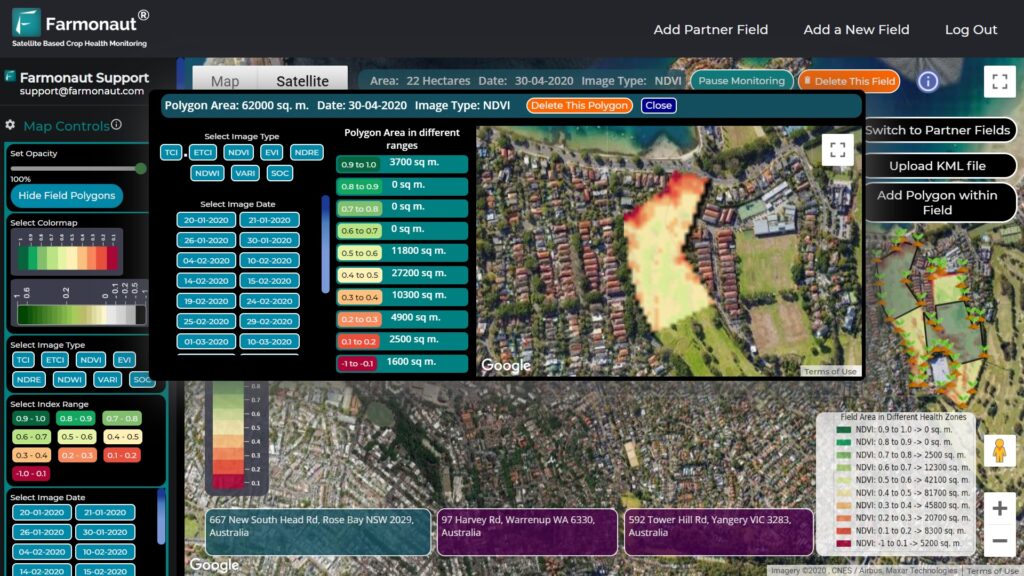
- 🛰 Satellite-Based Monitoring: Get crop health, soil condition, vegetation indices (NDVI), and weather analytics to support all three types of land-based agriculture.
- 🤖 AI Monitoring & Jeevn Advisory: Real-time AI-driven recommendations for better productivity and resource management.
- 🔗 Blockchain Traceability: Transparent tracking of agriculture products from field to market, assuring origin and reducing fraud.
- 🚚 Resource & Fleet Management: Track the efficiency and usage of farm machinery, optimize labor, boost safety, and minimize costs.
- 🌍 Environmental Monitoring: Monitor carbon footprint and promote compliance with global sustainability goals.
Explore scalable offerings tailored for individuals (mobile/web apps), businesses, developers (API solutions), and policy-makers. Affordable access to cutting-edge satellite analytics supports smarter decision-making for every agricultural context.
- 📱 For small-scale farmers and mining operators: Mobile and web-based apps deliver satellite data on-demand to optimize crop growth and resource extraction.
- 🏢 For businesses: Large-scale monitoring, fleet tracking, and real-time benchmarking against regional standards for yield, input use, and sustainability.
- 🏛 For governments: Support policy-making, monitor rural development, enforce land conservation and prevent illegal practices.
- 🏦 For financial institutions: Satellite-verified crop and mining data reduces fraud and increases credit access through secure digital verification (crop loan/insurance tool).
- 🔗 Blockchain product traceability empowers supply chain integrity and enhances product value for both the producer and consumer.
Key Challenges & Solutions for Land-Based Agriculture by 2025 and Beyond
Even as we adopt new technologies and frameworks, several major challenges remain for land-based agriculture in the coming years. These challenges also shape the discourse around what are the three types of land-based agriculture and their future relevance:
- 🌍 Climate change: More frequent droughts, extreme weather, and shifting growing zones threaten both yield and sustainability.
- 💧 Water scarcity: Unsustainable irrigation in commercial agriculture depletes resources and leads to soil salinization.
- ⚖ Soil health degradation: Excessive tillage, over-fertilization, and monocultures—especially in commercial systems—undermine productivity.
- 🔄 Biodiversity loss: Intensive practices can endanger traditional varieties and ecosystem balance, especially where monoculture dominates.
- 🤝 Socio-economic inequality: Smallholders practicing subsistence agriculture often lack access to credit, markets, or technology.
- 📈 Resource-use efficiency: The need to produce more food with fewer inputs—and lower environmental cost—is a defining challenge.
- ✔️ Data-driven advisories: Increase crop yields by up to 25% by tailoring water, fertilizer, and pesticide inputs with satellite and AI insights.
- 📊 Real-time monitoring: Detect diseases, pest outbreaks, and irrigation stress early, reducing losses.
- ⚠️ Risk reduction: Prevent fraud and ensure compliance with product traceability in supply chains (commercial and mixed systems).
- 🌱 Soil conservation: Farmonaut’s carbon footprinting empowers sustainable land management for all three types of agriculture.
- 🔑 API integrations: Allow developers and businesses seamless data flow for precision agriculture and reporting requirements. Explore our developer docs for implementation.
Frequently Asked Questions: Types of Land-Based Agriculture
What are the three types of land-based agriculture?
The three main types are: subsistence agriculture (household-focused, small-scale, low input), commercial agriculture (large, market-driven, high-tech), and mixed farming (integration of crops and livestock for enhanced resilience and sustainability).
What are the 5 types of agriculture?
The five types are: subsistence, commercial, plantation, shifting cultivation, and intensive/extensive agriculture. Each reflects different purposes, scales, and technology levels.
What are the 4 types of farming?
The four primary farming systems are: arable (crops), pastoral (livestock), mixed farming (both), and subsistence farming (family-need, tradition-based).
How does technology help address the sustainability challenges in agriculture?
Satellite monitoring, AI analytics, and blockchain-based traceability optimize resource use, reduce emissions, enhance traceability, and enable more profitable and resilient farming at every scale.
Where can I access satellite-powered agriculture insights?
You can download our Farmonaut mobile/web app or connect via API for real-time field-level and resource monitoring, tailored to various types of farming systems.
Conclusion: The Future of Land-Based Agriculture—Adapting for Resilience, Sustainability, and Innovation
Understanding what are the three types of land-based agriculture—subsistence, commercial, and mixed—is not only essential for academic clarity, but also for developing practical solutions that address the evolving needs of the sector. Together with extended frameworks (five types of agriculture and the four farming system types), these classifications provide the operational vocabulary needed for strategic planning, sustainable development, and policy alignment as we move into 2026 and beyond.
The agricultural landscape of 2025 and future years is being reshaped by climate imperatives, rapid technological advancement, and a growing global commitment to sustainability. By embracing new practices, leveraging digital insights, and integrating platforms like Farmonaut, stakeholders can ensure increased security, efficiency, and resilience in the face of challenges—and seize the opportunities that come with transformative change.
Explore, adapt, and thrive—unlock a sustainable future for agriculture, one insight at a time.