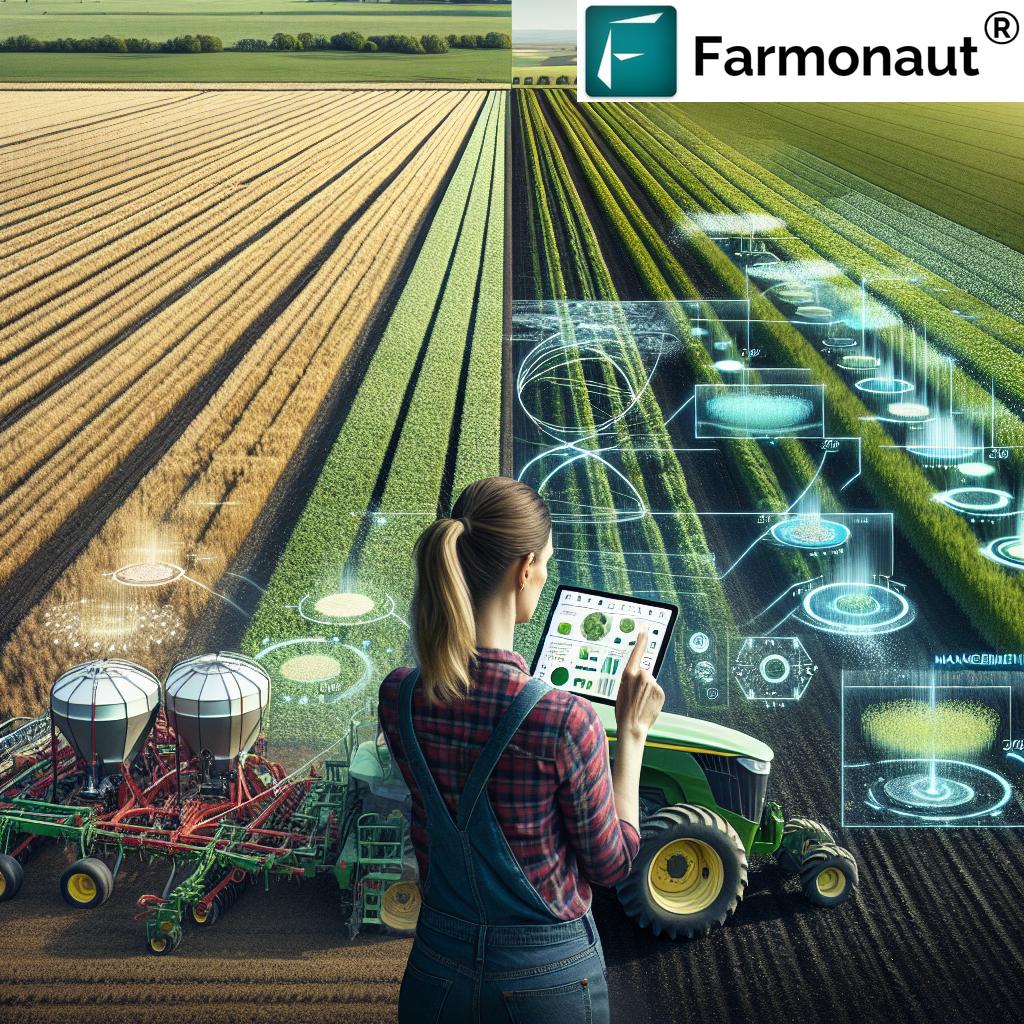
Water-Smart Irrigation: 7 Ways to Boost Crop Resilience
“Climate-smart irrigation can reduce water usage by up to 30% while maintaining crop yields in sustainable agriculture.”
Introduction: Why Water-Smart Irrigation Matters in 2026 and Beyond
Water is the lifeblood of agriculture, forestry, and land ecosystems. Yet, climate change is tightening its grip—with more frequent extreme droughts, irregular rainfall, and rising temperatures disrupting traditional farming, nurseries, and forest management methods. As we look from the vantage point of 2026, climate-smart irrigation (CSI) emerges as an essential, scalable strategy to boost water efficiency, soil health, and crop resilience across sectors, safeguarding yields and fostering sustainable, future-ready ecosystems.
By blending precision technologies, ecological knowledge, and adaptive practices, CSI addresses the pressing needs of agriculture and forestry under mounting climate stress. The realities of today—shrinking groundwater reserves, unpredictable weather and yield risks—demand an ecosystem approach, integrating soil, water, and crop management for both immediate benefits and long-term sustainability.
In this comprehensive guide, we unveil the seven most effective water-smart irrigation methods, review how sensors and AI are transforming irrigation systems and explain how these advances help reduce operating costs, protect habitats and ensure the future of farming, forestry, and land reclamation.
Key Insight:
Adopting water-smart irrigation is not just about saving water—it’s about resilient agriculture and forestry that thrive in the face of climate change, delivering higher quality yields and long-term ecosystem protection.
Core Principles of Climate-Smart Irrigation (CSI) for Efficient Water Use
CSI embodies four major principles. Mastery of these creates resilient, productive, and sustainable agroecosystems:
- Efficiency first: Precision irrigation matches water supply with crop needs in real time. Advanced sensors, weather tracking, and crop models guide irrigation to minimize losses (evaporation, runoff), boosting yield per unit water. (Farm Management Tools)
- Resource stewardship: Integrated water stewardship balances hydration in the root zone without oversaturating soils, thus reducing nutrient leaching and greenhouse gas emissions (from anaerobic soils).
- Resilience by design: Combining drought-tolerant varieties, mulching, shade management, and organic matter enhancement to buffer against heat waves and erratic rains.
- Integrated management: Linking irrigation with watershed planning, groundwater protection, and conservation (to prevent salinization, erosion, and degradation), enabling strong ecosystems across farms and timberlands.
Pro Tip:
Using interconnected sensor networks and real-time data analytics not only saves water but also improves yield quality and reduces energy costs by ensuring pumps are used only when necessary.
Water-Smart Irrigation: 7 Methods to Boost Crop Resilience
Let’s dive deeper into the seven most impactful techniques that define climate-smart irrigation and drive productive, climate-resilient agriculture, forestry, and land reclamation projects worldwide in 2026 and beyond:
- Drip Irrigation—Delivers water directly to the root zone through low-pressure tubing, minimizing evaporation and runoff, and supporting efficient nutrient application.
- Micro-Sprinkler & Variable Rate Systems—Utilize small, targeted jets for uniform hydration and precise adjustment, powered by sensors and real-time weather data.
- Rainwater Harvesting & Reuse—Captures, stores, and redistributes rainfall and treated drainage or effluent, reducing demand on groundwater and surface supplies while sustaining crops during dry times.
- Mulch-Based Moisture Conservation—Applying organic matter (straw, wood chips, compost) as mulch reduces evaporation and improves soil moisture and health.
- Deficit & Regulated Irrigation Scheduling—Strategically reducing water supply during select growth periods (using plant and soil indicators) without compromising final yields—delivering more crop per drop.
- Soil Health Enhancement—Boosting organic matter, reducing disturbance, and fostering healthy soil structure to increase water-holding capacity and resilience against drought.
- Integrated Weather & Sensor-Based Scheduling—Combining local sensors (moisture, salinity) with advanced AI-driven forecasts for adaptive, real-time optimization.
-
💧
Drip Irrigation -
🚿
Micro-Sprinkler Systems -
🌧️
Rainwater Harvesting -
🌱
Mulch-Based Conservation -
🕒
Deficit Scheduling -
🧑🌾
Soil Health Focus -
📡
Sensor & Forecasting Integration
“Soil health improves by 15% on average when water-smart irrigation methods are implemented in forestry and farming.”
Common Mistake:
Overwatering, especially in responsive systems, can backfire—oversaturating soils, causing nutrient leaching, anaerobic conditions, and unnecessary energy costs. Always calibrate to real soil and crop needs.

Comparative Summary Table: 7 Water-Smart Irrigation Methods
Investor Note:
Water-smart irrigation is driving rapid innovation and growth—demand for sensor networks, AI integration, and renewable-powered pumps is projected to rise by 40% by 2027, creating economic opportunities and resilient supply chains across agri-tech, forestry, and land development.
The Role of Technology: Sensors, AI, and Data Analytics for Water Management
State-of-the-art technologies are fundamentally reshaping how water management and irrigation systems operate in the modern landscape.
Key Technologies Empowering Climate-Smart Irrigation
- ✔ Sensor Networks: Portable and stationary sensors track soil moisture, salinity, temperature, and other indicators. Wireless networks provide real-time insights, enabling rapid response to water stress or heat events.
- 📊 Data Analytics & AI Dashboards: Complex field data is translated into actionable schedules, with AI-driven optimization that can cut water use 20–50% in many cases.
- ✔ Forecasting Systems: Short- and mid-term weather and climate forecasts guide irrigation timing, blending predictions with live crop data to avoid losses from erratic rains or heatwaves.
- ✔ Variable Rate Application: Smart systems apply water precisely where needed, reducing runoff and prioritizing vital crops/periods.
- ✔ Drip, Sprinkler, and Furrow Integration: Scheduling that adapts traditional approaches with new sensors and remote monitoring for maximum efficiency.

App Highlight:
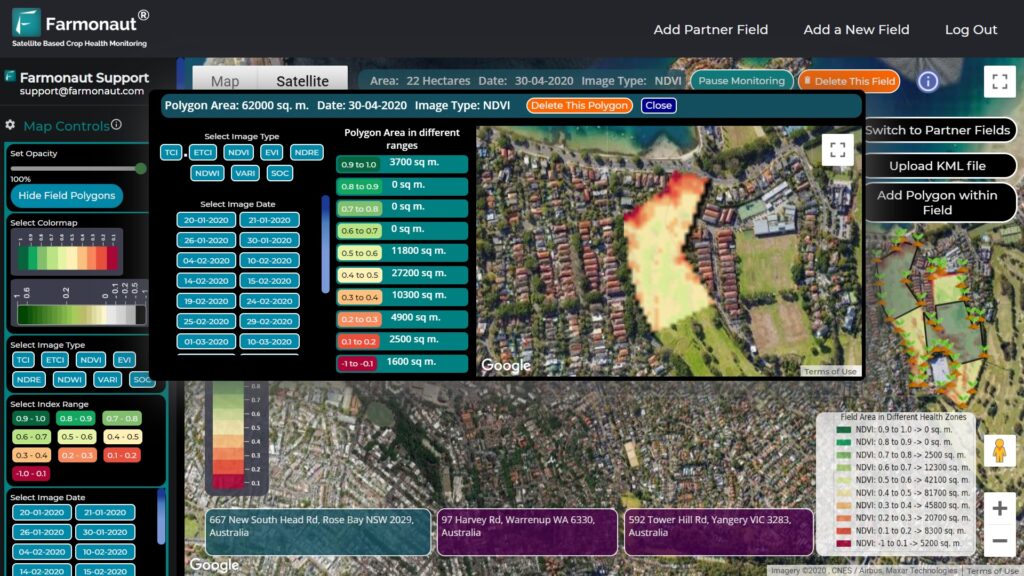
Discover actionable field metrics and satellite-driven irrigation insights with the Farmonaut App—available for Android, iOS, or web. Monitor irrigation, view crop and soil health, and integrate with scalable API solutions for advanced automation: See API Docs.




CSI in Real-World Sectors: Agriculture, Forestry, and Land Reclamation
Agriculture: Smarter Water, Better Crops
- ✔ Higher yields and improved quality with lower water input—CSI achieves more from every drop.
- ✔ Reduced fertilizer leaching and runoff—precision irrigation keeps nutrient where crops need it.
- 📊 Improved drought resilience for crops and soil—CSI methods enhance tolerance to heat and irregular rainfall.
- ✔ Lower energy costs by using pumps less and targeting water where it matters most.
Deploying drip and sensor-integrated systems (see the
Farmonaut Large-Scale Farm Management Platform
) helps growers oversee extensive fields with satellite-backed insights for moisture, crop status, and yield optimization.

Forestry & Nurseries: Supporting Seedlings and Habitats
- ✔ Speedier seedling establishment—precise hydration reduces mortality.
- ✔ Faster canopy recovery after drought; buffers against extreme heat stress.
- ✔ Container nurseries: up to 50% water savings with automated, sensor-driven cycles.
- ✔ Organic matter inputs support mycorrhizae and resilience, promoting healthy roots and habitat diversity.
Forestry managers can apply CSI planning to integrate irrigation practices with longer-term goals such as habitat protection, carbon sequestration
(Farmonaut Carbon Footprinting
), and fire resilience.
Land Reclamation, Mining & Infrastructure
- ✔ Irrigation boosts vegetation in mine site rehabilitation, stabilizing land and preventing erosion.
- ✔ Smart water use helps minimize compaction and drainage-related crusting, enhancing infiltration and plant regrowth.
- ✔ Groundwater monitoring and traceability aid compliance and sustainable use (Farmonaut Traceability).

- 🌍 Safeguarding yields & food security
- 💡 Improved ecosystem health and biodiversity
- 💰 Lower operating costs and energy usage
- ⭐ Reduced greenhouse gas emissions
- 🔗 Traceable, reliable water data for incentives and certifications
Key Insight:
Integration of satellite monitoring, blockchain traceability, and environmental impact tracking (see Farmonaut Carbon Footprinting) takes water-smart irrigation from isolated plots to landscape-level resilience—benefiting businesses, communities, and entire watersheds.
Implementation Roadmap: Upgrading Your Irrigation for 2026 and Beyond
A stepwise, evidence-based approach is crucial to implementing climate-smart irrigation. Here’s a practical 2026+ roadmap for agriculture, forestry, and land projects:
- Audit & Plan—Map water sources, assess current irrigation infrastructure, and set targets for water-use efficiency, yield improvement, and carbon/nutrient footprints.
- Invest in Scalable Tools—Modular sensor networks, solar-powered pumps, and irrigation emitters future-proof your operation. Upgrade as your needs—and climate—evolve.
- Data Literacy & Staff Training—Instruct teams to read soil, weather, and crop data. Standardize irrigation optimization protocols using AI systems.
- Integrate Soil & Crop Management—Combine CSI with mulching, cover cropping, crop rotation, and nutrient management for maximum water-use efficiency and soil health.
- Monitor Outcomes—Track water-use efficiency (e.g., kg of produce per cubic meter), energy intensity, soil moisture distribution, and habitat indicators. Adjust with changing climate signals.

Common Mistake:
Skipping soil type or groundwater quality assessments before CSI deployment can lead to salinization, root stress, or local water conflicts. Always tailor strategies to your unique site!
Caveats, Challenges & Social Safeguards
Navigating Risks & Local Conditions
- ⚠ Soil Type & Water Quality: Saline, compacted, or polluted soils require tailored irrigation and drainage (avoid universal solutions).
- ⚠ Economic feasibility: While sensor, AI, and pump investments are up-front, they deliver long-term savings—explore public incentives and satellite-based loan & insurance validation.
- ⚠ Downstream & Ecological Safeguards: Ensure optimized irrigation does not compromise water rights or local ecosystems. Adopt water-sharing agreements as needed.
- ⚠ Data & Privacy: Use trustworthy, transparent platforms for irrigation and monitoring—protect user & community data for compliance and confidence.
Key Insight:
Ecosystem- and community-led water stewardship is not only more just, but also more effective—blending CSI technology with local knowledge safeguards resources and prevents conflict.
Get Started: Farmonaut Technology for Climate-Smart Irrigation
At Farmonaut, we make satellite-driven, AI-powered irrigation insights accessible and scalable for growers, forestry managers, land reclamation teams, and ecosystem planners. Our platform, available via web, mobile app, and API, empowers users to:
- ✔ Monitor fields, forests, and projects with real-time NDVI, soil moisture, and vegetation health tracking, supporting CSI decisions (Large-Scale Farm Management).
- ✔ Generate actionable reports for irrigation optimization, drought risk, and habitat protection—AI-driven, field-accurate, and exportable.
- ✔ Integrate blockchain traceability into your operations (Traceability Solutions), ensuring transparent water and crop records for compliance & incentives.
- ✔ Monitor environmental impact and meet climate/green finance goals using our carbon footprinting tools.
- ✔ Automate operations at scale with our open API, backed by extensive API Documentation.

Farmonaut API Bonus:
Developers and agri-tech platforms can fully automate irrigation recommendations and receive satellite-verified crop and soil data through our Farmonaut API.
FAQ: Water-Smart Irrigation & Crop Resilience
What is climate-smart irrigation (CSI)?
Climate-smart irrigation (CSI) combines precise, data-driven irrigation with ecological best practices to maximize water efficiency, crop resilience, and ecosystem protection. It leverages sensors, AI, and integrated management for sustainable productivity.
How much water can I save with water-smart irrigation?
Depending on the method and context, farms and forestry projects can reduce water use by 20–50% compared to conventional systems, while maintaining or improving yields and soil health.
Does CSI improve yields or quality?
Yes. By matching water supply to crop needs and ensuring healthy soils, CSI methods reduce stress, prevent losses during drought or heat, and deliver higher, more reliable yield quality.
Can I automate irrigation with my existing infrastructure?
Often, yes—especially with sensor and AI-driven platforms. For example, with Farmonaut’s satellite and web/app solutions, users can integrate precision scheduling and ongoing monitoring into existing pump and line systems.
What about social or environmental impacts?
CSI prioritizes local water stewardship, ecological health, and community needs—even as technology advances. The best results come from blending digital tools with community knowledge and transparent water sharing.
Conclusion: Water-Smart, Future-Ready Ecosystems
In 2026 and beyond, climate-smart irrigation is not just an efficiency upgrade—it’s the keystone of resilient, sustainable agriculture, forestry, and ecosystem restoration. By harnessing sensors, AI, and ecological management practices, we can reduce water use, improve soil health, buffer against droughts and climate change, and safeguard habitats across landscapes.
At Farmonaut, our mission is to make these advances affordable and accessible worldwide—supporting growers, businesses, and governments in drought-smart, data-driven futures. Abundant harvests, healthy soils, and thriving ecosystems are possible when we put water, data, and sustainability first.
Ready to transform your irrigation? Explore our apps and platform or automate your workflow with our Open API today!