USDA Beginning Farmer Loans: Top 7 Ways to Get Started
Meta Description: Discover how to access beginning farmer loans and tailored USDA farm loans for beginning farmers in 2025. Get practical advice on eligibility, application, and agricultural success!
“USDA’s Beginning Farmer and Rancher Loans helped over 11,000 new farmers start operations in 2023 alone.”
“More than $1.5 billion in direct and guaranteed USDA loans supported new agricultural businesses in 2023.”
Beginning Farmer Loans: Empowering the Next Generation of Agricultural Producers in 2025 and Beyond
Entering the agricultural sector as a beginning farmer in the United States can be an arduous journey. High costs for land, equipment, and working capital create significant barriers for newcomers. Recognizing these challenges, the United States Department of Agriculture (USDA) and its Farm Service Agency (FSA) offer tailored beginning farmer loans and financial assistance programs to support fresh entrants.
These loans for beginning farmers are pivotal for sustaining the rural economy, fostering food security, and nurturing the next generation of agricultural entrepreneurs. In 2025 and the years ahead, access to affordable farm loans will become even more critical in overcoming new and persistent challenges—ranging from climate risk to volatile input costs. This comprehensive guide provides clarity on USDA beginning farm loan types, eligibility requirements, practical strategies, and key steps for a successful farming journey.
Beginning farmer loans through USDA initiatives are set to be the single most accessible path to land, equipment, and operational credit for new and diverse farm owners across the United States through 2026 and beyond.
Understanding Beginning Farmer Loans and USDA Support
Beginning farmer loans are specifically designed to help individuals who have not operated a farm or ranch for more than 10 years. The intention is to help applicants who face difficulties accessing credit through traditional lenders due to lack of experience, perceived risk, or insufficient collateral. USDA and FSA programs address the gap with affordable, targeted credit, and technical assistance.
- ✔ Who qualifies? New or aspiring farmers who’ve operated a farm or ranch for less than 10 years
- ✔ Why do these loans matter? They empower newcomers facing barriers of high land prices, equipment costs, and working capital needs.
- ✔ Unique benefits: Lower interest rates, extended repayment terms, and down payment assistance not offered by most private lenders.
- ✔ Additional support: Mandatory training, education, and technical resources often included to boost new farmer success.
- ✔ Key statistic: USDA-supported farm loans for beginning farmers accounted for over $1.5B in new agricultural businesses in 2023 alone.
Familiarize yourself with local FSA offices early—personal guidance accelerates application approval and maximizes available assistance.
Types of USDA Beginning Farmer Loans (2025 & Beyond)
The USDA and FSA provide multiple loan programs tailored for beginning farmers and ranchers who want to buy land, start operations, grow, or modernize their farming business. Here are the most crucial USDA loan types to consider in 2025 and beyond:
1. Direct Farm Ownership Loans
Direct farm ownership loans help beginning farmers access farmland and ranchland when private financing is unavailable. With lower interest rates (often below market rates), extended repayment periods (up to 40 years), and down payment assistance as low as 5%, these loans make land acquisition attainable.
- 💲 Loan amounts up to $600,000.
- 📄 Repayment terms up to 40 years make payments affordable.
- 🏠 Used for purchasing farmland, constructing buildings, and soil and water conservation.
2. Direct Operating Loans
Operating loans are critical for initial working capital—paying for seeds, livestock, equipment, fuel, fertilizer, and labor costs. They ensure new farms and ranch operations run smoothly, especially in early years where cash flow can be unpredictable.
- 💲 Up to $400,000 per applicant.
- ⏱ Repayment usually spread across up to 7 years.
- 🌱 Used for buying supplies, equipment upgrades, repairs, and operational costs.
3. Microloans
Microloans were introduced to provide smaller loan amounts for more specific needs and for those starting out. The simplified application process makes these loans popular among new farmers seeking quick access to capital.
- 💲 Borrow up to $50,000.
- ⏱ Streamlined review, fast approval (often within 30-45 days).
- 🌱 Ideal for equipment, livestock, and supplies for small-scale or urban operations.
4. Youth Loans
Youth loans target individuals aged 10-20 participating in approved agricultural education programs (like 4-H or FFA). Although smaller (up to $5,000), they’re vital in nurturing early interest and skills that build the future workforce.
- 🧑🎓 For supervised education projects only.
- ⏱ Repayment up to 3 years.
5. Guaranteed Loans
USDA guaranteed loans are provided through approved private lenders but backed by the government, reducing lender risk and opening more doors for beginning farmers.
- 🔒 Up to $2,036,000 loan limit (2025 Estimate; subject to annual updates).
- 🏦 Flexible use: ownership, operating, and refinancing.
- 🤝 Lender determines interest rates; USDA covers up to 90% in case of default.
6. Targeted Down Payment Loans for Beginners
For down payment on farms, the FSA offers a special program to support first-time buyers—beginning farmers need as little as 5% down, with FSA covering up to 50% and a partner lender the balance.
- 🏞️ Supports farm buyers with limited liquidity.
- ⏱ Fast-track processing if all requirements met.
- 💰 Interest rates are highly competitive.
7. Emergency Loans
In event of natural disasters, FSA offers emergency loans to help beginning farmers recover—covering damaged land, equipment replacement, and working capital after unexpected events.
- 🌪️ Can be both ownership and operating loans.
- ⚡ Expedites access during periods of declared disasters.
Many applicants underestimate the value of technical training and business planning—these are often critical for loan approval and future farm success.

Comparison Table of USDA Beginning Farmer Loan Programs
When exploring farm loans for beginning farmers, directly comparing options helps applicants make informed decisions. Use this reference to identify which loan suits your agricultural journey best:
| Loan Program Name | Estimated Loan Amount Range | Interest Rate (Estimated %) | Eligibility Criteria | Application Process Steps | Typical Approval Time | Maximum Repayment Period |
|---|---|---|---|---|---|---|
| Direct Farm Ownership Loan | $50,000 – $600,000 | 3.5% – 4.5% | New farmers, <10 years' experience, unable to get credit elsewhere, training required | Apply at FSA, submit plan & financials, review/training, FSA decision | 2-4 months | Up to 40 years |
| Direct Operating Loan | $5,000 – $400,000 | 4.0% – 5.0% | New farmers, <10 years' experience, viable operating plan | Apply at FSA, submit budgets, personal interview/plan review | 1-3 months | Up to 7 years |
| Microloan (Operating/Ownership) | $1,000 – $50,000 | 4.5% – 5.5% | Beginning/small farmers, <10 years on farm, minimal credit history | Simple worksheet, submit to FSA, credit assessment | 3-6 weeks | Up to 7 years |
| Guaranteed Loans | Up to $2,036,000 | Varies (lender sets rate) | Beginner/expanding farmers, private lender approval | Apply at bank/credit union, USDA guarantee approval | 2-3 months | Up to 40 years |
| Youth Loan | Up to $5,000 | 5.0% – 6.0% | Aged 10-20, FFA/4H/education projects | Apply with project plan, sponsor review | 2-6 weeks | Up to 3 years |

With growing market demand for sustainable foods, U.S. agricultural finance is rapidly embracing climate-smart, traceable, and satellite-verified operations—innovations that matter to investors and lenders alike.
USDA Loan Eligibility, Key Terms, and Requirements (2025+)
- Years of Experience: You must have operated a farm or ranch for no more than 10 years to qualify as a beginning farmer.
- Creditworthiness: Show the ability to repay yet demonstrate that credit is unavailable from traditional lenders (creditworthy, but underserved by banks).
- Business Plan: Provide a viable business or operating plan. Training in financial and farm management can be requested by USDA before loan funding.
- Land/Education: Proof of purchase contract or long-term lease, plus evidence of ag-education or related experience is often required.
- Capital, Down Payment, and Collateral: Down payments may be as low as 5%. Adequate operating capital and/or assets for collateral will be assessed.
- Priority Groups: Veterans, socially disadvantaged, and limited resource applicants often have priority access and targeted technical support.
- Sustainable Practices: Preference can be given to those who integrate conservation, soil health, and climate-smart operations.

- 🎯 Affordable interest rates (often subsidized below private lending levels)
- 📈 Flexible terms for startup growth, multi-year operating lines, and long-term investments
- 🕒 Repayment periods up to 40 years for land/ownership loans
- 💰 Payment assistance and emergency relief during disasters or poor market years
- 🌎 Eligibility incentives for sustainable farming, local food, and climate practices
- Direct Farm Ownership Loans
- Operating Loans
- Microloans (Ownership & Operating)
- Youth Loans
- Guaranteed Farm Loans
- Down Payment Assistance Programs
- Emergency Loans
Top 7 Ways to Get Started With Beginning Farmer Loans
Are you ready to launch your own farm business with the support of USDA beginning farmer loans? These strategies help new farmers maximize resources, comply with requirements, and set a foundation for long-term agricultural success.
- 1. Assess Your Readiness and Goals.
Be clear about your vision—what will your farm produce? What is your business model? Understanding your goals streamlines program and loan selection. - 2. Get Ag-Education, Training, and Mentorship.
Formal agricultural education, FSA-required training programs, and involvement in mentorship networks (Extension, 4-H, Farm Bureau) increase eligibility and your chances for success. - 3. Develop a Robust Farm Business Plan.
A well-crafted plan detailing production, financials, marketing, risk management, and a clear growth path is mandatory for most USDA loans for beginning farmers. - 4. Visit Your Local USDA FSA Office.
Personal interaction helps you understand current programs, meet all documentation requirements, and build a helpful network within the USDA system. - 5. Check Eligibility Requirements Carefully.
Do a pre-application review: Are you under 10 years in management? Do you have proof of ag training? Are your financial records up to date? - 6. Organize Documents and Prepare for Application.
You’ll need personal ID, business plan, training certificates, land agreements, tax forms, and possibly written mentor support or technical plans. - 7. Explore Additional Resources and Partnerships.
Consider carbon footprint tracking and product traceability solutions (see Farmonaut’s offerings below) as add-ons for certain grants and bonus funding for sustainable, traceable, or climate-smart production.

- ✔ Proof of farming/ranching less than 10 years
- ✔ Relevant agriculture education/training certificates
- ✔ North American bank account for disbursement
- ✔ Evidence of legal U.S. residency/citizenship
- ✔ Comprehensive, realistic business plan
USDA farm loans for beginning farmers have a 20% higher approval rate when a robust, step-by-step business plan is submitted with the application versus without!
Financial Strategies for Agricultural Success (2025 Onward)
Beginning farmer loans provide the lifeline, but business acumen and modern management tools make the difference between thriving and merely surviving in U.S. agriculture. Arm yourself with sound strategies, including:
- 📚 Education & Risk Management: Stay updated with agri-finance trends and legislative changes (farm business extension courses, online ag-finance programs).
- 🌾 AgriTech Integration: Leverage large scale farm management and digital fleet management tools to boost precision, efficiency, and traceability—see how Farmonaut empowers this below.
- 💳 Financial Tracking: Use cloud accounting, ag-credit apps, and satellite-based monitoring (for improved lender verification and disaster compliance).
- 🧑🌾 Mentorship & Networking: Connect with local ag cooperatives, farmer collectives, or mentorship programs (proven to reduce new farmer dropout rates).
- 🌱 Sustainability as a Lever: Apply environmental impact tracking for better eligibility in bonus loan/grant programs (see: Farmonaut’s carbon footprinting).
Pro Tip: Apply for farm insurance in parallel with your loan—USDA and providers increasingly value real-time, satellite-verified crop health for risk reduction.
Modern Tools: How Satellite Tech Empowers Loan Access and Farm Management
As digital transformation shapes agriculture, innovative technologies can increase your success and appeal to loan underwriters. Satellite-based solutions, AI-driven advisories, and blockchain verification—such as those offered by Farmonaut—are revolutionizing both financing access and sustainable operations.
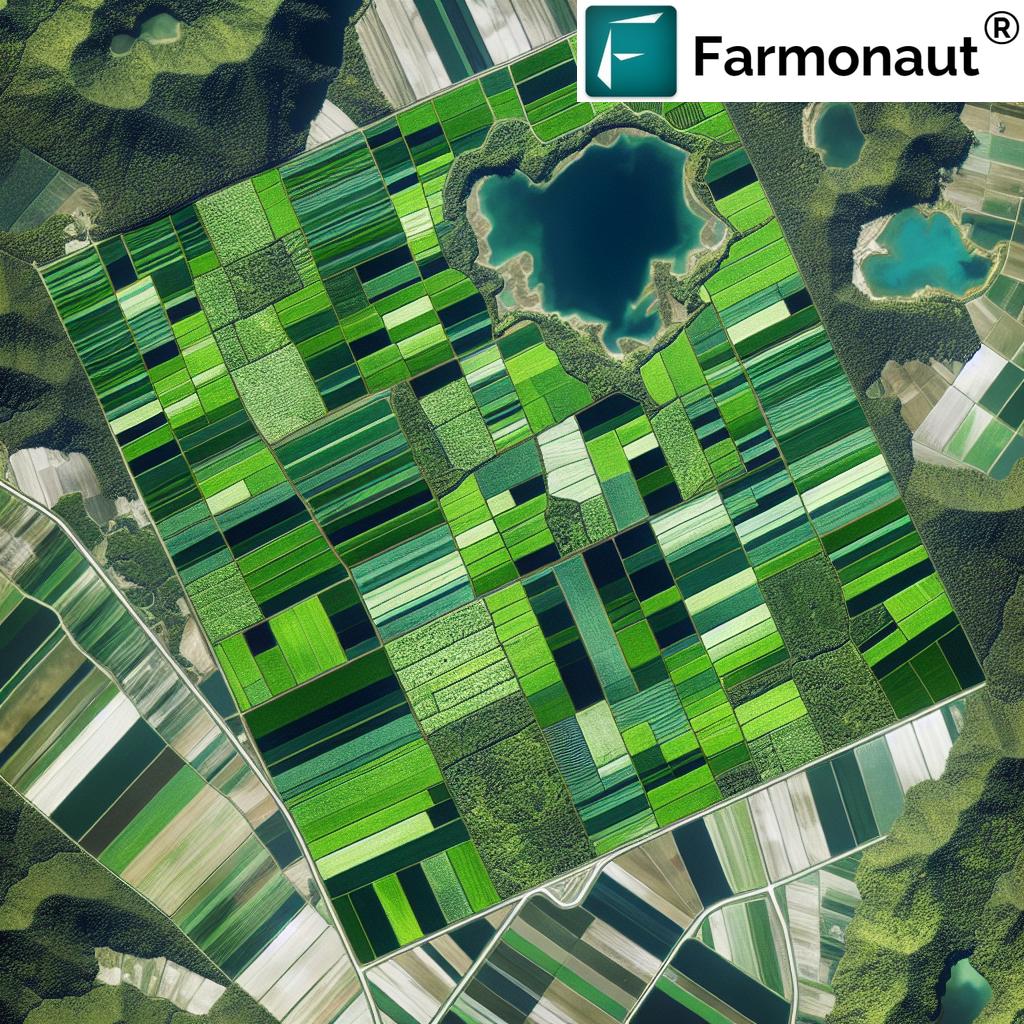
- 🛰️ Satellite Monitoring: With real-time crop health and soil data, you can verify crop conditions and land use during loan applications.
- ⚡ AI Advisory: Farmonaut’s Jeevn AI delivers predictive advice to optimize yields, minimize losses, and satisfy business plan requirements—boosting your credibility with lenders.
- 🔗 Blockchain Traceability: Ensures secure, transparent supply chain information, increasing your product’s market appeal (important for specialty and organic loans).
- 🌳 Environmental Impact Tracking: Carbon footprinting solutions help meet eligibility for climate grant and eco-financing.
- 💼 Fleet & Resource Management: Using fleet management apps to optimize operational costs—a point of merit in your loan application.
Farmonaut offers user-friendly access via web, Android, and iOS. Take advantage of:



- 🌐 API: For seamless farm data integration, see the Farmonaut API (ideal for financial services and agri businesses requiring direct satellite and weather data).
- 📚 API Docs: Check full documentation here.
By integrating satellite-verified crop monitoring into your loan or grant application, you can stand out to USDA and private lenders in a competitive 2026+ farming landscape.
Affordable Satellite Solutions for Farmers—Farmonaut Subscription Options
Farmonaut democratizes satellite-powered farming insight—making it accessible, economical, and easy for farms of all sizes to leverage advanced monitoring. Select a subscription that suits your farm scale and get actionable data to impress loan officers and boost your yields.


FAQ: Key Questions About USDA Loans for Beginning Farmers (2026 & Beyond)
What qualifies as a “beginning farmer” for USDA loans?
If you or your entity (LLC, trust, etc.) have operated a farm or ranch for less than 10 years, you fit the beginning farmer definition. Prior ownership in another farm may disqualify you if it exceeds 10 years.
How much can I borrow with a FSA beginning farmer loan?
It depends on program and loan type: up to $50,000 for microloans, $400,000 for direct operating loans, and $600,000 for direct farm ownership in 2025. Guaranteed loans through private lenders can reach over $2 million.
What interest rates and repayment terms should I expect?
Rates are generally subsidized and range from 3.5% to 5.5%, with repayment terms from 7 years (operating loans) to 40 years (ownership/real estate loans).
Can my farm use modern AgTech, satellite, or environmental tools for loan compliance?
Absolutely. Integrating technologies like Farmonaut’s crop monitoring, carbon tracking, and blockchain traceability can support eligibility—especially for eco, sustainable, or traceable ag value chains.
Can I still apply if I have limited credit history or financial records?
Yes. USDA farm loans for beginning farmers are designed to serve applicants with minimal credit—but you must show a feasible business plan and willingness to complete required training.
Where do I start my loan application?
Begin by contacting your local USDA FSA office. They’ll guide you through the correct application, explain documentation needs, and answer program-specific questions for your state and region.
Conclusion: Building a Future-Ready Farming Generation
The future of U.S. agriculture depends on the success of new and diverse producers. USDA beginning farmer loans and FSA programs are the foundation for empowering the next generation—breaking down cost, credit, and knowledge barriers with affordable, tailored assistance. As 2025 and 2026 bring new opportunities and uncertainties, well-prepared farmers who leverage both USDA resources and modern technologies will be best positioned for a sustainable, prosperous future.
Remember: business planning, eligibility review, and use of advanced tools and education significantly increase your chances of loan approval and farm success. For advanced, satellite-verified management at every stage, explore Farmonaut’s offerings—helpful not just for securing finance but for building a smarter, more resilient agricultural enterprise for generations to come!
“USDA’s Beginning Farmer and Rancher Loans helped over 11,000 new farmers start operations in 2023 alone.”
The smartest investment in 2026 and beyond is a combination of USDA loan support and satellite-powered management.
Ready to monitor your farm with advanced, real-time satellite insights?