Treadle Pump: 7 Benefits for Sustainable Farming in 2025
Table of Contents
- Summary: The Treadle Pump—A Sustainable Solution for Smallholder Farming in 2025
- Treadle Pump Trivia
- Introduction: Smallholder Irrigation Challenges in the Evolving Agricultural Landscape
- What is a Treadle Pump? Understanding the Device & Its Relevance in 2025
- Treadle Pump vs. Traditional Irrigation: Comparison Table
- Treadle Pump: 7 Benefits for Sustainable Farming
- How Farmonaut Supports Irrigation Innovation & Sustainable Agriculture
- Recent Advancements in Treadle Pump Technology (2025 & Beyond)
- Use Cases & Regional Relevance of Treadle Pumps
- Challenges, Limitations & The Way Forward
- Key Insights & Pro Tips (Callout Boxes)
- Frequently Asked Questions—Treadle Pump & Sustainable Irrigation
- Get Started with Farmonaut’s Satellite-Powered Solutions
Summary: The Treadle Pump—A Sustainable Solution for Smallholder Farming in 2025
The treadle pump is an innovative, human-powered irrigation device providing smallholder farmers with a sustainable solution to water scarcity and climate-related challenges. In 2025, as affordable irrigation remains critical for food production and rural development in many developing countries, these pumps deliver practical, eco-friendly, and efficient water management for crop irrigation. Treadle pumps operate without electricity or diesel, making them accessible even in areas with limited infrastructure. They empower rural communities, improve livelihoods, and promote responsible agricultural practices, fully supporting the global movement toward resilient, sustainable agriculture systems.
“Treadle pumps can reduce irrigation costs by up to 50% for smallholder farmers compared to diesel pumps.”
Introduction: Smallholder Irrigation Challenges in the Evolving Agricultural Landscape
In the evolving landscape of agriculture in 2025 and beyond, smallholder farmers continue to face challenges related to irrigation—especially in regions where access to electricity is limited or diesel-powered pumps are simply too costly. As the climate becomes less predictable and water scarcity more acute, ensuring reliable and sustainable agricultural production depends on simple, affordable, and environmentally responsible irrigation solutions.
The treadle pump, with its human-powered operation and low-maintenance design, offers a highly relevant solution for securing water supply to fields and crops—boosting yields and supporting the livelihoods of millions of rural smallholder farmers.
What is a Treadle Pump? Understanding the Device & Its Relevance in 2025
How the Treadle Pump Works: Simple Innovation for Efficient Irrigation
A treadle pump is a simple, pedal-operated irrigation device designed to draw water from shallow wells, rivers, or ponds and deliver it to surface fields. Unlike electric or diesel-powered irrigation systems, the treadle pump relies solely on human effort—operated by a user stepping rhythmically on pedals (the “treadles”), which are connected to two pistons inside a cylinder. This pumping action draws water via suction pipes and delivers it to the surface through hoses or open channels.
- ✔ No external energy source required: Only human energy is needed.
- ✔ Typically lifts water from depths up to 7 meters.
- ✔ Affordable, assembled using locally available materials.
- ✔ Easy to maintain and repair within rural communities.

Why the Treadle Pump is Especially Relevant in 2025
With the climate becoming more variable and water resources facing increasing scarcity, especially in rural regions of developing countries, smallholder farmers need efficient, affordable irrigation technology. The treadle pump fits this need perfectly:
- 💡 Accessible for rural communities with limited access to electricity or fuel
- 💰 Low-cost, easy to assemble/repair using local manufacturing
- 🌎 Eco-friendly—no greenhouse gas emissions or ground pollution
- 📉 Improves yield and livelihoods by enabling more crop cycles
“In 2025, over 2 million smallholder farmers are projected to use treadle pumps for eco-friendly irrigation.”
Treadle Pump vs. Traditional Irrigation Methods: Comparison Table
| Feature | Treadle Pump | Traditional Irrigation Methods |
|---|---|---|
| Water Usage (liters/hour) | ~1,000 | ~2,500 |
| Upfront Cost (USD) | $25–$60 | $250–$2,000 |
| Maintenance Requirement | Low (simple repairs, local parts) | Medium to High (mechanical, fuel-based repairs) |
| Energy Requirement | Manual (human effort only) | Diesel, electricity, or grid power |
| Crop Yield Increase | Up to 2x, enables multiple cropping | Variable—often subject to fuel/electricity costs |
| Environmental Impact | Low—no fuel, no emission | High—GHG emission, oil/chemical leak risk |
| Suitability for Smallholder Farmers | Excellent | Limited—mostly for large/medium farm sizes |
Scan this table for a quick comparison of core sustainability features—crucial for farmers making the shift to eco-friendly irrigation!

Treadle Pump: 7 Benefits for Sustainable Farming
Below, we explore the seven core benefits that position the treadle pump as the sustainable irrigation solution of choice for millions of smallholder farmers in the current and future agricultural landscape.
1. Affordability & Accessibility: Making Sustainable Irrigation Reach All Farmers
- 💡 Low upfront investment: At only $25–$60 per unit, treadle pumps are a fraction of the cost of traditional electric or diesel pump sets.
- 🚜 Accessible to rural communities: Assembled from locally available materials; repairs and spare parts are easy to source within the community, reducing downtime and dependency.
- 🧑🔧 User-friendly design: Simple construction makes operation feasible even for first-time users.
- 🔧 Maintenance is easy and inexpensive due to simple, robust engineering.
Treadle pumps are democratizing access to efficient irrigation—truly empowering those who represent the backbone of agriculture in developing regions.

2. Energy Independence: Freeing Farmers from the Unpredictability of Fuel & Power
- ⚡ Reliable irrigation anytime: No reliance on grid electricity, which is often erratic in rural areas, or on uncertain fuel supplies.
- 🌱 Autonomy: Farmers choose when and how much to irrigate without worrying about rising energy costs or supply chain disruptions.
- 💧 Immediate response to water needs—for climate variability situations such as drought or delayed rainfall.
This independence from external energy sources boosts peace of mind and enhances crop yield.

3. Sustainability & Environmental Impact: A Truly Green Technology
- 🌍 No emissions: Unlike diesel engines, treadle pumps produce zero greenhouse gases, supporting climate adaptation and sustainability goals.
- 💧 Encourages careful water use: Manual pumping naturally limits over-extraction of groundwater and encourages precise, efficient irrigation practices.
- 🌱 Protects soil health & biodiversity: Minimizes the risk of fuel leaks and chemical runoff into the ecosystem.
- ♻️ Promotes locally tailored solutions: Assembled using available resources, reducing transport emissions.
Adoption of sustainable treadle pumps is a key step towards regenerative, climate-smart agriculture in 2025.

4. Rural Employment & Skill Development: Contributing to Community Development
- 🛠️ Local manufacturing creates jobs—making, assembling, and repairing pumps within rural communities boosts employment.
- 🧑🏫 Training programs for technicians and farmers empower people with practical skills, fostering local entrepreneurship and technical capacity building.
- 🌐 Community resilience increases with self-sustaining repair and maintenance ecosystems.
5. Better Water Management: Smarter Use & Improved Agricultural Productivity
- 📊 Manual control means farmers adapt irrigation to actual field need, reducing water wastage.
- 🛰️ Integrates with mobile apps and basic sensors (2025 models), helping track flow rates and optimize irrigation times for different crop varieties.
- 🌾 Ensures adequate soil moisture, supporting healthy plant growth even during unpredictable rainfall patterns.

Pumps that facilitate better water management directly contribute to more resilient and productive smallholder farms.
6. Crop Yield Increase & Diversification: Unlocking Rural Prosperity
- 📈 Enables up to 2x more crops per year by supporting multiple growing cycles beyond rainfall-only systems.
- 🥕 Facilitates crop diversification—vegetables, cash crops, pulses all become feasible choices.
- 🌱 Reduces risk of total crop failure during dry spells or erratic weather, supporting food security and household income stability.
7. Empowering Communities & Supporting Rural Livelihoods
- 🧑🌾 Healthy, productive farms sustain livelihoods for millions in rural areas where agriculture is the mainstay.
- 🤝 Empowers women and youth: The pump’s ease of use increases participation in agricultural decision-making.
- 🌍 Strengthens food sovereignty: Less dependence on imported technology and energy sources, more local control over agriculture.
- 💡 Builds community self-reliance: Ownership of technology leads to greater innovation and resilience.

How Farmonaut Supports Irrigation Innovation & Sustainable Agriculture
At Farmonaut, we deliver satellite-powered digital solutions to maximize the value of technologies like the treadle pump for farmers and agribusinesses worldwide:
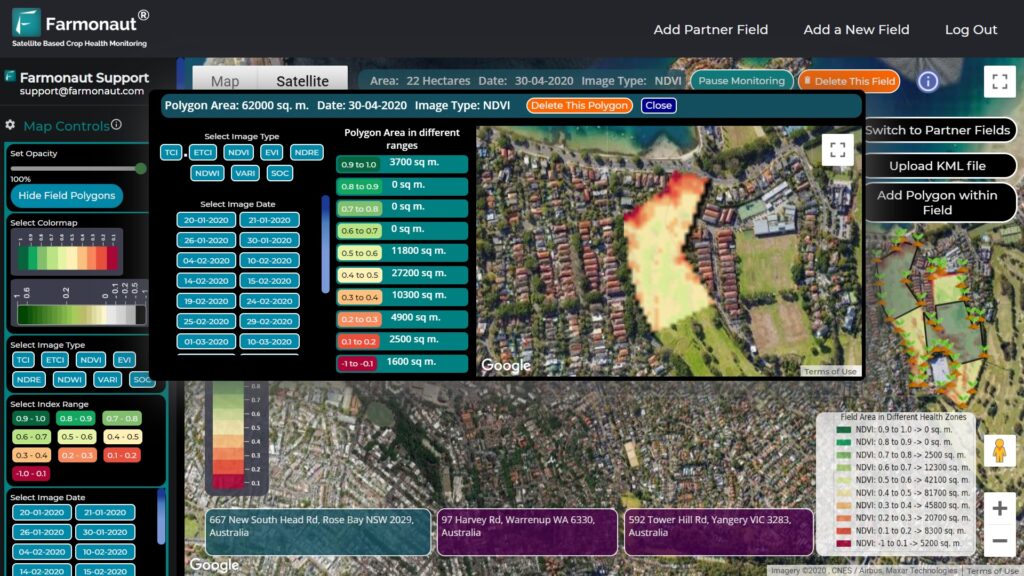
- 🛰️ Satellite crop monitoring—track crop health (NDVI), soil moisture, and vegetation status for optimized irrigation planning and water management.
- 🤖 AI-driven advisory (Jeevn AI)—get customized guidance, real-time weather updates, and precision recommendations for every farm, accessible via mobile app, web dashboard, and API.
- 🔗 Blockchain traceability—ensure food product origin, carbon tracking, and transparent supply chain management for sustainable markets.
- ⚙️ Fleet & resource management tools—allocate vehicles, machinery, and labor for cost-efficient on-farm logistics.
- ♻️ Environmental impact tracking—monitor your farm’s carbon footprint, optimize resource use, and support climate-smart goals.
Our solutions are designed for individual farmers, farming businesses, government agencies, and financial institutions seeking scalable, affordable, and data-driven tools for agriculture and resource management.
Available on Android, iOS, web, and API:



Developers and businesses can incorporate Farmonaut insights into their own technology stacks using our public API. For detailed API documentation, refer to our developer docs.
Recent Advancements in Treadle Pump Technology (2025 & Beyond)
While the basic treadle pump design (two pistons connected to pedals, pumping water from shallow sources) has remained robust and simple for decades, technology is enhancing its functionality in 2025 and beyond. Here’s how innovation is reinforcing treadle pumps for modern sustainable farming:
- Lightweight, corrosion-resistant materials—using reinforced polymers and stainless steel for longer lifespan and easier operation
- Improved ergonomic designs reduce foot and leg fatigue, enabling longer irrigation sessions by farmers of all ages
- Basic sensors track flow rates, water volumes, and irrigation times, feeding data into simple mobile dashboards to optimize scheduling
- Hybridization options—some models pair the human-powered system with low-cost solar panels to extend reach and reduce labor for deeper water tables
- Enhanced training materials and digital content for community adoption and troubleshooting
In the near future, integration with satellite-powered apps and decision-support systems (like those offered by Farmonaut) will make treadle pump irrigation even more precise and resource-efficient.
Use Cases & Regional Relevance of Treadle Pumps
- South Asia (India, Bangladesh, Nepal): Large populations of rural smallholders use treadle pumps to irrigate dry-season crops, especially vegetables, rice, and pulses.
- Africa (Kenya, Zambia, Malawi, Nigeria): Projects promote treadle pumps where farm sizes are small, water tables are shallow, and fuel scarcity is common.
- Latin America: Used in community irrigation projects for horticulture and food sovereignty programs.
- Southeast Asia: Integrated into smallholder irrigation and climate resilience plans.
Wherever energy supplies are erratic and farm incomes are constrained, treadle pumps remain a strategic, sustainable solution. Their simplicity and versatility allow for rapid uptake across diverse agricultural systems.
Challenges, Limitations & The Way Forward for Treadle Pump Technology
While treadle pumps offer transformative benefits, it’s vital to understand their current limitations and how ongoing development might overcome them:
- ⚠ Limited lifting height: The technology works best for water sources less than 7 meters deep; deeper sources require alternative solutions or technical modification.
- ⏳ Physical effort required: Prolonged use can be tiring, and is less suitable for elderly, disabled, or for irrigating very large fields.
- 🔄 Scaling challenge: Coverage area is limited compared to mechanized solutions—treadle pumps work best as part of a diversified irrigation toolkit.
- 💸 Access to finance: Despite being affordable, the poorest farmers may still need microfinance or credit to cover upfront costs and maintenance.
- 🚜 Awareness and training gaps: Extension services and training infrastructure are still needed to ensure optimal adoption in underserved regions.
The way forward: Stakeholders aim to combine treadle pumps with solar-powered assist systems, finance schemes, and digital irrigation advisory to address these challenges and maximize impact in the next decade.
“Treadle pumps can reduce irrigation costs by up to 50% for smallholder farmers compared to diesel pumps.”
Key Insights & Pro Tips: Treadle Pump for Sustainable Agriculture
Key Insight
The treadle pump’s affordability and zero-carbon operation directly empower rural smallholder farmers to boost yields in the face of climate variability and energy scarcity.
Pro Tip
When installing a treadle pump, ensure water source depth is less than 7 meters for optimal performance. Regularly check and adjust pedal/piston alignment to minimize user fatigue and maximize water output.
Common Mistake
Overwatering due to “effort investment”—farmers may irrigate longer than crop needs due to time spent. Always track soil moisture (even using simple DIY methods) to avoid waste and root disease.
Investor Note
Small-scale irrigation pumps like the treadle represent a high-impact, low-risk investment for donors, green funds, and local enterprises targeting SDG-linked climate adaptation and food security.
📊 Data Insight
In 2025, treadle pumps are projected to service over 2 million smallholder farmers globally—enabling product diversification and supporting the world’s rural food systems with minimal environmental footprint.
5 Fast Facts—Treadle Pump Adoption in 2025
- ✔️ 50% lower irrigation costs vs. diesel pumps
- 📈 Yields up to 2x per year even in unpredictable climates
- 🌏 Operates off-grid: ideal where fuel or electricity is limited
- ♻️ Zero emissions irrigation integrates well with regenerative agriculture
- 👩🌾 Empowers marginalized farmers by reducing technology barriers
Visual List: Sustainability Features of Treadle Pump
- 🌱 Uses human power, not fossil fuels
- 🌋 No greenhouse gas emissions
- 🚫 Prevents groundwater over-extraction
- 📤 Minimal noise pollution
- 🛠 Easy to repair, supporting the local economy
Frequently Asked Questions—Treadle Pump & Sustainable Irrigation
Q: How does a treadle pump differ from other small pumps?
The treadle pump is operated entirely by human power—no fuel or electricity is necessary—making it uniquely suited all-year for off-grid farms and remote regions. Its design is optimized for ease of use, minimal maintenance, and local sourcing of replacement parts.
Q: What is the lifespan of a typical treadle pump?
With proper care and periodic minor repairs, a treadle pump can easily last 5–10 years or more due to its robust, simple engineering. Advances in 2025 include anti-corrosion materials for even longer service life.
Q: Can treadle pumps irrigate large areas?
Treadle pumps are best suited for small plots (up to 2 hectares). For very large holdings or farms with deep water sources, solar or electric pumps may be preferable, but treadle pumps serve an essential niche for resource-constrained farmers.
Q: Is there a risk of overexertion using treadle pumps?
Proper ergonomic use, regular rest breaks, and sharing tasks among family or community members all help prevent fatigue and injury. Modern designs further reduce effort, making use feasible even for women and older farmers.
Q: How does sustainable irrigation integrate with digital agriculture (like Farmonaut)?
Digital tools from providers like Farmonaut give farmers real-time insights into crop health, soil moisture, weather updates, and irrigation scheduling—helping optimize every drop of water used, whether with treadle pumps or other solutions.
Get Started with Farmonaut’s Satellite-Powered Solutions
Ready to modernize your farm’s irrigation and sustainability practices for 2025 and beyond? From classic treadle pumps to artificial intelligence, Farmonaut’s suite of digital solutions supports every step of your farm’s development, resource allocation, and environmental stewardship.
API Access: For developers and businesses, access the Farmonaut API (find the API docs here) to build your own applications using advanced satellite insights for agriculture, irrigation management, and more.
Farmonaut Subscription Plans
Unlock premium analytics and real-time field monitoring for smarter and more sustainable farming operations:
Conclusion: The Future of Smallholder Farming is Green, Accessible & Innovative
In 2025 and beyond, the treadle pump exemplifies what sustainable agri-technology should be: affordable, efficient, simple, and environmentally responsible. Accessible to the millions of smallholder farmers who represent the heart of the world’s agricultural production, it delivers improved productivity, livelihoods, and community empowerment while directly addressing climate and water management challenges.
By combining treadle pumps with digital innovations and satellite-powered insights from providers like Farmonaut, the next generation of rural farmers will sustainably irrigate fields, boost yields, and support resilient food systems—protecting the planet for generations to come.