Top 7 Ag Sprayer & Agricultural Sprayer Trends 2026: Revolutionizing Modern Farming
Meta Description: Top 7 Ag Sprayer & Agricultural Sprayer Trends 2026 – Discover how precision sprayers and advanced agricultural technology are boosting crop productivity, efficiency, and sustainability in modern farming. Read more!
“By 2026, the global agricultural sprayer market is projected to surpass $3.5 billion due to rapid tech innovation.”
- Introduction to Agricultural Sprayers in 2026
- Agricultural Sprayer Trend Comparison Table (2026 Outlook)
- Trend #1: Precision Ag Sprayer Systems & Variable Rate Technology (VRT)
- Trend #2: Autonomous & Drone Sprayers for Modern Agriculture
- Trend #3: Sustainability – Reducing Chemical Inputs and Environmental Impact
- Trend #4: AI-Driven Integrated Pest and Crop Health Management
- Trend #5: Smart Diagnostics, Maintenance & Sprayer Longevity
- Trend #6: Labor Safety and User-Friendly Sprayers
- Trend #7: Interconnected Farm Management Ecosystems
- How Farmonaut’s Satellite & AI Solutions Empower Ag Sprayer Trends
- Practical Integration: Making the Most of Modern Ag Sprayer Tech
- Frequently Asked Questions (FAQ)
- Conclusion: Future-Proofing Agriculture with Cutting-Edge Sprayers
Introduction to Agricultural Sprayers in 2026
In the rapidly evolving landscape of agriculture, ag sprayers and agricultural sprayer systems are indispensable tools at the heart of efficient, sustainable, and high-yielding farming. As we look to 2026, both the significance and the technology of these machines will continue to grow, driven by innovation, the increasing demand for food security, and urgent needs for sustainability.
An agricultural sprayer is a device used to apply liquids—such as pesticides, herbicides, fertilizers, and water—to crops. By ensuring precise, uniform delivery, these sprayers are critical tools for maintaining healthy crop growth, controlling pests and diseases, and optimizing input use across different farm sizes, terrain conditions, and crop types.
By 2026, the world of modern farming is being reshaped by new technologies: autonomous sprayer units, AI analytics, drone spraying, and advanced data management systems. These changes offer enormous benefits in productivity, resource optimization, and environmental impact reduction.
Read on to discover the top 7 trends propelling ag sprayer systems forward in 2026 and beyond, and learn how your farm can harness these innovations for measurable gains in efficiency, cost savings, and sustainability.
Agricultural Sprayer Trend Comparison Table (2026 Outlook)
Below, we’ve summarized the top 7 agricultural sprayer trends projected for 2026 in this detailed table—helping you compare each trend across impact, adoption, and key benefits.
| Trend Name | Estimated Market Adoption by 2026 (%) | Key Technologies Involved | Expected Impact on Crop Productivity | Efficiency Gain (Est. %) | Sustainability Benefit |
|---|---|---|---|---|---|
| Precision Ag Sprayer & Variable Rate Technology (VRT) | 62% | GPS, Advanced Sensors, Real-time Analytics, VRT | Yield increase up to 15% | 20–35% | Reduce chemical input by 30%, save water by 15% |
| Autonomous & Drone Sprayer Systems | 28% | Drones, GPS, AI Navigation, Robotics | Faster response, reduces loss from late intervention | 10–30% | Minimize soil compaction, reduce carbon emissions |
| Sustainable Application & Environmental Protection | 47% | Low-drift Nozzles, Air-Assisted Booms, Monitoring Tools | Improved input efficacy, less crop residue | 15–22% | Reduce off-target spray by 40% |
| AI-Driven Pest & Crop Health Management | 33% | AI Algorithms, Machine Vision, Satellite Imaging | Up to 20% lower pest-related yield loss | 10–20% | Reduces unnecessary spraying events by 25% |
| Smart Diagnostics & Predictive Maintenance | 38% | IoT Sensors, Predictive AI, Telematics | Lower breakdowns, increased uptime | 12–18% | Extend sprayer lifespan by 20% |
| Safety-First & User-Friendly Sprayer Design | 55% | Automated Controls, Safety Shields, Smart Interfaces | Reduced labor accidents, less exposure to chemicals | 5–12% | Improved compliance and operator well-being |
| Connected Farm Management Ecosystems | 44% | Farm Management Software, Cloud Connectivity, APIs | Faster data-driven decision-making, holistic gains | 15–25% | End-to-end resource traceability, streamlined reporting |
“Over 60% of new sprayers by 2026 will feature advanced precision technology for targeted application and reduced waste.”



Trend #1: Precision Ag Sprayer Systems & Variable Rate Technology (VRT)
Focus on Precision & Data-Driven Input Application
The most transformative trend in agricultural sprayers as we approach 2026 is the adoption of precision agriculture—an approach that is fundamentally changing how inputs are applied to crops. Precision ag sprayer systems integrate GPS, advanced sensors, and real-time data analytics to apply inputs (like pesticides, herbicides, fertilizers) precisely where and when needed.
Variable Rate Technology (VRT) is at the core of this revolution, allowing farmers to adjust spray volumes in real time based on soil type, crop health, pest presence, and field variability. This minimizes waste and ensures that chemical use is optimized.
- Minimizes excessive chemical use—lowering environmental contamination & input costs
- Promotes targeted pest and disease management
- Increases crop yield and quality while reducing unnecessary spraying
With VRT, an ag sprayer can switch between applying less fertilizer to a nutrient-rich section and increasing herbicide in areas identified with higher weed pressure—all automatically, on the go.
Fun Fact: According to leading industry research, precision tech will be present in over 60% of new agricultural sprayers by 2026—a major leap in global crop productivity and sustainability.
Example: Real-Time Adjustments in Practice
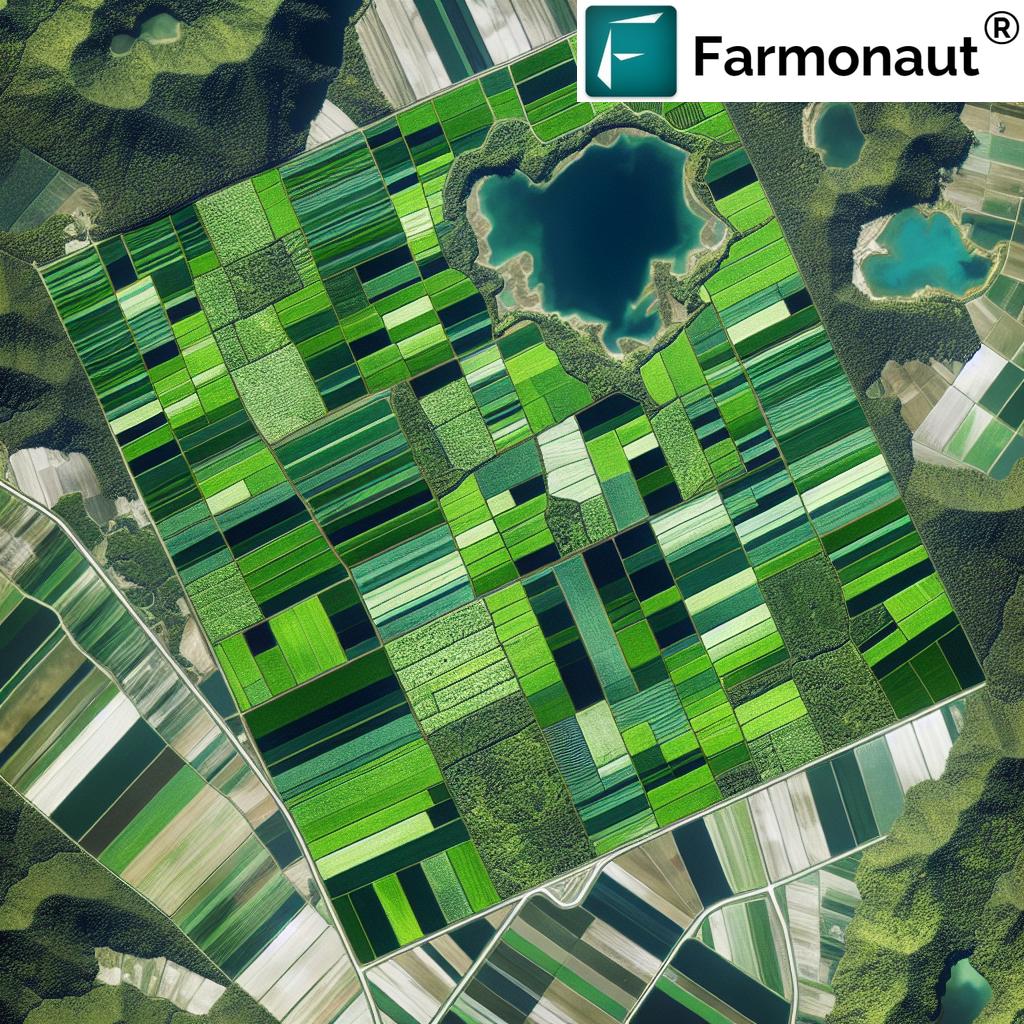
Imagine a modern ag farm with undulating terrain and a mix of soil types. A precision ag sprayer equipped with GPS mapping and NDVI sensors will record and analyze past yield data, current crop growth, and real-time moisture readings. The sprayer automatically adjusts its spray volumes as it moves, maximizing input efficiency in every square meter.
Benefits of Precision Sprayers:
- Reduce chemical input usage by up to 30%
- Improve water use by 15%
- Enhance overall yield and crop health
To further optimize sprayer management and field mapping, we recommend exploring advanced satellite-based tools like those provided on the Farmonaut Large-Scale Farm Management Suite, which integrates remote sensing data and analytics for enhanced decision-making at scale.
Trend #2: Autonomous & Drone Sprayers for Modern Agriculture
Harnessing Automation for Unmatched Efficiency
- Autonomous ground sprayers equipped with robotics, AI, and advanced GPS navigation enable unmanned operations in the field, significantly increasing efficiency while reducing labor costs and risks.
- Drone sprayers are also gaining momentum—especially for spot treatments, difficult terrains, hilly or uneven farmland, and rapid responses to localized pest infestations.
By 2026, the adoption of agricultural drones capable of precise crop spraying is predicted to reach nearly a third of new ag sprayer deployments—making aerial application the norm for many large-scale and high-value crop operations.
- Reduces time spent on labor-intensive spraying operations
- Spot-treats pest outbreaks quickly, preventing widespread crop loss
- Enhances safety—no direct human exposure to chemicals during application
- Ability to reach inaccessible areas, including steep slopes and wet fields
Curious about the role of AI and drones in future farming? Watch this deep dive:
Did you know? Some of the world’s largest rice and horticulture farms are already utilizing synchronized fleets of autonomous sprayers and AI-powered drones for targeted input delivery—even in the most challenging conditions!
Overcoming the Terrain Divide
Whether in hilly landscapes, paddy fields, or extensive orchards, drone sprayers can navigate otherwise inaccessible or unsafe terrains—reducing crop losses and delivering uniform protection for maximum yield.
Leveraging farm machinery fleets? Get advanced logistics and efficiency tools at the Farmonaut Fleet Management Hub. Benefit from real-time tracking, optimized routes, and maintenance alerts—empowering smarter agricultural spraying logistics for your operation.
Trend #3: Sustainability – Reducing Chemical Inputs and Environmental Impact
Sustainability is no longer a buzzword in modern agriculture—it’s a business imperative. With increasing regulatory pressure, consumer awareness, and resource constraints, farms must use ag sprayer systems that minimize chemical drift, runoff, and unintended impact on soil and water.
- Low-drift nozzle technologies and air-assisted booms reduce the chance of chemicals blowing off-target
- Real-time spray monitoring ensures only the intended crop areas are treated
- Integrated pest management (IPM) is now enabled by sprayers designed for bio-pesticides, biostimulants, and organic inputs
This trend ensures that crops receive the exact nutrients and protection they need, while the surrounding environment, watercourses, and beneficial insects remain safe.
Want to monitor and reduce your farm’s environmental impact even further? Discover the Farmonaut Carbon Footprinting Platform—track emissions, manage sustainable spraying practices, and support farm certification efforts.
Trend #4: AI-Driven Integrated Pest and Crop Health Management
Leveraging Artificial Intelligence for Smart, Targeted Spraying
By 2026, AI-powered analytics will play a leading role in agricultural sprayer systems, particularly for pest detection, disease prediction, and automated response. Machine vision systems and AI algorithms paired with satellite crop monitoring will:
- Rapidly identify pest outbreaks, disease spots, and nutrient deficiencies
- Send automated instructions to sprayers for spot application of inputs
- Reduce labor time in scouting and planning, enabling hands-off management
- Enhance crop health by responding before issues spread
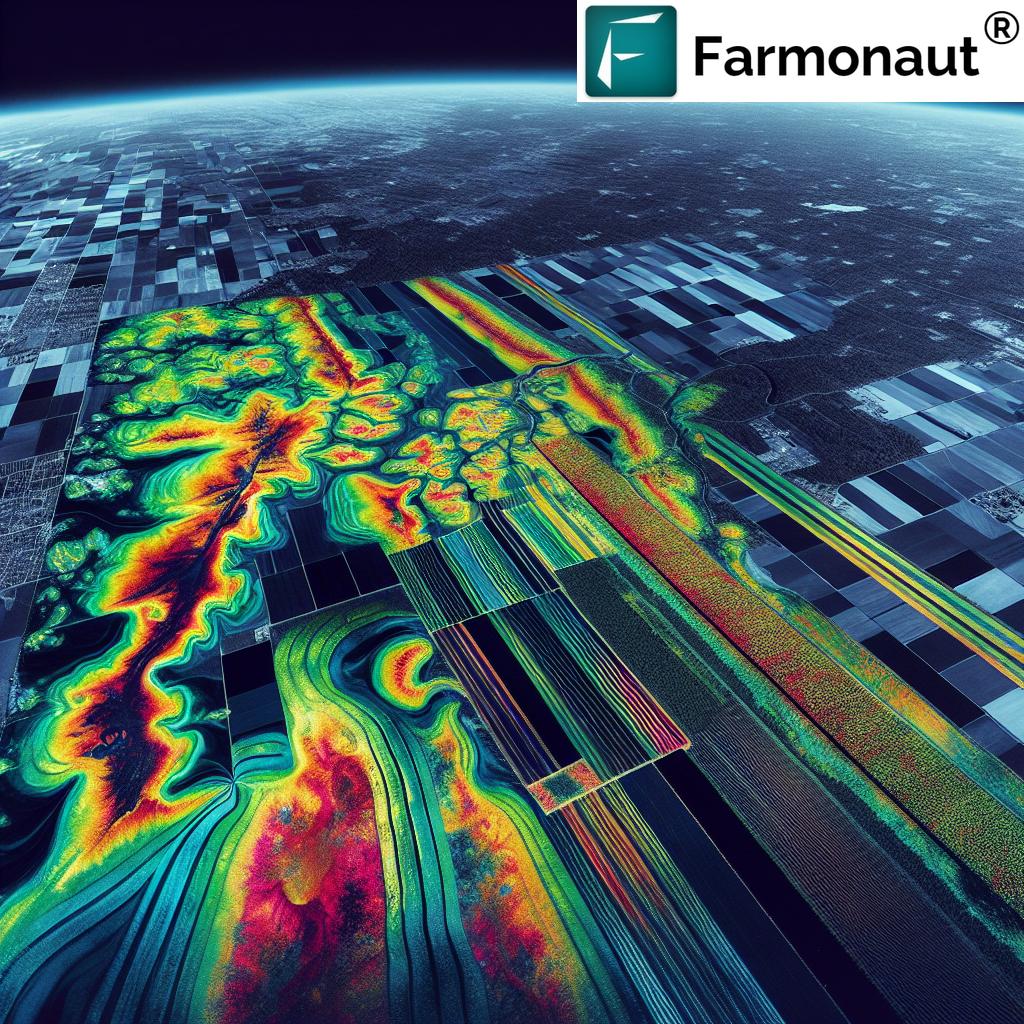
For example, multi-spectrum satellite data can indicate stress in a field. AI analyzes the affected areas and sends precise spraying routes or recommendations directly to the operator’s mobile device—allowing a targeted response instead of blanket chemical use across the entire farm.
Farmers looking to automate ag sprayer and input decisions will love the Farmonaut Jeevn AI Advisory Platform. Get real-time crop health reports, pest alerts, and weather-based input timing, maximizing the effectiveness of every spray operation.
Benefits of AI-Driven Pest Management for Ag Sprayers:
- Reduce unnecessary chemical use by 25% or more
- Decrease input costs and boost crop quality
- Enable “see-and-spray” approaches—where sprayers only apply product when sensors detect a relevant threat
- Help farmers quickly adapt to changing climate and pest pressure
Trend #5: Smart Diagnostics, Maintenance & Sprayer Longevity
Downtime during critical spraying operations costs farmers in lost yields and increased input waste. Leading ag sprayer systems for 2026 will be equipped with IoT sensors and predictive maintenance tools for:
- Remote diagnostics—catching early signs of wear, clogged nozzles, fluid leaks, or pump issues
- Automated maintenance alerts sent to your device, minimizing breakdowns and downtime
- Use of corrosion-resistant materials that extend lifespan even with heavy use
- Lighter, stronger parts improve machine efficiency and fuel consumption
This trend supports sustainability and cost control, as sprayers last longer, need fewer repairs, and waste fewer inputs due to faulty performance.
Pro tip: Modern fleets can be managed via advanced fleet tracking and maintenance systems, such as the Farmonaut Fleet Management Platform. Track usage, plan maintenance, and get alerts—all from one dashboard.
Trend #6: Labor Safety and User-Friendly Sprayers
Protecting the health and safety of farm labor is a growing legal and ethical responsibility. As agricultural sprayer use intensifies on larger and more diverse farms, expect even greater advancements in:
- Automated control panels that minimize direct contact with chemicals
- Cab air filtration & safety shields on self-propelled sprayers
- Simple, intuitive user interfaces—reducing operator errors
- Digital record-keeping for compliance and traceability
In 2026, AI-based monitoring platforms—like those available on Farmonaut’s Crop Plantation and Forest Advisory App—enable safe planning, remote oversight, and compliance reporting for everything from smallholder fields to large plantations.
Why this matters:
- Reduced labor exposure to hazardous products
- Minimized risk of chemical drift injuries or accidental overdose
- Consistent training through app-based interfaces and safety prompts
Trend #7: Interconnected Farm Management Ecosystems
The final megatrend in agricultural sprayer technology for 2026 is the rise of digitally-connected farm management systems:
- Ag sprayers are now connected with farm management software, APIs, and blockchain networks for real-time data syncing
- Sprayer performance, input records, and compliance are trackable across all devices, from office to field
- Spray events can be logged with location, input, quantity, and operator data, empowering better decision making
- Traceability—proof of sustainable/safe practices for higher-value markets or regulatory compliance
For ag businesses and cooperatives managing many teams, the future is integrated. Data from each sprayer unit flows into the farm’s cloud-based command center for instant reporting, resource allocation, and optimization.
Advanced traceability is now an expectation. Secure your supply chain and assure markets with the Farmonaut Blockchain Product Traceability Service—delivering transparent tracking from field application to export shipment.
Farmonaut Satellite & AI Subscriptions: Affordable, Scalable Solutions
Unlock the full potential of ag sprayer data and precision analytics with Farmonaut’s flexible subscription plans.
How Farmonaut’s Satellite & AI Solutions Empower Ag Sprayer Trends
At Farmonaut, our mission is to bridge the gap between cutting-edge technology and affordable access. We empower farmers and ag businesses worldwide with advanced satellite data, AI-driven insights, and blockchain traceability. Here’s how our solutions enhance each major ag sprayer trend:
-
Real-Time Crop Monitoring
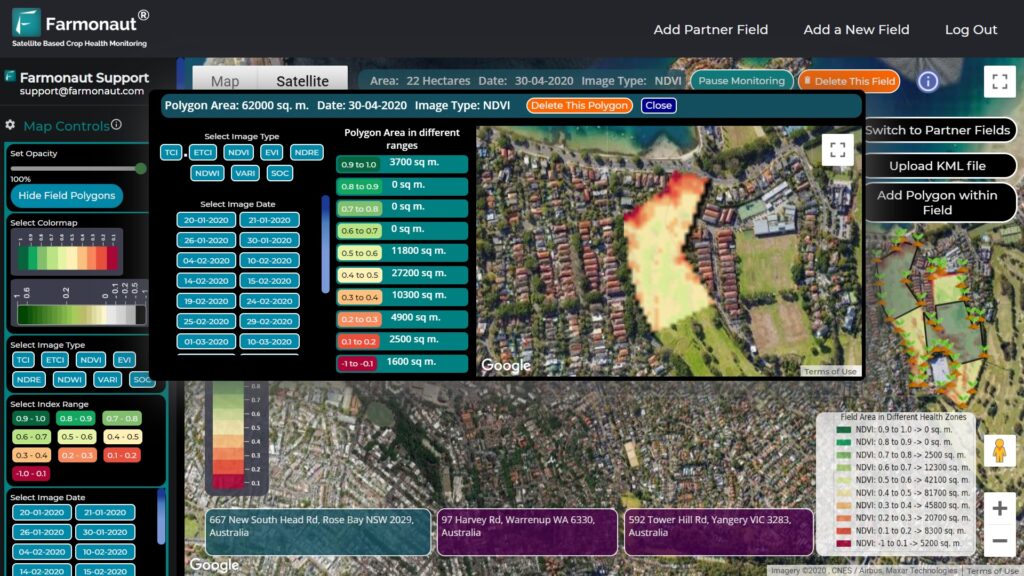
Using high-resolution satellite imagery, our platform provides NDVI crop health statistics, soil mapping, and input efficacy reports for smarter, targeted spraying.
Explore large-scale farm monitoring → -
AI-Based Pest & Disease Advisory
Our Jeevn AI system analyzes crop stress signals and local weather data, providing input timing guidance for sprayer schedules.
Try Jeevn AI for real-time notifications → -
Fleet & Resource Management
Optimize machinery routes, minimize delays, and ensure servicing to guarantee high sprayer uptime—cost savings and better productivity are automatic.
See fleet management tools → -
Traceability & Compliance
Record every spray event securely and transparently via blockchain, enhancing export market access and trust.
Learn about blockchain traceability → -
Environmental Impact Monitoring
Quantify your carbon footprint from spraying, fertilization, and transportation.
Access carbon management services → -
API Access for Developers
Seamlessly integrate our ag data with sprayer fleets and management dashboards.
Use the API | Developer Docs
Practical Integration: Making the Most of Modern Ag Sprayer Tech
How to Research, Select & Upgrade Your Ag Sprayer Solution for 2026
Step 1: Evaluate your primary crops and spraying requirements. Map your field terrain and note any accessibility challenges (e.g., hilly, uneven farmland).
Step 2: Choose a sprayer type—self-propelled, mounted, trailed, or drone—based on:
- Farm size and layout
- Chemicals and input types needed
- Frequency and timing of spray events
- Availability of skilled labor for operations
Step 3: Prioritize modern sprayer units that offer VRT, GPS integration, IoT monitoring, and data export functionality for compatibility with your farm management systems.
Step 4: Leverage analytics—monitor input efficacy, crop health, and carbon impact via Farmonaut’s carbon tracking platform or similar tools.
Step 5: Plan periodic upgrades and routine maintenance, using smart diagnostics to extend sprayer machine lifespan and minimize breakdowns—crucial during peak spray windows.
Step 6: Train your team! Use mobile-friendly tutorials and compliance checklists to ensure safe, effective, and legal operations.
Step 7: Invest in traceability solutions for records and compliance; learn more at Farmonaut’s blockchain traceability service.
Crop Loans & Insurance—New Possibilities:
With advanced ag sprayer tech and verifiable input records, securing crop loans and farm insurance is easier than ever. Explore our satellite-based loan and insurance verification—reduce fraud, speed up approvals, and provide evidence-based claims for loss events.
Frequently Asked Questions (FAQ)
A: Agricultural sprayers come in tractor-mounted, trailed, self-propelled, and drone-based units. The choice depends on farm size, terrain, crop type, and application needs.
Q2: How does variable rate technology (VRT) benefit farms?
A: VRT allows adjustment of input application in real time—reducing waste, lowering chemical costs, boosting crop health, and minimizing environmental contamination.
Q3: Are autonomous and drone sprayers safe and legal?
A: Yes, when operated according to regional guidelines and best safety practices. These systems reduce operator risk and are critical for difficult or dangerous terrains.
Q4: How can ag sprayer data be integrated with farm management software?
A: Many modern sprayers feature Bluetooth, Wi-Fi, or cloud APIs compatible with platforms like Farmonaut. This enables automated record-keeping, analytics, and compliance reporting.
Q5: How do environmental monitoring and traceability improve sustainability?
A: These tools quantify input efficiency, reduce off-target impacts, and provide transparent histories for end-to-end supply chain verification—vital for certification and export markets.
Conclusion: Future-Proofing Agriculture with Cutting-Edge Sprayers
As the world moves deeper into 2026, ag sprayers are no longer just machines—they are the nexus of data-driven farming, sustainability, and food security. Through precision input delivery, AI-powered insights, automation, and ecosystem integration, these systems are driving greater productivity, efficiency, and environmental stewardship.
For farmers navigating rising input costs, climate variability, and regulatory scrutiny, the modern agricultural sprayer—equipped with smart tech and real-time decision tools—offers a path toward resilience and thriving crop yields.
Whether you’re seeking to enhance environmental responsibility, optimize crop health, ensure food security, or simply gain more control over your operations, integrating the latest ag sprayer innovations is a strategic investment in the future.
- Ready to revolutionize your farm management experience? Get started today with Farmonaut’s satellite, AI, and blockchain solutions and discover the difference next-gen agricultural tech can make.
Stay ahead. Grow more. Grow smarter—with precision agricultural sprayer technology and Farmonaut’s powerful insight tools at your side.