Sustainable Water Management: 7 Powerful Strategies for 2026
“Precision irrigation can reduce water usage by up to 30% while maintaining crop yields in sustainable farming systems.”
Table of Contents
- Introduction: The Criticality of Sustainable Water Management
- Strategy 1: Precision Irrigation & Soil-Water Sensing
- Strategy 2: Climate-Adaptive Water Planning & Drought Resilience
- Strategy 3: Water Quality, Soil Health, & Nutrient Management
- Strategy 4: Watershed & Landscape-Scale Governance
- Strategy 5: Infrastructure & Innovation for Water Efficiency
- Strategy 6: Economic Resilience & Supportive Policy
- Strategy 7: Sector Case Examples — Agriculture, Forestry, and More
- Comparative Impact Table of Water Management Strategies
- Best Practices for Sustainable Water Management in 2026
- FAQ: Sustainable Water Management 2026
- Conclusion: Securing Water for the Future
Introduction: The Criticality of Sustainable Water Management
Water is the most critical input for agriculture and forestry, fundamentally shaping yields, resilience, and long-term productivity of land. In 2026, as global pressures such as urbanization, climate change, and competing industrial needs intensify, sustainable water management is no longer optional—it is mission-critical. Every farm, forest, watershed, and supply chain depends on water availability and quality to secure food and fiber while protecting ecosystems.
Rising drought risk, incidents of soil erosion due to erratic rainfall, and over-extraction of groundwater reveal the urgent need for new management systems that integrate precision irrigation, data-driven strategies, landscape stewardship, and resilient infrastructure. The integration of novel sensing technologies, AI, remote monitoring, and participatory governance will be pivotal in achieving adaptation and resource security through 2026 and beyond.
In this comprehensive guide, we present 7 powerful strategies for sustainable water management that are relevant for agriculture, forestry, and beyond. Explore innovative technologies, policy mechanisms, and best practices that together reduce water use, improve productivity, restore ecosystem health, and build resilience for the years ahead.



Strategy 1: Precision Irrigation & Soil-Water Sensing
The Power of Precision in Sustainable Water Management
Precision irrigation integrates advanced soil moisture probes, tensiometers, and weather data to align water application with crop demand. By continuously monitoring moisture levels and atmospheric conditions, growers reduce water and energy waste while maintaining optimal plant health.
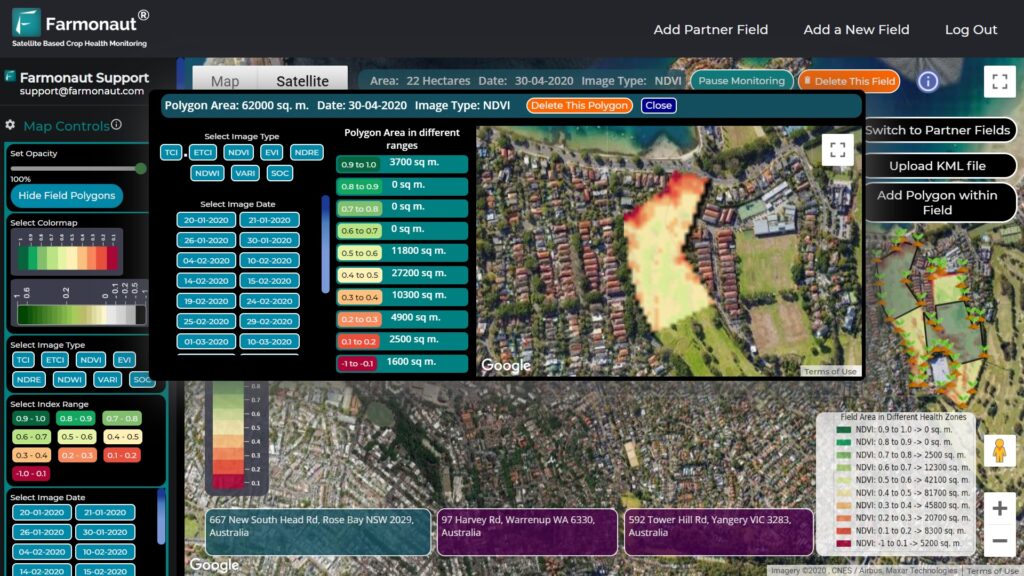
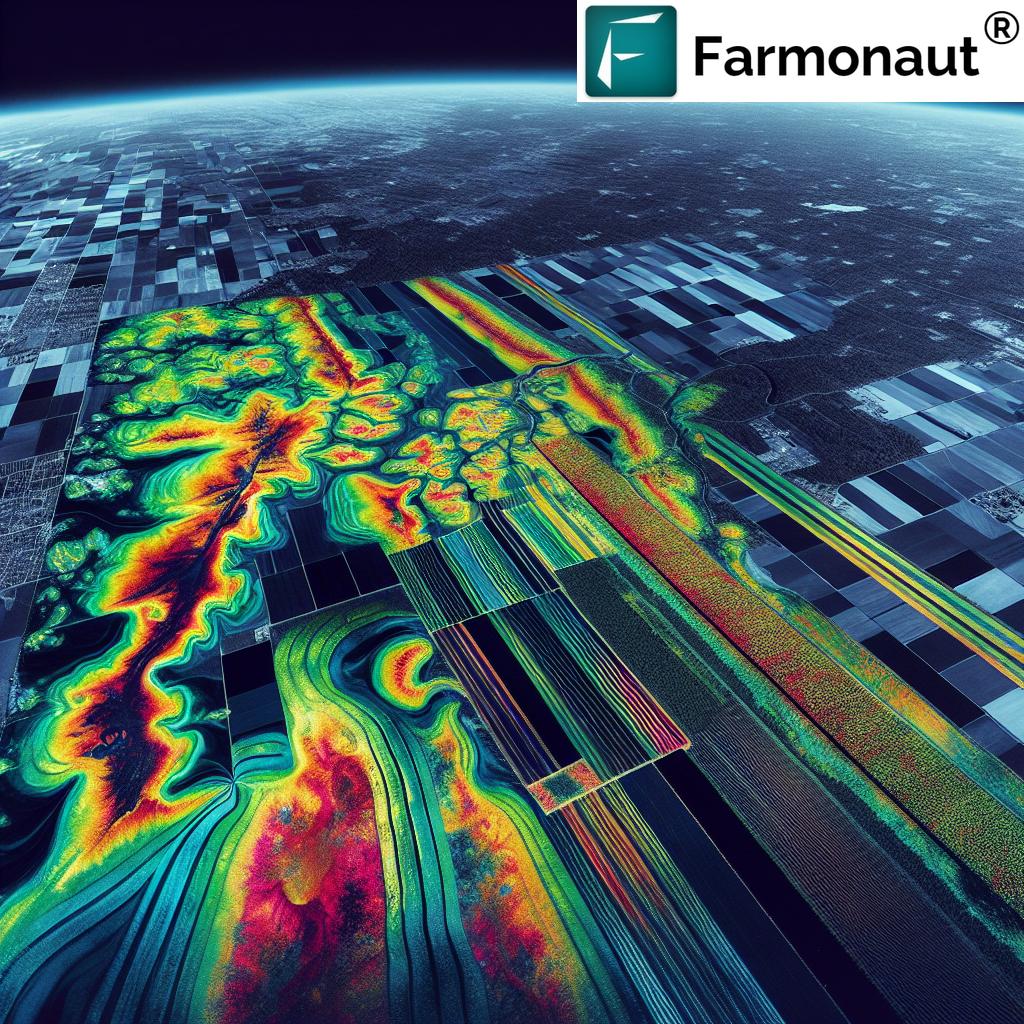
Additional remote sensing technologies—such as satellite imagery, AI-driven models, and drones—monitor canopy stress, evapotranspiration (ET), and spatial variability in soil moisture across large farms and forests. Variable-rate irrigation then applies water only where needed, minimizing runoff, preventing nutrient leaching, and reducing operational losses.
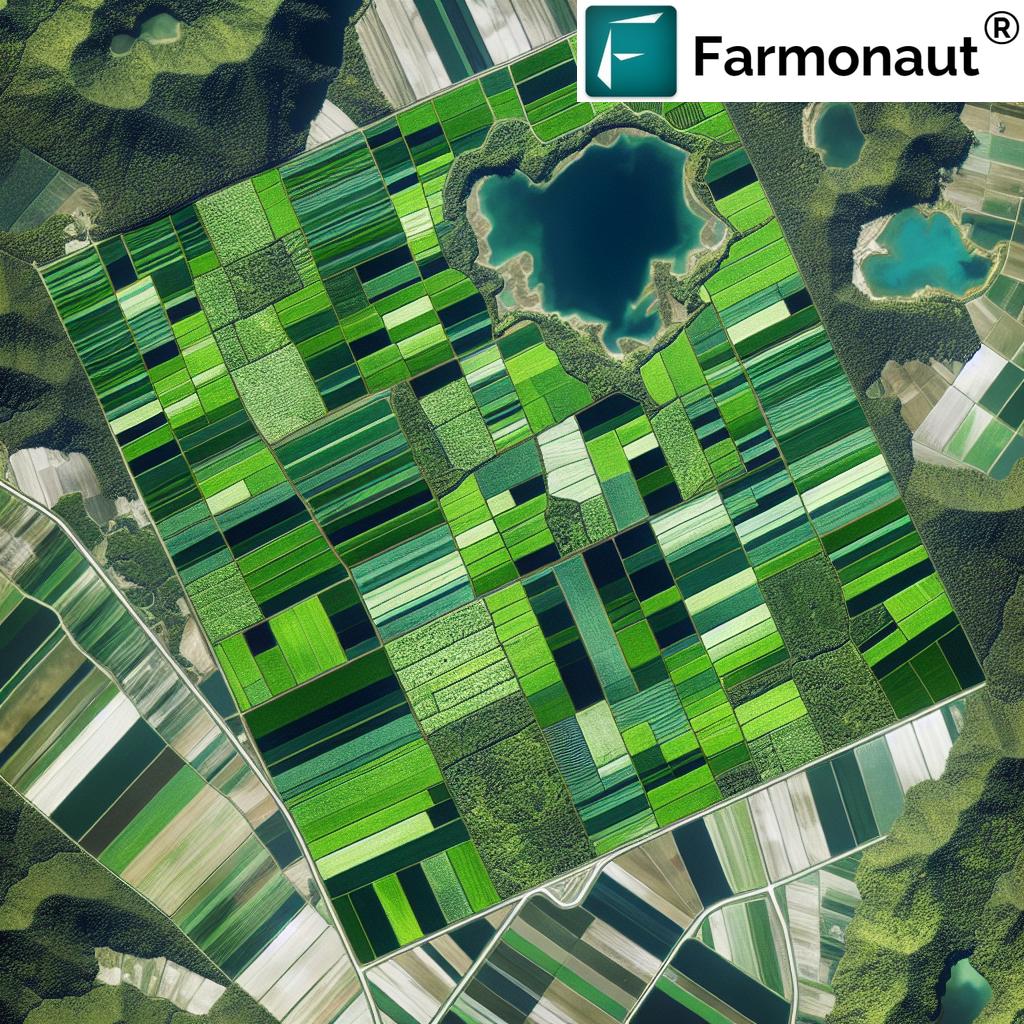
 Satellite imagery delivers field-level insights into crop health and water status
 AI-based advisory systems process data for accurate irrigation guidance and stress detection
 Soil moisture probes and tensiometers provide real-time feedback, ensuring water is only added when crop need is verified
Integrate weather and crop models via APIs such as the Farmonaut Satellite Weather API to optimize irrigation during each growth stage
Consistently, these strategies not only lower water use and energy consumption but also promote sustainable agriculture by enhancing productivity, resilience, and stewardship of the ecosystem.

- ✔ Key benefit: Reduced water and fertilizer waste, improved ecosystem stewardship
- 📊 Data insight: Field-specific monitoring allows adaptive scheduling & nutrient savings
- ⚠ Risk: Requires initial investment and upskilling for optimal sensor use
- 🌱 Benefit: Healthier crop canopies and improved yield stability
- 🔋 Energy savings: Precision irrigation often cuts pumping hours by 15–30%
Strategy 2: Climate-Adaptive Water Planning & Drought Resilience
Embracing Variability with Proactive Assessment
2026 brings unpredictable rainfall, hotter climates, and a heightened risk of droughts and water scarcity, especially in vulnerable regions. Climate-adaptive water planning leverages the latest forecasting tools and risk assessment models to inform crop calendars, select drought-tolerant varieties, and schedule planting or harvesting activities when water is available.
On-farm rainwater harvesting and storage infrastructure buffer supply variability, making water available during critical crop growth stages.
Forestry projects emphasize maintaining streamflow in dry seasons, crucial for seedling establishment, reforestation, and afforestation projects aimed at ecosystem restoration.
With AI-powered advisory platforms and real-time weather analytics (see Farmonaut Large Scale Farm Management), growers can respond swiftly to weather variability, align land use with water availability, and improve their resilience to climate extremes.

Climate-adaptive water risk assessment will drive value in geospatial and mining investment portfolios. Demand is rising for actionable satellite data and AI-based risk prediction to inform land restoration, groundwater management, and compliance strategies.
- Map historical water inflows and outflows for each land unit
- Use drought forecasting models to guide seasonal crop planning
- Select crop varieties with proven drought tolerance
- Deploy on-farm rainwater capture and storage
- Establish emergency irrigation for reforestation seedling phases

Strategy 3: Water Quality, Soil Health, & Nutrient Management
Preserving Soil & Water Through Smart Management
Soil health and water quality are deeply interconnected. Excess irrigation can cause erosion, degrade soil structure, and lead to runoff that carries fertilizer and other pollutants downstream. This not only impacts on-farm productivity but also threatens ecosystem health along fields, forest edges, rivers, and aquifers.
Emerging best practices for 2026 include:
- Integrated nutrient-water management: Synchronized application of irrigation and fertilizer to reduce nitrate leaching
- Deployment of buffer zones and terracing: Physical barriers that trap sediment and filter pollutants before they reach waterways
- Expanded cover cropping: Living plant cover along field and forest boundaries enhances infiltration and preserves micro-biodiversity
Platforms such as Farmonaut’s Carbon Footprinting add value here—by tracking land management, nutrient cycling, and carbon sequestration, these solutions help farmers and foresters document improvements in ecosystem health and access rewards for sustainable stewardship.

Neglecting buffer zones, synchronized application, or erosion control during major rain events frequently leads to costly water quality violations and shortens field productivity lifespan.
- ✔ Key benefit: Reduced loss of topsoil & nutrients
- 📊 Data insight: Farms with cover cropping lose 20% less nitrogen during storms
- ⚠ Risk: Over-irrigation can cause deep leaching of nutrients and degrade aquifers
- 🌳 Biodiversity: Buffer zones double as wildlife habitats
- 💧 Clean water: Clearer streams mean lower filtration costs downstream
“Data-driven water management strategies are projected to increase farm productivity by 20% by 2025.”
Strategy 4: Watershed & Landscape-Scale Governance
Collaborative Management: Beyond Individual Fields
The most resilient water management systems increasingly operate at catchment or watershed scales, recognizing that river basins cross property and jurisdiction lines. This means coordination across farmers, foresters, industry, and municipalities—balancing human needs, ecosystem health, and equitable access in each basin.
Key approaches shaping water governance in 2026:
- Payment for Ecosystem Services (PES): Rewarding land stewards for reforestation, wetland restoration, and waterway protection that stabilize basins and improve groundwater recharge
- Data sharing platforms: Transparent collection and exchange of water use data fosters trust and enables participatory governance
- Participatory management plans: Inclusive projects for setting water-use limits, sharing infrastructure costs, and tracking ecological indicators
Smart, scalable tools—like those available in Farmonaut’s Blockchain Traceability Solutions—enhance transparency, auditability, and compliance, especially where food and fiber supply chains must verify water stewardship claims.

Water governance at the watershed level amplifies ecosystem resilience and supports sustainable agriculture by ensuring entire catchments are managed for recharge, quality, and shared benefit.
- ✔ Key benefit: Improved drought resilience and shared water security
- 📊 Data insight: Transparent sharing can reduce allocation disputes by 40%
- ⚠ Risk: Requires robust frameworks for coordination—ad hoc efforts often fail
- 💹 Economic impact: PES programs can offset compliance and conservation costs
- 🌎 Ecosystem gain: Large-scale reforestation boosts regional biodiversity
Strategy 5: Infrastructure & Innovation for Water Efficiency
Modernizing On-Farm & Regional Water Use
Modern, efficient irrigation infrastructure is central to sustainable water management in 2026. Synergistic upgrades—such as:
- Low-pressure, high-efficiency systems: Drip and micro-sprinkler systems lower evaporation losses by delivering water right where and when it’s needed
- Solar-powered pumps: Reduce carbon footprint and operating costs
- Integrated agroforestry & silvopasture: More trees and perennials improve soil water retention, buffer against erosion, and diversify income streams
Remote operational tools (such as the Farmonaut Fleet Management suite) optimize irrigation hardware, monitor pump efficiency, and keep maintenance timely, ensuring infrastructure investments deliver maximum resilience and return on investment.
Integrating real-time satellite monitoring and predictive maintenance tools helps avoid costly infrastructure failures during peak demand.
- ✔ Key benefit: Lowered water and energy bills
- 📊 Data insight: Drip systems can reduce water use in hot regions by up to 50%
- ⚠ Risk: Without regular maintenance, even advanced systems lose efficiency
- 🔆 Sustainable energy: Solar reduces both emissions and grid dependence
- 🌳 Resilience: Trees and diverse crops buffer against seasonal water shocks

Strategy 6: Economic Resilience & Supportive Policy
Building Incentives & Safety Nets
Sustainable water management is only achievable if economic resilience and supportive policy frameworks are in place. This ensures smallholders, large enterprises, and landscape managers can consistently invest in—and benefit from—advanced technologies, infrastructure upgrades, and risk management tools.
Elements shaping this landscape:
- Access to affordable irrigation equipment: Credit lines, financing, and maintenance support empower small and medium-scale farmers to adopt water-efficient tools
- Incentives for sustainable practices: Government policies and donor programs increasingly reward investments that reduce water use, recharge groundwater, or install efficient infrastructure
- Risk transfer tools: Index insurance and satellite-based verification (Farmonaut Crop Loan & Insurance Tools) help growers cope with rainfall variability, droughts, and related crop losses
The most successful 2026 systems blend science-based incentives, rapid payout insurance, and transparent reporting—enabled by geospatial monitoring and digital ledger technologies for traceability and compliance.
Policy and financial support that leverage satellite verification and transparent metrics can unlock new levels of resilience for rural and peri-urban producers in drought-prone regions.
- ✔ Key benefit: Faster adoption of sustainable tech by small and mid-sized operations
- 📊 Data insight: Digital insurance can reduce payout times by 80% after weather events
- ⚠ Risk: Complexity in policy design means local context must shape interventions
- 🗃️ Transparency: Blockchain guarantees compliance in funding and reporting
- 💸 Economic uplift: Resilient farms mean stable incomes and local food security
Farmonaut’s modular, subscription-based model enables everyone—from small farmers to large enterprises and institutions—to access data-driven sustainability tools in a cost-effective way. Manage your operations remotely via web, iOS, and Android apps, or integrate our insights directly into your digital infrastructure with our API Developer Docs.
Strategy 7: Sector Case Examples — Agriculture, Forestry, and More
Applied Solutions for Real-World Impact
Sustainable water management integrates unique strategies tailored to sectoral needs:
-
Agriculture:
- Mulched, drip-irrigated vegetable systems in arid regions can lower water use by up to 40%, with precision scheduling aligning water availability to critical crop stages
-
Forestry:
- Assisted migration of drought-tolerant species and site-specific irrigation during seedling establishment boosts survival and restoration outcomes in reforestation projects
-
Horticulture and Perennial Crops:
- Subsurface irrigation keeps roots moist with minimal evaporation, supports high-value crops, and minimizes runoff
-
Mining Reclamation:
- Water-efficient revegetation practices stabilize soils and reduce sediment runoff, essential for restoring ecosystem function in mining-impacted landscapes
Actionable insights from Farmonaut’s Crop Plantation and Forest Advisory Services enable effective land management and guidance across all these sectors.
Always start with a water balance: clearly map all inflows, outflows, losses, and storage across your operation. This critical first step enables targeted investments and ensures compliance with regional water frameworks.
- ✔ Key benefit: Tailored strategies fit sector needs for maximum water savings and yield
- 📊 Data insight: Subsurface irrigation delivers stable supply in high-value orchard crops
- ⚠ Risk: Sectoral needs are dynamic—regularly review and adapt approaches
- 🌎 Global relevance: Approaches adapt from Peru to Malawi to France (see videos above)
- 🔄 Continuous improvement: Monitor, report, and refine systems annually
Comparative Impact Table of Water Management Strategies
| Strategy Name | Description | Estimated Water Savings (%) | Estimated Crop Yield Increase (%) | Ecosystem Health Impact | Implementation Complexity |
|---|---|---|---|---|---|
| Precision Irrigation & Soil-Water Sensing | Data-driven irrigation using probes, sensors, and remote platforms for field monitoring | 20-30% | 12-22% | High | Medium |
| Climate-Adaptive Water Planning | Drought forecasting, crop scheduling, rainwater harvesting, buffer storage | 10-25% | 8-14% | Medium-High | Medium |
| Water Quality, Soil Health & Nutrient Management | Buffer zones, synchronized fertilizer use, erosion control, cover crops | 10-17% | 7-12% | High | Low-Medium |
| Watershed & Landscape Governance | Collaborative, basin-scale allocation and ecosystem incentives (PES, data sharing) | 15-25% | 10-18% | High | High |
| Infrastructure & Innovation | Drip, micro-sprinkler, solar-powered pumps, integrated land management | 20-45% | 15-22% | Medium-High | Medium |
| Economic Resilience & Policy | Financing, insurance, incentives for water-saving practices and tech | 8-22% | 7-15% | Medium | Medium |
| Sector-specific Applications | Tailored solutions: mulched irrigation in veggies, subsurface in orchards, reclamation in mining | 15-35% | 10-18% | High | Low-Medium |
Best Practices for Sustainable Water Management in 2026
Success in the coming decade requires blending advanced technologies, collaborative action, and agronomic adaptation. Key best practices:
- 📍 Map your water balance: Track every input, output, and storage variable across the operation
- 🌐 Deploy scalable precision irrigation: Choose platforms with sensor integration, automation, and remote monitoring capabilities
- 🌾 Align crops and agronomy with hydrology: Adjust crop selection and planting windows to local climate and forecasted water availability
- 🛡️ Protect water quality at the source: Erosion control, buffer zoning, and nutrient synchronization preserve resources for future use
- 🤝 Engage your community and watershed: Participate in basin-wide plans, data sharing, and apply for incentive funding
- 📈 Measure, report, and improve: Use eco-indicators, yield statistics, and per-unit water use metrics to guide adaptation and access rewards
FAQ: Sustainable Water Management 2026
What is precision irrigation, and why is it critical?
Precision irrigation uses real-time data from soil moisture probes, weather analytics, and remote sensing to apply water exactly where and when crops need it. This reduces waste, saves energy, and optimizes yield—making it a critical pillar of sustainable agriculture.
How does data-driven management improve resilience?
Data-driven management enables timely, science-based decisions in response to climate variability, droughts, or system failures. By integrating remote sensing, in-field sensors, and AI analytics, farms and forests build resilience and adaptability across operations.
What is watershed governance, and why does it matter?
Watershed governance coordinates water management at the catchment or basin level. Inclusive governance ensures fair allocation, ecosystem health, and shared long-term benefits for all water users—from farmers to municipalities to industries.
How do I access affordable, advanced monitoring tools?
Platforms such as Farmonaut democratize access to satellite-driven insights, offering subscription-based solutions for farms, businesses, governments, and financial institutions. APIs and mobile apps enable customizable monitoring and rapid scaling.
How do I get started with sustainable water management?
Begin with a thorough water balance assessment, then prioritize deployment of precision irrigation or climate-adaptive planning tailored to your sector and location. Leverage remote monitoring, join watershed initiatives, and seek out policy incentives and financing tailored for sustainability.
Conclusion: Securing Water for the Future
The mission to secure food, fiber, and functioning ecosystems depends on our transformation from conventional to data-driven, resilient, and sustainable water management. As we cross into 2026 and beyond, every farm, forest, and watershed can harness precision irrigation, advanced sensing, climate-adaptive planning, innovative governance, and supportive policy to reduce water use, improve productivity, and restore ecological health.
At Farmonaut, we are dedicated to making affordable, advanced satellite technology and actionable data accessible to everyone—from individual farmers to large agribusinesses and government planners. Our commitment supports measurable improvements in yield, resilience, and environmental stewardship—helping to build a future where water cycles are sustained, communities thrive, and agriculture and forestry safeguard the ecosystem services upon which all life depends.
Explore our full array of products and documentation: Large Scale Farm Management | Carbon Footprinting | Blockchain Traceability | Crop Loan & Insurance | Fleet Management
API Access for Developers: Farmonaut Satellite Weather API | Developer Docs
Together, let’s enable smarter, sustainable water management—so water remains a source of resilience, productivity, and life, now and into the future.