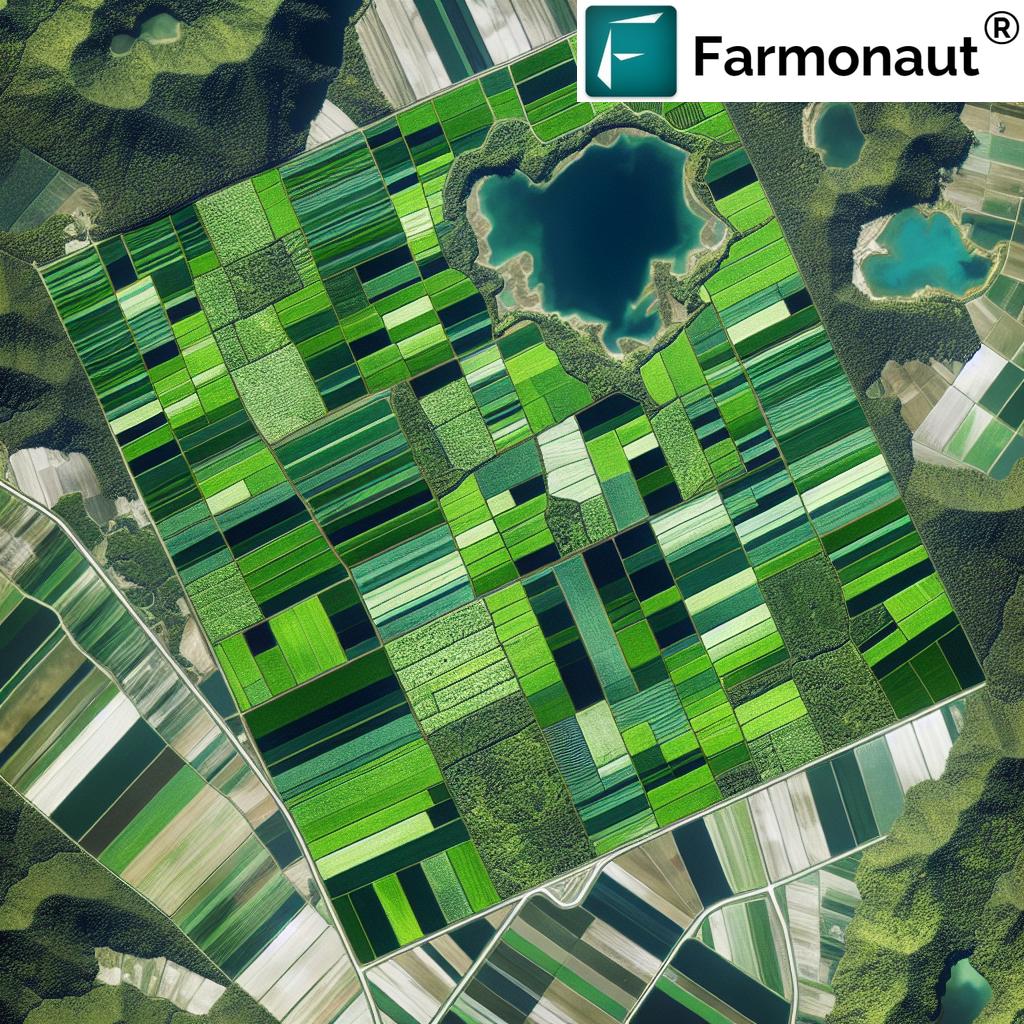
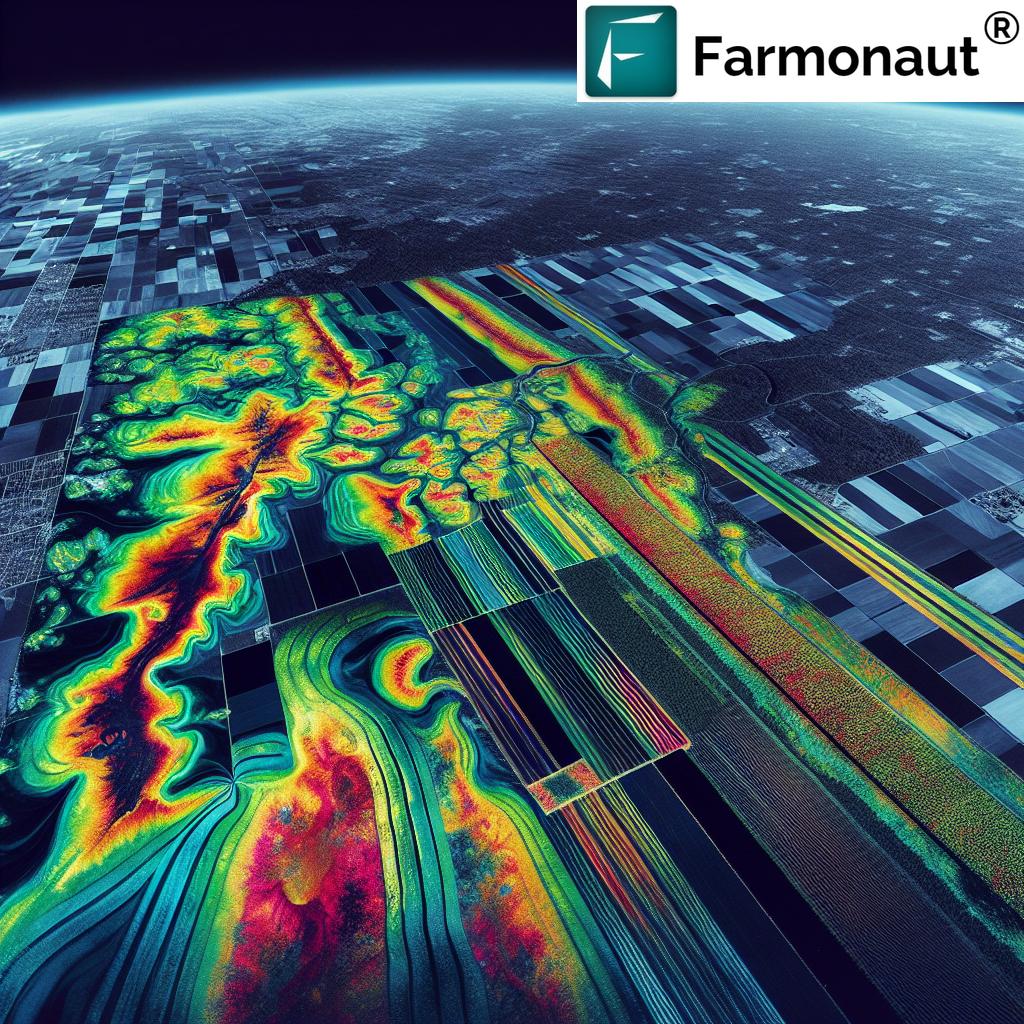
Sustainable Soil Management: 7 Powerful Practices for 2026
Table of Contents
- Introduction: The Cornerstone of Resilient Agriculture
- Key Principles of Sustainable Soil Management in 2026
- The 7 Powerful Sustainable Soil Management Practices
- Comparative Summary Table
- Impact Across Agriculture, Forestry & Land Reclamation
- Measurement, Monitoring & Outcome Indicators
- Farmonaut’s Role in Supporting Sustainable Soil Management
- FAQs: Sustainable Soil Management 2026
- Conclusion: Securing Resilient Productivity for 2026 & Beyond
Introduction: The Cornerstone of Resilient Agriculture
As we approach 2026, sustainable soil management (SSM) stands at the heart of resilient agriculture, forestry, and agroforestry. Soil is not just a growth medium—it’s a living, dynamic system teeming with microbial life, nutrients, and organic matter essential for sustaining food production and environmental stability. With climate variability intensifying and global food demand rising, securing long-term soil health has never been more urgent.
Why prioritize soil management in 2026? Because the impact of healthy soils ripples across farm yields, forestry sapling establishment, biodiversity, water systems, and even our climate resilience. Smart, sustainable nutrient cycling, adopting the latest precision agriculture tools, and introducing regenerative practices will define the farms and forests of the future—from large-scale plains to reforestation nurseries and post-mining landscapes.
- ✔ Soil is a cornerstone for resilient farming systems
- 📊 Healthy soils boost productivity and reduce input costs
- ⚠ Degraded soils threaten yields, stability, and ecosystem services
- 🌱 Integrating regenerative rotations, cover crops, and biochar restores balance
- 🛰 Modern sensing and monitoring optimize soil health metrics
Key Principles of Sustainable Soil Management in 2026
Sustainable soil management (SSM) blends biological, chemical, and physical practices to ensure productivity, conserve resources, and minimize environmental impact. In 2026, the most impactful approaches are coherent systems that combine new technology, scientific rigor, and on-the-ground stewardship. Let’s break down the foundation:
1. Maintain Soil Structure & Biodiversity
Protecting soil organic matter (SOM) is critical, as it preserves aggregation, porosity, water retention, and nutrient cycling. Diverse microbial communities fuel these processes. Minimizing disturbance through reduced tillage, rotating crops, and using perennial vegetative cover supports resilient soils.
2. Balance Nutrients Efficiently
Using soil testing-guided nutrient budgets prevents both depletion and excess. Integrate slow-release amendments, green manures, and mineral-rich organic matter to reduce leaching/runoff and keep available nutrients in the root zone.
3. Enhance Water Conservation & Management
Emphasize moisture-retention using mulches, cover crops, biochar, conservation tillage while improving drainage to mitigate drought and waterlogging. Smart water stewardship builds resilience to climate swings.
4. Reduce Erosion and Compaction
Vegetative corridors, contour farming, windbreaks, and controlled traffic farming help establish stable, uncompacted root zones and preserve precious topsoil.
5. Promote Carbon Sequestration
Actively incorporate agroforestry, cover crops, and robust soil carbon programs to meet both productivity and climate goals.
SSM in 2026 is not just about reducing chemical inputs; it’s about enriching soil life, optimizing water cycles, and building climate resilience for farming, forestry, and land reclamation alike.
The 7 Powerful Sustainable Soil Management Practices for 2026
Next, let’s dive into the seven transformative practices at the heart of sustainable soil management and nutrient optimization in 2026. Each technique integrates core principles with actionable strategies that bolster soil health, enhance water retention, support biodiversity, and drive long-term productivity.

1. Precision Soil Sensing and Remote Monitoring
Deploying precision sensors, proximal probes, and remote-sensing tools transforms the efficiency of modern soil management. These devices can map spatial variability in soil moisture, salinity, and nutrient status, allowing variable-rate input applications closely matched to actual field conditions.
- 🛰 Optimize input applications based on real-time soil health data
- ✔ Reduce costs and environmental impact by only applying what’s needed
- 📊 Data-driven budgets for nutrients and water management strategies
Satellite providers like Farmonaut help streamline monitoring by integrating satellite imagery, drone data, and AI analytics. These deliver actionable, field-level insights for better operational decision-making, whether in row crops, forestry, or reclamation projects.

2. Regenerative Crop Rotations
Designing regenerative rotations balances soil organic matter (SOM), disrupts pest cycles, and supports diverse biological communities. Rotating with deep-rooted legumes or cover crops during fallow periods boosts nitrogen fixation and organic matter, enhancing future crop nutrition.
- 🌱 Break up pest/disease cycles for healthier soils
- 🟢 Incorporate cover crops and legumes to feed microbial biomass and improve structure
- 🔄 Diversify nutrient uptake patterns, reduce erosion, and optimize cycling
Strategic rotation planning, informed by soil sensors and long-term observational data, maximizes SOM gains and resiliency against climate shocks.

3. Organic and Mineral Amendments
Applying organic amendments—like well-composted manure, biochar, and green manures—improves soil organic matter, cation exchange capacity, and microbial activity. Mineral supplements, including lime and gypsum, are adjusted based on soil pH and texture to balance nutrient availability.
- 🌾 Use biochar for carbon sequestration and increased moisture retention
- 🟤 Compost and green manures elevate biological activity, maintain structure
- 🧪 Correct pH imbalances to support nutrient cycling
Farmonaut’s Carbon Footprinting Solution uses satellite data and AI to quantify SOC and carbon sequestration impact in fields, helping inform amendment strategies while supporting climate objectives.

4. Cover Crops and Green Manures
Maintaining year-round ground cover with cover crops and green manures is pivotal.
These plants:
- 🛡 Reduce erosion from rain, wind, and surface runoff
- 🟢 Support beneficial insects and soil biodiversity
- 🌡 Buffer soil temperature and moisture fluctuations
- 💚 Add organic matter (SOM) on decomposition, supporting long-term fertility
For forestry and nursery systems, ground cover minimizes compaction and supports sapling resilience.
Choose species (e.g., legumes for N-fixation) tailored to site nutrient needs and climate.
🌱 Quick Visual: Top Cover Crop Advantages
- ✅ Erosion Control
- 🌾 Improved Soil Structure
- 🔬 Nutrient Cycling & N-fixation
- 💧 Enhanced Water Infiltration
- 🦋 Increase in Biodiversity

5. Integrated Pest & Disease Risk Reduction
Healthy, biologically active soils naturally suppress many pathogens and reduce weed pressure. By combining biological controls, crop rotation, planting disease-resistant varieties, and practicing wise chemical stewardship, agricultural and forestry operations can minimize residues while sustaining yields.
- 🦠 Support beneficial microbes that outcompete soil-borne pests
- 🛡 Use disease-resistant crops/trees for built-in protection
- 🔄 Rotate crops and integrate plant diversity for healthier soil cycles
Farmonaut’s Traceability Tools
harness blockchain to provide end-to-end transparency, supporting sustainable chemical management and compliance for agricultural and forestry produce.
Relying on repeated, single-crop systems can deplete SOM, encourage pests, and reduce resilience—stressing the need for more integrated, diverse approaches.

6. Water Stewardship in Agriculture & Forestry
Soil water conservation is a linchpin for stabilizing yields, especially as droughts and erratic rainfall become more common. Practices include:
- 💧 Mulching and cover crops for evaporation control
- ⚒ Rainwater harvesting and improved drainage for field/nursery resilience
- 🌱 Soil structure improvements for infiltration and retention
Advanced satellite moisture data (see Farmonaut’s API solutions) allows remote tracking of soil water status, making it easier for farms and forestry nurseries to plan irrigation, mitigate waterlogging, and react quickly to changing conditions.
7. Soil Health Monitoring & Adaptive Management Systems
Embedding long-term soil health metrics throughout agricultural, forestry, and reclamation systems guides adaptive management and continuous improvement.
- 🟤 SOC (Soil Organic Carbon), pH, macronutrients, micronutrients
- 🐛 Biological activity: earthworm abundance, microbial biomass, aggregate stability
- ⚖ Physical measures: bulk density, infiltration rate, compaction depth
- 📉 Erosion indicators: sediment loss, line transects, visual mapping
Farmonaut’s Large-scale Farm Management Platform unifies these data layers, supporting managers in real-time and facilitating compliance with sustainability standards for institutional programs and carbon markets.
Comparative Summary Table: 7 Powerful Sustainable Soil Practices
| Practice Name | Description | Est. Soil Health (% Increase) |
Reduction in Chemical Input (%) |
Impact on Water Retention (%) |
Long-term Cost Savings (Est. %) |
|---|---|---|---|---|---|
| Precision Soil Sensing | Remote, in-field sensors and AI imagery for tailored inputs | 15–20% | 20–30% | 10–15% | 15–25% |
| Regenerative Rotations | Adaptive multi-crop cycles with legumes and deep-rooted plants | 18–22% | 10–25% | 10–18% | 10–20% |
| Organic/Mineral Amendments | Compost, manure, biochar, lime/gypsum based on site needs | 20–28% | 25–35% | 12–24% | 15–32% |
| Cover Crops & Green Manures | Year-round vegetative cover, targeted for nutrient cycling | 23–30% | 22–28% | 15–25% | 18–27% |
| Pest & Disease Risk Reduction | Biological controls, crop/variety selection, responsible chemical use | 12–18% | 30–45% | 6–10% | 18–20% |
| Water Stewardship | Moisture conservation (mulches, tillage, rainwater), improved drainage | 13–18% | 16–28% | 25–40% | 20–35% |
| Soil Health Monitoring Systems | Continuous multi-metric tracking of soil status, adaptive management | 16–22% | 20–33% | 8–14% | 12–25% |
Data-driven soil management, enabled by AI, sensors, and satellite platforms, is opening new markets in carbon trading, traceability, and sustainability-linked agri-finance.
Impact Across Agriculture, Forestry & Land Reclamation
The adoption of sustainable soil management practices delivers optimized soil health, economic benefits, and ecosystem resilience across agriculture, forestry, and land reclamation sectors:
Agriculture
- ✔ Increased yields and crop quality due to stable nutrient availability and moisture retention
- 📊 Lower input costs by minimizing excess fertilizer, pesticides, and irrigation
- ⚠ Improved resilience to drought and erratic climate events
Forestry and Agroforestry
- 🌳 Enhanced sapling establishment and accelerated tree growth
- 💚 Fostering biodiversity at ground and canopy levels for ecosystem stability
- ⚖ Improved resistance to pests and diseases with healthy soils
Mining & Post-Extraction Landscapes
- ⛏ Accelerated soil reclamation for post-mining productivity
- 🌱 Application of organic amendments and microbial inoculants to jumpstart recovery
- 🛡 Erosion control and ecosystem service restoration
🔍 Sectors with Measurable SSM Gains
- 🌾 Agriculture: Yield security, cost reduction
- 🌳 Forestry/Agroforestry: Biodiversity, carbon goals
- ⛏ Mining Reclamation: Productivity, erosion reduction
Emerging policy and incentive programs—including cover crop subsidies, carbon credit schemes, and compliance-linked agri-loans—are catalyzing rapid adoption of sustainable soil management in both developed and emerging markets.
Measurement, Monitoring & Outcome Indicators
Consistent monitoring and adaptive feedback are essential for effective sustainable soil management in 2026. Here are the leading metrics and indicators that successful managers and policy-makers track:
Key Soil Health Metrics
- 🟤 Soil Organic Carbon (SOC) stock — tracks sequestration efforts and long-term fertility
- 👩💻 Regular soil testing: pH, phosphorus (P), potassium (K), micronutrients
- 🔬 Microbial biomass—direct indicator of biological activity
- ⚠ Bulk density, infiltration rate, compaction depth, aggregate stability
- ⏳ Erosion indicators: sediment/soil loss, bare ground area
Outcomes: Economic & Environmental
- 📉 Input costs saved: fertilizer, irrigation, chemical reduction
- 📈 Yield stability over multi-year production cycles
- 🌎 Revenue from carbon credits, regenerative agri-tourism
Managers can enhance monitoring with Farmonaut’s Fleet Management tools, unifying data logistics for equipment, field operations, and soil health evaluation.
Regular monitoring and iterative management, especially when using remote sensing and AI platforms, can double the rate of soil organic matter (SOM) recovery compared to traditional approaches.
Farmonaut’s Role in Sustainable Soil and Resource Management
At Farmonaut, we believe that sustainable soil management is a mission critical for the viability of global agriculture, forestry, and mining reclamation in 2026 and beyond. Our satellite-powered platforms and AI-driven insights bridge the information gap by delivering affordable, actionable, and precise data tools to farmers, corporations, and government decision-makers.
- 🛰 Multispectral satellite imagery for tracking crop, soil, and vegetation health
- 🧠 Jeevn AI Advisory for tailored, real-time recommendations (soil, weather, risk)
- 💻 API and App integration (API Docs) to support remote management
- ⛓ Blockchain-based traceability ensures supply chain transparency for produce and soil amendments
- 🚜 Fleet and Resource Management platforms for logistics optimization
Our mission is to democratize access to precision, sustainability-focused technology—empowering users to reduce costs, enhance yields, and build resilience in the face of changing climates and market demands.



For forestry and large plantation management, our Crop & Plantation Advisory Tools provide recommendations for nursery protocols, species selection, and soil conservation alongside advanced spatial analysis.
Integrate satellite-powered platforms with on-ground monitoring for a continuous, data-rich SSM strategy—scaling from individual farmers to corporate forest managers and state regulators.
- 🔹 Real-time soil health dashboards guide input decisions
- 🔹 Remote and API-enabled solutions support large, dispersed teams
- 🔹 Affordable access enables both smallholders and large enterprises
- 🔹 Transparency tools meet buyer and policy traceability demands
- 🔹 Compliance support for carbon credit, loan, and insurance applications
FAQs: Sustainable Soil Management for 2026
Q1. What is sustainable soil management (SSM)?
Sustainable soil management refers to the combination of practices that sustain soil productivity, reduce environmental impact, and conserve resources over the long term. It integrates biological, chemical, and physical strategies, such as cover crops, nutrient optimization, and carbon sequestration.
Q2. How does SSM improve farming and forestry productivity?
By maintaining organic matter, balancing nutrient budgets, enhancing water retention, and promoting biodiversity, SSM reduces risks, increases yields, and supports healthy tree and crop growth over decades.
Q3. Which practice is most effective for improving soil health?
There is no single answer. An integrated approach—combining precision sensing, cover crops, organic amendments, and regular monitoring—delivers the best results. Practices should be customized to site conditions and climate.
Q4. Can SSM reduce farm input costs?
Yes. By optimizing the use of fertilizer, water, and chemicals based on actual field needs, and by reducing losses from erosion and pests, input costs can drop by 15–35% over several years.
Q5. What tech tools are available for SSM?
Remote sensing satellites, IoT soil sensors, farm management platforms like Farmonaut’s app, and blockchain traceability are available. These help with real-time decision-making, compliance, and scaling best practices.
Q6. How important is monitoring for SSM?
Critical! Key soil health metrics, when tracked over time and interpreted with the help of analytics, allow farmers and managers to adapt quickly, ensuring sustained productivity and environmental outcomes.
Conclusion: Securing Resilient Productivity for 2026 & Beyond
In 2026, sustainable soil management isn’t a trend—it’s an imperative for continued food, forestry, and land productivity. By integrating precision diagnostics, regenerative best practices, and supportive policy frameworks, we can ensure that soil remains our most important sustainable asset.
- ✔ Precision soil sensing and real-time monitoring optimize every input
- ✔ Regenerative rotations and cover crops rebuild organic matter and biodiversity
- ✔ Integrated pest and water stewardship underpin climate resilience and eco-service restoration
- ✔ Continuous monitoring guides adaptive and cost-effective management
- ✔ Digital tools and policy incentives accelerate adoption and measurable impact
As we face new climate, market, and policy realities, embracing sustainable soil management will sustain productivity, reduce input costs, boost resilience, and be the bedrock for thriving agriculture, forestry, and reclamation enterprises—for generations to come.