Sustainable Insect Farming: 7 Powerful Facts for 2026
“By 2026, insect farming could provide up to 15% of the world’s alternative protein supply.”
Summary: Sustainable Insect Farming – The Future of Agriculture in 2025 and 2026
As the global population continues to swell and environmental pressures mount, adopting sustainable farming facts and practices has become indispensable for securing food supplies and preserving natural resources. In 2026, sustainable insect farming is at the forefront of emerging agricultural innovations, offering a viable and eco-friendly alternative to conventional livestock and fish farming.
Sustainable insect farming involves the cultivation of edible insects like crickets, black soldier fly larvae, mealworms, and grasshoppers for human consumption, animal feed, and even industrial uses. Compared to traditional livestock, these insects require far less land, less water, and significantly less feed to yield the same protein content. The result? Reduced resource input and minimal greenhouse gas emissions.
Sustainable insect farming isn’t just about efficient protein production. By transforming organic waste into valuable biomass, this method supports circular economies, reduces landfill overload, and fosters innovative, integrated farming systems. As sustainable practices become the standard for projects worldwide, insect farming stands out for its impact, minimizing environmental damage while boosting rural economies.
By embracing sustainable insect farming, the world can produce more protein with fewer resources, reducing ecological damage and fostering economic opportunities in rural areas.
1. The Efficient Protein Revolution: Why Edible Insects Matter
Among crucial sustainable farming facts for 2026, protein efficiency stands out. With food production under pressure to feed more people with fewer resources, edible insects such as crickets, black soldier fly larvae, and mealworms have emerged as a viable alternative to conventional protein sources like cattle, poultry, and fish.

The Numbers Behind Sustainable Insect Farming
- 💡 Crickets require approximately 80% less feed than cattle to yield the same amount of protein content.
- 🌱 Minimal greenhouse gases are produced per kilogram of insect protein, compared to conventional livestock.
- 🚰 Insect farming uses 50 times less water than traditional livestock production.
- 🌍 Insects utilize far less land and offer the highest protein yield per hectare.
- 🎯 Mealworms, grasshoppers, and black soldier fly larvae lead the way in feed conversion efficiency.
These efficient biological processes not only produce nutritious food but also reduce our ecological footprint—a game changer for agricultural sustainability.
Integrate insect protein into livestock or aquaculture diets to substantially improve feed efficiency and cut down costs while protecting the environment.
2. Sustainable Farming Project: Converting Waste to Resource
One of the most compelling aspects of sustainable insect farming is its ability to transform organic waste into valuable biomass. Sustainable farming projects worldwide are leveraging this power to close resource loops, turning what was once discarded into protein-rich feed and high-quality fat.
How Black Soldier Fly Larvae Lead the Way
- ♻️ Black soldier fly larvae efficiently consume food waste, livestock manure, and agricultural by-products, converting these into edible, nutritious protein and fat.
- 🔥 This bioconversion process reduces landfill mass, limits methane emissions, and contributes to lower pollution.
- 🐟 The resulting protein meal can directly displace resource-intensive feeds like soy and fishmeal.
- 📉 Reduces the environmental impact of conventional farming practices, fostering sustainable, circular economies.
Investor Note:
Circular economy models built around sustainable insect farming can open new economic opportunities for both rural and urban stakeholders, particularly as the global market for alternative proteins expands in 2026 and beyond.

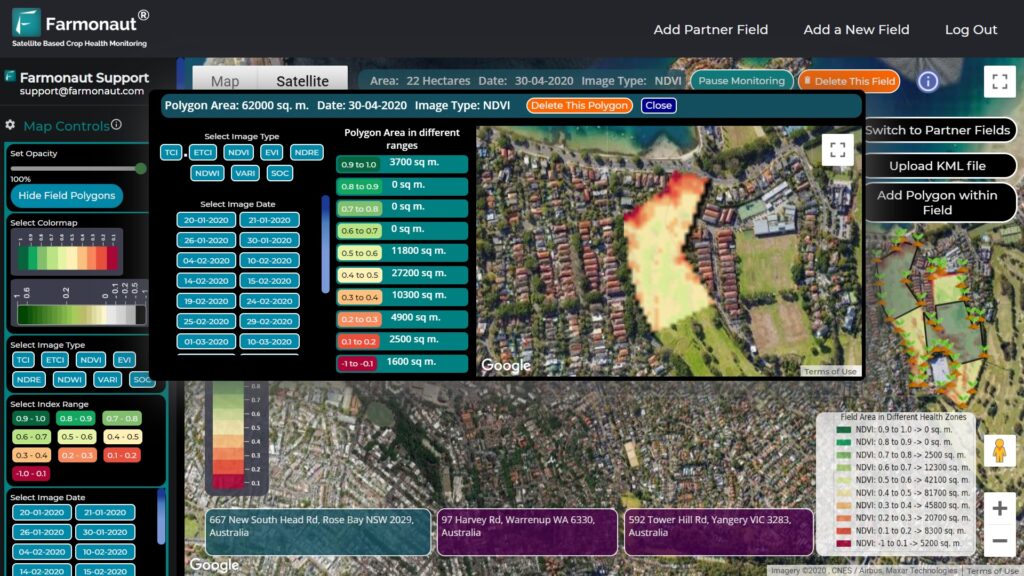
For those involved in large-scale agricultural monitoring and resource management, Farmonaut’s Large Scale Farm Management App offers precise satellite-based insights to optimize input, output, and sustainability in modern farming systems.
- ✔️ Reduces landfill waste by converting food, crop, and livestock byproducts into high-value protein.
- 📊 Minimizes methane emissions and lessens environmental pollution.
- 🌳 Displaces unsustainable protein sources (soy, fishmeal) that fuel deforestation and overfishing.
- 📈 Supports economic development through innovative, waste-to-protein projects.
- 🤝 Fosters integrated farming systems to increase resilience and efficiency.
3. Circular Economies & Bioconversion: Sustainable Insect Farming’s Secret Sauce
At the heart of every sustainable farming project lies the quest for circularity—producing resources, using them, then seamlessly reintegrating by-products back into the system.
Sustainable insect farming perfectly embodies these imperatives; insects consume organic waste, grow into high-protein biomass, and either serve as direct animal feed or even return as fertilizer, closing the production loop.

How Bioconversion Works:
- Collection: Local food, agricultural residues, and livestock manure are gathered.
- Feeding: Fast-growing insects (e.g., black soldier fly larvae) are fed waste.
- Growth: Larvae convert organic waste into protein and fat.
- Harvest: Insects are processed as feed, food, or oil; remaining ‘frass’ can fertilize crops.
- Return: The value loop closes: crops thrive with natural fertilizer, yielding more feed-stock for insects.
Many underestimate the market acceptance of insect-based protein. However, rising consumer awareness and regulatory support are breaking these barriers rapidly in 2026.
Learn more about maintaining environmental responsibility with Farmonaut’s Carbon Footprinting Solutions, designed to help agricultural businesses measure and reduce their carbon footprint with actionable, satellite-driven insights.
“Insect farming uses 50 times less water than traditional livestock production, making it a highly sustainable food source.”
Environmental Impact Table: Insect Farming vs Traditional Livestock
For a clear, data-driven perspective, review the table below comparing sustainable insect farming to cattle, poultry, and fish across key performance indicators for 2026:
| Farming Type | Estimated Protein Yield (kg/ha/year) | Water Usage (liters/kg protein) | Greenhouse Gas Emissions (kg CO2e/kg protein) | Land Use (sq. meters/kg protein) | Organic Waste Reduction (%) |
|---|---|---|---|---|---|
| Insect Farming | 1500 – 2500 | 350 – 500 | 1 – 2 | 15 – 30 | >50 |
| Cattle | 25 – 75 | 13,000 – 15,000 | 25 – 32 | 250 – 350 | <5 |
| Poultry | 250 – 350 | 4,300 – 6,000 | 7 – 10 | 70 – 90 | ~10 |
| Fish (Aquaculture) | 300 – 800 | 6,000 – 9,000 | 6 – 8 | 60 – 150 | ~12 |
Interpretation: Insects beat traditional livestock across all sustainability metrics—dramatically higher protein yields, minimized resource use, drastically lower emissions, and a critical role in reducing organic waste.
Sustainable insect farming has the potential to reduce land use for protein production by over 90%, supporting vital ecosystem conservation in 2026 and beyond.
4. Resource Efficiency and Reduced Ecological Footprint
Resource efficiency is at the core of any sustainable farming project, and insect farming excels in every metric:
- 📉 Insects can produce equivalent protein with a fraction of the land, water, and feed required by cattle, poultry, or fish.
- 🥤 The ultra-low water usage addresses mounting water-scarcity challenges.
- 🌬️ Minimal greenhouse gas emissions help tackle the urgent need for climate-friendly protein.
- 🌾 Insects can thrive on agricultural refuse (e.g., fruit pulp, spent grain), reducing dependency on arable land.
- 🕸️ Farming infrastructure can be vertical, modular, and urban, utilizing otherwise unused spaces.
Sustainable insect farming thus offers a blueprint for producing more with less, aligning with global imperatives for resource conservation and climate adaptation.



Use Farmonaut’s Satellite API and Developer Docs to build smart, sustainable agri-applications. For transparent protein origin, our product traceability platform leverages blockchain to secure your food and feed supply chains.

- ⚠️ Risk: Limited consumer familiarity in some regions may affect market uptake for direct human consumption.
- ⚖️ Regulatory approval for insect-based food and feed ingredients varies by country, impacting international scalability.
- 🧪 Limitation: Industrialized insect rearing requires stable, controlled production systems to ensure safety and quality.
- 🚚 Supply chain optimization and traceability solutions are essential to meet consumer and corporate demands.
- 🎯 Opportunity: Education and awareness campaigns can accelerate adoption and overcome perception barriers.
5. Integrating Sustainable Insect Protein into Livestock & Aquaculture
As protein demands surge, sustainable cow farming and fish farming sustainable practices are evolving to include insect-based feeds. This shift is central to the future of agriculture in 2026 and beyond, reflecting both efficiency improvements and environmental imperatives.
How are livestock and aquaculture integrating insects?
- 🐄 Cattle: Insect meal can replace up to 20% of conventional feeds (soy, cereals) without compromising animal health or yields, leading to significant reductions in land and water use.
- 🐟 Fish: Insect meal is rapidly replacing fishmeal, which is often linked to overfishing and marine ecosystem decline.
- 🦃 Poultry: Chickens and turkeys efficiently digest and thrive on insect protein, with high conversion rates.
- 🌾 Integrated farms: Combining crops, livestock, and insects in closed resource loops further increases overall system efficiency.
This integrative approach is impacting system-wide productivity, costs, and eco-footprints, positioning sustainable insect farming as a lynchpin of regenerative food systems.

Companies innovating in the sustainable insect farming supply chain—including processing, breeding, and traceability—are projected to experience strong market growth through 2026 as global protein demand rises and existing resources become constrained.
6. Economic & Rural Livelihood Opportunities
Beyond ecological benefits, sustainable insect farming offers a lifeline to rural economies:
- 💰 Low capital investment requirements make insect rearing accessible for smallholder farmers and rural entrepreneurs—even in resource-limited contexts.
- ⚙️ Insects can be reared with minimal infrastructure, using locally available organic waste.
- 🔄 Fits seamlessly within integrated farming systems, allowing livelihood diversification and greater resilience against climate and market shocks.
- 📓 Growing global acceptance (especially in Asia, Africa, South America) is building sustained, decentralized economic growth through export opportunities.
- 🏆 Supports youth and women’s participation in modern, sustainable agriculture.
Farmonaut’s Satellite-based Crop Loan & Insurance Product further enables rural farmers to access financing and insurance using real-time, satellite-verified crop data, reducing fraud and lending risks.
Smallholder insect farming is fostering integrated, resilient agricultural landscapes—connecting rural prosperity with global sustainability goals.
7. Overcoming Challenges: Regulation, Consumer Perception & Scaling
Sustainable insect farming is not without its hurdles as we head toward 2026. Key challenges include:
- 📄 Regulatory frameworks: Globally, food safety regulations are evolving. Some markets embrace insect protein in both food and feed; others require robust safety, labeling, and production controls.
- 🤔 Consumer perception: Insect protein’s direct or indirect role in diets faces initial resistance in certain cultures or markets. However, education, transparency, and food tech are propelling acceptance.
- 🏭 Scaling technology: Advancements in automation, breeding, and processing are making large-scale insect rearing increasingly efficient and reliable.
- 📦 Supply chain traceability: As markets mature, verifying protein origin becomes crucial—requiring advanced digital solutions.
- 📈 Market development: Strategic investment and policy support are fostering the mainstream adoption of insect protein across food systems.
Blockchain-enabled product traceability tools such as those from Farmonaut help address authenticity and build trust—which is essential for premium protein segments and regulatory compliance.
- 🎯 Sustainable insect farming can provide protein at far lower environmental cost than cattle, poultry, or fish.
- 🌱 Insects efficiently convert organic waste into valuable biomass, supporting circular food systems.
- 💡 Integration into sustainable cow farming and aquaculture is now commercially viable and scalable.
- 🔗 Blockchain traceability can build trust and transparency across international supply chains.
- 📊 Market demand for alternative proteins and sustainable feeds is projected to increase rapidly as consumer awareness grows.
Sustainable insect farming isn’t a distant dream—it’s a present-day solution driving us toward a climate-resilient, resource-smart agricultural future.
The Future of Sustainable Insect Farming: 2026 and Beyond
By 2026, sustainable insect farming will play a central role in future food systems, supporting:
- 🔋 Protein security for growing populations with less environmental pressure
- 💧 Solutions to severe water scarcity by reducing reliance on thirsty livestock
- 🌾 Integrated agricultural practices that regenerate soil, recycle waste, and support resilient economies
- 🕸️ New markets and business models across food, feed, biotech, and circular economy sectors
- 🌍 Enhanced biodiversity and land-use efficiency through reduced dependence on resource-intensive crops and grazing
As agriculture digitalizes and regulatory frameworks mature, the barriers to large-scale insect protein production will lower, further enabling this paradigm shift.

How Farmonaut Supports Sustainable Agriculture
At Farmonaut, we are committed to empowering sustainable farming globally by providing:
- Real-time, satellite-driven crop and resource monitoring for proactive, sustainable decision-making in agriculture.
- AI-based advisory to optimize inputs, outputs, and environmental impacts.
- Blockchain-based supply chain traceability, critical for food and feed security in the alternative protein industry.
- Fleet, resource, and large-scale farm management tools to boost productivity and land-use efficiency in modern agricultural systems.
- Applying carbon footprinting and environmental impact monitoring so agribusinesses can adopt climate-smart solutions.
Access Farmonaut on the web, Android, or iOS. For seamless integration, check our API and developer docs.

Frequently Asked Questions – Sustainable Insect Farming
What is sustainable insect farming?
Sustainable insect farming is the cultivation and rearing of edible insects (such as crickets, black soldier fly larvae, mealworms, and grasshoppers) for protein-rich food, animal feed, and industrial use, with minimal land, water, and environmental impact compared to conventional livestock.
How does insect farming reduce environmental impact?
Insect farming uses less land and water, dramatically cuts greenhouse gas emissions, and efficiently converts organic waste into valuable protein, thereby reducing landfill and supporting circular economies.
Can insects replace fishmeal and soy in livestock diets?
Yes! Insects provide an excellent protein and fat profile, making them an ideal alternative to conventional feeds like fishmeal and soy, which are linked to deforestation and overfishing.
What opportunities does insect farming offer for smallholders?
Insect farming requires little capital and infrastructure. Smallholders can start by using locally available organic waste, diversify their farm income, improve resilience, and participate in new sustainable markets.
How is technology supporting the growth of sustainable insect farming?
Advances in automation, satellite monitoring, AI analytics (like those offered by Farmonaut), and blockchain traceability are making large-scale insect protein production efficient, transparent, and trustworthy.
Farmonaut Subscriptions
Conclusion: Embracing Sustainability – The Time for Insect Farming is Now
Sustainable insect farming exemplifies the shift toward resource-efficient, eco-friendly, and innovative agriculture for 2026 and the foreseeable future. By producing more protein with less impact, transforming waste into value, and offering systemic benefits to global food security, insect farming isn’t just a trend—it’s a necessity as we confront increasing demands and environmental risks.
As technology, markets, and policies align, it’s time for all stakeholders—farmers, communities, investors, technologists, and consumers—to recognize insects’ unique potential. Through circular systems, digital innovation, and ongoing education, we can truly foster regenerative, resilient, and sustainable food systems for all.
This post was brought to you by Farmonaut, championing sustainable innovation for agriculture—leveraging data, transparency, and digital solutions for a brighter, greener future.