Strategic Farm Management: 5 Top Agriculture Strategies for 2025
“Only 15% of farms used advanced risk management strategies for sustainability by 2023—experts predict this will rise to 30% by 2025.”
Meta Description: Strategic farm management is essential in 2025. Discover top agriculture strategies for sustainability, risk management, and productivity in a changing world.
- Introduction
- Core Principles of Strategic Farm Management
- Strategic Farm Management Framework for 2025
- Comparative Strategies Table
- 5 Top Agriculture Strategies for 2025
- 1. Resource Optimization
- 2. Risk Management Strategies in Agriculture
- 3. Sustainable Input Use
- 4. Technology Adoption for Modern Farms
- 5. Climate Resilience and Deforestation Management
- Farmonaut: Supporting Strategic Farm Management
- Key Insights and Pro Tips
- Visual Lists & Bullet Points
- Strategic Farm Management FAQ (2025 & Beyond)
- Conclusion
“Strategic resource optimization in agriculture can decrease water usage by up to 40%, promoting efficient and sustainable farm management.”



Introduction: Strategic Farm Management in 2025
Welcome to our comprehensive guide on Strategic Farm Management—the foundation of successful, sustainable agriculture for 2025 and beyond. The agricultural sector faces unprecedented challenges fueled by climate change, rapid technological advancements, fluctuating markets, and the demand for increased food production. In this evolving landscape, strategic approaches and data-driven agriculture strategic plans are mandatory for farmers seeking to optimize resources, manage risks, and achieve sustainable productivity.
By aligning short-term agricultural activities with long-term sustainability goals, strategic farm management empowers operators to adapt, thrive, and grow. Leveraging digital tools, advanced analytics, and scientific best practices—while always considering environmental implications—farmers can drive remarkable improvements in efficiency, profitability, and ecosystem health.
Core Principles of Strategic Farm Management
At its core, strategic farm management integrates systematic planning, management, monitoring, and realignment to meet evolving challenges and opportunities. These essential pillars form the basis for all successful farm management strategies in 2025:
- Resource Optimization: Efficient use of land, water, labor, and capital is vital for maximizing yields and environmental integrity.
- Diversification: Incorporating a variety of crops and livestock mitigates market, climatic, and pest-related risks.
- Sustainability: Ensuring soil health, conserving biodiversity, and reducing greenhouse gas emissions.
- Data-Driven Decision-Making: Utilizing digital tools, remote sensing, and analytics to inform every action on the farm.
- Adaptability & Resilience: Staying agile to changes in weather, markets, and regulatory requirements.
Modern farmers increasingly recognize that embracing these strategic pillars creates a critical framework for success in an uncertain agricultural future.

Strategic Farm Management Framework for 2025
In 2025, strategic farm management is more than just a checklist of activities: it’s a dynamic, ongoing approach powered by a comprehensive agriculture strategic plan. This integrated framework is designed to support farm businesses at every stage:
- Vision and Objectives: Set clear goals for productivity, sustainability, and profitability. These should align with market predictions, regulatory standards, and regional environmental priorities.
- Situation Analysis: Analyze current strengths, weaknesses, opportunities, and threats (SWOT), considering factors like soil health, access to technology, labor, and climate risks.
- Implementation Tactics: Define detailed actions for strategic improvement—such as remote sensing adoption, new crop varieties, precision irrigation, and staff training.
- Monitoring and Evaluation: Continuously measure performance against key indicators to ensure strategic goals are being met and adjust as needed.
This iterative planning and assessment cycle ensures that farmers are prepared to rapidly adapt to changing contexts, seize opportunities, and minimize risks.

Comparative Strategies Table: Top 5 Approaches for Strategic Farm Management in 2025
| Strategy | Brief Description | Estimated Yield Improvement (%) | Estimated Reduction in Resource Use (%) | Sustainability Benefit |
|---|---|---|---|---|
| Resource Optimization | Maximizing efficiency in land, water, labor, and capital use through precision agriculture, tailored inputs, and irrigation management. | 8-20% | 25-40% | High (Reduces waste, conserves resources) |
| Risk Management Strategies | Diverse cropping, insurance, scenario planning, and climate-smart farming to buffer weather, market, and pest risks. | 5-12% | 10-18% | High (Stabilizes income, secures yields) |
| Sustainable Input Use | Applying fertilizers, pesticides, and water only as needed, reducing run-off and pollution. | 5-15% | 15-30% | High (Protects soil and water) |
| Technology Adoption | Leveraging digital tools, IoT, remote sensing, and AI for real-time monitoring and decision-making. | 10-25% | 20-35% | High (Promotes efficiency and innovation) |
| Climate Resilience & Deforestation Management | Practices like agroforestry, cover cropping, and land stewardship to resist weather shocks and conserve forests. | 6-16% | 12-28% | High (Builds farm and ecosystem resilience) |
This table highlights how each approach contributes uniquely to modern strategic farm management. Together or individually, integrating these strategies enables farmers to optimize efforts, boost yields, and enhance sustainability in 2025 and beyond.

5 Top Agriculture Strategies for 2025: In-Depth Guide to Strategic Farm Management
1. Resource Optimization: Maximizing Efficiency & Profitability
Efficient use and stewardship of resources—land, water, labor, and capital—is foundational in strategic farm management for 2025. With global food demand soaring and natural resources under pressure, the onus is on farmers to optimize input use, reduce waste, and maintain productivity without sacrificing environmental integrity.
Key Resource Optimization Techniques
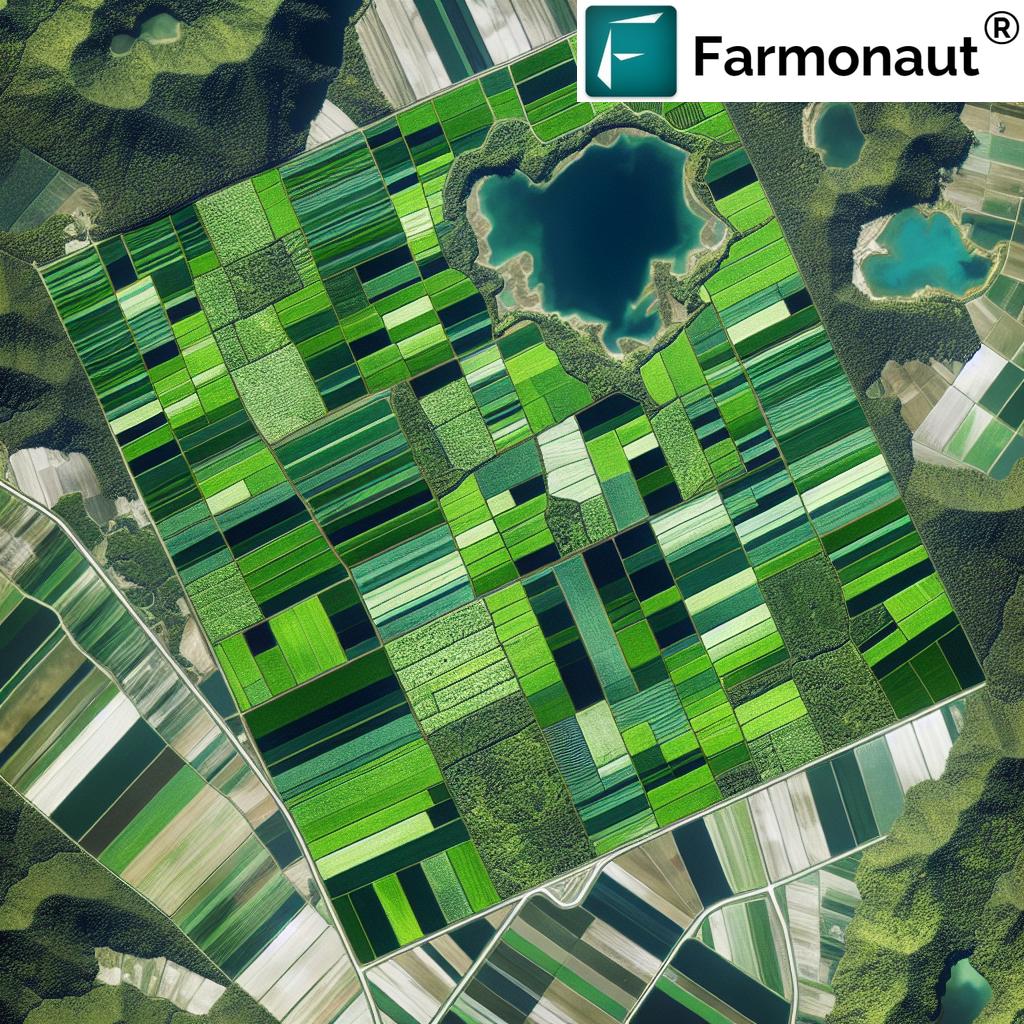
- ✔ Precision Agriculture: Leverage digital tools and satellite-based remote sensing to monitor soil moisture, crop vigor, and plant health in real time.
- ✔ Targeted Irrigation: Employ variable-rate irrigation systems, ensuring water is delivered only where and when it’s needed most.
- ✔ Labor & Capital Allocation: Use analytics for smart labor scheduling and optimize machinery use to lower costs.
- ✔ Efficient Fertilization: Incorporate soil tests and prescriptions to apply nutrients only as required—minimizing environmental impact and input costs.
- ✔ Yield Mapping & Forecasting: Analyze historical and live data to plan optimum harvest timing, boosting yields and market returns.
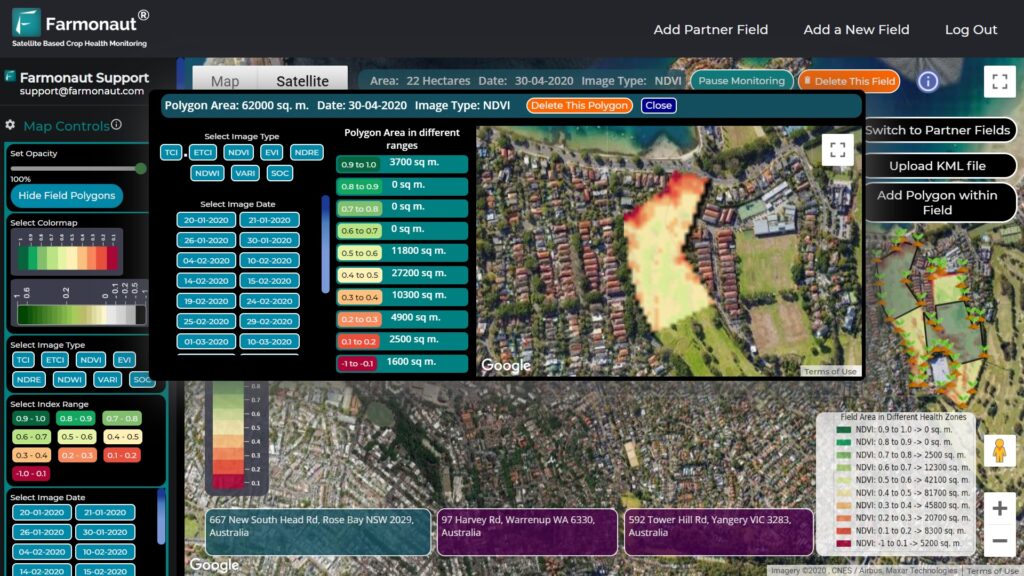
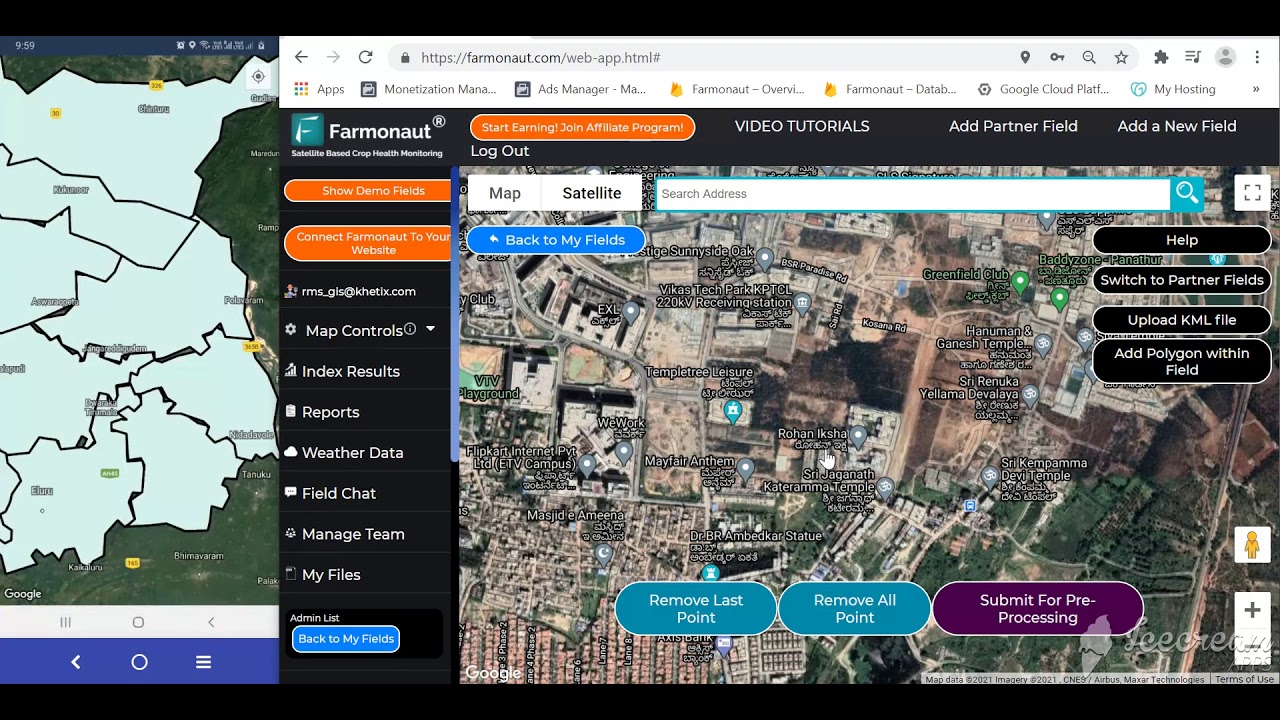
Tools like Farmonaut’s satellite monitoring system (accessible via web, Android, and iOS platforms) provide multi-spectral imagery for crop and soil condition insights, fundamentally supporting resource optimization at scale.
Farmonaut also offers APIs and fleet management tools—allowing for integration directly into farm management systems and operational dashboards, driving efficiency across equipment and logistics tracking.
Modern resource optimization isn’t just about saving money—it’s about resilience. By deploying sensors, remote monitoring, and AI, farms can cut their water usage up to 40% while boosting yields and ensuring compliance with environmental standards.
2. Risk Management Strategies in Agriculture: Building Resilience
With increasing climate unpredictability, pest outbreaks, and volatile markets, risk management strategies in agriculture are core to sustainable farm management in 2025 and beyond. A comprehensive approach requires integrating financial, agronomic, and technological methods to buffer shocks and stabilize both yields and income.
Essential Approaches to Risk Management
- 📊 Diversification: Rotate a variety of crops and integrate livestock, reducing reliance on a single commodity or market.
- ⚠ Insurance & Financing: Secure farm income against hazards by adopting satellite-based crop loan and insurance products with real-time verification technology.
- 📊 Scenario Analysis: Utilize digital forecasting and scenario planning for weather, pest, and market modeling.
- ⚠ Climate-Smart Farming: Implement practices like drought-resistant seed varieties, conservation tillage, and adaptive irrigation scheduling.
- 📊 Community Collaboration: Pool resources, share infrastructure, and create local knowledge hubs to spread risk across regions.
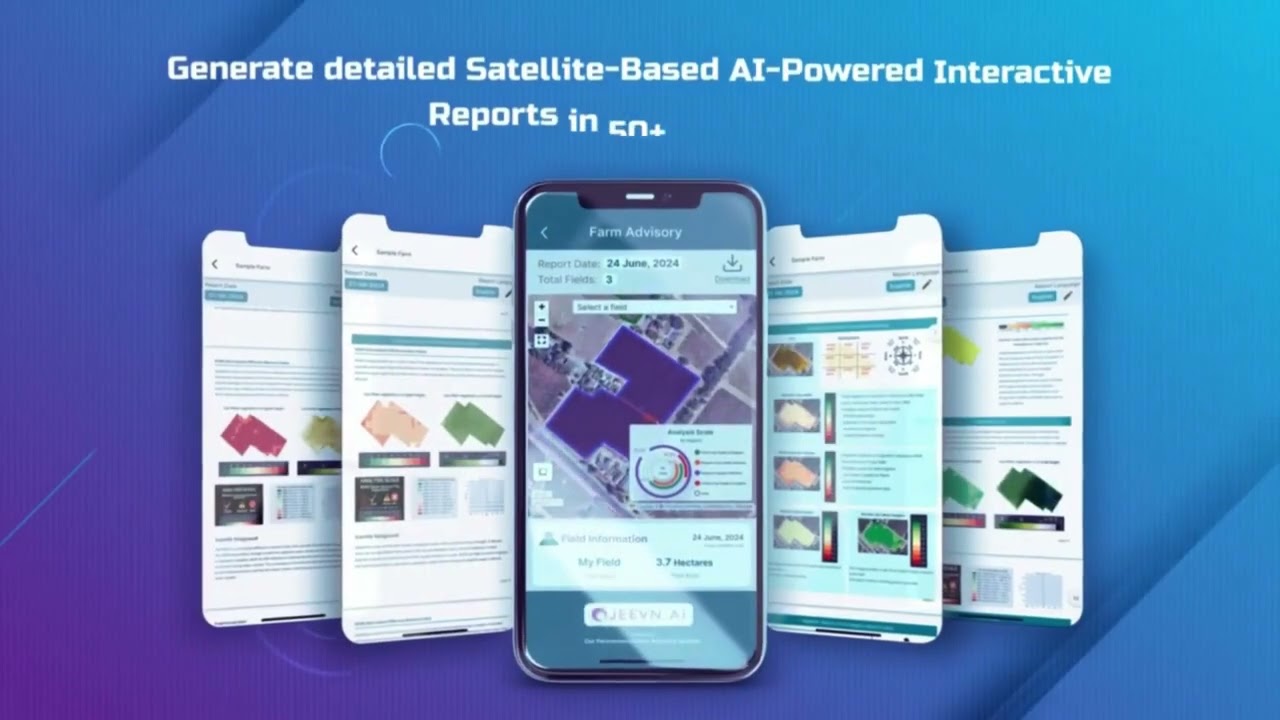
Innovative platforms, including Farmonaut’s Jeevn AI Advisory System—delivering live insights, weather forecasts, and tailored strategies—help farmers act ahead of risk events, making operations more proactive and less reactive.
Underestimating secondary risks such as supply chain disruptions or pest migration. In 2025, comprehensive farm management strategies must monitor not just climate, but also market and infrastructure risks to stay truly resilient.

3. Sustainable Input Use: Reducing Environmental Impact
Optimizing fertilizer, pesticide, and water inputs has become non-negotiable for meeting sustainability goals in strategic farm management. Misuse can degrade soil, pollute water systems, and increase costs—while data-driven, targeted applications maximize productivity and reduce run-off.
Best Practices for Sustainable Input Use
- ✔ Precision nutrient management using satellite and sensor data to determine exact application timing and amounts.
- ✔ Integrated pest management, leveraging predictive analytics to apply biological controls and reduce dependence on chemical sprays.
- ✔ Rotation and cover cropping to fix nitrogen, suppress weeds, and improve soil structure—reducing the need for synthetic inputs.
- ✔ Automated irrigation scheduling based on soil moisture, weather, and evapotranspiration forecasts—eliminating excess water waste.
- ✔ Adoption of low-emission fertilizers to cut greenhouse gases and improve decarbonization efforts on the farm. Interested in tracking your farm’s carbon footprint? Explore Farmonaut’s carbon footprinting tools.

Use digital scouting tools and remote sensing imagery to spot nutrient deficiencies or pest pressure—before they become visible to the naked eye. This enables targeted interventions, cutting input costs and boosting crop health.
4. Technology Adoption for Modern Farm Management
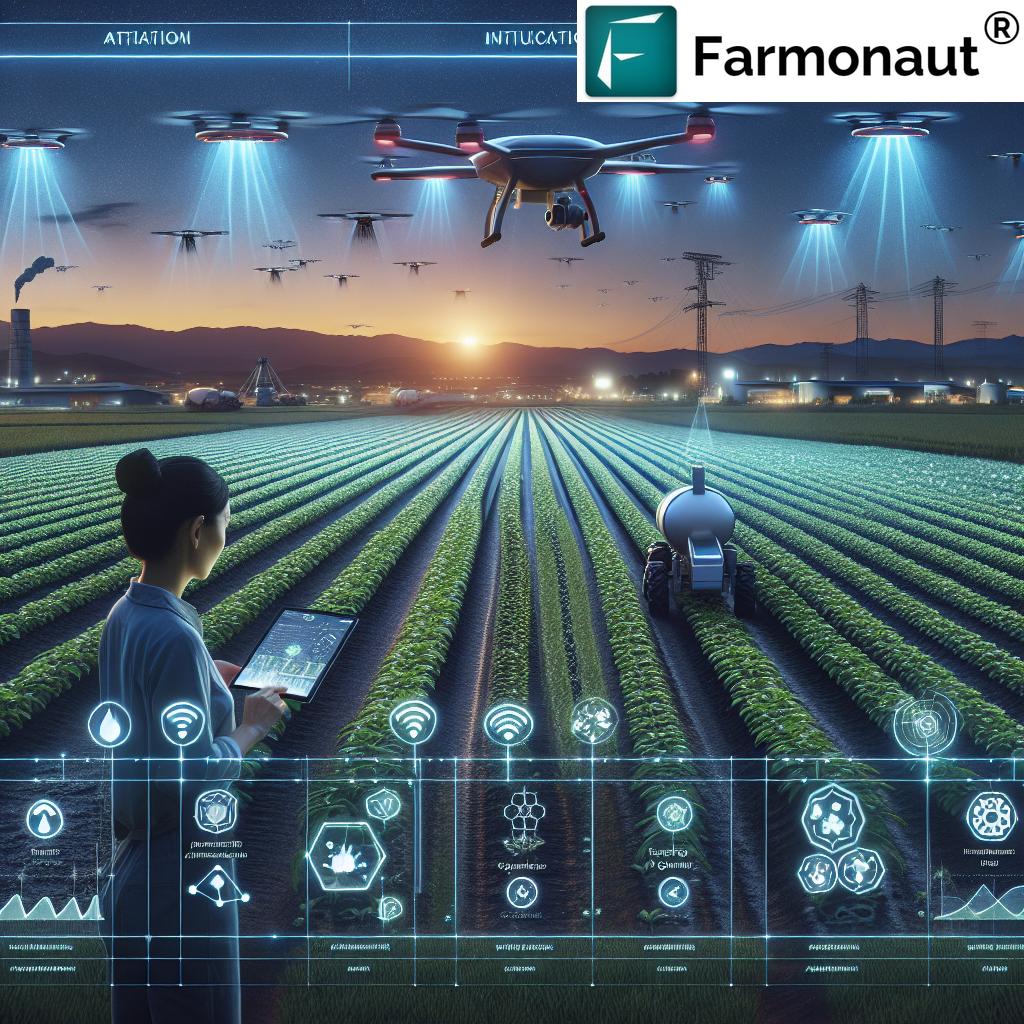
The future of strategic farm management is digital. In 2025, farms embracing advanced technology outperform others in profitability and sustainability. Leveraging remote sensing, AI, IoT devices, and advanced analytics allows real-time data-driven decisions—reducing guesswork and error, and enabling “smart” farming.
Top Tech Advancements in Strategic Farm Management
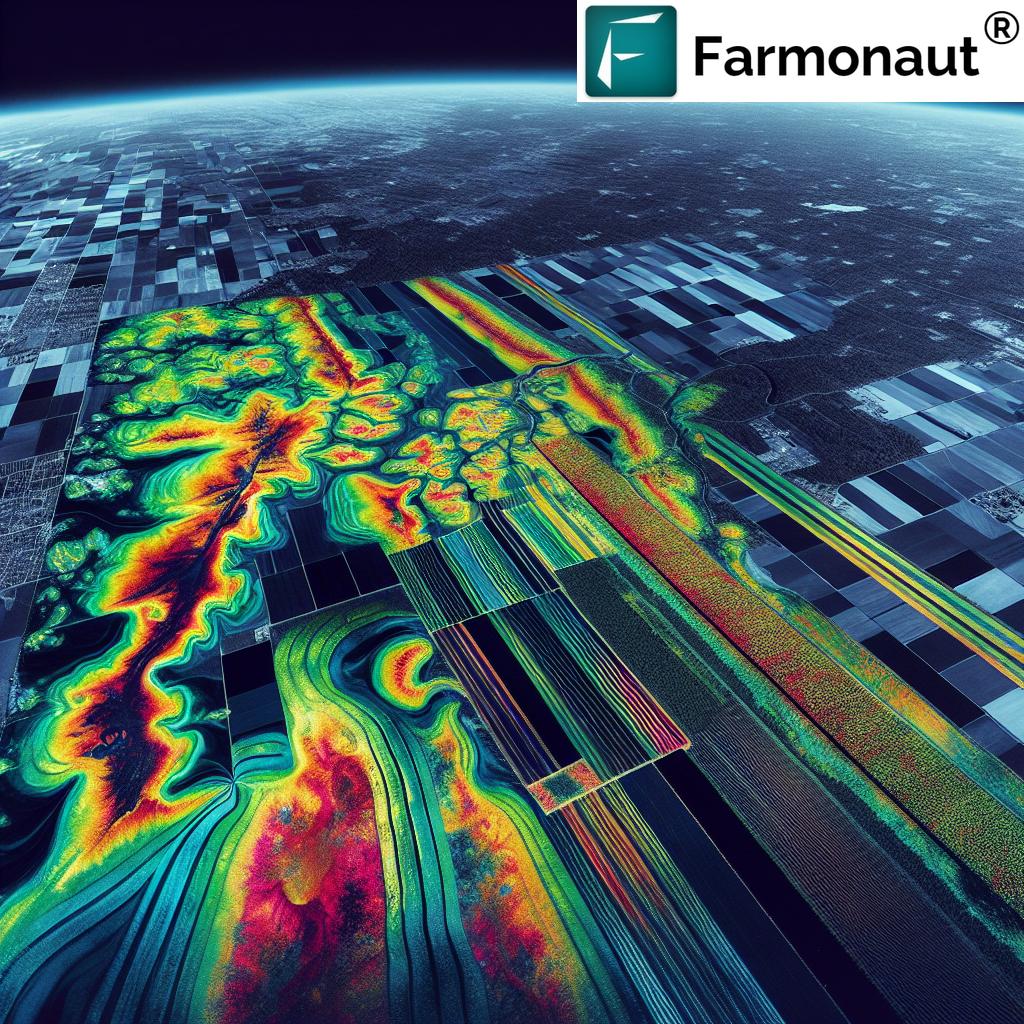
- ✔ Satellite Imagery: Provides field-wide NDVI (Normalized Difference Vegetation Index) for crop health monitoring and yield prediction.
- ✔ IoT Sensors: Allow for automated data collection from soil, weather, and equipment—feeding analytic dashboards for informed planning.
- ✔ AI & Machine Learning: Predicts pest outbreaks, recommends optimal planting or harvesting times, and suggests input use tailored to field zones.
- ✔ Blockchain Traceability: Using Farmonaut’s traceability platform, farmers can prove product authenticity to buyers, supporting premium markets and compliance.
- ✔ Mobile Platforms & APIs: Easily integrate with web and mobile apps for anytime, anywhere farm operations monitoring.
Farmonaut offers a multi-feature platform that lets users access satellite imagery, real-time monitoring, AI advisory, and blockchain-based tracking—all through user-friendly web or mobile interfaces.
- ✔ API Integration: Developers and large-scale agribusinesses can embed satellite data and insights directly inside their business systems. For full documentation, see our API developer docs.
- ✔ Large-Scale Farm Management: Designed for agribusinesses controlling multiple fields, this platform supports large, complex operations by providing consolidated data at scale.
With the agri-tech sector’s exponential growth, strategic investments in satellite and AI technology are poised to become the defining success factor for both traditional and emerging agribusinesses across the globe by 2026.
5. Climate Resilience and Deforestation Management Strategies
Climate change has created new, complex risks for global agriculture—droughts, floods, rising temperatures, and extreme weather events threaten yield stability and profitability. Integrated climate resilience and deforestation management strategies are now central to sustainable farm management.
Recommended Approaches to Climate Resilience
- ✔ Agroforestry & Afforestation: Incorporate tree planting around and within croplands to prevent soil erosion, improve microclimates, and sequester carbon.
- ✔ Cover Cropping and Reduced Tillage: These techniques protect soil from degradation, suppress weeds, enhance water retention, and increase biodiversity.
- ✔ Real-Time Environmental Monitoring: Use carbon footprinting and ecosystem impact tools to track emissions and compliance in agriculture.
- ✔ Landscape Planning: Map sensitive areas and implement controlled land clearing practices—balancing productivity with conservation.
- ✔ Early Warning Systems: Monitor weather and crop stress in real time with advanced platforms, enabling adaptive, preventative action.
Proactively managing deforestation and building soil health isn’t just good for the planet—these methods add direct value to farm operations by stabilizing yields and safeguarding future land productivity.
Explore our carbon footprinting tools
Farmonaut: Supporting Comprehensive Strategic Farm Management
At Farmonaut, we’re committed to making satellite-driven, data-rich monitoring and management solutions affordable, scalable, and accessible for agriculture worldwide. Our mission is to empower every farmer, agribusiness, and government to thrive in a modern, sustainable paradigm—adapting to challenges in 2025 and beyond with confidence.
- Real-Time Monitoring: Multispectral satellite imaging for crop health, soil conditions, and field variability. Enables faster response to weather, pests, and input needs.
- AI-Based Advisory Systems: Jeevn AI delivers customized recommendations, climate forecasts, and farm-specific strategies based on live, remotely-sensed data.
- Blockchain Traceability: Complete supply chain transparency for food safety, compliance, and premium markets—see our traceability product.
- Fleet and Resource Management: Optimize equipment logistics and minimize operational waste using built-in analytics and reporting.
- Environmental & Carbon Monitoring: Track greenhouse gas emissions, ensure regulatory compliance, and enhance your sustainability credentials with carbon tracking tools.
Check out our developer API docs for custom integrations.
Why Choose Farmonaut for Strategic Farm Management?
- ✔ Affordable, scalable solutions suitable for individuals, enterprises, and governments.
- ✔ Real, actionable insights—not just raw data—delivered through intuitive apps and APIs.
- ✔ Commitment to sustainability: All features built for decarbonization, traceability, and greater environmental stewardship.
- ✔ Multi-sector technology: Our platforms support not only agriculture, but also mining and infrastructure for holistic rural development.
- ✔ Security and scalability with blockchain, cloud, and AI-driven solutions built for 2026 and beyond.
- 📡 Satellite Crop Health Monitoring
- 🤖 AI-Powered Advisory Systems
- 🔗 Blockchain Traceability
- 📈 Fleet & Resource Management
- 🌎 Environmental Impact Tracking
Learn More
Try Farmonaut for strategic farm management today
or access our crop plantation and forest advisory tools for afforestation and climate adaptation.
Visual Lists: Strategic Farm Management Essentials
Top 5 Benefits of Strategic Farm Management
- ✔ Optimized Resource Use – Reduces inputs and operational costs
- 📊 Improved Yield Stability – Minimizes losses from climate, pests, and market shocks
- 🌱 Enhanced Environmental Sustainability – Builds soil health and biodiversity
- 💡 Data-Driven Decisions – Eliminates guesswork for every field and activity
- ⚡ Future-Proofed Operations – Supports rapid adaptation to technology, regulations, and consumer demand
📌 5 Bullet Points for Strategic Planning in Agriculture
- ✔ Set SMART goals (Specific, Measurable, Achievable, Relevant, Time-bound)
- 📊 Regularly update plans to reflect emerging threats and opportunities
- ⚠ Evaluate financial implications for every change in strategy
- 🌎 Integrate sustainability criteria into every operational decision
- 🤖 Adopt advanced technology for continuous monitoring and improvement
At a Glance: Strategic Farm Management KPIs to Track
| KPI | Importance |
|---|---|
| Water Use Efficiency | Conserves scarce resources and cuts costs |
| Input Cost Per Hectare | Direct indicator of resource optimization success |
| Yield Per Hectare | Key productivity measure for profitability and food security |
| Soil Carbon Content | Proxy for sustainability and land health |
| GHG Emissions Per Output | Direct impact on environmental credentials |
- Leverage satellite monitoring for field-level precision.
- Invest in multi-crop and livestock systems.
- Track carbon and emissions KPIs for regulatory compliance.
- Automate irrigation and fertilization based on live data.
- Utilize blockchain for end-to-end crop traceability.
Strategic Farm Management FAQ (2025 & Beyond)
What is strategic farm management?
Strategic farm management is a comprehensive, data-driven approach to planning, implementing, and optimizing every aspect of farm operations. It combines resource optimization, risk management, sustainability, and the use of advanced technology to consistently meet productivity and profitability goals—while adapting to environmental and economic changes.
Why is resource optimization important in agriculture?
Resource optimization ensures efficient, responsible use of land, water, labor, and capital. By reducing waste and directing inputs only where needed, farmers boost profits, conserve environmental resources, and lay a foundation for long-term sustainability.
How do risk management strategies in agriculture help farms remain profitable?
Risk management strategies such as crop diversification, insurance, and climate-smart practices buffer farms against unpredictable weather, fluctuating markets, and pest or disease outbreaks. This stability is key to maintaining yield and profitability in the face of increasing volatility.
How does technology improve strategic farm management?
Technology enables real-time monitoring, precision input application, predictive analytics, and reliable traceability. Through platforms like Farmonaut, farmers access actionable insights that reduce guesswork and maximize operational speed, accuracy, and efficiency, all vital for sustainable growth.
What is the role of deforestation management strategies?
Deforestation management strategies protect soil health, conserve biodiversity, and reduce greenhouse gas emissions. Practices like agroforestry, buffer zone maintenance, and afforestation integrate environmental stewardship into the farm’s long-term growth plan, securing both land health and future productivity.
Where can I access digital tools for strategic farm management?
Farmonaut offers web, Android, and iOS applications, as well as robust APIs and monitoring packages for individual farms, businesses, and governments. Explore Farmonaut apps for field monitoring, or try our Agro Admin platform for large-scale farm management.
Conclusion: Building the Future with Strategic Farm Management
Strategic farm management will define the winners in agriculture for 2025 and beyond. Integrating advanced technology, sustainable resource use, rigorous risk management, and proactive planning is no longer optional; it’s essential for adapting to climate, feeding a growing population, and safeguarding our global food system.
Farmers, agribusiness leaders, and policymakers must embrace modern farm management strategies tailored to their unique landscapes and market realities. By leveraging platforms like Farmonaut—empowering users with satellite insights, AI advisories, blockchain-based traceability, and robust resource monitoring—we can build resilient, productive, and sustainable agricultural systems for a brighter, climate-adapted future.
Ready to start your journey? Download the Farmonaut app, explore our carbon footprinting tools, or use our API for your own system—advance your farm management into the future, today.