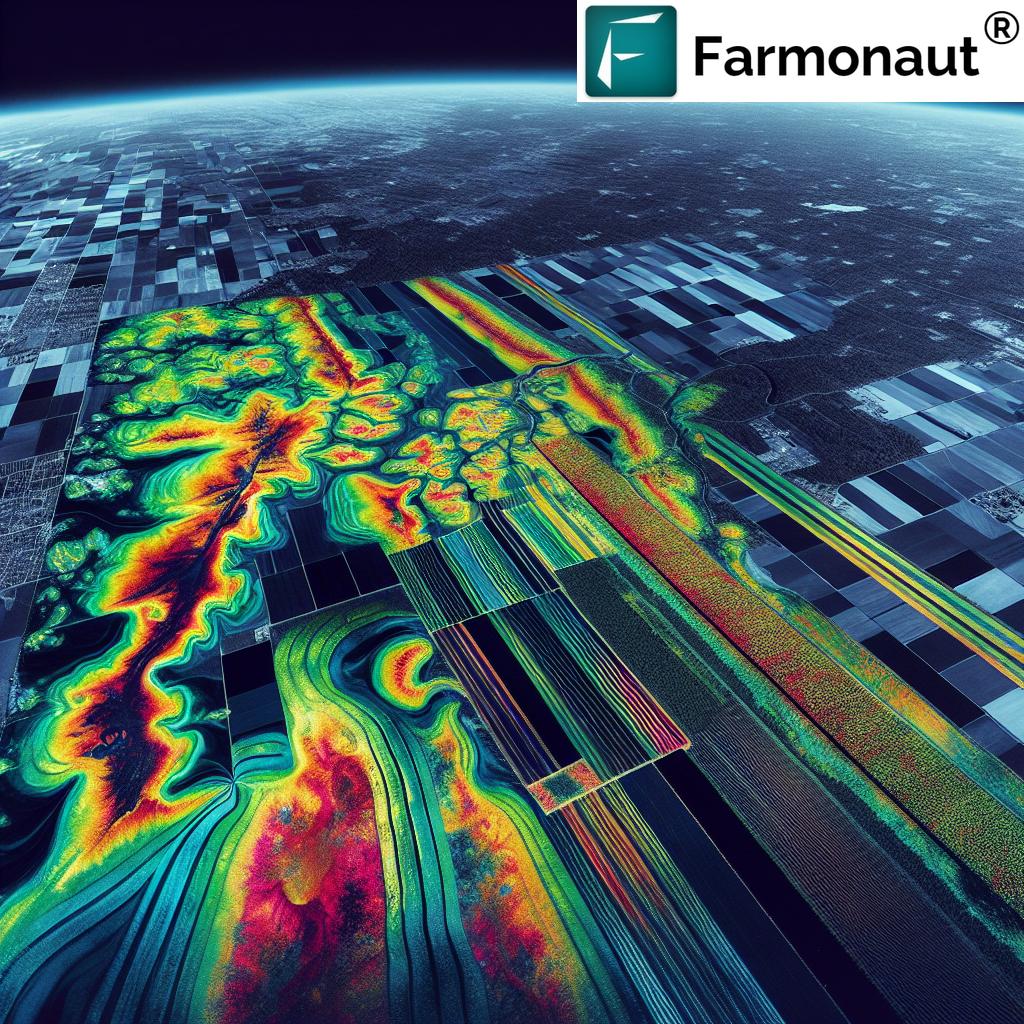
Sequestration Agriculture: 7 Top Strategies for 2026
Meta Description: Discover the top 7 sequestration agriculture strategies for 2026. Learn how carbon sequestration in agriculture improves soil health, boosts yield, and builds climate resilience with sustainable practices.
Table of Contents
- Summary: Carbon Sequestration in Agriculture 2025
- What is Carbon Sequestration in Agriculture?
- The Science Behind Soil Carbon Sequestration Agriculture
- Comparison of Top Carbon Sequestration Strategies in Agriculture (2026)
- Sequestration Agriculture: 7 Top Strategies for 2026
- How Farmonaut is Revolutionizing Sequestration Agriculture
- Benefits Beyond Carbon Sequestration
- Challenges, Opportunities, and The Future
- Key Insights & Callouts
- Frequently Asked Questions
- Conclusion: Towards Climate-Resilient, Sustainable Agriculture
Summary: Carbon Sequestration in Agriculture: A Sustainable Pathway for Climate Resilience in 2025
As the global community grapples with escalating climate challenges, sequestration agriculture—specifically agriculture carbon sequestration—is becoming a critical solution. This process captures and stores atmospheric CO₂ in agricultural soils and vegetation, mitigating greenhouse gas emissions while fostering climate resilience and enhancing food security. Advancements in technologies like satellite monitoring, AI-driven advisories, and real-time analytics, such as those offered by Farmonaut, are set to optimize these carbon sequestration practices for a more sustainable and climate-resilient food system.
What is Carbon Sequestration in Agriculture?
Sequestration agriculture refers to a suite of practices designed to capture and store atmospheric carbon dioxide (CO₂) in agricultural soils and vegetation. These methods primarily enhance the soil’s capacity to store carbon by integrating crop diversity, organic amendments like compost and biochar, cover cropping, agroforestry, and conservation tillage. These natural processes, when implemented systematically, transform agriculture from a net source of greenhouse gases into a vital carbon sink, directly mitigating atmospheric CO₂ levels and advancing global climate goals.
By focusing on the ability of soils and vegetation to absorb and retain carbon—through photosynthesis and integrating organic matter into the earth’s layers—sequestration practices lock away carbon that would otherwise increase greenhouse gas levels. This process is indispensable in 2026 and beyond, as we continue to seek scalable, nature-based climate solutions.
The Importance of Agriculture Carbon Sequestration
- ✔️ Reduces atmospheric CO₂ through increased soil organic carbon (SOC).
- ✔️ Enhances food and soil security by improving soil structure and productivity.
- ✔️ Supports sustainable farming with improved biodiversity and ecosystem services.
- ✔️ Mitigates climate change by transforming soils from emitters to stable reservoirs of carbon.
- ✔️ Boosts farm resilience against drought, erosion, and erratic weather patterns.



The Science Behind Soil Carbon Sequestration Agriculture
Soils comprise the largest terrestrial carbon reservoir on Earth, storing more carbon than exists in the atmosphere and all plant life combined. Soil organic carbon (SOC) is the backbone of this storage, derived from decomposed plant residues, roots, and microbial activity. By increasing the amount of SOC stocks through strategic practices, soils can effectively lock away atmospheric CO₂ that would otherwise contribute to climate change.
This process involves a dynamic interplay of inputs and outputs:
- 📊 Inputs: Fresh plant residues (leaves, stems, roots), compost, and biochar.
- 📉 Outputs: Loss through microbial respiration, erosion, and agricultural disturbances.
Practices that increase soil organic carbon content, such as conservation tillage or integrating agroforestry, do so by enhancing biomass inputs, improving microbial activity, and stabilizing organic matter in the soil. This stabilization is critical for long-term carbon storage and creating fertile, resilient agricultural systems in the face of climate change.
Soil Carbon Cycle: From Plant to Stable Storage
- 🌱 Photosynthesis: Plants absorb CO₂ and convert it to organic matter.
- 🔄 Soil Incorporation: Plant residues and roots enter the soil, fueling microbial communities.
- ⏳ Stabilization: Microbial processing turns organic matter into stable soil carbon fractions.
- 🛡️ Sequestration: Good management minimizes losses, ensuring carbon remains locked away for decades.

Comparison of Top Carbon Sequestration Strategies in Agriculture (2026)
| Strategy Name | Estimated Carbon Sequestration Potential (tons CO₂/ha/year) | Impact on Soil Health | Implementation Complexity | Estimated Adoption Cost (USD/ha) | Climate Resilience Benefit |
|---|---|---|---|---|---|
| Conservation Tillage (No-Till) | 0.5 – 1.0 | High | Low | 50 – 200 | High |
| Cover Cropping | 0.5 – 1.2 | High | Medium | 80 – 170 | High |
| Agroforestry | 1.0 – 2.5 | High | High | 300 – 900 | High |
| Crop Rotation and Diversification | 0.3 – 0.7 | Medium | Low | 50 – 100 | Medium |
| Organic Amendments (Compost & Biochar) | 0.6 – 1.8 | High | Medium | 150 – 500 | High |
| Silvopasture | 0.8 – 2.2 | High | High | 250 – 800 | High |
| Precision Resource Management | 0.2 – 0.5 | Medium | Medium | 100 – 200 | Medium |
Sequestration Agriculture: 7 Top Strategies for 2026
Transitioning to sequestration agriculture in 2026 requires implementing a set of proven, scalable practices tailored to different agro-ecosystems. Below, we outline these seven top carbon sequestration strategies, with a focus on their scientific rationale, practical steps, and climate resilience benefits.
1. Conservation Tillage (No-Till/Reduced Tillage)
Conservation tillage involves reducing or eliminating plowing and soil disturbance, thereby maintaining soil structure and dramatically reducing carbon loss from the soil’s surface. This practice stabilizes the soil’s organic matter, minimizing erosion and enhancing microbial activity crucial for the formation of stable SOC.
In a no-till system, plant residues remain on the surface, acting as mulch, which reduces soil temperature fluctuations, conserves moisture, and feeds soil microbes—all contributing to increased soil carbon sequestration agriculture.
- ✔ Key Benefit: Retains up to 1 ton of CO₂ per hectare annually.
- 📊 Data Insight: Improved water infiltration and reduced erosion by up to 60%.
- ⚠ Risk: May require adaptation in weed control strategies.

2. Cover Cropping
Cover crops are grown during fallow periods or between cash crops, providing continuous living cover over the soil. These plants (such as clovers, vetch, rye, or radish) add biomass both above and below ground, feeding soil microbes and increasing SOC levels. In addition to sequestering carbon, cover cropping improves soil structure, prevents nutrient runoff, and supports beneficial insects.
- ✔ Biodiversity boost: Fosters natural pest control agents.
- 📊 Data insight: Can increase SOC stocks by 10% in 3 years.
- ⚠ Limitation: Needs careful selection to avoid competition with cash crops.
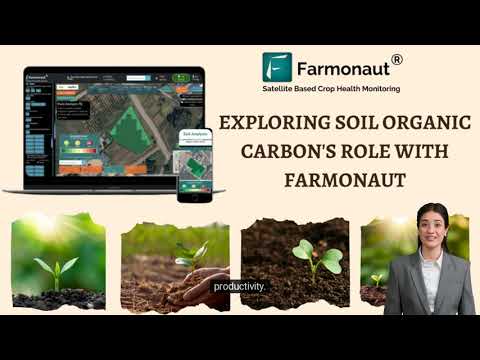
Explore Farmonaut’s Large-Scale Farm Management platform to monitor crop and cover growth using satellite-driven NDVI and crop health analytics.
3. Agroforestry Systems
Agroforestry integrates trees or shrubs into crop or grazing lands, creating multi-layered systems that mimic natural forests. This approach leverages both the above-ground (tree trunks, branches, leaves) and below-ground (roots) biomass accumulation, providing significant potential for carbon sequestration in agriculture—often sequestering 2x more CO₂ per hectare than conventional cropping.
In regions suited to silvopasture, combining trees and pasture further enhances soil carbon content while offering shade, windbreaks, and additional income streams from timber, fruit, or fodder.
- ✔ Key Advantage: High carbon sequestration with improved crop and grazing animal microclimates.
- 📊 Data Insight: Can store up to 2.5 tons CO₂/ha/year—highest among mainstream solutions.
- ⚠ Implementation Need: Initial upfront cost and longer wait for returns.

Unlock forest and plantation monitoring insights with Farmonaut’s Crop & Forest Plantation Advisory tool for better decision-making on integrated systems.
4. Crop Rotation and Diversification
Continuous monoculture leads to declining soil health, organic matter depletion, and vulnerability to pests—undermining long-term carbon sequestration. Crop rotation and diversification break pest and disease cycles, promote varied root systems, and enable inclusion of deep-rooted or N-fixing crops like legumes. This increases both biomass input and organic matter stabilization in soils.
- ✔ Disease management: Reduced input of pesticides and built-in soil fertility.
- 📊 Data insight: Up to 0.7 tons CO₂/ha/year in stable SOC formation.
- ⚠ Common Mistake: Not aligning rotations with local climate and market needs.

5. Organic Amendments: Compost & Biochar
Applying organic amendments like compost or biochar directly raises the organic carbon content in soils.
– Compost acts as a slow-release source of nutrients and organic matter, energizing microbial activity and promoting aggregation.
– Biochar, a stable form of carbon created by pyrolyzing biomass, remains in soil for centuries, enhancing soil fertility, water retention, and long-term carbon storage.
- ✔ Soil health: Significant boost in microbe diversity and water-holding capacity.
- 📊 Data insight: Compost and biochar can improve annual carbon sequestration up to 1.8 tons CO₂/ha.
- ⚠ Risk: Variable biochar quality; requires careful sourcing and application rates.
Interested in tracking soil carbon content, amendment impact, and greenhouse gas emissions? Check out Farmonaut’s Carbon Footprinting feature—empowering data-driven, sustainable farming decisions.
6. Silvopasture
Silvopasture is the practice of integrating trees and shrubs into pasture systems for grazing livestock. This dual system offers shade, wind protection, enhanced microclimates, and considerable carbon sequestration advantages—both in plant biomass and improved soil organic carbon. The deep-rooted trees access nutrients from subsoils and cycle them to the surface, enriching the topsoil for grasses and legumes.
- ✔ Health benefit: Livestock experience reduced heat stress, enhancing animal welfare and productivity.
- 📊 Data insight: Up to 2.2 tons CO₂/ha/year total carbon storage.
- ⚠ Implementation: Grazing must be carefully timed to avoid damage to young trees.

7. Precision Resource Management
Leveraging technology for precision agriculture—from satellite-guided input application to AI-powered irrigation—enables targeted resource allocation, reducing fossil fuel consumption and optimizing biomass production for maximum carbon sequestration. This data-driven approach is critical for measuring, monitoring, and verifying on-farm carbon outcomes, especially at scale.
- ✔ Efficiency: Lowers input costs and GHG emissions, while improving soil health.
- 📊 Data insight: Yields a measurable, incremental increase in SOC (up to 0.5 tons CO₂/ha/year).
- ⚠ Limitation: Requires initial investment in digital tools and ongoing data management.

How Farmonaut is Revolutionizing Sequestration Agriculture in 2026
At Farmonaut, our mission is to make advanced satellite-based technologies affordable and accessible, empowering agricultural businesses, smallholder farmers, and policymakers to accelerate the adoption of sequestration agriculture strategies. Here’s how we contribute to a climate-smart, resilient agriculture future:
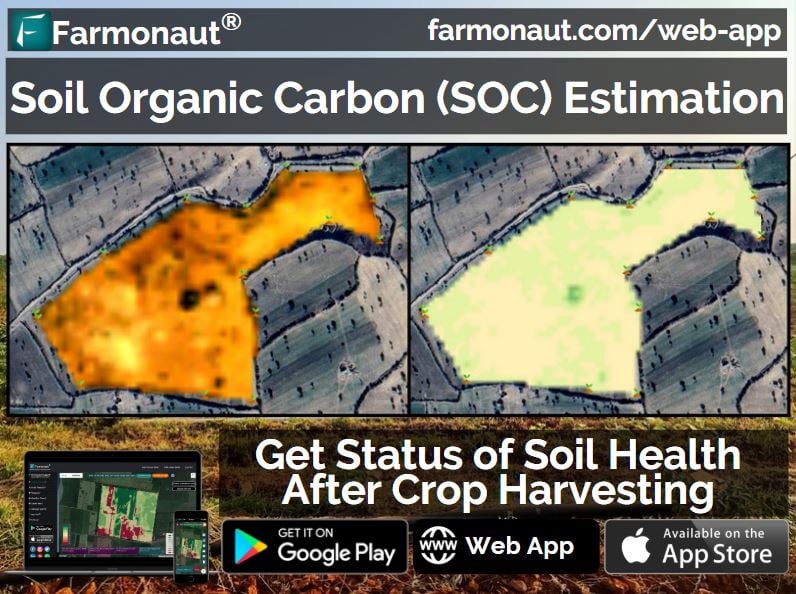
- 📡 Satellite-Based Monitoring: We deliver high-resolution multispectral satellite imagery for real-time analysis of crop growth, soil conditions, erosion risks, and vegetation cover, crucial for tracking carbon sequestration practices.
- 🤖 AI & Jeevn Advisory: Our Jeevn AI system processes satellite data to provide field-specific guidance, predicting the best timing for tillage, cover cropping, crop rotation, and organic amendment applications.
- 🔗 Blockchain Traceability: Ensuring full transparency in sustainable supply chains—see our Product Traceability module.
- 📈 Environmental Impact Tracking: Carbon footprinting tools help quantify and verify sequestration outcomes for farmers and accrediting bodies.
- 🛠️ Resource Management APIs: Developers can integrate our API for seamless access to satellite and environmental datasets. Comprehensive API documentation is available here.
- 🚜 Fleet Management: Optimize logistics and reduce operational emissions in large-scale agricultural and resource sectors with our fleet management tools.
- 💡 Loan & Insurance Verification: Banks and insurers can validate sustainable practices and soil health for farm loans and coverage through our crop loan & insurance verification platform.

Key Insights & Callouts
Tech-enabled monitoring of soil carbon and biomass is crucial for carbon markets and policy compliance by 2026.
Combine at least two strategies (e.g., cover cropping plus compost) to magnify both carbon sequestration and climate resilience benefits.
Neglecting long-term monitoring—regularly update soil carbon data for accurate GHG reduction claims.
Emerging carbon credit frameworks in 2026 will enhance revenue for farmers using verified sequestration practices.
Satellite analytics integrated with AI is shaping next-generation ephemeral carbon markets and supply chain traceability.
Benefits Beyond Carbon Sequestration in Agriculture
- ✔ Enhanced Soil Fertility: Promotes robust root growth, nutrient cycling, and microbial activity.
- ✔ Improved Water Retention: Builds soil resilience to drought and heavy rainfall.
- ✔ Biodiversity Conservation: Supports diverse plant and wildlife communities in agricultural lands.
- ✔ Greater Productivity: Yields are consistently higher in carbon-rich soils.
- ✔ Climate Adaptation: Reduces risk of lost harvests and income due to weather extremes.
The global transition to sustainable food systems by 2026 relies on scaling agriculture carbon sequestration—directly linking soil health and food security.
🌍 Visual List: Key Benefits of Sequestration Agriculture
- 🌳 Locks atmospheric CO₂ in soils and plants
- 💧 Enhances soil’s ability to absorb and retain water
- 🛡 Buffers farms against climate shocks
- 🌱 Supports sustainable, circular nutrient cycles
- 💹 Improves long-term profitability of farming
🛠 Visual List: Leading Technologies in Sequestration Agriculture
- 🛰 Satellite Imagery Monitoring
- 🤖 AI-driven Soil Health Assessment
- 🔗 Blockchain-Powered Traceability
- 💻 Precision Resource and Fleet Management Tools
- 📈 Carbon Footprinting & Emissions Tracking Platforms
Challenges, Opportunities, and The Future of Sequestration Agriculture
Despite its potential, sequestration agriculture faces notable challenges:
- ⚠ Measurement Uncertainty: Soil carbon changes can be difficult to track across diverse geographies and farming systems.
- ⚠ Permanence Risk: Changes in land use or extreme weather may reverse carbon gains unless strategies are maintained long-term.
- ⚠ Adoption Barriers: Upfront cost, knowledge gaps, and limited financial incentives can delay widespread adoption among farmers.
However, there are powerful opportunities ahead, especially as we move through 2026 and beyond:
- 🔗 Integration into Carbon Markets: Verified carbon sequestration unlocks new revenue streams for farmers via credits and ecosystem services payments.
- 📊 Technology Innovation: New satellite, AI, and blockchain platforms make it easier to measure, monitor, and finance sustainable agriculture practices globally.
- 🧑🌾 Growing Policy Support: Governments are incentivizing sequestration agriculture with subsidies, technical assistance, and research funding in their climate action programs.
- 💡 Rural Economic Development: Investments in soil health stimulate rural economies, boost job creation, and stabilize food production systems.
To overcome barriers, collaboration between farmers, agronomists, and tech providers is key—with digital tools like Farmonaut driving accessibility and informed decision-making for all.
Frequently Asked Questions
What is carbon sequestration in agriculture?
It’s the set of practices that capture and store atmospheric CO₂ in agricultural soils and crops, mitigating greenhouse emissions and enhancing soil health.
What is soil carbon sequestration agriculture, and why is it important in 2026?
Soil carbon sequestration agriculture increases organic matter in soils, locking away CO₂ and improving farm resilience against climate change—a key sustainability strategy for the future.
Which sequestration strategies have the highest potential?
Agroforestry and silvopasture top the list, with significant carbon storage both above and below ground, followed by effective use of cover cropping and organic amendments.
How can farmers measure their impact?
Farmers can use satellite-based tools and digital platforms (like Farmonaut’s) to monitor biomass, soil carbon, and greenhouse gas reductions in real time.
What are the main challenges to adopting these practices?
Key barriers include measuring soil carbon reliably, maintaining long-term management, and upfront adoption costs, but technology and policies are rapidly addressing these issues as we head towards 2026.
Can these efforts help farmers access new income streams?
Yes—verified carbon sequestration creates opportunities for participation in carbon credit markets and sustainability-centric supply chains.
Where can I learn more or integrate these solutions?
For real-world analytics, resources, and implementation tools, explore our apps or carbon footprinting page.
Conclusion: Towards Climate-Resilient, Sustainable Agriculture
As we approach 2026, sequestration agriculture is not just a theoretical solution but a practical, proven pathway for building climate resilience, increasing agricultural productivity, and supporting global food security. By embracing science-based carbon sequestration strategies—such as conservation tillage, cover cropping, agroforestry, crop rotation, organic amendments, silvopasture, and precision resource management—farmers, businesses, and policymakers can transform agricultural landscapes into vital carbon sinks.
Farmonaut’s advanced satellite, AI, and blockchain-enabled platforms are dedicated to driving the adoption and measurement of these strategies, supporting a transparent, scalable, and sustainable transformation in agriculture. Together, we can make sequestration agriculture the foundation of climate-smart food systems, restoring earth’s most critical resource—soil—for future generations.
Get satellite-driven insights, optimize your farm operations, and track your sustainable impact with Farmonaut.