Rainfed Plantain Farming: 7 Innovations for 2026
- Introduction to Rainfed Plantain Farming
- Global Significance of Rainfed Plantain Farming
- Challenges in Rainfed Plantain Farming in 2025
- 7 Innovations Transforming Rainfed Plantain Farming for 2026
- Comparative Innovation Impact Table
- Farmonaut: Satellite Technology Empowering Rainfed Farming
- Socioeconomic Impact and Sustainable Agronomy
- Frequently Asked Questions – Rainfed Plantain Farming 2026
- Conclusion & Next Steps
Introduction to Rainfed Plantain Farming: Foundations for the Future
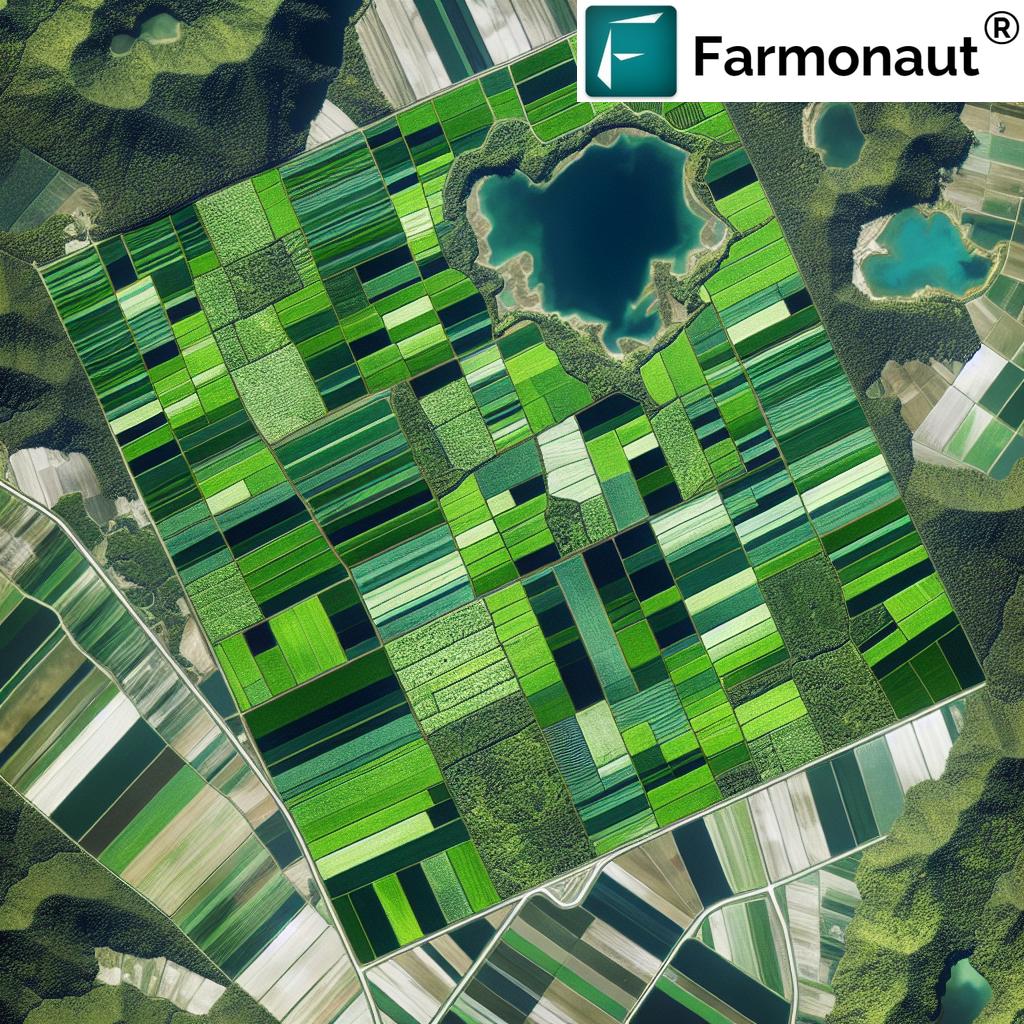
Rainfed farming stands as the cornerstone of agricultural production, particularly in tropical and subtropical regions where irrigation infrastructure remains limited or economically unfeasible. In 2025 and into 2026, rainfed farming—notably for plantain crops—is entering a transformative era driven by innovations that address longstanding challenges including climate variability, soil health, and sustainable management.
Plantain (Musa spp.), a staple food crop closely related to bananas, thrives in warm, humid climates with annual rainfall patterns typically ranging from 1200 to 2500 mm. These cropping systems are predominant in areas such as Africa, Latin America, and South Asia, where farmers rely primarily on natural precipitation to support crop growth. By 2026, understanding the unique conditions of rainfed plantain farming is critical for devising practices that improve yield, reduce stress, and ensure sustainability amidst increasing climatic fluctuations.

Global Significance of Rainfed Plantain Farming
Rainfed plantain farming is more than a means of food security; it’s a source of income and economic sustainability for millions of smallholder farmers in parts of Africa (notably Nigeria, Ghana, Uganda, and Cameroon), Latin America (Colombia, Ecuador, Brazil), and South Asia (India, Bangladesh, Sri Lanka). These rainfed systems not only support local economies but also underpin rural livelihoods and ecosystem health.
- ✔ Food security: Plantain is a daily staple for over 400 million people worldwide.
- ✔ Income stability: Smallholder farmers rely on seasonal plantain harvests for household needs.
- ✔ Agro-ecosystem services: Traditional rainfed methods support biodiversity, carbon sequestration, and microclimate regulation.
- ✔ Limited irrigation access: In many regions, poor infrastructure and water scarcity make rainfed farming the principal cropping strategy.
As we approach 2026, embracing advancements in agronomy, technology, and resource management becomes not just an opportunity, but a necessity for highly productive and resilient plantain farming under rainfed conditions.
Rainfed plantain farming systems, especially in sub-Saharan Africa and Latin America, will undergo rapid change due to climate adaptation and technological integration by 2026.
Challenges in Rainfed Plantain Farming in 2025
Focus Keyword: Rainfed Plantain Farming & Climate Challenges
The viability of rainfed farming—and specifically plantain farming—is increasingly threatened by a cascade of evolving challenges in 2025 and beyond. Addressing these is essential to secure stable yields and long-term sustainability.
Major Challenges
-
Climate Variability and Water Stress:
- Irregular rainfall patterns—influenced by climate change, El Niño, and La Niña events—cause prolonged dry spells and/or excessive precipitation.
- Unseasonal droughts and delayed onset of monsoons disrupt planting schedules and expose plants to severe water stress, resulting in reduced flowering and low yield.
-
Soil Degradation and Health Decline:
- Decades of continuous cropping, minimal fallow, and the absence of soil restoration practices lead to severe nutrient depletion and erosion.
- Loss of organic matter and poor soil structure decreases moisture retention and increases susceptibility to heavy rainfall-induced erosion.
-
Escalation of Pest and Disease Pressures:
- Stressed plantains become more vulnerable to pests such as banana weevils and nematodes, and to diseases like Black Sigatoka and Panama disease.
- Under rainfed conditions, lack of precise pest management methods increases crop loss risk.
-
Limited Access to Inputs and Innovation:
- Smallholders have limited and often unaffordable access to improved plantain varieties, fertilizers, water harvesting technologies, and modern tools.
- The digital divide means many farmers do not benefit from emerging AI-driven or precision agriculture tech.
Many smallholder farmers over-cultivate rainfed plantain fields without replenishing soil nutrients, leading to long-term declines in yield and soil fertility.
Unpredictable water availability causes flowering and fruit set issues in plantains.
Black Sigatoka and weevil outbreaks spike during periods of stress.

Bullet Points: Top Five Climate and Systemic Risks in Rainfed Plantain Farming
- ⛈ Erratic rainfall threatens soil moisture stability and fruit development.
- 💧 Water stress leads to lower plantain yields and increased crop failures.
- 🚜 Soil erosion from heavy rainfall reduces field productivity long-term.
- 🐛 Pest/disease resilience is reduced when plants are water-stressed.
- 🌱 Lack of improved varieties and modern methods keeps yields suboptimal for many regions.
7 Innovations Transforming Rainfed Plantain Farming for 2026
Focus Keyword: Innovations in Rainfed Plantain Farming Systems
To overcome the multi-layered challenges of rainfed plantain farming, several innovations are rapidly scaling from pilot phases to mainstream adoption as we enter 2026. These advancements focus on maximizing yield, building climate resilience, enhancing soil health, and ensuring future-ready food security.
1. Climate-Smart Agronomy (CSA)
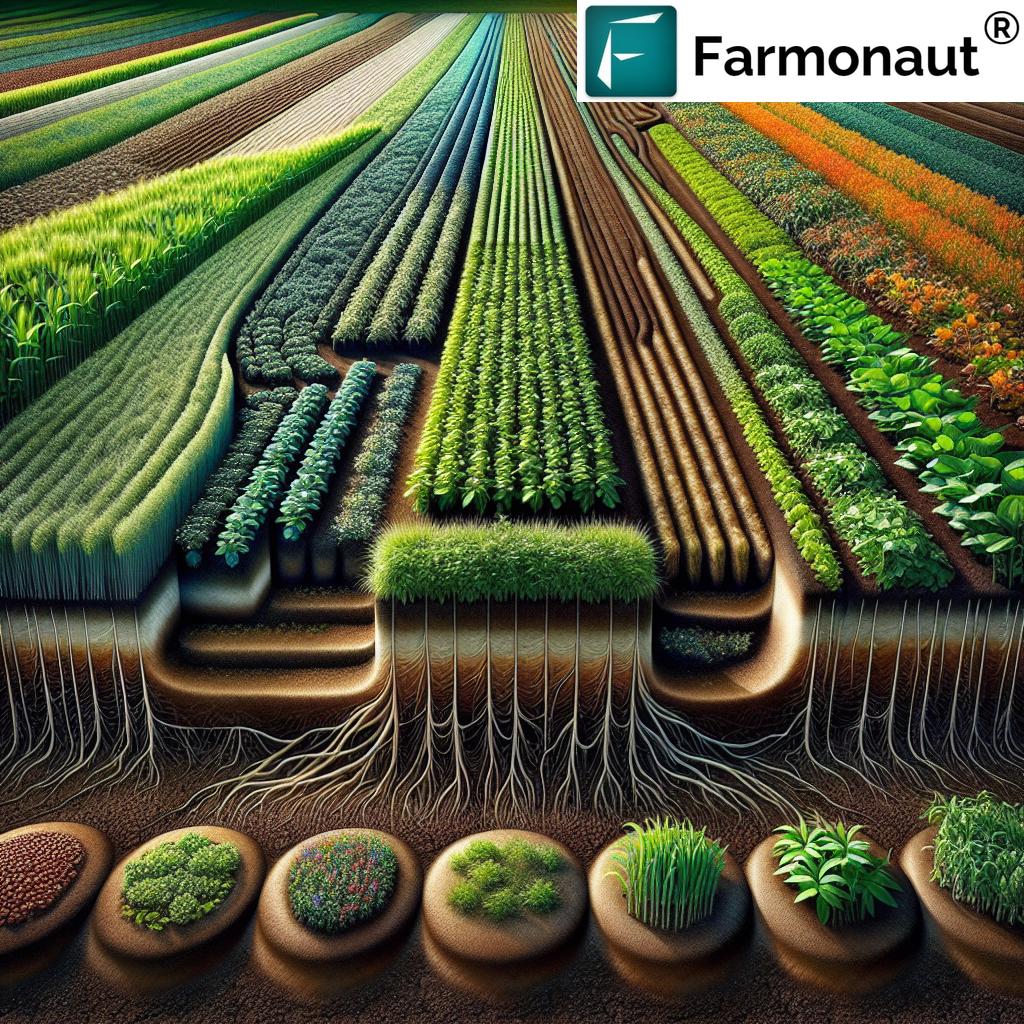
Climate-smart agronomy encompasses conservation and regenerative practices such as mulching, intercropping with legumes, contour farming, and cover cropping. These methods:
- ✔ Increase soil moisture retention and reduce risk of dry spells
- ✔ Reduce erosion even under erratic or excessive rainfall
- ✔ Improve long-term soil health and organic matter content
- ✔ Suppress weed pressure and moderate soil temperature
By combining these methods, rainfed plantain systems can become more robust and less dependent on external water supplies.

2. Drought-Tolerant and High-Yield Plantain Varieties
Recent advancements in breeding and biotechnology have enabled the development of improved plantain varieties specifically adapted for rainfed and drought-prone conditions:
- ✔ Drought and disease resistance help maintain yields during climatic stress.
- ✔ Enhanced yield potential, meaning more produce per hectare, even under marginal rainfall.
- ✔ Compatibility with integrated pest management for lowering crop losses.
Wide-scale adoption of these cultivars is projected to uplift overall productivity in major rainfed plantain production zones by 25–30% by 2026.
3. Soil and Water Conservation Technologies
A resurgence in traditional and novel soil conservation methods is transforming the baseline resilience of rainfed plantain systems:
- ✔ Micro-catchments: Small-scale land shaping to capture and retain rainwater for local use
- ✔ Zai pits (water holes): Facilitate water infiltration, improve organic matter, and anchor nutrients close to plant roots
- ✔ Rainwater harvesting: Storage ponds and ferrocement tanks moderate rainfall variability
Such technologies stabilize field water availability, optimize rainfall use, and mitigate soil erosion—all contributing to higher, more stable yields under rainfed conditions.
Reduces water stress, increases supply during dry spells
Slows erosion, maintains nutrients, boosts plantain growth
4. Digital Agriculture & Weather Forecasting Solutions
The next generation of digital agriculture tools deliver targeted, timely, and affordable advice to farmers in remote, rainfed-dominated regions:
- ✔ Real-time weather forecasting for optimizing planting and harvesting schedules
- ✔ Pest and disease alerts, reducing the response time to emerging threats
- ✔ Data-driven crop management recommendations
- ✔ Smartphone and SMS-based knowledge transfer, bridging the access gap
Implementation of such systems helps reduce risk associated with climate variability while enhancing productivity and sustainability among smallholder rainfed plantain farmers.

5. Integrated Pest & Disease Management (IPM)
Future-ready pest management involves:
- ✔ Integrating resistant plantain varieties
- ✔ Use of biological controls (e.g., beneficial bacteria and fungi)
- ✔ Crop rotation and field hygiene to interrupt pest cycles
- ✔ Reduced, targeted pesticide applications for sustainable practice
IPM ensures plant health under rainfed resource constraints, minimizes environmental impact, and helps mitigate resistance build-up in target pest populations.
Combining digital advisory systems with field scouting (using satellite or drone data) offers plantain farmers an early-warning edge against outbreaks even with limited broadband access.

6. Community-Managed Rainwater Harvesting Systems
Scalable, community-led investments in rainwater harvesting infrastructure are on the rise:
- ✔ Shared water reservoirs buffer dry spells for group-farmed plantain fields.
- ✔ Low-tech collection networks distribute water during critical crop development stages.
- ✔ Empower communities to maintain local supply resilience while building ownership of assets.
This innovation directly compensates for limited irrigation infrastructure in rural settings and fosters cooperative approaches to sustainability.
7. Satellite-Based Monitoring & Resource Management
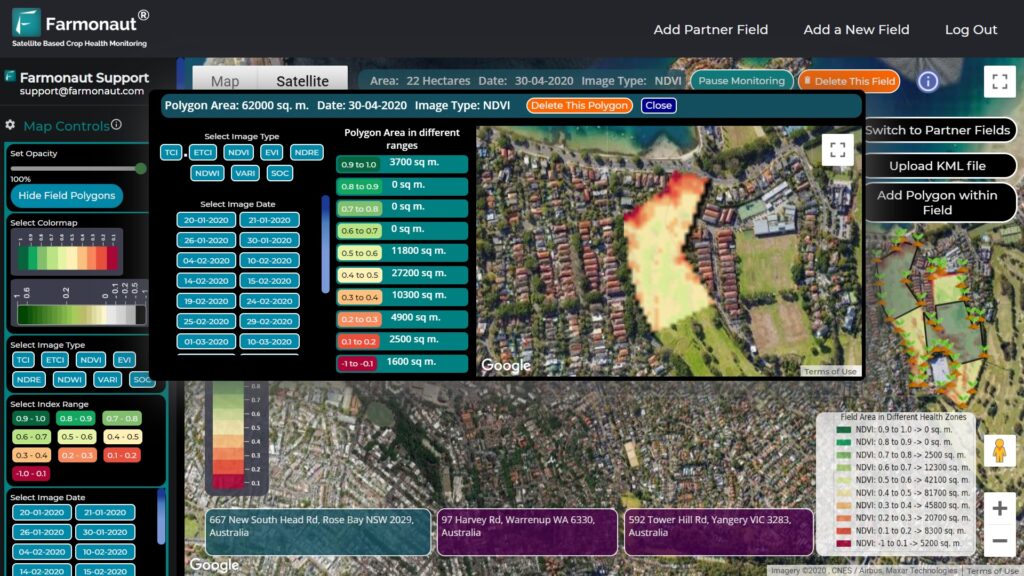
Advanced satellite technology now enables regular, accurate, and affordable crop health monitoring. Solutions such as those offered by Farmonaut provide:
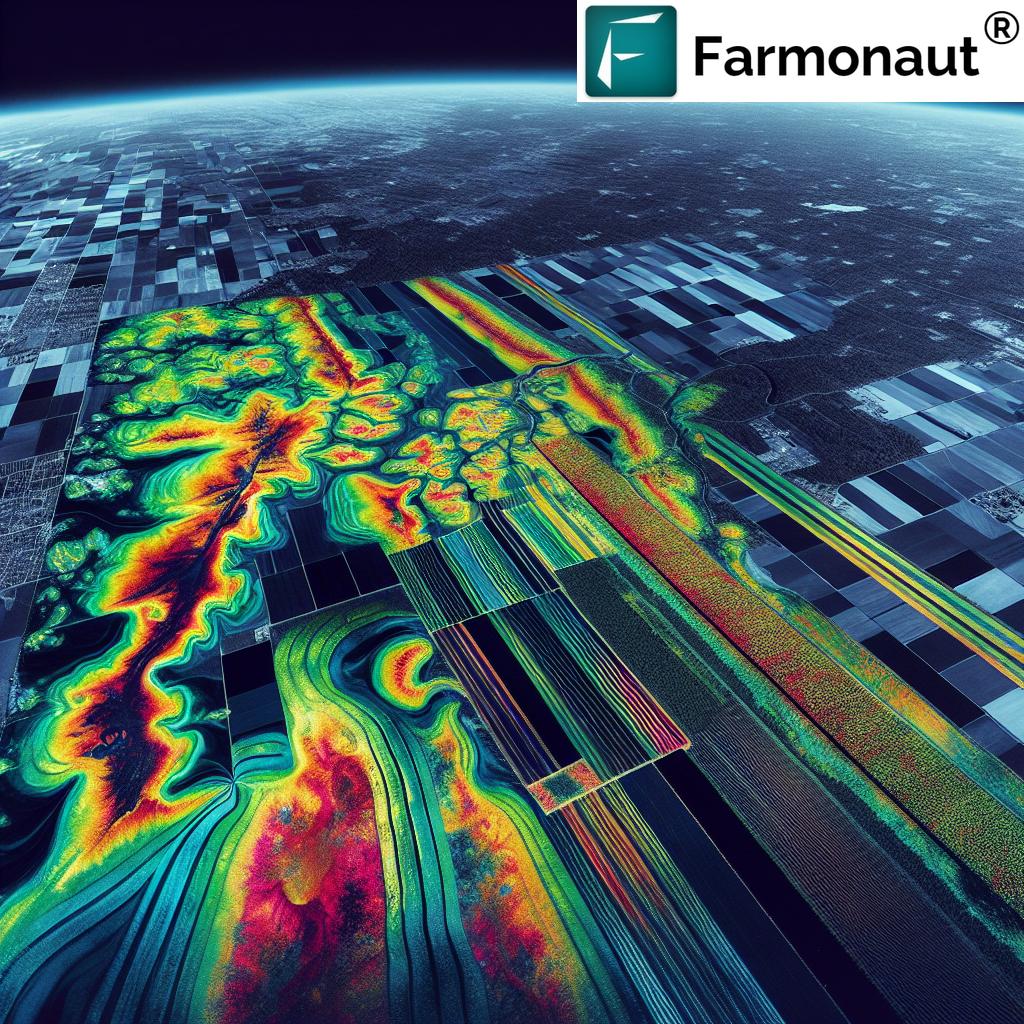
- ✔ NDVI-based monitoring for early detection of plant stress and yield prediction
- ✔ Soil moisture mapping, allowing farmers to identify dry areas and optimize interventions
- ✔ Carbon footprinting dashboards for tracking environmental impact and eligibility for green certifications
- ✔ Seamless access via web or mobile apps as well as developer APIs for integration into local management systems

This innovation is revolutionizing rainfed agriculture, empowering plantain farmers to make data-driven decisions with minimal cost or technical experience.



With up to 60% of the world’s plantain cropping area under rainfed systems, these innovations offer significant upside for agritech investments targeting food security, carbon markets, and climate-adaptive agriculture for 2026 and beyond.
Comparative Innovation Impact Table: Rainfed Plantain Farming 2025–2026
| Innovation Name | Brief Description | Estimated Yield Improvement (%) | Resilience to Climate Challenges | Effect on Soil Health | Implementation Cost (USD) | Technology Readiness Level (TRL) |
|---|---|---|---|---|---|---|
| Climate-Smart Agronomy | Conservation practices (mulching, cover cropping, intercropping, contouring) | 18–23% | High | Positive | $100–$500/ha | 8 |
| Drought-Tolerant Plantain Varieties | Improved genetics for stress, pest, and disease resilience | 22–30% | High | Neutral | $35–$90/ha (seedlings/scions) | 8 |
| Soil & Water Conservation Tech | Micro-catchments, zai pits, rainwater harvesting | 12–17% | Medium–High | Positive | $60–$350/ha | 7 |
| Digital Agriculture & Weather Forecasting | Smartphone/SMS advisory, apps, climate-smart scheduling | 8–14% | High | Neutral | $10–$45/user/year | 9 |
| Integrated Pest & Disease Management (IPM) | Combines resistant varieties, biocontrols, best practices | 10–19% | Medium | Positive | $30–$120/ha | 8 |
| Community Rainwater Harvesting | Group-owned & managed catchment/irrigation systems | 10–16% | High | Positive | $200–$2,500 (shared system) | 7 |
| Satellite-Based Crop Monitoring | Remote monitoring of crops, soil, water and carbon impact | 11–15% | High | Neutral | $30–$100/year (per field) | 9 |
Farmonaut: Satellite Technology Empowering Rainfed Plantain Farming
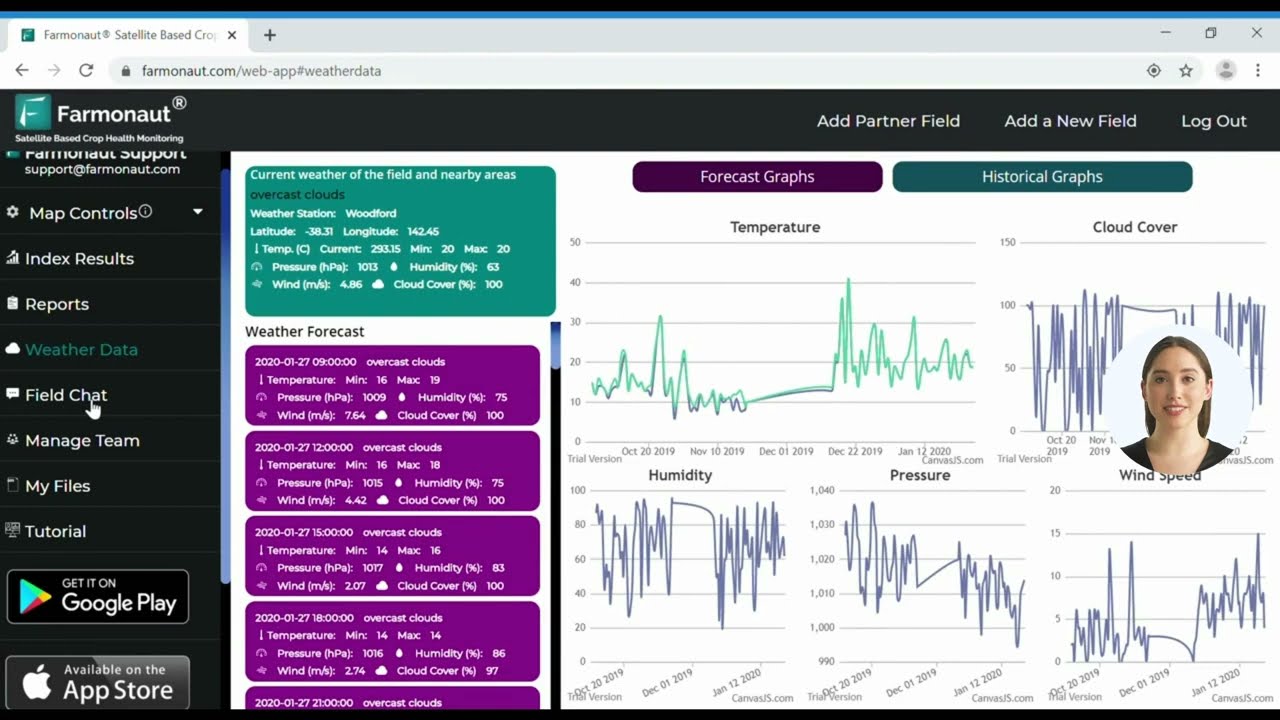
At Farmonaut, we are dedicated to making satellite-based insights affordable and accessible—helping plantain farmers, agribusinesses, and rural institutions leapfrog traditional limitations in rainfed agriculture. Our platform provides:
- Real-time satellite monitoring: Track crop health (NDVI), soil moisture, and field anomalies, enabling timely action for stressed rainfed plantain crops.
- Carbon footprint monitoring: Measure, report, and manage the sustainability of plantain fields, a major requirement for green supply chains in 2026 and beyond.
- AI-based advisory (Jeevn AI): Get site-specific recommendations on yield forecasting, irrigation scheduling, input optimization, and weather alerts directly to your smartphone or dashboard.
- Blockchain-based crop traceability: Build consumer trust and streamline export certification by tracing rainfed plantain from farm to market.
- Crop loan and insurance verification: Satellite-verified evidence assists rural growers in accessing affordable financial support and quick claims settlement without site visits.
- Resource and fleet management: Remotely monitor distributed farm resources, optimize machinery/fleet utilization, and plan logistics efficiently on the large-scale farm management platform.
Our approach helps bridge the digital divide for rural, rainfed-dominated farming systems, enhances decision-making, and aligns with sustainability mandates for years ahead.
Subscribe now for scalable satellite-driven management tools for single farms or regional agencies:
Farmonaut’s monitoring covers everything from soil health and moisture variability to real-time crop stress, empowering data-driven rainfed plantain farming decisions with less than $1/week investment per field.
Socioeconomic Impact and Sustainable Agronomy: Rainfed Plantain Farming 2026
Rainfed plantain systems are not only vital to staple food security, but also underpin income generation and rural employment from Latin America to South Asia and Africa. Prioritizing sustainable management and innovation produces multi-tier wins:
- ✔ Improved yields = greater household food and financial security
- ✔ Organic and nature-based practices build ecosystem resilience, protecting pollinators, soil microbes, and rural water supplies
- ✔ Enabling access to carbon markets, crop insurance, and digital traceability connects rainfed farmers to new revenue streams and global supply chains
- ✔ Community-led watershed management amplifies access to water, reduces local climate vulnerability, and enhances social capital
- ✔ Policy alignment with digital solutions (e.g., subsidies for improved varieties or tech-enabled field monitoring) builds long-term resilience
By 2026, a significant share of rainfed plantain growers will also participate in sustainable certification programs, leveraging traceability tech to validate their climate and health credentials for both local and export markets.
Failing to monitor and adapt to new pest pressures as weather patterns shift can lead to unexpected rainfed plantain crop failures, even in regions with improving rainfall.
Visual List: Future Sustainability Drivers
- 🌳 Agroforestry Integration: Plantain fields combined with shade trees improve microclimates and buffer yield variability.
- 🌿 Organic Inputs: Composting, green manures, and biochar advance soil health and reduce reliance on synthetic fertilization.
- 💧 Decentralized Rainwater Capture: On-farm and cooperative water stores increase drought resilience even in the driest seasons.
- 🔒 Digital Traceability: Blockchain-backed supply chains ensure authenticity and attract premium buyers.
- 📈 Yield Forecasting: Satellite data and AI enable better farm planning and local market integration.
Frequently Asked Questions – Rainfed Plantain Farming 2026
- What is rainfed plantain farming?
Rainfed plantain farming is growing plantains relying mainly on natural rainfall, without supplemental irrigation. It’s predominant in regions with limited irrigation infrastructure and accounts for over 60% of global production. - What are the main challenges for rainfed plantain farmers in 2026?
The main challenges include erratic rainfall patterns due to climate change, prolonged drought spells, soil degradation (nutrient loss and erosion), heightened pest and disease threats, and limited access to improved varieties or digital tools. - How do digital technologies benefit rainfed plantain farming?
Digital platforms and satellite-based monitoring (like Farmonaut) provide timely weather data, field-specific advisories, pest and disease predictions, yield forecasting, and improved resource management—all accessible on mobile or browser apps. - Can rainfed plantain farms be climate resilient?
Yes. By integrating innovations such as drought-tolerant plantain varieties, regenerative agronomic practices, water harvesting systems, and digital monitoring, rainfed plantain farms can increase both yield and resilience to climate shocks. - Where can I access technology or tools to improve my rainfed plantain farm?
Affordable, scalable tools are available at Farmonaut’s app portal for real-time monitoring, management, and forecasting.
Conclusion & Next Steps for Rainfed Plantain Farming
Rainfed plantain farming remains a vital backbone for food security and rural livelihoods across many parts of Africa, Latin America, and South Asia. However, this cornerstone of tropical agriculture faces pronounced challenges—from climate variability and soil health decline to pests, diseases, and resource limitations. The good news: We are also witnessing a wave of promising opportunities driven by cutting-edge innovations and sustainable agronomy.
By embracing the seven key innovations—ranging from climate-smart practices and improved plantain varieties to digital, community, and satellite solutions—rainfed plantain farms can significantly improve yield, enhance resilience, and secure their future in the context of rising climate challenges in 2026 and beyond.
The integration of satellite-driven insights with on-ground regenerative practice and community-based water management holds exceptional promise—not just for productivity but for the overall sustainability of rural livelihoods and local ecosystems. With strategic investment, training, and access, the future of rainfed plantain farming can remain bright and bountiful for generations to come.
Begin your journey toward a smarter, more resilient, and profitable plantain farming future. Download the Farmonaut app or explore our advisory solutions today!
By 2026, rainfed plantain farming will be defined not just by overcoming limitations but by leveraging new technology, diversified practices, and satellite-driven management to unlock higher yield, security, and ecological harmony worldwide.