Rabbit Poop for Garden: Organic Fertilizer Trends 2026
“Rabbit poop use as fertilizer is projected to grow by 18% in organic gardens by 2026.”
“By 2025, over 60% of sustainable farms are expected to use rabbit manure for enhanced soil nutrition.”



Table of Contents
- Introduction: Rabbit Poop for Garden Innovation in 2026
- What Makes Rabbit Poop for Garden Use Unique?
- Nutrient Profile and Properties
- Applications in Agriculture, Agroforestry & Gardens
- Sustainable Agriculture Trends in 2025–2026
- Comparative Benefits Table: Organic Fertilizer Options
- Best Practices for Using Rabbit Manure in Gardens
- Common Challenges & Solutions
- Enhance Your Fertilizer Practices with Farmonaut
- Frequently Asked Questions
- Conclusion: A Greener Choice for 2026 and Beyond
Introduction: Rabbit Poop for Garden Innovation in 2026
As we approach 2026, organic fertilizers are gaining renewed attention for their sustainable advantages in agriculture and home gardening. Among emerging options, rabbit poop for garden soil and crop enrichment stands out for its unique properties and eco-friendly impact. Demand for organic and sustainable fertilizer options is shaping the evolving landscape of food production, and informed gardeners and farmers are turning to rabbit manure to enhance soil health, support robust plant growth, and minimize environmental harm.
This blog unpacks why rabbit poop for garden use is a top choice in 2025-2026 for sustainable and profitable organic agriculture, how it works, and how to maximize its benefits for your garden, farm, or forestry plots.
Rabbit manure is one of the few animal manures that can be applied directly to gardens without extensive composting due to its relatively low ammonia and pathogen risk—making it both convenient and safe for organic gardening in 2026.

What Makes Rabbit Poop for Garden Use Unique?
Rabbit manure (sometimes called droppings or poop) stands apart from other common organic manures due to its dry, pelleted structure and nutrient-rich content. Unlike cow or chicken manure, it is relatively odorless, easy to handle and to store, making it ideal for sustainable gardening and agriculture, especially in urban and small-scale settings.
- ✔ Lower Risk: Applied directly to soil without harming plants or roots
- 📊 Nutrient-Dense: Rich in essential nitrogen (N), phosphorus (P), potassium (K)
- ⚠ Safe & Odorless: Minimal ammonia, relatively dry and not prone to foul smells
- ✔ Microbial Boost: Contains beneficial microbes and organic matter for better soil structure
- 📋 No Need for Extensive Composting: Use instantly or after brief storage
Many gardeners assume all animal manures need extensive composting. With rabbit manure, direct application is typically safe—a huge labor and time saver in 2026.
Rabbit Poop for Garden: Rising Trend in Urban & Organic Spaces
In urban gardens and permaculture setups, rabbit droppings fit perfectly into closed-loop systems. Raising rabbits for meat, pets, or fiber produces a steady stream of high-value organic fertilizer, reducing waste and minimizing synthetic fertilizer use. As sustainable agriculture gains prominence in 2025-2026, more farmers, gardeners, and agroforestry initiatives are utilizing rabbit manure for its unique and scalable benefits.

Nutrient Profile & Properties: Rabbit Poop for Fertilizer
Rabbit manure is a balanced source of the primary macronutrients essential for plant growth:
- ✔ Nitrogen (N): Approximately 2.5%
- ✔ Phosphorus (P): Around 1.3%
- ✔ Potassium (K): About 0.6%
This composition is similar to or even slightly richer than many commonly used organic manures. Rabbit poop also contains trace minerals, organic matter, and beneficial microbes that improve soil structure, aeration, and water retention.
- ✔ Improves soil fertility with slow-release nutrients
- ✔ Supports microbial diversity vital for nutrient cycling
- ✔ Promotes healthy root growth and resilience in plants
- ✔ Reduces risk of burning plants compared to “hot” manures like chicken
Because rabbit droppings are dry and pellet-shaped, handling, storing, and applying them is much easier than with wet or sticky manures, making this ideal for regular garden use.
Feeds plants for weeks without leaching
Improves structure, aeration and water retention
Low ammonia and pathogen content
Layer rabbit manure with mulch around fruit trees, vegetables, or flower beds for a slow-release nutrient boost and improved soil structure.
Applications: Rabbit Poop for Garden, Agroforestry & Organic Plots
How Can Rabbit Poop Be Used in Gardens and Fields?
As organic fertilizer, rabbit manure is a highly effective choice for a wide variety of applications in plots, fields, forestry nurseries, and mixed-crop systems:
- Vegetable Plots: Adds vital nutrients and organic matter for boosted yields and soil fertility.
- Herb Gardens: Grows lush herbs by maintaining steady nutrient flow.
- Young Tree & Forestry Saplings: Supports early root development, especially in organic nurseries.
- Top Dressing: Sprinkled as a soil amendment around mature plants.
- Compost Booster: Speeds decomposition and improves C:N ratio in traditional composting.
- Permaculture Setups: Closes the loop in regenerative agriculture systems.
- Potting Mix Enrichment: Safely mixed into seed starting and transplant soils for home gardening.

Sustainable Farming & Soil Health
Across the evolving agricultural landscape of 2026, farmers are integrating rabbit manure as a vital soil input. Its use is particularly prized in regions with rising restrictions or bans on synthetic fertilizers, such as some parts of Florida, USA.
- Enhances soil fertility without harmful residues
- Supports regenerative agriculture and carbon sequestration
- Reduces dependence on purchased inputs
- Improves water retention and resilience against drought
- Boosts crop yields and ecosystem health in agroforestry systems

With regulatory shifts, especially in North America and Europe, demand for eco-friendly fertilizers like rabbit manure is poised for double-digit compound annual growth through 2026.

Sustainable Agriculture Trends: Rabbit Poop for Garden Fertilizer in 2025–2026
In response to climate change and food security concerns, the shift toward sustainable agriculture is gaining pace globally. Rabbit poop allows organic farmers to practice:
Eco-Friendly Nutrient Cycling
Reduced Chemical Input
Cleaner Waterways
As policies like the Florida fertilizer ban and circular economy standards in Ontario (see the
Ontario Farmers 2025 video)
show, organic manures are essential ingredients for regenerative farming and environmental stewardship.
Rabbit droppings—by improving soil health, sequestering soil carbon, and eliminating the need for
environmentally harmful synthetic inputs—will help define the next chapter in sustainable gardening and
agroforestry.

Every ton of rabbit manure used instead of synthetic fertilizer avoids up to 1.5 tons of CO2 emissions and contributes to healthier watershed ecosystems.
Comparative Benefits Table: Rabbit Poop vs. Other Organic Fertilizers
Choosing the best organic fertilizer can be confusing. This table compares the sustainability and soil health metrics of rabbit manure with other leading options.
| Fertilizer Type | Estimated Nitrogen (N-%) | Estimated Phosphorus (P-%) | Estimated Potassium (K-%) | Composting Requirement | Soil Health Impact | Eco-Friendly Score (1-10) | Adoption Growth (% 2025-2026) |
|---|---|---|---|---|---|---|---|
| Rabbit Poop | 2.5% | 1.3% | 0.6% | No | High | 9 | +18% |
| Cow Manure | 0.6% | 0.5% | 0.4% | Yes | Medium | 8 | +7% |
| Chicken Manure | 1.5% | 1.0% | 0.5% | Yes | Medium | 7 | +11% |
| Compost (Mixed) | 0.7% | 0.3% | 0.5% | Yes | High | 8 | +12% |
Rabbit poop for garden delivers higher nitrogen plus convenience and safety—no waiting, minimal effort, and maximal benefit for home and commercial gardens.
Best Practices: How to Use Rabbit Poop for Garden Success
Rabbit manure can be applied immediately, but correct methods ensure the best results for plants and soil:
Direct Application
- ✔ For in-ground crops: Broadcast droppings as a top dressing around plants (avoid contact with leaves/stems)
- ✔ For container plants: Mix up to 10% by volume with potting mix for slow, even nutrient release
- ✔ For trees: Form a ring around the drip line (not touching trunk)
Composting for Sensitive Applications
- ✔ Lightly compost rabbit poop for a few weeks for seedlings or heavy applications
- ✔ Combine with carbon-rich matter (straw, leaves) for better balance
- ✔ Use finished product for root vegetables or where microbial diversity needs boosting
Smart Application Rates
- 📏 Recommended rate: 5–10 pounds per 100 square feet, adjust by crop and soil test results
- ⚖ Mix with Compost: For sandy or depleted soils, blend with mature compost or other organic matter to optimize fertility and moisture retention

- ✔ Easy to handle, non-offensive to neighbors
- 📊 Boosts soil carbon content and water-holding capacity
- ⚠ Do not use droppings from sick rabbits to avoid pathogens
- ✔ Blends well in layered compost bins to improve health and decomposition
- 📏 Adjust rates as needed—overuse can lead to excess nitrogen for sensitive roots
Always check for the latest local/national agricultural regulations regarding manure applications for safety and food production compliance.
Common Challenges & Solutions with Rabbit Poop for Garden Fertilizer
Despite its advantages, some practices and precautions can maximize the effectiveness and minimize any rare downsides of rabbit manure use:
- ⚠ Do not use manure from unknown or treated sources (avoid chemical contamination)
- 📉 Over-application can cause nutrient runoff—measure and test soil regularly
- 🐇 Balance with other organic inputs in heavy clay or sandy soils for best results
- 🌡 Monitor temperature/moisture—rabbit droppings are dry, but excessive wetting may cause mild odor
- 🦠 Rarely, contact with sick animals can introduce pathogens; compost when in doubt
Enhance Rabbit Poop Fertilizer Practices with Farmonaut
For growers looking to further maximize soil health, farming productivity, and environmental stewardship, digital tools can offer deep insights into soil conditions, crop health, and fertilizer impact. We at Farmonaut provide:
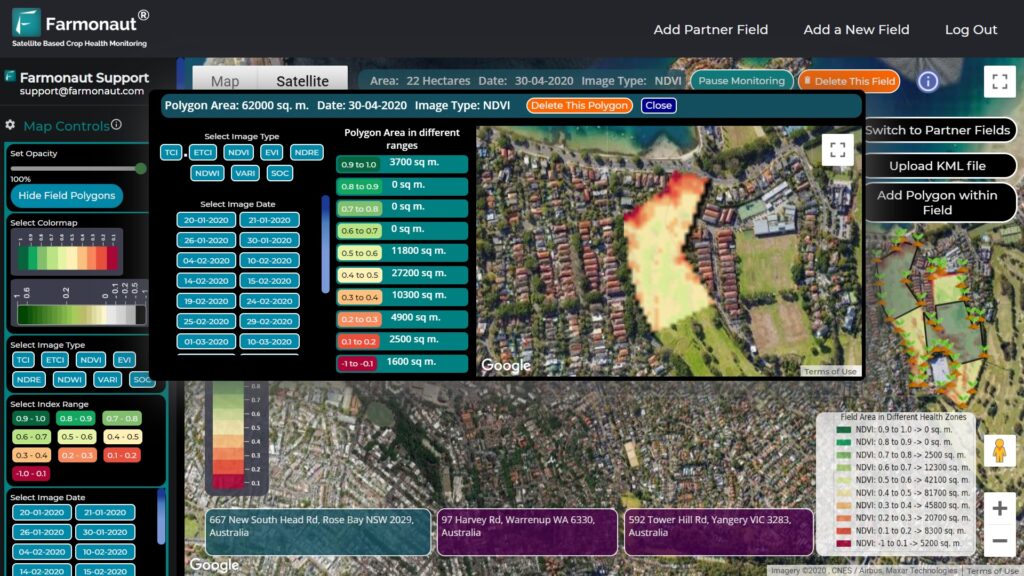
- ✔ Real-time satellite-based soil and crop health mapping for optimizing fertilizer use and placement
- ✔ AI-powered weather, growth and application advisories for smarter farming
- ✔ Carbon footprint monitoring to ensure your manure practices align with global sustainability goals
- ✔ Blockchain-based traceability for transparent record of manure origin and usage
- ✔ Resource management tools for reducing fertilizer costs and boosting yields
Farmonaut’s solutions empower organic farmers, gardeners, and agroforestry practitioners to refine manure inputs, improve overall farm efficiency, and demonstrate environmental leadership.
-
Explore the Farmonaut Satellite API for seamless integration of soil, weather, and crop health analytics into your fertilizer management.
Link your manure use with precision farming and sustainability!
Docs: API Developer Documentation - Carbon Footprinting Platform – Assess and demonstrate lower emissions from manure practices.
- Farmonaut Agro-Admin App – Manage large organic operations and fertilizer schedules from a single dashboard.
- Product Traceability Module – Build transparency for organic certification and consumer confidence in sustainable produce.
- Crop Loan & Insurance Support – Use satellite validation to secure financing for sustainable farm input upgrades.
Geospatial monitoring of soil nutrient change can validate the carbon sequestration benefit of transitioning from synthetic to rabbit manure-based practices on organic farms.
Frequently Asked Questions: Rabbit Poop for Garden & Sustainable Fertilizer
Q1. Is rabbit poop safe to use directly on my vegetable garden?
Yes, rabbit manure is one of the safest manures for direct garden application because it’s low in ammonia and pathogens compared to other animal manures.
Q2. Does rabbit manure need to be composted?
No, it doesn’t require composting for most uses! However, light composting is advised for seedlings or if you’re unsure of the rabbits’ health.
Q3. How much rabbit manure should I use in my plots?
A general rate is 5–10 pounds per 100 sq. ft., but always adjust to your soil test results. For containers, blend up to 10% by volume.
Q4. What are the main advantages over chicken or cow manure?
Rabbit droppings are drier, contain more nitrogen, less risk of “burning,” less odor, and safer for direct soil use.
Q5. Can I mix rabbit droppings with other fertilizers?
Yes! Blending rabbit manure with compost, mulch, or other organic matter enhances soil structure and biodiversity.
Q6. Can Farmonaut help optimize my manure and fertilizer strategy?
Absolutely—our satellite and advisory platforms support smart application, resource tracking, and environmental monitoring for organic fertilizer systems. Try Farmonaut today!
Conclusion: Rabbit Poop for Garden—A Greener, Smarter Choice for 2026
As we move decisively into the era of regenerative agriculture in 2026, rabbit manure stands out as a highly effective, sustainable, and pragmatic organic fertilizer choice. Its unique properties—including a rich balance of primary macronutrients, ease of use, and powerful soil health benefits—make it exceptional among animal manures.
The trend toward eco-conscious gardening and agroforestry isn’t just about avoiding harm; it’s about actively enhancing soil, water, and environmental health while supporting robust, resilient farming systems. By minimizing synthetic inputs and leveraging natural cycles, we are laying the foundation for a more secure and profitable food future.
Modern tools such as Farmonaut’s satellite and AI-powered platform ensure that sustainable fertilizer practices can be optimized, monitored, and scaled. As we collectively innovate in soil management, rabbit poop for garden remains a simple yet revolutionary step for every organic grower—big or small—seeking positive impact in 2026 and beyond.
With organic gardening and regenerative agriculture gaining momentum, rabbit manure could become a global staple fertilizer—closing nutrient loops, protecting the environment, and delivering strong economic returns for sustainable growers.