Table of Contents
- Understanding and Managing Pythium in Corn: Implications for Agriculture in 2025
- Biology, Epidemiology, and Risk of Pythium in Corn
- Symptoms and Diagnosis: Recognizing Pythium in Corn
- Environmental Condition and Risk Factors
- Pythium in Corn: 7 Powerful Strategies for 2026 Management
- Comparative Outcomes Table of Management Strategies
- Innovations & Technologies for Modern Pythium Management
- Farmonaut: Advanced Satellite Solutions for Pythium Management
- Frequently Asked Questions (FAQ)
- Conclusion
“In 2025, integrated Pythium management strategies can reduce corn yield loss risk by up to 40%.”
“Over 85% of successful corn fields use advanced technology to detect and manage Pythium infections efficiently.”
Pythium in Corn: 7 Powerful Strategies for 2026 Management



Understanding and Managing Pythium in Corn: Implications for Agriculture in 2025
Pythium in corn—a group of oomycete pathogens commonly known as water molds—poses a significant, ongoing threat to Zea mays production worldwide. As the demand for corn continues to rise driven by its pivotal roles in food, feed, and biofuel industries, **managing Pythium outbreaks** is critical for sustainable agriculture from 2025 onward. This comprehensive overview illuminates Pythium’s biology, disease risk factors, key symptoms, and environmental conditions favoring infection, while offering **cutting-edge management strategies optimized for the modern, technology-driven landscape of corn farming**.
Biology, Epidemiology, and Risk of Pythium in Corn
Pythium, a genus of oomycete pathogens, diverges significantly from true fungi despite superficial similarity. As part of the oomycetes group, these soil-borne organisms are most commonly known as water molds, and are characterized by filamentous growth and production of motile, swimming zoospores.
Pythium in corn primarily causes:
- Seed rot
- Damping-off (pre- and post-emergence)
- Root rot
In the early stages of corn growth, Pythium infects germinating seeds, resulting in poor emergence, seedling death, or stunted development. As plants mature, root infections expand, impairing nutrient and water uptake. This translates into stunting, chlorosis (yellowing), and, eventually, **lowered yield potential**.
- 🌿 Root Rot: Compromised roots fail to anchor plants and support healthy growth.
- 🌱 Seedling Damping-Off: Emerging plants collapse before establishing, decimating stands.
- 💧 Water Mold Infection: Zoospores swim through saturated soils especially during heavy rainfall or poor drainage.
- 📉 Yield Reduction: Untreated, significant yield losses can occur, impacting farm profitability.
- 🦠 Multiple Species Threat: Pathogenic species including Pythium ultimum, P. aphanidermatum, and P. irregulare adapt to varying environmental stressors, complicating control.
How Pythium Impacts Corn Production Worldwide
Pythium in corn is widespread globally, but prevalence peaks—particularly in regions with heavy, sustained rainfall or waterlogged soils during early planting. Irrigation, climate variability, and intensive cropping practices further intensify outbreaks.
For farmers in the United States, China, Brazil, and other leading corn-producing nations, unchecked Pythium can damage both yield and seed quality, with economic consequences felt across the entire supply chain.
Key Biological Features
- ✔ Group: Oomycetes (“water molds”), not true fungi
- ✔ Motile Zoospores: Swim across soil water films, quickly locating and infecting seeds and roots
- ✔ Filamentous Growth: Extensive mycelium enables fast colonization in moist conditions
- ✔ Disease Cycle: Survive in soil or plant debris, waiting for optimal environmental conditions
- ✔ Main Threat Period: Early germination to seedling stage; also impacts mature roots under stress

Pythium Disease Epidemiology: Why It Matters in 2026 and Beyond
Disease outbreaks depend on a triad of interacting elements:
- Pathogen Presence: Multiple species present in most arable soils
- Susceptible Host: Corn (Zea mays) seeds and roots especially during vulnerable growth stages
- Favorable Environment: Moist, poorly drained, heavy soils especially under high rainfall or intensive irrigation
With climate models predicting erratic rainfall, more prolonged wet periods, and warming temperatures into 2026, the risk of Pythium in corn fields will only grow—making innovative management strategies ever more critical.
- Faster Response: Enables timely treatment, reducing disease spread
- Targeted Control: Select best fungicide or biocontrol based on accurate species ID
- Yield Protection: Prevents stand failure and insidious yield loss
- Cost Efficiency: Minimizes unnecessary chemical applications
- Sustainable Practices: Supports integrated, eco-friendly disease management plans
Symptoms and Diagnosis: Recognizing Pythium in Corn
Early, accurate diagnosis is vital. Pythium symptoms in corn typically manifest as:
- ⚠ Soft, water-soaked seeds/seedlings—rapid decay before or after emergence
- ⚠ Failure to emerge—patchy fields with visible gaps in stand establishment
- ⚠ Stunted, wilted, or chlorotic plants—even under adequate moisture
- ⚠ Brown-black, mushy lesions on roots—sloughing or rotting tissue, sometimes with characteristic odor
- ⚠ Reduced root mass—roots that lack healthy white tips and fine feeder roots
- 🌡 Seed rot and damping-off: Lethal to new stands; often mistaken for cold or water stress
- 🌪 Patchy emergence: Empty strips in fields where seeds failed to germinate or seedlings died
- 🪴 Wilting despite moist soil: Key sign of root dysfunction
- 🔬 Mushy, dark lesions on roots: Distinctive in diagnostic labs and visible during field digging
Effective Diagnosis: Combining Field and Laboratory Insights
Field diagnosis begins with scouting: observe abnormal emergence, wilting, or stunted young corn. In suspicious cases, pull and inspect roots for brown/black rot and soft tissues.
In laboratories, isolation on selective media and molecular identification (e.g., PCR for specific Pythium DNA) pinpoint the causative species. Accurate detection is critical for guiding chemical and biological interventions, as not all Pythium respond to the same treatments.

Environmental Condition and Risk Factors Favoring Pythium in Corn
Understanding what favors Pythium development is key to preemptive, effective management. While Pythium species thrive globally, their virulence and impact on Zea mays depend most on soil moisture and temperature:
- 💧 Moist, poorly drained soils: Classic risk factor; enables zoospore movement and survival
- 🌧 Heavy and frequent rainfall: Makes fields waterlogged; disease intensity rises
- 🌡 Soil temperature (20°C–30°C): Favors most Pythium species including P. ultimum and P. aphanidermatum
- 💦 Excessive irrigation: Poor or poorly timed irrigation mimics rain-saturated soils
- 🧱 Compacted, heavy clay soils: Prevents drainage, reduces oxygenation—heightening risk
- 🔃 Continuous mono-cropping of corn: Persistent host roots sustain pathogen populations
- 🌱 Planting in cold, wet soils: Slow germination = longer vulnerability window to infection
Climatic shifts predicted for 2025–2026, including erratic rainfall and more frequent wet spells, mean Pythium in corn remains a critical risk for modern agriculture worldwide. Whether in North America, South America, or Asia, anticipating and adapting to these environmental conditions must be the cornerstone of disease management.

Pythium in Corn: 7 Powerful Strategies for 2026 Management
Modern management of Pythium in corn integrates decades of agronomic research with data-driven and biotechnological breakthroughs.
Here are seven advanced, effective strategies to mitigate risk, reduce disease, and safeguard yield in the upcoming years:
- Cultural Practices & Optimized Agronomy
- Raise seedbeds and install tile drainage to reduce soil moisture and water-logging.
- Rotate with non-host crops (e.g., soybean, wheat) to break the disease cycle.
- Delay planting until soil temperature and moisture conditions are optimal (warm, not saturated).
- Seed Treatments (Fungicidal & Biological)
- Apply fungicides (mefenoxam, metalaxyl) on corn seed before sowing.
- New: Explore biological agents (Pythium-antagonistic bacteria/fungi) and defense-eliciting seed coatings for sustainability.
- Deployment of Resistant or Tolerant Corn Hybrids
- Select or breed hybrids with enhanced root health and partial Pythium resistance/tolerance.
- Leverage CRISPR/Cas and molecular breeding for rapid genetic progress.
- Biological Control via Microbial Agents
- Introduce beneficial soil microbes (Trichoderma spp., Bacillus subtilis) proven to suppress Pythium populations.
- Precision Irrigation and Moisture Management
- Monitor and control irrigation based on real-time soil moisture (e.g., satellite or sensor-based).
- Schedule watering judiciously to balance moisture and ward off saturation.
- Digital Disease Monitoring and Forecasting
- Employ AI-driven platforms with satellite and drone imagery for field-scale disease risk assessment.
- Implement predictive models to inform intervention timing for treatments.
- Integrated Crop Management with Sustainable Practices
- Combine the above strategies with organic amendments, green manure, or reduced tillage.
- Apply Integrated Pest Management (IPM) principles to maximize long-term soil and plant health.
Comparative Outcomes: Pythium in Corn Management Strategies (2025–2026)
| Management Strategy | Estimated Disease Reduction (%) | Relevant Technology/Innovation | Implementation Complexity | Projected Yield Impact (%) |
|---|---|---|---|---|
| Cultural Practices & Drainage | 20–35% | Tile drainage, Raised beds, Real-time soil mapping | Medium | +10–18% |
| Seed Treatments | 35–60% | Novel chemical & bioseed coatings | Low-Medium | +20–25% |
| Resistant / Tolerant Hybrids | 15–30% | Molecular breeding, CRISPR/Cas gene editing | High | +8–15% |
| Biological Control (Microbial) | 20–40% | Trichoderma / Bacillus-based bioproducts | Medium | +7–14% |
| Precision Irrigation | 15–25% | Soil moisture sensors, Satellite-based mapping | Medium | +10–17% |
| Digital Monitoring & Forecasting | 10–18% | AI analytics, Drones, Farmonaut satellite tools | Low | +6–11% |
| Integrated Crop Management | up to 65% | All above, IPM frameworks | High | +25–40% |
“In 2025, integrated Pythium management strategies can reduce corn yield loss risk by up to 40%.”
“Over 85% of successful corn fields use advanced technology to detect and manage Pythium infections efficiently.”
Innovations & Technologies for Modern Pythium in Corn Management
The era of digital agriculture has arrived, and with it, new tools for detecting, predicting, and preventing Pythium infection at field and regional scales. Technology that leverages satellite imagery, drones, AI-driven modeling, and smart sensors is transforming how we safeguard corn against water mold risks.
- 🛰 Satellite Crop Health Monitoring:
Automated detection of stress-linked patterns (stand gaps, wilting, stunted zones) for early-warning and intervention—see Farmonaut Web App - 🛠 Jeevn AI Advisory Systems:
Real-time recommendations based on soil, weather, and crop health data; optimize planting schedules and fungicide applications - 🚁 Drones with Multispectral Cameras:
Rapid, targeted disease scouting—even over thousands of acres - 🔗 Blockchain Traceability:
Assure sustainable production practices and input traceability throughout the corn value chain—see Farmonaut Traceability Solution - 🌎 Environmental Impact Monitoring:
Track carbon footprint and resource use across fields—providing data for compliance and sustainability reporting. More on Farmonaut Carbon Footprinting. - 🛰 API-Based Weather and Disease Data:
Integrate with existing farm management systems for seamless updates—start with the Farmonaut Satellite & Weather API and read the Developer Docs.

How Precision Technology Supports Pythium Management
- 📊 Data insight: Mapping risk hotspots and tracking the evolution of root rot over time using NDVI and soil moisture indices.
- ⚙ Automation: Scheduling irrigation, flagging drainage issues, and alerting for timely seed treatments—all directly from a farm dashboard or mobile device.
- 💡 Efficiency: Applying input products (fungicides, biocontrols) only where needed, reducing environmental load and operational cost.
- ♻ Sustainability: Integrated carbon and resource monitoring (Farmonaut Carbon Footprinting feature) aligns with global agri-climate mandates for 2026.
- 🔒 Blockchain-powered transparency: Ensures authenticity and sustainability, from field to supply chain.

Integration With Large-Scale Farm Management
By 2026, large-scale farm management apps powered by AI, satellites, and IoT will form the backbone of Pythium risk management in major corn production zones. For scalable operations, Farmonaut Agro Admin App offers centralized oversight, crop scheduling, field reporting, and integration of disease alerts—vital for maximizing yield and sustainability.

Farmonaut: Advanced Satellite Solutions for Pythium in Corn Management
At Farmonaut, we are dedicated to driving the adoption of cutting-edge satellite technology for actionable, real-time insights in corn production and disease management systems. Our cloud-based platform empowers farmers, agribusinesses, and governments worldwide to detect risk factors, monitor soil and crop health, and make data-driven decisions for combating Pythium in corn with unprecedented efficiency.
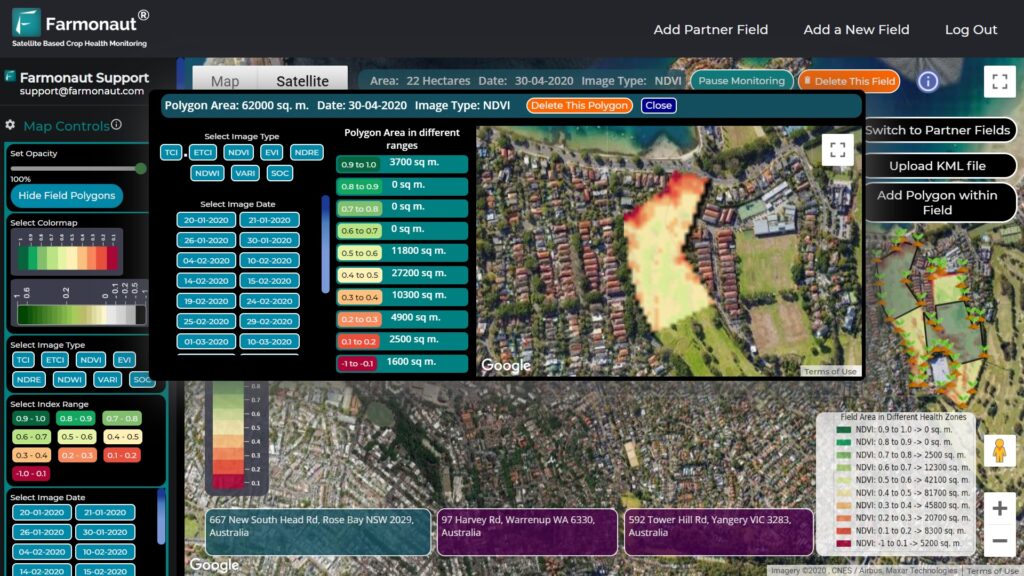
- Satellite Crop Monitoring—Access multispectral imagery, NDVI, and soil moisture analytics for instant identification of Pythium stress zones in any corn field.
- AI-Advisory & Jeevn AI Integration—Get custom alerts, weather forecasts, and treatment strategies prioritized for Pythium risk using our advanced AI algorithms across Android, iOS, and web.
- Environmental and Resource Monitoring—Utilize real-time carbon footprinting for more sustainable, compliant agriculture (Learn more about Farmonaut Carbon Footprinting).
- Product Traceability—Blockchain-enforced traceability for corn products and agricultural resources supports market access and consumer trust (Read about Farmonaut Traceability).
- Fleet Management for Corn Operations—Optimize machinery logistics, irrigation scheduling, and input delivery with smart tracking (Learn about Farmonaut Fleet Management).
- Large-Scale Farm Management Apps—Centralize field data, streamline reporting, and enhance multi-field disease alerts (Explore Farmonaut’s Agro Admin App).
- Crop Loan & Insurance Tools—Satellite verification reduces risk for financial backers and streamlines farmer access to crop loans (More on Farmonaut Crop Loan & Insurance Tools).
- API Integrations—Developers can seamlessly integrate disease and moisture monitoring with any corn management platform (Farmonaut Satellite API | Developer Docs).

Frequently Asked Questions (FAQ) About Pythium in Corn
What is Pythium and why is it so concerning for corn production?
Pythium is a genus of soil-borne oomycete pathogens (water molds) that threaten corn by causing seed rot, damping-off, and root rot. Its ability to thrive in moist, poorly drained soils makes it especially dangerous during wet years or in irrigated regions.
How do I recognize early symptoms of Pythium in corn?
Look for water-soaked, decaying seeds, patchy field emergence, stunted and wilted seedlings, and mushy, brown-black root lesions. Above-ground symptoms often resemble drought or nutrient stress, so root inspections and accurate diagnosis are essential.
What is the single most effective strategy to reduce Pythium risk in corn?
Integrated approaches combining drainage improvements, seed treatments, precision irrigation, and digital monitoring provide the best defense. No single method is sufficient due to the complexity of Pythium biology and disease ecology.
How does climate change influence Pythium outbreaks?
Erratic rainfall and prolonged wet periods—as forecasted for 2025–2026—create ideal conditions for pathogen growth and spore movement, making climate-adapted, technology-driven management a necessity.
Can advanced technologies like AI and satellite imagery really help on small to medium farms?
Yes! Affordable, subscription-based tools make satellite and AI-powered disease risk alerts accessible to even small producers—empowering timely, site-specific action and reducing input costs.
Conclusion: Securing Sustainable Corn Yields Beyond 2025
Pythium in corn remains a formidable, evolving challenge for agriculture worldwide. With seed, seedling, and root systems vulnerable to rapidly changing environmental conditions, the twin threats of yield loss and economic impact loom large for global Zea mays cultivation—especially as 2026 approaches.
Yet, by combining optimized cultural practices, targeted seed treatments, resistant hybrids, biological control, precision irrigation, and digital technologies, we can pioneer a path towards resilient, sustainable corn production systems. Platforms like those from Farmonaut offer an actionable, affordable bridge between next-generation satellite data and practical field management—empowering all producers, from small farms to expansive enterprises.
The next era of Pythium management lies in integration: uniting agronomic wisdom with the digital, molecular, and biotechnological innovations on the frontier of modern agriculture. As environmental risk grows and technologies advance, only those prepared to adopt dynamic, multi-layered solutions will continue to thrive in an ever-demanding market.

- 📌 Early detection and real-time risk management yield substantial savings on inputs and boost corn output.
- 💡 Invest in drainage, resistant hybrids, and microbial controls for robust, future-proof disease resistance.
- 🛰 Leverage digital monitoring platforms for multi-layered pest and pathogen insights.
- ♻ Sustainability and compliance reporting are streamlined with carbon and traceability platforms like Farmonaut.
- 🚀 Adopt integrated management today—the future of global corn production will demand it.