- Introduction: Why Precision Agriculture Matters in 2026
- Core Concepts of Precision Agriculture & Remote Sensing
- Precision Agriculture Technology Impact Table: Yields & Resource Savings
- Sector-Wise Applications: Optimizing Yield Across Land & Landscapes
- Key Technologies Driving 2025–2026 Adoption
- Benefits: How Precision Systems Reduce Costs & Environmental Impact
- Practical Implementation Roadmap for 2025 and Beyond
- Challenges, Solutions, and Future Outlook
- Farmonaut: Making Satellite Data and AI Accessible to All
- FAQs: Precision Agriculture & Remote Sensing (2025–2026)
- Conclusion: Precision, Partnership & Next Steps
“By 2026, precision agriculture is projected to increase global crop yields by up to 15% using remote sensing data.”
Precision Agriculture 2026: Boosting Yield Remotely
The world of modern agriculture is entering a transformative era. As populations climb and demands on our landscapes intensify, precision agriculture — powered by cutting-edge remote sensing technologies — is setting new standards for how we grow, manage, and restore the Earth’s resources. By 2025 and into 2026, the data, sensors, and analytics fueling these revolutions will be more relevant than ever, offering profound impacts across farming, forestry, and reclamation domains.



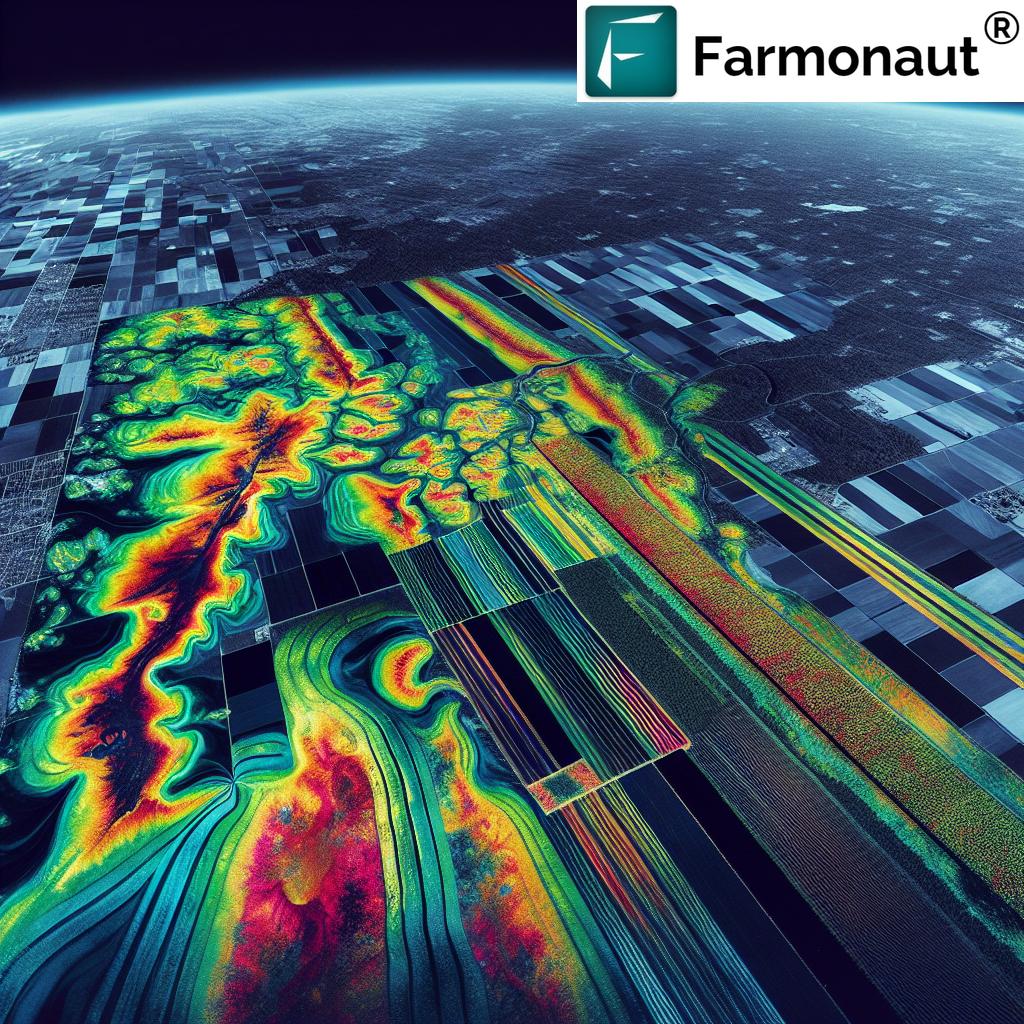
Precision agriculture in 2026 combines spatial detail, timing, and variable rate applications — enabling farms and forests to optimize yields while slashing resource waste.
In this comprehensive guide, we break down the core concepts, technologies, and sector-specific applications of precision agriculture and remote sensing — all pivotal for stakeholders ready to minimize costs, conserve resources, and maximize yields well into 2026 and beyond.
We’ll also discuss the practical pathways for deploying these systems on your land as well as the role of satellite-technology providers in democratizing access to actionable intelligence.
Core Concepts of Precision Agriculture & Remote Sensing
The core of precision agriculture lies in harnessing spatial data, sensors, and analytics to enable site-specific management across expansive – and heterogeneous – landscapes. Rather than treating entire fields, forests, or reclamation sites as uniform, we now map and monitor every meter or even every centimeter, tracking moisture, soil nutrient status, crop vigor, and pest pressure with unprecedented detail and temporal frequency.
- ✔️ Spatial detail: High-resolution satellite imagery, drone-based photogrammetry, and ground sensors pinpoint variations at the meter to centimeter scale.
- ✔️ Timing: Frequent, often weekly or even daily, monitoring means managers can respond within days rather than weeks to changes in soil moisture, plant vigor (NDVI/EVI), pest infestations, or nutrient deficiencies.
- ✔️ Variable rate input: Data-driven prescriptions enable targeted application of irrigation, fertilization, and agrochemicals, minimizing waste and lowering input costs.
- ✔️ Integrated decision support: Platforms that fuse remote imagery, weather data, and analytic models provide a holistic foundation for forecasting yield, planning harvest windows, and making rotation decisions.
- ✔️ Conservation & stewardship: Precision management aids in protecting ecosystems by minimizing runoff, reducing greenhouse gas intensity, and conserving biodiversity.
🌾 Core Benefits of Remote Sensing in Agriculture
- 📊 Data-Driven Management — Site-specific prescriptions for every field
- ⏱ Rapid Response to threats, stress, and anomalies
- 🔍 Early Detection of deficiencies, water stress, and pests
- 💧 Optimized Irrigation & Nutrient Management
- 🌱 Sustainable Practices for biodiversity and environmental stewardship
Start with remote sensing to identify field zones with variable yield, moisture, or stress, then target boots-on-ground investigations for maximum efficiency.
Adoption rates for precision technologies are set to accelerate beyond 60% for large operations by 2026, as regulations, climate pressures, and ROI become increasingly compelling for stakeholders across agriculture, forestry, and reclamation domains.
Precision agriculture in 2025 and beyond combines not only the right technologies but also data governance and capacity-building approaches — ensuring access, training, and responsible data use for all.
Precision Agriculture Technology Impact Table: Yields & Resource Savings
For readers interested in tangible outcomes, here’s a high-level comparison of core technologies, their estimated adoption rates in 2025, projected yield impact, and key applications across crop and forest systems:
| Technology | Description | Estimated Adoption Rate (2025) | Projected Yield Improvement (%) | Resource Savings (%) | Typical Applications |
|---|---|---|---|---|---|
| Satellite Remote Sensing | High-frequency, spatial imagery for large-scale monitoring of crop, soil, and forest status | 65% | 12–15% | 20–25% (water, fertilizer, agrochemicals) | Crop vigor, soil moisture, forest health, reclamation monitoring |
| Drone Imagery | Centimeter-scale photogrammetry and multispectral surveys for targeted field insight | 38% | 8–12% | 10–18% (inputs, runoff, pest risk) | Canopy mapping, stress detection, storm or pest damage, planting validation |
| IoT Soil Sensors | In-situ, real-time probes for moisture, pH, nutrient, and salinity tracking | 42% | 8–15% | 20–40% (water, fertilizer use) | Variable irrigation, fertilizer scheduling, soil status mapping, reclamation |
| Variable Rate Technology | Automated, targeted application systems for fertilizer, irrigation, and agrochemicals | 48% | 10–17% | 18–45% (input savings) | Precision seeding, VRT sprayers, irrigation rigs |
| Farm Management Software | Integrated decision-support platforms fusing data, weather, models, and advisories | 61% | 10–16% | 10–30% (costs, lost yield) | Yield planning, harvest windows, compliance, rotational plans |
“In 2025, over 60% of large farms will adopt data-driven management for resource conservation and yield optimization.”
🛰 Key Technology Features for Modern Farming (2025-2026)
- 🌐 Cloud-based Analytics for multi-source data fusion
- 🌡 Continuous Monitoring (soil, canopy, weather, stress)
- 🤖 AI-based Decision Support for forecasting and planning
- 🗺 High-Resolution Mapping (satellite + drone)
- 🔒 Secure Data Ownership and governance frameworks
Sector-Wise Applications: Optimizing Yield Across Land & Landscapes
The relevance of precision agriculture and remote sensing is profound across distinct domains—each with tailored use-cases, technologies, and objectives:
🌾 Agriculture: Crop Farming, Site-Specific Management
Modern farming now relies on remote soil moisture sensors and satellite-based field monitoring for optimal input use.
- 📈 Runoff & greenhouse gas intensity: Data analytics help reduce runoff and emissions, improving overall environmental impact.
- 💧 Moisture management: Soil moisture probes paired with automated irrigation can save water and energy, especially when used with Farmonaut’s Carbon Footprinting tools to track sustainability metrics.
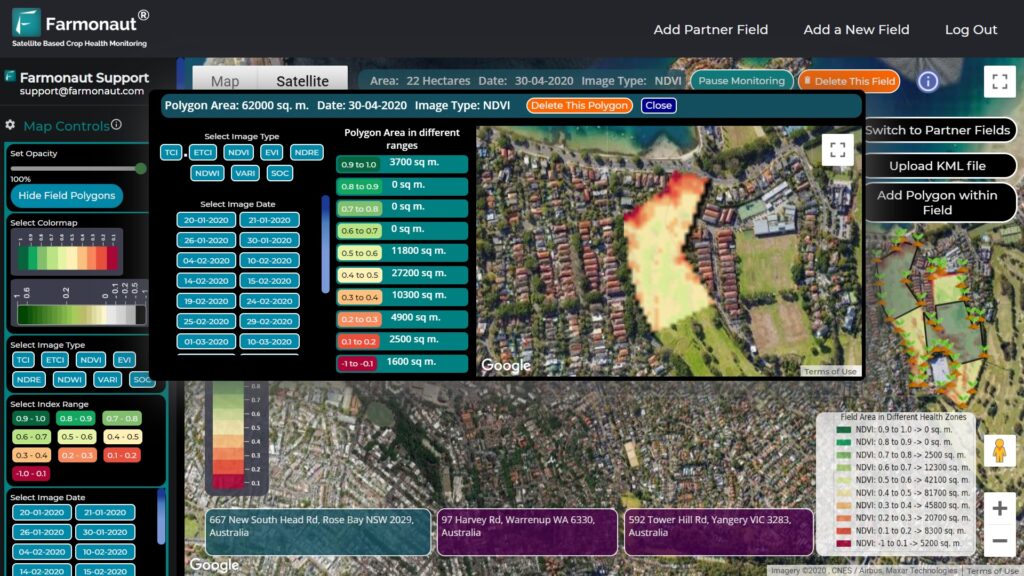
- ⚠️ Early detection: Spectral indices like NDVI/EVI provide early warning signals for nutrient deficiencies or stress before visible yield loss occurs—enabling data-driven corrective actions.
- 💰 Variable-rate guidance: Using real-time data reduces input costs and boosts yield by matching applications to actual need.
Overreliance on visual scouting — without leveraging current data and sensors — can lead to missed early signs of crop stress or pests, resulting in preventable yield loss.
🌲 Forestry: Remote Health Monitoring & Biodiversity Resilience
In forestry, satellite and drone surveys are changing how we manage canopy density, track storm or pest damage, and develop thinning or reforestation plans.
- 🚁 Drone photogrammetry maps canopy at sub-meter accuracy to spot invasive species or storm impacts.
- 🌳 Forest production: Precision forestry tools optimize biomass yields while balancing biodiversity and environmental stewardship.
- ⚡ Health tracking: Satellite indices monitor growth rates, stress, and enable timely, data-backed interventions.
🏭 Mining & Land Reclamation
Remote sensing does more than just optimize yield — it enables responsible oversight in mining and post-mining reclamation.
- 🌱 Revegetation monitoring: Satellites and field sensors track rehabilitation success, measure soil compaction and surface runoff risk.
- 📋 Regulatory compliance: Data supports audits, tailings management, and cover crop performance.
- ♻️ Environmental stewardship: Reduce disruption and plan reclamation for biodiversity and ecosystem restoration.
For more effective reclamation management, check out Farmonaut’s Crop, Plantation, Forest Advisory tools—designed to support vegetation, canopy, and growth processes remotely.
💎 Minerals, Ores & Gemstones: Remote Surveys & Responsible Extraction
Precision mapping is now at the heart of modern mining exploration and extraction planning.
- 📡 Hyperspectral & LiDAR: Powerful surveys map ore bodies and terrain—improving resource targeting and reclamation logistics.
- 🌾 Land sustainability: Data-driven extraction and reclamation minimize surface and ecosystem disruption.
- 📝 Traceability & transparency: Blockchain-integrated platforms like Farmonaut Traceability ensure authentic, transparent supply chain monitoring across agricultural and mining outputs.
Combining in-field sensors with satellite-derived indices (NDVI, EVI) provides the richest insight—helping managers respond rapidly to weather shifts, nutrient status, and pest outbreaks.
Key Technologies Driving 2025–2026 Adoption
2025 marks the convergence of five technology streams making precision systems more accessible, effective, and scalable across all managed landscapes:
- 🛰️ Satellite Constellations: Frequent, cloud-penetrant imagery for near real-time detection of moisture, growth, vigor, and stress, no matter the field size or remoteness.
- 🚁 Drones & UAVs: Custom photogrammetry & multispectral snapshots for sub-meter detail — especially useful for canopy mapping, drone-based pest detection, or post-storm damage assessments.
- 📡 IoT Soil & Canopy Sensors: Subsurface probes monitor soil moisture, nutrient levels, salinity, and pH, while canopy sensors track leaf area, pigment status, and photosynthetic vigor.
- 🤖 AI, Cloud Analytics & Models: Machine learning interprets diverse data to predict stress, optimize irrigation and nutrient prescriptions, and simulate future scenarios for optimal management.
- 🦾 Automation & Robotics: From autonomous irrigation rigs to precision weeding and harvesting robots, automation reduces labor input and maximizes use efficiency.
The most powerful results arise when all streams are integrated — satellite imaging pinpoints trends, drones target hotspot investigation, sensors deliver real-time field detail, while decision support platforms combine the data for actionable, resource-saving guidance.
Benefits: How Precision Systems Reduce Costs & Environmental Impact
Robust precision agriculture systems deliver quantifiable benefits across sectors — lowering costs, increasing yields, and supporting environmental stewardship:
- 💧 Resource efficiency: Substantial reductions in water, fertilizer, and chemical use — savings range between 15% to 45% in well-managed operations.
- 🌾 Yield stability & resilience: Stress and deficiency detected early (before visible loss) improves resilience against drought, heat, pests, and fluctuating growing conditions.
- 🌿 Environmental stewardship: Targeted application minimizes soil, water, and biodiversity disruption, and ensures compliance with regulatory targets on runoff and emissions.
- 💡 Decision confidence: Data-driven management enables managers to forecast, plan, and adapt strategies swiftly in response to shifting weather, policy, or market risk.
- 🌍 Sustainable resource management: Platforms such as Farmonaut’s Fleet Management tools improve equipment tracking, operational efficiency, and cost management for large-scale users.
Regulations in many regions now require clear documentation of fertilizer use, runoff mitigation, and reclamation efforts. Advanced platforms support automated reporting and proof for compliance audits.
Practical Implementation Roadmap for 2025 and Beyond
Embarking on precision agriculture adoption does not require an all-or-nothing approach — especially in 2025–2026, as technologies become modular and scalable:
- Start Small: Pilot an integrated system on a representative field or block. Monitor soil moisture, yield, and automate irrigation. Gradual onboarding encourages troubleshooting before scaling.
- Scale Thoughtfully: Phase in sensors, drone imagery, and decision support platforms as ROI is demonstrated. Ensure data security and simple user interfaces for every team member.
- Integrate Biodiversity & Reclamation Goals: In forestry and mining lands, link vegetation tracking to regulatory compliance & ecosystem restoration plans.
- Partner for Learning: Work with consulting platforms, extension specialists, or research agencies for training and up-to-date guidance.
- ✔ Clear data ownership models and usage permissions are essential.
- ✔ Always back up critical data and set up secure access controls.
- ✔ Document all field trials and variable rate prescriptions for traceability.
Ready for hands-on, real-time precision monitoring? Try Farmonaut’s Subscription Options:
✔ Key Steps for a Smarter 2026 Field Operation
- ✔ Prioritize technologies that offer both scalable integration and modular upgrades.
- ✔ Secure trustworthy, real-time data sources (satellite, drone, and ground sensors).
- ✔ Emphasize staff training in interpreting data outputs and integrating alerts into daily routines.
- ✔ Build process redundancy — never rely on a single metric or technology type alone.
- ✔ Ensure all data streams are accessible via mobile/web apps — maximize your management agility in and out of the field.
Challenges, Solutions, and Future Outlook
- ⚠️ Data Access & Interoperability: Integrate diverse data streams (imagery, sensors, models) using platforms designed for cross-compatibility with easy interfaces.
- 💸 Initial Costs & Training: Upfront investment should be justified with pilot results; ongoing training and workforce upskilling are essential for ROI.
- 🔒 Privacy & Data Ownership: Always clarify who controls, accesses, and uses field data and how it aligns with regional governance and regulatory requirements.
- 🌦️ Climate Variability: Models must adapt to shifting weather baselines and future extremes; regular recalibration and scenario planning are required.
Precision agriculture thrives on continuous improvement — update your data sources and management models at least annually, especially as field conditions and climate targets evolve.
As we advance towards 2026, stable connectivity, cost reductions, and universal mobile app access will only further democratize access to precision insights and actionable analytics.
Farmonaut: Making Satellite Data and AI Accessible to All
At Farmonaut, we believe intelligent systems should empower users, increase transparency, and drive sustainability — regardless of farm, forest, or operational size.
- 📱 Universal Access: Our web and mobile apps deliver satellite and sensor-based data direct to users, businesses, and government teams worldwide.
- 🛰️ Real-Time Satellite Monitoring: Multispectral imagery tracks vegetation health, NDVI, soil moisture, and infrastructure integrity – enabling fast, informed decision-making.
- 🤖 AI-Driven Advisory (Jeevn AI): Our advisory platform analyzes satellite data, weather forecasts, and on-ground inputs to deliver tailored strategies for agriculture, mining, and land restoration domains.
- 🔗 Blockchain Traceability: With traceability solutions, users can validate origin and authenticity for supply chains in both agriculture and mining, improving trust and transparency.
- 💳 Affordable & Scalable: Our subscription-based model ensures all users—from individual farmers to governments—can access state-of-the-art insights at a fraction of legacy system costs.
For developers and businesses looking to directly integrate satellite and weather insights, visit our API platform and review the full API documentation.
Interested in large-scale, multi-farm monitoring and administrative analytics? Learn about our Farmonaut Agro Admin App for centralized, cross-farm oversight.
We are shaping precision agriculture’s future: offering a modular, data-driven, and sustainable approach so everyone can optimize yield, reduce environmental footprint, and manage risk—remotely and reliably.
FAQs: Precision Agriculture & Remote Sensing (2025–2026)
Precision agriculture refers to using advanced sensing, analytics, and autonomous systems to optimize crop yields, conserve resources, and reduce environmental impact by managing variability within and between fields.
Remote sensors (including satellite, drone, and IoT soil/canopy probes) provide real-time, highly granular data on moisture, soil nutrients, pest pressure, crop health, stress, and yield potential—enabling rapid, targeted, and more sustainable management decisions.
Yes. Modular platforms (like Farmonaut) let even small operations access affordable satellite insights, early warnings, and management guidance—often with ROI seen within the first season due to input savings and reduced loss.
Training costs, data security, interoperability, and initial hardware or sensor investment are chief challenges. However, subscription models and integrated mobile platforms greatly lower the cost and learning curve for many users.
By minimizing excessive input use, protecting biodiversity, lowering runoff, and documenting sustainable practices—supported by transparent, traceable data and compliance-ready reports.
Conclusion: Precision, Partnership & Next Steps
In 2026 and beyond, precision agriculture and remote sensing systems will no longer be an accessory; they are the foundation of profitable, resilient, and sustainable land management. Whether for multinational agricultural enterprises, forestry agencies, land reclamation teams, or smallholder associations, the tools and data exist to remotely optimize yields, reduce resource costs, and prove environmental performance.
With continual advances in sensors, data analytics, and platform accessibility (on mobile and web), the time to engage with precision technologies is now. The journey starts with a single field — and grows as your confidence, ROI, and sustainability commitments do.