Potato Rhizoctonia: Top Yield Strategies 2026
- Introduction: The Critical Threat of Potato Rhizoctonia
- Understanding Potato Rhizoctonia
- Economic and Agronomic Impact of Rhizoctonia
- Top Yield Strategies for Managing Rhizoctonia (2026)
- Comparative Strategies Effectiveness Table
- Integrating Modern Technology & Innovation
- How Farmonaut is Powering Precision Management
- Challenges & Future Directions (2026 and Beyond)
- Frequently Asked Questions
“By 2025, precision agriculture techniques could boost potato yields by up to 18% despite rhizoctonia threats.”

Introduction: The Critical Threat of Potato Rhizoctonia
Potato rhizoctonia remains one of the most critical soil-borne diseases threatening global potato yields as we move toward 2026. Caused primarily by the fungal complex Rhizoctonia solani, this disease continues to pose severe challenges for both smallholder and commercial farmers across worldwide potato cultivation regions.
With the potato serving as a staple and vital cash commodity for many economies, the impact of rhizoctonia on tuber quality, plant vigor, and overall productivity cannot be overstated. The management of this disease is evolving rapidly, integrating advances from breeding resistant varieties, biological and biocontrol treatment, soil health practices, and the revolution of precision agriculture.
In this comprehensive analysis, we delve into the nature and management of potato rhizoctonia as it stands in 2025 and project strategies for maximizing yields in 2026 and beyond. Our aim is to equip all stakeholders in modern agriculture—from growers and agronomists to processors, investors, and technology providers—with the most effective insights and action plans.

Understanding Potato Rhizoctonia: Disease, Biology, and Spread
Potato rhizoctonia is caused primarily by the soil-borne fungal pathogen Rhizoctonia solani. The complex biology of this disease allows it to stay persistent in soil and planting material through tough structures called sclerotia. These survival bodies help the pathogen withstand environmental conditions, enabling them to remain viable for several growing seasons.
Manifestation and Symptoms
- 🦠 Stem canker: Sunken, dark lesions on stems – stunting plant growth.
- ⚫ Black scurf: Irregular, black, hard sclerotia formed on tuber surfaces, directly impacting market value.
- 🌱 Stolon pruning: Restriction or pruning of underground stems (stolons), reducing new tuber initiation and yields.
The pathogen infects underground parts of the potato plant and thrives under cool, moist soils—especially when soil compaction leads to poor aeration. These environmental conditions often occur during wet springs or in poorly drained fields.
📊 Potato Rhizoctonia Lifecycle: Key Stages
- Sclerotia Persistence: Survive in soil/seed tubers for years.
- Soil Germination: Favorable conditions (cool, moist soils) trigger germination.
- Infection of Seedlings: Infects shoots, roots, stolons, and developing tuber.
- Tuber Colonization: Black scurf formation on maturing tubers (market loss).
- Return to Soil: Sclerotia return with crop debris or infected seed, continuing the cycle.
Environmental Influence on Disease Incidence
In 2025 and projecting into 2026, climate variability continues to significantly influence rhizoctonia incidence. Notable factors include:
- 🌦️ Fluctuations in temperature and rainfall patterns – especially in temperate regions with unpredictable wet/dry cycles.
- 🌍 Intensification of cropping systems, such as reduced rotation or back-to-back potato planting, which can exacerbate pathogen pressure and increase infection cycles.
- ⏳ Persistence of sclerotia in soils with history of potato/rhizoctonia problems, creating a survival advantage for the pathogen.
This disease is not limited to one part of the globe—it remains critical worldwide, impacting developed and developing regions alike.
Economic and Agronomic Impact of Rhizoctonia
The broad impact of potato rhizoctonia touches every aspect of the potato supply chain—farmers, processors, marketers, and even policy makers.
How Potato Rhizoctonia Compromises Production
- ⚠ Yield Losses: Rhizoctonia can cause yield reductions up to 30% in susceptible varieties, especially under favorable conditions for infection.
- 💲 Quality Downgrade: Tubers with black scurf exhibit blemishes, making them unmarketable and reducing shelf life.
- 🔄 Rejection at Processing: Potato processing industries face increased costs due to tuber sorting, discarding contaminated lots, and running less efficient lines.
- 🌿 Plant Growth Suppression: Stem canker and poor root/stolon health impact plant vigor, lowering photosynthetic efficiency and nutrient uptake.
- 🌏 Global Pricing & Market Volatility: Disrupted supply chains raise prices, especially for economies reliant on potato exports.
📦 Path from Field to Market: Loss Points
- Field losses from stunted growth
- Sorting loss due to unappealing black scurf
- Post-harvest tuber decay in storage
- Fuel and labor expenses in repeated grading
- Downstream effects for processors and exporters
- ✔ Yield Impact: Crop volume can be reduced drastically, risking profitability.
- 📊 Economic Burden: Additional expenses for disease management and rejected lots.
- 🏭 Processing Losses: Quality lapses create bottlenecks in facilities
- ⚠ Market Loss: Poor tuber appearance limits market access for farmers.
- 🛡 Food Security: Reduced global supply threatens staple food accessibility.

Top Yield Strategies for Managing Potato Rhizoctonia (2026)
As we look ahead, solutions for managing potato rhizoctonia are more integrated, flexible, and high-tech than ever. These approaches combine advances in resistant varieties, soil health and management, biological innovation, and precision technology.
“Over 23% of new potato varieties released in 2025 showed significant resistance to rhizoctonia, improving crop reliability.”

1. Advances in Resistant Potato Varieties
Breeding programs using genomic selection and marker-assisted techniques have made major leaps by 2025. These efforts have enabled the release of several new cold- and disease-resistant cultivars with robust rhizoctonia tolerance.
- ✅ Benefits:
- Reduced reliance on chemical treatments
- Higher yields even under heavy pathogen pressure
- Improved crop reliability across variable seasons
- 🧬 Key Technologies: Genomic selection, DNA markers, high-throughput pheno/genotyping.
🚀 Major Enhancements in Resistant Breeding:
- Rapid screening for multi-trait resistance (rhizoctonia, nematodes, late blight)
- Integration with digital traceability (Farmonaut Product Traceability for root-to-table credibility)
- Accelerated testing using remote monitoring platforms
2. Biological Seed Treatments & Biocontrol of Potato Rhizoctonia
Biocontrol using beneficial microbial formulations—such as Trichoderma spp. and other antagonistic candidates—has become mainstream in 2025. These approaches directly suppress Rhizoctonia solani activity in the soil and around seed tubers, while also promoting plant growth.
- 🌱 Key Advantages:
- Promotes beneficial microbial communities in soil
- Reduced environmental footprint compared to older synthetic fungicides
- ⚗️ Next-Gen Treatments:
- Microbial consortia with improved formulation and longevity
- Targeted fungicides used as part of Integrated Pest Management (IPM)

3. Soil Health Management & Crop Rotation for Rhizoctonia Reduction
Long-term soil health is vital for keeping rhizoctonia pressure reduced. Strategies include:
- 🌾 Rotating potatoes with non-host crops (cereals, legumes, brassicas)
- 🌻 Cover cropping and green manures for rebuilding organic matter
- 🚜 Conservation tillage to improve aeration and foster beneficial microbe habitats
These integrated soil management approaches support both sustainable agriculture and disease suppression.
For environmental impact monitoring and sustainability tracking, digital platforms like Farmonaut Carbon Footprinting offer actionable, satellite-verified data.
4. Precision Agriculture & Remote Monitoring: The Digital Leap for Potato Rhizoctonia
Precision agriculture leverages technology to deliver targeted insights and interventions. By 2026, tools such as:
- 📡 Soil sensors: Real-time readings for moisture, temperature, and compaction (key for rhizoctonia risk)
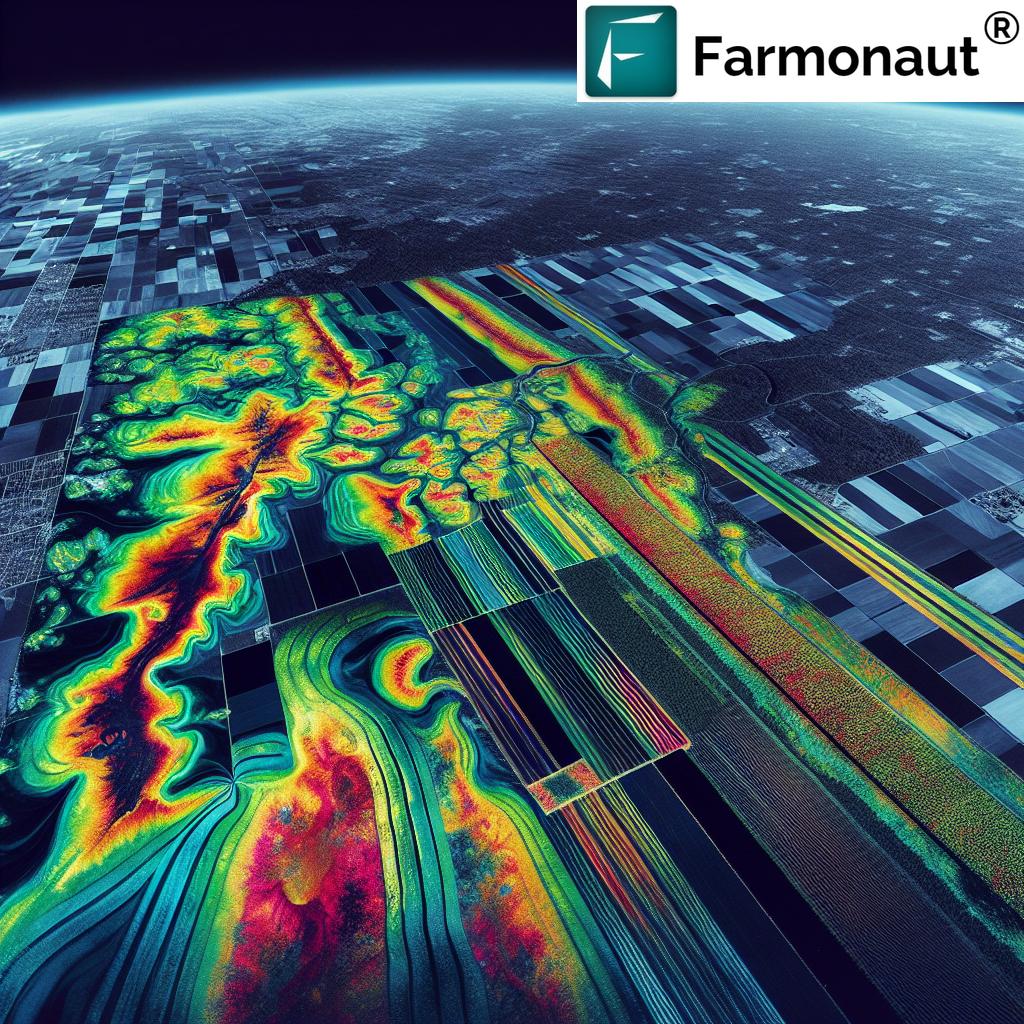
- 🌍 Satellite and drone imagery: Early detection of disease hotspots, plant stress, and yield losses
- 🧠 AI-based advisories: Recommending precise timings for intervention and promoting efficient resource use
- Farmonaut’s platform enables multi-spectral satellite crop health monitoring, soil status checks, and predictive alerts for disease risk
Enhanced digital records improve farm traceability and resource optimization, resulting in sustainable gains.
Advanced management systems like Farmonaut Large Scale Farm Management streamline data-driven decisions for enterprises.

5. Improved Harvest, Handling, and Storage to Minimize Spread
- 🧹 Cleaning equipment and storage facilities to remove sclerotia and reduce infection sources
- 📦 Careful tuber handling: Reduces wounds and infection sites post-harvest
- ❄️ Temperature and humidity control – Minimize post-harvest decay and black scurf development
Digital monitoring of storage conditions is a win-win—reducing economic losses and ensuring longer shelf life of potato stock.
Comparative Strategies Effectiveness Table
| Strategy | Description | Estimated Yield Increase (%) | Implementation Cost (USD/ha) |
Adoption Rate (2025, %) | Notable Technologies Used |
|---|---|---|---|---|---|
| Resistant Varieties | Genetic breeding of resistant/tolerant potato cultivars to minimize rhizoctonia impact | 10–22 | $250–450 (seed premium) | 23 | Genomic selection, DNA markers |
| Biological Seed Treatment | Application of biocontrol agents (e.g., Trichoderma) and beneficial microbes on seed tubers | 8–16 | $60–120 | 21 | Microbial consortia, IPM software |
| Soil Health & Crop Rotation | Rotation with non-host crops, organic matter management, and conservation tillage | 7–14 | $50–90 | 63 | Cover crop monitors, soil sensors |
| Precision Agriculture & Remote Monitoring | Use of satellite/drone imaging, AI analytics, and app-based crop & soil monitoring | 9–18 | $30–80 (subscription) | 32 | Satellite imagery, AI, Farmonaut Platform |
| Improved Handling & Storage | Sanitation of harvest machinery, facility hygiene, and climate-controlled storage | 4–9 | $15–45 | 56 | IoT humidity/ temp sensors, inspection apps |

Integrating Modern Technology & Innovations in Potato Rhizoctonia Management
Potato farming in 2026 is inseparable from state-of-the-art technology. A combination of satellite-driven monitoring, machine learning, blockchain traceability, and real-time agronomic advisory is changing the way we fight soil-borne diseases like rhizoctonia.
- 📡 Satellite Imaging: Rapidly detects plant stress & soil moisture issues, flagging earliest rhizoctonia outbreak zones.
- 🧠 AI & Machine Learning: Models help predict risk, suggest fungicide timing, optimize crop rotations.
- 🔗 Blockchain-Based Traceability: End-to-end verification for “disease-free” supply chains—see Farmonaut Traceability
- 🌤 Weather Forecasting: Anticipates climate shifts, optimizing field interventions.
- 🔒 Storage IoT Integration: Sensors maintain optimal storage humidity/temperature, reducing post-harvest decay.

How Farmonaut is Powering Precision Management of Potato Rhizoctonia
At Farmonaut, our mission is to make satellite-driven insights affordable and accessible for everyone in agriculture. We combine advanced satellite imagery, AI, and other digital technologies to enable the next generation of precision rhizoctonia management for potato farmers and agri-businesses.
- 🌱 Satellite Crop Monitoring: Track vegetation health (NDVI), identify early stress symptoms from potato rhizoctonia.
- 💡 AI-Based Advisory: Personalized, field-level recommendations on disease risk windows, fungicide scheduling, and crop-rotation planning via our Jeevn AI system.
- 🌍 Blockchain Traceability: For disease-free supply chain verification—trusted data from field to store. Learn more at Farmonaut Product Traceability.
- 🌀 Environmental Impact: Measure field carbon emissions and sustainability metrics with Farmonaut Carbon Footprinting.
- 📱 Fleet and Resource Management: Large-scale operations can optimize logistics, reduce resource waste, and remotely control crop protection machines via Farmonaut Fleet Management.
Our all-in-one platform is accessible on Android, iOS, and web—empowering individual growers, corporations, and government bodies, regardless of their farm size.


Challenges & Future Directions: Potato Rhizoctonia Management in 2026 and Beyond
Despite progress, potato rhizoctonia remains a significant challenge due to:
- 🔃 Wide host range of R. solani—infecting many crops, complicating rotation planning
- ⏳ Persistence of sclerotia in soil over many growing seasons
- 🌦️ Unpredictable climate variability—shifting risk windows annually
- 🌏 Access Gaps—Smallholders in developing regions may lack resistant seed or biocontrol agents
- 🧑🌾 Adoption Barriers—Training, financing, or digital literacy may lag in some areas
The future of potato rhizoctonia management will emphasize even deeper integration of:
- 📡 Remote Sensing & Machine Learning: For hyper-local disease prediction and field-specific advisory.
- 🧬 Breeding for Multi-Trait Resistance: Not just rhizoctonia, but resilience against multiple pathogens and environmental stresses.
- 🌱 Sustainable Soil & Resource Management: Minimizing heavy chemical use while restoring soil ecology.
- 🌐 Digital Extension Services: To help smallholders with technology, training, and affordable inputs—accessible directly from smartphones or web platforms.
Frequently Asked Questions: Potato Rhizoctonia & Precision Management
- What is potato rhizoctonia and why is it significant?
Potato rhizoctonia is a fungal disease primarily caused by Rhizoctonia solani, affecting tubers, stems, and stolons, leading to yield loss and lower market value. - How do resistant potato varieties work against rhizoctonia?
Resistant cultivars have genetic traits that make them less susceptible to infection, enabling higher productivity with reduced chemical inputs. - Why is precision agriculture useful in rhizoctonia management?
It provides real-time data on soil, plant health, and environmental risk, enabling targeted action and optimizing resource use to prevent losses. - What role does soil health play?
Healthy soil supports beneficial microbes and organic matter, reducing rhizoctonia survival and infection cycles year on year. - How does Farmonaut support potato rhizoctonia management?
We provide satellite-driven field monitoring, AI-powered risk alerts, sustainability tracking, and supply chain traceability, accessible via web, Android, and iOS to empower stakeholders at every level.
- ✔ Resistant varieties and IPM deliver the backbone for sustainable yield stability.
- 📊 Precision agriculture ensures targeted, efficient interventions with digital field insights.
- ⚠ One-off approaches are no longer sufficient—integrated, holistic management is essential for 2026 and beyond.
- 🧬 Breeding, technology, and biologicals are converging for a climate-resilient future.
- 🛠 Farmonaut delivers real-time, affordable, and scalable agri-tech solutions worldwide.
Conclusion: Securing Potato Yields with Innovation
As potato rhizoctonia continues to drive challenges in modern agriculture, the evidence is clear: the most effective pathway for yield assurance is integrating resistant genotypes, sustainable soil management, biological tools, and cutting-edge precision agriculture platforms. With advances in genetic, technological, and digital domains, we are entering a new era of evidence-based, resilient potato production. At Farmonaut, our commitment is to empower you—growers, agronomists, businesses, and policymakers—with actionable insights, enabling you to thrive in a rapidly changing world.
For more on precision agriculture, carbon footprinting, crop loan and insurance support, and next-gen resource management, visit our Farmonaut platform or explore these dedicated areas:
- Farmonaut Carbon Footprinting – For sustainable agriculture and regulatory compliance
- Farmonaut Product Traceability – End-to-end supply chain transparency
- Farmonaut Crop Loan and Insurance – Risk-minimized financing for farmers
- Farmonaut Fleet Management – Digital tools for large-scale farm operations and logistics
Embrace the innovations shaping crop health, sustainability, and economic success for the coming decade. The future of potato agriculture is digital, resilient, and rooted in knowledge—act now to stay ahead.