Phytophthora in Soybeans: 7 Breakthrough Strategies for 2026
Meta Description: Phytophthora in soybeans continues to threaten yield in 2026. Learn the latest breakthroughs in integrated management, resistance, diagnostics, and precision tools to safeguard your soybean crop and maximize productivity.

Farmonaut Satellite Monitoring App – Try Now
Phytophthora in Soybeans: A Comprehensive Overview for 2025-2026
Phytophthora in soybeans, caused by the soilborne oomycete Phytophthora sojae, remains one of the most destructive diseases affecting soybean production globally. In regions with poorly drained soils and high moisture—including the United States, Brazil, Argentina, and Asia—this pathogen continues to challenge farmers by causing significant yield losses and complicating disease management.
As of 2025 and looking ahead to 2026 and beyond, management of Phytophthora sojae is critical for sustaining soybean productivity. Despite advances in breeding for resistance, innovative seed treatments, precision diagnostics, and integrated practices, the pathogen’s adaptability and the dynamic nature of the agricultural environment demand continuous advancement in our strategies.
Understanding the Biology and Disease Cycle of Phytophthora
Focus Keyword: Phytophthora in Soybeans
Phytophthora in soybeans is caused by the soilborne oomycete pathogen Phytophthora sojae. Unlike true fungi, oomycetes possess unique biology and reproductive strategies that enable them to thrive in saturated, poorly drained soils.
Lifecycle & Pathogenesis
- ✔ Oospores: P. sojae survives in soils as hardy, thick-walled oospores, which can persist for years and withstand adverse environmental conditions.
- ✔ Germination: In periods of excessive rainfall or poor drainage, oospores germinate to produce sporangia that in turn release motile zoospores.
- ✔ Zoospore Movement: Zoospores swim through the water-filled spaces in saturated soil, targeting the roots of young soybean seedlings.
- ✔ Early Infection: Initial symptoms include seedling damping-off, stunted growth, and wilting—this early stage is critical for management interventions.
- ✔ Advanced Symptoms: As infection progresses, mature plants display yellowing, defoliation, stem cankers, and sometimes death—patchy field patterns and productivity drops soon follow.

Critical Environmental Triggers
- 📊 High Moisture: Wet, poorly drained conditions promote disease progression and oospore germination.
- ⚠ Low Oxygen: Saturated soils limit oxygen, weakening root defenses and making plants highly susceptible.
- ✔ Temperature Range: Phytophthora thrives in moderate-to-warm temperatures (15–30°C), often following heavy rainfall.

“Phytophthora sojae can persist in a single field for over 10 years due to its hardy oospores, making continuous and integrated management strategies particularly important.”
Phytophthora in soybeans not only damages roots and stems but undermines field productivity across multiple years, especially in fields with recurring waterlogging and limited crop rotation. Understanding this biology and disease cycle is essential for formulating effective, long-lasting control measures.
Economic Impact and the Critical Need for Innovation
Soybean is a vital global crop, and phytophthora in soybeans remains a persistent threat, costing the industry hundreds of millions in annual losses. Yield losses exceeding 50% can occur during periods of excessive rainfall, especially in poorly drained regions of the US Midwest, Brazilian Cerrado, and Asian river basins.
- ✔ Direct Impact: Seedling and mature plant death translates to lost farm income and regional economic instability.
- ⚠ Hidden Costs: The need for fungicides, resistant seeds, and improved drainage systems escalates production expenses.
- ⚠ Supply Chain Disruption: Patchy field damage and unpredictable yield reductions can impact international soybean trade projections.
- 📊 Long-Term Decline: Continuous field infections degrade soil structure and undermine sustainable agriculture.
Phytophthora in soybeans is, therefore, much more than a field disease—it is a persistent barrier to high-yield, sustainable, and stable soybean production.
7 Breakthrough Strategies for Phytophthora Management in Soybeans: 2026 Edition
Facing the evolving pathogen landscape, farmers, agronomists, and researchers in 2026 rely increasingly on technology, genetics, and sustainable practices. Here are the seven most impactful, science-driven management strategies—each adapted to the field realities and technological advances expected in agriculture’s next era:
Top 7 Strategies At a Glance
- 🌱 Advanced Resistant Cultivars
- 💧 Improved Drainage & Moisture Management
- 🧬 Stacked Resistance Genes—Gene Editing
- ⚗️ Next-Generation Seed Treatments (Chemical/Biological)
- 📈 Precision Fungicide Application
- 🌾 Diversified Crop Rotation & Conservation Tillage
- 🛰️ Remote Sensing-Based Field Diagnostics & Monitoring
Stacking both major Rps genes and partial (quantitative) resistance in soybean cultivars offers broader, more durable protection—even against rapidly adapting Phytophthora races.
1. Advanced Resistant Cultivars 🌱
Genetic resistance remains the cornerstone of Phytophthora management in soybeans. Traditional and molecular breeding programs have developed cultivars equipped with Rps (Resistance to Phytophthora sojae) genes targeting the most prevalent pathogen races. In 2026, the frontier is stacked resistance: combining major Rps genes with minor effect (quantitative) loci and exploring gene editing (e.g., CRISPR) to introduce new resistance traits that are both broad-spectrum and durable.
- ✔ Durable Resistance: Slows pathogen adaptation. Longer field utility, fewer breakdowns.
- 📊 Custom Fit: Cultivars can be matched to field-specific or regional pathogen populations (races).
- ⚠ Continued Monitoring: Annual surveillance of field isolates supports effective gene deployment.
2. Improved Drainage & Moisture Management 💧
Since Phytophthora sojae thrives in waterlogged, low-oxygen conditions, engineering fields for better drainage is critical. Popular options in major soybean regions for 2026 include tile drainage systems, laser leveling, and raised bed planting. These methods reduce both the incidence and severity of root and stem rot, supporting sustainable production.
- ✔ Tile Drainage: Removes excess water efficiently, reducing soil saturation “hotspots.”
- ✔ Raised Beds: Improves surface drainage, oxygen flow, and seedling establishment.
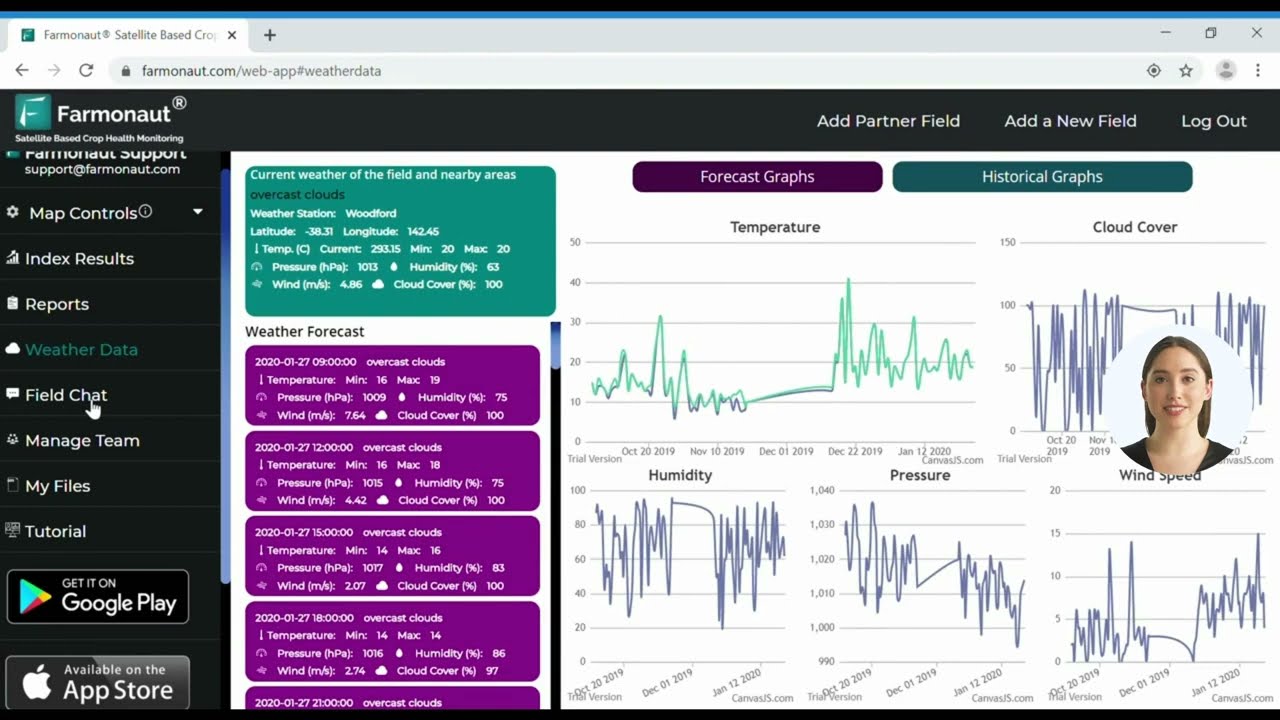
- 📊 Moisture Sensors: Advanced soil moisture sensors help optimize irrigation—Farmonaut’s Satellite Soil Moisture Monitoring tools are highly recommended for a precision approach.

Farmonaut’s satellite-driven moisture mapping provides real-time soil moisture and drainage analytics—ideal for optimizing irrigation and constructing precision drainage infrastructure. Check our Agro Admin App for scalable solutions.
3. Stacked Resistance Genes & Gene Editing 🧬
Breeders are leveraging CRISPR and advanced genomics to “stack” resistance genes and create next-generation cultivars. The goal for 2026 is enhanced durability; by combining several effective genes, farmers will stay ahead of shifting pathogen races. Stacked gene cultivars are expected to reduce disease losses by up to 80%, while maintaining yield and marketability.
- ✔ Technology-Driven: Gene editing shortens breeding cycles and enables trait stacking with high precision.
- ⚠ Regulatory Oversight: Regional approval processes may affect deployment speed in some markets.
- 📊 Pathogen Surveillance: Integrating digital field data and molecular race monitoring optimizes resistance management.
4. Next-Generation Seed Treatments (Chemical & Biological) ⚗️
Early seedling protection is pivotal. Modern seed treatment recipes combine multi-site fungicides, targeted oomycete controls, and biological agents (beneficial bacteria/fungi) to suppress Phytophthora infections at the critical emergence phase.
- ✔ Reduced Seedling Mortality: Early-phase protection reduces yield gaps, especially in high-moisture springs.
- ✔ Customizable: “Prescription” seed treatment packages can be tailored by region, pathogen history, and field microclimate.
- ⚠ Resistance Management: Alternating actives prevents fungicide resistance in the pathogen.
Key Seed Treatment Benefits
- 💡 Enhanced early root and stem vigor
- 🌱 Lower seedling damping-off risk
- ⚗️ Extended field protection window
5. Precision Fungicide Application 📈
The heavy rainfall and crop stress factors that drive Phytophthora outbreaks are often unevenly distributed. Precision agriculture tools—drones, satellite monitoring, and AI-driven prescription maps—enable farmers to target fungicide applications exactly where and when needed.
- ✔ Reduced Input Costs: Fungicides are only applied to infected or high-risk zones.
- ✔ Environmental Protection: Lower chemical loads reduce uptake into the ecosystem.
- ⚠ Technology Investment: Onboarding precision ag tools requires upfront infrastructure, but ROI is significant long-term.

Applying broad-spectrum fungicides across entire fields regardless of infection risk wastes money and increases resistance; precision deployment is more effective and sustainable.
6. Diversified Crop Rotation & Conservation Tillage 🌾
Short-rotation soybeans and minimum tillage can sometimes favor Phytophthora sojae survival. Integrating non-host crops (corn, cereals) in multi-year rotations and using conservation tillage that preserves soil health but discourages pathogen buildup are vital for sustainable management.
- ✔ Soil Health: Multi-species rotations & reduced tillage build beneficial microbial communities that suppress phytopathogens.
- ✔ Soil Structure: Prevents waterlogging by improving aggregate stability.
- ⚠ Weed and Residue Management: Conservation tillage may require targeted weed/pest interventions.
7. Remote Sensing-Based Field Diagnostics & Monitoring 🛰️
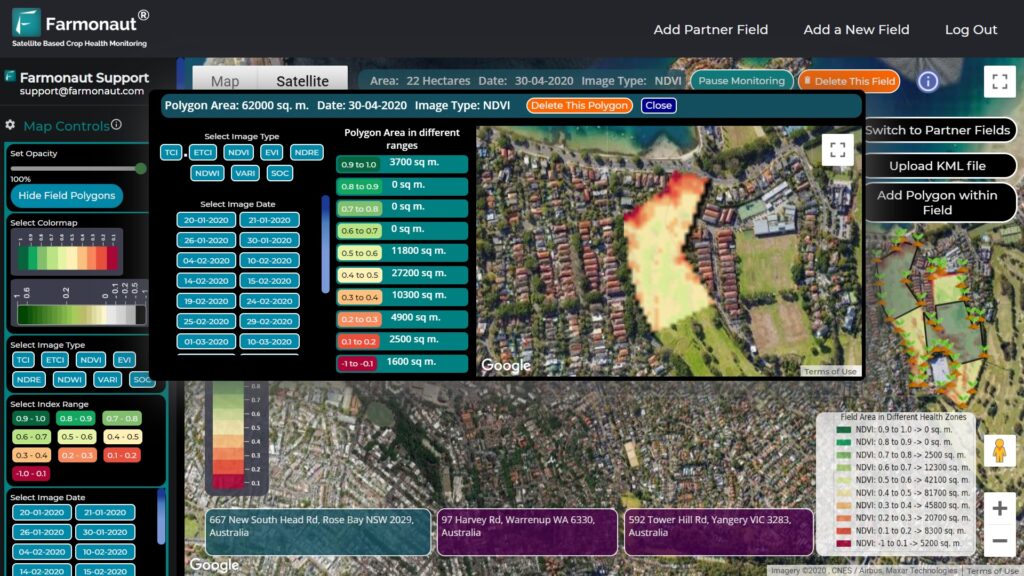
Remote sensing is revolutionizing phytophthora in soybeans detection and management. Using multispectral satellite imagery, drones, and ground sensors, fields can be continuously monitored for water accumulation, early infection symptoms, canopy stress, and probable disease outbreaks—well before visible symptoms appear to the naked eye.
- ✔ Early Warning: Detect susceptible areas and pre-symptomatic infection for swift intervention.
- ✔ Data-Driven Decisions: Optimize fungicide use, drainage investments, and variety selection based on real-time risk and disease mapping.
- 📊 Integration: Remote sensing feeds directly into digital farm management systems like Farmonaut for streamlined risk response.

Agri-tech and geospatial monitoring for plant disease will see exponential demand in 2026 and beyond—technologies enabling early diagnosis, remote guidance, and precision interventions are market drivers.
Comparative Strategies Performance Table
The table below compares the 7 breakthrough strategies for managing phytophthora in soybeans, considering disease reduction effectiveness, estimated costs, technology availability, and core advantages—enabling decision-driven implementation for farmers and stakeholders in 2026.
| Strategy Name | Brief Description | Est. Effectiveness (% Disease Reduction) | Est. Cost (USD/ha) | Technology Readiness | Key Advantages |
|---|---|---|---|---|---|
| Advanced Resistant Cultivars | Deployment of soybeans with stacked Rps or quantitative resistance genes for broader protection | 60–80% | 20–60 (seed premium) | Available | Durability, race flexibility, fits existing systems |
| Improved Drainage & Moisture Management | Tile drainage, raised beds & satellite-monitored field moisture levels | 30–60% | 100–800 | Available | Reduces all water-related stress/diseases; boosts general crop health |
| Stacked Resistance Genes & Gene Editing | Multiple Rps or enhanced loci using gene editing for broader, longer-lasting resistance | 60–90% | 60–120 (seed premium) | Experimental/Phased Release | Future-proofing, customizable, fast-tracked by genomics |
| Next-Gen Seed Treatments | Combination chemical (multi-active) & biological (microbial) seed coatings | 30–50% | 10–30 | Available | Protects seedlings; easy to use, rapidly adopted |
| Precision Fungicide Application | Digital and drone-guided targeted sprays based on remote disease/soil data | 20–40% | 5–60 (variable) | Available | Reduces cost, limits resistance, eco-friendly |
| Diversified Crop Rotation & Conservation Tillage | Rotation with non-host crops, minimal but strategic tillage | 15–30% | Varies (10–100) | Available | Regenerates soil; complements other methods |
| Remote Sensing Diagnostics & Monitoring | Satellite, drone, and AI-driven mapping for early detection and risk zone prediction | 20–35% (through early intervention) | 15–50 (service/apps) | Available | Enables precision; rapid response; scalable |
Combining at least three integrated strategies—for example, resistant cultivars, improved drainage, and remote monitoring—typically results in disease incidence reductions exceeding 70% in affected fields.
Advanced Diagnostics & The Future of Precision Agriculture
In 2026, field monitoring technology is on the cusp of transformative change. Molecular diagnostic tools—PCR, qPCR, and portable isothermal amplification devices—bring laboratory-grade race detection to the field, enabling farmers to identify phytophthora in soybeans before symptoms are visible.
- ✔ Rapid Results: Onsite diagnostics provide actionable resistance gene deployment in real-time.
- ✔ Precision Response: Field hands and advisors use Farmonaut satellite-based scouting to pinpoint hotspots and deploy resources effectively.
Digital integration—combining remote sensing, sensor data, and diagnostic results—enables prescriptive action plans. This revolutionizes everything from irrigation scheduling to choosing the correct varieties and fungicide rotations.
Farmonaut: Satellite-Driven Solutions for Soybean Disease Management
As an advanced satellite technology company, Farmonaut empowers the agricultural sector to fight phytophthora in soybeans with actionable, scalable, and data-driven tools.
- ✔ Satellite Monitoring: Multispectral imagery delivers high-resolution data on vegetation health and real-time soil moisture—critical for identifying risk zones before outbreaks escalate.
- ✔ AI Advisory: The Jeevn AI system offers weather-driven, region-specific decision support for timely fungicide, irrigation, and crop rotation interventions.
- ✔ Blockchain Traceability: End-to-end documentation from seed to harvest, improving transparency, loan verification, and product traceability.
- ✔ Environmental Impact: Monitor field carbon footprint and resource efficiency for sustainable compliance and certification goals.
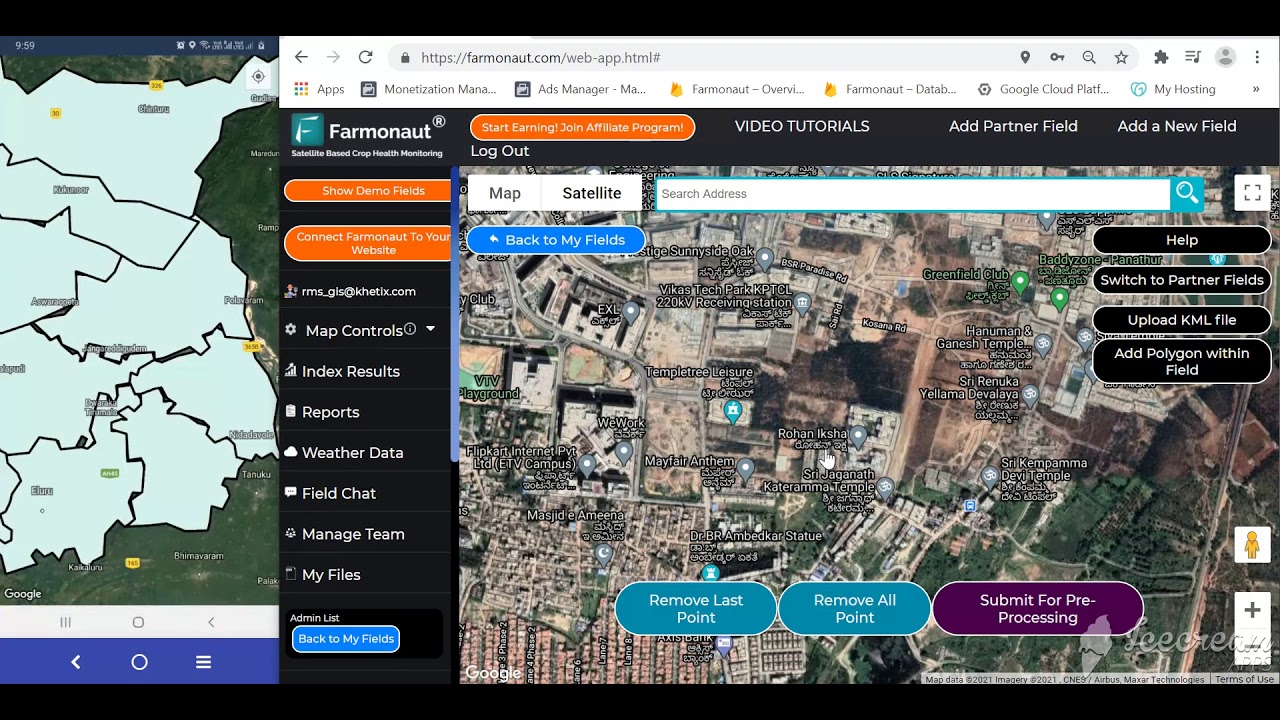
- ✔ Large-Scale Field Mapping: Farmers, research organizations, and agri-businesses can deploy Farmonaut’s Large Scale Farm Management System for collective risk management across multiple farms or regions.
- ✔ API Access: Programmatic access to satellite, weather, and diagnostic data through our API and developer docs.
- ✔ Crop Loan & Insurance: In regions where phytophthora damages threaten farmer finances, Farmonaut’s crop loan and insurance satellite-verification services streamline financing and claims with transparent, real-time field data.

With Farmonaut’s technology, users access real-time satellite data, actionable AI recommendations, and blockchain traceability tooling—all on Android, iOS, and Web Apps, making advanced soybean disease management accessible for smallholders and large enterprises alike.


Ready to experience the future of agriculture? Get started with Farmonaut’s App here →
Underestimating the value of cross-sector geospatial tools—soil, moisture, and yield monitoring aren’t just for agriculture; mining and infrastructure leaders benefit from similar satellite insights as offered by Farmonaut.
Frequently Asked Questions (FAQ)
A: The pathogen (Phytophthora sojae) survives in soils for many years as oospores and rapidly evolves in response to resistance genes and environmental change. Fields with poor drainage or history of soy production are especially at risk; thus, only multi-layered, integrated management can ensure lasting control.
A: Improved drainage (e.g., tile systems, raised beds) is critical—combined with remote soil moisture monitoring (see the Farmonaut platform) for optimal field water management.
A: New satellite and AI-based diagnostics can identify probable infection risk days to weeks before visible symptoms—over 90% accuracy now achievable with 2026’s best tools.
A: Yes. Microbial seed coatings and soil amendments are increasingly available, often combined with chemical fungicides for synergistic effect.
A: Absolutely—our carbon footprinting tool and satellite health maps work together for integrated environmental and disease management.
Building field resilience against phytophthora in soybeans also improves sustainability—co-benefits include improved soil health, water efficiency, and reduced environmental impact.
Final Thoughts: Building Resilience through Continuous Innovation
Phytophthora in soybeans stands as a formidable challenge to productive, sustainable agriculture in 2025, 2026, and beyond. But with today’s integrated management, technological advances, and precision diagnostics, we are ushering in a future where major yield losses are not inevitable.
- ✔ Use stacked resistance genes and stay alert for new pathogen races each season.
- ✔ Keep your drainage and irrigation infrastructure optimal—use satellite moisture monitoring for best results.
- ✔ Deploy seed treatments suited to your field’s disease history and environmental conditions.
- ✔ Adopt remote sensing and digital tools—platforms like Farmonaut offer scalable benefits from field to region.
- ✔ Stay connected with researchers, advisors, and digital platforms for the latest updates and recommendations.
The intersection of biology, technology, and innovative management practices offers us the greatest opportunity to control phytophthora in soybeans, reduce economic loss, and lead the sustainability movement in global soy production. Whether you are a smallholder, corporate agronomist, or research scientist, solutions are more accessible and actionable than ever—thanks to integrated platforms and continuous research advancement.
🔍 Quick Takeaways
- ✔ Phytophthora in soybeans jeopardizes over 40% of global production annually—integrated management remains vital.
- ✔ 2026 will see wide use of stacked gene cultivars, next-gen diagnostics, and remote sensing platforms.
- ✔ Early detection and moisture management are the most cost-effective interventions for high-risk fields.
- ✔ Farmonaut offers field-to-globe, real-time monitoring and advisory tools for soy, mining, and infrastructure stakeholders.
- ✔ Monitor, adapt, and act—precision is the key to sustainable, profitable soybean farming in the Phytophthora era.
Relying on a single management strategy—such as only using resistant varieties—can lead to rapid pathogen adaptation. Combined, tech-driven and biological methods are the sustainable way forward.