Phomopsis Grapes: Proven 2026 Disease Control Strategies
Understanding Phomopsis in Grapes: A 2025–2026 Perspective
Phomopsis grapes disease, primarily attributed to the fungal pathogen Phomopsis viticola, has steadily emerged as one of the most problematic diseases affecting grapevines globally. As the viticulture industry embraces expansion in 2025 and beyond, especially in climate-sensitive wine regions and premium table grape production zones, the need for advanced disease management strategies has never been more vital.
The fungal disease collectively referred to as “Phomopsis rot” or “Phomopsis cane and leaf spot” manifests through small, dark lesions on young shoots and clusters. These lesions often coalesce, causing blight, weakening vegetative growth, and diminishing both yield quantity and grape quality.
Phomopsis control in grapevines is increasingly complex due to shifting climatic factors. Prolonged wet weather—especially during spring bud break—contributes to higher infection rates. With wine and table grape markets growing more competitive, early detection, integrated management, and technology-driven innovations are at the forefront of sustainable viticulture success in 2026.
Focus Keywords: phomopsis grapes, disease, grape, management, viticulture, quality, symptoms, rot, season, sustainable, yield, infected, control, environmental



Integrated Phomopsis management, combining cultural practices and precision tech methods, increases both disease reduction and grape quality in 2026 vineyards.
Symptoms and Early Detection: What to Watch For with Phomopsis Grapes
Critical Symptoms: Spotting Disease Early for Optimal Control
Detecting Phomopsis grapes disease in the early season is crucial for effective control. The symptoms can vary by vine growth stage and are often confused with other fungal diseases. Here’s how to distinguish and act on them:
- ✔ Young Shoots: Small black lesions and spots along green shoots and internodes. Lesions can coalesce, causing tissue to break and create brittle canes.
- ✔ Leaves: Irregular dark spots with yellow halos, typically on basal leaves.
- ✔ Clusters: Black, sunken lesions appear on berries and cluster stems—these can severely affect yield and cause fruit rot.
- ✔ Cane Wood: Small cankers develop on perennial wood, reducing future yield and plant vigor.
- ✔ On Fruit: Berries become shriveled or develop cracked skin, increasing susceptibility to secondary pathogens.
Phomopsis lesions are most visible in the early spring—being able to detect these before widespread infection is essential for sustainable management and improved crop outcomes.
Visual Checklist for Field Scouts 📋
- Check for black specks or streaks on young shoots after wet periods.
- Inspect basal leaves near the ground for yellow-edged dark spots.
- Examine fruit clusters at pre-flowering and post-fruit set for tiny, sunken lesions.
- Assess old wood for sunken, elongated cankers in the dormant season.

Early leaf and shoot inspections after rainy spring weather significantly reduce Phomopsis disease spread by enabling prompt cultural intervention.
Why Phomopsis Remains Vital in Modern Viticulture
In the era of precision agriculture, understanding Phomopsis is not only a necessity for farmers but a strategic priority for the grape industry. The impact of this fungal disease extends from decreased grape yield and fruit quality loss to broader economic repercussions in wine and table grape markets globally.
- 📊 Up to 30% yield loss occurs in infected vineyards without targeted intervention.
- 📉 Quality affects both wine production (taste, aroma) and table grapes (appearance, shelf life).
- ⚠ Economic impacts are amplified in climate-altered regions prone to unpredictable rainfall and prolonged wet conditions.
- 🌱 Sustainable management is crucial for compliance with environmental standards in 2026.
- ➕ Adoption of AI, remote sensing, & traceability links disease control with market access and certification requirements.
Phomopsis Disease — Main Impact Points:
- Reduced Vineyard Yield
- Loss of Fruit Quality
- Higher Input Costs
- Increased Grape Vine Mortality Rates
- Market Rejection due to Low-Grade Berries
2026 Strategy Focus:
- Precision Monitoring Via Satellite Data
- Anticipatory Weather-Driven Fungicide Applications
- Blockchain Traceability for Market Compliance
- Integrated Biological Controls
- Climate-Adapted Canopy & Pruning Regimes

Fungal Lifecycle: How Phomopsis viticola Attacks Grapevines
Understanding the disease cycle of Phomopsis grapes is critical for timing management interventions. The fungus Phomopsis viticola overwinters in infected canes and woody debris. Warm, wet weather during early spring bud break triggers the release of spores, which are spread by rain splash to young, susceptible tissues.
- 🦠 Primary Inoculum: Develops in old wood and mummified debris.
- 🌧 Favorable Conditions: Prolonged wetness and moderate temperatures (17–22°C) accelerate spore germination and infection processes.
- 🌱 Target Sites: Young shoots, basal leaves, and flower clusters at the start of the growing season are most vulnerable.
- 🔄 Secondary Spread: Successive wet events can trigger additional infection cycles during the season, especially in dense canopies.
- 🌾 Survival: The pathogen survives in the vineyard by colonizing pruning wounds and old, infected wood—hence the importance of proper sanitation.

2026 Impacts: Economic and Quality Challenges of Phomopsis Grapes
The consequences of uncontrolled Phomopsis infection go beyond simple yield loss. The impacts permeate the wine and table grape industry’s economic fabric:
- ✔ Reduced grape yield: Lesion development and shoot blight limit cluster formation and fruit set.
- ✔ Compromised grape quality: Surviving berries are often unsuitable for premium wine or table markets due to rot and aesthetic defects.
- ✔ Long-term economic burden: Infected wood requires intensive pruning, raising labor costs and increasing replanting needs.
- ✔ Market reputation damage: Persistent disease outbreaks can affect a grower’s reputation, especially in export-dependent regions.
- ✔ Increased input costs: Repeated fungicide applications and yield loss pressure overall agribusiness profitability.
Delaying fungicide or pruning interventions after disease symptoms appear in the midseason—once cane lesions and fruit rot are established, control is far less effective and yield loss becomes inevitable.

Comprehensive Phomopsis Management & Control Strategies for Grapevines
Integrated Disease Management in 2026—Combining Traditional & Tech Solutions
Faced with Phomopsis grapes disease in 2026, integrated management approaches offer the most effective, sustainable pathway. By combining cultural, chemical, and biological practices—and integrating them with precision agriculture technologies—growers can maximize yield, reduce environmental impact, and safeguard grape quality.
1. Cultural Practices: The Foundation of Sustainable Control
- 🌿 Pruning: Regularly remove and destroy infected canes, clusters, and pruning debris that serve as primary inoculum sources.
- 🌱 Canopy Management: Employ open canopy training and leaf removal to improve airflow and leaf drying, reducing wet periods and infection risk.
- 🏷️ Sanitation: Meticulously clear fallen debris and mummified berries from beneath vines during the dormant season—a best practice in sustainable grape farming.
2. Chemical Control: Targeted Fungicide Use
- ✔ Timing Applications: Strategic fungicide applications from bud break to pre-fruit set, with emphasis on the early season when tissues are most susceptible.
- ✔ Fungicide Rotation: Alternate products with different modes of action to prevent pathogen resistance.
- ✔ Systemic Modern Fungicides: Opt for products with improved environmental profiles to preserve beneficial non-target organisms.
3. Biological Control: Harnessing Nature
- ✨ Microbial Antagonists: Employ biopesticides (e.g., Bacillus subtilis or Trichoderma spp.) that outcompete or inhibit Phomopsis inoculum on shoots and clusters.
- 🦋 Sustainable Practice: Biological control aligns with 100% chemical-free strategies and increasingly stringent residue requirements in major wine markets.
4. Resistant Varieties: Long-Term Disease Suppression
- 🌾 Partial Resistance: Choose registered grapevine varieties with documented tolerance to Phomopsis viticola—integrate varietal selection with sustainable practices and precise monitoring.
- 🔬 Breeding Progress: Though no fully immune variety exists as of 2026, renewed breeding programs continue to improve disease resilience.
Read the detailed Farmonaut API Developer Documentation for implementation guidance.
5 Key Elements for Effective Phomopsis Disease Management
- ✔ Early detection of lesions on shoots and leaves post bud break
- ✔ Application of systemic and contact fungicides—with strict adherence to rotation
- ✔ Rigorous cultural practices reducing the number of infected canes left in vineyards
- ✔ Adoption of precision tech tools for canopy humidity profiling
- ✔ Varietal selection and site choice minimizing initial Phomopsis inoculum
Europe, California, and Australia continue to allocate significant R&D budgets to phomopsis grapes disease resistance and digital vineyard monitoring, increasing long-term ROI for technology-enabled grape growing enterprises.

Comparative Strategies and Impact Table
| Control Strategy | Method Description | Estimated Effectiveness (% Disease Reduction) | Implementation Cost (USD/ha) | Technology Required | Environmental Impact Rating |
|---|---|---|---|---|---|
| Fungicide Rotation | Alternate systemic/contact fungicides during critical periods (bud break–fruit set) | 70–85% | 200–350 | Conventional Sprayer | Medium |
| Canopy Management | Prune, train, and thin to improve air flow and reduce leaf wetness | 40–60% | 120–180 | Manual/Labor Crew | Low |
| Remote Sensing | Monitor canopy humidity, detect early symptoms using satellite or drone imaging | 60–75% | 40–90* | Satellite/Drone, App | Low |
| Drone-Based Spraying | Targeted application of fungicide/biological agents using drones at specific sites | 65–80% | 150–250 | Drone & Mapped Data | Medium |
| AI-Driven Monitoring | Automated detection and forecasting for precise intervention, reducing over-spraying | 78–92% | 65–120* | Satellite/AI App | Low |
| Biological Antagonists | Use of beneficial microbes on foliage, wood, and canes | 35–52% | 140–210 | Conventional Sprayer | Low |
*Subscription-based/seasonal rates for satellite or AI platforms can result in lower annualized costs, especially for multi-field operations.
- 🌐 Field-Wide Disease Surveillance: Pinpoint high-risk zones before widespread outbreaks with precision satellite imagery.
- 📲 Jeevn AI Advisory: Real-time alerts on weather, bud break, and infection windows for timely chemical/biological interventions.
- 🔗 Blockchain Traceability: Ensure market access and certification by documenting every disease management action and harvest quality. Learn more.
- 🚗 Fleet/Operation Management: Deploy labor and equipment resources effectively using integrated satellite data. Read about Farmonaut Fleet Management.
- 🌿 Environmental Impact Monitoring: Meet sustainable farming standards by tracking fungicide/water use and carbon footprint. Monitor with Farmonaut.
Integrated Phomopsis management via digital platforms helps growers reduce chemical dependency by 20–40%, supporting both environmental compliance and profitability.

Technology & Innovation: The Future of Phomopsis Control
The battle against phomopsis grapes disease in 2026 hinges on marrying proven agronomic practices with cutting-edge technology. The integration of precision agriculture tools—from AI-driven forecasting to blockchain traceability—is elevating disease management beyond traditional methods.
- ⚡ Remote Sensing: Satellite and drone imagery detect subtle symptoms invisible to human scouts.
- 💡 AI-Based Forecasting: Models predict infection risk based on weather, vine stage, and site history.
- 🔗 Blockchain for Traceability: Securely records disease management actions for compliance and market access, find out how it works.
- 📋 Data-Driven Farm Admin: Automate orchard records, chemical application logs, and worker assignments via app, see Farmonaut’s solution.
- 📱 Mobile Apps: “On-the-go” dashboards mean vineyard health checks and recommendations are always at your fingertips.
Data-Driven Decision Support—A New Era
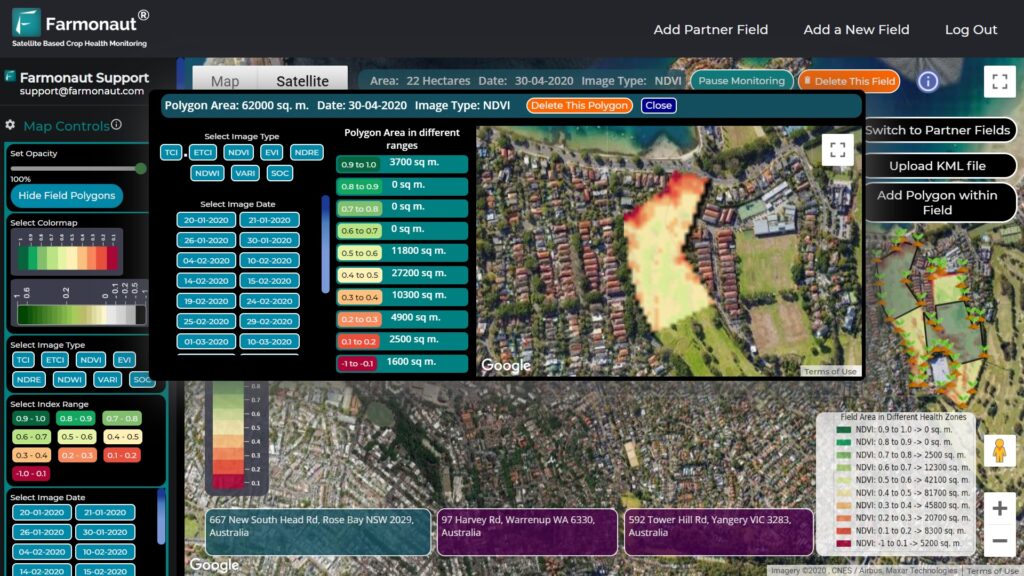
Satellite-driven platforms accelerate awareness of shoot lesions and canopy health discrepancies across large and small vineyards. Automatic alerts empower teams to act on hot spots—reducing labor cost and ensuring chemical applications are truly need-based.
Farmonaut: Next Generation Satellite Disease Monitoring
At Farmonaut, we are redefining grape disease management by harnessing satellite technology, artificial intelligence, and blockchain. From enabling remote, early detection of Phomopsis grapes symptoms to providing real-time, field-specific recommendations, our mission is to make sustainable precision agriculture available for all—no matter the scale of your vineyard.
What Sets Our Platform Apart?
- 📊 Satellite Health Monitoring: High-frequency NDVI and multispectral imagery pinpoints stressed or infected blocks before symptoms are visible to the eye.
- 🤖 Jeevn AI Advisory: Custom alerts for bud break, favorable wet conditions, and high Phomopsis risk periods enable data-driven scheduling of preventive action and labor deployment.
- 🔗 Blockchain-Based Traceability: Digitize every management step—fungicide/biological use, canopy operations—boosting compliance and premium market assurance.
- 🌱 Environmental Impact Monitoring: Automated carbon and chemical use tracking supports your sustainable farming certifications and ESG reporting.
- 📱 Mobile and API Access: Our platform is available via Android, iOS, web apps, and robust APIs for seamless integration into existing agri-management workflows.
Accessible, Scalable, Affordable
- 💡 Subscription-based plans fit every operation—see below for more information.
- 🌍 Scalability for small, medium, or multi-regional vineyard portfolios.
- 🤝 Data ownership remains with users—adopt technology at your own pace with maximum flexibility.
Automated early warnings from satellite-driven AI save growers hundreds of hours of manual scouting and can reduce Phomopsis outbreaks by up to 45% year-on-year.
FAQ: Common Questions on Phomopsis Grapes Disease
Q1: What’s the best time for Phomopsis control in vineyards?
A: The period immediately after bud break and up to fruit set is most critical for fungicide and cultural interventions. Early detection and timely application are more effective than waiting for visible symptoms.
Q2: Can precision technology replace all traditional Phomopsis controls?
A: No—digital monitoring and AI forecasting complement (not replace) core practices like pruning, canopy management, and chemical rotation. Integrated approaches deliver the best results.
Q3: Which grape varieties show the most Phomopsis resistance in 2026?
A: Several newer hybrids and crossbred rootstocks offer improved tolerance, but site-specific disease pressure and environmental conditions are equally important factors to consider.
Q4: How does Farmonaut’s satellite & AI system alert for Phomopsis?
A: Our system analyzes multispectral data, weather trends, and phenological indicators to push real-time warnings—streamlining both detection and intervention.
Q5: Are biological controls enough for commercial-scale vineyards?
A: Biologicals can be effective in low to moderate disease pressure scenarios and when used in combination with pruning, canopy thinning, and smart chemical use. They support sustainability and market-driven “zero-residue” demands.
Conclusion & Sustainable Outlook
Phomopsis grapes disease remains a formidable challenge for grapevine health, productivity, and quality in 2026 and beyond. Its management is intrinsically tied to the strategic integration of cultural, biological, chemical, and technological solutions. The evolution of precision agriculture and data-driven disease detection is unlocking new potential—reducing environmental impact, improving yield, and maintaining global industry competitiveness.
As climate patterns continue to shift, proactive approaches—spanning early symptom detection, AI-powered forecasting, and blockchain-backed traceability—are vital for sustainable grape production. At Farmonaut, we are committed to equipping growers, advisors, and businesses with affordable, accessible, and actionable technology that empowers informed decisions from bud break to harvest.
The future of phomopsis disease management is integrated, sustainable, and rooted in innovation—let’s move toward a healthier, more resilient viticulture sector together.