P2O5 Fertilizer, P205 Fertilizer: Top Innovations for 2026
P2O5 fertilizer, P205 fertilizer, is at the heart of shaping modern agriculture and ensuring food security as we stride into 2026. As global demands for sustainable yields and soil health intensify, innovations in phosphorus fertilizer technologies are transforming how farmers approach crop and soil management.
What is P2O5 Fertilizer?
P2O5 stands for diphosphorus pentoxide, a chemical representation used universally to quantify the available phosphorus content in fertilizer products. When referring to phosphate fertilizers, the phosphorus content is expressed as P2O5 to standardize nutrient labeling. This makes it easier for farmers and agronomists to compare, accurately apply, and optimize nutrients for diverse crops, soil conditions, and growth cycles.
Common phosphate fertilizers include:
- Single superphosphate (SSP)
- Triple superphosphate (TSP)
- Diammonium phosphate (DAP)
All these fertilizers contain varying percentages of P2O5, providing different solubility rates and modes of application to suit crop and soil requirements. For instance, SSP typically contains about 16-22% P2O5, TSP offers about 44-48% P2O5, and popular blended DAP formulations come with ~46% P2O5.
Using P2O5 fertilizer allows for standardized phosphorus application globally, ensuring precise nutrient management and efficient use of finite phosphorus reserves.
P2O5 fertilizer, P205 fertilizer, is often referred to as phosphate fertilizer in commercial markets and is critical for healthy plant growth, robust yields, and sustained soil fertility in both modern and traditional agricultural practices.



Importance of Phosphorus in Agriculture
Phosphorus is one of the essential macronutrients for all plants, playing a pivotal role in energy transfer, photosynthesis, cellular development, and root growth. Within each crop cycle, phosphorus is fundamental to processes including:
- Energy transfer via ATP molecules
- Photosynthesis and sugar/starch transformation
- Plant cell membrane development
- Root stimulation
- Enhanced flowering, fruit, and seed formation
Deficient phosphorus levels result in stunted growth, poor seed and fruit formation, and overall lower plant vigor. This is a major constraint to global crop productivity, particularly in tropical and subtropical regions where soil phosphorus fixation is prevalent.
- Phosphorus deficiency is widespread in the soils of Asia, Africa, and the Americas.
- Regular application of p2o5 fertilizer, p205 fertilizer replenishes soil phosphorus, ensuring crops receive adequate nutrition throughout their growth cycle.

Application and Best Practices for P2O5 Fertilizer
Effective application of P2O5 fertilizer requires attention to soil testing, crop type, and timing. The diversity of soil types and crops across regions makes it critical to determine the appropriate quantity and application method for optimal results.
Soil Testing and Nutrient Recommendations
- Soil tests help determine the existing phosphorus levels and the required amount of P2O5 fertilizer.
- Avoid over-application, which can result in wasted resources and environmental runoff concerns.
- Modern agronomists and precision agriculture platforms recommend tailored nutrient programs based on geospatial and multi-seasonal soil data.
Looking for real-time, precision soil health analytics? Explore our Large Scale Farm Management Dashboard—ideal for farm managers to monitor P2O5 fertilizer application, crop health, and optimize resource allocation using satellite insights.
Best Practices for Application
- Band Placement: Applying P2O5 fertilizer close to plant roots enhances phosphorus uptake and minimizes fixation.
- Broadcasting: Evenly disperses fertilizer, but less efficient due to potential surface fixation and runoff.
- Fertigation: Integrating phosphate fertilizer into irrigation supports precision delivery, but requires compatible infrastructure.
- Timing: Apply P2O5 fertilizer just before planting or during early crop stages for maximum growth benefits.
- Integrating Organic Matter: Incorporating compost or manure with P2O5 fertilizer improves soil structure and phosphorus availability.
Combining P2O5 fertilizer with organic amendments helps reduce phosphorus fixation in clay/dense soils and supports sustainable nutrient cycling.
Precision Agriculture and Digital Tools
The rise of precision agriculture means farmers increasingly use technologies like GPS-guided systems, drone imagery, and satellite monitoring to apply P2O5 fertilizer accurately. This not only reduces input costs but also increases efficiency and minimizes environmental risks from over-fertilization.

Sustainability and Environmental Concerns with P2O5 Fertilizer
Phosphorus is obtained primarily from phosphate rock reserves, which are finite and concentrated in only a handful of countries. This creates potential market and supply vulnerabilities. As peak phosphorus looms as a global concern, it’s essential to adopt both resource-conserving and recycling measures to maintain soil fertility in the future.
- Improper fertilizer application may lead to phosphorus runoff, causing eutrophication in lakes, rivers, and coastal zones.
- New regulations and buffer zones are being implemented worldwide to limit environmental impact from P2O5 fertilizers.
- Recycling phosphorus from animal manure, food waste, and sewage sludge is emerging as an important sustainable strategy for closed-loop agriculture.

Concerned about the environmental impact of your P2O5 fertilizer use? Leverage Farmonaut’s Carbon Footprinting Tools to monitor and minimize environmental footprint on your farm.
Over-application of P2O5 fertilizer does not always translate to higher yields. Excess phosphorus can remain unused, runoff into water bodies, and disrupt aquatic ecosystems.
Top Innovations for P2O5 Fertilizer in 2026
Advanced P2O5 fertilizer, P205 fertilizer technologies are poised to redefine the agricultural landscape in 2026, emphasizing both higher efficiency and greater sustainability. Emerging products and practices are focused on reducing waste, increasing phosphorus use efficiency, and improving yields—while supporting soil health for the long term.
- Slow-Release and Controlled-Release P2O5 Fertilizers: These formulations deliver phosphorus more steadily over time, preventing fixation and leaching, vastly improving nutrient availability and plant uptake.
- Nano-P2O5 Fertilizers: Incorporating nanotechnology improves phosphorus dispersion and absorption at the root level, maximizing efficiency, especially in phosphorus-fixing soils.
- Bio-Enhanced P2O5 Fertilizers: Incorporating beneficial microbes (like phosphorus-solubilizing bacteria) increases natural phosphorus cycling in the soil, reducing the need for synthetic inputs.
- Recycling & Green P2O5: Closed-loop processes recover phosphorus from wastewater, animal manure, and organic waste to produce eco-friendly fertilizers, conserving phosphate rock reserves.
- Smart Application Technologies: Digital platforms leverage real-time soil and crop data to recommend and automate customized fertilizer schedules, preventing both under- and over-application.

Genetically Enhanced Crops
Significant research is now targeting genetically edited and bioengineered crops with enhanced phosphorus use efficiency (PUE). These advances mean plants may soon require less external phosphate fertilizer while achieving higher yields and maintaining robust development, especially in tropical and subtropical regions with fixed, unavailable soil phosphorus.
P2O5 fertilizer, P205 fertilizer innovations present major opportunities for investment, particularly in nanotechnology, bio-enhanced products, and smart application solutions.
Digital Traceability and Transparency
Market trends in 2026 place increasing emphasis on traceability and transparency across the entire agriculture supply chain. Technologies such as blockchain are being adopted to verify the source and application of fertilizers, boosting consumer and regulatory confidence.
Interested in secure, blockchain-backed traceability for your P2O5 fertilizer applications and agricultural products? Explore Farmonaut’s Product Traceability Solutions for enhanced compliance and market differentiation.

Farmonaut & Satellite-Driven Precision Agriculture
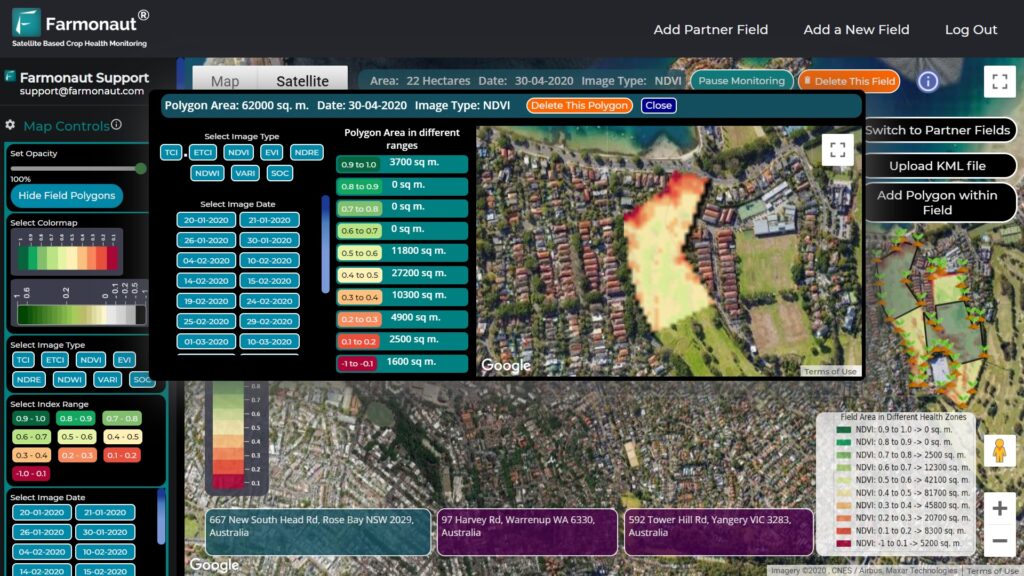
As we at Farmonaut work towards democratizing advanced geospatial agriculture, our satellite-based monitoring and AI-powered advisory systems empower farmers to make more informed, data-driven decisions for P2O5 fertilizer application and nutrient management.
- Satellite-based crop health and soil monitoring allows users to detect phosphorus deficiencies early.
- AI-based recommendations and real-time monitoring optimize timing, placement, and amounts of phosphate fertilizer needed by each region, field, or zone.
- Environmental impact tracking helps ensure sustainable fertilizer practices, reducing runoff and loss of resources.

API Access: For developers, agritech startups, and corporate teams, our public API and detailed developer documentation allow seamless integration of satellite insights into custom dashboards, ERPs, and farm management platforms.

Enhance fleet and input logistics for large operations: Discover our Fleet Management Tools supporting fertilizer delivery, farm equipment optimization, and timely application across diverse geographies.
Comparison Table: Traditional vs. Innovative P2O5 Fertilizer Technologies (2026 Estimates)
| Technology Type | Estimated Phosphorus Efficiency (%) |
Estimated Yield Increase (%) |
Soil Health Impact | Sustainability Score (1-10) |
Estimated Cost ($/hectare) |
|---|---|---|---|---|---|
| Traditional P2O5 | 42 | 8 | Neutral/Negative | 4 | $120 |
| Slow-Release P2O5 | 58 | 11 | Positive | 7 | $160 |
| Nano-P2O5 | 67 | 14 | Positive | 8 | $190 |
| Bio-Enhanced P2O5 | 72 | 16 | Positive | 9 | $215 |
| Recycled/Green P2O5 | 59 | 12 | Positive | 10 | $145 |
* All figures are estimates for 2026 based on current research, market trends, and expert projections.
Key Callouts & Best Practices
Adopt integrated nutrient management—combine organic and inorganic fertilizers to maintain both soil fertility and high yields year after year.
- ✔ Use soil tests to determine actual phosphorus requirements before applying P2O5 fertilizer, P205 fertilizer.
- 📊 Regularly monitor crop health and soil conditions using digital tools to adjust fertilizer plans.
- ⚠ Establish buffer strips near water bodies to reduce runoff and minimize environmental risks.
- ✔ Transition to innovative formulations (nano, slow-release, bio-enhanced) for improved efficiency and sustainability.
- 📊 Leverage satellite data, API integrations, and AI advisories for region-specific fertilizer scheduling and resources management.
Key Bullet Points & Visual Lists
- ✔ Boosted Phosphorus Use Efficiency – Advanced formulations increase the fraction of phosphorus actually taken up by crops.
- ✔ Higher Yields – Sustainable management can lift yields by up to 18% globally by 2026.
- ✔ Reduced Environmental Runoff – Slow- and controlled-release products minimize nutrient loss to waterways.
- ✔ Support for Soil Health – Integration with organic materials and soil microbes fosters resilient, living soils.
- ✔ Secure, Transparent Supply Chains – Blockchain-based traceability increases marketplace trust and regulatory compliance.
- 🟢 Soil Sampling & Testing
- 🔵 Data-Driven Recommendation
- 🟠 Precision Fertilizer Application (e.g., banding or fertigation)
- 🟣 Monitoring with Satellite/AI Tools
- 🟡 Yield and Environmental Impact Assessment
- 📈 Increased adoption of slow- and nano-release fertilizers in Africa and Asia.
- 🌱 Widespread use of bio-enhanced formulations for sustainable, regenerative agriculture.
- 🛰️ Satellite-linked advisory for field-specific P2O5 management.
- 🔒 Blockchain traceability for transparent input source verification.
- ♻️ Recycling initiatives gaining ground, especially in large agrifood economies.
FAQ Section: P2O5 Fertilizer, P205 Fertilizer & Phosphorus Management (2026)
A: P2O5 fertilizer, P205 fertilizer contain diphosphorus pentoxide, a chemical form representing available phosphorus in the product. These phosphate fertilizers directly supply essential macronutrient phosphorus, which is vital for plant energy transfer, root growth, and crop yields—making them irreplaceable in both traditional and modern agriculture.
A: Combine precision application based on soil testing, shift to slow- or nano-release P2O5 products, integrate organic amendments, and adopt digital traceability and environmental monitoring using platforms like Farmonaut.
A: While advanced fertilizers may have a higher upfront price, they deliver better phosphorus use efficiency, reduce the frequency of applications, improve yields, and lower long-term environmental costs. Table comparisons show clear benefit in yield and soil health.
A: Over-application without reference to actual soil phosphorus status, leading to wasted resources, negative soil health outcomes, and increased runoff. Always test, then apply as required.
A: Leverage satellite technology, digital farm management platforms, and blockchain traceability to monitor applications in real time, quantify carbon/greenhouse gas impact, and provide reports for compliance and transparency.
Conclusion
As we move decisively into 2026, P2O5 fertilizer, P205 fertilizer remain indispensable for modern, sustainable agriculture—supporting the world’s food systems as demand, regulation, and environmental pressures mount. Future-ready farmers and agribusinesses must embrace advancements in fertilizer technologies, integrate precise application methods, and prioritize sustainability through responsible phosphorus management, recycling, and digital traceability.
Innovative solutions, such as nano-based, bio-enhanced, and recycled phosphorus fertilizers, combined with satellite-driven tools and traceability, offer the greatest opportunity for maximizing yield, supporting soil health, and ensuring long-term food security. By staying ahead of trends in P2O5 fertilizer, P205 fertilizer, and integrating technology at every step, farmers can confidently meet both today’s and tomorrow’s challenges — feeding the globe while conserving precious natural resources.
Farmonaut is committed to empowering users and businesses globally with affordable, cutting-edge geospatial and agritech solutions that support sustainable, efficient, and transparent agricultural practices.
Ready to optimize your P2O5 fertilizer use? Download the Farmonaut app today, explore our satellite and API-driven services, or learn more about our sustainability, traceability, and management products for the future of agriculture.