Orthman Strip Till, ZML Strip Till: 7 Soil Benefits – Revolutionizing Sustainable Farming for 2025 and Beyond
“Orthman and ZML strip tillage can increase crop yields by up to 15% versus conventional tillage methods.”
Summary: In modern agriculture, the evolution of tillage methods like orthman strip till and zml strip till has been pivotal in enhancing soil health, improving crop yields, and promoting sustainable farming practices. By 2025, these innovative and widely adopted strip tillage techniques are creating substantial impacts across farming communities globally. In this comprehensive guide, we’ll break down how strip tillage works, compare prominent systems, analyze the seven major soil benefits, and explore the evolving future of sustainable agriculture.
Table of Contents
- 1. Understanding Strip Tillage: The Foundation
- 2. The Growth of Orthman Strip Till and ZML Strip Till
- 3. Comparative Benefits: Orthman vs. ZML vs. Traditional Tillage
- 4. 7 Soil Benefits of Orthman Strip Till & ZML Strip Till
- 5. Modern Technologies Supporting Strip Tillage
- 6. Broader Agricultural Impacts in 2025+
- 7. Farmonaut: Supporting Smarter, Greener Agriculture
- 8. FAQ on Orthman Strip Till, ZML Strip Till: Soil, Tillage, and Beyond
- 9. Conclusion: Shaping the Future of Soil Health
Strip till systems like Orthman and ZML are redefining the balance between high yields and resilient, sustainable soils in modern crop agriculture. Understanding how to maximize these benefits is crucial for the future of farming.
Understanding Strip Tillage: The Foundation of Modern Soil Health
As we move deeper into the 2020s, the importance of maintaining soil health while maximizing crop productivity has never been greater. Climate change, evolving regulations, and consumer demand for sustainable food are pushing farmers to adopt practices that go beyond simple input-output models. Among the most promising solutions are advanced tillage systems like the orthman strip till, zml strip till, setting new benchmarks for soil, fertility, and yield.
What Is Strip Tillage?
Strip tillage is an innovative tillage method that combines the advantages of conventional and no-till practices. Unlike traditional tillage, which disturbs the entire field surface, strip tilling focuses on “strips” — narrow bands of soil (typically 8 to 10 inches wide) where seeds will be planted. The areas between these strips remain undisturbed, preserving crop residue on the surface which is crucial for protecting soil from erosion and moisture loss.
- ✔️ Conserves soil moisture by reducing overall soil disturbance
- ✔️ Reduces labor and fuel consumption for tillage passes
- ✔️ Promotes beneficial microorganisms and increased organic matter
- ✔️ Enhances planting conditions by preparing only the seedbed zones
- ✔️ Protects surface residue to combat wind and water erosion
When implementing strip tillage, monitor soil moisture closely before field operations to prevent compaction and maximize seedbed quality.
The philosophy behind strip tillage recognizes that the soil is a living resource, and every tillage pass impacts its structure, fertility, and future productivity. By tilling only in narrow bands where crops will be planted, the method drastically reduces soil disturbance, conserves energy, and encourages environmental sustainability — making it especially attractive for modern and future-focused farmers in 2025 and beyond.

Key Differences from Conventional Tillage
- 🌱 Conventional Tillage: Disturbs the entire field surface, often diminishing organic matter and exposing soil to rapid erosion.
- 🌾 Strip Tillage: Tills only narrow strips, preserving soil structure, organic matter, and critical residue between rows.
“Strip till methods reduce soil erosion by approximately 40%, promoting sustainability in modern agriculture for 2025.”
The Growth of Orthman Strip Till & ZML Strip Till: Precision and Adaptability in Action
Among strip till systems, Orthman Strip Till and ZML Strip Till have emerged as leaders — gaining significant traction among modern farming communities across the globe. Each brings unique strengths in delivering improved soil health, optimized fertilizer application, adaptability, and sustainability for different crop types, soil conditions, and regional climates.
Orthman Strip Till System: Precision-Driven Technology
The Orthman Strip Till system is recognized for its cutting-edge precision engineering. In 2025, its equipment not only tills the soil in uniform strips but also enables targeted fertilizer placement in the root zone using integrated GPS, AI-based sensor technologies, and real-time monitoring. The Orthman system supports variable-rate fertilizer application, which reduces input waste, lowers costs, and ensures nutrients are available exactly when and where crops need them the most.
- 📈 Improves germination rates and root establishment
- ⚡ Reduces fuel consumption and labor with faster, more efficient field passes
- 💡 Minimizes environmental impacts by lowering nutrient losses to runoff
- 🛰️ Leverages GPS and soil sensors for a data-driven approach to modern agriculture

ZML Strip Till System: Versatility and Sustainable Solutions
The ZML Strip Till emphasizes sustainability, flexibility, and soil conservation. Its modular equipment can be customized for various crop rotations, soil textures, and climatic conditions. Advanced tools for residue management ensure that enough surface cover remains while still preparing ideal seedbeds. These features are central to the global shift toward climate-smart agriculture in 2025 and beyond.
- 🔄 Adaptable Across Crops: Easily integrates into diverse cropping systems, making it ideal for farms facing variable climate conditions.
- 🌏 Promotes Carbon Sequestration: Helps preserve organic matter, thus capturing more carbon in the soil.
- 🧩 Customizable: Equipment can be tailored to soil moisture, residue, and planting preferences for greater efficiency.
Over-tilling “strips” or skipping proper residue management may reduce the effectiveness of strip till’s soil health benefits. Use recommended settings for your soil type and residue cover.
- 🌟 Innovative systems like orthman strip till, zml strip till enable:
- ⚙ Enhanced precision for planting and fertilizer delivery
- 🧪 Improved nutrient efficiency and minimized waste
- 🌱 Promotion of healthier, more resilient soil
- 🌞 Reduced fuel consumption and labor requirements
- ♻ Sustainable residue management for erosion control
 Farmonaut’s Satellite Platform App
Comparative Benefits Table: Orthman Strip Till vs. ZML Strip Till vs. Traditional Tillage
Here’s how orthman strip till, zml strip till systems stack up against traditional tillage when it comes to key soil health and sustainability metrics:
| Soil Benefit | Orthman Strip Till: Estimated Impact | ZML Strip Till: Estimated Impact | Traditional Tillage: Baseline |
|---|---|---|---|
| Improved Soil Structure | High (+30%) | High (+28%) | Low |
| Reduced Erosion | High (~-40%) | High (~-38%) | Very Low |
| Enhanced Moisture Retention | High (+25%) | Medium-High (+22%) | Low |
| Increased Organic Matter | Medium (+18%) | High (+23%) | Low |
| Nutrient Efficiency | High (+20%) | High (+22%) | Low |
| Compaction Reduction | High | Medium-High | Very Low |
| Carbon Sequestration | Medium (+15%) | High (+20%) | Low |
- 🌿 Improved Soil Structure: Less overall soil disruption, more resilient soils.
- 💧 Enhanced Moisture Retention: Surface residue preserves water, benefiting crops especially under variable climatic conditions.
- 🌞 Reduced Erosion: Residue cover slows wind and water erosion.
- 🦠 More Organic Matter: Supporting robust microbial ecosystems and soil fertility.
- 🧬 Higher Nutrient Use Efficiency: Fertilizer is applied directly in the seed zone with fewer losses.
7 Soil Benefits of Orthman Strip Till & ZML Strip Till: Maximizing Health, Yields, and Sustainability
The pivot towards orthman strip till and zml strip till is grounded in robust agronomic and environmental science. Here are the seven soil benefits shaping the future of agriculture in 2026 and beyond:
-
1. Improved Soil Structure
Benefit: Only the planting strips are disturbed, leaving the rest of the field intact. This preserves natural pore spaces and aggregates, which leads to healthier, more stable soil structure over time. Improved aggregation supports robust root growth and resilience against compaction and crusting.
-
2. Reduced Soil Erosion
Benefit: With residue cover left on 60–80% of the field surface, wind and water erosion decrease sharply—by approximately 40% in modern systems. This is critical for farms prone to weather extremes and highly variable rainfall.
-
3. Enhanced Moisture Retention and Infiltration
Benefit: Preserved residue serves as a “blanket,” reducing evaporation and slowing overland water flow. This enables more rainfall (or irrigation) to infiltrate the soil profile rather than running off, providing sustained moisture for crops even during dry periods—vital for the unpredictable weather patterns anticipated in 2026 and beyond.
-
4. Increased Soil Organic Matter & Microbial Activity
Benefit: By tiling less and maintaining residue, both orthman and zml strip till enhance organic matter accumulation. Over time, this builds soil carbon levels and supports beneficial microorganisms, boosting fertility and resilience.
-
5. Higher Nutrient Use Efficiency
Benefit: Strip till systems enable precise fertilizer placement in the root zone. With advanced GPS and sensor-guided application, input efficiency can improve by 20% or more, reducing costs and environmental impact via less runoff or volatilization.
-
6. Reduced Compaction & Improved Trafficability
Benefit: Since most of the soil remains untouched and more stable, equipment can pass over fields with less risk of compaction. Crop roots encounter less resistance, while paths for machinery become more predictable and manageable, reducing labor.
-
7. Carbon Sequestration and Environmental Benefits
Benefit: Protecting residue and minimizing soil disturbance slows down organic matter oxidation, helping the field “lock in” more carbon. This directly contributes to global carbon footprint mitigation—an emerging necessity for environmental compliance and consumer demand in 2026 and beyond.
Agricultural technologies that boost soil organic carbon and improve input efficiency are gaining investment momentum globally. Farmers adopting orthman strip till and zml strip till practices are better positioned for sustainable, resilient, and future-proof yields.

Both Orthman and ZML strip till systems exemplify how precision agriculture and conservation tillage can coexist for truly sustainable farming—delivering productivity, protection, and profitability.

- 🔍 Precision nutrient placement minimizes input waste and boosts early growth
- 🌊 Surface residue actively protects against moisture loss
- 🌾 Adaptability—can integrate with cover cropping, precision planting, and advanced irrigation systems
- ⏱️ Reduced operational costs through fewer field passes and lower labor requirements
- ⚡ Direct support for climate-smart and carbon farming policies
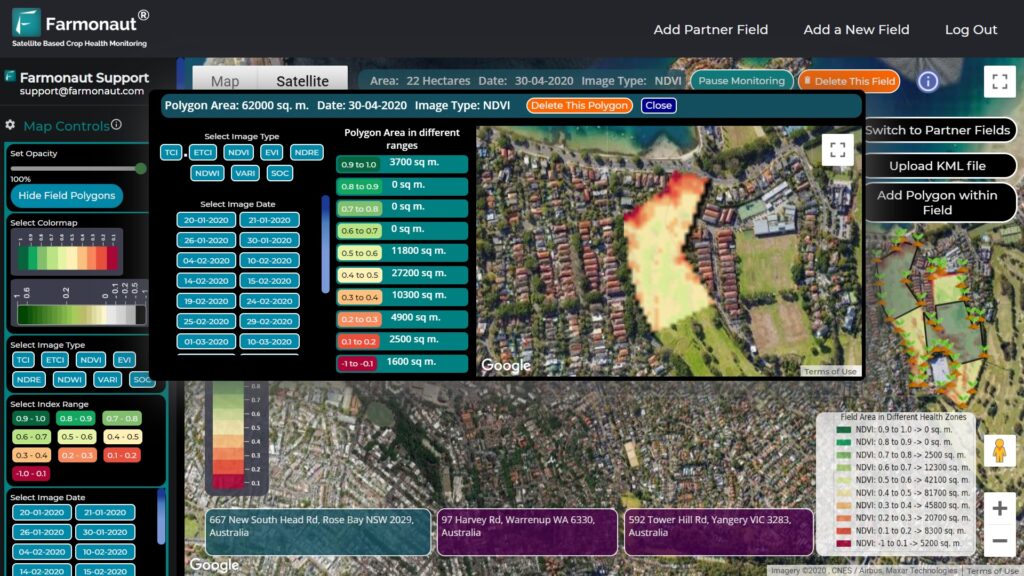
Leverage our satellite crop and soil condition monitoring tools to analyze field zones, track organic matter, and validate the impact of strip tillage—directly from your mobile or web app.

Modern Technologies Supporting Strip Tillage Systems
The orthman strip till, zml strip till evolution is tightly connected to precision technology, integrated data solutions, and machine learning that empower modern agriculture in 2025 and beyond:
- 🛰️ GPS-Guided Equipment: Ensures perfectly parallel strips, accurate fertilizer placement, and efficient use of every square meter of the field.
- ⚙️ Sensor Technologies: Measure soil moisture, compaction, and temperature in real time, allowing for instant machine adjustments.
- 🚜 Variable-Rate Fertilizer Application: Reduces waste and maximizes input efficiency, with direct benefits to soil and yield sustainability.
- 💻 Satellite and AI-Based Monitoring (via Farmonaut): Offers powerful crop, residue, and soil health insights at the click of a button, supporting smarter farm management and environmental compliance.
- 🔗 Blockchain Traceability: Ensures all agricultural activities are tracked, tamper-proof, and transparent—crucial for premium carbon farming and farm-to-fork initiatives.
Integrate your strip tillage operations with real-time monitoring tools for soil, moisture, and weed mapping to enhance nutrient management and reduce environmental impact.

Broader Agricultural Impacts in 2025+: Soil, Yields, and Sustainable Practices
In the fast-evolving agricultural landscape, orthman strip till and zml strip till offer solutions to many pressing challenges:
- 📈 Yield Improvements: Up to 15% better crop yields compared to conventional tillage—delivering both profitability and food security benefits to farmers globally.
- ⚡ Resource Efficiency: Less fuel, labor, and input use equals reduced costs and improved environmental metrics.
- 🌱 Climate Resilience: By promoting soil health, water retention, and carbon sequestration, strip till systems help farms withstand the increasingly variable climatic conditions poised to shape agriculture in 2026 and beyond.
- 🌍 Alignment with Global Sustainability Targets: Supports carbon accounting, compliance for eco-labels, and modern consumer demands for traceable, sustainable foods.
Farmonaut makes these transitions easier by providing affordable, satellite-driven crop, residue, and soil health monitoring.

Integrate advanced soil health and cropping insights with your farm management tools using the Farmonaut API. Learn more with our API Developer Docs.
Farmonaut: Supporting Smarter, Greener Agriculture (2026+)
We at Farmonaut strive to empower farmers, businesses, and governments with seamless, affordable access to precision soil, crop, and residue data. Our satellite-based AI technologies measure critical indicators like NDVI (Normalized Difference Vegetation Index), soil moisture, and carbon dynamics—directly supporting efforts to achieve sustainable, high-yield farming with advanced tillage practices.
- 🌍 Accessible via Android, iOS, Web, and API — monitor your fields or entire agricultural enterprises from anywhere.
- 🌾 Enhance soil management — Use our AI systems to track changes in field health across seasons and initiatives.
- 🪧 Support green supply chains — Leverage our Blockchain Traceability solutions for transparency in inputs and practices.
- 💼 Optimize large-scale management — Our Large-Scale Farm Management Platform helps enterprises oversee extensive cropping and soil conservation operations.
- 🌳 Get actionable advice — Use AI-powered plantation and forest advisory for diverse agricultural landscapes.


FAQ: Orthman Strip Till, ZML Strip Till: Soil, Tillage, and Sustainability
What is the main difference between Orthman Strip Till and ZML Strip Till?
Orthman Strip Till is renowned for its high-precision, GPS-integrated technologies and targeted fertilizer application. ZML Strip Till focuses on adaptability, modularity, and sustainable residue management, making it easier to adjust for different crops and soil conditions. Both deliver key soil health advantages over traditional tillage.
How do these strip till systems help with carbon sequestration?
By minimizing full-surface tillage and protecting organic matter, both systems slow organic carbon loss and foster deeper, more stable soil carbon storage—vital for future-ready, climate-smart agriculture targeting emissions reductions.
Are Orthman and ZML systems compatible with cover cropping or conservation farming?
Yes. Their ability to work with remaining surface residue and precision equipment integration makes them ideal for farmers implementing cover crops, diversified rotations, and conservation-focused practices—now a best practice in 2026 and beyond.
What are the main operational cost benefits?
A reduction in fuel use, fewer field passes, targeted fertilizer application, and less labor means operational savings—while maintaining or increasing yields. Input efficiency improvements with orthman strip till, zml strip till are especially significant for large-scale or environmentally sensitive operations.
How can I monitor my soil health or residue coverage if using these systems?
We recommend our Farmonaut satellite-based platform for analyzing residue levels, soil organic content, and field-by-field variability—making it easier to validate improvements and meet sustainability standards.
Orthman and ZML strip till systems are not just technologies—they are integral to a resilient, climate-adaptive, and sustainably profitable future for farmers worldwide.
Conclusion: Shaping the Future of Soil Health and Sustainable Yields
The transition to orthman strip till and zml strip till represents a pivotal shift in modern agriculture. By combining cutting-edge technology, sustainable practices, and conservation principles, these systems provide a roadmap for resilient, high-yield, and environmentally responsible farming.
As 2026 and future years present new agronomic, environmental, and economic challenges, the adoption of precision strip till systems—and powerful satellite technology solutions like those we offer at Farmonaut—will remain at the heart of smarter, greener, and more profitable agriculture.
Start your journey towards healthier soils and better yields with leading-edge tillage systems, and leverage robust, real-time insights to optimize every acre, proactively manage risks, and build a legacy for your land and business.