Olive Oil Extraction Machine: 2026 Breakthroughs
The Evolution and Significance of Olive Oil Extraction Machines in Modern Agriculture
“Modern olive oil extraction machines increase oil yield by up to 25% compared to traditional methods in 2025.”
Olive oil production stands as a historic cornerstone of Mediterranean agriculture, a tradition shaped over millennia. Today, as the global demand for premium olive oil continues to rise, the field experiences a technological transformation. From stone mills to hydraulic presses, and now to state-of-the-art olive oil extraction machines leveraging automation, IoT, and sustainable practices, the evolution of these machines embodies the intersection between traditional farming wisdom and modern engineering.
By 2026, the olive oil extraction machine is no longer just a processing tool—it’s a critical enabler of sustainable yield, quality optimization, and environmental stewardship. Let’s explore how the latest advancements are revolutionizing olive oil production, boosting efficiency, and empowering farmers and agribusinesses with future-ready technology.
Adoption of smart olive oil extraction machines in 2025–2026 aligns with global objectives of sustainability, yield maximization, and quality assurance, ensuring industry competitiveness for the next decade.
Overview of Olive Oil Extraction Machines: From Ancient Roots to Cutting Edge
The olive oil extraction machine epitomizes the technological journey from ancient stone mills to today’s smart agricultural processing systems. Originally, olives were crushed using mechanical means, involving slow, labor-intensive mixing (malaxation) and simple pressing devices to separate oil from water and solids.
Fast forward to the 2020s, and modern oil extraction machines have evolved into sophisticated assemblies using continuous centrifugation, automated malaxers, and IoT for real-time monitoring. Each process step—crushing, malaxation, pressing, and centrifugation—is now precisely managed to deliver maximum efficiency, yield, and product quality.
- ✔ Crushing: Mechanically breaking down olives into paste.
- ✔ Malaxation: Slow mixing, key to releasing oil droplets and influencing flavor.
- ✔ Centrifugation: Rapid spinning to separate oil from water and solids.
- ✔ Pressing: Squeezing the olive paste to extract more oil, primarily used in older/traditional systems.
- ✔ Separation: Final purification for high-grade extra virgin oil.
Ignoring malaxation temperature control can cause loss of polyphenols and diminished oil quality. Modern machines with precise controls solve this issue.
As the global demand for olive oil increases, investing in optimized olive oil extraction machines is no longer optional—it’s vital.

Modern Breakthroughs: 2025–2026 Olive Oil Extraction Machine Advancements
In 2025–2026, the olive oil sector has shifted dramatically toward automation, smart sensors, sustainability, and optimization. Today’s most advanced extraction machines incorporate a fusion of engineering, AI, and environmental design features. Let’s explore leading innovations set to define the industry’s future:
- ⭐ Continuous Two-Phase & Three-Phase Centrifugation Systems:
Reduced water usage, less waste generation, and higher extraction efficiency. Adaptable to various olive varieties and harvesting intervals. - 📊 Automated Malaxers with Precise Temperature & Time Control:
Safeguards delicate polyphenols, antioxidants, and aroma/flavor compounds for premium oil quality. - 🔎 Smart IoT Sensors & Integrated Data Analytics:
Real-time monitoring of: moisture content, oil yield, paste consistency, and machine health. Data streams drive cloud-based decision platforms and predictive analytics. - ⚡ Energy Efficiency with VFDs and Efficient Motors:
Drastically lowers energy consumption—aligning with both economic and environmental objectives. - ♻ Waste Valorization Systems:
Turning olive pomace into biofuel or fertilizer further supports circular economy models and sustainable agriculture. - 🌀 Integration with Farm Management Platforms:
Seamless integration of process data with larger smart farm management ecosystems (see how innovative platforms can help large scale deployments).
Olive oil extraction machine market growth is fueled by rising global demand for sustainably produced premium oil. Early investment in smart extraction systems can offer rapid ROI by maximizing yield, quality, and operational efficiency.

Technology Comparison Table: Olive Oil Extraction Machine Advancements, 2025–2026
Here’s a comparative overview of the most influential olive oil extraction machines—showcasing technological innovation and progress in yield, efficiency, and sustainability:
| Machine Model/Type (2025–2026) |
Technology Used | Est. Yield Improvement (%) | Efficiency Metrics | Sustainability Features | Est. Cost Range (USD) |
|---|---|---|---|---|---|
| Automated Twin-Screw Continuous Press (2025) | Cold Press + Real-Time Sensor | 20–25% | ~ 15% less energy use ~ 30% water saved |
Low pomace, closed-loop water, modular upgrades | $78K–$180K |
| Smart Centrifugal System (2026 Launch) | IoT-Enabled Centrifugation + AI Control | 24% | Up to 22% lower energy per kg output | Pomace valorization, blockchain traceability, minimal water | $120K–$250K |
| Compact Portable Malaxer | Mini Batch + Variable Temp/Time Control | ~15% | 23% reduced waste | Easy on-site use, mobile, energy optimized | $13K–$40K |
| Three-Phase Hybrid System | Continuous + Intermittent Centrifugation, VFD | 22% | 19–27% improvement in energy/water savings | Automated waste separation, energy recycling | $190K–$299K |
| Modular Micro-Extraction Unit (2025) | Batch cold-press, IoT integration | 10–14% | Optimized for smallholders | Minimal water, upgradable modules | $9K–$37K |

✔ Highlights of 2025–2026 Olive Oil Extraction Machine Technology
- ⭐ Yield Maximization: Up to 25% more oil extracted—compared to 2010-era methods
- 📊 Water Saving: Modern systems reduce water use by up to 40% across the process
- ⚡ Efficiency: Smarter VFDs and motors cut energy bills by 10–27%
- 🔒 Quality Protection: Automated malaxers ensure consistent, premium product
- 🟢 Sustainability: Integrated waste valorization turns pomace into biofuel or fertilizer
- 🔬 Precision Automation: Intelligent process controls from paste consistency to oil separation
- 🌱 Smart Integration: Real-time links to farm management software and traceability platforms
- 📲 Remote Monitoring: Manage and tweak parameters via cloud apps and smartphones
- 🌍 Environmental Safeguards: Closed water loops, energy recirculation, carbon footprint tracking (see more on carbon tracking)
For small-scale farmers in Mediterranean and emerging regions, modular and portable olive oil extraction machines offer scalable efficiency and on-site processing—cutting losses and improving oil freshness.

Smart Agriculture Integration: Maximizing Olive Oil Extraction Efficiency
Modern olive oil extraction machines function as more than static equipment—they link dynamically with precision farming systems to optimize every stage of production.
Advantages include:
- 📈 Harvest Timing Optimization: Faster and smarter processing allows olives to be crushed within hours, preserving oils and reducing oxidation.
- 🔍 Data-Driven Variety Selection: IoT-enabled analytics help farmers choose optimal olive varieties based on local soil, weather, and desired oil profile.
- ⏱ Interval Management: The reduction in post-harvest processing time raises yield and preserves flavor/antioxidant levels.
- 🛡 Predictive Maintenance: Connected machines provide real-time alerts to reduce downtime and safeguard continuous production.
- 🌳 Resource Allocation: Satellite-driven data (like Farmonaut’s management tools) guide farm-scale planning, from harvest logistics to waste utilization.

Sustainability and Environmental Impact: The New Standard in Olive Oil Extraction
Sustainability is central in 2026’s olive oil production. Tech-forward extraction machines are designed from the ground up to reduce water and energy usage, minimize waste, and support a circular economy for Mediterranean and global farming regions.
- 🌊 Water Recirculation
- ⚡ Energy-Efficient Drives
- 🟤 Valorization of Pomace
- 🌱 Carbon Footprinting Compliance (tracking tools)
- ♻ Reduction in Extraction Waste
- ☁ Emission Reduction Certifications
- 🔄 Blockchain for Traceability (learn about blockchain traceability)
Today’s machines incorporate advanced environmental reporting, often linking directly with regulatory and carbon monitoring APIs — making it easier for producers to comply and market their oils as eco-conscious.

2025’s advanced machines with closed water systems often report up to 40% less water use and 25% more yield when validated by smart sensors and satellite crop monitoring.

Economic Impacts & Profitability: Why Modern Extraction Machines Matter
- 💹 Higher Yield, Higher Revenue: Every percentage point of extra yield means more sales and faster break-even.
- ⏳ Reduced Processing Times: Move from harvest to final product in hours, not days, slashing losses.
- 🚜 Labor & Cost Efficiency: Automation reduces manual workforce needs—vital in regions facing labor shortages.
- 🍈 Premium Grade Quality: Precision malaxation and real-time controls result in oils meeting the highest consumer and export standards.
- 📉 Lower Ongoing Costs: Energy and water savings cut long-term operational budgets.
These gains directly address the key challenges of Mediterranean and global olive oil producers: profitability, quality, sustainability, and compliance.



- 🌐 For olive oil supply chain transparency, see: Product Traceability Solution
- 📊 For carbon compliance and sustainability reporting, explore: Carbon Footprinting Product
- 🛡 Insurance, finance, and resource management for agriculture: Crop Loan and Insurance Data Verification | Fleet Management
Farmonaut’s Role: Pioneering Satellite Technology for Olive Oil Agriculture
At Farmonaut, we empower farmers, agribusinesses, and governments with actionable satellite-driven insights. Our solutions enable real-time monitoring, AI advisory for optimal harvest timing, environmental tracking, and transparent blockchain traceability across the olive oil value chain:
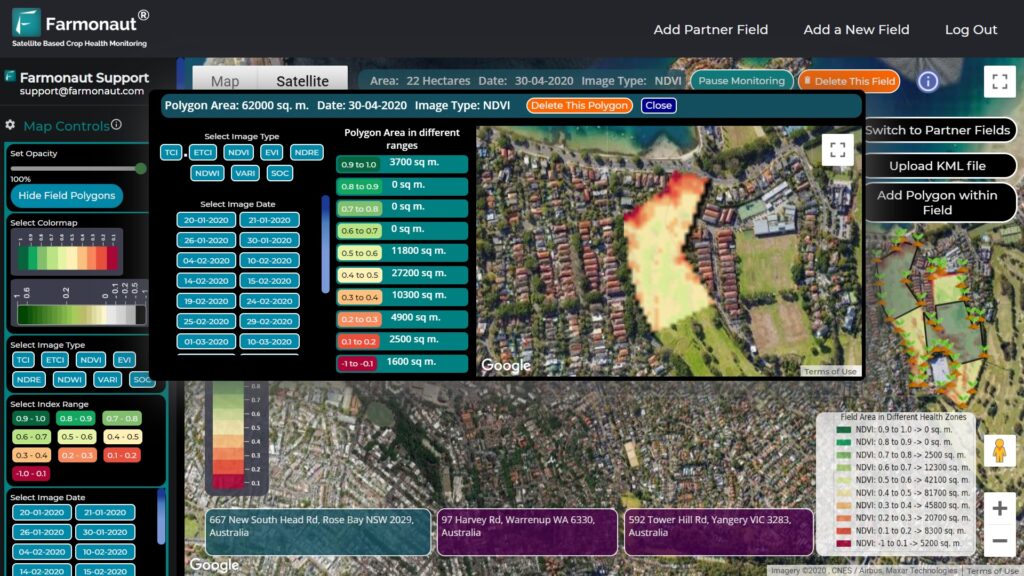
- 🌐 Satellite Imagery: Monitor olive groves for health, stress, and yield estimation with NDVI/soil indices.
- 🛰 Resource Optimization: Advise on harvesting strategies to maximize oil content and minimize waste.
- 🔒 Blockchain Traceability: Certify the origin and authenticity of olive oil batches (see how this works).
- ⚖ Environmental Monitoring: Auto-generate carbon footprint and compliance reports for sustainable olive oil production.
- 📊 AI-Powered Analytics: Get harvest timing and extraction parameter recommendations, maximizing oil yield and profitability.
Available via API and developer tools, our data solutions can be integrated with your farm management or machinery systems—helping optimize production from the field to the extraction plant.
Industry Challenges & The Future: 2026 and Beyond
Despite advances, the path ahead holds challenges for the olive oil extraction machine sector:
- ⚠ Initial Investment: High upfront costs can limit smallholder access to state-of-the-art machines, although compact/modular models are reducing this barrier.
- ⚡ Energy Infrastructure: Even with improved efficiency, access to stable power in remote regions remains a limiting factor.
- 🧩 Data Integration Challenges: Connecting extraction machines, farm management systems, and external satellite data requires standardization and training.
- 👨🏫 Training and Upskilling: Operators and farmers must adapt to the expanding role of automation and real-time data analysis.
The future will be shaped by:
- 🤖 AI-Driven Extraction: Dynamic parameter optimization during each batch based on sensor feedback.
- 🏷 Enhanced Blockchain: Real-time, tamper-proof traceability for every oil batch to ensure consumer trust.
- 🌍 Universal API Connectivity: Linking field, plant, market, and regulatory data for seamless ecosystem management.
- 🌱 Ultra-Low Impact Systems: Waterless or negative-emission extraction processes in next-gen machines.
Expect artificial intelligence and advanced traceability to differentiate premium global olive oil brands—anticipate major competitive advantages for early tech adopters in Mediterranean and emerging markets.
✨ 5 Clear Wins: Modern Olive Oil Extraction Machines (2026)
- Up to 25% higher oil yield compared to 2010s tech
- Water and energy use slashed by 20–40%
- Fully automated process parameters = consistent, premium product
- Instant traceability for consumer confidence
- Meeting or exceeding global sustainability and carbon compliance protocols
Conclusion: The Vital Role of Olive Oil Extraction Machine Technology in Tomorrow’s Agriculture
In 2026 and beyond, olive oil extraction machines embody the absolute intersection of traditional olive farming wisdom and modern engineering. They are the pivotal element in producing high-yield, sustainable, eco-certified, and traceable olive oils—crucial for Mediterranean and global agricultural markets.
For every olive oil producer—from the smallholder in Southern Greece to large-scale operations in Spain, Italy, Turkey, and beyond—the choice and integration of modern extraction machines determine profitability, competitiveness, and environmental stewardship.
As consumer demand for premium, ethical, and sustainably produced oil continues to rise, continued investment in both machine technology and complementary satellite data solutions (such as those offered at Farmonaut) is essential. These advances empower us to foster resilience, growth, and transparency in the olive oil sector for years to come.
Ready to elevate your olive oil production with precision agriculture, sustainability, and next-gen extraction tech? Start with Farmonaut’s platform and see the difference satellite-driven data can make.
Frequently Asked Questions: Olive Oil Extraction Machines & Technology
What is the main function of a modern olive oil extraction machine?
A modern olive oil extraction machine is designed to maximize oil yield, efficiency, and product quality by crushing, mixing (malaxation), and using centrifugation or pressing to separate oil from water and solids, now with advanced automation, sensors, and smart controls.
How have olive oil extraction machines evolved between 2025 and 2026?
They now feature IoT sensors, AI-powered controls, continuous processing, closed water loops, and built-in environmental compliance. Innovations have increased oil yield by up to 25%, reduced water use by nearly 40%, and enabled real-time data analytics and traceability.
What sustainability features do new machines provide?
Key features include closed water recirculation, pomace valorization to reduce waste, energy-efficient motors, and real-time carbon tracking. Many also support traceability protocols for ethical and sustainable supply chain certification.
Can small farms benefit from the latest extraction machines?
Yes. Modular and portable extraction units are increasingly available, offering lower costs, mobile operation, and scalability—empowering smallholder farmers to maximize yield and minimize loss.
How does Farmonaut support olive oil producers in the modern era?
As a leading satellite intelligence provider, we deliver actionable field health, yield, and environmental data, AI-powered harvest advice, and blockchain-based traceability—all accessible through our web, mobile, and API platforms to help optimize the entire olive oil value chain.
Have questions or want to see how satellite smart farming and machine innovation can transform your olive oil operation?
Try Farmonaut’s platform—modernize your oil production for 2026 and beyond!