Harnessing Biodiversity in Agriculture for Resilience and Productivity in 2026
Introduction: The Era of Resilient Soil Biodiversity
In the face of increasing climate volatility, agricultural systems worldwide are at a pivotal juncture. Historically, monocultures and intensive chemical use have driven short-term productivity, but as we move toward 2026, the focus is shifting rapidly toward sustainability, resilience, and the integration of ecological practices. At the core of this transition lies the boosting of soil biodiversity, harnessing the power of agroforestry, and employing diversified, science-backed management methods.
Biodiversity in agriculture isn’t a new concept but it is now proving essential for yields, pest regulation, water management, and the long-term viability of farms. In this comprehensive guide, we explore the advances at the intersection of agroecology, integrated landscape management, and technology—including how we at Farmonaut support these evolving approaches with state-of-the-art satellite and AI-based services.
“A farm’s resilience to climate extremes hinges directly on its soil biological diversity and the varied species it nurtures—from enabling natural pest controls to stabilizing yields under unpredictable weather.”
Let’s delve into the mechanisms by which enhanced soil biodiversity and agroforestry-based agricultural practices can transform farming, ensuring both the health of our land and the success of generations to come.
Soil Biodiversity: The Foundation of Robust Agricultural Systems
Healthy soil teems with diverse life. Millions of microbial and faunal species interact beneath our feet, driving essential ecosystem services—including nutrient cycling, disease suppression, carbon sequestration, water holding capacity, and the physical structure of fields. In the era leading into and beyond 2026, research has made it clear that nurturing this diversity is foundational to supporting agricultural productivity and sustainability.
- Soil biodiversity underpins healthy crops by driving nutrient cycling and disease resistance
- Diverse microbial communities improve drought tolerance and decrease disease outbreaks
- Faunal life in soil increases structure, porosity, and water infiltration, reducing runoff
- Soil carbon sequestration is amplified by high biological diversity, addressing climate mitigation
- Resilient soils buffer agricultural systems from weather extremes, enhancing farm reliability

Microbial and Faunal Diversification Drives Productivity
The more diverse the soil life—bacteria, fungi, protozoa, nematodes, arthropods—the more robust the nutrient cycling and suppression of soil-borne diseases. Microbial diversity breaks down complex organic matter, facilitating the gradual release of nutrients for crops. Mycorrhizal fungi extend the root networks of plants, boosting both water and phosphorus uptake, thus increasing yields while lessening the need for chemical fertilizers.
Encourage greater microbial diversity in your soil by reducing tillage and regularly applying high-quality compost—both practices shown to foster beneficial communities while suppressing pathogens.
Essential Practices for Enhancing Soil Biodiversity (2026)
Implementing targeted practices to increase soil biodiversity remains integral for modern farms. Select proven approaches that not only improve soil health but also reduce chemical inputs, increase resilience, and optimize ecosystem services.

- ✔️ Cover Cropping: Keeps the soil covered year-round with vegetation, promotes faunal biodiversity, and enhances natural pest controls.
- ✔️ Reduced Tillage: Minimizes soil disturbance, protecting microbial networks and the overall structure of fields.
- ✔️ Compost Application: Adds organic matter and beneficial microbial inoculants.
- ✔️ Diversified Crop Rotations: Alternating crops, especially use of legumes and grains, starves out soil-borne pests and stabilizes fertility.
- ✔️ Biofertilizers & Targeted Inoculants: Bolster natural communities and reduce chemical reliance.

Common Mistake ⚠️
The Role of Crop Diversification and Agroforestry in Farm Resilience
As we approach 2026, crop diversification and agroforestry methods have gained considerable traction for their ability to minimize disease outbreaks, increase yields, support ecosystem services, and buffer farms against the impacts of climate extremes. By mixing legumes, tubers, grains, and utilizing native or adapted species, farmers foster biological controls and soil health.
- 🌳 Agroforestry: Integrates trees with cropping or grazing, resulting in microclimate moderation and improved biomass yields.
- 🪵 Silvopasture: Pairs trees with pasture (livestock grazing), creating mutual benefits in soil protection, forage, and timber outputs.
- 🌱 Multi-species Rotations: Disrupts pest lifecycles and boosts soil fertility, reducing chemical dependence.
- 🌼 Flower-rich Field Margins: Attract and sustain beneficial pollinators and predator insects, enhancing natural pest controls and pollination services.

A multi-tiered approach—embracing diverse species at the field, farm, and landscape level—fuels the resilience necessary for the next generation of agriculture.
Integrating Trees: Agroforestry, Silvopasture, and Perennial Systems
Trees in farming aren’t simply for timber; they regulate microclimate, stabilize soil, increase water retention, and shelter native fauna. Practices like agroforestry and silvopasture bring together annual crops, livestock, and tree species, fostering layered, more natural ecosystems.

- Moderating Weather Extremes: Trees create windbreaks and shade, lowering field temperatures and minimizing the risk of drought-induced damage or heat stress.
- Protecting Soil & Water: Root networks reduce erosion and increase water absorption, especially critical on sloped or forestry-adjacent lands.
- Continuous Biomass & Food Production: Agroforestry delivers fruit, forage, and timber even as crops rotate, supporting diversified farm income.
Pollinator Habitat Diversity & Biological Pest Controls
Pollination underpins the yield of many crops. Habitat provision for bees, hoverflies, butterflies, birds, and other pollinators ensures reliable pollination services and robust natural enemy populations that regulate pest outbreaks.
- 🌼 Flower Strips & Hedgerows: Sustain diverse pollinator communities across the landscape.
- 🐝 Unmown Field Margins: Provide nesting and foraging sites for native bees and natural enemies.
- 🦉 Minimize Chemical Impact: Carefully time pesticide applications to protect pollinators while still managing pests.
- 🌎 Landscape Connectivity: Facilitate the movement of beneficial species across farms, ensuring effective biological controls.
Agroforestry and diversified cropping systems open premium market opportunities—ranging from traceable, shade-grown coffee to sustainably certified timber. Investments here hedge risk against market and climate volatility for both smallholders and agrifood companies.
Ecological Water and Nutrient Cycling for Drought Resilience
Robust water management through an ecological lens amplifies crop resilience and lowers vulnerability to drought. Wetlands, vegetated riparian buffers, and practices like mulching or reduced tillage help maintain groundwater recharge and mitigate runoff, safeguarding both crop yields and downstream water quality.
- 🌀 Soil Moisture Optimization: Use both organic matter and mulch to increase water retention between rains.
- 🌳 Tree Canopies: Reduce evaporative loss and fortify water supply for crops beneath their shade.
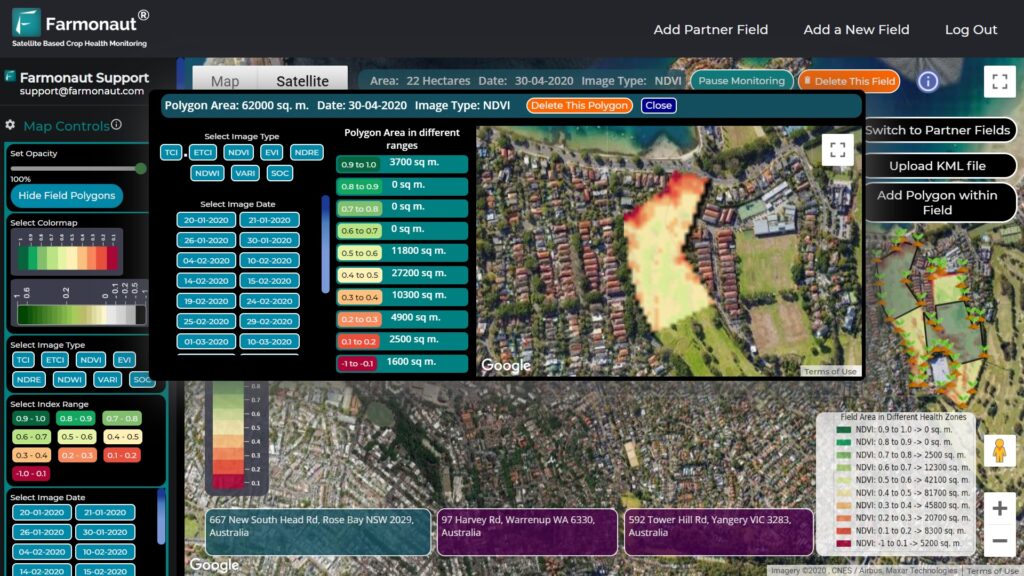
- 🔎 Remote Sensing: Satellite-based monitoring allows precision application of irrigation and inputs, minimizing waste and improving crop health. Our carbon footprint monitoring tools bring actionable data for sustainable water and nutrient management.

Integrating cover crops and mulches improves water-use efficiency and soil water availability, reducing the exposure of your farm to seasonal drought-driven yield declines.
Genetic Diversity, Participatory Breeding, and Resilience
Genetic diversity within and among crop species acts as a crucial buffer against new pests, diseases, and climate extremes. By mixing landraces, wild relatives, and locally adapted cultivars, farmers can foster resilience and tap into new genetic resources for traits like drought tolerance, salinity resistance, or pest avoidance.
- 🧬 Dynamic Seed Pools: Retain and refine locally adapted seed pools through on-farm participatory breeding.
- 🌾 Diverse Rotations: Intermix crops to disrupt pest cycles and maintain both productivity and soil health.
- 🐤 Integrative Livestock Systems: Grazing animals with diverse plant species supports mutual ecosystem benefits, soil aeration, and nutrient cycling.
Farmers gain from participatory breeding programs—where community selection hones varieties for local conditions and market demands. A stronger seed base means enhanced future resilience.

On-farm genetic diversity enables rapid response to climatic changes and pest incursions by ensuring that at least some species or varieties can thrive under new conditions.
Market Incentives & Policy Mechanisms Driving Biodiversity Adoption
For biodiversity-friendly methods to scale, farmers need clear market signals and supportive policies. Incentives and payment for ecosystem services schemes reward producers for maintaining diverse landscapes. Policy levers—including satellite-based crop insurance—reduce risk during transition and support farm businesses as they adopt resilient approaches.
- ✅ Certification Schemes: Premium pricing for “eco-labeled” commodities (shade-grown coffee, certified timber, etc.), boosting income and providing motivation for adoption of biodiversity-focused practices.
- ✅ Payment for Ecosystem Services: Direct compensation for maintaining forests, buffer strips, and wetlands with high biological value.
- ✅ Access to Sustainable Finance: Crop loan and insurance services tailored to eco-friendly producers help them invest in the transition.
- ✅ Supply Chain Traceability: Blockchain-based systems (see Farmonaut Product Traceability) ensure reliable sourcing and transparency, increasingly demanded by global markets and conscious consumers.
Neglecting market trends and consumer demand for sustainable products can restrict farm profitability. Forward-looking adoption of diversified practices and traceability paves the way for strong market positioning—especially in 2026 and beyond.
Technology-Driven Soil Biodiversity Management: Farmonaut’s Approach
Technology—when integrated thoughtfully—serves as a major enabler for scaling resilient soil biodiversity management. Our Farmonaut team is at the forefront, offering advanced satellite-based solutions and real-time AI-powered advisory systems that help farmers monitor, analyze, and optimize every aspect of their agricultural systems.
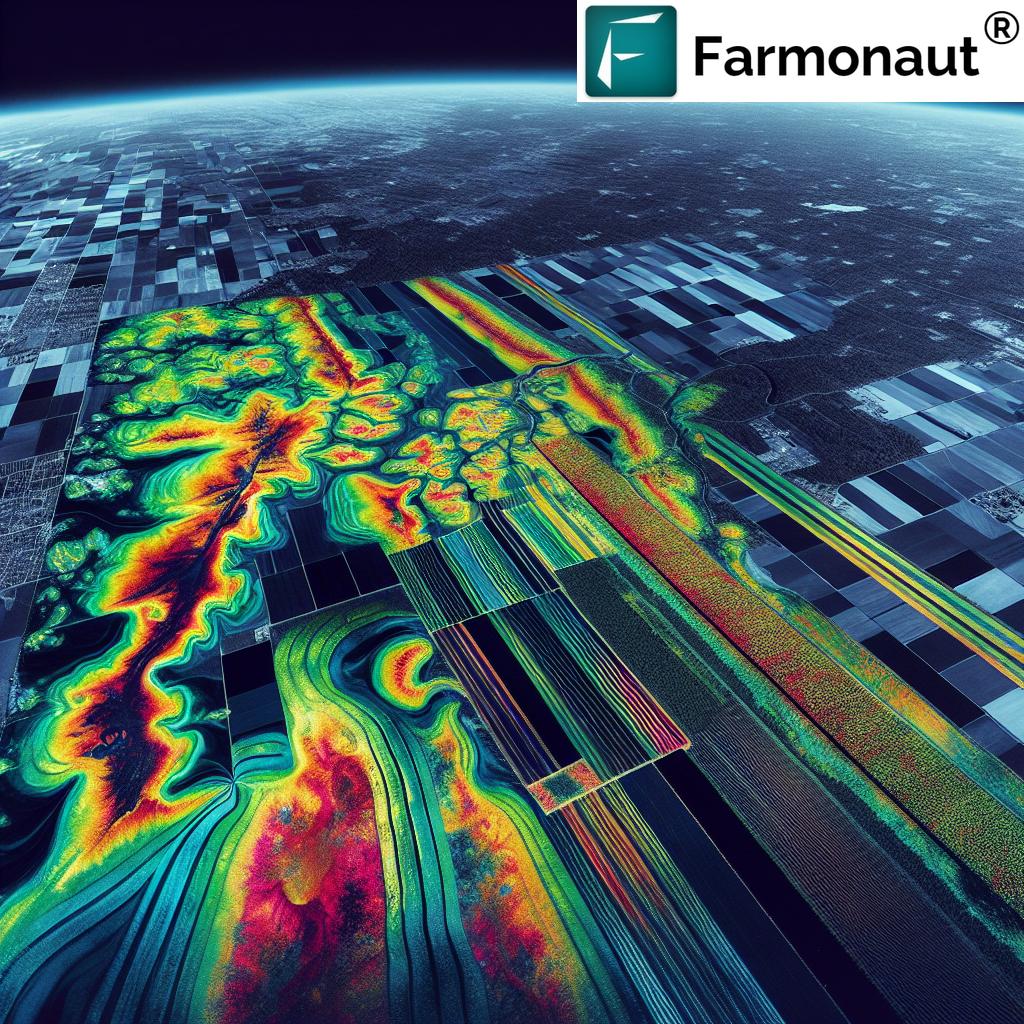
- 🌐 Remote Sensing: Multispectral satellite imagery evaluates vegetation health, monitors soil conditions, tracks carbon sequestration, and detects drought risk—empowering farm decision-making.
Try our large-scale farm monitoring app:
Farmonaut Large Scale Farm Management - 🧠 AI-Based Advisory: Our JEEVN AI system provides field-specific, actionable recommendations to improve soil biodiversity and overall farm health.
API for AI-powered solutions:
Farmonaut API - 🔗 Blockchain Traceability: Granting farmers and supply chain players the ability to verify sustainability credentials of their products for the most demanding markets.
Read more: Product Traceability - 📱 Mobile & Web Access: Our platform is available on Android, iOS, and web, making satellite-powered decision support accessible anywhere, at any scale.
- 🛰️ Environmental Impact Tracking: Provides real-time analysis of carbon footprint and supports the adoption of less carbon-intensive practices.
Visit: Carbon Footprinting page



API Developer Documentation:
Farmonaut Satellite & Weather API Docs
Key Benefits of Farmonaut Technology for Soil Biodiversity:
- 📊 Data insight: Real-time analysis of field health, soil conditions, and biodiversity indices for targeted interventions.
- 📈 Yield improvement: By monitoring and optimizing for maximum soil diversity, overall farm productivity is enhanced.
- 💧 Water management: Precision soil moisture analytics reduce irrigation waste and improve water-use efficiency.
- ⚡ Risk reduction: Early detection of disease or drought stress enables timely, cost-effective action.
- 🔒 Market access: Verified, transparent data on sustainable practices improves chances of premium market entry and eco-certification.
Key Risks, Trade-offs & Strategies for Effective Adoption
While adoption of biodiversity-focused practices offers clear advantages, it also demands thoughtful planning and support. There can be initial costs, transition phases, and a need for farmer training on assessing biodiversity outcomes.
Investing in soil biodiversity and agroforestry may involve upfront expenses, but regular monitoring, technical guidance, and ecosystem service payments can yield significant long-term returns—in resilience, productivity, and market premiums.
- Transition Costs: Initial investments in cover crops, trees, or equipment are usually offset by reduced future seed, fertilizer, or irrigation costs.
- Skill Development: Training or extension services are often needed to optimize impact and monitor outcomes.
- Regular Evaluation: Track indicators such as microbial activity, pollinator abundance, pest enemy populations, and tree species diversity to ensure ongoing effectiveness.
Estimated Benefits of Soil Biodiversity Practices in Agriculture (2025–2026)
Below is a comparative table highlighting how leading soil biodiversity practices stack up on key metrics, supporting decisions for resilience and sustainability in 2025–2026 and beyond.
| Practice | Estimated Increase in Yield (%) | Pest Reduction (%) | Soil Organic Matter Improvement (%) | Carbon Sequestration Potential (kg/ha/year) |
|---|---|---|---|---|
| Agroforestry | 10–15% | 25–35% | 15–25% | 200–550 |
| Cover Cropping | 8–12% | 10–20% | 10–18% | 150–400 |
| No-Till Farming | 6–10% | 5–15% | 12–20% | 180–300 |
| Organic Amendments (e.g., Compost) | 7–13% | 8–14% | 18–30% | 220–500 |
| Diversified Rotations | 9–14% | 20–28% | 8–15% | 100–220 |
The greatest pest reduction and carbon sequestration are achieved through agroforestry and organic amendment systems, making them priority options for sustainable farm investment in 2026.
Farmer Insights & Practical Action Checklist
Visual List: Top 5 Steps to Boost Soil Biodiversity & Farm Resilience
- 🌾 Diversify crops using rotations and intercropping — Disrupt pest cycles and enhance nutrient cycling.
- 🌳 Adopt agroforestry & integrate trees — Provide habitat and moderate climate forces on your land.
- 🌼 Develop flower-rich margins and hedgerows — Attract pollinators, support beneficial insects.
- 🪱 Increase composting and apply organic amendments — Feed soil fauna and improve organic matter.
- 📊 Monitor results with digital tools — Use remote sensing and AI-based apps (like ours at Farmonaut) for actionable data and adaptive management.
Visual List: What to Avoid in 2026 Farm Systems
- 🚫 Excessive tillage, disturbing soil structure and microbial networks
- 🚫 Over-reliance on chemical fertilizers and pesticides
- 🚫 Monocultural planting schedules without rotation
- 🚫 Neglect of treed areas or field margins
- 🚫 Missing out on digital monitoring of soil and crop health
Quick Checklist for 2026-Ready Farms:
- ✔ Diversify species and cover crops
- ✔ Integrate trees (agroforestry/silvopasture)
- ✔ Build flower-rich field margins & hedgerows
- ✔ Practice reduced/no-till farming
- ✔ Apply compost and organic matter
- ✔ Use digital monitoring tools (like Farmonaut’s apps)
- ✔ Monitor and adapt continuously for best results
Scaling soil biodiversity practices at the landscape level requires both innovative finance—see digital traceability/loan tools from Farmonaut for risk reduction and verification—and improved extension services for knowledge sharing.
FAQs: Soil Biodiversity, Agroforestry, and Resilient Agriculture
-
Q: How does soil biodiversity concretely improve farm yields?
A: High soil biodiversity intensifies nutrient cycling, organic matter decomposition, and suppressive capacity for soil-borne diseases, leading to more consistent and higher yields. -
Q: What’s the best first step for a farm newly adopting biodiversity-focused practices?
A: Begin by diversifying crop rotations and introducing cover crops—these simple, cost-effective changes jumpstart microbial activity and soil health. -
Q: What types of trees should farms integrate for optimal resilience?
A: Favor mixes of native or regionally adapted species for agroforestry and silvopasture, balancing fruit, timber and habitat provision -
Q: How does Farmonaut help with soil biodiversity management?
A: We provide actionable, satellite-driven insights into soil and vegetation health, AI-powered recommendations, and blockchain-based traceability—making biodiversity management quantifiable, transparent, and adaptive. -
Q: What market mechanisms support widespread adoption of these practices?
A: Premium certification, ecosystem service payments, traceability/verified supply chains, and sustainable lending options all encourage farmers to transition and maintain biodiversity-friendly operations.
Conclusion: None—Nurturing a Resilient, Sustainable Farm Future
As we navigate 2026 and beyond, agricultural systems that nurture soil biodiversity and integrate agroforestry represent not just an ecological imperative but the most pragmatic route to resilience and sustainability. The synergy between diversified crops, healthy soils, natural pest controls, and robust water cycling is increasingly evident in improved yields and reduced vulnerability to climate extremes.
With technology and data-driven solutions—such as those delivered by us at Farmonaut—farmers, agribusinesses, and decision-makers are uniquely positioned to balance productivity, profitability, and environmental stewardship. Through smart planning, ongoing monitoring, participatory improvement, and responsive market mechanisms, the vision of productive, climate-robust agriculture is within our collective reach.
It’s time to harness the foundational power of soil biodiversity, restore balance to our agricultural systems, and secure lasting livelihoods for farm communities everywhere.
Farmonaut Subscription Table
Investing in soil biodiversity now lays the groundwork for long-term resilience, reliable yields, and market leadership in a climate-uncertain future. Tools like Farmonaut’s satellite and AI-driven platform make this journey accessible and measurable for everyone.