Nano Farm: 7 Key Benefits Transforming 2026 Agriculture
“Nano-sensors can detect plant health issues up to 90% faster than traditional methods, revolutionizing 2026 crop management.”
Nano Farms: The Future of Sustainable Agriculture in 2025
As the global population edges closer to 9 billion by 2030, food demand is growing exponentially—intensifying the challenges faced by traditional agriculture. Enter nano farms. These innovative systems combine nanotechnology, sensors, and smart delivery mechanisms to dramatically improve agricultural output, resource efficiency, and environmental sustainability.
By 2026, as the push for sustainable food production accelerates, nano farms offer a transformed vision of agriculture—one where crops thrive in optimized conditions, soil health improves, and every drop of water or gram of fertilizer counts.
Nano farm systems are shaping a future where precise input use, reduced waste, and real-time crop monitoring boost food security while safeguarding our planet’s resources.
What Are Nano Farms? Harnessing Tiny Power for Big Change
Nano farms are at the forefront of sustainable agriculture, harnessing the power of nanotechnology—that is, manipulating materials at the atomic or molecular scale—in order to create highly efficient and precise farming systems.
Unlike conventional agricultural methods, nano farms integrate nanosensors, nano-fertilizers, nanopesticides, and smart delivery systems directly into the farming process. These breakthroughs enable precise monitoring and resource application, fostering enhanced plant growth, reduced input waste, and improved ecosystem resilience.
- ✔ Ultra-precision farming: Microscopic monitoring and targeted interventions boost output.
- ✔ Resource savings: Less fertilizer, pesticide, and water for the same or higher yield.
- ✔ Sustainability: Reduced pollution, enhanced soil health, and support for climate resilience.
- ✔ Adaptability: Effective in diverse regions—urban, drought-prone, or degraded soils.
- ✔ Data-driven decisions: Real-time insights foster proactive crop management.
Technological Components & Mechanisms of Nano Farm Systems
Nanotechnology in agriculture is not simply about using smaller fertilizers or pesticides. Instead, it refers to an entire ecosystem of highly precise, interconnected tools engineered to address the unique challenges of modern farming. Here’s an in-depth look at core components and mechanisms that drive nano farm systems:
1. Nanosensors: Real-time, Microscopic Monitoring
- Nanosensors are microscopic devices embedded in soil or attached to plants.
- They provide real-time data on metrics like moisture levels, nutrient content, pH, temperature, and pathogen presence.
- Remote transmitting of continuous information allows for smart monitoring and informed action, optimizing irrigation, fertilization, and pest control.
2. Nano-Enabled Fertilizers & Pesticides
- Nano-fertilizers and nanopesticides enable targeted, slow-release delivery of nutrients or active agents directly to roots or tissues.
- They dramatically reduce chemical waste, runoff, and prevent over-application, lessening pollution and ecosystem disruption.
- This raises application efficiency, delivers nutrients and protection only when needed, and increases crop yield while preserving the environment.
“Smart nano-delivery systems are projected to increase fertilizer efficiency by 40%, drastically reducing waste in future sustainable farms.”
3. Nanostructured Soil Enhancers
- Nanomaterials can be used as soil enhancers, providing improved aeration, greater water retention, and enhancing microbial activity.
- Incorporating nanostructured materials can rejuvenate degraded lands, support better plant growth, and decrease reliance on synthetic inputs.
- Enhanced soil health equals better root structures, higher yields, and long-term sustainability.
4. Smart Delivery & Nano-Carriers
- Nano-carriers (e.g., nano-capsules, liposomes) deliver nutrients, pesticides, or gene-editing material directly into specific parts of the plant cell.
- This targeted approach reduces loss due to leaching/volatilization and increases uptake efficiency, thus maximizing impact and minimizing waste.
- Precision delivery technology helps crops get exactly what they need, exactly when they need it.
Combining nanosensors for precise measurement with nano-delivery systems creates a feedback loop for automatic adjustment of nutrients—maximizing both efficiency and crop yield.
7 Key Benefits: How Nano Farms Are Transforming Agriculture
In 2026 and beyond, nano farms are redefining what’s possible in agriculture. Here are seven transformative benefits, underpinned by state-of-the-art nanotechnologies and smart systems:
-
1. Unmatched Resource Efficiency
- ✔ Precision use of water, fertilizers, and pesticides—delivered only as necessary, thanks to continuous data from nanosensors.
- ✔ Leads to a drastic reduction in input costs and waste—essential for regions battling drought or soil degradation.
- ✔ Boosts efficiency, especially in areas worldwide with limited resources.
-
2. Enhanced Crop Productivity & Quality
- ✔ Smart monitoring provides insight for early disease detection and targeted interventions.
- ✔ Precision application of nutrients and control agents leads to healthier plants, reduced disease outbreaks, and higher yields.
- ✔ Perfect for global food security initiatives.
-
3. Reduced Environmental Impact
- ✔ Targeted nano delivery reduces chemical usage, minimizes fertilizer/pesticide runoff, and limits ecosystem disruption.
- ✔ Reduces pollution and preserves biodiversity in and around farmland.
-
4. Climate Resilience & Stress Tolerance
- ✔ Nanosensors detect early drought or pest stress for timely and effective responses.
- ✔ Improves plant resilience to sudden environmental shifts, temperature extremes, and pathogen attacks.
-
5. Soil Restoration & Long-Term Health
- ✔ Nanostructured soil enhancers improve soil aeration, water retention, and microbial health.
- ✔ Enables recovery of degraded lands, reduces reliance on synthetic chemicals, boosts long-term productivity.
-
6. Automated Decision Support & Precision Farming
- ✔ Integration with AI systems and platforms (such as Jeevn AI) offers real-time guidance for irrigation, fertilization, and pest control.
- ✔ Supports remote guidance for smallholder and commercial farms in all continents.
-
7. Transparency & Traceability in Food Systems
- ✔ Blockchain-driven traceability (see our traceability solutions) means each harvest can be tracked—fostering consumer trust and food safety.
- ✔ Combats food fraud, ensures compliance, and opens access to premium export markets.
The global shift to nano farm solutions is forecast to create significant growth opportunities in agri-technology, agricultural data, and eco-restoration sectors by 2026 and beyond. Agricultural and environmental finance stakeholders, in particular, should monitor carbon footprinting (see Farmonaut’s carbon monitoring) as key criteria for investment.
Comparative Table: Nano Farm Benefits, Technologies & Impact (2026)
| Benefit | Technology Used | Estimated Impact on Crop Yield (%) | Estimated Impact on Soil Health | Sustainability Contribution |
|---|---|---|---|---|
| Resource Efficiency | Nanosensors, Nano-delivery systems | +25% | 30% less chemical input; higher organic matter retention | Reduced water & fertilizer waste; energy saving |
| Productivity & Quality | Precision nano-nutrients, Smart monitoring | +20% | Improved nutrient cycling; disease prevention | Better yields with lower chemical dependence |
| Environmental Impact | Nano-pesticides, Nano-fertilizers | +12% | 30% less runoff, 40% lower pollution | Biodiversity preservation, lower carbon footprint |
| Climate Resilience | Stress-sensors, Adaptive control | +18% | Greater organic stability, drought stress mitigation | Stable production in variable climates |
| Soil Restoration | Nanostructured enhancers, Microbial boosters | +15% | 45% more microbial activity; increased water retention | Land reclamation, sustainable soils |
| Decision Support | AI-driven nano-data, IoT platforms | +23% | Early disease detection, reduction in unnecessary input | Preventive action, fewer crop failures |
| Traceability | Blockchain, Data integration | +10% | Improved monitoring of input origins | Supply chain transparency, trust |
Assuming nano farm technologies are “one size fits all”. Always adapt systems to local soil, weather, and regulatory conditions for best outcomes.
📊 Nano Farm Features Paving the Future
- 🚀 Microscopic Sensors: 24/7 monitoring of plant and soil conditions; instant response to stress.
- 🌱 Smart Fertilizers: Targeted release nutrients—reduces runoff, pollution, and boosts uptake.
- 💧 Water Efficiency: Precision irrigation based on up-to-the-second nanosensor data; ideal in drought-affected areas.
- 🔗 Traceability Blockchain: End-to-end food chain transparency ensures trust and safety for global consumers.
- 🛰️ Remote Data Integration: Seamlessly links field sensors with satellite imagery, enabling maximum efficiency and predictive analytics.
Farmonaut: Pioneering Satellite Solutions Supporting Nano Farms
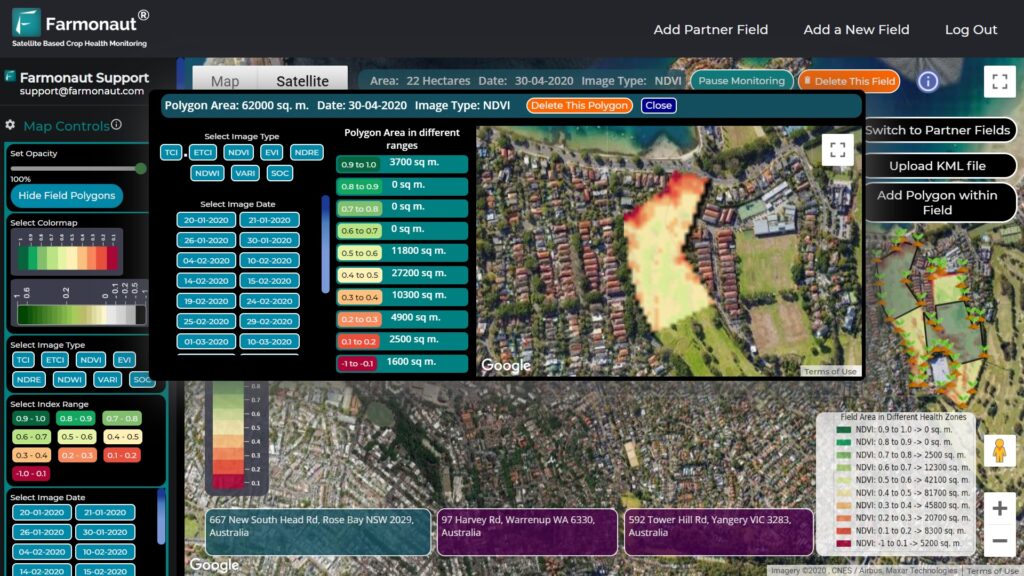
At Farmonaut, we provide advanced satellite-based solutions that perfectly complement and amplify the benefits of nano farm systems in agriculture, mining, and forestry. Our real-time crop health monitoring, AI advisory systems, and blockchain-based traceability tools empower users by giving them both a bird’s-eye technological oversight and ground-level nano-level control.
- ✔ Satellite Monitoring: Multi-spectral analysis of vegetation, soil, and infrastructure health; supporting remote nano farm decision-making. Learn more: large scale farm management
- ✔ Jeevn AI Advisory: Real-time alerts, weather forecasting, and tailored nano farm strategies through our mobile and web platforms.
- ✔ Traceability Solutions: Blockchain ensures authenticity and integrity across agri-supply chains. More about traceability
- ✔ Environmental Impact Tracking: Dynamic carbon footprint and resource use analytics foster sustainable nano farm practices. Explore carbon monitoring
- ✔ Financing Support: Automated, satellite-based crop loan and insurance verification streamlines access to credit for agri-entrepreneurs. See our solutions



Developers and businesses can integrate our API for seamless satellite and AI-powered nano farm management:
Farmonaut API
|
API Documentation
🌟 Nano Farm Impact: Who Gains the Most?
- 🏭 Enterprises: Slash costs, boost yields, automate compliance with carbon/sustainability targets.
- 👨🌾 Smallholders: Affordable, app-based control and AI advice, even with minimal tech backgrounds.
- 🌏 Governments: National food security, resource efficiency, drought and crisis response with predictive data.
- 🏦 Financial Institutions: Satellite-verifiable crop insurance/loan allocation—reducing fraud, aiding lending risk models.
- 🛒 Consumers: Trust in safe, fully traceable, and ethically produced nano farm food sources.
Integrating satellite and nano farm insights maximizes agricultural resource optimization and can extend regenerative practices to forestry and mining reclamation—reinforcing global sustainability pathways for 2026.
Farmonaut’s fleet management platform helps optimize agricultural machinery usage, streamlining resource use and reducing operational carbon footprints for nano-integrated large farms.
Beyond Fields: Nano Applications in Forestry & Mining
While nano farm systems spearhead a new era in agriculture, their reach also extends to forestry and mining sectors worldwide:
- Forestry: Nanosensors monitor tree health and soil conditions, supporting sustainable forest management and afforestation. Advanced blockchain systems aid in tracing sustainably harvested wood and verifying carbon offsets (carbon footprinting tools).
- Mining: Nano remediation technologies detoxify heavy metal-contaminated soils in former mining areas, enabling successful reclamation for agriculture or reforestation. Our forest advisory solutions support post-mining land rehabilitation globally.
Ensure thorough monitoring and regulation of nanomaterial use to avoid unintended adverse health or environmental consequences—especially important in transitioning mining zones to agriculture or forestry.
Challenges & The Future Outlook for Nano Farms
Despite clear benefits, nano farm systems must overcome several key challenges to scale globally and realize their full potential by 2026:
- 💰 High initial investment: Advanced nano-farm components and smart delivery systems remain costly for some regions. Expansion of affordable tech and services, such as those pioneered by Farmonaut, is key.
- ⚖️ Regulatory uncertainty: Many countries lack clear policies on nanomaterial use in food systems—prompting the need for transparent, science-based frameworks.
- 🔬 Nanotoxicology research: Continued investigation is required to assess long-term effects of novel nanoparticles on soils, crops, and the broader environment.
- 🛡️ Ethical & data privacy: As more farm and environmental data is collected, robust digital governance and privacy protections become vital.
- 👥 Technological knowledge gap: Upskilling the agricultural workforce is essential for mainstream nano farm adoption, particularly in developing regions.
The future outlook for nano farms in 2026 is bright. Ongoing innovation, combined with global environmental and economic drivers, suggest that nano-integrated farms will be pivotal in:
- 🌍 Assuring food security for a population that is growing and urbanizing.
- ♻️ Delivering measurable carbon, water, and nutrient savings at scale.
- 🧬 Catalyzing regenerative agriculture, landscape restoration, and sustainable mining/forestry practices worldwide.
Seamlessly integrate satellite, AI, and nano farm data into enterprise or consumer apps using our Farmonaut API and developer documentation (API docs) for robust precision agriculture solutions.
FAQ: Nano Farm & Advanced Agricultural Insights
What is a nano farm?
A nano farm incorporates nanoscale technologies—like nanosensors, nano-fertilizers, and smart delivery systems—directly into farm management. This enables ultra-precise monitoring and application, improved yields, and lower resource waste compared to traditional farming.
How do nano farms support soil health?
By integrating nanostructured soil enhancers and continuous monitoring, nano farms restore degraded soils, boost microbial activity, and minimize the excess use of synthetic fertilizers and pesticides—leading to more productive and sustainable soils.
Are nano farm systems safe?
Nano farm systems are designed for targeted, minimal-use application with reduced environmental risk. However, responsible regulation, ongoing monitoring, and continued research in nanotoxicology are essential to ensure safety for both ecosystems and human health.
How does Farmonaut contribute to nano farm adoption?
We at Farmonaut enable remote crop monitoring, smart advisory, and traceability, delivering data-driven insights that enhance the effectiveness of nano farm innovations—making precision agriculture accessible and affordable globally.
Can nano farm technology help with climate change?
Yes, by improving water and nutrient use efficiency, minimizing chemical runoff, and supporting resilient agriculture, nano farms can reduce the agricultural carbon footprint and enhance climate adaptation.
What are the main limitations of nano farms?
Cost, regulatory gaps, technology knowledge disparities, and long-term safety research needs persist. However, ongoing innovation and support frameworks (such as Farmonaut platforms) are rapidly addressing these barriers.
Emerging farmers and agri-businesses who embrace nano farm systems early will be best positioned for global food chain leadership, sustainability certification, and market access through 2026 and beyond.
Conclusion: Nano Farms and The Sustainable Future
In summary, nano farm technology is rapidly evolving to meet the pressing food, climate, and resource challenges of our global society as we move toward 2026. By integrating nanosensors, smart delivery systems, environmental monitoring, and AI-driven platforms, nano farms are set to revolutionize agriculture—producing more food, on less land, with fewer inputs and lower environmental impact.
At Farmonaut, our commitment remains steadfast: Delivering intelligent, cost-effective satellite solutions to empower next-generation farms, governments, and agri-businesses. We firmly believe that the future of agriculture—from rural cropland to urban vertical farms—depends on the widespread, responsible adoption of nano-enabled, smart, and sustainable systems.
Are you ready to embrace the nano farm transformation? Join the movement—whether through our web and mobile platforms, API integration, or by learning more about advanced farm and fleet management.
Together, let’s shape a resilient, productive, and truly sustainable agriculture for 2026—and beyond.