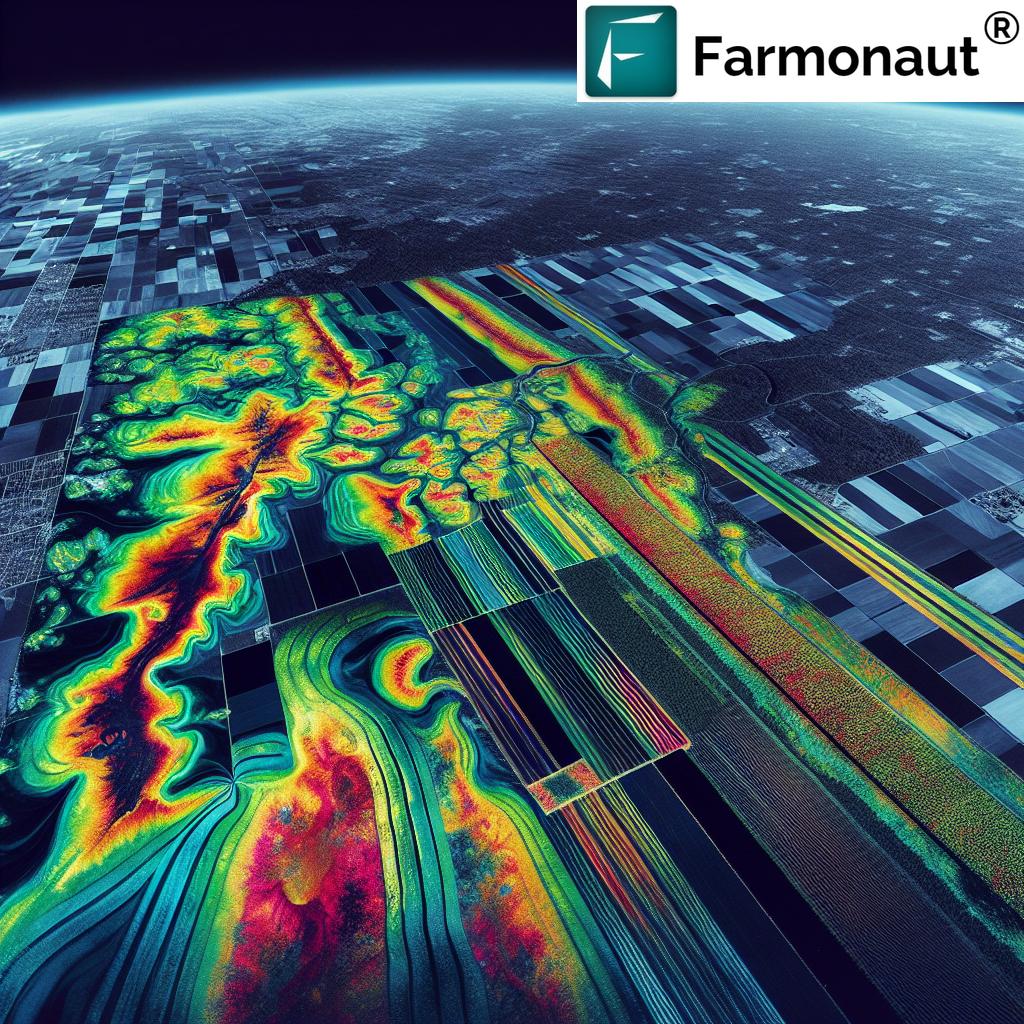
Most Productive Farmland in US & World: Top Areas 2026
Introduction
Agriculture remains the backbone of global food security and economic stability, with a select group of regions delivering a remarkable share of the world’s food and raw material output. The most productive farmland in the US and worldwide in 2026 stands out for its unrivaled yields, strategic significance, and adoption of advanced technologies that cement their roles as global food baskets.
For policymakers, farmers, agribusiness stakeholders, and the broader public, understanding these critical areas is essential for making informed decisions about investment, sustainability, and food security as we move toward 2026. As technology-driven solutions—such as satellite mapping, AI-driven management, and precision agriculture—reshape the landscape, these regions not only increase their output, but also adopt climate-smart strategies for resilience.
In this comprehensive article, we explore the leading farmland regions in the US and the world, the key factors contributing to their high productivity, the critical crops that drive economies, and the most influential technological innovations defining agriculture in 2025–2026 and beyond.
“In 2025, California’s Central Valley produces over 25% of the US’s food on less than 1% of its farmland.”
“Precision agriculture technologies boost Brazilian soybean yields up to 30%, making Brazil a global productivity leader by 2026.”
The most productive farmland in the world is not only defined by climate and soil, but by the integration of advanced precision technologies—a trend that will only accelerate through 2026.
The Most Productive Farmland in the United States
The United States ranks among the leaders in agricultural productivity, with pockets of farmland that consistently deliver top yields and drive the nation’s agricultural economy. Let’s explore the areas that are most productive for farming in the US—and the unique blend of natural and technological factors behind their success.
- 🌽Corn Belt (Iowa, Illinois, Indiana, Nebraska, Minnesota, Ohio): Heartland for corn and soybeans, with deep mollisol soils and advanced mechanization.
- 🍇California’s Central Valley: Regionally diverse powerhouse for fruits, vegetables, and nuts—thanks to a Mediterranean climate and sophisticated irrigation systems.
- 🍊Florida: Leading the nation in citrus production, especially oranges and grapefruits.
1. The Renowned Corn Belt: Iowa, Illinois, Indiana, Nebraska, Minnesota, Ohio
The most productive farmland in the US centers upon the Corn Belt, extending across Iowa, Illinois, Indiana, Nebraska, Minnesota, and Ohio. This region is renowned for its deep mollisol soils, moderate rainfall, and seasonal temperature that optimally supports corn and soybean production. The Corn Belt consistently produces the highest yields per acre in the nation—and often, the world.
Why? Because these states combine favorable natural resources and intensive mechanization with the latest in precision technologies.
✔ Innovations such as GMO seed varieties, soil amendment management, and precision irrigation keep output high even during variable climate years.
✔ Iowa, specifically, is noteworthy for consistently leading in per-acre corn yield, with many counties reporting over 200 bushels per acre as of 2025.
✔ Crop rotation and best agronomic practices help maintain soil health and fend off monoculture fatigue.
✔ Iowa and Illinois are prominent soybean producers, underlining the region’s crop diversity.

Focusing solely on yield and ignoring soil health can degrade the long-term productivity of the most fertile regions. Soil sustainability practices are essential for maintaining high output into 2026 and beyond.
2. California’s Central Valley: The Fruit, Nut, and Vegetable Powerhouse
California’s Central Valley is one of the globe’s premier most productive farmland areas by value and crop diversity. Despite occupying under 1% of the nation’s farmland, the Valley produces more than a quarter of America’s food.
Key Reasons for Productivity:
- ✔ Climate: Its Mediterranean climate ensures warm, dry summers and mild winters, perfect for crops like almonds, pistachios, table grapes, tomatoes, lettuce, and citrus.
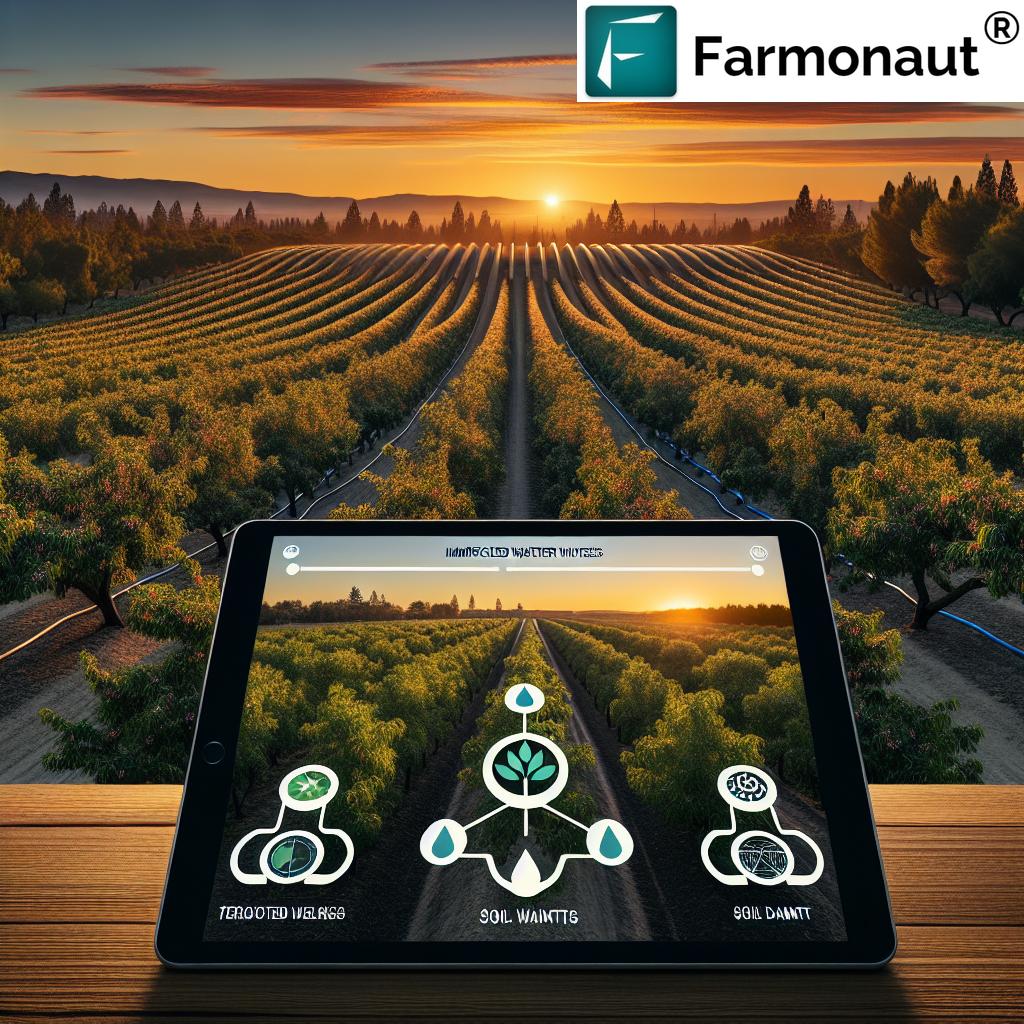
- ✔ Irrigation Infrastructure: Statewide irrigation systems, such as the Central Valley Project, reroute water to otherwise arid land, supporting high-yield crop production year-round.
- ✔ Technology Adoption: The region is at the forefront of crop mapping, variable-rate irrigation, and blockchain traceability for international exports. Explore Farmonaut’s traceability products to learn how supply chain transparency is transforming vegetable and fruit exports in regions just like California.
California also leads in embracing regenerative and organic farming practices to boost soil health and long-term fertility.

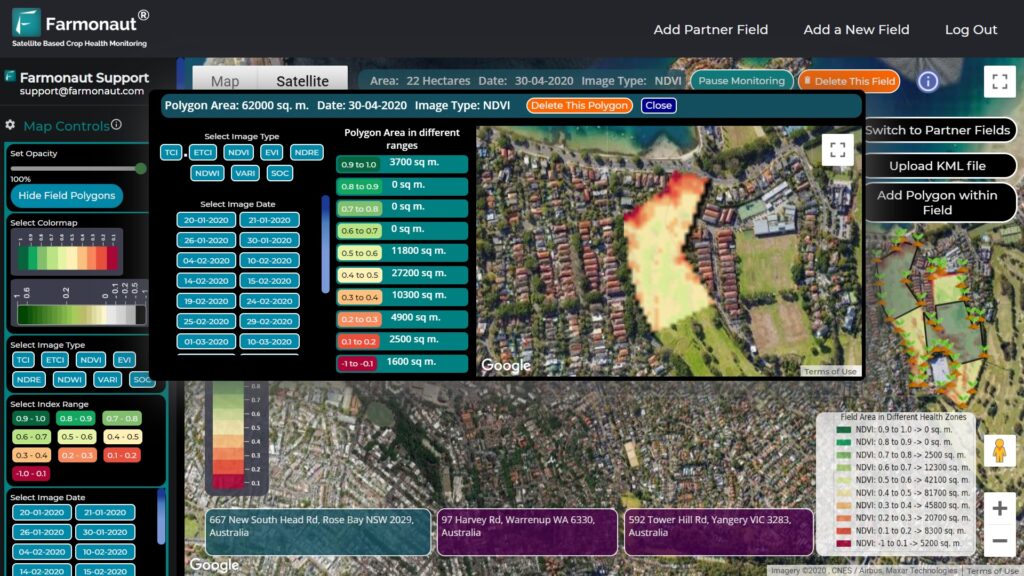
Advanced satellite technology from Farmonaut enables real-time monitoring of crop health and water stress, helping U.S. farmers optimize irrigation and sustain high yields.
3. Emerging US Farmland Hotspots: From Plains to Southeast
- ✔ Kansas, North Dakota, South Dakota, Texas: These states—often labeled the “Wheat Belt”—are rapidly modernizing with innovations like drone monitoring and remote irrigation management, pushing further growth in winter wheat and sorghum output.
- ✔ Kentucky and Alabama: Increasing their prominence in corn and soybean production, especially as new technologies counter erratic climate effects.
🎬 Watch: How AI is Revolutionizing Corn Fields Across America - ✔ Delmarva Peninsula (Delaware, Maryland, Virginia): Cultivates high-value vegetables and poultry due to sandy soils and access to large markets.



Key Crops and Technologies: US Region Insights 2025-2026
- 🌽 Corn: The principal crop of the Corn Belt; the US is the world’s largest producer, with roughly 390 million metric tons expected in 2025.
- 🌱 Soybeans: Gaining strategic prominence as demand for plant-based protein and renewable biofuels surges.
- 🍓 Fruits & Nuts: California’s Central Valley supplies over 50% of US fruits, almonds, pistachios, and grapes.
- 🥦 Vegetables: Lettuce, tomatoes, carrots, and specialty greens dominate irrigated farmlands in California, Arizona, and Florida.
- 🌾 Wheat & Sorghum: Critical for breadbasket states (Kansas, Texas, North Dakota).
The latest precision technologies—like autonomous tractors, variable-rate application tools, and AI-aided real-time pest advisories—are integral for maintaining the most productive farmland in the US.

Sectors driving technological upgrades on US farmlands—especially satellites, agronomic AI, and irrigation management—will experience robust growth through 2026, with high ROI projected.
The Most Productive Farmland in the World
Globally, the areas are most productive for farming due to unique combinations of optimal soils, water access, climate stability, and fast technology adoption. Here’s where the world’s fertile farmland clusters—and why they matter most for global food security.
- 🌏 North China Plain: Leading hub for wheat, maize, cotton, and soybeans. Advanced irrigation from the Yellow River & AI-driven crop management ensure intensive harvests.
- 🌾 Indo-Gangetic Plain (India & Pakistan): One of the most intensively farmed tracts worldwide, especially for rice, wheat, and sugarcane.
- 🥩 Pampas (Argentina, Uruguay, S. Brazil): Cereals and soybean expansion, plus beef exports, all supported by precision farming and satellite monitoring.
- 🌻 European Plain (France, Germany, Netherlands): High yields of cereals, potatoes, rapeseed, vegetables through cutting-edge greenhouse and water management technologies.
“Precision agriculture technologies boost Brazilian soybean yields up to 30%, making Brazil a global productivity leader by 2026.”
1. North China Plain: Intensive, Technology-Supported Production
The North China Plain is a prime example of most productive farmland in the world. Its alluvial soils and access to substantial irrigation via the Yellow River underpin triple-cropping cycles of wheat, rice, maize, and soybean. In 2025–2026:
- ✔ Satellite-aided water management has curbed previous over-use and increased reliability.
- ✔ Blockchain traceability for internationally traded rice and oils is increasingly adopted.
- ✔ Climate-smart seed varieties are expanding to reduce vulnerability to increasingly erratic rainfall and temperature swings.

2. Indo-Gangetic Plain: The Breadbasket of South Asia
Spanning northern India and Pakistan, the Indo-Gangetic Plain is one of the world’s most intensively farmed areas. Supported by Vertisol soils and centuries-old canal systems, the region is critical for rice, wheat, and sugarcane output. As of 2025:
- ✔ Government-led satellite crop monitoring and real-time weather advisories (like those available via the Jeevn AI Advisory System on the Farmonaut App).
- ✔ Precision fertilizer application to combat historically low nutrient use efficiency.
- ✔ Adoption of AI-driven pest management boosted average yields and supports food security.
For those building their own agri-tech solutions, the Farmonaut API and API Developer Docs provide programmatic access to all major satellite agri-data layers, including real-time NDVI, soil moisture, crop advisory, weather data, and more—great for managing farmlands at scale or powering insurance/fleet solutions.
3. Pampas: South America’s Grain and Soybean Powerhouse
The Pampas of Argentina and Uruguay (also Southern Brazil) are legendary for rapid grain and cattle expansion. Fertile soils and a long growing season produce high-yield wheat, soybeans, and maize, with Brazil recently outpacing the US in annual soybean harvests (120M+ tons as of 2025). Increasing precision ag adoption is a key productivity factor.

Satellite crop monitoring, as available on platforms like Farmonaut, is especially effective for vast, dispersed stretches of high-yield soybean fields in Brazil, Argentina, and Uruguay.
4. European Plain: Advanced Management & Greenhouse Model
The European Plain—stretching from the French breadbasket, through Germany, to the innovative greenhouses of the Netherlands—holds a unique place in global food supply:
- ✔ France and Germany produce enormous quantities of wheat, barley, and sugar beet on highly mechanized, sustainably managed fields.
- ✔ The Netherlands champions ultra-efficient, high-tech greenhouse farming, yielding world-leading vegetable outputs per hectare—leveraging AI, hydroponics, and robotic management.
With the growing importance of carbon footprint monitoring for European exporters, sustainable agronomy is increasingly key to productivity and competitive advantage.
Other High-Output Farmlands to Watch in 2025–2026:
- ✔ Nile Delta (Egypt): Sustained by extensive irrigation from the Nile; key for rice, vegetables, and cotton.
- ✔ Mekong Delta (Vietnam, Cambodia, Thailand): Critical for global rice supply, especially for East and Southeast Asia.
- ✔ Black Sea Region (Ukraine, Russia): Chernozem soils, wheat, and sunflower oil export surges—though climate volatility is a concern.
Top productive farmland clusters are now responsible for over 60% of global grain, soybean, and vegetable output, thanks to their adoption of advanced yield and technology management systems.
Global Farmland Products and Economic Impact
- ✅ Rice, Wheat, & Maize: Account for 80%+ of calorie intake across Asia, Africa, and Latin America. High-yield farming regions (e.g., Indo-Gangetic, North China Plain, US Midwest) are critical to world food security.
- ✅ Soybeans: Driven by Brazil, Argentina, and the US, global soybean output is at record highs with rising demand for meat substitutes and feed.
- ✅ Fruits, Vegetables, and Tree Nuts: California, European Plains, and hubs in China and Turkey are major world suppliers.
- ✅ Oil Crops (Palm, Rapeseed, Sunflower): Key for food and biofuels, especially in tropical Asia and Eastern Europe.
- ✅ Specialty Crops (Cotton, Coffee, Cocoa): Sub-Saharan Africa, Vietnam, and South America are major exporters, with technology aiding disease and climate resilience.
- ✔ Higher Yields through digital prescription farming and optimized water/fertilizer use
- 📊 Enhanced Traceability for food safety, export compliance, and premium branding
- ⚡ Lower Carbon Footprints through precision application and efficient logistics
- ⚠ Improved Climate Resilience with adaptive, satellite-informed best practices
- 🛈 Better Financing Options as satellite crop verification is adopted by lenders and insurers worldwide (Farmonaut Crop Loan & Insurance Verification).
Top Most Productive Farmland Regions and Key Factors (2025 Estimates)
| Country/Region | Estimated Annual Yield (tons/hectare, 2025) | Main Crops | Key Technologies Used | Projected Contribution to Global Food Supply (%) |
|---|---|---|---|---|
| US Midwest/Corn Belt (Iowa, Illinois, Indiana, Nebraska, Minnesota, Ohio) | 12–15 (corn); 3–4 (soybeans) | Corn, Soybeans, Wheat | Precision seeding, Automated irrigation, Farmonaut Large-Scale Farm Management, Drones, Satellite NDVI | ~9% |
| California Central Valley | 10–12 (nuts/fruits avg.) | Fruits, Nuts, Vegetables | Smart irrigation, Crop monitoring, Traceability (Farmonaut Traceability), Drip Systems, Blockchain | ~4% |
| North China Plain | 7–8 (wheat); 6–7 (rice) | Wheat, Maize, Soybeans, Rice | Satellite mapping, AI irrigation scheduling, Blockchain export certification | ~11% |
| Indo-Gangetic Plain (India/Pakistan) | 5–6 (wheat/rice avg.) | Rice, Wheat, Sugarcane | Remote sensing, AI pest management, Weather-linked advisories | ~12% |
| Pampas (Argentina, Uruguay, S.Brazil) | 3–4 (soybeans, wheat) | Soybeans, Wheat, Maize, Beef | Satellite NDVI, Fleet Management (Farmonaut Fleet Solutions), Precision planting | ~7% |
| European Plain (France, Germany, Netherlands) | 8–10 (cereals & vegetables avg.) | Wheat, Rapeseed, Vegetables, Potatoes | Greenhouse control, AI crop planning, Carbon tracking (Farmonaut Carbon Footprinting Tools) | ~8% |
| Nile Delta (Egypt) | 7–9 (rice, vegetables) | Rice, Cotton, Vegetables | Irrigation optimization, Remote soil monitoring | ~2% |
In 2025, the top 8 productive farmland regions produce approximately 53% of the world’s corn, soybeans, wheat, and rice—a testament to their global significance and the power of technology-driven productivity.
Key Factors Influencing Farmland Productivity in 2025
- Soil Quality and Type: Rich mollisol soils in the US Corn Belt, Chernozems in Europe/Ukraine, Vertisols in India underpin nutrient-dense and structurally stable farmland.
- Climate and Water Availability: Regions with reliable rainfall or secure irrigation systems ensure consistent yields. Climate-smart varieties and drought-resistant seeds are deployed as climate volatility increases.
- Technological Integration: Drones for early process monitoring, satellite-based insights, GPS-guided machinery, and AI-driven soil assessment maximize resources and minimize loss.
- Crop Diversity and Rotation: Diverse cropping avoids soil depletion, reduces disease risk, and sustains multi-year output.
- Policy, Infrastructure, and Market Access: Subsidies, rural infrastructure, and value chain access enable consistent, market-linked production.

Advanced Technologies & Innovation: Driving Productivity for 2026
The future of agriculture will be shaped by several game-changing technologies that continue to enhance yields, minimize environmental impact, and expand the reach of precision farming even to remote or marginal areas. Here are some key trends:
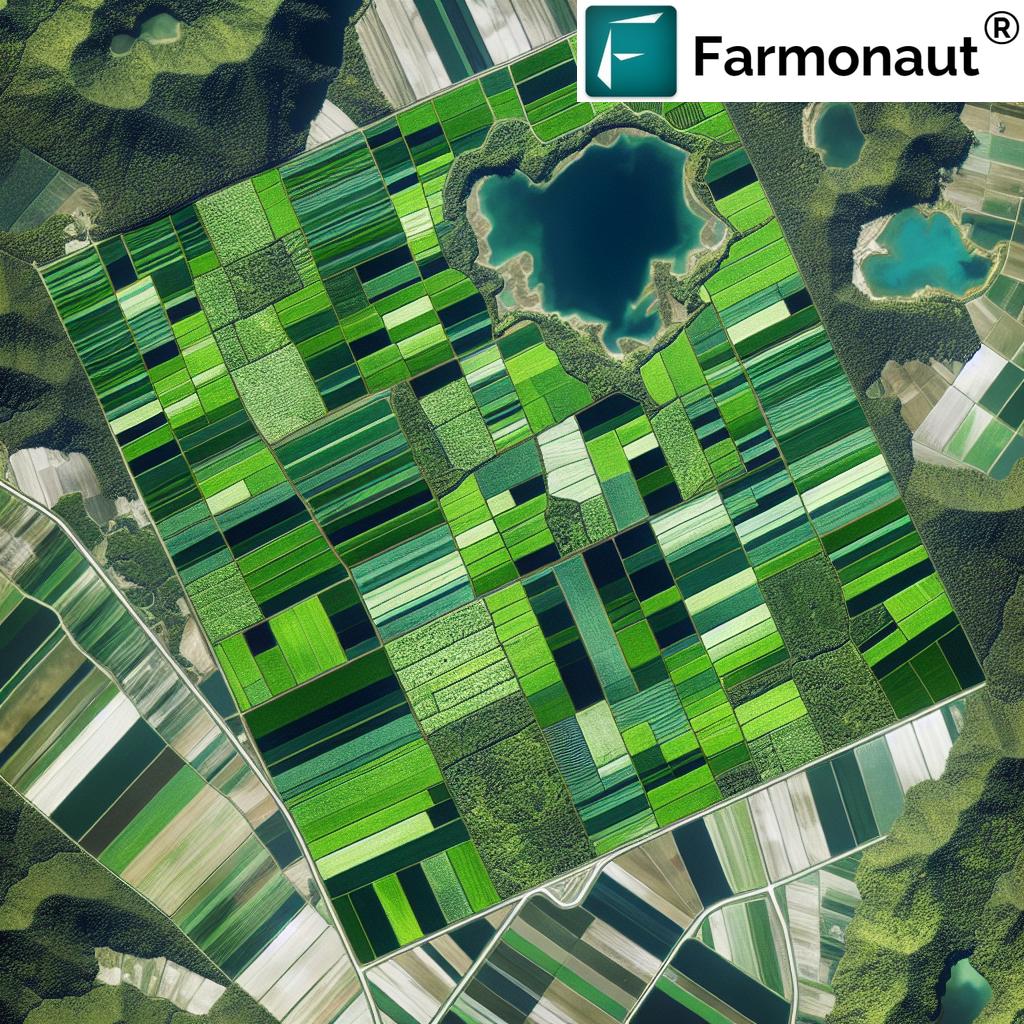
- ✔ Satellite-based Monitoring: Provides a ‘field-to-space’ perspective; enables users to see drought stress, pest outbreaks, and nutrient deficiencies before they’re visible on the ground.
- ✔ AI and Machine Learning: Analyze crop data and offer predictive, adaptive advisories for inputs, harvest timing, and market decisions.
- ✔ Drone Technology: Offers hyper-local data collection and targeted input application for maximum efficiency and reduced chemical use.
- ✔ Blockchain Traceability: Ensures food’s authenticity, boosts transparency, supports premium pricing and access to competitive export markets. For B2B/retailers, Farmonaut’s Product Traceability Solutions are playing a growing role worldwide.
- ✔ Fleet and Resource Management: As labor shortages grow, tools like Farmonaut’s fleet management solutions will be essential for efficient machinery and logistics optimization.
Overlooking sustainability—failing to integrate carbon footprint tracking and regenerative farming—can risk market access and regulatory compliance in key export markets post-2026.
Integration of trusted, real-time satellite technologies and AI-driven management tools is rapidly becoming the baseline for all productive farmland globally—shifting from “early adopter” to “industry standard” by 2026.
Farmonaut: Satellite-Driven Insights for Productive Farmland Management
As the world’s most productive farmland clusters intensify their use of satellite, AI, and blockchain, we at Farmonaut are committed to democratizing high-tech solutions for every farmer, business, and institution.
Our platform delivers:
- ✔ Real-time vegetation and soil monitoring with multispectral satellite imagery—NDVI, SAVI, and more—for precise, field-by-field productivity tracking.
- ✔ Jeevn AI Advisory System: Smart, actionable weather, planting, and input recommendations tailored to every region.
- ✔ Blockchain-enabled traceability for agri-produce—helping users in California, the European Plain, and other leading regions secure premium markets and brand trust.
- ✔ Environmental impact monitoring: Quantifies fields’ carbon footprint and recommends ways to optimize sustainability.
- ✔ Fleet/resource management: Efficiently tracks and schedules machinery use, cutting costs and boosting output for large-scale farms.
Our app is available on Web, Android, and iOS. Flexible APIs let developers and agri-enterprises build custom solutions using Farmonaut’s core data.
Our mission: Make satellite-driven insights, advanced agronomic tools, and transparent traceability affordable and accessible worldwide—fueling productivity, security, and sustainability for the decades ahead.
Satellite-verified loan and insurance services cut risk and paperwork, opening new opportunities for inclusive agri-financing in even the remotest productive farmland regions.
Conclusion
As we approach 2026, the most productive farmland in the US and world is unlocking ever-higher yields through a synergy of:
- 🌍 Naturally fertile soils and reliable climate
- 🤖 Early and intensive adoption of digital/satellite technologies
- 🛡️ Regenerative and climate-smart practices for soil health and resilience
From the Corn Belt and Central Valley to the Indo-Gangetic Plain and Pampas, key regions are leading global food security. Their success, however, hinges on keeping sustainability, innovation, and inclusive access at the fore. By leveraging the latest in AI, blockchain, and precision agriculture, we can secure our future food supply—while ensuring economic stability for farmers, stakeholders, and society worldwide.
The world’s most productive farmland—powered by advanced technologies—proves that precision, transparency, and sustainability are the bedrocks of tomorrow’s agriculture.
FAQs: Most Productive Farmland Regions 2026
- What is the most productive farmland in the US?
The US Midwest “Corn Belt,” especially states like Iowa, Illinois, Indiana, and Nebraska, consistently record the highest per-acre yields for corn and soybeans. California’s Central Valley dominates in fruits and vegetables by value. - Which region is considered the most productive farmland in the world?
The Indo-Gangetic Plain (India/Pakistan), North China Plain, Pampas (Argentina, Uruguay, S.Brazil), the US Corn Belt, and select European and Nile Delta regions are the world’s most productive by output, area, and international supply influence. - What are the leading technologies increasing farmland productivity in 2025–2026?
Satellite monitoring, AI-based advisories, blockchain traceability, and fleet/resource management are now mainstream in high-output farmland globally. These solutions optimize resource use while supporting compliance and traceability. - Which crops dominate world agricultural production?
Corn, soybeans, wheat, and rice dominate in calories and international trade; regionally, high-value fruits, nuts, and vegetables increasingly shape productive farmland economies. - How can I access farm monitoring technology as a farmer or business?
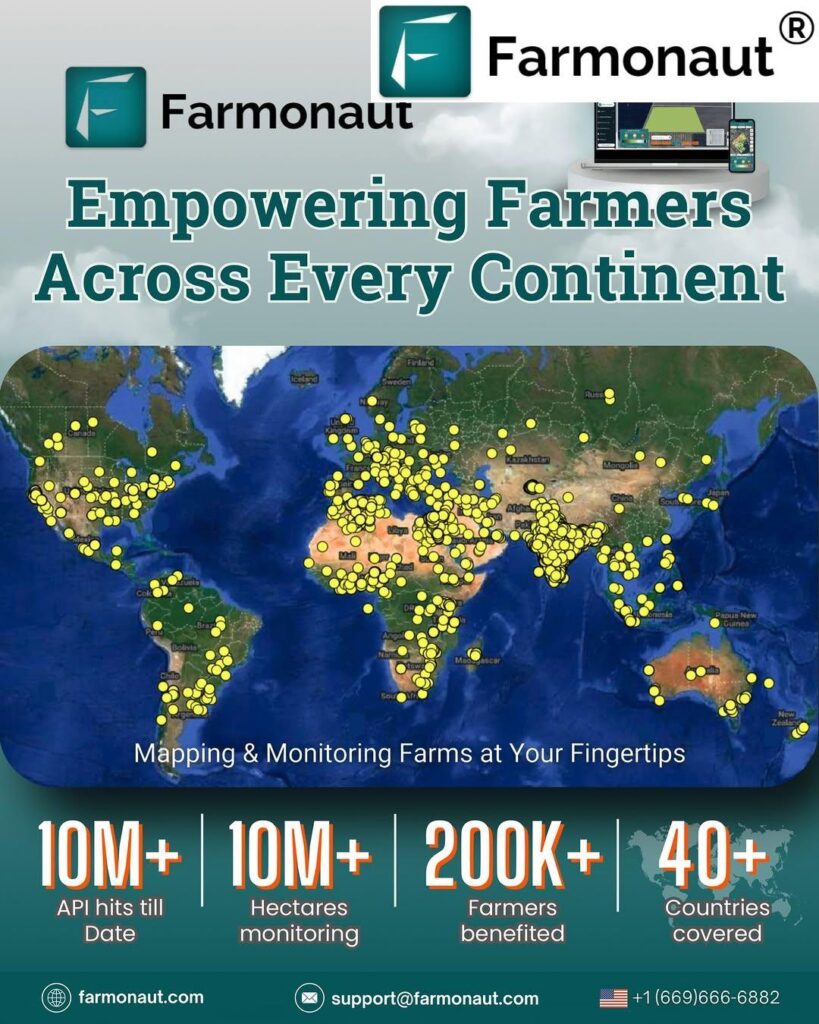
Platforms like Farmonaut bring cost-effective, real-time satellite and AI-powered tools to individual users, businesses, and institutions worldwide—see Farmonaut App for more.
Want to experience satellite-powered farmland management in action?