Major Crops 2026: Powerful Trends in Global Food Security
Major Crops: The Cornerstones of Global Food Security
Major crops serve as the foundation of our global agricultural systems, playing a truly indispensable role in food security, economic stability, and rural livelihoods. In 2026 and beyond, the importance of these crops continues to grow, driven by the increasing needs of a burgeoning population, shifting climate patterns, and the accelerating pace of technological change.
Understanding major crop production trends, challenges, and the role of innovation is crucial for policymakers, farmers, and agribusinesses as we navigate a world where global food demand and sustainable practices are more essential than ever before.
The foundation of global food security and rural economies rests on a handful of major crops—wheat, rice, maize, soybeans, and barley. Their cultivation, processing, and integration with technology are shaping the future of agriculture.
Defining Major Crops: Global Importance and Nutrition
Major crops are cultivated extensively worldwide due to high demand, substantial economic contribution, and critical nutrition supply. As staples, these crops form the primary diet and protein source for billions, underpinning economies, food industries, and rural development.
- Wheat: Primary dietary staple, especially in Europe, Asia, and North Africa. Rich in calories, widely used in food products.
- Rice: Dominant in Asia and parts of Africa, critical to over half the world’s population. High in carbohydrates, vital for daily nutrition.
- Maize (Corn): The highest-produced crop by volume globally, dual use as food and feed crop, essential for both human consumption and animal feed.
- Soybeans: High protein content, key for animal feed and industrial applications from biofuels to food processing.
- Barley: Used for animal feed, brewing, and a range of food products, especially in colder regions and for livestock industries.
These major crops not only serve the nutrition needs of billions but also act as the backbone of agribusinesses, industrial processing, and even renewable energy in the form of biofuels.

Current Status & Production Trends for 2026
The status and trends in major crop production are being reshaped in 2025 and into 2026 by technological innovations, climate challenges, and evolving global market demand. Let’s explore these powerful shifts:
- ✔ Maize remains the volume leader, due to its critical dual role as a food and feed crop and increased industrial use in renewable fuels and bioenergy.
- ✔ Wheat follows closely as the world’s second-highest produced major crop, essential for food security and a primary dietary staple in many regions.
- ✔ Rice continues its vital role especially in Asia, directly supporting more than half the world’s population.
- ✔ Soybeans see significant expansion due to surging protein demand and renewable energy applications.
- ✔ Barley stays important as a resilient animal feed and food processing crop, notably in developed and developing countries.
Advances in seed genetics, digital agriculture, and precision farming are pushing yield boundaries and enabling adaptation to erratic weather patterns tied to climate change.

Global trade dynamics and market demand are also exerting profound effects, as trade policies, export restrictions, and price movements impact farmers, economies, and downstream industries.
The transformative impact of AI, satellite technology, and precision farming is making the major crops sector increasingly attractive for investments—as these technologies promise higher yield, resilience against pest and climate risks, and improved market stability.
Comparative Table: Major Crops & Technology Trends (2025-2026)
| Crop | Estimated 2025-2026 Global Production (million tonnes) | Key Technological Innovations | Major Food Security Challenges | Leading Digital Solutions (2025-2026) |
|---|---|---|---|---|
| Wheat | 790-800 | Genomic breeding, AI-driven irrigation, drought-resilient seed varieties | Erratic weather, soil degradation, trade volatility | Satellite monitoring, predictive analytics, digital crop advisories |
| Rice | 507-514 | Flood-resilient breeds, sensor-driven field monitoring | Unpredictable monsoons, water scarcity, yield loss | Precision agriculture apps, real-time weather forecasting |
| Maize (Corn) | 1,158-1,180 | CRISPR-based gene editing, autonomous drones, robotics | Pest outbreaks, trade barriers, biofuel market pressure | Remote sensing, drone-based crop health mapping |
| Soybeans | 394-400 | Nutrient efficiency, block-chain traceability, AI-based crop insurance | Input cost hikes, disease, sustainability standards | Farm management platforms, environmental impact dashboards |
| Barley | 150-155 | Heat-resistant cultivars, digital supply chain mapping | Drought, storage loss, market access | IoT warehousing, logistics optimization, fleet management |
Crop-specific digital platforms can help identify yield gaps, reduce environmental impact, and boost food security for each major crop—consider hybrid solutions for optimal field-level management.
Factors Driving Major Crop Production
1. Technology
- 📊 Genomic breeding: Advanced seed genetics for disease resistance and climate resilience
- 🤖 AI & Precision farming: Real-time crop monitoring and tailored input management
- 📡 Satellite data: Remote field analysis, soil health tracking, and yield forecasts
- 🌱 Biotechnologies: Nutrient-rich, drought- & flood-resistant crop varieties
- 🛡️ Blockchain traceability: Secure, transparent supply chains—see more on blockchain-based Farmonaut Traceability
2. Environmental & Economic Factors
- 🌤 Erratic weather patterns due to climate change
- 💹 Market volatility and shifting trade dynamics
- 🌎 Global population growth increasing food demand
- 🌾 Soil health concerns and water scarcity
- 🐛 Pest management and disease outbreaks
- 🚛 Supply chain disruptions and infrastructural constraints
- 🏭 Industrial applications (biofuels, animal feed, processing)
- 🧪 Access to affordable agricultural inputs
Many overlook the impact of supply chain infrastructure and digital solutions on yield stability. Investing in logistics and digital monitoring is as crucial as seed and soil management.
Sustainable Agriculture & Major Crop Production
Major Crop Sustainability: Cornerstone for 2026
Sustainability remains central to every aspect of major crop cultivation in 2026. Regenerative agriculture practices, efficient water use, and fertilizer management are not just environmental concerns—they’re business essentials.
- 🌱 Regenerative farming: Boosting soil health, building organic carbon, and supporting biodiversity
- 💧 Water-smart agriculture: Sensor- and AI-based irrigation that reduces waste and optimizes supply, especially for rice and wheat in Asia and Africa
- 📉 Nutrient management systems: Digital tools for reducing fertilizer runoff and greenhouse gas emissions
- 🌾 Crop rotation and cover cropping: Preventing soil degradation and yield loss for maize, soybeans, and barley fields
- 🌲 Agroforestry and field diversification: Enhancing ecosystem resilience
Efficient management practices cut average water use by up to 30% per hectare in high-yield rice and wheat farms in 2025—and expectations for 2026 are even higher.
 Get the Farmonaut Android App for Satellite-Driven Crop Monitoring
Challenges Facing Major Crop Production in 2026
⚠ Key Risk Factors:
- Climate volatility: Unpredictable droughts, floods, and heatwaves
- Pest outbreaks & disease pressure: More aggressive due to global warming
- Soil degradation: Rapid loss of arable land and dwindling organic matter
- Market volatility: Trade disruptions, export bans, and price instability
- Infrastructure bottlenecks: Poor storage and transportation networks
📈 Evolving Demand Patterns:
- Protein demand boosting soybean expansion in all continents
- Urbanization reduces cultivable acreage for staple crops
- Shifting dietary trends influencing cereal and oilseed pricing
- Food processing industries need stricter traceability and nutrition standards
These challenges demand innovative solutions as traditional methods struggle to cope with increasingly complex global supply chains, stressed production environments, and the risk of food insecurity for vulnerable populations.
Explore Farmonaut’s solution for satellite-driven carbon footprinting, designed to monitor and track agricultural emissions for sustainable management.
Major Crops: Economic and Social Development Impacts
Major crops are deeply woven into the economic fabric of rural areas and developing countries, supporting economies through:
- 📊 Employment: Millions of rural jobs in farming, transportation, processing, and logistics
- 🌍 Export revenues: Surpluses of wheat, rice, maize, and soybeans underpin national food supply stability and hard currency reserves
- 🏭 Industrial synergy: Inputs for food industries, biofuel manufacturing, and animal feed industries
- 📈 Value chain growth: Investments in infrastructure (storage, cold chains, digital supply logistics)
- 🤝 Social development: Enhanced livelihoods, nutrition security, and women’s participation in rural communities


Innovations Shaping Major Crop Production and Food Security
Emerging technologies are reshaping every link in the major crop value chain—from genomic editing of seed varieties to autonomous field operations and climate-resilient on-farm infrastructure.
- ☁️ AI-powered disease prediction: Early warnings to prevent pest/disease damage
- 🌱 Genome editing: CRISPR/Cas-9 and gene drive tech for yield and protein content optimization
- 🚜 Robotics: Automated weeding, spraying, and harvesting for wheat, maize, soybeans
- 🔗 Blockchain: Secure, transparent tracking of food safety and traceability (critical for trade and export crops)
- ⚡ Renewable energy integration: Solar- and wind-powered irrigation and cold storage
- 🛰️ Satellite-driven insights: Real-time monitoring of crop health and yield
- 📱 Mobile farm management apps: Empowering farmers with updates on fertilization, weather, and pests
- ⚙️ Digital insurance: Automated, satellite-verified crop insurance (learn more here)
- 📦 Agri-logistics: Platform-based fleet management, logistics and cold chain monitoring—see Farmonaut’s fleet tools
- 🌲 Agroforestry advisory: Farmonaut’s crop, plantation, and forest advisory platform for climate-adapted, sustainable land use

Digital Agriculture Platforms: Driving Efficiency & Sustainability
Digital transformation is redefining agricultural management systems, reducing environmental impact, optimizing inputs, and strengthening traceability. Satellite and AI-based platforms connect the dots from field health to harvest, storage, and compliance.
- Remote Satellite Monitoring: Stay ahead of disease outbreaks, water scarcity, and yield drops fast—ideal for maize, wheat, and rice fields.
- AI-Powered Prescriptions: Automated, location-specific advisories to optimize fertilizer and irrigation for each growth stage.
- Blockchain for Food Security: Transparency in sourcing, processing, and logistics builds trust in export and consumer supply chains.
- Crop Disease Modelling: Real-time alerts to prevent widespread losses—especially for fungal threats and new pest variants.
- Automated Resource Management: Streamlining fleet and asset tracking, reducing costs, and securing rural field operations.

The highest-performing agribusinesses of the next decade will blend digital monitoring and sustainability metrics to unlock growth, meet traceability standards, and attract green finance—all enabled by advanced platforms.
Farmonaut: Satellite-Driven Solutions for Major Crop Management
As a satellite technology company, we at Farmonaut focus on democratizing access to satellite-driven insights for agriculture stakeholders worldwide. Here’s how our technology addresses real-world needs in major crop management in 2026:
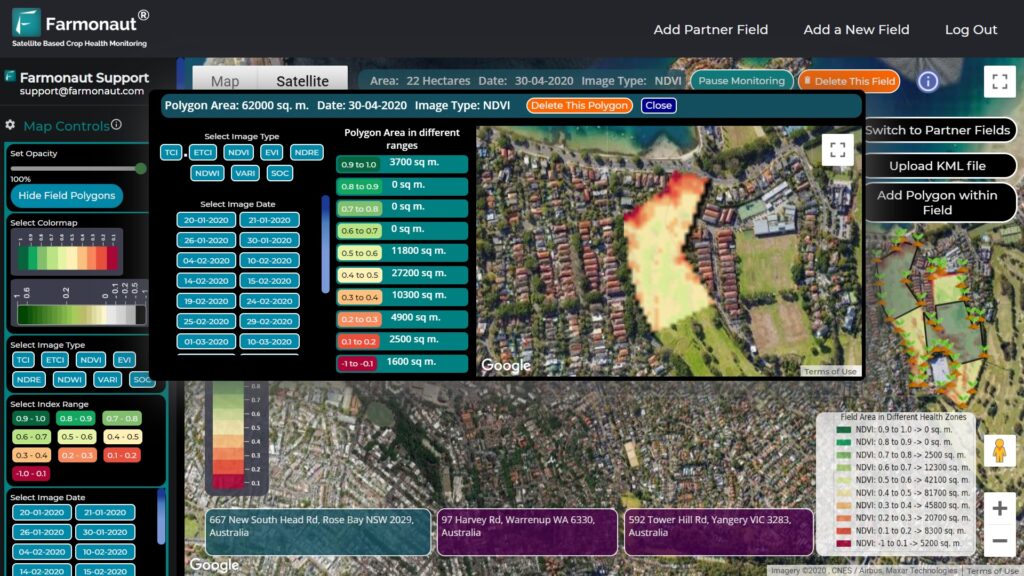
- 🛰️ Satellite-Based Monitoring: Real-time crop health, soil analysis, and vegetation status via multispectral imaging—ideal for wheat, maize, rice, and soybeans. Access these tools through our Web and Mobile Apps.
- 🤖 Jeevn AI Advisory System: Delivers personalized, weather-adaptive recommendations and threat alerts, all based on satellite intelligence.
- 🔗 Blockchain Traceability: Ensures authenticity, transparency, and food security across supply chains for major crops.
- 🗺️ Fleet & Resource Management: Integrated digital platforms optimize logistics and cold chain, reducing losses and operational costs. More on Farmonaut Fleet Management Solutions.
- 🌱 Environmental Impact Monitoring: Track, report, and manage carbon footprint and sustainable practices using our carbon footprinting tools.
- 🔐 Financing & Insurance Insights: Automated crop verification supporting faster, fairer lending decisions—details on crop loan & insurance verification.

Integrate our satellite and weather API for custom major crop analytics in your enterprise systems. — See Developer Docs: API Documentation

Farmonaut’s blend of AI, blockchain, and satellite imaging simplifies everything from field scouting to compliance reporting—an all-in-one toolbox for agribusinesses, food processors, and rural economies.

Frequently Asked Questions: Major Crops & Food Security 2026
What are the “major crops” globally in 2025 and 2026?
Wheat, rice, maize (corn), soybeans, and barley are the most widely cultivated major crops worldwide. They provide the foundation for calories and protein, underpin global food industries, and remain indispensable to food security and economic stability.
How is climate change affecting major crop production?
Climate change introduces greater frequency of droughts, floods, erratic rainfall, and temperature extremes. This creates uncertainty in yield, higher risk of pest & disease outbreaks, and stresses on traditional farming systems.
How can technology help address food security challenges?
Technology, including satellite monitoring, AI-driven advice, genome editing, and blockchain traceability, helps optimize crop health, predict risks, reduce losses, and improve supply transparency, boosting both yield and long-term food supply stability.
What is satellite monitoring’s role in future agriculture?
Satellite monitoring provides real-time, large-scale visibility into crop growth, health, and moisture, enabling responsive management of resources and rapid response to crop threats, weather changes, and market demands.
How can I start using digital agriculture tools for farm management?
Farmonaut offers web and mobile solutions for satellite-driven crop, soil, and environmental monitoring as well as APIs for enterprise integrations. Sign up at Farmonaut Apps or integrate via API.
Conclusion: Advancing Food Security with Major Crops in 2026 and Beyond
As we look towards 2026 and beyond, major crops continue to serve as the cornerstones of global food security, economic stability, and rural development. Their importance in our diet, industries, and livelihoods is unmatched.
The future of global agriculture is defined by:
- Sustainable intensification: Adopting regenerative farming and smart agro-practices to nourish soil, optimize inputs, and protect the environment
- Technological innovation: Harnessing the power of AI, satellite data, and genomics for maximum output and resilience
- Digital empowerment: Enabling farmers, agribusinesses, and policymakers to make data-driven, real-time and transparent decisions
- Collaborative adaptation: Responding rapidly to climate challenges and evolving market trends
- Scalable solutions: Making monitoring, blockchain-driven traceability, and loan/insurance access universal for all growers
By strategically investing in the synergy between sustainable practices and technology, societies will ensure that major crops continue to nourish the world, empower farmers and agribusinesses, and enhance food security for generations.
Top 5 Takeaways: Major Crops & Food Security Trends in 2026
- 🌎 Major crops form the backbone of global food systems, with over half of all calories consumed worldwide stemming from wheat, rice, and maize.
- 📈 AI and satellite technologies are enabling higher yields, lower risks, and transparent food supply chains on a global scale.
- 🛡️ Climate-smart innovations—from drought-resilient seeds to real-time weather forecasting—are critical to sustainable, resilient agriculture.
- 🤝 Digital advisory and farm management platforms empower rural economies, drive value chain growth, and reduce loss.
- 🔗 Blockchain-based traceability ensures food authenticity, protects consumers, and enables secure international trade.
📊 Future-Ready Crop Management Systems
- ✓ Predictive analytics & AI diagnostics
- ✓ Satellite-powered pest/disease risk maps
- ✓ Real-time field stress alerts via mobile
- ✓ Digital financing & crop insurance access
- ✓ Integrated fleet & logistics management
🌱 Key Sustainability Practices
- ✓ Adaptive crop rotation and cover cropping
- ✓ Water-saving irrigation systems
- ✓ On-farm carbon footprint monitoring
- ✓ Agroforestry and landscape diversification
- ✓ Digital record-keeping for compliance
By 2026, those leveraging digital agriculture platforms—from farmers and processors to policy strategists—can increase resilience, maximize output, and ensure that every tonne of wheat, rice, maize, or soybean contributes to global food security.