Table of Contents
- Introduction: Meeting the Future of Texas Cattle Farming
- Genetic Origin & Key Characteristics of the Longhorn Brahman Cross
- Why the Longhorn Brahman Crossbreed Matters in 2026 Agriculture
- 7 Texas Farmer Benefits of the Longhorn Brahman Cross
- Comparative Benefit Table: Longhorn Brahman Cross vs. Standard Breeds
- Role in Sustainable and Climate-Smart Agriculture
- Challenges, Research, and Future Opportunities
- Smart Tech and Satellite Solutions for the Cattle Farming Landscape
- Frequently Asked Questions (FAQ)
- Conclusion: The Road Ahead for Texas Cattle Farming in 2026
“Longhorn Brahman cross cattle can thrive in temperatures over 40°C, supporting climate-smart farming in Texas by 2026.”
Longhorn Brahman Cross: 7 Texas Farmer Benefits 2026
In the constantly shifting landscape of agriculture, the quest for resilient, adaptable breeds has gained renewed importance. As global climate patterns shift and challenges for modern Texas cattle farming intensify in 2026 and beyond, the Longhorn Brahman cross stands out as a beacon of sustainable livestock innovation. By combining the best traits of the iconic Texas Longhorn and the robust, heat-tolerant Brahman (originating from India), this crossbreed offers a solid foundation for climate-smart, sustainable, and efficient beef production across Texas and other tropical and subtropical regions worldwide.
In this comprehensive guide, we explore how this cross is revolutionizing beef production by addressing everything from heat resilience, disease resistance, and grazing efficiency to long-term productivity, environmental stewardship, and smart farming tech adoption. If you’re a Texas farmer, rancher, or agriculture enthusiast looking for future-proof, sustainable solutions, this post is your go-to resource for actionable insights and in-depth explanations.
The Longhorn Brahman crossbreed is tailored for changing climates, with proven abilities that enable Texas farmers to maintain profitability while improving sustainability.
Genetic Origin & Key Characteristics of the Longhorn Brahman Cross
Longhorn Brahman crosses are the deliberate product of breeding Texas Longhorn cattle (famous for their uniquely lengthy horns and hardy nature) with the Brahman breed (originating from India), renowned for its heat and parasite resistance, disease tolerance, and ability to thrive in harsh environments. By combining these breeds, the crossbreed inherits a unique set of traits:
- ✔ Agility and low maintenance (from Longhorn parentage)
- ✔ Robust immune system and drought resilience (thanks to Brahman genetics)
- ✔ A balanced frame, typically ranging from 900 to 1,200 pounds, making them manageable and productive
- ✔ Coat patterns that merge the distinctive Texas Longhorn’s colors with the Brahman’s short, slick, heat-deflecting hair, enhancing thermoregulation
- ✔ Natural resistance to common pests and diseases, reducing reliance on chemical treatments
When evaluating potential crossbreeds for your herd, prioritize genetic lines known for uniform performance and adaptability to your region’s climate.
Why do Texas farmers choose the Longhorn Brahman cross?
The Longhorn Brahman cross is painstakingly developed to tackle the environmental and economic demands faced by Texas and similar regions. High temperatures, unpredictable weather, seasonal drought, and fluctuating forage resources define these challenges. A breed that’s both robust and adaptable is not just preferred, but critical for sustainable cattle farming in 2026 and beyond.

📊 Key Characteristics at a Glance:
- Heat tolerance up to and beyond 40°C
- Tick and pest resistance reduces chemical use
- Average weight: 900–1,200 lbs (moderate frame)
- Distinct horn structure and color patterns
- Adaptable to poor quality forage
Why the Longhorn Brahman Crossbreed Matters in 2026 Agriculture
The agricultural landscape is fast evolving, and Texas farmers face mounting pressure to adopt sustainable, efficient beef production systems that safeguard profitability and ecological health. Crossbreeds like the Longhorn Brahman cross directly address these modern priorities:
- ✔ Resilience to climate change impacts: Capable of enduring more extreme heat, drought, and disease
- ✔ Improved productivity: Faster growth rates compared to pure Brahman or Longhorn, with better overall efficiency
- ✔ Market versatility: Producing both high-quality beef and niche products suitable for specialty markets
These benefits make it possible to run herds with lower input costs, minimal environmental footprint, and higher productivity—a winning combination for the future.
Neglecting to monitor crossbred herd genetics can lead to inconsistent performance. Implement regular breed assessments and collaborate with experts to maintain herd integrity.




7 Texas Farmer Benefits of the Longhorn Brahman Cross
“Crossbred herds can reduce land degradation by up to 30%, promoting sustainable grazing practices on Texas farms.”
Let’s break down the most critical benefits of the Longhorn Brahman cross for farmers seeking climate adaptation, sustainability, and profitability in 2026:
- Superior Drought & Heat Tolerance – Adaptability to high temperatures and low-water conditions is embedded in Brahman genetics, allowing crosses to remain productive through Texas’s intense summers.
- Enhanced Parasite & Disease Resistance – Natural resistance minimizes losses from ticks and common pests, reducing chemical intervention needs.
- Exceptional Feed Efficiency – Converts poor-quality forage into quality beef, aiding sustainability and lowering supplemental feed costs.
- High Fertility and Reproductive Efficiency – Consistently strong calving rates, robust maternal instinct, and long productive lifespan.
- Longevity – Longer productive lifespans, resulting in less frequent herd replacement and superior lifetime returns.
- Grazing Versatility – Capable of utilizing a wide variety of forage and even thriving in mixed silvopastoral or agroforestry systems.
- Environmental Sustainability – Lower methane output and less pressure on land and water resources, vital for climate-smart beef production.
Texas Farmer Advantages: Quick Review
- ✔ Heat and drought resilience greatly exceed most standard breeds
- ✔ Reduced input costs due to pest resistance and low maintenance
- 📊 Improved beef quality—leaner, healthier cuts with fewer antibiotics
- ⚠ Risk of crossbreed variability requires careful herd management
- ✔ Sustainable land management for long-term pasture health
The unique ability of the Longhorn Brahman cross to optimize grazing and reduce pressure on water resources makes it a standout investment for climate-adapted beef operations.

Comparative Benefit Table: Longhorn Brahman Cross vs. Standard Breeds
| Key Benefit | Benefit Description | Estimated Impact (%) on Yield/Resilience | Climate Adaptation Relevance |
|---|---|---|---|
| Drought & Heat Resistance | Withstand >40°C and months of dry conditions due to Brahman genetics | Up to 30% better resilience than typical European breeds | Essential for Texas’s warming, drought-prone climate |
| Parasite & Disease Resistance | High tolerance for ticks and common pests; strong immune systems | Reduced losses by up to 25%; less reliance on chemical treatments | Supports low-input, sustainable systems with lower risks |
| Feed Efficiency | Utilize poor-quality forage for sustained weight gain; less supplemental feed | Improved feed conversion by up to 20% | Helps preserve native pastures and reduce overgrazing |
| Fertility & Reproductive Efficiency | Consistent calving ease and strong maternal instincts | 10–15% higher calving rates than less-adapted beef breeds | Secures stable herd sizes and reliable production in tough climates |
| Longevity | Remain productive for up to 20 years | 30% longer productive lifespan vs. commercial breeds | Reduces long-term replacement costs and maximizes returns |
| Grazing Versatility | Thrive in silvopastoral, open range, and mixed grazing systems | 30% higher utilization of diverse pastures | Ideal for Texas’s mixed land use and regenerative systems |
| Environmental Sustainability | Low methane emissions, preserves soil and water | Reducing land pressure by up to 30% | Addresses climate mitigation and regenerative agriculture goals |
Environmental sustainability isn’t just a buzzword. Adopting the Longhorn Brahman cross enables Texas farmers to substantially reduce their carbon and water footprint.
Role in Sustainable and Climate-Smart Agriculture
The need for sustainable cattle farming in Texas is urgent. Climate change, erratic rainfall, and extreme weather threaten traditional livestock systems, making adaptation imperative:
- ✔ Lower water requirements mean less strain on Texas’s aquifers
- ✔ Efficient land use allows for rotational and regenerative grazing practices
- ✔ Natural parasite resistance reduces dependency on chemical pest control, preserving soil and water quality
- ✔ Crossbreeds integrate seamlessly into agroforestry and silvopastoral systems, supporting biodiversity
🌎 Core Sustainability Features:
- ✔ Water-Smart—Up to 20% less water usage per pound of beef compared to European breeds
- ✔ Diversity-Ready—Flourishes in mixed-use ecosystems, boosting carbon sequestration
- ✔ Soil-Friendly—Reduces pasture degradation and land erosion
For Texas cattle operations striving to measure and validate their climate-smart strategies and sustainability outcomes, consider utilizing Farmonaut’s Carbon Footprinting Solution, designed to offer easy, satellite-based carbon footprint monitoring and climate compliance support.
Integrating robust, sustainable cattle breeds helps Texas contribute to global emission reduction targets for agriculture, a vital step for future beef market access.

Traceability is increasingly important for both compliance and market access. See how Farmonaut’s blockchain-based product traceability can safeguard the authenticity and transparency of your beef supply chains.
Challenges, Research, and Future Opportunities
Despite the many advantages of the Longhorn Brahman cross, scaling this crossbreed in Texas—especially for sustainable, commercial production—requires attention to the following challenges:
- ⚠ Crossbreed Variability: Inconsistencies in phenotype and performance necessitate robust, systematic breeding programs and ongoing genetic research.
- 📊 Market Development: Consumer education and streamlined supply chains are essential to realize the premium market potential for leaner, specialty beef.
- ✔ Technology Adoption: Leveraging data-driven tools for herd management, breeding, and land monitoring is key for maximizing productivity in changing environments.
- ⚠ International Standards: Global beef markets require traceability and sustainability verification — areas where smart tech can offer competitive advantages.
- ✔ Water-Use Efficiency: Ongoing efforts to further reduce herd water intake without compromising health and yield will be vital as Texas water regulations tighten in coming years.
Current research into genomic selection and reproductive technologies (like AI and embryo transfer) is being refined to produce more consistent, desirable crosses with predictable productivity and adaptability. Ongoing innovation in sustainable grazing practices and herd health (including pest surveillance and early disease detection) is likely to further boost the performance of Longhorn Brahman cross cattle, improving returns for Texas livestock farmers.
Frequently Asked Questions (FAQ)
Q1: Will the Longhorn Brahman cross thrive in all parts of Texas?
Answer: Yes, the crossbreed has been developed specifically for adaptability, making it suitable for a wide range of Texas regions, including hot, arid, and subtropical zones.
Q2: How does the beef quality of Longhorn Brahman crosses compare to standard breeds?
Answer: Crosses typically yield leaner, tender beef with fewer fat deposits, appealing to health-conscious consumers and specialty markets. Taste profiles may differ, making them attractive in niche sectors.
Q3: What are the key sustainability benefits of switching to the Longhorn Brahman cross?
Answer: Reduced chemical and water use, improved grazing efficiency, and lower land degradation are top benefits. These traits minimize environmental impact while enhancing herd productivity.
Q4: Can technology help optimize herd management for this crossbreed?
Answer: Absolutely! Modern satellite tools provide real-time insight into livestock performance and land health, enhancing breeding, grazing, and resource management decisions for sustained yield.
Q5: Do Longhorn Brahman crosses require special management strategies?
Answer: While generally low-maintenance, best results come from regular genetic assessment, targeted nutrition, and integrated pest and grazing management to preserve their resilience and productivity.
Smart Tech and Satellite Solutions for the Cattle Farming Landscape
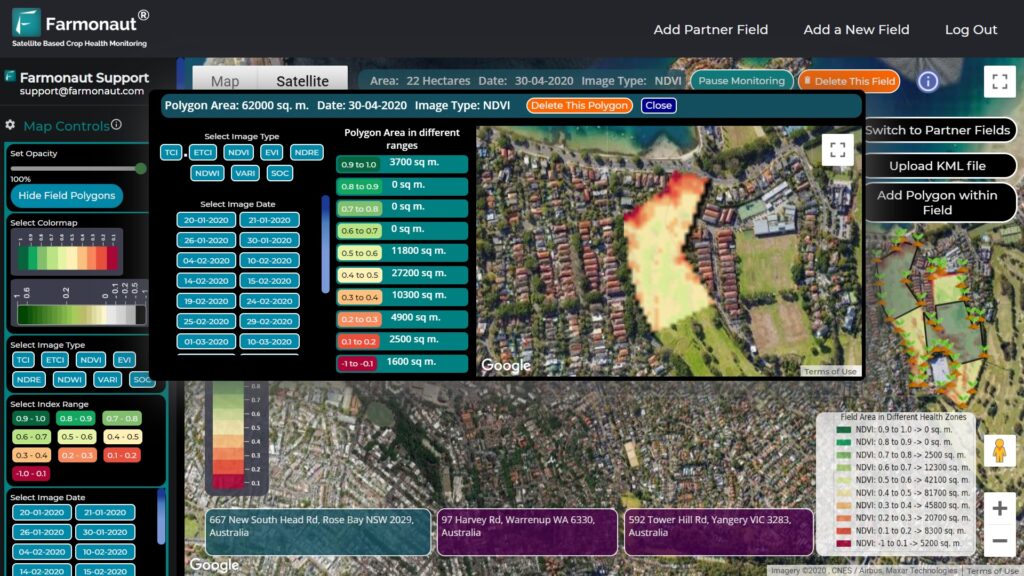
In 2026 and beyond, sustainable cattle farming depends on smarter monitoring, traceability, and resource management. We at Farmonaut offer advanced satellite technology solutions that empower farmers and large-scale cattle producers to transform every hectare of their land and head of livestock into a source of actionable data.
Using real-time satellite-based monitoring, you can:
- Monitor range and pasture health for optimal grazing rotations and land conservation
- Track herd movement and health status using AI-powered dashboards for early intervention
- Measure environmental impacts including carbon, methane, and water use for compliance and market readiness
Our fleet management solutions optimize vehicle usage for large ranches and help minimize fuel and labor inputs. For those looking to increase market confidence and transparency, our blockchain traceability features ensure that every pound of beef produced is authentic and can be tracked back to sustainable practices on your specific Texas ranch.
Access our platform through the web, Android, or iOS app – or check out our extensive API and developer documentation to integrate field intelligence into your custom ranch management systems.
Our platform brings together satellite, AI, and blockchain to make sustainable cattle farming affordable, transparent, and scalable for Texas ranchers, agriculture businesses, and government agencies.

Conclusion: The Road Ahead for Texas Cattle Farming in 2026
The Longhorn Brahman cross is more than just another hybrid—it’s a future-ready breed that empowers Texas farmers to lead the world in sustainable, climate-adapted cattle production. By harnessing genetics that combine the iconic resilience of the Longhorn with the renowned heat and pest resistance of the Brahman, farmers achieve lower input costs, higher productivity, and stronger resilience in every season. This crossbreed not only enhances beef quality and market opportunities but also aligns with the growing urgency for environmental stewardship and climate adaptation in the modern age.
For the best results, supplement your herd improvements with satellite-powered data and sustainable grazing strategies. We at Farmonaut are dedicated to providing technology solutions that help every Texas cattle producer thrive, monitor, and optimize every aspect of their operation – from field to marketplace, today and for decades to come.
Ready to future-proof your Texas beef operation?
- ✔ Embrace crossbreeds designed for the changing climate and new market expectations
- ✔ Adopt cutting-edge technology and traceability for compliance and profitability
- ✔ Monitor and measure sustainability metrics to unlock premiums and meet global standards
Explore our full suite of climate-smart agriculture solutions and monitor your farm’s environmental footprint with Farmonaut Carbon Footprinting.
Texas farmers who integrate Longhorn Brahman cross cattle and sustainable monitoring tools set themselves apart—secure your future in the evolving beef industry today!
Summary: The Longhorn Brahman Cross – Revolutionizing Sustainable Cattle Farming in 2025 & Beyond
As the industry advances toward 2026, implementing the Longhorn Brahman cross in Texas isn’t just an adaptation—it’s a revolution for sustainable and climate-resilient beef production. Farmers can now expect superior adaptability, lower environmental impact, and access to premium markets, especially when supported by state-of-the-art satellite tech from companies like Farmonaut. Now is the time to harness these crossbreeds and digital tools for a resilient, profitable, and sustainable future in the Texas cattle sector.