Llama Poop Fertilizer: 7 Benefits for Sustainable Farms
“Llama poop fertilizer can increase soil organic matter by up to 25%, supporting healthier, more sustainable crops.”
Introduction: Why Llama Poop Fertilizer?
In recent years, sustainable agriculture has become an urgent focal point for farmers and environmentalists alike, prompting an active search for alternatives to traditional chemical fertilizers. Among the most promising innovations now gaining traction in 2026 is the use of llama poop fertilizer as a potent, eco-friendly soil amendment.
While cow and chicken manures have long been used to enrich croplands, llama manure is now attracting attention worldwide due to its unique properties and efficiency. This dry, pellet-like fertilizer does not just improve soil health but also underpins wider environmental and farming systems, making it a centerpiece of sustainable agriculture discussions from the Andes to arid regions in Asia and North America.
Let us explore the organic, nutrient-rich, and sustainable nature of llama poop fertilizer to understand why it stands out in the ecosystem of 2026 agriculture.
Llama poop fertilizer’s dry, pathogen-resistant nature allows direct field application—reducing time and labor compared to traditional manures like cow or horse excrement.
The Need for Sustainable Farming in 2026 and Beyond
By 2026, global agriculture faces resource depletion, climate variability, water scarcity, and soil degradation. Old dependency on chemical fertilizers is increasingly unsustainable, associated with:
- Decreasing soil fertility and organic content
- Groundwater and surface water contamination
- Greenhouse gas emissions
- Ecotoxicity and biodiversity loss
With llama manure and other natural inputs, farmers can now adopt practices that align with sustainable and regenerative farming efforts, making nutrient-rich applications possible without the drawbacks of synthetics.

The rise of pelletized llama manure as an organic fertilizer opens up new value-added market opportunities for livestock owners and sustainable inputs vendors in global agriculture markets.
What Makes Llama Manure Stand Out?
Llama poop fertilizer, often referred to as “llama pellets,” is distinguished by its compact, dry nature and unique agronomic profile. Here’s how its composition and application characteristics lend themselves to sustainable agricultural practices:
Key Qualities of Llama Poop Fertilizer
- ✔ Low moisture content: Easy handling, minimal composting needed
- 📊 Excellent nitrogen, phosphorus, and potassium (N-P-K) balance: Continuous, balanced nutrient cycling
- ✔ Low odor & pathogen risk: Safer for immediate use
- 🌱 Improves soil structure, aeration, & water retention
- 🔥 Reduced risk of ‘burning’ plants
- ⚠ Lower methane emissions compared to cow or chicken droppings
- 🌍 Environmentally aligned with climate-smart agriculture efforts
“Llama manure contains 1.5% nitrogen—50% more than cow manure—making it a potent eco-friendly soil booster.”

Comparative Table: Llama Poop Fertilizer vs. Alternatives
| Benefit | Llama Poop Fertilizer | Cow Manure | Horse Manure | Synthetic Fertilizer |
|---|---|---|---|---|
| Nitrogen Content (%) | 1.5% | 1.0% | 0.7% | Varies (10-40%) |
| Moisture Retention Improvement | ✓✓✓ | ✓✓ | ✓ | × |
| Pathogen Risk Level | Low | Medium-High | Medium | None |
| Odor Intensity | Low | High | Medium | None |
| Application Method Ease | ✓✓✓ | ✓ | ✓ | ✓✓ |
| Sustainable Attribute | ✓✓✓ | ✓✓ | ✓✓ | × |
| Cost Efficiency | ✓✓✓ | ✓✓ | ✓✓ | Depends |
Applying too much synthetic fertilizer in place of balanced organic inputs can cause nutrient burn, groundwater pollution, and long-term soil texture problems. Llama manure offers a safer alternative!
7 Major Benefits of Llama Poop Fertilizer for Sustainable Farms
1. Superior Soil Enrichment & Organic Matter Boost
The organic content of llama poop fertilizer is higher than many alternative manures—improving soil structure, aeration, and water retention. This is especially crucial in arid or semi-arid regions facing climate variability, where moisture conservation can make or break crop yields.
- ✔ Increases soil organic matter by up to 25%
- 🌱 Improves root development for a wide variety of crops
- 🌐 Restores degraded soils in both small-scale and large farming systems
2. Steady, Balanced Nutrient Release
Llama manure is naturally rich in nitrogen (N), phosphorus (P), and potassium (K)—the essential macronutrients for vigorous plant growth. The slow and steady nutrient release feeds crops continuously without the risk of burning roots, as can happen with concentrated chemical inputs.
- 📊 1.5% nitrogen content—50% more than cow dung
- ✔ Suitable for seedlings without danger of excess nutrients
- ⚡ Eliminates nutrient run-off and fertilizing inefficiencies
3. Lower Environmental Footprint & GHG Emissions
Llamas consume less water, emit lower methane emissions, and produce manure with a milder odor and lower environmental impact than cows or chickens. Using their manure as fertilizer translates into a more climate-smart farming approach.
- 🌱 Reduces greenhouse gas emissions compared to traditional livestock manures
- ♻ Supports circular agriculture practices
- 🌍 Aligns with UN’s 2030 SDGs on sustainable food systems

4. Rapid, Safe Application—Use Fresh or Cured
Llama poop’s naturally dry, pathogen-poor composition means it does not require prolonged composting—reducing operating time and labor for application. This direct-use capability is a game-changer for efficient farming and soil amendment management.
- ✔ Low moisture content allows immediate or rapid field application
- ⚡ No need for heavy machinery or long curing processes
- 🌱 Scalable to any farm size, from home gardens to commercial fields
5. Versatility Across Sectors: Crop, Horticulture, & Forestry
From organic vegetables to flower cultivation and forest restoration, llama manure fits a broad variety of sectors:
- 🌼 Safe for sensitive crops and seedlings (herbs, lettuce, flowers)
- 🌳 Used as a soil conditioner in reforestation and ecological restoration
- 🏡 Urban and small-scale horticulture-friendly due to low odor and compact form

6. Low Odor, User-Friendly, and Export-Ready
The distinct, clean pelletized texture of llama poop makes it a pleasure to handle, store, and even package for international organic fertilizer markets—unlike other animal waste, which can require extensive odor management and bulky logistics.
- 💼 Ideal for home, greenhouse, and community gardens
- 🛒 Packaged llama pellets are increasingly found in urban gardening stores in 2026
7. Economic Opportunity & Resource Circularity
Llamas are bred worldwide for fiber production and as pack animals. Valuing their manure as a premium organic fertilizer enables small communities and farmers to add another income stream—diversifying agricultural livelihoods and promoting circularity of resources.
- 💰 Low-cost inputs for sustainable farming
- 📦 Easy transport and storage of dry pellets supports local and export trade
Our remote sensing-powered Crop Plantation & Forest Advisory Tools provide location-based insights, ideal for managing crops sustainably—boosting biological soil health alongside organic amendments like llama manure. Try it out for your next plantation or restoration project!

Key Advantages of Llama Poop Fertilizer 🌱
- Steady organic nutrient supply for sustainable growth
- Safe for direct root contact—no need for heavy composting
- Improves soil aggregation for stronger, healthier plants
- Low odor, easy transport—urban and rural viable
- Encourages circular resource use & supports climate goals
Potential Limitations ⚠
- ⚠ Limited supply compared to cow or chicken manure in major markets
- ⚠ Lower overall NPK values than commercial synthetic fertilizers (requires synergy with other inputs)
- ⚠ Slow adoption rate in some agriculture sectors in 2026
- ⚠ Transportation logistics for export markets could still be expanded
Satellite-based soil monitoring apps now let farmers track organic matter, NPK content, and soil moisture—enabling optimized application of llama manure and other natural amendments.
How to Use Llama Poop Fertilizer in Sustainable Agriculture
Application is simple—whether you are a large landowner or an urban gardener:
- 🌱 Fresh pellets can be sprinkled directly on vegetable beds, flower pots, or around fruit trees—no compost pile necessary (unless you want to blend with other organics).
- ⏳ Short-curing (1-2 weeks) makes it ideal for rapid nutrient cycling—especially before transplanting seedlings or annuals.
- 🚜 Bulk field amendment for row crops: Broadcast using fertilizer spreaders, then lightly till into topsoil to protect against surface runoff.
- 💧 Incorporate into soil restoration or reforestation plantings—mix pellets in planting holes for robust early establishment.

Mixing llama pellets with biochar or local mulch can enhance water retention and nutrient holding capacity even more—helpful for both arid regions and balcony gardens.
Satellite Insights & Farmonaut Tools for Soil Health
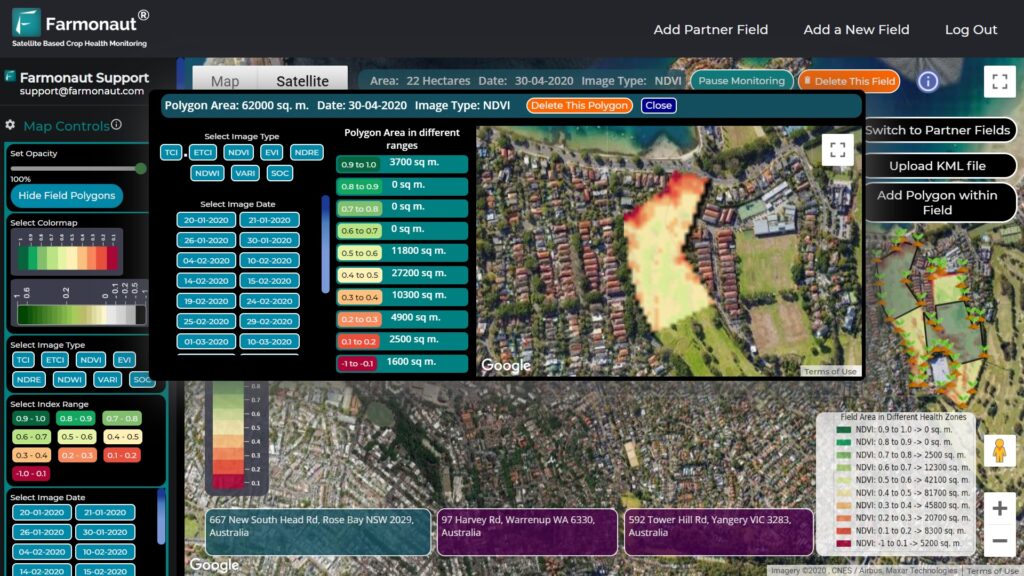
For progressive farmers and land managers seeking to maximize llama poop fertilizer benefits, Farmonaut’s Agro Admin Platform is an industry-leading solution. Our AI-powered, satellite-based tools deliver:
- 🛰 NDVI and MSAVI mapping for real-time vegetation health assessments
- 💧 Soil moisture monitoring to optimize water and manure application schedules
- 🌱 Custom fertilizer application maps for site-specific llama manure use
These tools (available on web, iOS, and Android) enable precision soil management, crop health analysis, and resource traceability—helping users reduce waste and increase efficiency on their sustainable agriculture journey.



For developers and businesses aiming to integrate farm data, our API and detailed API Documentation provide seamless integration options to support precision soil management, resource traceability, and smart advisory for sustainable inputs and amendments.
Global Market Trends: Llama Poop Fertilizer in Modern Agriculture (2026)
The sustainability boom is propelling llama manure from a niche novelty to a mainstream fertilizer option. Trends for 2026 include:
- 📈 Steady increase in market demand and value for pelletized organic fertilizers
- 🌱 Integration with carbon impact tracking tools like Farmonaut’s Carbon Footprinting Suite
- 🔬 Emergence of blended soil amendments—llama manure + biochar, worm castings, etc.
- ➕ Widespread traceability adoption: Blockchain-backed proof of organic amendment origin (see our traceability platform)
- 🌍 Global movement toward methane and nitrate emission reduction

In 2026, regulatory and consumer demand for sustainable, lower-emission fertilizers is set to boost the acceptance and global trade of llama manure products. Smart monitoring and traceability further expand market confidence.
FAQ: Llama Poop Fertilizer & Sustainable Farming
What is the nutrient composition of llama manure?
Llama manure typically contains about 1.5% nitrogen, 0.5% phosphorus, and 1% potassium (N-P-K), providing a balanced, slow-release nutrient source for crops.
Do I need to compost llama poop before using it as fertilizer?
No. The dry, pelletized nature of llama manure means it is safe for direct use or requires only a short curing period—unlike some traditional manures.
Does llama manure carry disease risks or strong odors?
Very low compared to cow or horse manure. Its lower pathogen load and minimal odor make it ideal for both rural and urban applications.
How does llama poop fertilizer support sustainable agriculture?
By providing a renewable, eco-friendly source of nutrients with lower emissions, better water retention, and organic matter enrichment—llama poop fertilizer promotes regenerative, climate-smart farming systems.
Can I combine llama manure with other amendments?
Yes! Llama manure can be blended with compost, biochar, or other natural amendments to further improve soil health, nutrient availability, and water conservation—adaptable to all management systems.
Leveraging smart fleet/resource management tools with soil status data allows coordinated logistically-efficient distribution of organic soil amendments like llama manure across large or remote restoration sites.
Final Thoughts
The agricultural landscape of 2026 is firmly rooted in approaches that foster resiliency, biodiversity, and circular resource management. Llama poop fertilizer powerfully aligns with these principles.
Its distinctive dry, low-odor, and balanced nutrient profile elevates it above many traditional manures and synthetic fertilizers—delivering not only better soil health and climate-smart outcomes but also empowering economic opportunity for modern farmers.
By incorporating organic amendments like llama manure—and harnessing satellite-driven soil, vegetation, and resource management tools (as we do at Farmonaut)—stakeholders worldwide can contribute to successful sustainable farming systems.
As the evidence and adoption of natural fertilizers continue to grow globally, llama poop fertilizer stands out as an outstanding innovation for the future of agriculture and ecological restoration.
5 Key Takeaways
- ✔ Llama poop fertilizer increases soil health and water retention
- 📊 Offers a slow, balanced nutrient release—ideal for sustainable farming
- 🌱 Aligns with climate-smart agriculture and eco-restoration strategies
- 🌍 Supports environmental objectives—low emissions, low risk
- 🔎 Easily integrated with advanced soil monitoring tools (like those from Farmonaut)