IoT4Ag: Transforming Smart Farming with Data Power in 2026
Meta Description: IoT4Ag is revolutionizing agriculture in 2026, integrating smart sensors and data for precision, sustainability, and efficiency. Discover its impact, challenges, and future with Farmonaut’s satellite-driven insights.
“By 2026, IoT4Ag-enabled farms may deploy over 100 sensors per hectare for real-time data monitoring.”
- Summary
- What is IoT4Ag? (Definition & Context)
- Key Components of IoT4Ag in 2025-2026
- How IoT4Ag Drives Precision Agriculture
- Comparative Impact Table: IoT4Ag Smart Sensors Metrics
- Benefits of IoT4Ag Technology
- Farmonaut’s Satellite-Driven Role in IoT4Ag
- Major Challenges & Road Ahead
- Highlighted Expert Insights
- Key Facts, Insights & Risks
- FAQ: Smart Agriculture with IoT4Ag in 2026
- Conclusion & Next Steps



IoT4Ag: Revolutionizing Agriculture through Smart Connectivity in 2025-2026
In 2025 and beyond, the traditional agriculture enterprise is rapidly transforming into a data-driven, sustainable, and efficient sector. At the core of this shift is IoT4Ag—the integration of the Internet of Things (IoT) into agriculture—which is fundamentally changing the way farmers work with food, soil, and climate. As global demand for food rises amid environmental challenges and climate change pressures, IoT4Ag stands out as a critical enabler by optimizing yields and minimizing impact on our planet.
IoT4Ag refers to the deployment of interconnected devices and sensors across agricultural landscapes, collecting data on field conditions, weather, livestock health, and machinery. By feeding this data into advanced analytics systems and AI algorithms, farmers receive actionable insights to make informed decisions. IoT4Ag does more than just optimize crop yields—it supports resource efficiency, climate adaptation, and the transformation of farming into a responsive, innovative, and resilient enterprise.
What is IoT4Ag? – A Comprehensive Perspective
IoT4Ag—short for ‘Internet of Things for Agriculture’—refers to the system where devices (sensors, drones, cameras, smart stations, etc.) are wirelessly interconnected across agricultural fields. These devices collect real-time data about the soil, atmosphere, crops, livestock health, and even machine status. The data streams are communicated to central analytics platforms where actionable insights are generated using advanced AI models and machine learning algorithms.
The integration improves everything from precision irrigation schedules to fertilizer applications, pest management, and climate adaptation. As a result, farmers gain the ability to make informed decisions while minimizing resource waste and increasing both yield and profitability.
Imagine hundreds of smart sensors monitoring every square meter of a field, sending updates to a cloud AI that predicts rainfall, pest outbreaks, or optimal harvest time—this is the reality of IoT4Ag in 2026.
Key Components of IoT4Ag in 2025-2026
The strength of IoT4Ag arises from the harmonious integration of multiple devices and technologies that collect, process, and communicate data. Let’s explore the key components powering this revolution in agriculture:
1. Smart Sensors and IoT Devices
- Soil Moisture Sensors & Nutrient Monitors: Measure moisture, pH, nutrient levels, and temperature in real time.
- Smart Weather Stations: Capture hyper-local weather data (temperature, humidity, wind speed, rainfall) directly from the field.
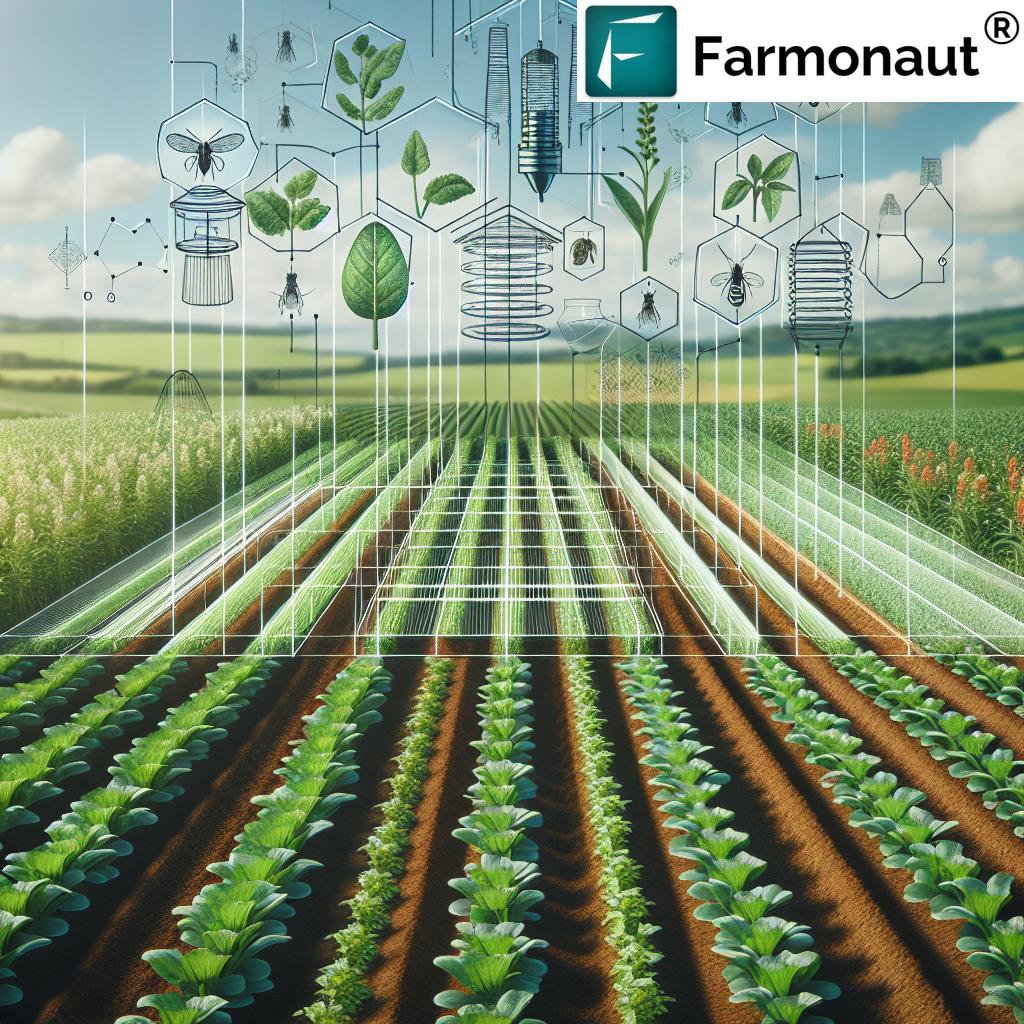
- Pest & Disease Detectors: Use optical and chemical sensing to detect pest infestations and crop disease risk before outbreaks escalate.
- Canopy & Crop Health Sensors: Leverage multispectral cameras to evaluate vegetation health, detect stress, and optimize irrigation and fertilization.
2. Drones & Autonomous Machinery
- Drones Equipped with Multispectral & Thermal Cameras: Survey large tracts of farmland for crop health, pest outbreaks, water status, and nutrient deficiencies from the sky.
- Autonomous Tractors and Harvesters: Use IoT-enabled GPS and sensors to plant, weed, and harvest automatically, minimizing human intervention and errors.
- Robotic Weeders & Seeders: Target specific zones with precision, reducing need for chemical application and resource waste.
- Fleet Management Systems: Integrate with platforms like Farmonaut Fleet Management to optimize logistics, reduce costs, and ensure machinery efficiency.
3. Livestock Monitoring with Wearable IoT Devices
- Wearable Sensors: Clip-on, collar, or implantable devices to track vital signs, activity, and grazing patterns for livestock.
- Automated Feeding & Health Alerts: Send real-time notifications about abnormal health levels or feeding needs, preventing disease outbreaks and improving animal welfare.
- Grazing Optimization: Generate actionable insights to rotate livestock efficiently, reducing pasture stress and improving soil quality.
4. Data Analytics, AI & Machine Learning Algorithms
- Data Streams & Cloud Integration: All devices collect data and upload it to cloud data analytics platforms.
- Machine Learning Algorithms: Automatically analyze trends, predict crop yields, prevalence of pest outbreaks, irrigation needs, and optimal schedules.
- AI-Based Decision Support: Integrate data with weather forecasts, historical patterns, and real-time inputs to help farmers make informed decisions via tools like Farmonaut’s Jeevn AI Advisory System.
- Resource Optimization: Advanced algorithms ensure every drop of water, every gram of fertilizer, and every field intervention is timed and dosed for maximum efficiency, reducing resource waste.
In connected farming, the secret to success lies in the subtle combination of real-time data collection and analytics-driven decision making. This blend empowers rapid responses to evolving field conditions and unforeseen challenges.
How IoT4Ag Drives Precision Agriculture in 2026
IoT4Ag unleashes the full power of precision agriculture, the practice of tailoring inputs and actions with pinpoint accuracy based on field-specific data. Let’s break down how:
✔ Precision Resource Application
- • Water: Dynamic moisture sensors and weather forecasting allow farmers to optimize irrigation schedules.
- • Fertilizer: Deploy nutrient monitors to ensure fields get exactly the nourishment they need – no more, no less.
- • Pest & Disease Management: Use predictive AI algorithms to spot outbreaks early, enabling targeted treatments that reduce pesticide waste.
📊 Data-Driven Crop Monitoring
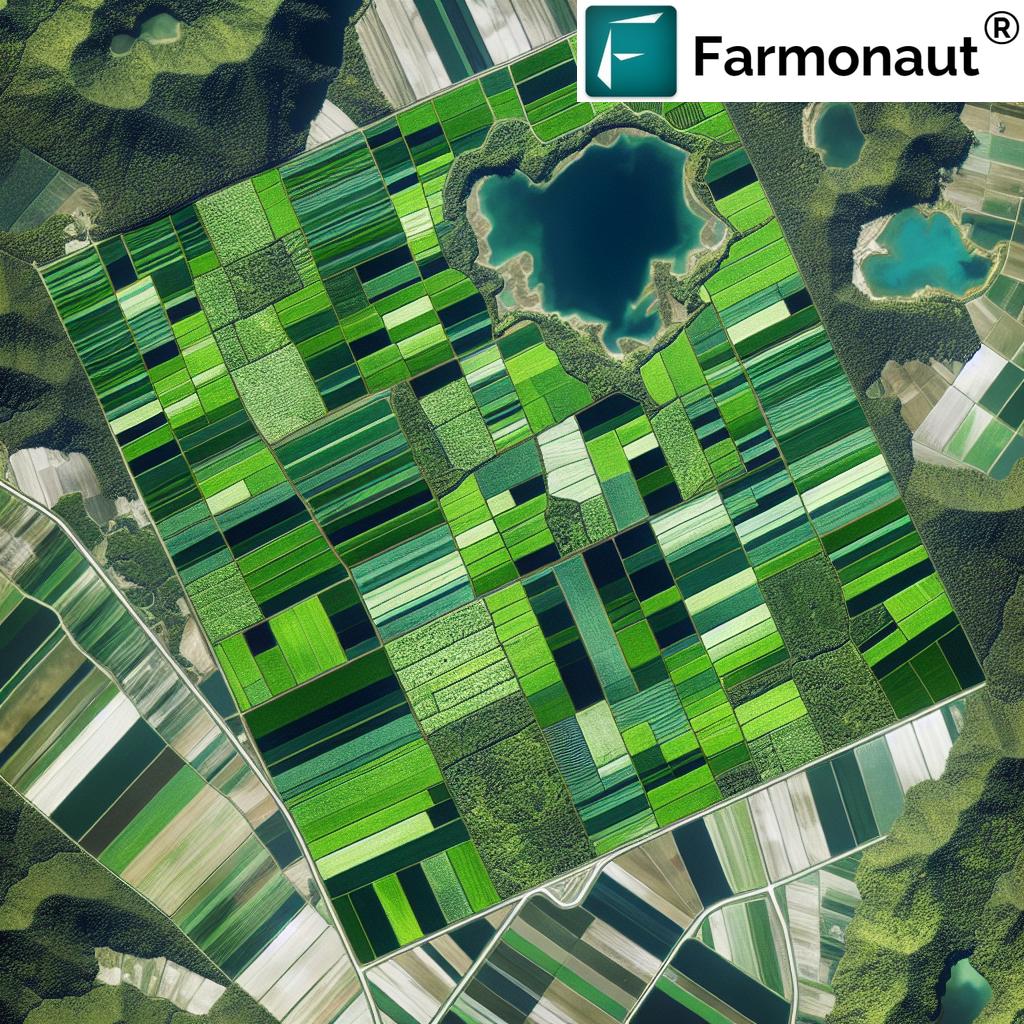
- • Multispectral Imaging (from drones and satellites) delivers in-depth insights into crop health, photosynthesis efficiency, and problem zones in each field.
- • Farmonaut’s large-scale farm management tools provide actionable, block-by-block crop health analysis for expansive operations.
⚠ Early Warning Systems
- • AI/ML-powered predictions alert users to pending disease outbreaks, adverse weather events, and equipment failures—preventing losses and ensuring crop security.
🔍 Supply Chain Transparency and Traceability
- • Modern traceability systems (see Farmonaut’s blockchain traceability solution) record every event, from planting and cultivation to harvest and distribution, bolstering food safety and compliance.
🌍 Environmental Sustainability
- • Data-driven interventions drastically reduce the risk of overwatering, overfertilization, or pesticide runoff, helping preserve water supplies and protecting soil health.
- • Farmonaut aids carbon footprint monitoring and reporting, supporting compliance and sustainability commitments.
“Smart sensor adoption in agriculture is projected to increase global crop data collection by 60% by 2025.”
Comparative Impact Table: IoT4Ag Smart Sensors and Precision Farming Metrics
Benefits of IoT4Ag Technology in Smart, Sustainable Farming
IoT4Ag is more than just a technological leap; it delivers practical, measurable benefits across the farming value chain. Here’s how:
- ✔ Resource Efficiency: Smart scheduling and application of water, fertilizers, and pesticides minimize waste, lower inputs by 10–30%, and reduce environmental burden.
- ✔ Increased Productivity: Farmers respond to early warnings on health or pests, improving yields and food quality while reducing losses.
- ✔ Environmental Stewardship: Optimized resource use means lower runoffs, improved soil health, and significant cuts to farm carbon emissions.
- ✔ Climate Resilience: Farmers can quickly adapt to weather changes, shifting threats or opportunities to maintain production in a changing climate.
- ✔ Food Safety & Transparency: Traceability systems ensure every stage of crop production and distribution is documented, increasing consumer confidence.
📦 How IoT4Ag Transforms the Value Chain (Visual Checklist)
- Planning: Use data on weather and soil to choose the right crop & planting time
- Planting: Smart seeders and tractors ensure precision and minimize losses
- Growth: Real-time monitoring optimizes nutrients and detects stress instantly
- Protection: Targeted intervention for pests, with less chemical use
- Harvesting: Timing and method optimized for yield & quality with fleet automation
- Post-harvest: Data ensures traceability and sustainable storage/transport
To make the most out of precision farming, start with a scalable sensor and analytics plan. Even a single IoT sensor on a small field can deliver early resource savings and act as proof of concept before expanding IoT deployment.
Farmonaut’s Role: Satellite-Driven IoT4Ag, AI, and Transformative Insights
As IoT4Ag becomes mainstream, advanced monitoring and analytics solutions are essential to turn data streams into actionable insights for farmers worldwide. At Farmonaut, we believe the fusion of satellite technology, AI, and blockchain is the foundation of the next wave of smart agriculture.
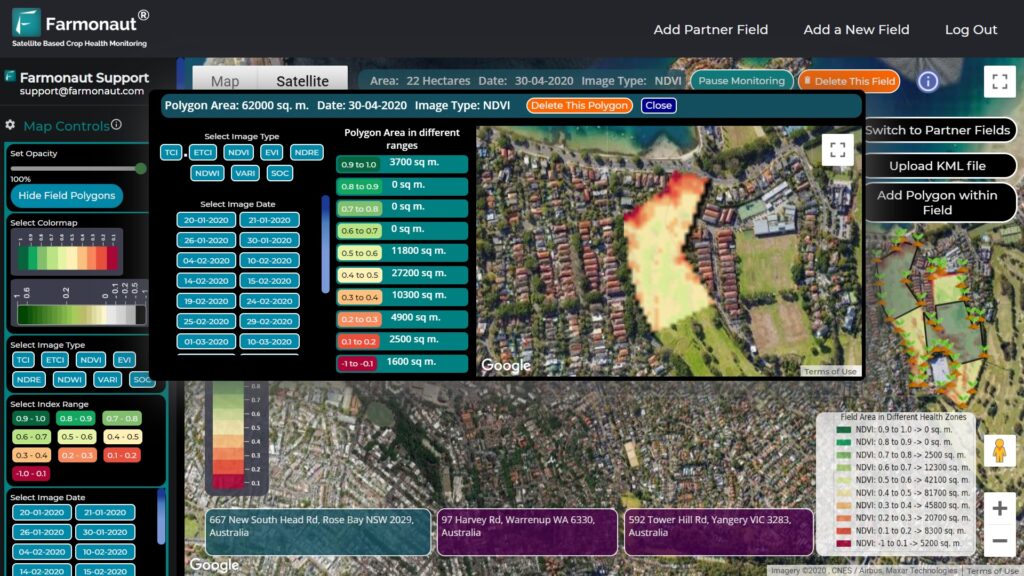
- Satellite-Based Monitoring: We offer multispectral crop health analysis, high-resolution soil condition maps, and advanced productivity indices using state-of-the-art satellite imagery. Our large-scale farm management platform empowers enterprises, smallholders, and agribusinesses to access affordable monitoring across vast landscapes.
- Jeevn AI Advisory System: Our AI-driven advisory engine analyzes satellite and ground data for real-time, actionable strategies. This enables farmers to improve crop performance, manage pests, and reduce input costs efficiently.
- Blockchain Traceability: With our traceability tools, we secure food origin and integrity, supporting global compliance and consumer trust.
- Environmental Impact Monitoring: We facilitate carbon footprint assessments for agriculture—aiding sustainable production and transparent carbon reporting.
- API & Developer Solutions: Developers can integrate our satellite-based insights into any digital farming platform or ERP using our open API (API developer docs).
Why Our Approach Empowers the Next Wave of Precision Farming
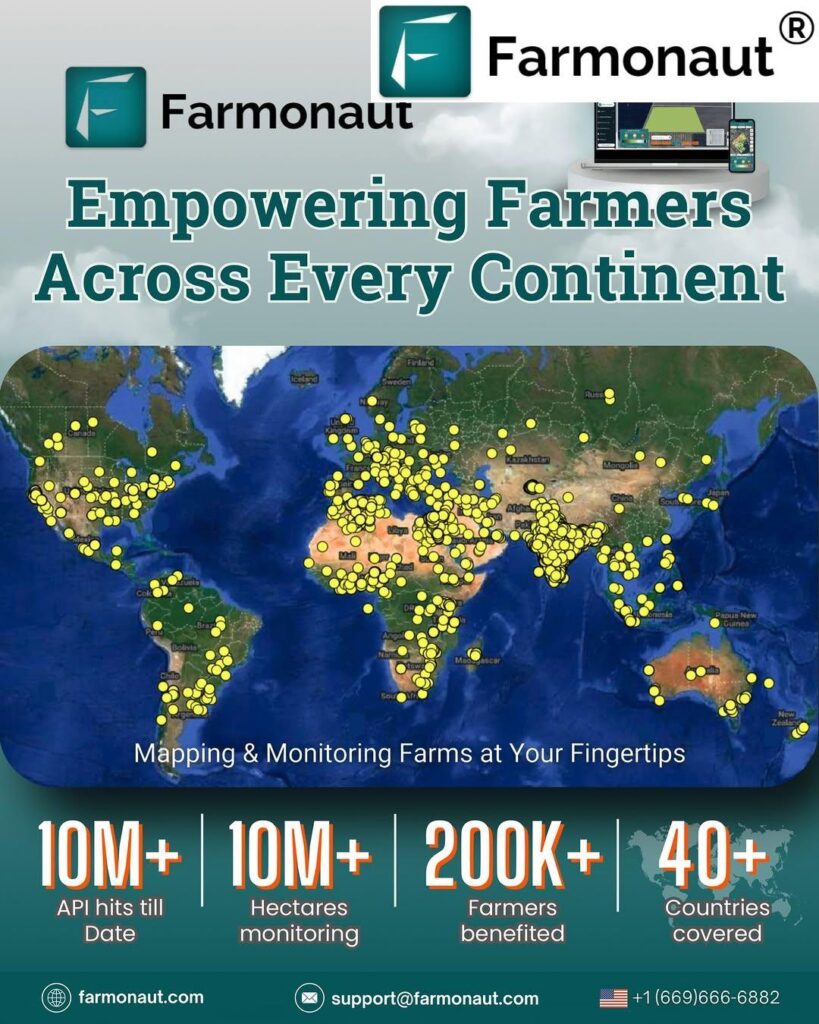
- Accessible for All: Our subscription-based model and mobile/web app ensure that, regardless of scale or technical expertise, all farmers, cooperatives, and agri-enterprises can use world-class analytics and monitoring.
- End-to-End Solutions: We support not just precision farming, but also fleet management, resource optimization, traceability, environmental monitoring, and financial verification for loan and insurance applications (see details).
- Scalable Platform: Whether you manage a single field or administer agricultural projects at national scale, our flexible platform and API power-up your operations—seamlessly integrating with your existing systems.
“Satellite-driven insights and traceability will become integral to insurance, financing and logistics in global Agriculture 4.0.” – Early adoption of IoT4Ag platforms offers high ROI potential as data-driven risk management transforms rural economies.
Major Challenges for IoT4Ag in 2026 & Beyond
While the future of smart farming is bright, a few critical challenges stand in the way of universal adoption:
- Upfront Investment Costs: Though rapidly falling, cost of deploying dense sensor networks is still a barrier for many small-scale farmers and developing markets.
- Connectivity Gaps: Reliance on stable internet connectivity makes rural and remote farms vulnerable. Emerging solutions such as LPWAN and satellite broadband (Starlink, etc.) are bridging gaps but require capital and training.
- Data Privacy and Cybersecurity: Sensitive farm data must remain secure; frameworks and regulations are needed to protect users from misuse or breaches.
- Integration Complexity: As more devices and analytics platforms arrive, interoperability standards are vital to unify data streams and avoid fragmentation.
- Digital Literacy: Training and support are needed to ensure every farmer—regardless of experience or geography—can use the systems to their fullest value.
Governments and private industry are investing heavily in connectivity and education, but it will take cross-sector effort to close digital divides and democratize smart agriculture.
Over-relying on device data without regular system audits. Always calibrate sensors and cross-check analytics with field experience; IoT4Ag is most powerful when humans and AI work together!
IoT4Ag: 📋 Advantages & ⚠ Cautions
- 🌱 Boosted yields & ROI from precise input application
- 🌍 Lower emissions by monitoring carbon & resource use
- 🔗 Traceable supply chains support compliance & sustainable brands
- 📱 Anywhere access via mobile/web dashboard
- 🤖 Automated alerts decrease error, loss & response time
- ⚠ Initial sensor cost $50–$300/unit (falling with scale)
- ⚠ Dependency on connectivity in remote zones
- ⚠ Cyber risks if data systems aren’t secured
- ⚠ Data overload without a unified dashboard/API
- ⚠ Need for ongoing training and sensor maintenance
IoT4Ag is boosting the global smart farming equipment market to over $2.3B by 2025, led by data-driven solutions and AI telematics!
Farms leveraging precision soil and health sensors saw up to 21% higher yields and significantly reduced water use.
Use multispectral imaging with AI analysis for rapid pest detection and spot treatments that reduce chemical cost and environmental impact.
Skipping regular calibration of sensors can cause inaccurate data—verify measurements at every season change.
Satellite & IoT4Ag integration is driving new standards in sustainability reporting for agri-finance and emission credits.
The next frontier for IoT4Ag: predictive analytics and unified data platforms accessible to cooperatives worldwide.
5 Key Points: IoT4Ag Transformation
- • IoT4Ag is revolutionizing agriculture through smart sensor networks, AI, and advanced analytics in 2026.
- • Farmonaut’s platform makes satellite insights accessible to all, with subscription plans for every scale.
- • Precision farming increases yields, reduces resource waste, and improves climate resilience at field and national scale.
- • End-to-end traceability and environmental impact monitoring build both regulatory compliance and brand trust.
- • Training, secure data systems, and reliable connectivity are critical for IoT4Ag democratization worldwide.
Frequently Asked Questions (FAQ): IoT4Ag & Smart Agriculture in 2026
What is IoT4Ag and how does it benefit modern farmers?
IoT4Ag refers to the use of interconnected smart sensors and devices in agriculture that collect real-time data on soil, crops, weather, livestock, and machinery. This data, processed by advanced analytics and AI, enables farmers to make more informed decisions, optimize input use, increase yields, and reduce environmental impact.
How do IoT4Ag sensors improve precision agriculture?
Smart sensors measure key field parameters—such as soil moisture, nutrient levels, and pest activity—at a granular level. By integrating this data into AI-driven platforms, farmers can precisely schedule irrigation, fertilization, and pest management interventions, resulting in better productivity and lower costs.
Does IoT4Ag help reduce resource waste and environmental impact?
Yes! Precision application of water, fertilizers, and pesticides guided by sensor data significantly reduces waste, runoff, and emissions—safeguarding long-term soil fertility and promoting sustainable farming practices.
What are the biggest challenges for IoT4Ag in 2026?
Key challenges include upfront sensor network cost, connectivity limitations in remote areas, data privacy and security issues, and the need for ongoing farmer training. Advances in satellite internet and LPWAN are helping bridge the digital divide.
How does Farmonaut’s solution fit into the IoT4Ag ecosystem?
We at Farmonaut offer satellite-based crop health monitoring, AI-powered advisory, blockchain traceability, fleet management, and environmental impact tracking—enabling farmers and enterprises worldwide to access affordable, actionable insights for smarter, more sustainable agriculture.
Conclusion: Data-Driven IoT4Ag Powers the Future of Food and Sustainability
By 2026 and beyond,
IoT4Ag is fundamentally transforming agriculture, combining the power of real-time data, dense sensor networks, advanced AI, and honest traceability to address both productivity and environmental challenges.
As global food demand rises and climate change pressures escalate, IoT4Ag emerges as the critical enabler for a new, resilient, and thriving digital farming era.
- Farmers get the actionable insights and decision support they need, optimizing every operation from the ground up.
- Enterprises access scalable solutions for fleet, traceability, and sustainable production.
- Consumers see safer food with transparent origins.
- Governments and financial institutions get better data for policy and risk management.
With platforms like Farmonaut, these technologies become accessible to all,
**ensuring sustainable and efficient farming—worldwide.** The age of smart, data-powered agriculture is not just coming—it’s here.
Ready to join the smart farming revolution? Start now—deploy IoT4Ag on your farm with Farmonaut’s satellite-driven platform and experience actionable insights from the edge of your field to the heart of your enterprise.
Interested in integrating satellite-based IoT4Ag data into your agri-software, ERP, or research platform?
Explore the Farmonaut open API and detailed developer docs to empower your digital future!