Hydroponic Farming Business Plan: Profit & Products 2026
Introduction: The Rise of Hydroponic Farming (2025–2026)
As the global population continues to rise and arable land becomes increasingly scarce, finding sustainable, profitable agricultural solutions has become a top priority. Hydroponic farming offers an innovative and efficient alternative to traditional soil-based cultivation—and its popularity is surging in 2025 and beyond.
By growing plants without soil and using nutrient-rich water in controlled environments, hydroponics not only enhances crop yields but also reduces costs, resource use, and dependency on weather.
For farmers and entrepreneurs considering entering the sector, a thorough hydroponic farming business plan is crucial to harness this profitable and technology-driven agricultural revolution.

Understanding Hydroponic Farming & Systems
Hydroponic farming is a soilless agriculture method that eliminates the dependency on land and traditional soil. Instead, it utilizes controlled environments, optimal water supply, and precisely formulated nutrient solutions to foster healthy plant growth—regardless of harsh climate conditions or external seasons.
The core principle is maximizing yields per square foot, while conserving water, reducing the need for pesticides, and enabling year-round cultivation. This is why hydroponic farming business plans are increasingly being adopted by urban, peri-urban, and rural entrepreneurs alike.
Main Hydroponic Systems Explained
- Nutrient Film Technique (NFT): A thin film of nutrient water runs over the roots, ideal for leafy greens and herbs.
- Deep Water Culture (DWC): Plant roots are suspended in an oxygenated, nutrient-rich water solution—best for fast-growing crops.
- Drip System: Nutrient solution drips directly onto the base of each plant. Highly customizable and scalable.
- Aeroponics: Roots are sprayed with mists of nutrient solution, allowing for rapid oxygen uptake and growth.
- Vertical Hydroponic Systems: Utilizes shelves or towers to maximize yield per square meter, perfect for urban spaces.
Key Components of a Hydroponic Farming Business Plan
Building a robust hydroponic farming business for 2025–2026 means covering all aspects, from market research and crop selection to operational strategy, distribution, infrastructure, and financial modeling. Below, we dig deep into each component of an effective hydroponic farming business plan.
1. Market Research & Location Analysis
Searching “hydroponic farming near me” highlights demand & proximity—two essentials for market-led business planning.
- Analyze local consumer trends—look for increasing demand for fresh, chemical-free produce via supermarkets, organic stores, restaurants, and farmers’ markets.
- Urban and peri-urban areas offer excellent logistical convenience and market access thanks to consumer proximity.
- Examine availability of greenhouse or indoor space for setup and hydroponic expansion.
- Check competition by mapping existing hydroponic farming products in your region.

2. Crop Selection & Hydroponic Systems
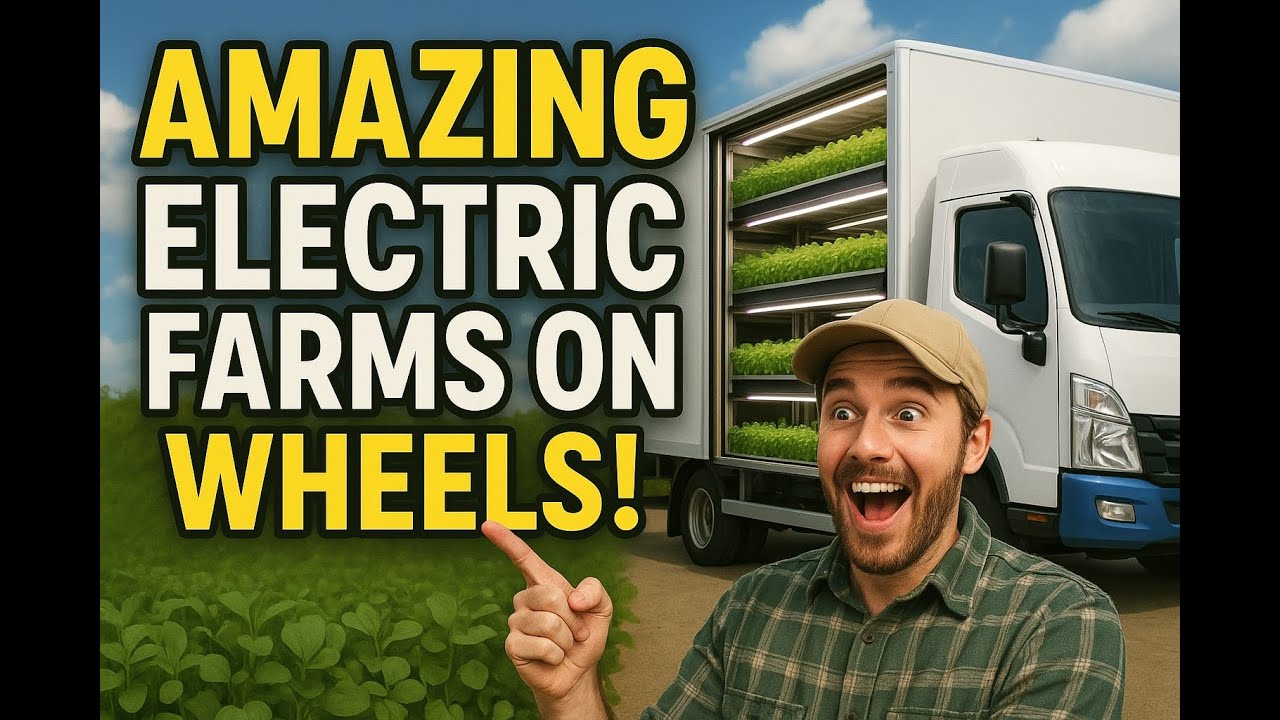
- Choosing profitable crops: Fast growers like lettuce, spinach, kale, basil, mint, cucumbers, tomatoes, strawberries perform well in hydroponic setups.
- System selection: Decide between NFT, DWC, drip system, or vertical/modular models depending on crop requirements, available capital, and expansion plans.
- Yield optimization: Leverage data and environmental controls for precise, high-volume output.
Ignoring local market demand and growing niche or low-demand crops often leads to unsold inventory—always align selection with consumer trends and ROI calculations.
3. Infrastructure & Technology Investment
- Build or lease suitable greenhouse or indoor spaces equipped with climate control, lighting (LEDs), and automated fertigation systems.
- Install monitoring systems for temperature, humidity, light, CO2, and pH to optimize crop health.
- Integrate IoT, AI-based analytics, and blockchain traceability for data-driven efficiency, risk reduction, and crop authentication.
Did you know? Our blockchain-based product traceability can help hydroponic farm operators authenticate produce origins and build transparency for discerning consumers and regulatory markets.

Use carbon footprinting tools to measure and optimize the sustainability of your hydroponic operations—this is increasingly in demand from investors and food retailers.
4. Operational Strategy & Workforce Management
- Estimate workforce requirements—include skilled staff trained in hydroponic system management, monitoring plant nutrition, and data collection.
- Develop a planting calendar for continuous, staggered harvest cycles; this approach minimizes downtime and maintains steady revenue streams.
- Implement real-time monitoring systems to track plant growth and reduce crop loss.
- Offer ongoing training—particularly in new technologies and automation for optimal farm efficiency and sustainability.


5. Marketing & Distribution Channels
- Promote hydroponic farming products as fresh, chemical-free, and locally grown—appealing to health-conscious consumers and green retailers.
- Develop channels such as farmers’ markets, supermarkets, organic stores, and online direct-to-consumer platforms for optimal reach and higher profit margins.
- Collaborate with local restaurants—many are seeking unique, high-quality, local ingredients.
- Integrate traceability and product authentication to increase credibility, using solutions like Farmonaut’s Traceability System for proof of produce origin.
Incorporating transparency and local branding will unlock premium price points and new revenue streams in the hydroponic farming business for 2026.

6. Financial Projections & Profit Potential
- Prepare an initial investment summary for infrastructure, equipment, and setup based on chosen systems and crop selection.
- Factor in monthly operational costs: labor, energy, water, nutrients, and system maintenance.
- Estimate revenue streams: regular market sales, direct-to-consumer sales, and potential off-season premium pricing.
- Calculate gross and net profitability—include sensitivity analysis for risks such as equipment failures or market price fluctuations.

Underestimating the impact of energy and water costs on overall profitability—use actual operating data, not estimates, for long-term planning.
Hydroponic Crop Profitability Comparison Table (2025–2026)
One of the most crucial aspects of your hydroponic farming business plan is benchmarking which products offer the best blend of profitability, sustainability, and market demand. Use the table below to compare key crops.
*Sustainability Score: 0–10, based on water efficiency, low input cost, and environmental impact.
📋 Key Hydroponic Farming Advantages in 2025–2026
- ✔ Water Efficient: Hydroponics uses up to 90% less water than traditional farming methods.
- 💧 Year-Round Production: Controlled environments mean no seasonality, thus stable income.
- 📊 High Profitability: Quick crop cycles allow for multiple harvests and rapid reinvestment.
- ⚡ Technology-Driven: Enhanced by real-time data, IoT, and AI for precise management.
- 🌱 Sustainability: Lower carbon footprint and minimal pesticide usage support green initiatives.
🛠 Step-by-Step Hydroponic Farming Startup Guide
- Conduct market analysis and identify profitable crops based on local demand.
- Select the right hydroponic system and grow area considering scalability.
- Invest in infrastructure, technology-enabled monitoring and automated controls.
- Secure skilled workforce and implement a training program.
- Build strong marketing & distribution channels for steady sales.

🚀 Tech Innovations Maximizing Hydroponic Farming Profitability
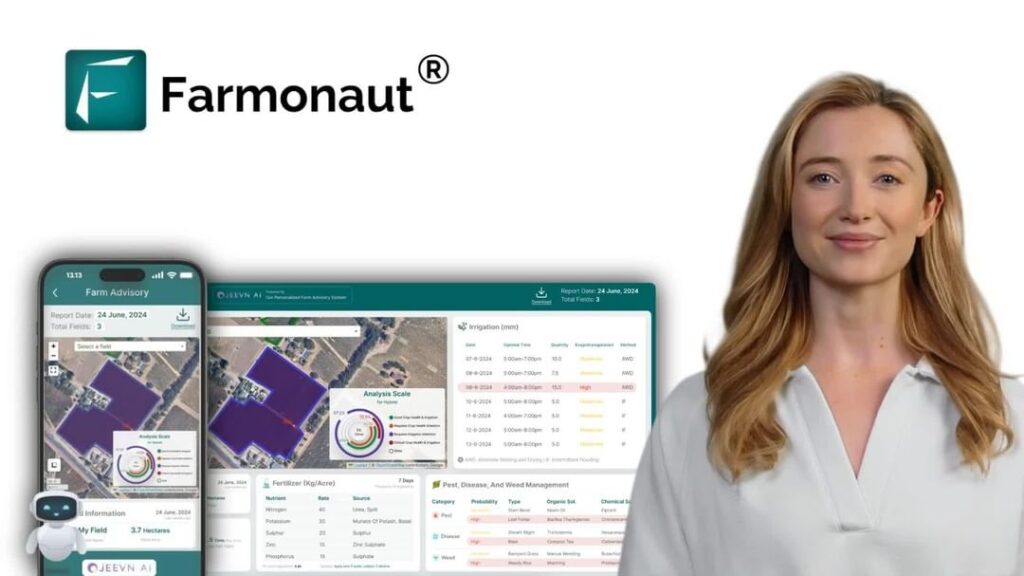
- 🤖 AI-Based Crop Advisory: Leveraging data for precision planting & nutrient schedule optimization.
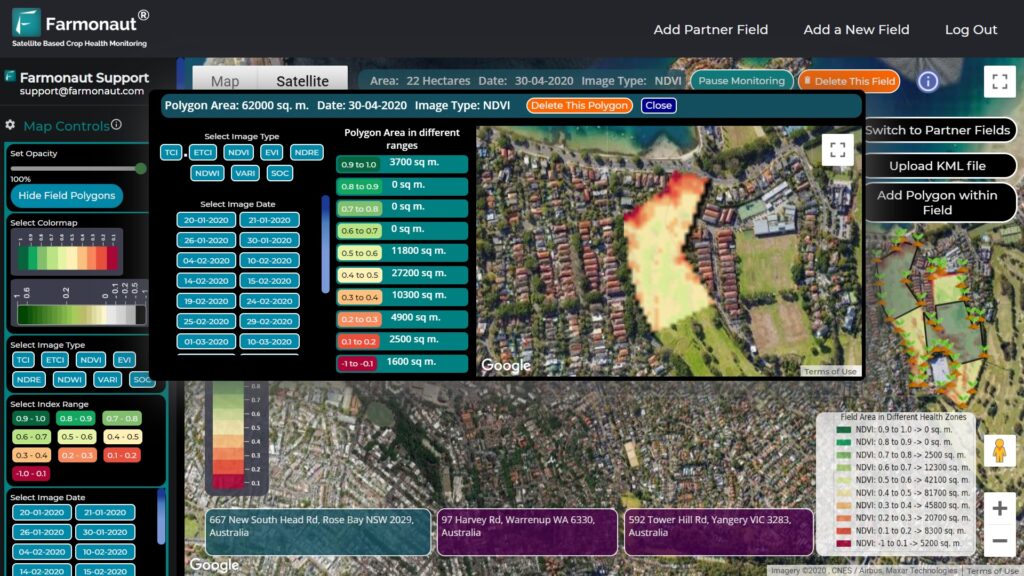
- 📡 Satellite Imagery: Real-time health monitoring and timely intervention.
- 🔗 Blockchain Traceability: Ensuring authentic produce in consumer markets.
- 📱 Mobile App Controls: Manage hydroponic systems remotely for efficiency.
- ♻ Environmental Tracking: Carbon footprint measurement and optimization.
Access satellite-verified loan & insurance solutions to expand financing opportunities for your hydroponic venture!

Manage multi-location hydroponic operations with Farmonaut’s Large-Scale Farm Management platform for streamlined control and data-driven decision-making.
Farmonaut’s modular subscriptions offer affordable access to satellite and AI tools. Choose a plan that fits your hydroponic business scale and expand as you grow!
Green investors now favor hydroponic farms actively measuring their carbon footprint. This metric enhances both compliance and market positioning.
How Farmonaut Elevates Hydroponic Business Success
In the rapidly advancing landscape of sustainable agriculture, Farmonaut emerges as a leading provider of satellite-driven insights and AI-based technologies for hydroponic farming businesses. Our solutions are designed to supercharge operational efficiency, monitoring, and profitability, supporting a data-driven approach in 2025 and beyond.
Key benefits:
- 🌍 Real-time satellite imagery and AI advisory for crop health, resource use, and risk mitigation.
- 🛰 Blockchain-based traceability solutions for authenticity and market trust.
- 📱 Mobile & Web Apps for intuitive farm management—monitoring water, energy, and environmental metrics remotely.
- 💡 Environmental impact tracking for hydroponics; essential for global certification and green marketing.
- ⚙ Modularity—choose API integration or tailored subscriptions to fit your business size and expansion plans.
Future Outlook: Profit in Hydroponic Farming & Sustainability in 2026
The direction for hydroponic farming business plans in 2026 points toward scalable, technology-enabled, and sustainable models with high profitability. As urbanization continues, consumer demand for fresh and pesticide-free products will further accelerate.
Tech-forward hydroponic entrepreneurs are set to benefit from:
- ✔ Rapid scaling through modular indoor systems and vertical farming.
- 🧠 Data-driven decision-making using satellite-based platforms and AI-enabled prediction tools.
- 🌿 Preferred access to green investment and subsidy channels due to sustainability compliance.
- 📈 Participation in $15 billion+ global hydroponics market (projected by 2026), driven by technology and rising food demands.
- 🔗 Enhanced distribution through online direct-to-consumer sales and partnerships with forward-thinking retailers.
Optimizing logistics is essential in scaling your hydroponic business—explore fleet management tools for seamless urban delivery and lower operational costs.
Enhanced advisory capabilities using AI-powered Crop Plantation & Forest Advisory ensure optimal crop schedules and ecosystem planning.
Frequently Asked Questions (FAQ)
What is a hydroponic farming business plan?
A hydroponic farming business plan outlines your strategy, infrastructure, operational requirements, financial projections, and marketing approach for launching or scaling a soilless, technology-driven agricultural business.
Why is hydroponic farming considered more sustainable than traditional soil farming?
Hydroponic farming dramatically reduces water usage (up to 90% less), limits pesticide application, and enables high-density, year-round production—key factors in agricultural sustainability and profitability.
What are the most profitable products in hydroponic farming?
Leafy greens (lettuce, spinach, kale), tomatoes, basil, mint, and strawberries are among the highest-demand crops for hydroponic systems, thanks to short cycles and market premiums for fresh produce.
How can technology further enhance hydroponic farm efficiency?
Integrating satellite imagery, AI-based advisory, blockchain traceability, and mobile monitoring platforms leads to better crop health, risk management, and distribution efficiency—especially suited for urban and commercial hydroponic farms.
Are there financing options for setting up hydroponic farms?
Many financial institutions support hydroponic businesses with loans and insurance, often leveraging satellite-based verification platforms like Farmonaut’s Crop Loan & Insurance Verification to reduce operational risks.
Conclusion
The hydroponic farming business plan is your sustainable pathway to profitable agriculture in 2026 and beyond. By integrating the latest technology, understanding market trends, and focusing on efficiency and sustainability, new and existing entrepreneurs can tap into a sector primed for growth—even as traditional farming becomes challenged by climate and resource constraints.
Let Farmonaut’s advanced tools empower your hydroponic business—ensuring real-time monitoring, resource optimization, transparency, and access to environmental data. This gives you a competitive advantage and positions your operation for long-term profitability.
The journey into hydroponic agriculture is a promising opportunity for those ready to innovate, adapt, and thrive. Start now with a comprehensive business plan and the right technology partners for a future-proof enterprise.