Hooded Sprayer: Crop Protection & Sustainability 2026
“Hooded sprayers can reduce chemical drift by up to 90%, ensuring precise pesticide application in 2025.”
- Introduction: Hooded Sprayer Technology in Modern Agriculture
- How Hooded Sprayers Work
- Key Advantages of Hooded Sprayers in 2025 & Beyond
- Comparative Feature-Impact Table: Hooded vs Conventional Sprayers
- Diverse Applications of Hooded Sprayer Technology
- Smart Agriculture: Precision, Data & Satellite Insights (Farmonaut)
- Environmental Impact, Worker Health & Sustainable Agriculture
- Integration With Advanced Technologies: Sensors, Guidance & Autonomy
- Future Outlook: Research, Developments & Challenges
- Farmonaut Subscription Plans & App Access
- Frequently Asked Questions (FAQ)
- Conclusion: Hooded Sprayer as a Pivotal Tool for Sustainability in 2026
Introduction: Hooded Sprayer Technology in Modern Agriculture
As we move into 2026, modern agriculture faces mounting demands for sustainability, efficiency, and environmental responsibility, all while maintaining high productivity. Meeting these challenges requires solutions that fuse advanced technology with eco-friendly practices. One such innovation—the hooded sprayer—has emerged as a pivotal equipment piece, revolutionizing crop protection by reducing chemical drift, enhancing precision, and improving environmental outcomes across global agriculture.
With **stricter regulatory frameworks governing pesticide usage** and a growing global emphasis on sustainability, transitioning from conventional boom sprayers to modern hooded sprayer technology is not just a recommendation—it’s fast becoming essential for responsible, compliant, and high-yield farming in 2026 and beyond.
Adopting hooded sprayers aligns with global sustainability goals by cutting chemical usage, protecting crops, and greatly reducing contamination of soil, water, and nearby areas.
This in-depth guide explores how hooded sprayer technology works, why it is superior to conventional spraying for crop protection and environmental health, and how integration with AI, sensors, and satellite-based platforms like Farmonaut enhances its impact in 2025, 2026, and the future.

How Hooded Sprayers Work: Enhancing Precision, Reducing Chemical Drift
A hooded sprayer is a specialized piece of equipment designed for ultra-targeted application of pesticides, herbicides, fungicides, and fertilizers. The key innovation lies in its hood-like enclosure—a **structure** that surrounds the spraying nozzles. Unlike **conventional boom sprayers**, which **release chemicals broadly** and are prone to wind drift, the hooded design **channels the spray** precisely onto the crop canopy, **creating a microenvironment** for droplets to settle efficiently.
- ✔ Reduces chemical drift by keeping spray within the hood
- ✔ Protects soil, water, and adjacent areas from contamination
- ✔ Improves operator and worker safety by minimizing exposure
- ✔ Enables ultra-precise application of crop protection chemicals
- ✔ Compatible with advanced technologies (e.g., sensors, GPS)
The hood’s enclosed system prevents wind-dispersal of chemicals, allowing **droplets to settle directly atop the desired crop surface**—not on soil, non-target plants, or into nearby water bodies. This enhances coverage accuracy, reduces wasted chemicals, and prevents unwanted **environmental contamination**.
When using hooded sprayers, always adjust nozzle angles and pressure according to crop canopy height and density for maximum coverage efficiency.
- 🔷 Hood Structure: Blocks wind, creating stable zone
- 🔷 Internal Nozzles: Deliver fine spray below hood
- 🔷 Targeted Channeling: Directs droplets onto crop canopy
- 🔷 Minimal Overspray: Reduces drift to non-target zones
- 🔷 Precision Control: Enables responsible chemical usage
Key Advantages of Hooded Sprayer Technology in 2025 & 2026
The adoption of hooded sprayer technology represents a **sophisticated solution** that enables farmers to meet diverse agricultural demands—from increased **precision** to environmental protection and regulatory compliance.
1. Maximized Precision & Efficiency in Crop Protection
Hooded sprayers enable **ultra-targeted application of agrochemicals**, with the hood structure creating a microenvironment for droplets to **settle efficiently**. This precision:
- ✅ Enhances coverage and absorption on the target crop
- ✅ Enables reduced chemical usage without sacrificing crop quality
- ✅ Translates into cost savings and lower environmental footprints
2. Significant Reduction of Chemical Drift & Off-Target Contamination
Chemical drift is a leading concern when using conventional sprayers. Wind-blown droplets can contaminate adjacent fields, **water bodies**, and even **residential areas**, posing HT1 and environmental hazards. Hooded sprayers, with their enclosed design:
- 🛡 Minimize drift—helping to meet stricter regulatory requirements
- 🛡 Protect neighboring ecosystems and nearby operators
- 🛡 Reduce liability for farmers and agricultural businesses
3. Enhanced Environmental and Worker Health Safety
The containment provided by the hood lessens exposure of operators and individuals to toxic chemicals. This reduces health risks and:
- 🌲 Limits contamination of soil and water, supporting biodiversity conservation
- 🌲 Facilitates compliance with sustainability standards, paving the way for market access and subsidies
- 🌲 Promotes responsible agricultural practices at the farm and landscape scale
4. Seamless Compatibility with Smart Agricultural Technologies
Modern hooded sprayers integrate with GPS guidance, site-specific application via sensors, and even **autonomous spraying systems**. This synergy:
- 🌐 Maximizes resource use efficiency
- 🌐 Enables precision farming down to individual crop rows
- 🌐 Supports integration with satellite data & decision support platforms
⚡ Why 2026? The Momentum of Regulatory & Market Demands
In 2025–2026, worldwide trends are intensifying towards regulatory compliance on pesticide drift, traceability for responsible agriculture, and **subsidies** tied to sustainability metrics. This makes hooded sprayer adoption critical for farmers wanting to stay productive and future-ready.
“Precision application with hooded sprayers may cut pesticide use by 40% on average, promoting sustainable farming by 2026.”

Comparative Feature-Impact Table: Hooded Sprayer vs Conventional Sprayer
Assuming drift is only a concern on windy days. Even low wind or thermal inversions can cause significant chemical drift with conventional sprayers. Hooded sprayers protect against drift in a wide range of field conditions.

Diverse Applications of Hooded Sprayer Technology: Row Crops, Horticulture & Forestry
While hooded sprayers are primarily used in **row crops** like corn, soybeans, and cotton, their **benefits extend** to a variety of agricultural fields and even forestry operations. In 2026, expanding use cases include:
- 🌾 Row Crops: Corn, soybean, cotton, sorghum, etc.
- 🍇 Specialty Horticulture: Lettuce, carrots, onions, peppers—precision spraying for delicate plant structures
- 🌳 Orchards & Vineyards: Reducing drift onto fruit clusters/protecting pollinators (see video below)
- 🌲 Forestry: Spot-treating invasive species, fungal outbreaks, or using hooded sprayers for selective herbicide application to restore biodiversity
- 🏡 Urban & Residential: City parks, greenspaces, and landscaper services that must avoid chemical exposure to people/pets

- 🍃 Less contamination in orchards – Protect fruit & reduce residue risk
- 🦋 Maintaining pollinator & natural enemy populations – Drift less likely to harm beneficial insects
- 🌎 Forestry biodiversity – Precise targeted spraying minimizes disruption to native flora and fauna
- 🏢 Urban safety – Controlled use near residential areas and water bodies
- 🔥 Wildland management – Target invasive weeds without large-scale environmental chemical release



Interested in harnessing agri-intelligence beyond the field? Access Farmonaut’s API (with detailed API documentation here) to integrate satellite insights into your farm management, sprayer fleet tracking, or targeted application programs.
Global demand for sustainable agri-technology—including hooded sprayers and data-driven monitoring—is expected to accelerate by 2026, presenting major growth opportunities.

Smart Agriculture: Precision, Data & Satellite Insights with Farmonaut
The integration of hooded sprayer technology with **precision agriculture** platforms and satellite-based monitoring transforms the way we approach crop health, resource management, and chemical application.
Farmonaut leverages satellite imagery, artificial intelligence (AI), and real-time environmental sensors to advance precision, traceability, and sustainability in agriculture.
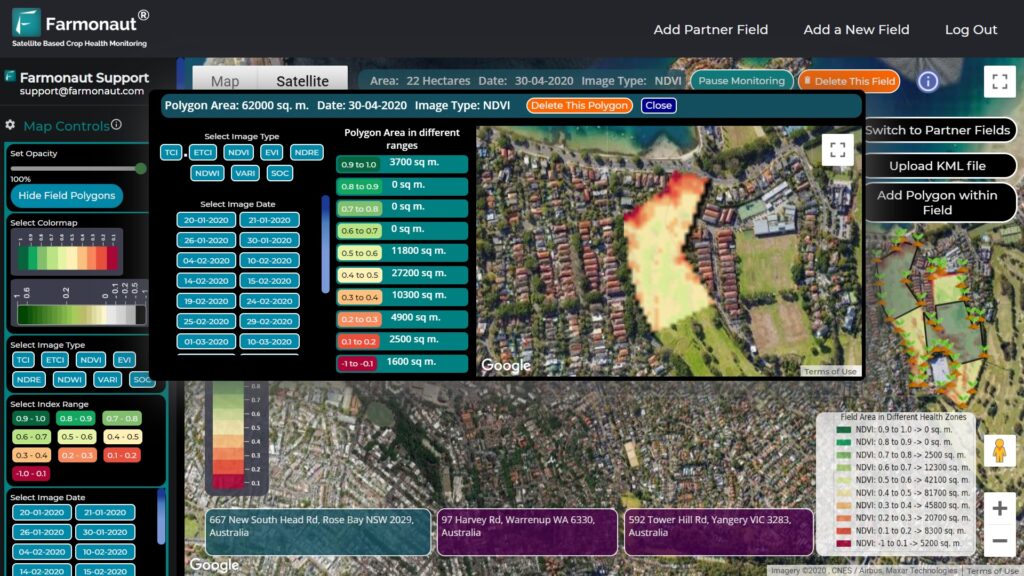
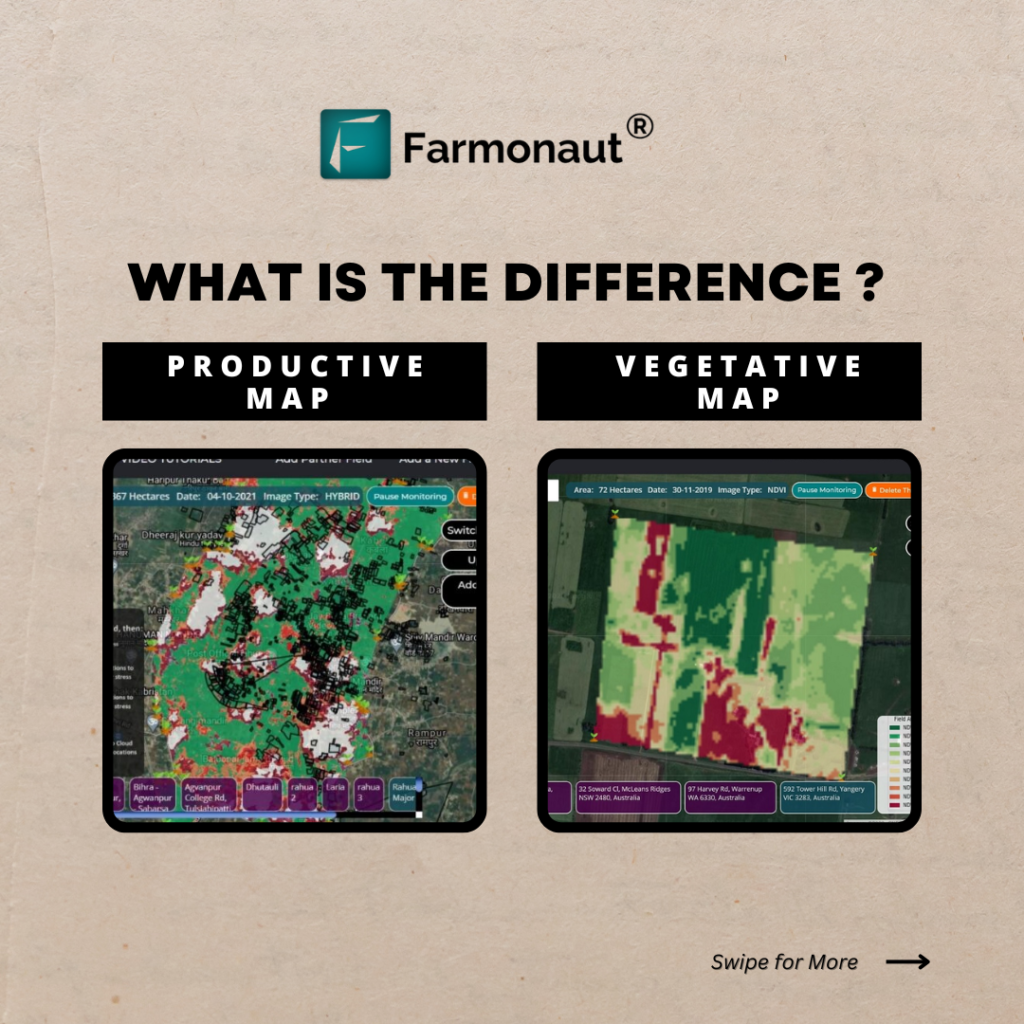
- 🌍 Satellite Monitoring: Track vegetation health (NDVI), soil conditions, and optimize spray timing for best results with hooded sprayers.
- 🤖 AI Advisory Systems: Our Jeevn AI delivers real-time strategies for farm inputs, pest outbreaks, and spray scheduling—maximizing hooded sprayer impact.
- 📦 Blockchain Traceability: Use blockchain-based traceability to secure your sustainable agriculture supply chains.
- 🚜 Fleet Management: Fleet management tools help schedule and optimize hooded sprayer application rounds, reduce downtime, and improve resource use efficiency.
- 🌱 Large-Scale Farm Management: Our agro admin platform is perfect for large-scale growers managing multiple hooded sprayer-equipped units and teams.
Combining Farmonaut’s real-time crop monitoring with hooded sprayer tech can boost yield by 8–15% while further reducing chemical footprints in 2026.

Want to quantify your carbon savings or sustainability compliance? Our carbon footprinting tools help agricultural businesses track emissions and environmental impact—essential for subsidy programs and eco-certification in 2026.
- 📊 Key Benefit: Up to 90% drift reduction with hooded sprayer usage
- 📊 Data Insight: 95%+ application accuracy when combined with satellite multispectral imagery
- 📊 Cost Savings: 40% average reduction in chemical input costs
- ⚠ Risk: Inefficient nozzle calibration can compromise sprayer precision; training is essential
- 📊 Compliance: Aligns with new environmental standards in 2026
Environmental Impact, Worker Health & Sustainable Agriculture with Hooded Sprayers
Reducing pesticide drift is far more than a regulatory checkbox—it’s a crucial step in advancing soil health, water safety, biodiversity, and the integrity of food systems.
- 🌳 Biodiversity Conservation: By reducing off-target chemical exposure, hooded sprayers protect beneficial insects, aquatic organisms, and non-crop plants.
- 🚱 Water Protection: Limits agrochemical runoff into streams, ponds, and drinking water sources.
- 🧑🌾 Worker Safety: Operators experience less exposure to hazardous chemicals due to the spray hood’s containment.
- 👨👩👧 Healthier Communities: Safer residential areas and reduced risk of chemical exposure to nearby individuals.
Field trials in 2025–2026 show hooded sprayer adoption can cut non-target area contamination by up to 90%, maintaining **long-term soil fertility and ecological balance**.
Responsible application of chemicals using hooded sprayer technology is rapidly becoming the industry standard in sustainable farming and precision forestry management.

Integration with Advanced Technologies: Sensors, Guidance & Autonomy
The future of hooded sprayer technology is integrated, automated, and data-driven. Key innovations for 2026 include:
- 🚦 GPS-Enabled Guidance: Perfect rows and minimum overlap, reducing chemical overspray
- 📡 Variable Rate Application: Sensors and AI direct sprayers to adjust dosage in real-time, based on detected crop vigor or pest infestation
- 🕹 Autonomous Sprayer Platforms: Self-driving machines equipped with hoods, nozzles, and remote monitoring for continuous, error-free operation
- 💧 Spray Quality Sensors: Real-time droplet size, pressure, and coverage analysis to ensure maximal efficiency
- 🌤 Weather Integration: Automated scheduling based on wind speed, humidity, and inversion via meteorological satellites
Farmonaut’s Role in Technological Advancement
At Farmonaut, our mission is to make satellite and AI-driven insights affordable and accessible. This includes supporting hooded sprayer strategies with:
- 🛰 Real-time crop condition insights to pinpoint ideal spray windows
- 🦾 AI-based advisories on optimal chemical application rates
- ⛓ Blockchain traceability for certified responsible usage and market trust
Example Integration:
Before deploying a hooded sprayer, a grower checks NDVI imagery and Farmonaut’s satellite data to assess crop health. Jeevn AI then recommends the best pesticide and rate, and a precision sprayer applies the chemical, with the hood minimizing drift. A sensor records application, and the blockchain secures this for buyers and certifiers.
Future Outlook: Research, Developments & Challenges for Hooded Sprayer Technology
The evolution of hooded sprayers will shape sustainable agriculture’s future by:
- 🔬 Optimized Hood Designs: Ongoing research targets airflow improvements and even greater drift reduction
- 📲 Sensor-Equipped Sprayers: For real-time spray monitoring and site-specific chemical application
- ♻ Green Agrochemicals: Compatibility with biodegradable, low-impact chemicals
- 👩🏽💻 Training & Support: New digital tools and extension services to help farmers maximize hooded sprayer value
- 💡 Adoption Barriers: Initial investment, training, and maintenance—especially for smallholders
Widespread adoption of hooded sprayer technology may be limited by upfront equipment costs and the need for specialized operator training, especially in emerging markets.
In 2026 and beyond, scaling up deployment will depend on supportive subsidies, improved user interfaces, integrated data solutions like our Farmonaut sat-platform, and global education efforts.

Farmonaut Subscription Plans & App Access
At Farmonaut, we believe advanced, satellite-based crop monitoring and decision support should be affordable and simple for all—no matter your scale of operation or location.
Our platform helps you integrate data-driven solutions with tools like hooded sprayers for unparalleled sustainable productivity.
Explore traceability solutions (protecting the authenticity of sustainably-grown crops) or get satellite-based verification for loans and insurance—all through the Farmonaut ecosystem.
For optimized plantation, forest, and agro-advisory, see our crop plantation and forest advisory app.
Frequently Asked Questions (FAQ) About Hooded Sprayer Technology
Q1. What is a hooded sprayer and how does it differ from a conventional sprayer?
A hooded sprayer is a specialized piece of equipment featuring an enclosure (hood) that channels chemical spray directly onto crops, offering precision application and drift reduction. In contrast, conventional sprayers release chemicals broadly and are prone to wind-drift, increasing the risk of contamination in soil, water, and adjacent fields.
Q2. How much can hooded sprayers reduce pesticide drift?
Modern hooded sprayers can reduce chemical drift by 60–90% over conventional sprayers. This results in less off-target contamination and better compliance with regulatory standards.
Q3. What crops or conditions are best suited to hooded sprayers?
Row crops like corn, soybeans, and cotton, as well as horticultural crops, orchards, vineyards, forestry, and urban greenspaces. They are especially beneficial where drift must be minimized, such as near residential areas, water bodies, and sensitive habitats.
Q4. Are hooded sprayers compatible with precision agriculture and digital monitoring?
Yes—hooded sprayers integrate seamlessly with GPS, satellite imagery, and sensors, enabling site-specific application and comprehensive farm management via platforms like Farmonaut.
Q5. What are the main challenges to adopting hooded sprayer technology in developing regions?
Initial cost, maintenance, and operator training can be limiting. However, digital extension services, government subsidies, and accessible platforms help bridge the gap for smallholder farmers.
Conclusion: Hooded Sprayer as a Pivotal Tool for Sustainability in 2026
The hooded sprayer stands as a cornerstone of sustainable, responsible, and high-efficiency agriculture in 2026 and beyond. Its ability to deliver ultra-precise crop protection, dramatically reduce chemical drift, and preserve the environment aligns with both market demands and regulatory responsibility.
Integration with satellite intelligence, AI advisories, and traceability tools amplifies the value of hooded sprayers for growers, cooperatives, and agri-enterprises across the spectrum. As sustainability standards and ecological concerns intensify, adoption of hooded sprayer technology—supported by platforms like Farmonaut—will help farmers meet the productivity, compliance, and stewardship goals of the next decade.
Now is the time to align your farm or business with the future: Explore Farmonaut’s platforms, apps, and APIs and elevate your crop protection, resource efficiency, and sustainability profile in 2026!