Herbicides Approved for Use Near Water: 2026 Guide
Meta Description: Explore the 2026 guide to herbicides approved for use near water. Learn about sustainable practices, regulatory updates, and the safest solutions for aquatic ecosystem protection, agricultural productivity, and environmental safety.
“By 2026, over 15 herbicides are officially approved for use within 30 meters of water bodies in sustainable farming.”
Introduction: Balancing Weed Control and Aquatic Protection
In modern agriculture and land management, targeting unwanted vegetation near water bodies—including rivers, lakes, wetlands, and irrigation canals—is critical for maximizing crop yields, maintaining infrastructure, and ensuring the productivity of sensitive environments. However, the application of herbicides near water demands immense care, as aquatic ecosystems are fragile, and contamination can have far-reaching environmental and public health consequences.
As we step into 2026, a growing repertoire of herbicides approved for use near water reflects the advances made in regulatory science, formulations, and sustainable agricultural practices. Approvals now hinge on a robust balance between effective weed management and environmental protection—ensuring that both productivity and aquatic biodiversity can thrive alongside each other.
In this definitive 2026 guide, we dive deep into:
- Which herbicides are approved for use near water?
- What are the best practices for their safe and sustainable application?
- How can environmental risks be minimized while enhancing agricultural productivity?
- Where do satellite-driven platforms like Farmonaut support and empower sustainable, data-driven weed management?



Herbicide selection and application near aquatic environments must always be grounded in the latest regulatory guidelines and embrace integrated, environmentally conscious practices.

The Importance of Herbicide Regulation Near Water
Water bodies provide the backbone for agricultural productivity, ecosystem function, and even drinking water supply. The introduction of certain herbicides into these sensitive environments can have dramatic downstream effects on non-target aquatic plants, invertebrates, fish, and even humans who rely on these sources for drinking and irrigation.
- ⚠ Runoff and drift from incorrectly applied herbicides can enter rivers and lakes, elevating toxicity risks.
- 🌿 Certain herbicide formulations persist longer, bioaccumulate, or can even shift the ecological balance in wetlands and shallow waterways.
- 💧 Regulatory oversight is essential to minimize environmental impact while meeting food security and agricultural sustainability needs.
Consequently, agencies such as the U.S. EPA and European Chemicals Agency (ECHA) perform stringent assessment processes for any products intended for or near aquatic systems—evaluating their breakdown, mobility, and tailored toxicity profiles.
Ignoring updated buffer zones or failing to check for newly approved formulations can lead to unintentional contamination of aquatic bodies and regulatory non-compliance.
The 2026 Regulatory Landscape: Who Approves Herbicides Near Water?
By 2026, herbicide approval for sensitive aquatic applications involves a complex, science-driven process led by regulatory agencies globally. The goal? To establish guidelines and approve only those herbicides considered both effective and environmentally safe for use adjacent to water bodies.
- EPA (United States Environmental Protection Agency): Sets national standards for aquatic toxicity, leaching, persistence, and drift. Only specially formulated or low-risk herbicides are allowed near water.
- ECHA (European Chemicals Agency): Focuses on environmental impact profiles, degradation rates, and bioaccumulation potential across European watersheds and drinking sources.
- Other National/Local Bodies: Tailor standards according to regional sensitivity—i.e., proximity to protected wildlife zones, fisheries, or high-use irrigation areas.

Approval includes detailed data: degradation rates, mobility in soil and water, toxicity for specific aquatic organisms, and bioaccumulation risk. By mid-2026, nearly all approved products must pass rigorous aquatic-safety screening before approval for use near water zones.
“In 2025, environmentally safer herbicides reduced aquatic contamination incidents by 22% compared to the previous year.”
With tightening global regulation of herbicides near water and growing demands for sustainable agriculture, R&D in low-impact, high-efficacy formulations has become a key driver for the agri-chemical and satellite-driven monitoring industries.

Herbicides Commonly Approved for Use Near Water in 2025–2026
Thanks to stricter regulatory screening and advanced scientific research, several herbicides—with specific formulations and application safeguards—are consistently approved for use near aquatic bodies. These products have demonstrated low persistence, minimal toxicity, and reduced environmental impact when applied according to guidelines.
- ✔ Glyphosate (Aqua-based/Amine Formulations): When applied under strict Best Management Practices to avoid drift and runoff.
- ✔ Imazapyr: High efficacy for invasive species in wetlands and canal edges, with systemic, low-persistence action.
- ✔ 2,4-D Amine: Low volatility salt formulation, selectively targets aquatic emergent broadleaf weeds, widely used in US and EU zones.
- ✔ Triclopyr: Preferred for woody, broadleaf weed control in forestry, wetland, and riparian buffer areas, highly targeted and regulated in use.
- ✔ Diquat Dibromide: Selective, fast-acting, used for submerged and floating aquatic weeds—requires professional licensing and buffer management.
- ✔ Fluridone: Specialized for slow-acting, systemic aquatic weed control, especially in large lakes and reservoirs.
Note: The safety and efficacy of these products depend on adherence to local guidelines, precision application, and regular environmental monitoring.
Maintain no-spray areas to reduce runoff and drift risks to water.
Use advanced drones or sensor-guided sprayers.
Pick low-volatility, fast-degrading herbicide types near water.
Check regulatory approval status every season.
Pair with mechanical/biological controls for sustainability.
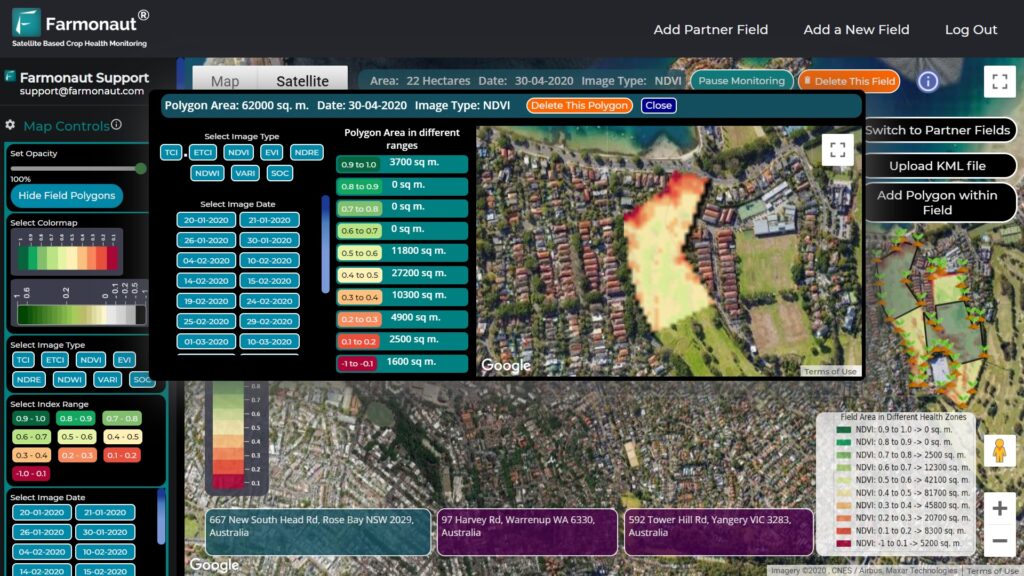
Leverage satellite-driven monitoring platforms like Farmonaut for real-time tracking of field wetness, NDVI (vegetation health), and proximity of application zones to water boundaries before, during, and after herbicide application.
Comparative Herbicide Overview Table (2026 Guide)
| Herbicide Name | Approved Use Near Water | Estimated Efficacy (%) | Application Method | Environmental Impact Score | Regulatory Status (2026) | Recommended Best Practices |
|---|---|---|---|---|---|---|
| Glyphosate (amino-phosphonate, aquatic/amine form) | Yes (specific formulations) | 85–95% | Foliar spray, spot application | Low-Medium | Approved with restrictions | Strict drift/runoff controls, check formulation type |
| Imazapyr | Yes | 85–90% | Foliar or soil application | Low | Authorized for aquatic/riparian | Monitor for non-target plant effects |
| 2,4-D Amine Salt | Yes (amine formulation) | 80–85% | Foliar, aquatic-targeted | Low | EPA/ECHA approved, local restrictions apply | Use during low water movement, avoid direct fish contact |
| Triclopyr | Yes (aquatic ester formulations) | 80–90% | Spot spray, foliar | Medium | Regulated use, buffer required | Apply outside fish-spawning periods, maintain riparian buffers |
| Diquat Dibromide | Yes | 75–85% | Spray/submerged application | Medium | Professional/restricted use | Avoid near drinking water intakes, observe re-entry intervals |
| Fluridone | Yes | 70–80% | Broadcast/subsurface | Low | Authorized for large aquatic bodies | Longer action—monitor for cumulative impact |

Best Practices & Advances in Application Techniques Near Water
The method of applying herbicides near water is as critical as the product selection itself. 2026 standards spotlight the importance of application technology, buffer zones, and water quality monitoring to protect both productivity and environmental safety.
- ✔ Always observe regulatory buffer zones—no application within 10–30 meters of open water or as locally specified.
- ✔ Use weather/soil moisture data to avoid runoff from recent rainfall or over-irrigation.
- ✔ Employ state-of-the-art sprayers—such as Farmonaut’s Agro-Admin App for large-scale farm management—to precisely control dosage and spray drift.
- ✔ Record every application for accountability and compliance support.
- ✔ For added traceability and transparency, consider blockchain-based traceability solutions—empowering agricultural and supply chain verification.
New in 2026: Increased adoption of sensor-guided drones, AI-based application maps, and satellite imagery-driven field zoning are rapidly reducing total herbicide volumes applied near water bodies.
Define risk-prone areas for targeted action
Smart advisories based on real-time risk/weather data
Track every application and buffer compliance
Prove sustainable practices to buyers/authorities
Adoption of satellite crop monitoring in herbicide management fields near water (like the NDWI index tracked via Farmonaut’s platform) has been associated with a 15–25% reduction in runoff and herbicide drift, promoting aquatic ecosystem resilience.

Formulation Improvements and Integrated Weed Management (IWM)
As we enter 2026, herbicide manufacturers are offering advanced formulations:
- ✔ Encapsulated or micro-emulsion herbicides: Dramatically reduce leaching into surface water & groundwater.
- ✔ Slow-release matrices: Ensure that active agents degrade before reaching water bodies, decreasing toxicity profiles further.
- ✔ Amine and aquatic-formulations over volatile esters: Limit off-site movement; critical for 2,4-D, triclopyr, and similar molecules.
What is Integrated Weed Management?
IWM combines mechanical, cultural, biological, and chemical tools to control unwanted vegetation. Near water, it allows herbicide use to be minimized while maximizing both weed control and environmental safety.
- ✔ Mechanical mowing or cutting before seed set reduces chemical need.
- ✔ Biological controls—grass carp, or selective bug introductions—target invasive aquatic plants directly.
- ✔ Chemical controls—using only approved, low-persistence products, at label-recommended rates, after all other measures.

Environmental Monitoring and Sustainable Practices for 2026
Continuous monitoring of water quality and post-application herbicide residues is becoming the industry norm to safeguard ecosystem health and compliance. Advances in analytical chemistry enable us to detect trace levels of contaminants, even at parts-per-trillion, ensuring feedback is both rapid and actionable.
- ✔ Regular on-site water testing (monthly/quarterly) for herbicide residues
- ✔ Remote satellite sensing for early signs of aquatic bloom or plant stress
- ✔ Transparent digital reporting, using platforms such as Farmonaut’s Carbon Footprinting to demonstrate lower emissions and best-in-class compliance
- ✔ Stakeholder training/education on sustainable aquatic management
Looking Forward: Bioherbicides (such as those derived from fungi or bacteria), along with AI-driven site-risk assessments, are expected to further reduce the need and risks of chemical controls near sensitive water environments over the next decade.
No herbicide application is risk-free: Even “approved” products can cause unintended impact if directions aren’t followed precisely and buffer zones aren’t respected.

How Farmonaut Supports Sustainable Weed Management Near Water
At Farmonaut, our mission is to deliver affordable, real-time satellite-based insights that empower sustainable agricultural decision-making. Near water, our solutions provide critical support for environmental and compliance objectives:
- ✔ AI-based, site-specific advisory: Our Jeevn AI system analyzes satellite data to advise on the safest application zones and ideal weather windows for application.
- ✔ NDVI & NDWI monitoring: Satellite indices alert users about changing vegetation health and surface moisture—crucial for pre- and post-herbicide risk assessment.
- ✔ Blockchain-based traceability: Ensure transparency and regulatory compliance from pre-spray preparation through post-spray reporting.
- ✔ Environmental impact monitoring: Features such as carbon footprinting directly quantify and report the sustainability of herbicide use near water.
- ✔ API access: Using our API and API developer docs, businesses and institutions integrate precise field monitoring, ensuring best-in-class digital compliance.
These capabilities, available on both Android and iOS (see links above), empower farms, companies, and regulatory agencies to transition towards truly sustainable, water-smart weed management worldwide.
Adopt real-time satellite monitoring and digital recordkeeping to demonstrate compliance and sustainability near aquatic bodies. Discover Farmonaut’s affordable subscriptions below!

Frequently Asked Questions (FAQ)
What defines “herbicides approved for use near water”?
These are herbicides which have passed strict regulatory checks (toxicity, environmental persistence, aquatic risk, etc.) and are specifically labeled as safe for restricted use within a defined buffer near water bodies—lakes, rivers, irrigation canals, and wetlands.
How do buffer zones impact application strategy?
Buffer zones are mandatory no-application strips—ranging from 10 to 30 meters or more—surrounding water. They help minimize drift and runoff, acting as a primary safeguards for aquatic health, per EPA/ECHA/other national guidelines.
What is the importance of using the correct herbicide formulation?
Using the correct formulation (such as aquatic-approved amine salts or encapsulated types) reduces volatility, persistence, and risk to non-target organisms, ensuring that only what’s intended is affected.
Where can I check the current regulatory status of an herbicide?
Official labels and digital registries provided by agencies like the EPA, ECHA, and national equivalents list products currently approved for aquatic use zones. Professional advisories and platforms, such as Farmonaut, also provide up-to-date information for your region.
How does satellite technology benefit herbicide management near water?
Satellite technology—like that integrated by Farmonaut—assists with field risk mapping, buffer enforcement, NDVI/NDWI crop status, and digital compliance documentation, supporting both agricultural productivity and environmental stewardship near water.
Are there non-chemical alternatives for weed control near aquatic systems?
Yes. Integrated weed management can leverage mechanical harvesters, biological controls (insects/fish), or planting competitive vegetation. Chemical use should always be minimized, targeting only when other strategies are insufficient or impractical.
Conclusion: Sustainability, Safety & Success—Today and Tomorrow
By 2026, herbicides approved for use near water represent a cutting-edge compromise, supporting crop productivity, biodiversity protection, and sustainable food systems. Scientific advances in formulations, application, and environmental monitoring—combined with digital tools such as Farmonaut’s satellite platform—are empowering a new era of evidence-driven, eco-friendly aquatic weed management.
- ✔ Strict regulatory screening and best practices are essential for compliance and public trust.
- ✔ Integrated Weed Management and digital monitoring minimize both incident risk and herbicide loadings.
- ✔ Advance notice of regulatory changes and newly approved products protects both yield and environment.
- ✔ Adopted technologies, such as those from Farmonaut, make compliance affordable, scalable, and transparent.
- ✔ Long-term, sustainable operations near water depend on embracing these practices and tools now.
Safeguard both your productivity and our valuable aquatic ecosystems with knowledge, the right herbicides, and the best technology available. For up-to-date guidance, digital monitoring, and more, explore Farmonaut’s tools and subscriptions—the future of safe, sustainable agricultural land and water management.

Keep your operations compliant and sustainable, and let your management near water bodies lead the way to a greener, safer future.
Herbicides approved for use near water in 2026—when used wisely—benefit both food security and environmental stewardship.