Flufenacet Herbicide & Diflufenican Herbicide for Weed Control: Modern, Sustainable, and Essential Tools for Crop Protection in 2025 and Beyond
Introduction: The Evolving Landscape of Modern Weed Control
In 2025 and beyond, the need for efficient weed control remains a critical factor in driving the sustainability and productivity of agriculture globally. Ensuring optimal crop yields and protecting the long-term health of farm ecosystems demand strategies that are both advanced and environmentally sound. At the forefront of this agricultural revolution stand flufenacet herbicide and diflufenican herbicide — two essential tools backed by years of scientific refinement and integration into modern weed management systems.
With agriculture continuously evolving, a deeper understanding of the chemical profiles, modes of action, and application strategies of these herbicides is vital for farmers, agronomists, and agribusiness stakeholders seeking sustainable solutions. As herbicide resistance and climate variability pose new challenges, the integration of technology and data-driven insights — including satellite solutions like those from Farmonaut — is becoming paramount.
- ✔ Flufenacet herbicide excels in pre-emergence control of key grass weeds in cereals.
- 📊 Diflufenican herbicide adds critical broadleaf action, combatting chickweed, speedwell, and more.
- ⚠ Integrated application strategies are vital to prevent weed resistance in evolving agricultural systems.
- 🌱 Sustainable practices combine chemical, cultural, and mechanical controls to safeguard yields.
- 🚀 Innovative satellite monitoring from Farmonaut ushers in an era of smarter, targeted weed management.
Chemical Profile & Modes of Action: Focus on Flufenacet Herbicide & Diflufenican Herbicide
Among the arsenal of modern herbicides used globally, flufenacet and diflufenican continue to play pivotal roles in controlling a wide spectrum of both grass and broadleaf weeds. Each of these active ingredients offers unique strengths:
Flufenacet Herbicide: Profile, Mode of Action, and Applications
- Chemical Group: Group 15 – Acetyl-CoA Carboxylase (ACCase) inhibitors
- Primary Action: Inhibiting very-long-chain fatty acid (“VLCFA”) synthesis
- Effect: Disrupts cell division and growth in germinating weeds, causing stunted development and eventual plant death
- Target Weeds: Early-season grass weeds, especially blackgrass (Alopecurus myosuroides), annual meadow-grass, Italian ryegrass, and others
- Application Window: Primarily pre-emergence or at early post-emergence, soon after cereal drilling
Flufenacet herbicide is noted for its long-residual activity and high efficacy, making it indispensable in winter wheat, barley, and rye production – especially across temperate regions that face serious grass weed challenges.

Diflufenican Herbicide: Profile, Mode of Action, and Applications
- Chemical Group: Group 12 – Inhibitors of carotenoid biosynthesis
- Primary Action: Blocks key enzymes in the synthesis of carotenoids (vital plant pigments)
- Effect: Leads to a lack of chlorophyll in affected weeds; results in bleaching, followed by tissue death
- Target Weeds: Broadleaf weeds including chickweed, speedwell, cleavers, mayweed, and certain grass species
- Application Window: Pre- and early post-emergence in cereals; especially effective in winter crops
Diflufenican herbicide, often used alongside flufenacet, is crucial for controlling notorious and competitive broadleaf weeds that would otherwise escape control and compromise yields. Its unique mode of action breaks weed growth cycles and facilitates resistance management within integrated weed management (IWM) frameworks.
Comparative Efficacy & Features Table: Flufenacet Herbicide, Diflufenican Herbicide, and Conventional Solutions
| Herbicide Name | Mode of Action | Target Weeds | Estimated Efficacy (% Weed Control) | Resistance Management Potential | Environmental Impact | Recommended Application Stage | Compatibility with Precision Agriculture |
|---|---|---|---|---|---|---|---|
| Flufenacet | Group 15 – VLCFA synthesis inhibitor (ACCase) | Grass weeds (e.g., blackgrass, Italian ryegrass, annual meadow-grass) | 85–95% | High (when used in rotation/with mixtures) | Moderate to low (good biodegradability in new 2025+ formulations) | Pre-emergence/early post-emergence | Excellent; enables site-specific application via GPS/AI |
| Diflufenican | Group 12 – Carotenoid biosynthesis inhibitor | Broadleaf weeds (e.g., chickweed, speedwell, cleavers) and some grasses | 80–92% | High (especially when combined with other modes of action) | Low (especially in formulations from 2025 onwards) | Pre-emergence/early post-emergence | Excellent; supports variable rate and patch spraying tech |
| Conventional Herbicide (e.g., 2,4-D, Group 4 Auxin) | Auxin mimic (hormonal disruptor) | Select broadleaf weeds | 65–75% | Moderate to low (widespread resistance issues) | Higher (older chemistries, longer persistence in soil) | Post-emergence mainly | Limited (not always compatible with digital ag tools) |
Application Strategies in Modern Crop Systems: Maximizing Flufenacet Herbicide & Diflufenican Herbicide Efficiency
Optimizing Usage Within Crop Production
Application timing and method present crucial considerations for ensuring the optimal performance of flufenacet and diflufenican herbicides. Across winter wheat, barley, and rye, the following key points summarize effective usage:
- Pre-Emergence Application: The ideal window is immediately after cereal crop drilling but before weed germination begins – targeting grass and broadleaf weeds before they become competitive.
- Tank Mix Compatibility: Often combined in pre-formulated packs or tank mixed for enhanced weed spectrum control and resistance management; may also include other herbicides like prosulfocarb, metribuzin, or pendimethalin as part of an IWM strategy.
- Dosage Precision: 2025+ recommendations encourage adapting rates based on soil type, organic matter, and expected rainfall, with precision ag tools minimizing off-target movement.
- Cereal Crop Focus: Best suited for winter cereals (wheat, barley, rye), particularly in regions such as Europe, North America, and temperate zones of Asia and Oceania.
- Safety Margins: Flufenacet and diflufenican feature higher selectivity to cereal crops, but care is required to avoid overlap or drift onto sensitive crops and non-target field margins.

Key Insight
Combining flufenacet herbicide and diflufenican herbicide delivers a synergistic effect by harnessing distinct modes of action, providing robust protection against both grass and broadleaf weeds within winter cereal systems.
Pro Tip
For maximum weed control efficacy in 2025 and beyond, utilize digital tools (including farm management technology) to monitor emerging weed pressure and adjust herbicide application rates accordingly. This approach enhances efficiency and supports sustainable practices.
Common Mistake
Ignoring the importance of correct application timing for flufenacet and diflufenican herbicides often results in reduced weed control — especially if rainfall or irrigation rapidly moves the product beyond the weed germination zone, or if application is made too late after crop sowing.
Investor Note
Sustainable weed management in 2025+ relies on innovative satellite monitoring and API-driven solutions, such as those provided by Farmonaut’s satellite API. These platforms support data-driven decision-making for input use, layout design, and environmental compliance in agriculture and geospatial industries.
Sustainability Alert
Replacing older, high-residue herbicides with flufenacet and diflufenican formulations (optimized for biodegradability and precision application in 2025+) directly supports climate-smart, low-input, and environmentally responsible crop production practices.
Key Features Checklist for 2025+ Flufenacet & Diflufenican Herbicide Programs
- ✔ Pre-emergence action: Attacks weeds before they emerge and compete.
- 📊 High residual activity: Extended in-season weed protection and yield security.
- 🌀 Resistance mitigation: Two distinct modes of action delay onset of resistance.
- 🌍 Environmentally improved: New formulations lower leaching and groundwater risk.
- 🚜 Precision tech compatible: Easily integrated with farm management apps and smart sprayers.
🌾 2025+ Innovations in Herbicide Application: Visual List
- 🌱 Real-time monitoring: Satellite-driven insights (e.g., Farmonaut platform) support proactive weed scouting
- 🤖 AI-based weed detection: Precision targeting of herbicide to infested patches, reducing chemical usage
- 💧 Variable rate spraying: Adjusts chemical delivery on-the-go, boosting both efficacy and sustainability
- 🔗 Blockchain traceability: Certified product histories for food safety and regulatory compliance (learn more)
- ⏲ Weather-synchronized application: Minimized drift and optimal uptake under variable climate

By integrating satellite data, AI field scouting, and actionable advisory systems, today’s farmers and agribusinesses can track weed emergence, resistance “hot spots”, and the actual impact of every herbicide application.
Integrating IWM & Achieving Sustainable Weed Management in Agriculture
Why Resistance Management Remains Vital for Flufenacet & Diflufenican Herbicides
Herbicide resistance is a global agricultural concern, with multiple weed species having evolved to survive repeated chemical treatments by single-mode herbicide groups. The efficient, sustainable use of flufenacet and diflufenican relies on a toolbox approach—rotating crops, alternating modes, and integrating non-chemical controls to delay resistance evolution.
- Chemical Mixtures: Using flufenacet herbicide and diflufenican herbicide in combination provides broad-spectrum coverage and reduces the odds of resistant individuals surviving.
- Cultural Practices: Crop rotation, delayed drilling, and stale seedbed techniques disrupt weed cycles and lower seed banks.
- Targeted Mechanical Controls: Banding, inter-row cultivation, and residue management physically suppress problem weeds.
- Integrated Use: Alternating applications with herbicides from different groups further suppresses resistance emergence.
⚠ Environmental Considerations: Lower Risk Profiles in 2025+
Newly-formulated flufenacet and diflufenican products offer reduced risks to soil life, aquatic organisms, and non-target flora. They leach less, degrade faster, and align with stricter global environmental frameworks. Compliance is monitored using satellite-based environmental impact tracking, which Farmonaut offers to help growers track emissions and demonstrate sustainable practices.

Future Outlook: Technology, Innovation, & Sustainable Crop Protection in 2026 and Beyond
What will define weed management, resistance mitigation, and crop herbicide usage in the years 2026 and beyond? The trends are clear:
- Smart Sensors & Drones: Next-gen field scouting — AI-empowered drones combine precise spatial targeting with real-time analytics for herbicide deployment only where needed.
- Formulation Science: Ongoing innovation continuously improves biological safety and delivery, with microencapsulation reducing drift and enhancing persistence against rain.
- Digital Workflow Tools: Satellite and cloud-based platforms like Farmonaut allow seamless integration of monitoring, advisory, and compliance for large- and small-scale farms worldwide.
- Global Regulatory Shifts: Stringent frameworks will push for lower-input, high-precision solutions, especially in European, North American, and emerging Asian markets.
- Traceability: Blockchain solutions (Farmonaut Traceability) will certify chemical usage, seed provenance, and farm sustainability for food supply chain transparency.

How Farmonaut Empowers Efficient Weed Management in a Digital Age
As satellite technology leaders, we at Farmonaut provide cutting-edge solutions tailored for data-driven, environmentally responsible herbicide application in agriculture.
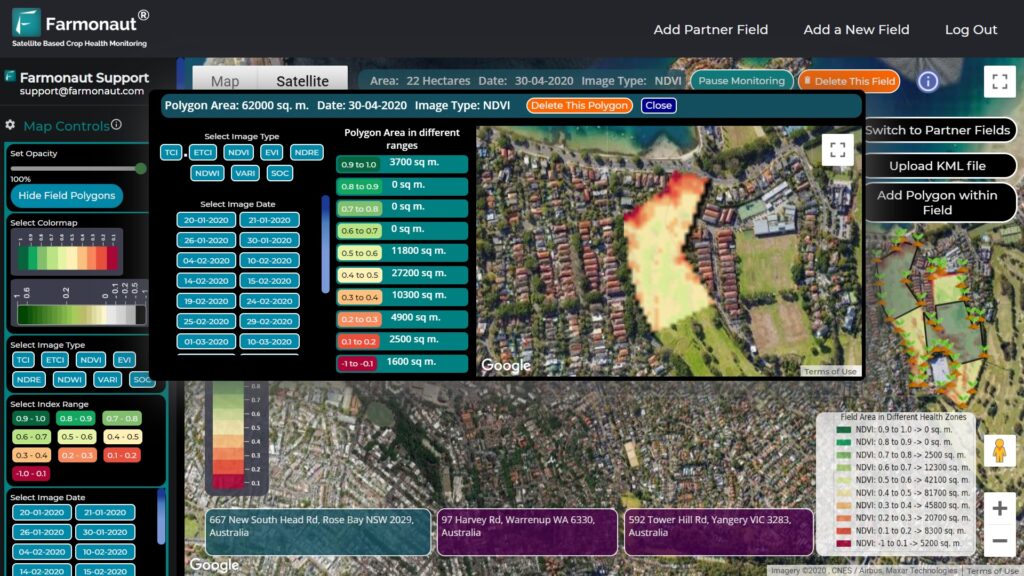
- 🌍 Satellite-Based Monitoring: We enable farmers and agronomists to assess weed pressure, vegetation health (NDVI), and soil moisture in real time for optimal herbicide deployment.
- 🤖 Jeevn AI Advisory System: Our AI platform delivers field-specific advising — including weather, disease risk, and herbicide timing for targeted applications.
- 🔗 Blockchain Traceability: We support food safety initiatives via transparent records of herbicide usage, certified seed sources, and supply chain journeys. Read about our traceability solutions.
- 🚜 Fleet & Resource Management: Our platform helps optimize the movement and usage of sprayers and machinery, integrating with herbicide application workflow. Farmonaut Fleet Management offers digital dashboards for logistics and efficiency.
- ☁ APIs for Developers & Businesses: Easily connect Farmonaut’s satellite insights to any enterprise solution via our comprehensive API (API Developer Docs).
- 📱 Accessibility for All: Our cloud platform, Android, and iOS apps make satellite and AI tools affordable for any scale, anywhere (App:



)
Scalability, cost-effectiveness, and environmental consciousness remain at the core of our mission — making satellite insights, blockchain authenticity, and AI-driven management accessible for both family farms and corporate agribusinesses worldwide.

- 🌱 Farmonaut’s Carbon Footprinting Solution: Calculate and track your field-, farm-, or supply chain-level carbon impacts as you optimize herbicide inputs. Carbon Footprinting With Farmonaut
- 🏷 Traceability for Regulatory and Consumer Trust: Blockchain-based traceability records chemical usage, crop origin, and supply chain journeys, promoting food safety and market access. Farmonaut Traceability Solutions
- 🛡 Crop Loan and Insurance Support: Secure faster and more accurate field verification for agricultural loans and insurance claims using Farmonaut’s satellite-based verification system. Farmonaut’s Crop Loan and Insurance Verification
- 🗺 Large-Scale Farm Management: For agri-enterprises managing thousands of hectares — Farmonaut’s enterprise solution supports multi-site weed mapping, input logistics, and detailed compliance reporting. Farmonaut Large-Scale Farm Management
Frequently Asked Questions: Flufenacet, Diflufenican & Future-Proofing Weed Management
Flufenacet herbicide is a Group 15 ACCase inhibitor with a unique mode of action targeting VLCFA (very-long-chain fatty acid) synthesis in germinating weed seedlings, especially grass species. This differs from conventional herbicides like 2,4-D (auxin mimics) which typically focus on hormonal disruption in emerged weeds. Flufenacet offers higher selectivity, stronger residual control, and reduced environmental impact in modern formulations.
Yes. Diflufenican herbicide acts as a Group 12 carotenoid biosynthesis inhibitor. Using it in combination with flufenacet and practicing integrated weed management (IWM) considerably delays resistance development in both grass and broadleaf weed populations. However, regular rotation of herbicide groups and inclusion of non-chemical controls are essential for sustained effectiveness.
Yes. Regulatory agencies globally are imposing stricter limits on leaching, persistence, and collateral impacts. The latest 2025+ formulations of these herbicides are optimized for swift biodegradability and precision delivery, supporting compliance with upcoming frameworks and programs aimed at reducing agrochemical footprints.
Absolutely. Using precision agriculture tools (such as satellite-guided applications, AI-powered drones, and Farmonaut’s field monitoring platform), growers can reduce unnecessary herbicide usage, target only affected zones, and gain full traceability of chemical applications—thus minimizing cost and off-target contamination.
Satellite platforms like Farmonaut enable growers to visualize weed emergence, estimate biomass, and monitor field boundaries in real time. Coupled with AI advisory systems, this data streamlines chemical use, ensures better input ROI, and supports evidence-based compliance with sustainability benchmarks.
Bookmark leading ag tech platforms, regulatory updates, and subscribe to Farmonaut’s regular digital newsletters for the latest in cereal crop protection, resistance management, and digital innovation.
Conclusion: Flufenacet and Diflufenican Herbicide—Essential Tools, Sustainable Practice
The integration of flufenacet herbicide and diflufenican herbicide into modern, precision-driven, environmentally focused farming systems will remain central to sustainable food production through 2026 and beyond. Their unique complementary modes of action, strong efficacy, and compatibility with advanced ag technologies have made them indispensable in cereal protection, resistance management, and yield security.
Looking forward, the fusion of digital insights, satellite monitoring, and smart chemical application will ensure that weed control becomes not just more efficient, but also more sustainable and transparent — safeguarding resources, optimizing yields, and delivering quality produce to global markets.
For those embracing technology-powered agriculture, solutions such as Farmonaut provide the tools needed to remain ahead of both agronomic and regulatory change, while fostering profitability and environmental stewardship.
Try Farmonaut: Advanced Satellite Monitoring, Blockchain Traceability & AI for Your Agriculture