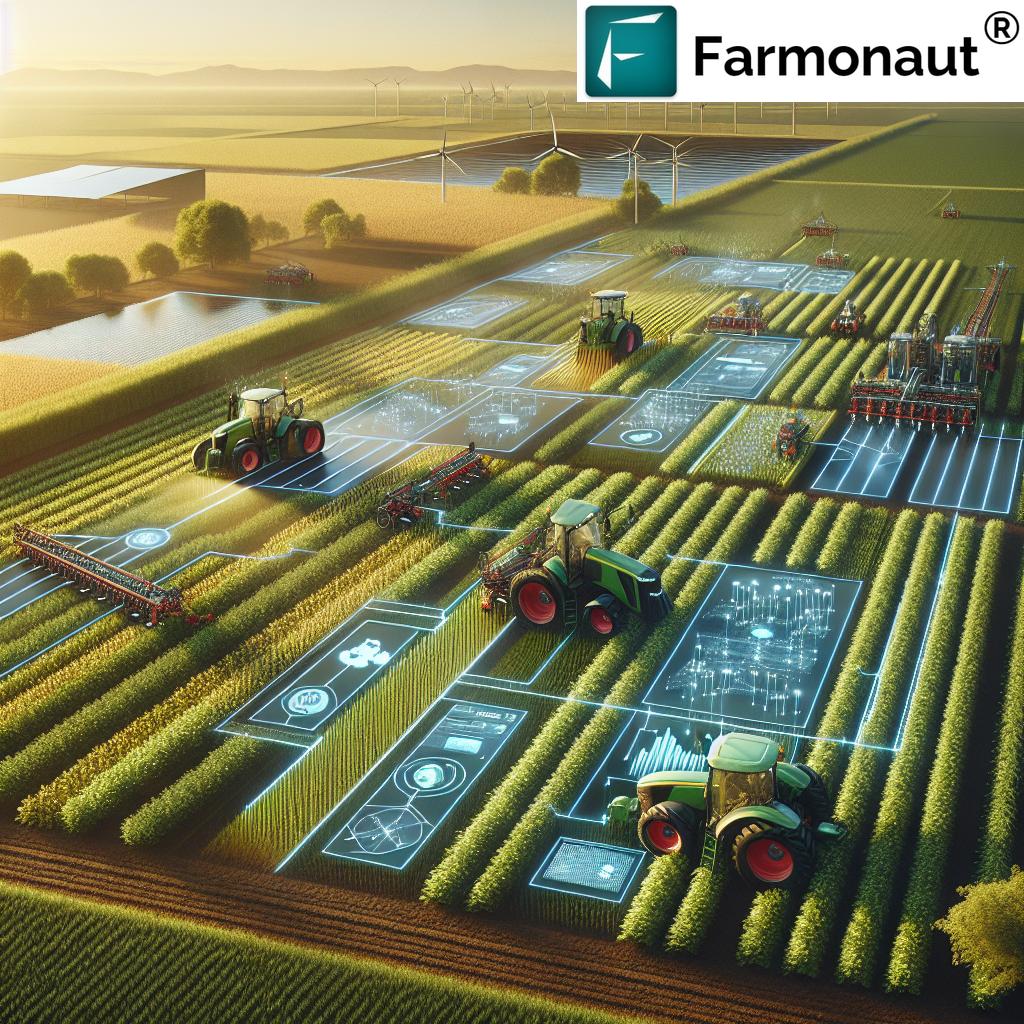
Fertilizing Winter Rye: Top 2026 Innovations
Table of Contents
- Trivia: Tech Boosts in Winter Rye Fertilization
- Introduction
- Importance of Fertilizing Winter Rye
- Comprehensive Soil Testing & Nutrient Requirements
- Timing of Fertilizer Application for Winter Rye
- Organic Amendments & Integrated Nutrient Management
- Precision Agriculture & Innovative Technologies
- Comparison Table of Winter Rye Fertilization Innovations (2025-2026)
- Climate Resilience & Environmental Stewardship
- Emerging Strategies to Optimize Winter Rye Production
- How Farmonaut Supports Fertilizing Winter Rye
- Top 5 Best Practices: Fertilizing Winter Rye
- Frequently Asked Questions (FAQ)
- Conclusion & Next Steps
Winter rye (Secale cereale) is emerging as a pivotal, highly valued crop in temperate agriculture. Renowned for its resilience, cold climate hardiness, robust soil protection, and essential cover crop role, winter rye remains indispensable for sustainable farming systems in 2025 and beyond. But as environmental regulations tighten and demands for better yields rise, the fertilizer strategies we use must evolve to maximize effectiveness, improve soil health, and minimize loss or environmental impact.
This blog article explores the latest best practices and top 2026 innovations for fertilizing winter rye. Our goal is to guide farmers, agronomists, and agricultural innovators in optimizing nutrient management, leveraging precision technology, and boosting rye yields – while firmly committed to environmental stewardship.



Adopting precision fertilization strategies in winter rye farming not only boosts yield efficiency and soil health but also protects water systems by minimizing nutrient loss and leaching.
The Importance of Fertilizing Winter Rye for Sustainable Agriculture
Winter rye, typically sown in late summer or early fall, grows vigorously through the fall and resumes rapid growth with the first signs of spring. This cover crop plays a multifaceted role:
- ✔ Soil Protection: Shields soil from winter erosion.
- ✔ Nutrient Cycling: Scavenges excess N, P, and K, returning organic carbon during biomass decomposition.
- ✔ Hardiness: Thrives in cold, temperate climates, offering insurance against unpredictable weather events.
- ✔ Improved Structure: Enhances soil structure and aeration via deep, fibrous root systems.
- ✔ Resilient Growth: Excellent biomass production even on acidic, depleted soils.
Proper fertilization is critical to:
- Support rapid early growth and root establishment.
- Maximize above- and below-ground biomass.
- Ensure rye contributes effectively to organic matter cycling and improved soil health for the next cycle of crops.
Neglecting comprehensive soil testing and over-relying on one-size-fits-all fertilizer rates. Tailor your fertilizing approach to site-specific soil and environmental needs for best results.
Comprehensive Soil Testing & Understanding Nutrient Requirements
Before applying fertilizers, it’s essential to assess existing soil nutrient levels, pH, and organic matter content. Soil testing is foundational for precision fertilizing winter rye and for optimizing both performance and resource use:
- 📉 Nitrogen (N): Typically the most limiting factor. Proper N management boosts early growth, supports high yields, but must be carefully managed to avoid leaching losses.
- 📉 Phosphorus (P): Critical for root development, stress tolerance, and especially crucial in acidic soils or those depleted by past cropping history.
- 📉 Potassium (K): Promotes stress resistance and robust overall plant health.

Advanced 2025-2026 innovations leverage precision soil testing tools—for instance, using satellite data and on-site IoT sensors—to map field variability. This enables targeted application of fertilizers exactly where and when they are most needed, reducing waste and cost while enhancing nutrient use efficiency.
- 💡 Pro Tip: Use digital soil testing tools to generate geospatial nutrient maps, identifying low-nutrient patches and guiding variable-rate fertilizer applications.
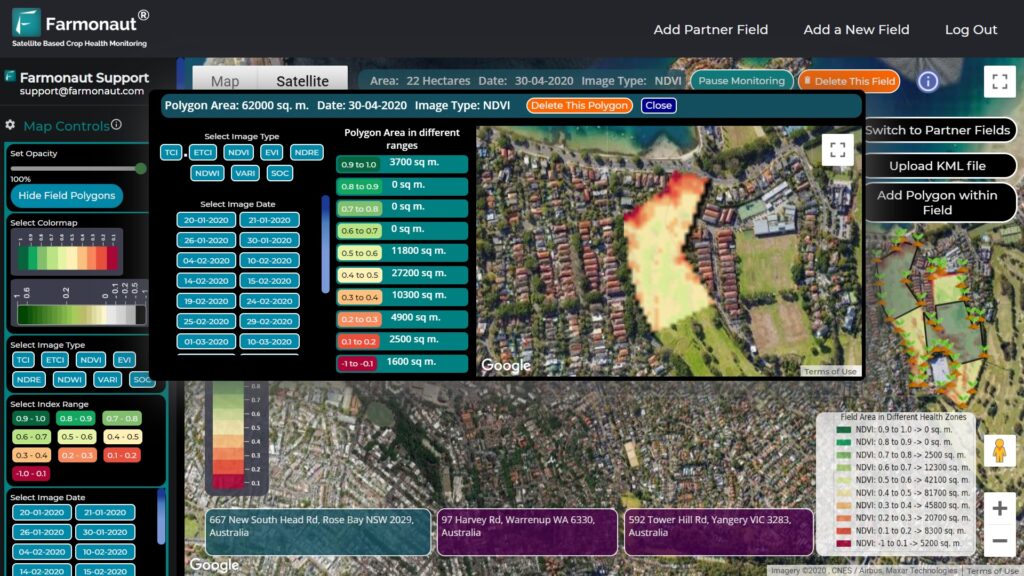
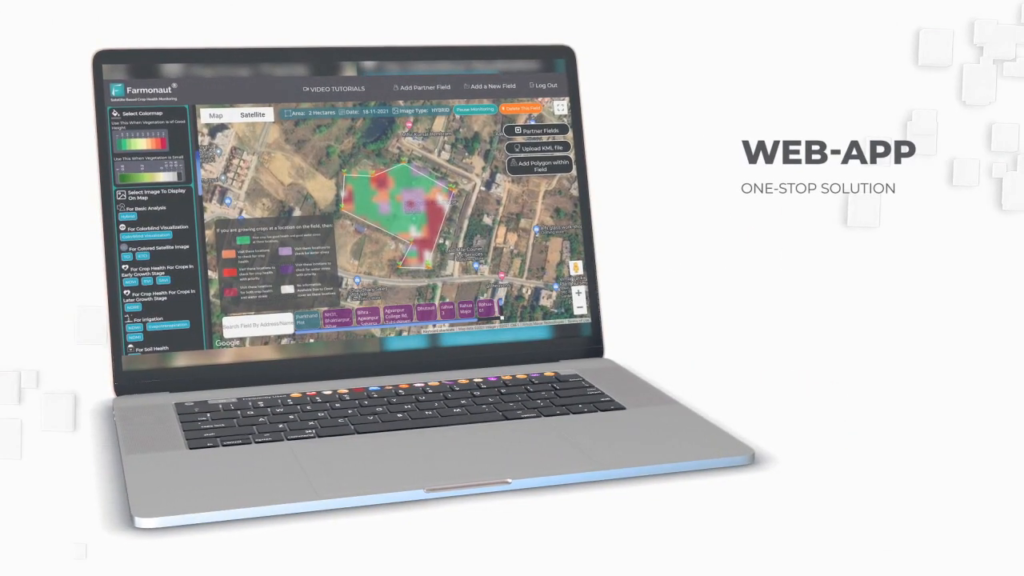
For deeper, field-scale intelligence, Farmonaut offers real-time vegetation and soil condition monitoring via multispectral satellite imagery—accessed conveniently through our mobile and web apps or via powerful APIs for custom integrations.
Innovations in precision fertilization and satellite-based monitoring are rapidly shaping the value chain for input suppliers and agri-investors, promising higher ROI, data-driven efficiency, and lower environmental risk.

- ✔ Improved accuracy in fertilizer planning reduces input costs.
- ✔ Enhanced nutrient efficiency by applying only what is required.
- ✔ Reduced risk of over-fertilizing & nutrient burn.
- ✔ Better yields and ROI for rye-based systems.
- ✔ Supports environmental compliance under strict new regulations.
Timing of Fertilizer Application for Winter Rye in 2025-2026
Application timing is key for maximizing nutrient uptake in winter rye. A strategic approach ensures nutrients are available when most needed by the crop—and minimizes losses due to leaching or runoff:
- Pre-Plant Fertilizing: Focus on phosphorus and potassium at or just before seeding to stimulate root establishment and early growth.
- Nitrogen Management: Adopt a split application strategy: apply a modest portion at sowing and the remainder in early spring, aligned with rye’s vegetative growth peak.
- Incorporation of Controlled-Release Fertilizers: Using advanced coated N fertilizers and nitrification inhibitors helps synchronize nutrient availability with crop uptake patterns, reducing risk of loss.

With digital monitoring (NDVI, soil moisture, and weather data), you can fine-tune split N applications for sustainable fertilization—and using Farmonaut’s satellite monitoring solutions offers a scalable, cost-effective way to track these indicators for any field size.
- 📈 Boosts early growth & establishment.
- 📊 Reduces nitrogen leaching risk during winter.
- 📅 Meets peak spring nutrient demand.
- ⚠ Mitigates environmental losses.
Organic Amendments & Integrated Nutrient Management Strategies
Integrating organic fertilizers such as compost, manure, or biosolids into your fertilization plan offers multi-dimensional value:
- 🌿 Improves soil structure and biology, boosting microbial diversity and activity for continuous nutrient cycling.
- 🌿 Provides slow-release nutrients—vital for maintaining consistent rye growth.
- 🌿 Enhances organic matter content, which is critical for water retention, aeration, and root health.
- 🌿 Reduces dependency on synthetic inputs, aligning with sustainable farming mandates.
In 2025 and beyond, integrated nutrient management (INM) combines organic and mineral fertilizers to maximize both immediate and long-term benefits. As a cover crop, winter rye itself enhances organic matter as its residues decompose—optimizing this process amplifies fertility gains for subsequent cash crops.
Combining organic and synthetic inputs in an integrated approach can improve soil structure, foster resilience against drought, and consistently boost yield in winter rye rotations.

- 🌱 Greater sustainability and resilience.
- 🌎 Lower environmental impact compared to all-synthetic programs.
- 💧 Improved water retention and drought buffering.
- 🌾 Boosted organic matter content after rye cover decomposition.
- 🧬 Enhanced soil biology for future crop health.
Precision Agriculture & Innovations in Fertilizing Winter Rye
From AI-powered diagnostics to smart drones and blockchain-enabled traceability, precision agriculture is redefining how we optimize fertilization and nutrient management in rye systems.
These advancements are particularly vital as regulatory, economic, and climate pressures mount through 2025, 2026, and beyond.

- 🤖 AI-Based Nutrient Mapping: Identifies site-specific deficiencies and informs variable-rate fertilizer application.
- 🚁 Drone-Based Fertilizer Delivery: Achieves hyper-local targeting—vital for irregular or difficult terrain.
- 🌍 Satellite Imaging (e.g., NDVI, soil moisture analysis): Monitors crop progress, detects nutrient uptake issues, and guides real-time intervention.
- 📲 Internet of Things (IoT) Sensors: Collects continuous soil and environmental data to inform planting, irrigation, and fertilizer scheduling.
- 🔗 Blockchain Traceability: Ensures transparent nutrient management throughout the rye supply chain.
How Farmonaut Technology Supports Fertilizing Winter Rye
At Farmonaut, we deliver real-time, satellite-driven insights—enabling farmers and agricultural businesses to optimize fertilizing winter rye through:
- Satellite-Based Monitoring: Multispectral imagery for soil condition analysis, moisture tracking, and NDVI for biomass growth monitoring.
- AI-Powered Recommendations: Our Jeevn AI system offers customized fertilization schedules and nutrient management advice, tailored to evolving soil and crop needs.
- Blockchain Traceability: Transparent and secure fertilizer use across the supply chain; learn more about Farmonaut Traceability.
- Fleet Management: Optimize logistics and application timing for both synthetic and organic fertilizers with our Fleet Management tools.
- Environmental Impact Tracking: Carbon footprint monitoring and adaptive management through Farmonaut’s Carbon Footprinting.
- API Integrations: Easily connect data-driven tools into existing farm management systems using our ready-made API developer documentation.

In adopting precision technology for fertilizing winter rye, you not only boost performance and resilience but also demonstrate long-term environmental stewardship—a must in today’s fast-evolving agriculture ecosystem.
Streamline the integration of AI, satellite, and real-time data into your fertilizer management plan with Farmonaut’s scalable subscription options. See below for instant access plans:
Comparison Table of Winter Rye Fertilization Innovations (2025-2026)
| Innovation/Technology Name | Brief Description | Estimated Yield Improvement (%) | Estimated Nutrient Efficiency Gain (%) | Environmental Impact | Tech Availability |
|---|---|---|---|---|---|
| Precision Soil Sensors | In-field multisensor networks for near-real-time soil monitoring (N, P, K, pH, moisture). | 10-15 | 18-25 | Low (Reduces over-application, leaching) | 2025 |
| AI-Based Nutrient Mapping | AI analyzes field and crop data to optimize variable-rate fertilizer application. | 16-18 | 30-32 | Low | 2026 |
| Biological Amendments | Application of bio-stimulants (e.g., mycorrhizae, rhizobacteria) to boost soil health and nutrient uptake. | 9-12 | 22-26 | Low | 2025 |
| Drone-Based Fertilizer Delivery | Targeted aerial applications for inaccessible or spatially variable fields. | 13-16 | 18-21 | Medium (Reduces soil compaction) | 2025 |
| Controlled-Release Fertilizers | Polymer-coated N fertilizers for slow, steady nutrient release. | 10-12 | 14-17 | Low | 2025 |
| Decision Support Systems (DSS) | AI tools deliver real-time application timing and rate optimization. | 13-17 | 25-29 | Low | 2026 |
| Integrated Nutrient Management (INM) | Combines synthetic and organic amendments for improved cycling and soil health. | 10-15 | 20-22 | Low | 2025 |
| Blockchain Traceability | Transaction records and transparent fertilizer use along the chain. | N/A | N/A | High (Supports regulatory compliance) | 2025 |
Climate Resilience & Environmental Stewardship in Winter Rye Fertilization
As the climate changes, sustainable fertilizing winter rye grows ever more complex. Key environmental concerns include:
- 🌍 Greenhouse Gas Emissions: Nitrous oxide emissions from excessive or poorly timed N use.
- 🌲 Water Quality Risks: Runoff of N, P, and K into water bodies contributing to eutrophication.
- 💧 Soil Degradation: Intensive, single-approach fertilization leading to declining soil health.

Advanced 2026-focused fertilization strategies are now anchored by:
- AI-based decision support systems that predict optimal application rates and timing depending on weather, soil moisture, and anticipated plant growth.
- Adaptive fertilization programs to respond to seasonal variability.
- Real-time environmental impact monitoring powered by satellite data, as available in Farmonaut’s environmental modules (Farmonaut Carbon Footprinting).
Adopting traceable and sustainable fertilization practices is not just good stewardship—it’s essential for regulatory compliance as environmental laws become stricter worldwide.

Emerging Strategies to Optimize Winter Rye Production for 2025 and Beyond
The future of fertilizing winter rye lies in multifaceted, data-driven strategies that enhance productivity, sustainability, and economic efficiency.
Here’s a look at standout 2026+ tactics:
- 🚀 Variable Rate Fertilizer Application: Automated field mapping and prescription maps minimize waste and environmental impact.
- 🧬 Soil Microbial Enhancements: Biological inoculants and biofertilizers optimize soil health and yield potential.
- 🌦 Real-Time Weather Integration: In-application weather triggers to avoid loss and synchronize with crop growth peaks.
- 📜 Blockchain Recordkeeping: Enhanced transparency on fertilizer sourcing, application, and environmental impact for certification and market access (learn more).
- 🛰 Continuous Remote Monitoring: Satellite metrics track crop progress, identify emerging nutrient deficiencies, and alert for in-season corrections.
Top 5 Best Practices: Fertilizing Winter Rye for Maximum Yield and Sustainability
- Base Decisions on Comprehensive Soil Testing—leverage digital tools and farm history for tailored N, P, K recommendations, then retest annually to refine baselines.
- Adopt Split Nitrogen Applications—apply an initial dose at planting and top up in early spring, matching rapid biomass growth stages.
- Integrate Organic and Synthetic Fertilizers for improved structure, water retention, and root health; include cover cropping in rotations for ongoing benefit.
- Use AI-Driven, Data-Informed Management Platforms—such as those provided by Farmonaut—for real-time monitoring, adaptive guidance, and compliance documentation.
- Monitor Environmental Metrics Continuously—ensure compliance, sustainable yields, and responsible input use, including carbon tracking.
Early adopters of precision fertilization, satellite monitoring, and blockchain traceability can unlock premium markets and reduce environmental enforcement risks.
Maximize actionable insights, compliance, and efficiency by using Farmonaut’s platform and custom Large Scale Farm Management solutions. These tools generate site-specific recommendations, automate recordkeeping, and allow managers to adapt quickly to changing weather or policy requirements.
With continuous satellite and AI data streams, you can trace every fertilizer application and predict yield response—critical for insurance, loans, and sustainability certifications.
Frequently Asked Questions (FAQ) on Fertilizing Winter Rye
- Q: When is the best timing to fertilize winter rye?
A: Apply phosphorus and potassium at seeding or pre-plant, then split nitrogen between sowing (fall) and early spring for optimal uptake and minimal loss. - Q: How much nitrogen is ideal for winter rye in 2026?
A: Rates depend on soil testing, yield goals, and rotation, but typical total N ranges 40–90 kg/ha—including adjustments for residual soil N and organic sources. - Q: Are organic amendments enough for high yields?
A: Alone, they may not supply peak demand, but in integrated systems they enhance soil health, buffer inputs, and improve nutrient cycling—boosting both short and long-term yields. - Q: Do I need precision tech for small fields?
A: Even smallholders benefit from digital soil testing, simple GIS maps, and mobile monitoring: efficiency gains add up at any scale. - Q: What role does Farmonaut play in fertilizing winter rye?
A: We provide satellite-based monitoring, AI-powered advisory, and resource management tools for all scales, making precision, compliance, and sustainability easy and affordable. - Q: How does carbon tracking relate to fertilizer use?
A: Carbon footprinting modules (like Farmonaut’s) help verify and reduce emissions from fertilizer choices, an emerging requirement for many export and premium domestic markets.
Repeating prior-year fertilizer plans without adjusting for updated testing, crop removal, and organic additions—every season’s needs are unique!
Conclusion & Next Steps: The Future of Fertilizing Winter Rye
Fertilizing winter rye in 2026 is a high-tech, adaptive process requiring an optimal blend of precision soil testing, innovative nutrient management, the best organic and synthetic strategies, and ongoing environmental monitoring. With the surge of accessible AI, satellite data, decision-support systems, and blockchain recordkeeping—plus a new urgency for regulatory compliance—the tools for success are available to all sizes of farm operations.
With Farmonaut’s platform, real-time updates, and innovative advisory services, modern farmers are empowered to make data-driven, sustainable decisions that maximize yields, enhance soil health, and secure a resilient agricultural future for the coming decades.
Ready to modernize your winter rye fertilization strategy and streamline compliance?
Explore Farmonaut’s full suite: from apps for mobile and desktop, to APIs for enterprise, and dedicated modules for carbon tracking, resource management, and traceability.
Put advanced data analysis, real-time monitoring, and compliant recordkeeping at your fingertips for every field—a future-proof foundation for fertilizing winter rye in 2026 and beyond.
- 🛰 Satellite-based fertilizer planning for rye crops—improve accuracy, reduce waste
- 🤖 AI-driven insights ensure every rye field gets precise inputs, at the right time
- 🌾 Blockchain traceability far ahead of market standards for supply chain transparency
- 💼 Scalable tools for smallholders, large farms, and agencies alike
- 🌎 Environmental impact tracking supports compliance and sustainability goals
Optimize. Enhance. Sustain. Make your next winter rye harvest your strongest ever—start with Farmonaut today.