Farming Volatile Water: 7 Game-Changing Solutions for 2026
Summary: Volatile Water Farming for 2025 and Beyond
Volatile water farming is fast emerging as a transformative solution to the global challenge of freshwater scarcity. As climate change continues to deepen and traditional water resources become increasingly scarce, farming volatile water – that is, harnessing atmospheric moisture in the form of vapor, humidity, dew, and fog – stands out as a critical, innovative approach to sustainable agriculture.
As we move toward 2026, new technologies—spanning advanced materials, automation, and satellite-driven insights—enable farmers in arid and semi-arid regions to tap directly into ambient humidity, bypassing the limits of surface and groundwater supplies. This isn’t just a stop-gap; it’s a paradigm shift that holds the key to improving global food security, enabling future-ready irrigation systems, and redefining farming for an uncertain climate.
In this in-depth guide, we explore the foundations of volatile water farming, discover the latest breakthroughs, compare the top seven solutions for 2026, and explain how satellite technology platforms (like ours at Farmonaut) are optimizing these systems for maximum impact.
Understanding Volatile Water Farming
Farming, for millennia, has relied on predictable access to water—from rainfall, rivers, lakes, and aquifers. But in many parts of the world, these traditional sources have become unreliable or depleted as a result of changing climate patterns and overuse.
Volatile water farming—sometimes called farming volatile air or volatile air farming—refers to the collection and utilization of the atmospheric moisture that constantly surrounds us. By leveraging innovative techniques and technologies, we can tap into vapor in the air—a previously overlooked, yet abundant, source for sustaining crops.
What Counts as Volatile Water?
- Atmospheric Humidity: The invisible water vapor always present in the air.
- Fog: Dense, ground-level clouds with high water content, exploitable by fog nets.
- Dew: Water droplets formed overnight due to cooling air, collectible via advanced surfaces and structures.
- Transient Vapor: Temporarily available moisture arising from local weather events, evaporation, or temperature shifts.
Comparing Traditional vs. Volatile Water Use in Agriculture
- Traditional Methods: Depend heavily on localized rainfall or man-made irrigation from surface water and groundwater.
- Volatile Water Farming: Taps an almost omnipresent, renewable form of water—the atmosphere itself.
Why Farming Volatile Water is Critical for the Future
The need for sustainable water management in agriculture isn’t just trending; it’s a fundamental shift:
- ✔ Climate Impacts: As droughts deepen and rainfall patterns become erratic, resources like groundwater are being depleted at alarming rates.
- ✔ Arid Regions: Zones including the Sahel, Middle East, and Southwestern United States face acute water scarcity.
- ✔ Global Food Security: The world must feed 9+ billion by 2050, making every drop of water count—especially in resource-limited settings.
- ✔ Reducing Agricultural Footprint: Dependence on river and groundwater runoff is not only unsustainable but can lead to soil salinization, loss of biodiversity, and ecosystem instability.
How Atmospheric Water Harvesting Works
Atmospheric Water Harvesting (AWH) is the cutting-edge process at the core of volatile water farming. It involves condensing, collecting, and storing water molecules directly from the air using engineered or natural systems. The rapid progress in agritech and materials science has created breakthrough systems that function even in environments with relative humidity as low as 10-20%, once thought “impossible” for effective moisture extraction.
- ✔ Passive Systems: Utilize materials and device design that collects dew or fog without needing external energy.
- ✔ Active Systems: Employ energy inputs such as solar, wind, or grid electricity to drive condensing machines or atmospheric condensers.
Core Technologies in Volatile Water Harvesting
- Hydrophilic Surfaces & Fog Nets – Specialized fibers/netting trap minute droplets from humid air, especially effective in coastal or fog-prone regions.
- Metal-Organic Frameworks (MOFs) – Engineered nano-materials with exceptionally high surface areas, enabling adsorption and desorption of water even in low humidity.
- Nanostructured Desiccants – Substances that attract and hold atmospheric water molecules before being “wrung out” by temperature shifts or mechanical means.
- Condensation Devices – Advanced cooling and condensing tech, often powered by solar, that draw out ambient vapor into liquid form for irrigation.
- IoT Environmental Sensors – Integrated with harvesting units, sensors monitor humidity, dew point, and weather to optimize collection efficiency.
7 Game-Changing Solutions for Volatile Water Farming in 2026
To realize the potential of volatile water farming and make sustainable agriculture a reality, let us now explore the top seven breakthrough solutions revolutionizing the field by 2026:
-
Advanced Fog Harvesting Structures
Description: Highly efficient, large-scale nets woven from hydrophilic polymers are being installed in coastal and fog-rich regions (like the Sahel’s Atlantic edge or Central California). These structures passively trap fog droplets, funneling water for direct irrigation or storage.
Key Benefit: Can generate up to 30 liters per square meter per day in some environments.
Icon: 🌫️ -
Solar-Powered Atmospheric Condensers
Description: Solar-driven air conditioners cool ambient air below its dew point, rapidly condensing large volumes of vapor. Ideal for arid regions (Middle East, Southwestern United States) with available solar energy.
Key Benefit: Off-grid operation and modular scalability.
Icon: ☀️ -
Metal-Organic Framework (MOF) Water Harvesters
Description: MOFs are cutting-edge crystalline compounds with high surface areas for “scooping” vapor from even the driest air. MOF-based devices automatically perform adsorption-desorption cycles, requiring minimal energy.
Key Benefit: Effective in low humidity (< 20%) environments, such as the interior Middle East.
Icon: 🧪 -
Greenhouse-integrated Volatile Water Systems
Description: Greenhouses equipped with interior fog nets, desiccant panels, and microclimate sensors. These closed environments harvest both internal humidity and external vapor, dramatically reducing overall irrigation needs.
Key Benefit: Supports high-value or sensitive crops, maximizes efficiency, and enables urban or vertical farming.
Icon: 🏢🌱 -
Precision Drones and Aerial Atmospheric Farming
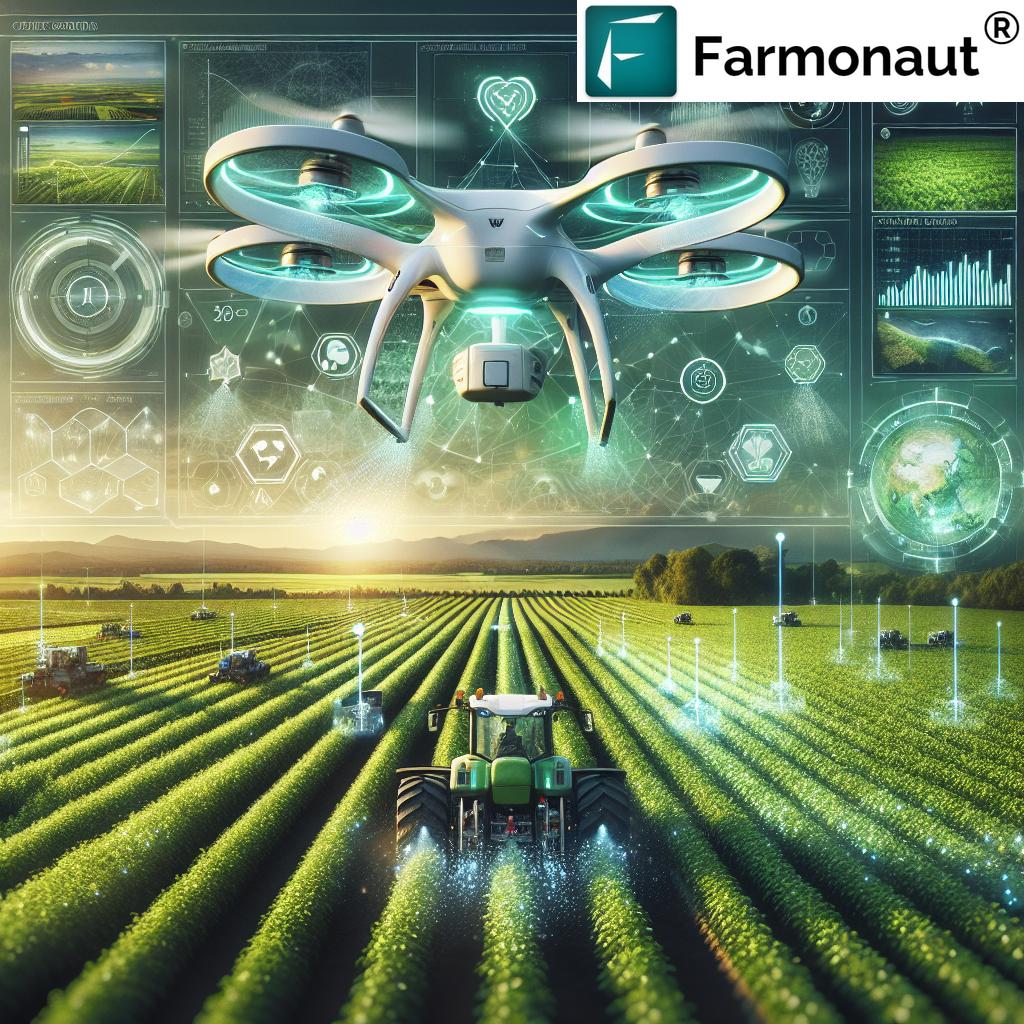
Description: Unmanned aerial vehicles (UAVs) fitted with nano-desiccant arrays sample and concentrate atmospheric moisture above fields, quickly delivering it to crop roots.
Key Benefit: Flexible deployment, real-time data integration, ideal for both smallholder and large-scale farms.
Icon: 🚁 -
Regenerative Crop Varieties and AI-Driven Water Management
Description: Genetically optimized crops with root and leaf structures tailored to intermittent and minimal water supplies. When combined with AI-based irrigation management, volatile life farming reaches new efficiency peaks.
Key Benefit: Increased resilience, higher productivity from available atmospheric moisture.
Icon: 🌾🤖 -
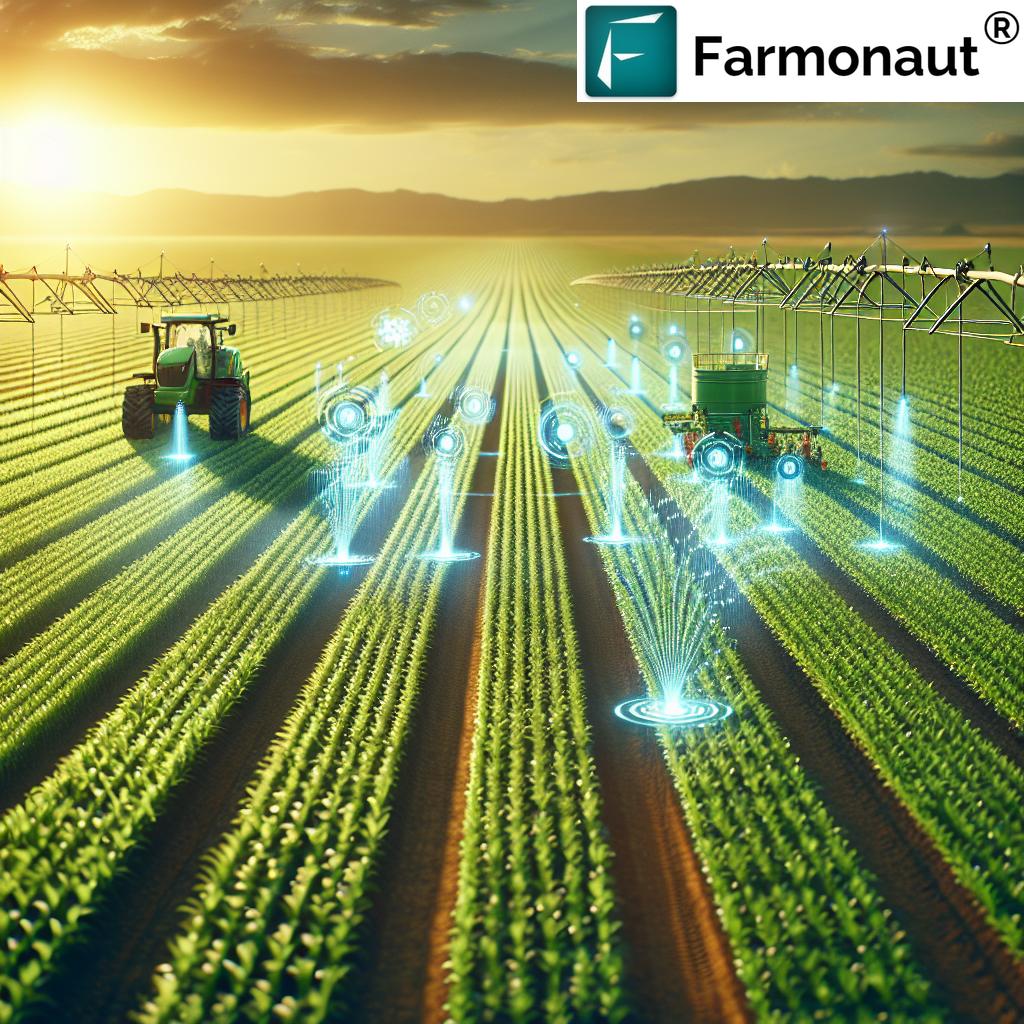
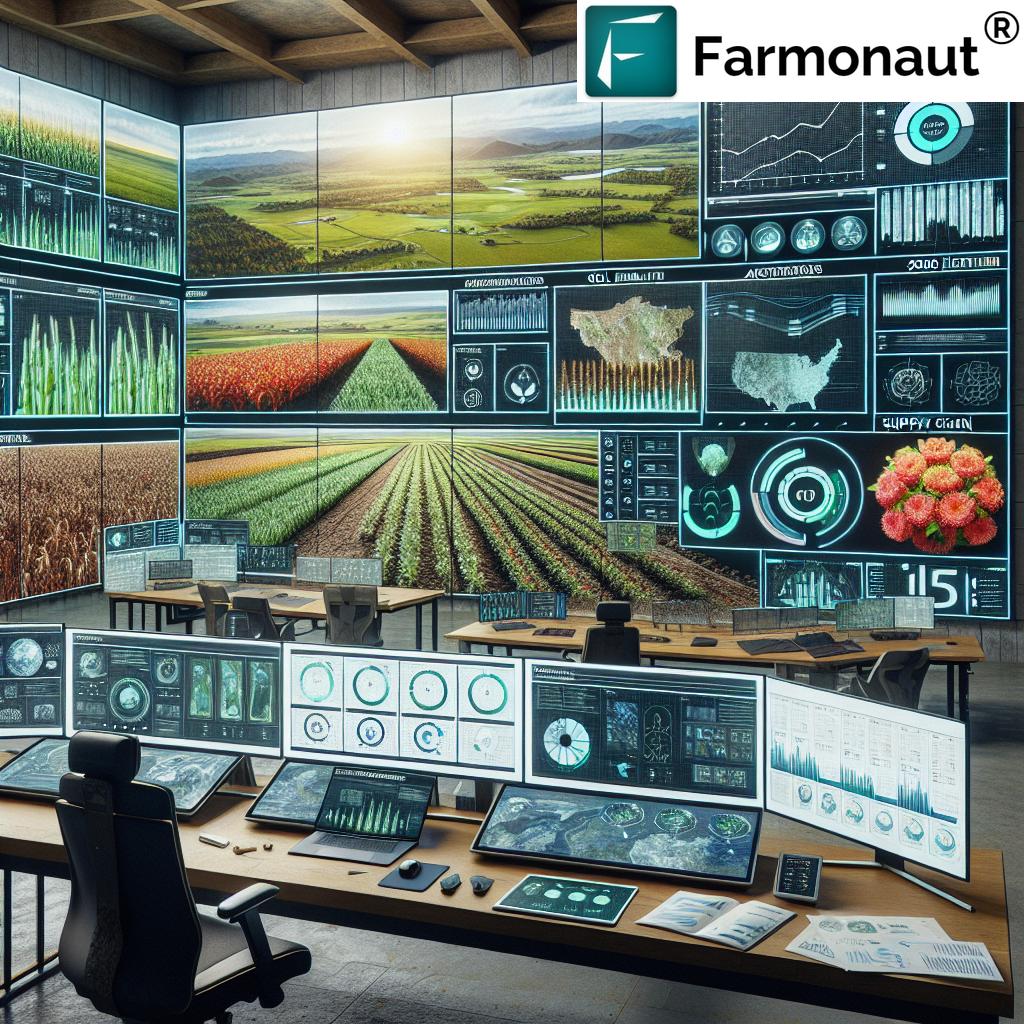
Fully Automated IoT-Integrated Water Harvesting Farms
Description: Next-gen farms automate everything—from sensor-driven humidity monitoring to drone-based moisture delivery and blockchain-enabled traceability. All systems work in concert for optimal resource management.
Key Benefit: Labor savings, precise targeting, minimal waste, scalable from backyards to national projects.
Icon: 🔗🌍


Comparative Solutions Effectiveness Table
| Solution Name | Description | Estimated Water Savings (%) | Estimated Energy Use (kWh/ha) | Environmental Impact | Cost Efficiency ($/ha, est.) | Scalability | Adoption Potential (2026) |
|---|---|---|---|---|---|---|---|
| Advanced Fog Harvesting Structures | Large hydrophilic polymer nets capture fog droplets for irrigation | 20-35% | 1-5 | Low | 150-400 | Regional | High |
| Solar-Powered Atmospheric Condensers | Solar-cooled devices condense vapor from ambient air | 18-28% | 8-20 | Medium | 600-1200 | Global | High |
| MOF Water Harvesters | Nanomaterial-based sorbents for low-humidity moisture capture | 15-25% | 5-10 | Low | 950-2000 | Local/Regional | Medium |
| Greenhouse-Integrated Harvesting | Greenhouse systems with fog/dew collectors and recirculation | 28-40% | 3-7 | Low | 1100-2500 | Local/Urban | High |
| Precision Drones & Aerial Farming | UAVs distribute collected atmospheric moisture to crops | 12-22% | 10-22 | Medium | 1500-3000 | Regional/Global | Medium |
| Regenerative Crops & AI Water Management | Genetically optimized crops + AI-managed intermittent irrigation | 30-42% | 3-7 | Low | 1100-2000 | Global | High |
| IoT-Integrated Automated Harvesting Farms | Fully automated, sensor-driven atmospheric harvesting & resource tracking farm | 25-38% | 10-18 | Medium | 2100-5000 | Regional/Global | High |
Applications, Benefits and Implications for Agriculture and Food Security
The adoption of volatile water farming isn’t limited to a single scenario or region. Its real strength lies in versatility across diverse environments and farm types. Below, discover concrete applications, the top benefits, and vital implications for the future of sustainable agriculture:
- 🌍 Desert & Arid Regions (Sahel, Middle East, SW United States): Offers a viable alternative to groundwater exploitation, reducing depletion and slow-moving land degradation.
- 🏙️ Urban & Rooftop Farming: Systems can capture humidity in metropolitan climates, powering vertical gardens and scalable city food production.
- 🌱 Climate-Resilient Crop Production: Especially suited to regenerative agriculture where intermittent, on-demand supplies are optimal.
- 🔬 Research Stations & Marginal Land Use: Extends viable farmland into previously unsupportive microclimates, without reliance on trucking in remote resources.
- 🫱 Smallholder Empowerment: Decentralized access to water enables remote or infrastructure-poor communities to thrive and buffer against extreme weather.
-
🌫️ Fog Harvesting Fields
High-yield irrigation for coastal deserts & hills -
🏢 Urban Greenhouse Integration
Humidity recycling for rooftop vegetables -
🔗 IoT-Driven Resource Tracking
Reduce loss, optimize output in large-scale production
Key Benefits of Farming Volatile Water
- ✔ Reduces dependence on erratic rainfall, surface and groundwater bodies.
- ✔ Slows aquifer depletion and prevents soil salinization.
- ✔ Promotes local food production—including in cities—helping solve last-mile nutrition challenges.
- ✔ Decreases agricultural carbon footprint with energy-efficient, decentralized water use.
- ✔ Mitigates risks of climate variability with on-site, year-round water harvesting.

Key Insight:
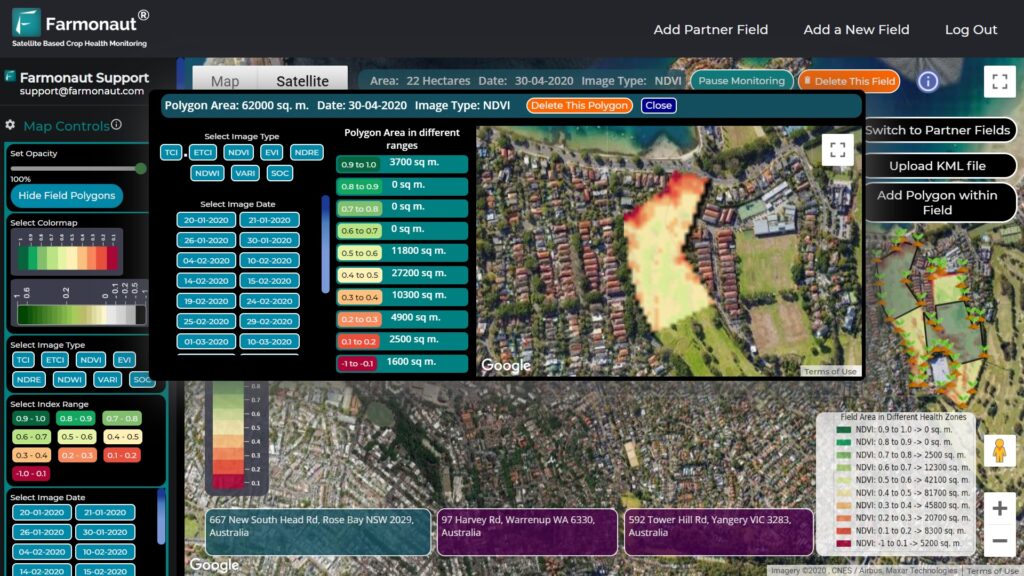
Satellite-powered advisory tools, such as those provided by Farmonaut, can precisely monitor vegetation health, soil moisture, and water needs from space, enabling farmers to dynamically adjust irrigation from atmospheric harvesting—maximizing both sustainability and yield.

- 📊 Traceability Solutions: Learn how blockchain traceability from Farmonaut can support authentic, transparent supply chains for volatile water farmed produce.
- 📊 Fleet Management: Optimize all resource logistics and water harvesting deployments from a single dashboard with Fleet Management tools.
- 📊 Large Scale Farm Management: Aggregate multispectral farm data for entire corporate or city-wide operations, fine-tuning every aspect of atmospheric irrigation strategy.
- 📊 API Access for Custom Solutions: Build or integrate Farmonaut’s satellite and weather API directly into existing on-farm or municipal atmospheric water management systems.
- 📊 API Docs: Quickly get started with developer documentation here.
-
👨🌾 Small Farmers
On-site dew nets, mobile fog collectors -
🏢 Urban Growers
Integrated water harvesting with rooftop gardens -
🏭 Agri-businesses
Scalable, AI-optimized atmospheric farming -
🇸🇦 Middle East Enterprises
Solar condensation in desert agriculture
Challenges and The Road Ahead
While volatile water farming is highly promising and transformative, several challenges persist—especially as we aim for global upscaling by 2026:
- ⚠ Upfront Costs: Purchasing and installing atmospheric harvesting equipment is still more expensive than conventional pumps or pipes—especially for smallholders.
- ⚠ Energy Use: Active condensers may raise emissions unless solar or wind-powered, though passive and low-energy options are advancing rapidly.
- ⚠ Technology Access: Remote and low-income regions require subsidies or innovative licensing models to enable widespread adoption.
- ⚠ Crop Optimization Lags: Many popular agronomic varieties are not yet primed for intermittent or atmospheric-only irrigation; targeted breeding remains necessary.
- ⚠ Awareness & Training: Farmers, especially outside early-adopter areas, must be educated on how volatile water farming solutions outperform legacy methods in terms of water conservation and resilience.
Common Mistake:
A common misstep is deploying harvesting systems where atmospheric moisture is consistently low (<10%) without supplementary technology (e.g., MOFs, advanced desiccants), resulting in poor yields. Always match solutions to local climate analytics!

How Satellite Technology and AI Are Empowering Volatile Water Farming
Smart volatile water farming doesn’t happen in isolation. The emergence of AI-driven agricultural monitoring, machine learning, and satellite data platforms means farmers can pinpoint when, where, and how to deploy every atmospheric harvesting asset for maximum water savings and crop resilience.
At Farmonaut, we offer advanced satellite-based monitoring available via Android, iOS, web app, and API. Our tools help users:
- 🔎 Track real-time vegetation health (NDVI), soil moisture, and stress at individual field level
- 🤖 Use Jeevn AI Advisory System to analyze crop requirements and advise tailored water management strategies based on weather, satellite trends, and climate predictions
- 🔗 Integrate blockchain traceability to assure transparency (especially for food grown with advanced water solutions)
- 📈 Monitor carbon emissions, using our carbon footprinting feature to further sustainability

Pro Tip:
Pair real-time soil and weather data from satellite platforms with advanced atmospheric harvesting systems. This combination lets you forecast high humidity hours for optimized water collection and automate irrigation when and where it matters Most.



How Farmonaut Supports Sustainable Agriculture and Volatile Water Farming
We at Farmonaut are committed to making satellite-driven agricultural insights accessible, affordable, and actionable for users everywhere. Our integrated data services directly support the transition to sustainable water management—including volatile water and moisture harvesting techniques. Here’s how our offerings can accelerate the global shift to climate-smart farming:
- Real-Time Satellite Crop Monitoring: See exactly which fields need supplemental water—reducing waste and boosting efficiency.
- AI-Optimized Resource Use: Pair field analytics with atmospheric water availability for minimal-resource irrigation strategies.
- Blockchain Traceability: Guarantee ethical, water-conscious produce from source to shelf with full chain-of-custody visibility. Learn about Traceability here.
- Carbon and Environmental Impact Tracking: Monitor emissions from every farming system, including water harvesting operations. Discover our Carbon Footprinting Solution.
- Fleet and Resource Management: Track, maintain, and route water collection infrastructure and field equipment for best ROI. Fleet Management Details.
- APIs and Developer Integrations: Connect our insights directly into custom volatile water farming or other agricultural systems. Farmonaut API Access | Developer Docs

For scaling up or institutional monitoring, our Agro-Admin App enables comprehensive, easy management for large commercial or government programs.
Ready to implement advanced monitoring for your volatile water farming journey?
Subscribe below for Farmonaut’s satellite-driven solutions!
Key Insights, Pro Tips & Investor Notes
Investor Note:
The global market potential for atmospheric water harvesting technologies is set to exceed $3.7 billion by 2026 as water stress intensifies. Companies and developers who integrate volatile water farming into existing agri-infrastructure are poised for rapid, resilient growth.
Pro Tip:
Implement passive, solar-powered systems first in fog-prone or coastal regions—yield and return on investment are highest when ambient moisture levels are naturally elevated!
Key Insight:
For policy makers: Incentivize volatile water farming with grants and training programs, focusing on those zones most at risk from groundwater depletion (Sahel, Middle East, American West).
Common Mistake:
Underestimating ongoing maintenance or repairs with advanced fog and MOF structures; plan for annual material checks and filter replacement.
Farmer-Friendly Fact:
Atmospheric harvesting can be started at a small scale—up to 6000 liters/year/household with DIY dew collection arrays, ramping up to tens of thousands of cubic meters for institutional agriculture.
FAQ: Volatile Water Farming
- What exactly is volatile water farming?
- It is a set of techniques and systems designed to harvest atmospheric moisture—including vapor, dew, and fog—for agricultural use, bypassing or supplementing conventional irrigation.
- Can atmospheric harvesting work in every country?
- Most countries have regions with sufficient ambient humidity or fog to make these solutions viable, especially during key growing seasons or with modern material advancements (MOFs, nanostructures).
- Is it affordable for smallholder farmers?
- Initial investments are higher than traditional methods, but costs are falling with scaling and passive systems. Long-term savings from water independence and yield improvement frequently offset initial costs.
- What maintenance do these systems require?
- Fog nets and passive devices need occasional cleaning and annual checks. Advanced MOF or IoT-integrated farms require filter/material replacement and software updates.
- How does it affect food quality or safety?
- With blockchain traceability and satellite oversight, water origin and crop quality are verified, often improving market appeal for sustainably grown produce.
- What tools are available for monitoring?
-
- Farmonaut’s web and mobile apps for real-time crop, irrigation, and resource tracking
- Offline IoT sensors and atmospheric data collectors
- APIs for custom integration into large institutional systems
Conclusion: Redefining Food Security with Volatile Water Farming
By 2026 and beyond, volatile water farming will not just be an “alternative” for arid or climate-stressed regions—it will redefine the principles of sustainable agriculture.
From the Sahara’s fog-blanketed coast to vertical farms in city centers and dryland crops near the American desert southwest, the ability to harvest and manage atmospheric moisture will be vital for resilient food production. When paired with satellite-based insights, AI-driven management, and transparent resource tracking, the future of sustainable, climate-resistant agriculture is within reach for communities—and the planet at large.
Ready to join this revolutionary concept? Explore our advanced Farmonaut platform for affordable, world-class monitoring and advisory for 2026 and beyond!