Farm Subsidies by State and Name: Definition & Guide (2025 Overview)
“California receives over $920 million in annual farm subsidies, leading U.S. states in agricultural support for 2025.”
“In 2025, over 1.4 million American farmers are enrolled in federal crop insurance programs across all states.”
Table of Contents
- Farm Subsidies Definition: What Are Farm Subsidies?
- Farm Subsidies by State: Key 2025 Trends
- Major Farm Subsidy Programs by Name (2025)
- Comparative Table: Farm Subsidies by State and Name (2025)
- Crop Insurance: The Backbone of 2025 Agricultural Stability
- Conservation Practices: Trends for the Future
- Subsidy Distribution: Who Gets What?
- Policy, Challenges, & The Future of Farm Subsidies
- How Farmonaut Empowers Modern Subsidized Agriculture
- Frequently Asked Questions on Farm Subsidies by State and Name
- Farmonaut Subscription Options
Farm Subsidies Definition: What Are Farm Subsidies?
Farm subsidies by state and name remain a pivotal aspect of U.S. agricultural policy, shaping the reality for farmers, agribusinesses, and the sector at large. But what is the farm subsidies definition?
Essentially, farm subsidies are a set of financial aids or support extended by the government—mainly through the USDA—to farmers and agribusinesses across the United States. These programs aim to stabilize incomes, buffer market volatility, foster sustainable practices, and encourage reliable food production.
Subsidies can take multiple forms, including:
- Direct payments: Financial support paid straight to eligible farmers, often based on historical output or acreage.
- Price supports: Government purchases or price floors to stabilize commodity prices (corn, wheat, soybeans, cotton, etc.).
- Insurance premiums: Subsidized premiums for risk management programs, ensuring farmers have coverage against weather, pests, or market downturns.
- Disaster relief: Emergency payments for farmers facing disasters like floods, droughts, and wildfires.
- Conservation incentives: Compensation for adopting environmentally friendly practices and enrolling in federal conservation initiatives.
Primary Objectives of subsidies:
- Stabilize farmers’ incomes (buffering unpredictable factors—weather, pests, price shocks).
- Promote sustainable farming and environmental conservation.
- Maintain a secure, reliable food supply in the face of global challenges.
- Support rural development to sustain communities across diverse states.
Farm subsidies in 2025 have expanded to include increased incentives for conservation, carbon sequestration, and climate-smart agriculture across major U.S. states. The focus: resilient, sustainable food systems for a changing world.
Farm Subsidies by State: Key 2025 Trends
Farm subsidies by state and name reveal significant variation reflecting unique agricultural outputs and policy priorities in key states like Iowa, Texas, Illinois, California, Kansas, and Nebraska.
Let’s break down why this variation exists:
- Crop types: Corn, soybean, cotton, cattle, wheat, specialty crops, etc.—each state’s focus determines allocation.
- Climate conditions: Drought-prone states invest more in risk management for insurance and disaster programs.
- Market dynamics: Subsidies buffer against fluctuating prices and promote consistent production of essentials amid trade volatility.
- Environmental priorities: Leading states emphasize conservation to ensure water and soil security for the future.
🗺️ State-by-State Highlights
- Ranks among the top for corn and soybean subsidies
- Crop insurance, price support, and ethanol-linked incentives
- Substantial conservation programs for water quality
- Diverse support for cotton, cattle, and feed grains
- Increasing disaster and drought relief funds
- Expanding sustainable range management programs
- Focus on corn, soybean, and ethanol
- Environmental incentives rising in prominence
- Significant federal funds for crop risk coverage
- Largest allocations for specialty crops: fruits, nuts, vegetables
- Keen emphasis on water conservation and climate resilience
- Wheat and cattle dominating support programs
- Disaster assistance and drought mitigation
- Key sites for conservation reserve sign-ups
- 🌽 Corn: Iowa, Illinois, Nebraska
- 🌾 Wheat: Kansas, North Dakota
- 🥜 Peanuts/Cotton: Texas, Georgia
- 🍊 Specialty crops: California, Florida
- 🐄 Cattle: Texas, Nebraska
- 🌻 Sunflower: North Dakota, Kansas
Emerging trends in federal and state subsidies—especially climate-smart and carbon-focused initiatives—are shifting capital investment priorities in the agri-food sector, with tech adoption accelerating most rapidly in highly subsidized regions.
Major Farm Subsidy Programs by Name (2025)
Understanding farm subsidies by name is essential to grasp how these programs shape the landscape. Here’s an overview of key 2025 programs—as administered by agencies like the Commodity Credit Corporation (CCC), the Farm Service Agency (FSA), and the Risk Management Agency (RMA):
-
Price Loss Coverage (PLC):
- Protects income when market prices of key crops (corn, wheat, soybean, cotton) fall below a reference price set by policy.
-
Agricultural Risk Coverage (ARC):
- Provides payments when actual farm revenue (yield × market price) drops below a county or farm-level benchmark.
-
Conservation Reserve Program (CRP):
- Pays farmers to remove environmentally sensitive land from annual production—enhancing soil, water, and wildlife health.
-
Federal Crop Insurance Program:
- The largest risk management program. Over 60% of insurance premiums are subsidized, covering a vast range of crops and weather perils.
-
Disaster Assistance Programs:
- Quick financial relief for losses due to floods, drought, wildfires, pests, and disease outbreaks.
-
Environmental Quality Incentives Program (EQIP):
- This provides financial and technical assistance to support conservation practices and resource management.
Investigate not just which crops are subsidized in your state—but which programs (ARC, PLC, CRP, EQIP) offer the best fit for your farm’s production model, risk profile, and conservation goals.
Comparative Table: Farm Subsidies by State and Name (2025)
The table below offers a comparative summary of major farm subsidy programs by state and name for 2025, detailing estimated federal subsidy allocations and conservation initiatives. This enables a quick, visual comparison of state-level trends and highlights the most prominent programs across the U.S.
| State | Top Subsidized Crop/Program | Estimated Subsidy Amount (2025, USD) | Program Name | Conservation Initiatives Highlighted |
|---|---|---|---|---|
| Iowa | Corn, Soybean | $1.45B | PLC, ARC, Crop Insurance | Water Reduction Initiatives, Soil Health |
| Texas | Cotton, Cattle, Sorghum | $1.30B | PLC, Disaster Assistance, EQIP | Rangeland Management, Drought Resilience |
| Illinois | Corn, Soybean, Ethanol Production | $1.10B | ARC, PLC, Conservation Compliance | Wetland Preservation, Carbon Sequestration |
| California | Fruits, Nuts, Specialty Crops | $920M | EQIP, Specialty Crop Grants, Crop Insurance | Drip Irrigation, Water Conservation |
| Kansas | Wheat, Sorghum, Cattle | $760M | PLC, ARC, Disaster Assistance | Prairie Restoration, Drought Mitigation |
| Nebraska | Corn, Beef Cattle | $720M | PLC, ARC, Crop Insurance | Water Management Practices |
| Minnesota | Soybeans, Corn | $640M | ARC, Crop Insurance, Conservation Reserve Program | Wetland Restorations |
| North Dakota | Wheat, Sunflower, Barley | $590M | PLC, ARC, Crop Insurance | Cover Cropping Initiatives |
| Georgia | Cotton, Peanuts | $370M | PLC, EQIP, Specialty Crop Grants | Irrigation Efficiency |
| Florida | Citrus, Strawberries, Vegetables | $315M | Specialty Crop Insurance, Disaster Relief | Coastal Environmental Practices |
- ✔ Income Stability: Shields farmers from unpredictable markets and yields.
- 📊 Insured Productivity: Crop insurance minimizes financial risk across weather scenarios.
- 🌿 Conservation Initiatives: Financial incentives drive environmentally friendly farming and water management.
- ⚠ Disaster Resilience: Emergency programs buffer against natural disasters.
- 🌎 Secure Food Supply: Supports robust, consistent food production for U.S. and export markets.
Crop Insurance: The Backbone of 2025 Agricultural Stability
The federal crop insurance program, administered by the Risk Management Agency (RMA), is arguably the cornerstone subsidy protecting over 1.4 million farmers across states as of 2025 and into the future. Over 60% of premium costs are subsidized, making it affordable for all sizes of farms.
- 📈 Coverage: Includes corn, soybean, wheat, cotton, specialty crops, and livestock revenue.
- ⚠ Events Covered: Drought, flood, pests, hurricanes, and market price drops.
- 💸 Financial Buffer: Prevents farm bankruptcies and prompts quick economic rebounds after disasters.
- 🛡 Risk Reduction: Empowers banks and insurance providers to confidently extend loans—aiding rural development.
- 📝 Customizable coverage for each operation
- 🚜 Safeguards input investments (seed, fertilizer, fuel)
- 📉 Reduces risk for small/medium farms
- 🏦 Facilitates faster access to credit/insurance



Curious about satellite-aided crop insurance? Our Crop Loan and Insurance Product streamlines the process by using real-time satellite data to validate crop conditions. This supports banks and insurance companies in efficiently issuing and managing crop insurance, mitigating fraud, and ensuring farmers get timely support.
Overlooking how state-specific changes in disaster coverage or insurance terms can affect eligibility. Always review the latest state-level policy updates, especially when enrolling in or renewing crop insurance for 2026 and beyond.
Conservation Practices: Trends for the Future
Conservation is central to the evolution of farm subsidies by state and name, especially with the mounting pressure of climate change and water scarcity. In 2025 and beyond, key programs such as the Conservation Reserve Program (CRP) and EQIP are driving adoption of environmentally friendly and economically sustainable practices.
- 🌳 Soil & Water Health: Compensation for retiring fragile acreage (CRP, wetland preservation).
- 🌱 Carbon Sequestration: Increasing incentives for cover cropping, crop rotation, and agroforestry.
- 💧 Water Conservation: Specialty focus in California, Texas, and arid states—drip irrigation and water-efficient technologies are booming.
- 🦉 Biodiversity Protection: Habitat creation for pollinators and wildlife on enrolled land.
To track and validate environmental outcomes, blockchain traceability and near-real-time satellite technologies (like those available from us at Farmonaut) are now in high demand. Check out our Blockchain Traceability solution for secure tracking of agricultural conservation compliance—vital for eligibility in new, incentive-driven federal programs.
“Future subsidy programs” will increasingly tie financial support to measurable conservation outcomes tracked via advanced geospatial tools and transparent recordkeeping. Adaptation is no longer optional—it’s essential.
Subsidy Distribution: Who Gets What?
The distribution of farm subsidies by state and name continues to stir debate as we head into 2026. Critics have noted a tendency of funds disproportionately benefiting large agribusinesses and established commodity crop operations, with small-to-mid-sized farms sometimes struggling to access the same level of support.
-
Key Factors in Allocation:
- Scale of farm operation (acres in production, total revenues)
- Historical eligibility and past enrollment in subsidy programs
- Geographical risk (flood, drought, or pest prevalence)
-
Emerging Trends:
- State-level policies prioritizing equity: Focus on smaller farms, beginning farmers, and historically underserved communities
- Technological proof: Satellite-based acreage verification is increasingly required for program compliance and fraud prevention
For evolving subsidy access, digital solutions are vital. Our AI-driven crop monitoring, available via Farmonaut’s Large-Scale Farm Management platform, helps users document and prove conservation practices or land usage, improving eligibility for support—especially on large, multi-field farms.
For agricultural investors, insurers, and policymakers, access to reliable geospatial validation—delivered via satellite and blockchain—has become essential for appropriating government support with accuracy and trust.
Policy, Challenges, & The Future of Farm Subsidies in the U.S.
Looking ahead to 2026 and beyond, policy dynamics around farm subsidies will be shaped by:
- 🌎 Climate change adaptation: More extreme weather, pests, and variable growing conditions require flexibility and rapid-response support.
- 🔄 Trade volatility: Farmers need insulation from shifting global prices and evolving export dynamics.
- 🌱 Sustainability metrics: Growing demand for visible, science-based environmental impact (carbon, water, biodiversity).
- 🌍 Equitable distribution: Ongoing reforms are likely to increase support for small farms and underrepresented groups.
- 🔗 Technology integration: Surveillance for fraud, measuring on-farm practices, facilitating program application and compliance.
With upcoming farm bill and USDA rules under review, the following trends are expected to dominate:
- Carbon incentives: Major funding boost to climate-smart practices, especially on enrollments managed and verified by emerging satellite providers.
- Insurance upgrades: Extension of multi-peril policies to further crops; increased ease-of-access via digital solutions.
- Direct digital traceability: Use of blockchain and satellites to overhaul compliance and payment accuracy.
- Adaptive disaster modules: Automated payouts linked to real-time verified disaster events.
For all agricultural stakeholders—from large agribusinesses to individual farmers—staying proactive and tech-savvy is essential to maximize subsidy access and compliance in the coming years.
Need customizable agri-intelligence for integrating subsidy verification, environmental compliance, or resource tracking? Try the Farmonaut Satellite API and explore full documentation here.
How Farmonaut Empowers Modern Subsidized Agriculture
At Farmonaut, we are committed to making satellite-driven agricultural intelligence accessible and actionable for farmers, agribusinesses, governments, and financial institutions globally. Our platforms support practitioners through:
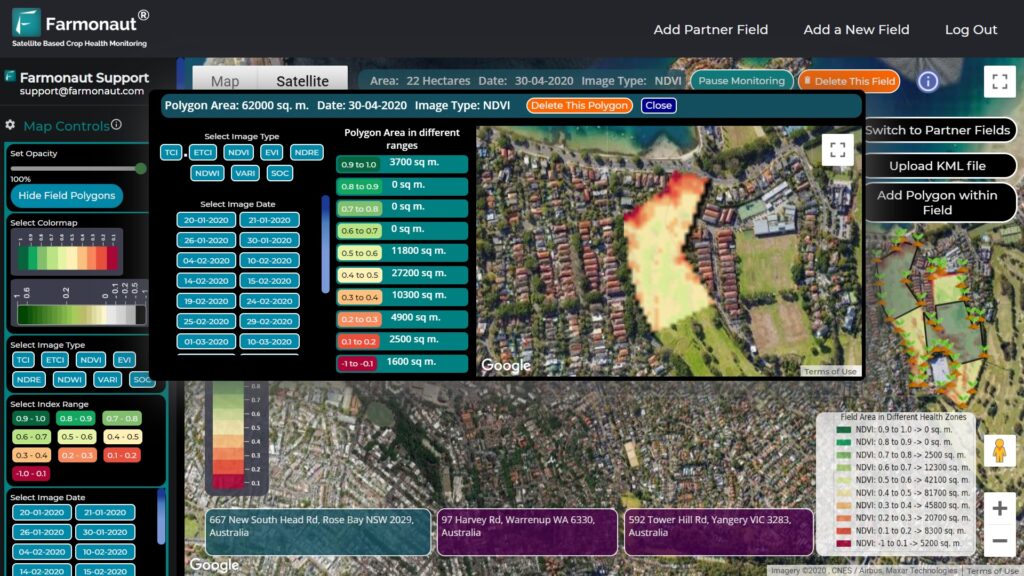
- 🔭 Satellite-Based Monitoring: Multispectral imagery to track crop health (NDVI), detect stress, optimize input usage, and validate crop insurance or subsidy compliance.
- 🤖 Jeevn AI Advisory: Real-time recommendations for planting, irrigation, and input management that align with evolving subsidy qualifying practices.
- 🔗 Blockchain Traceability: Transparent crop, resource, and compliance tracking for government and agency requirements.
- 🚌 Fleet & Resource Management: Track and optimize machinery use and operational logistics at scale; vital for modern, subsidy-driven farm operations. Explore our Fleet Management Product.
- ♻️ Environmental Impact Monitoring: Monitor carbon footprint, water use, and on-farm sustainability for easier subsidy eligibility and compliance. Learn about our Carbon Footprinting Solution.
Our products bring actionable insights into the hands of every size operation, enhancing productivity while ensuring environmental stewardship—a cornerstone of the new era of farm subsidies by state and name.
Ignoring the technical requirements of next-generation subsidy programs—especially proof of digital compliance and timely reporting. Using tools like Farmonaut ensures you remain eligible and compliant as standards evolve.
Financial institutions are integrating satellite data as a new standard for crop, insurance, and conservation subsidy verification—lowering risk for lenders and improving access for farmers.
Farmonaut Subscription Options
Ready to empower your farm, business, or agency with cost-effective satellite monitoring for subsidy program compliance, risk management, and conservation support? Discover our tailored plans below:
FAQs: Farm Subsidies by State and Name
-
What are farm subsidies?
Farm subsidies are financial or technical aids provided by the government to farmers and agribusinesses, designed to stabilize incomes, encourage sustainable farming, promote food security, and protect producers from market and weather risks. -
How are farm subsidies distributed by state?
Subsidy allocation varies by state based on the type of crops produced, the scale of farm operations, climate risk, and environmental priorities. Leading states like Iowa, Texas, Illinois, and California receive the largest share due to their agricultural output and crop portfolio. -
What are the main programs offered by name in 2025?
Key programs include Price Loss Coverage (PLC), Agricultural Risk Coverage (ARC), Federal Crop Insurance, Conservation Reserve Program (CRP), and Environmental Quality Incentives Program (EQIP). -
Who is eligible for farm subsidies?
Farmers, ranchers, and agribusinesses meeting certain production, acreage, or conservation requirements. Each federal and state program may have specific rules. -
How do new technologies like Farmonaut help with subsidy compliance?
Advanced satellite and AI tools allow farmers and agencies to monitor and document compliance with program conditions, track environmental outcomes, and facilitate rapid, accurate reporting for eligibility and payment accuracy. -
Are there conservation-focused subsidy programs?
Yes. Programs like CRP, EQIP, and state-level carbon-sequestration incentives reward climate-smart and environmentally sustainable practices. -
Will subsidy trends change beyond 2026?
Subsidy design is moving toward climate resilience and digital transparency, placing a premium on conservation outcomes, equitable access, and verified data.
For updates on subsidy policy, digital traceability, and satellite solutions for farm management, regularly visit Farmonaut’s blog or follow our app updates.
Farm Subsidies by State and Name: An Overview for 2025 & Beyond
Farm subsidies by state and name remain an indispensable element of U.S. agricultural security, resilience, and progress. As the sector adapts to climate, market, and policy changes, aligning operational practices—and digital reporting—with the evolving landscape of subsidy programs is critical.
At Farmonaut, we’re enabling this transition via affordable, user-centric satellite and digital tools. Leveraging technology to simplify compliance, sustain productivity, and promote conservation, we’re committed to supporting our agri-food community’s journey through 2026 and beyond.