Farm Instruments: Essential Instruments Used in Farming — The Ultimate 2025 Guide to Modern Tools, Precision Tech, and Sustainable Agriculture
Table of Contents
- Introduction
- Types of Farm Instruments in 2025
- Key Farm Instruments and Advanced Technologies in 2025
- Innovations Transforming Farming Instruments
- Precision Farming: Harnessing AI, Sensors, and Data
- Sustainability and Environmental Impact
- Accessibility, Affordability & Training for Farmers
- The Future: Integration of Farm Instruments, Satellite Insights & Beyond
- FAQ: Farm Instruments in Modern Agriculture
- Conclusion
Introduction: The Evolving Landscape of Farm Instruments in 2025
The agricultural landscape continues its transformation in 2025, driven by pressing global needs and rapid technological advancements. Central to modern farming is the expanding range of farm instruments — a wide spectrum of tools, equipment, and advanced machinery that redefine how farmers manage soil, water, crops, and environmental resources.
As we navigate changing conditions like climate variability, water scarcity, and the need for sustainable practices, understanding both traditional and advanced instruments is crucial for all stakeholders in agriculture. This comprehensive guide explores the different types of instruments used in farming, from classic hand tools that remain indispensable to AI-driven machinery and smart sensors increasingly central in 2025.
Types of Farm Instruments in 2025: From Traditional Tools to Advanced Machinery
The spectrum of instruments used in farming in 2025 encompasses a wide variety of equipment: from basic hand tools to large-scale mechanized machinery embedded with precision technology and smart sensors.
1. Classic Hand Tools: Timeless, Indispensable, Precise
- ✔ Hoes: Used for soil preparation, weeding, and ridging — provide precise control and minimal soil disturbance.
- ✔ Sickles: Essential for harvesting grain and certain crops, especially in terrains where machines cannot operate.
- ✔ Spades: Core tools for turning soil, digging, and planting — crucial in both subsistence and modern farms.
- ✔ Rakes: Used for smoothing soil, collecting debris, and preparing seedbeds.
These hand tools remain fundamental, especially in areas where large machinery cannot be easily deployed, and subsistence farming is prevalent.
2. Mechanized Farm Instruments and Attachments: Expanding Scale & Efficiency
- ✔ Tractors: The backbone of modern farming, often fitted with various attachments to prepare large tracts of land efficiently.
- ✔ Plows, Harrows, and Cultivators: Attached implements that assist in soil preparation, aeration, and weed control.
- ✔ Seed Drills: Crucial for precision planting — ensuring seeds are sown at consistent depths and spacing, promoting uniform crop emergence.
- ✔ Harvesters & Threshers: Automate the collection, processing, and threshing of crops, reducing manual labor and losses.
3. Rise of Precision & Smart Farming Instruments
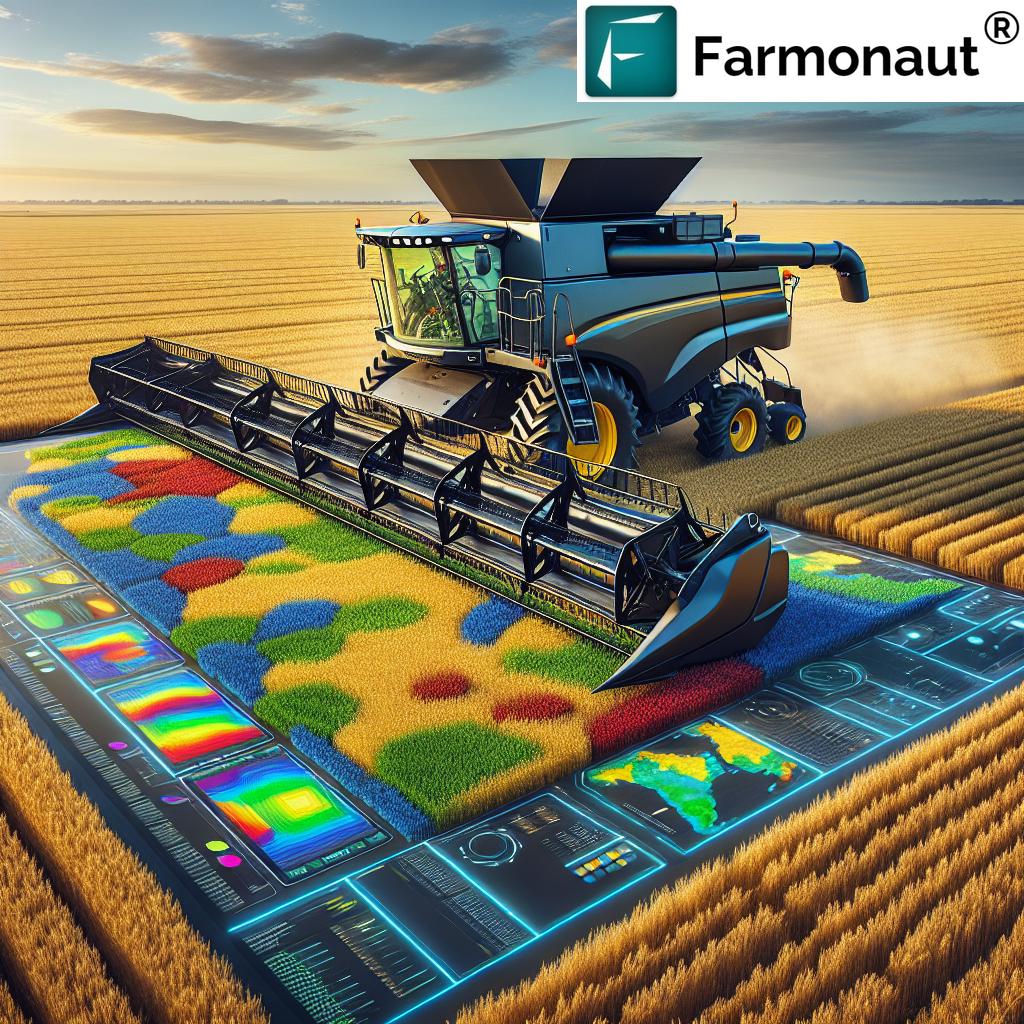
- ✔ GPS-enabled Tractors & Combines: Track and guide machinery for high-accuracy operations and optimal field coverage.
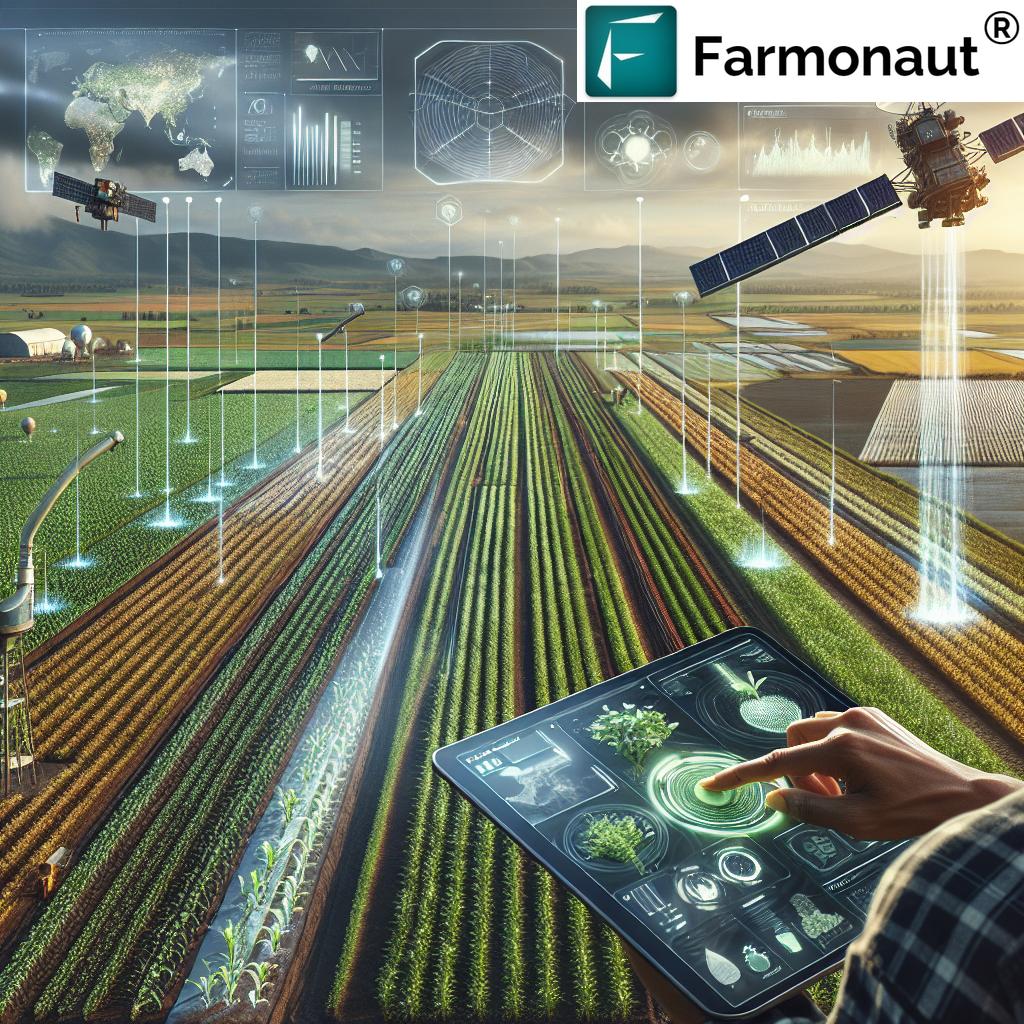
- ✔ Drones Equipped with Multispectral Sensors: Monitor crop health, soil conditions, and pest infestations with high accuracy.
- ✔ Automated Irrigation Systems & Soil Moisture Sensors: Integrated systems ensure optimal water use, crucial in areas facing water scarcity due to climate change.
- ✔ AI-powered Platforms for Farm Management: Use machine learning to analyze data and automate planting, spraying, and harvesting




Discover how you can leverage satellite-powered AI to monitor crops, soil conditions, and farm productivity with Farmonaut’s innovative web platform in 2025.
4. Specialized Equipment for Sustainability and Climate-Smart Farming
- No-Till and Conservation Agriculture Implements: E.g., No-till seed drills preserve soil structure and encourage microbial health.
- Solar-powered Water Pumps & Fencing: Decrease reliance on fossil fuels and lower operational costs, especially in areas off the electricity grid.
- Biodegradable or Recyclable Tool Components: (Innovations enhancing sustainability)
- 🌾 Traditional Hand Tools — Sickles, hoes, spades for small, precise tasks
- 🚜 Mechanized Equipment — Tractors, plows, threshers for efficiency
- 🌐 Smart & AI-Driven Tools — Drones, robotic weeders, automated irrigation for precision
- ☀️ Sustainable Instruments — Solar pumps, biodegradable implements
- 📈 Data Integration Platforms — Farmonaut, fleet management, resource tracking
Key Farm Instruments and Advanced Technologies in 2025
| Instrument/Technology | Primary Use | Core Technology/Feature | Estimated Cost Range (USD) | Estimated Efficiency Improvement (%) | Sustainability Impact |
|---|---|---|---|---|---|
| Traditional Plough | Soil preparation, primary tillage | Manual, simple mechanical leverage | $50–$800 | 10–15% | Low |
| Mechanized Tractor | Multi-purpose; land preparation, equipment towing | Diesel/Electric engines, basic automation | $10,000–$80,000+ | 30–50% | Medium |
| No-Till Seed Drill | Direct planting without tillage | Mechanical disc/coulters | $1,500–$18,000 | 20–40% | High |
| Drones (Multispectral) | Crop health & pest monitoring; inputs delivery | AI, multispectral sensors, GPS | $2,000–$20,000 | 15–35% | High |
| Soil Sensors | Real-time soil moisture, nutrient, pH monitoring | Integrated IoT, precision sensors | $50–$800/sensor | 10–25% | High |
| Automated Irrigation Systems | Efficient & optimized water delivery | AI, integrated moisture sensors, remote access | $3,000–$50,000+ | 25–65% | High |
| Autonomous Tractor | Self-driving planting, tillage, spraying | AI, GPS, machine learning | $75,000–$500,000 | 50–80% | Medium–High |
| Robotic Weeder | Weed removal, spot-spraying | Machine vision, robotics | $9,000–$60,000 | 15–30% | High |
| Satellite Monitoring Platform (e.g., Farmonaut) | Crop, resource, and environmental monitoring | Satellite imagery, AI, blockchain | $10–$500/mo (sub-based) | 15–40% | High |
Unable to decide which instrument or technology fits your needs? Explore large-scale farm management tools on our Agro Admin App page for enhanced productivity and operational control.
Innovations Transforming Modern Farm Instruments
Advancements in Materials Science & Design
- ✔ Lighter & Stronger Tools: Materials Science achievements, such as carbon-fiber composites and advanced alloys, make current tools lighter, more durable, and easier to use for prolonged hours.
- ✔ Ergonomic Enhancements: Modern hand tools are designed for operator comfort, reducing fatigue and risk of repetitive strain injuries.
- ✔ Corrosion-resistant Finishes: Innovations reduce maintenance time and extend tool lifespan.
AI & Autonomous Farm Machinery: 2025 and Beyond
- 🤖 Autonomous Tractors: Entire routines of plowing, planting, and even harvesting conducted with minimal human input, using sensors, GPS, and AI to adapt in real time to field conditions.
- 🚀 Robotic Weeders & Drones: Machine vision systems can distinguish crops from weeds—enabling spot weeding that decreases chemical use and improves sustainability.
- 📊 Integrated Data Flow: Modern farm equipment is increasingly embedded with IoT components, sending performance, soil, and crop data to management platforms in real time.
- 🔬 Materials Innovation: Composites & eco-friendly plastics
- 🛰️ Remote Sensing: Satellite monitoring & AI analytics
- ⚡ Electrification: Electric tractors/pumps reduce carbon emissions
- 🧠 Onboard Computers: From manual to smart automation

Explore Farmonaut’s JEEVN AI Advisory system, which delivers real-time, AI-driven insights from satellite data to boost productivity and sustainability in modern farming.
The Role of Satellite Technology & Data-driven Decision-Making
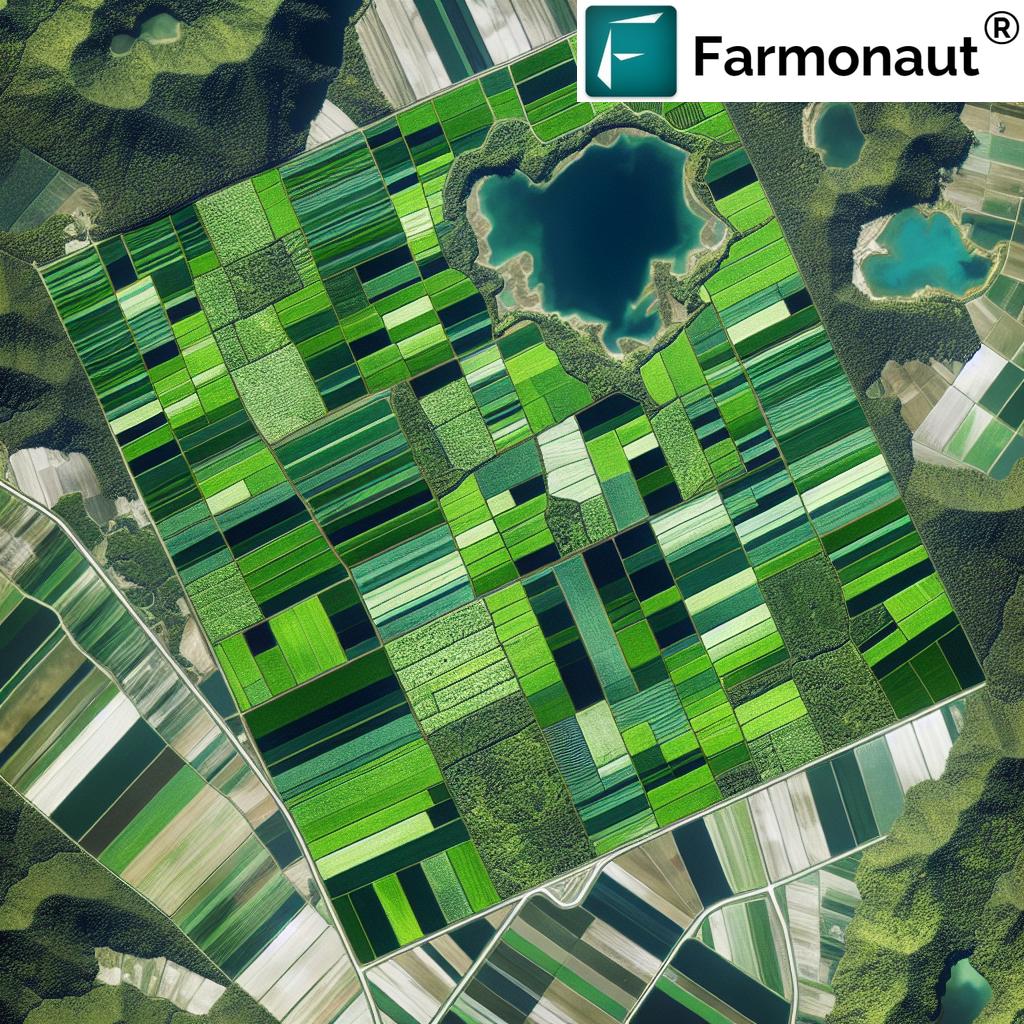
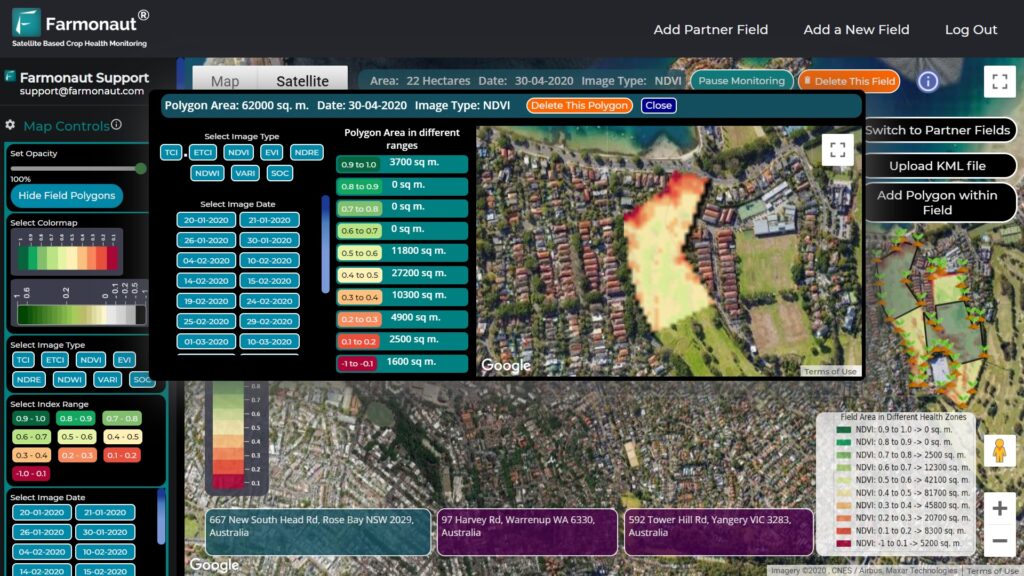
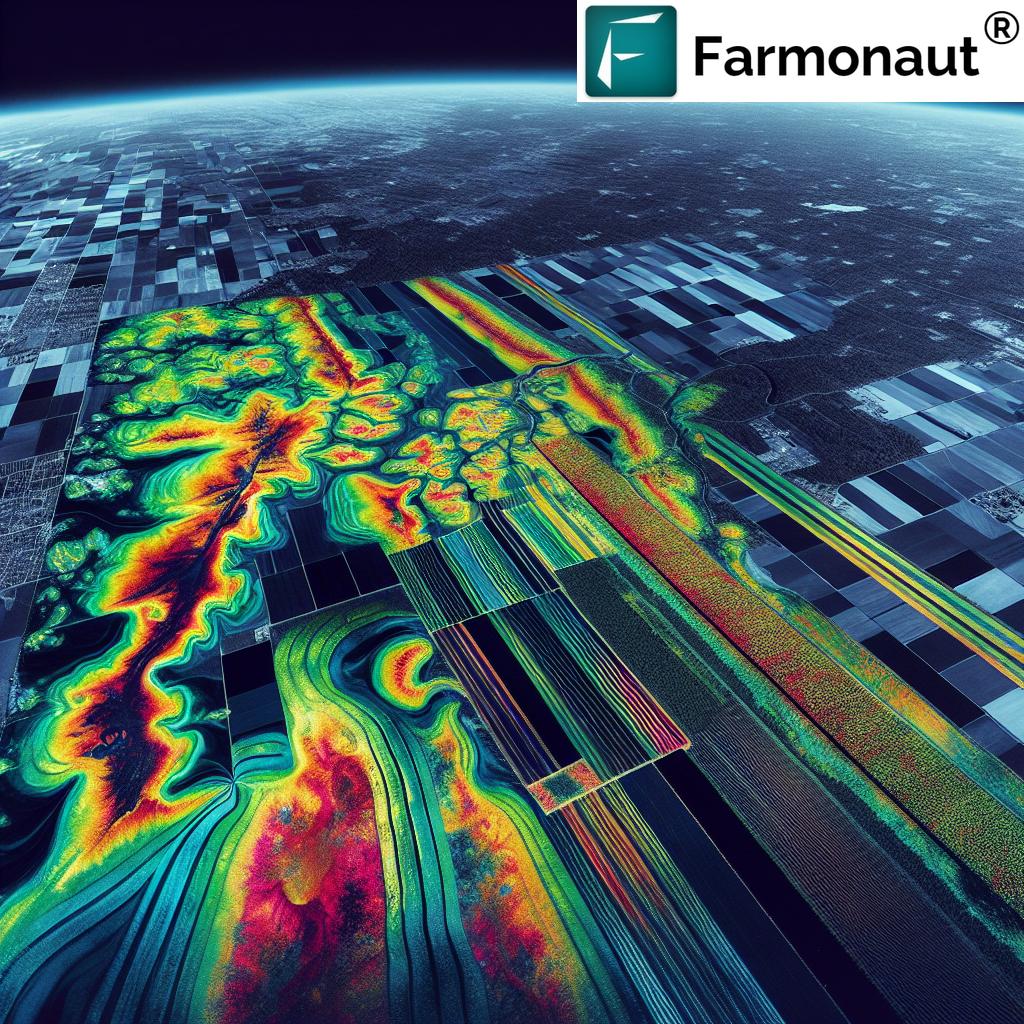
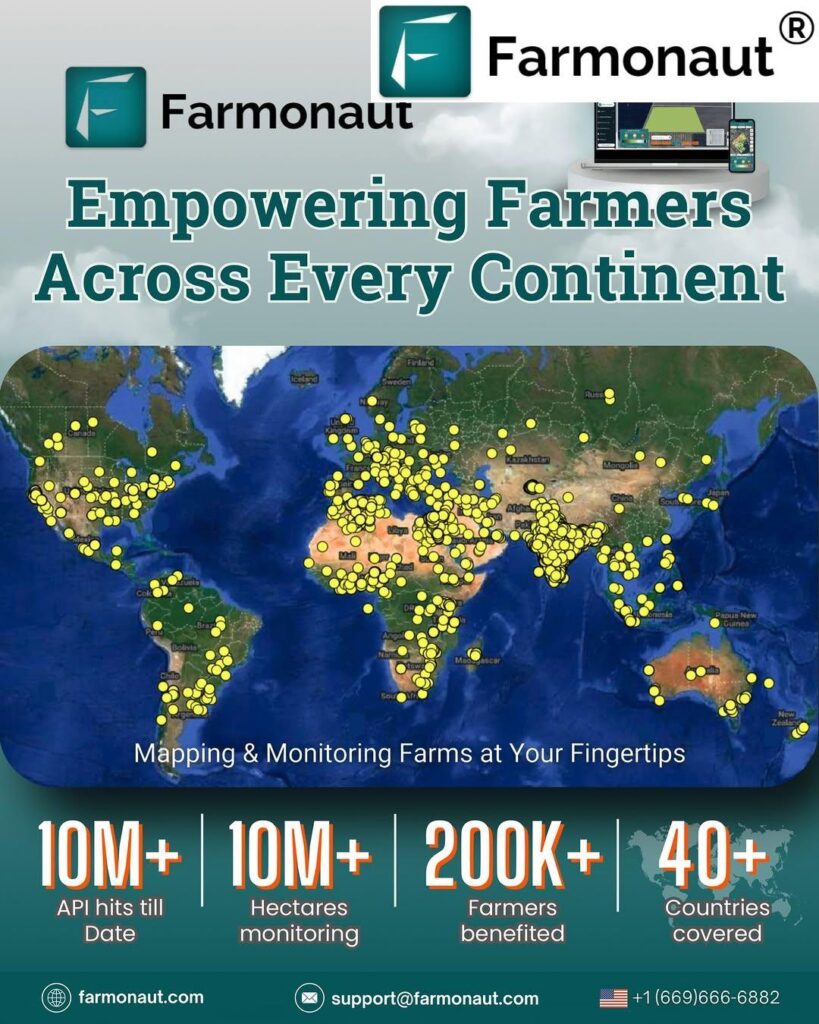
In 2025, satellite monitoring platforms—like Farmonaut—enable farmers to oversee crop health, soil conditions, and resource use across vast or remote tracts of land. By bringing multispectral satellite imagery together with AI-powered analytics, these tools empower producers to spot disease, drought, or nutrient issues early, reducing losses and input wastage.
- ✔ Real-time Monitoring: Satellite imagery is analyzed for vegetation health (NDVI), pest risk, moisture, and more.
- ✔ Actionable Alerts: Guidance for precision interventions.
- ✔ Blockchain Integration: Enables end-to-end traceability of farm produce, fostering transparency.

Try Farmonaut’s mobile and web platforms to harness the power of satellite-driven crop health insights in your own operations!
Precision Farming: Harnessing AI, Sensors, and Data for 2025
Precision Instruments: Driving Productivity & Resource Management
Precision agriculture strategies are built upon a suite of farm instruments—from soil sensors and GPS-guided tractors to drones and AI platforms—working in synergy to increase yields, reduce manual labor, and conserve valuable inputs.
- ✔ High-accuracy soil sensors: Track pH, nitrogen, phosphorous, and potassium levels to inform fertilization, saving on chemical inputs and protecting the environment.
- ✔ Cameras and vision systems: Classify crops versus weeds, enabling targeted mechanical or spray intervention.
- ✔ Drones with multispectral and thermal sensors: Monitor plant stress, disease, vegetation health, and water use.
Smart Irrigation Systems: Saving Water, Increasing Yields
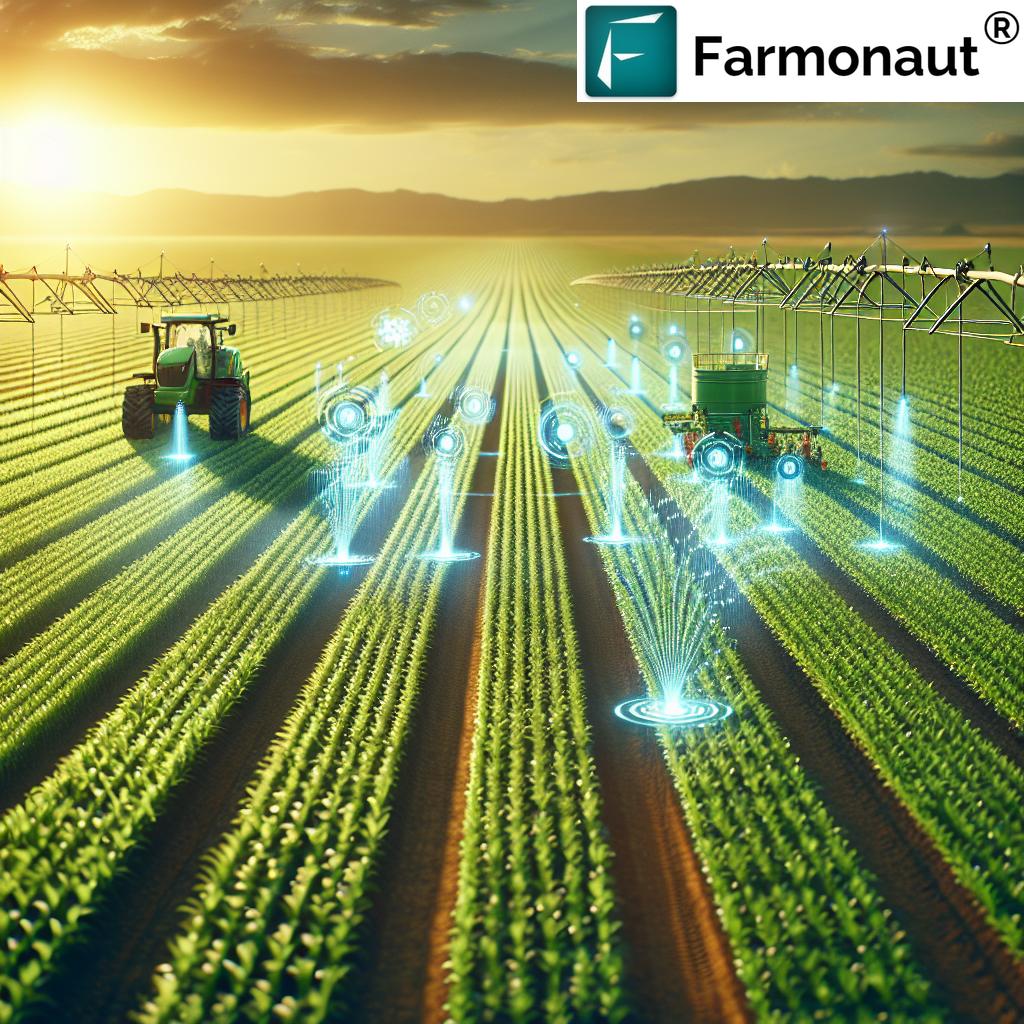
Automated irrigation systems employ integrated soil moisture sensors and AI-driven weather models to release water where and when crops need it—reducing waste and ensuring resilience in water-scarce regions.
- ✔ Maximized input efficiency — Only use water and chemicals where needed
- 📈 Higher yields — Reduce disease and nutrient stress
- ⚠ Lower environmental impact — Less runoff and emissions
- 🔄 Continuous monitoring — Problems detected in near real-time
- 🔒 Traceability enabled — End-to-end tracking of crop production (Read about blockchain traceability)
Sustainability and Environmental Impact: Greener Farming Instruments in 2025
Sustainable agriculture is more than a trend—it’s a central need for soil, water, and crop resilience in a changing climate. Instruments used for farming in 2025 are often designed with environmental stewardship in mind:
- ✔ No-till drills and conservation implements maintain soil structure and biodiversity.
- ✔ Solar-powered machines and biodegradable components reduce fossil fuel reliance and plastic waste.
- ✔ AI + satellite monitoring ensures minimal chemical usage through targeted spraying, cutting pollution at the source.
Interested in reducing your farm’s carbon footprint? Visit our Carbon Footprinting Solutions page to analyze, monitor, and report carbon emissions for compliance and operational improvement!

Accessibility, Affordability & Training for Farmers
The advances in farm instruments must remain accessible and affordable for a broad spectrum of producers, including smallholder and subsistence farmers in remote areas.
How 2025’s Instruments Offer Greater Access
- ✔ Modular Equipment: Manufacturers offer modular options—buy only necessary attachments for your farm’s needs.
- ✔ Subscription-based data platforms: Farmonaut enables cost-effective access to satellite & AI-driven farm monitoring—scalable to small farms or large businesses.
- ✔ Government subsidies and public-private schemes support the technology transition.
- ✔ Digital literacy and training: To ensure effective implementation and ongoing maintenance, organizations increasingly include hands-on training with instrument delivery.

Learn about rising adoption and affordable access to smart farming in 2025, and see how Farmonaut’s platform can support your transition to efficiency and sustainability.
- ✔ Subscription models lower upfront investment costs
- ✔ Mobile and remote access—Compatible with Android, iOS & web
- ✔ API access—Integrate insights into third-party platforms
- ✔ Custom solutions—Fit the unique needs of your farm enterprise
- ✔ Training & support—Empowering farmers for long-term adoption
The Future: Integration of Instruments & Satellite Insights in Agriculture 2026 and Beyond
As agriculture continues to evolve rapidly, the future of farm instruments is a seamless integration of hardware, data, and cloud services. The convergence of machines embedded with AI, real-time satellite observation, and blockchain traceability will empower producers to operate with unmatched efficiency, transparency, and environmental awareness.
- ✔ Farmers harness live insights from satellites and field sensors to adjust inputs, reduce waste, and maximize yields—field-by-field, hour-by-hour.
- ✔ Automated fleets communicate using IoT, managing operations from planting to harvest and even logistics.
- ✔ Environmental monitoring and carbon reporting tools help comply with regulations and access financial products built for modern, sustainable practices.
- ✔ API-enabled platforms like Farmonaut provide the digital ecosystem to build next-gen apps, advisory systems, and marketplace solutions.
- ✔ Blockchain traceability ensures supply chain authenticity, building trust with consumers and buyers in an increasingly globalized market.

FAQ: Farm Instruments in Modern Agriculture
What are the most essential farm instruments in 2025?
Core instruments include precision-enabled tractors (often with AI/automation), plows, seed drills, harvesters, multispectral drones, soil sensors, and smart irrigation systems. Integration with digital platforms (for example, Farmonaut) enhances their value by providing real-time insights and management tools.
How has technology changed the range of instruments used in farming?
The adoption of AI, machine learning, precision sensors, and sustainable materials has transformed traditional hardware into powerful, data-driven tools. Now, farmers can perform tasks remotely, automate routine operations, and make data-informed decisions—leading to reduced inputs, increased output, and environmental benefits.
Are advanced farm instruments affordable for smallholder farmers?
Affordability is improving with modular equipment options, subscription-based software (Farmonaut), and expanded access to government support and training programs. Many startups and technology companies offer scalable services designed for small and medium-scale operations.
What role do satellites and digital platforms play in modern instruments?
Satellites and digital platforms empower farmers to monitor vast lands, assess soil and crop health, and optimize operations with data-driven recommendations. Platforms like Farmonaut add value through real-time insights, resource mapping, and AI-advisory systems.
How do I integrate data from farm instruments into my workflow?
Many modern instruments feature built-in IoT connectivity and enable data sharing with digital management apps or via APIs. This data can be visualized, analyzed, and used to automate tasks or report for compliance, financing, and operational decision-making.
Conclusion: Farm Instruments at the Heart of Agriculture’s Transformation
In 2025 and beyond, farm instruments—from classic hand tools to AI-powered precision equipment—remain the foundation of modern, efficient, and sustainable farming. The landscape of agriculture will continue to evolve rapidly, driven by technological advancements, the need for resource management, and the imperative of environmental stewardship. By integrating traditional methods with cutting-edge machinery, sensors, and digital platforms like Farmonaut, producers can increase productivity, reduce losses, and adapt effectively to a changing world.
To meet the challenges of global food security, climate change, and sustainability, a wide variety of instruments—customized, modular, and data-driven—remain central to both smallholder and large-scale agriculture. As innovation accelerates, understanding the range and importance of instruments used in farming will be essential for every stakeholder—from farmers and agribusinesses to technology developers and policy makers.
Are you ready to transform your farm with advanced instruments and satellite-driven insights? Get started with Farmonaut today and harness the power of modern agriculture!