EPA WaterSense Irrigation Controllers: 5 Key Benefits for Sustainable Agriculture in 2026
“WaterSense irrigation controllers can reduce outdoor water use by up to 30%, saving billions of gallons annually, according to the EPA.”
“Over 13,000 irrigation controllers have earned the EPA WaterSense label, supporting water sustainability in U.S. agriculture.”
Table of Contents
- Introduction: The Water Crisis & Technological Solutions
- Understanding EPA WaterSense Irrigation Controllers
- Key Features of EPA WaterSense Irrigation Controllers
- Comparative Benefits: Traditional vs WaterSense Controllers
- EPA WaterSense Irrigation Controllers: 5 Key Benefits
- Sustainability & Productivity: Transforming Agriculture Across Regions
- Challenges and Future Prospects in 2026 & Beyond
- How Farmonaut Empowers Smart, Sustainable Agriculture
- FAQs on EPA WaterSense Irrigation Controllers
- Conclusion
Introduction: The Water Crisis & Technological Solutions
Water scarcity intensifies with each passing year. The Food and Agriculture Organization (FAO) estimates that agriculture consumes about 70% of global freshwater withdrawals. As climate variability poses unprecedented challenges to farming systems, the efficient use of every drop of water becomes paramount.
Innovative solutions are gaining traction among modern agricultural practitioners seeking to optimize resource management, enhance yields, and ensure environmental protection. One stand-out technology reshaping the future of irrigation is the EPA WaterSense irrigation controller. This technology is shaping sustainable agriculture in 2026 and beyond, setting new standards for irrigation efficiency, water conservation, and crop health.
EPA WaterSense irrigation controllers use real-time data and climate intelligence to reduce water use without compromising crop yield—an essential strategy for future-proofing food production.
The EPA WaterSense Program: An Overview
WaterSense is a program initiated by the U.S. Environmental Protection Agency (EPA) aimed at promoting water efficiency in the United States and globally. It accomplishes this by labeling products, programs, and services that meet stringent performance and efficiency criteria.
- WaterSense-labeled irrigation controllers are smart devices certified to reduce outdoor water use by at least 20% compared to conventional timers.
- Certification ensures devices meet rigorous standards for water performance, adaptability, and energy savings.
- Adoption is supported by agricultural policy and environmental sustainability initiatives.
By leveraging cutting-edge technology, these controllers enable both small-scale farmers and large agricultural operations to address the critical issue of water conservation with precision and reliability.
Understanding EPA WaterSense Irrigation Controllers
What makes EPA WaterSense irrigation controllers revolutionizing devices? Unlike traditional controllers that operate on fixed schedules regardless of actual weather or soil conditions, WaterSense-labeled devices utilize advanced inputs.
- Real-time weather data integration
- Soil moisture sensor compatibility
- Automated system adjustments based on local forecasts
- Remote monitoring via smart devices and farm management platforms
- Modular, scalable designs adaptable across different field sizes and crop types
These EPA WaterSense irrigation controllers minimize waste, prevent water stress, reduce runoff and soil leaching, and lower energy use. They allow farmers to irrigate crops only when needed and in the exact amount required, resulting in precise irrigation scheduling that supports healthy growth, environmental protection, and efficient resource use.
Integrating soil moisture sensors with your EPA WaterSense certified controller maximizes efficiency. Irrigate only when soil conditions demand it, reducing water and energy waste.
Key Features of EPA WaterSense Irrigation Controllers for 2026 & Beyond
1. Weather-Based Smart Scheduling
Modern EPA WaterSense irrigation controllers integrate with local weather stations or weather networks. This enables the controllers to:
- Access hyper-local forecasts to tailor irrigation to natural rainfall and drought cycles.
- Automatically delay irrigation after rain events, preventing overwatering and runoff losses.
- Adjust watering schedules in real-time during unpredictable weather patterns, which are becoming more frequent due to global climate variability.
This climate-responsive approach is critical for agricultural sustainability in regions increasingly affected by drought and weather uncertainties.
2. Integration with Soil Moisture Sensors
WaterSense-labeled controllers readily support inputs from soil moisture sensors. This means irrigation only occurs when the soil moisture level falls below a defined crop-specific threshold, preventing both water stress and excessive leaching of valuable nutrients.
Ignoring soil moisture readings leads to over-irrigation or water stress. Always validate sensor placement and calibration for optimal scheduling.
- Supports high-value and water-sensitive crops, reducing losses and maximizing yield.
- Enables fine-tuning for different soil types, regardless of their retention or drainage characteristics.
- Curbs nutrient leaching and protects soil health.
3. Remote Monitoring & Smart Connectivity
The new era of smart irrigation brings remote monitoring, instant alerts, and seamless integration with farm management platforms. EPA WaterSense irrigation controllers offer:
- Mobile and web-based access for monitoring irrigation status, scheduling, and weather/soil sensor data.
- Real-time push notifications/alerts for anomalies, failures, or upcoming maintenance needs — improving system uptime and reliability.
- Integration with resource management tools: such as
Farmonaut Fleet & Resource Management
for optimizing agricultural equipment use, monitoring, and sustainability tracking.
These capabilities empower farmers everywhere—from the United States to water-scarce regions in Africa and Asia—to take timely, data-driven actions, further minimizing waste and maximizing efficiency.
4. Modular & Scalable Designs
EPA WaterSense certified controllers are available in modular formats adaptable to all scales—from small orchards to large, commercial crop fields.
- Growers can add or remove zones as their operations expand or change.
- Supports diverse crop types and field configurations.
- Integration with legacy systems via smart add-on modules enables retrofits with minimal disruption.
This scalability ensures broad applicability and long-term value as farming evolves and adapts to new challenges and opportunities in 2026 and beyond.
Discover advanced solutions for large-scale farm management with Farmonaut’s modular tools.
5. Automated Compliance & Reporting
As environmental protection regulations tighten in 2026 and beyond, EPA WaterSense irrigation controllers simplify compliance by:
- Automatically tracking water use and system performance
- Generating reports for regulatory submissions and sustainability certifications
- Facilitating carbon footprinting efforts by providing concrete data on water and energy savings, supporting climate-resilient farming.
Comparative Benefits: Traditional vs EPA WaterSense Irrigation Controllers
| Feature/Benefit | Traditional Controllers (Estimated Value) | EPA WaterSense Controllers (Estimated Value) |
|---|---|---|
| Water Savings (%) | 0–10% | 20–30% |
| Energy Efficiency (%) | 5–12% | 20–25% |
| Annual Water Cost Savings (USD) | $0–$150/ha | $250–$700/ha |
| Environmental Impact (CO₂ Emission Reduction, tons/year) | 0.2–0.4 | 0.8–1.2 |
| Farm Yield Improvements (%) | 1–3% | 5–9% |
EPA WaterSense irrigation controllers deliver up to three times higher water savings, double the energy efficiency, and significant yield improvements compared to conventional irrigation scheduling methods.
Eco-efficient technology like EPA WaterSense irrigation controllers are increasingly recognized by carbon credit trading schemes. Early adopters can unlock new revenue streams through environmental stewardship.
EPA WaterSense Irrigation Controllers: 5 Key Benefits
-
Significant Water Conservation
EPA WaterSense irrigation controllers are designed to minimize water waste. Their smart sensors and climate-responsive algorithms cut unnecessary irrigation, ensuring precise delivery only where and when crops actually need it.
-
Energy Savings and Reduced Carbon Footprint
By shortening irrigation cycles and eliminating unnecessary pumping operations, these controllers reduce on-farm energy consumption. This not only saves costs but also cuts greenhouse gas emissions for sustainable resource management.
-
Enhanced Crop Health and Yield
Smart scheduling and soil moisture adjustment help in maintaining optimal plant conditions. This reduces chances of water stress or overwatering, leading to improved root health, nutrient uptake, and higher yields.
-
Soil Protection and Nutrient Preservation
Over-irrigation leads to nutrient leaching and soil salinization. EPA WaterSense controllers protect soil by delivering only the required amount of water, preserving essential nutrients and soil structure.
-
Automated Compliance and Sustainability Reporting
With built-in data tracking, these controllers make it easy to generate compliance reports for government and sustainability certifications, supporting efforts in environmental protection.
✔ Top EPA WaterSense Irrigation Controller Benefits:
- ✅ Significant reduction in water use
- ⚡ Improved energy efficiency
- 🌱 Better crop yields & plant health
- 🔒 Enhanced compliance with environmental standards
- 📉 Reduced operational costs
Assuming weather data alone is enough. Combine both weather-based scheduling and soil moisture sensor integration for best results.
📊 Five Ways EPA WaterSense Controllers Optimize Agriculture:
- 🌦️ Use local weather forecasts to reduce wastage.
- 📱 Remote alerts for scheduling maintenance and detecting system failures.
- ⚠️ Minimize overwatering and prevent nutrient runoff.
- 🔄 Align irrigation to actual crop stage and soil data.
- 🔗 API integration available for seamless data flow between monitoring systems and controllers.
Sustainability & Productivity: Transforming Agriculture Across Regions
The adoption of EPA WaterSense irrigation controllers aligns with modern sustainability and productivity goals within agriculture worldwide.
🌎 Global Agricultural Impact
- 🌍 Water conservation is now foundational for crop management in arid regions.
- 🌐 Controllers are integrated into modern smart farm networks for consistent data-driven decisions.
- 🌳 Farmonaut’s forestry and plantation advisory services support sustainable tree cropping, reforestation, and carbon offset measurement.
- 🤝 Links directly to national sustainability targets and food security initiatives, ensuring the future of farming.
Key Statistics:
- 💧 Water demand is projected to rise by 20% globally by 2030—emphasizing the need for smart irrigation solutions.
- 🌤️ Regions with variable weather benefit most from automated controller scheduling and soil moisture sensing.
- 🔄 Rotational crop systems paired with WaterSense technology can improve water-use efficiency by 25% or more.
Proper water and nutrient management prevents environmental issues like algae blooms and soil contamination—further highlighting the value of smart irrigation.
- ✔ WaterSense irrigation controllers enable precise resource use—boosting farm efficiency.
- 🌎 Support global sustainability targets and food security mandates.
- 📲 Real-time connectivity empowers quick response to climate anomalies.
- 🌱 Enhance crop quality, reduce disease, and optimize plant health using precision irrigation scheduling.
- 💹 Contribute to improved farm profitability and ecosystem health.
The Role of WaterSense Controllers by Region (2026+):
- North America: Integrated with satellite monitoring and soil diagnostics for regulatory compliance
- Europe: Emphasis on carbon neutrality and nitrate leaching controls
- Latin America: Critical for large irrigation projects and export-oriented agribusiness
- Asia & Africa: Addresses accessibility, affordability, and rapid climate variability
Challenges and Future Prospects in 2026 & Beyond
Overcoming Barriers to Adoption
- 💲 Upfront Cost and Technology Access: The initial investment can be significant for smallholder farmers, especially in developing regions. However, government incentives and cost reductions from market scale-up are helping lower barriers.
- 🛠️ Integration with Existing Infrastructure: Many farms operate with legacy irrigation systems. Adapting these to support smart controller technology sometimes requires technical upgrades and skill development.
- 📈 Need for Reliable Data: Smart scheduling relies on high-quality sensor and weather data. In regions with limited digital infrastructure, this can be a challenge.
Explore satellite-enabled crop insurance and loan verification to offset investment costs and access financial support linked to sustainable practices.
Emerging Solutions and Trends
- 🤖 AI and Machine Learning: Advanced machine learning now powers next-gen WaterSense controllers, providing crop-specific scheduling that accounts for both long-term weather patterns and real-time anomalies.
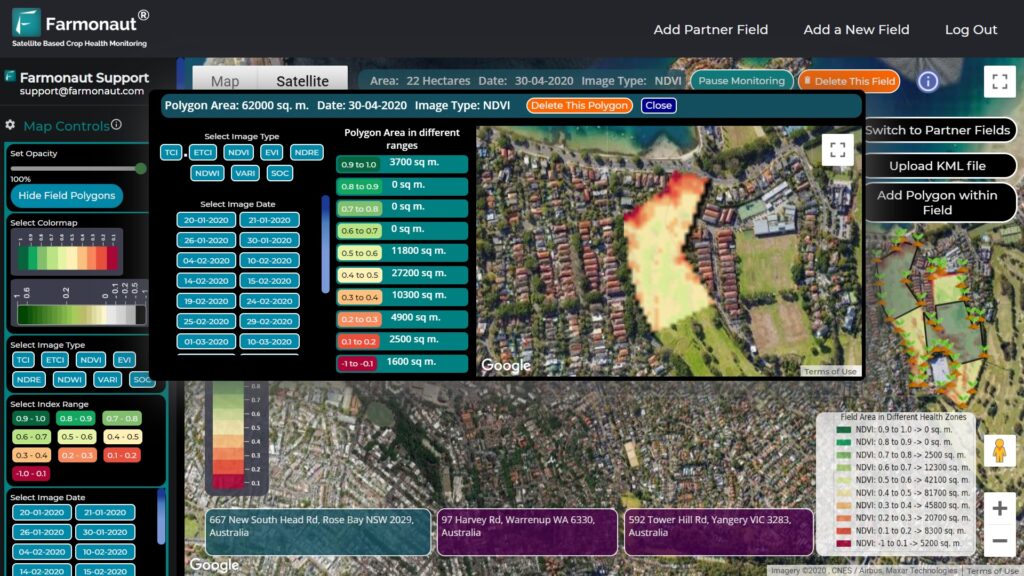
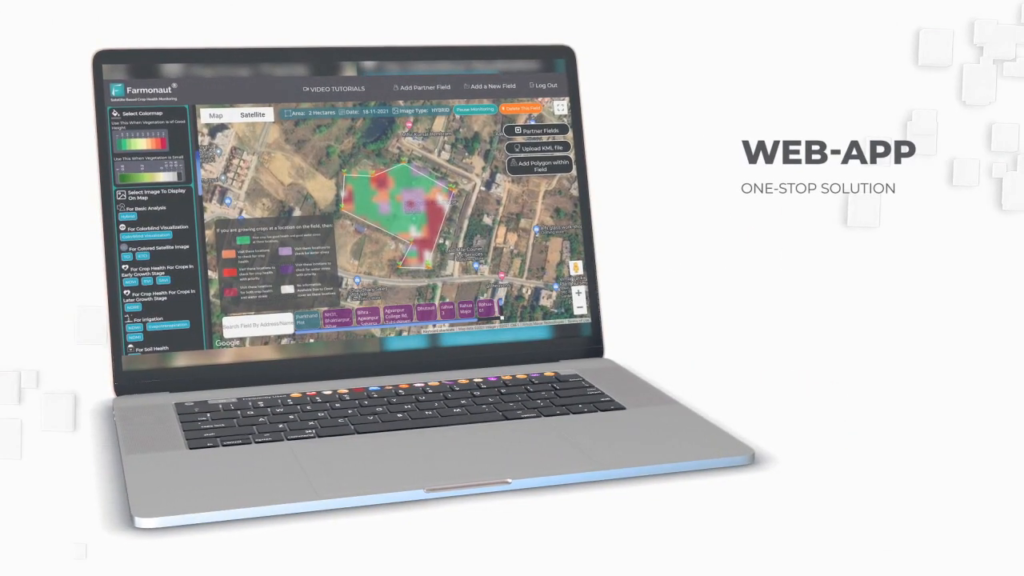
- 🌐 Satellite Remote Sensing: Our Farmonaut platform leverages satellite-driven NDVI and soil moisture data to inform and calibrate irrigation controller settings at scale.
- 💡 API-based Integration: Farmonaut’s API documentation is available for seamless incorporation with smart irrigation networks, simplifying remote monitoring and management.
- 📲 Mobile Accessibility: Growing smartphone penetration ensures that remote control, monitoring, and alerts are available to more stakeholders than ever before.
Digital transformation is driving a new green revolution. Companies providing smart irrigation and water management solutions are at the forefront of agtech investment growth in 2026.
How Farmonaut Empowers Smart, Sustainable Agriculture
As a pioneering satellite technology provider, we at Farmonaut are at the forefront of democratizing access to satellite-driven agriculture insights for users worldwide. Our integrated platform—available on Android, iOS, and web—makes it possible for farmers, businesses, governments, and financial institutions to access and apply data-driven solutions for irrigation, soil moisture monitoring, environmental protection, and farm management.
- Satellite-Based Monitoring: Real-time vegetation health (NDVI), soil moisture, and field stress mapping for precision resource use.
- Jeevn AI Advisory System: AI-powered insights and weather forecasts for advanced crop and irrigation scheduling.
- Blockchain Traceability: Secure, end-to-end product journey tracking for supply chain authenticity in agriculture. Learn about traceability for food safety and compliance.
- Fleet & Resource Management: Streamline logistics and monitor equipment with Farmonaut fleet tools for agricultural operations of any scale.
- Environmental Impact Monitoring: Track and reduce carbon emissions using satellite-based carbon footprinting solutions.
Our subscription-based model is scalable and accessible—designed for individual users and large-scale agricultural enterprises alike.



Explore Farmonaut API for satellite weather, soil, and crop data integration.
Combining Farmonaut’s satellite-driven environmental monitoring with EPA WaterSense irrigation controllers enables truly climate-resilient and sustainable agricultural systems.
FAQs on EPA WaterSense Irrigation Controllers
What is the EPA WaterSense label and why does it matter for irrigation controllers?
The EPA WaterSense label certifies that a controller meets strict EPA criteria for water efficiency and performance. Labeled controllers ensure at least 20% reduction in outdoor water use compared to conventional systems, making them vital for both environmental protection and cost savings.
How do WaterSense controllers help prevent water waste and runoff?
WaterSense controllers use real-time data—including local weather, soil moisture, and plant needs—to automatically adjust irrigation schedules and durations. This precision helps prevent overwatering, excessive runoff, and evaporation losses, preserving both water and soil health.
Can EPA WaterSense controllers be integrated with existing irrigation systems?
Yes. Most modern WaterSense controllers feature modular designs for seamless integration with a variety of irrigation infrastructures, including drip, sprinkler, and pivot systems. Retrofit modules are available for legacy equipment.
What are the typical water and energy cost savings?
Annual water savings can range from 20% to 30% and energy efficiency improvements are up to 25%. These can save farms hundreds of dollars per hectare every year, while boosting yields and reducing environmental impact.
Are there financial or policy incentives for adopting EPA WaterSense irrigation controllers?
In many regions, adoption of WaterSense-labeled products is supported by rebates, tax credits, and other incentives. These help offset initial investment and accelerate return on sustainability investments—check local programs for details.
Conclusion
As water scarcity intensifies and climate variability poses new challenges to agriculture, efficient irrigation management with advanced technology is not just an opportunity—it’s a necessity. EPA WaterSense irrigation controllers are at the forefront of this revolution, delivering measurable water, energy, and environmental savings while boosting productivity and crop health.
Nations, agribusinesses, and family farms alike face a pivotal choice: Adopt smart, data-driven irrigation to ensure sustainable food production for the future. With EPA WaterSense-labeled controllers and technology like Farmonaut’s affordable, scalable satellite platform, we can build a resilient, productive global agricultural system—one that thrives in 2026 and well beyond.
For actionable insights, real-time farm monitoring, and seamless integration with your WaterSense irrigation controllers, explore Farmonaut’s platform now.