Economic Impact of Sustainable Agriculture: 7 Key Benefits
Summary: The Economic Impact of Sustainable Agriculture in 2025
“Sustainable agriculture could reduce farming input costs by up to 30% by 2025, boosting profitability for farmers worldwide.”
Table of Contents
- Introduction
- Understanding Sustainable Agriculture in 2025
- Economic Impact of Sustainable Agriculture: Why It Matters
- 7 Key Economic Benefits Explained
- Comparative Benefits Table: Tangible Economic Outcomes
- Market Shifts & Trends in 2025 and Beyond
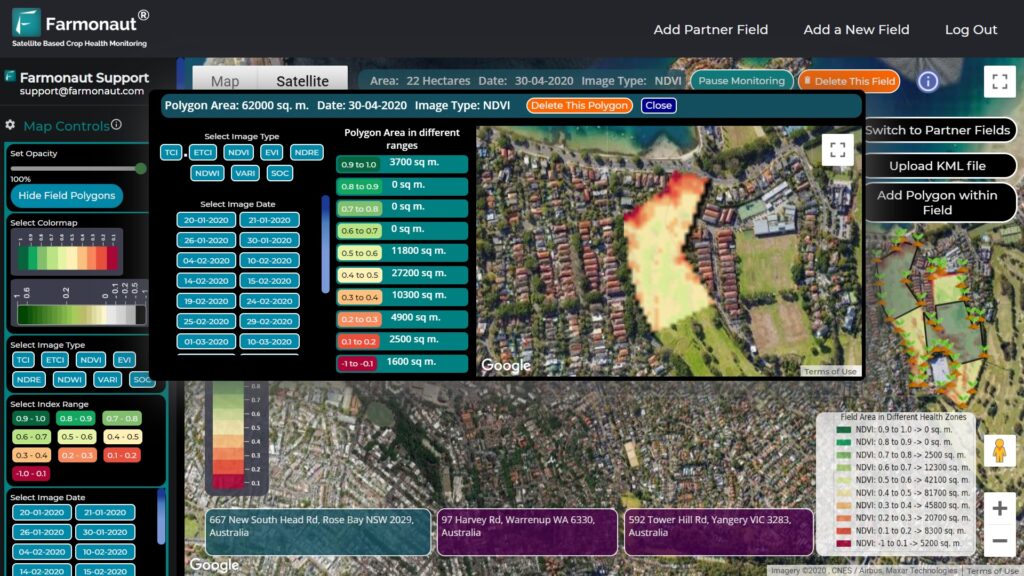
- Role of Digital & Satellite Technology: Unlocking Potential
- Callout Highlights & Pro Tips
- Strengthening Rural Economies and Job Creation
- Environmental and Societal Economic Effects
- Challenges, Limitations & Opportunities
- Farmonaut Subscription Options
- FAQ: Economic Impact of Sustainable Agriculture
- Conclusion
Introduction
As the global population continues to rise and climate change intensifies, the agriculture sector faces mounting pressure to produce more food while preserving natural resources. Sustainable agriculture—encompassing environmentally friendly practices, social equity, and long-term economic viability—is no longer just a trend; it’s the future of farming.
Fast-forward to 2025 (and looking toward 2026+), the economic impact of sustainable agriculture is both profound and measurable, influencing the way communities farm, markets function, and national economies grow. Farmers, businesses, policy-makers, and rural economies are all stakeholders in this paradigm shift.
In this comprehensive guide, we will explore the 7 key economic benefits of sustainable agriculture, the market and technology trends shaping its adoption, and how this green transition boosts profitability, resilience, and rural prosperity—globally and locally.

Understanding Sustainable Agriculture in 2025
Sustainable agriculture refers to farming systems and practices that balance productivity, environmental stewardship, and social responsibility. These systems aim to:
- ✔ Preserve soil health (reducing degradation and improving fertility)
- ✔ Minimize water and chemical use (protecting finite natural resources)
- ✔ Enhance biodiversity (supporting ecological balance)
- ✔ Strengthen rural economies and social equity (empowering farmers and communities)
- ✔ Ensure economic viability (delivering market and income benefits)
Key Practices Include:
- 🌾 Crop rotation & diversification
- 🌳 Agroforestry
- 🐞 Integrated pest management & biological controls
- 🌱 Organic and reduced-input farming
- 🚜 Reduced tillage (conservation tillage)
The rapid rise in sustainable and organic food demand—driven by global consumer awareness and regulatory policies—means that the **economics of sustainable agriculture** is no longer theoretical. It’s reality.
By 2025, sustainable farming systems are estimated to cover over 15% of global agricultural land—reflecting a massive shift in how we grow our food and manage natural resources.
Economic Impact of Sustainable Agriculture: Why It Matters
The economic impact of sustainable agriculture is multi-dimensional, affecting everything from farmers’ profitability and rural employment to market trends and national economies. At its core, the movement is about balancing productivity with conservation, thereby ensuring that agriculture continues to thrive amid climate pressures and resource constraints.
Key drivers for the agriculture economic impact include:
- 📊 Reducing input costs through efficient practices and natural fertilizers
- 📈 Increasing resilience to economic and climate shocks
- 💲 Accessing premium markets via organic, fair-trade, and sustainably sourced food products
- 🔎 Stimulating rural economies with job growth and income diversification
- 🛡️ Decreasing negative externalities, like pollution and soil degradation, that strain national budgets
The aim is to create a sustainable, thriving agricultural economy that benefits farmers, consumers, and our planet for generations to come.

7 Key Economic Benefits of Sustainable Agriculture
Let’s break down the seven most impactful economic benefits of sustainable agriculture in 2025 and beyond. This list synthesizes financial, social, and market advantages—anchored by estimations relevant for farmers, agribusiness leaders, and policymakers globally.
- Reduced Input Costs
Sustainable agricultural practices (like crop rotation, organic composting, and integrated pest management) enable farmers to cut down on expensive synthetic fertilizers and pesticides. By 2025, farming operations leveraging these techniques may see up to 30% reduction in input costs per hectare—resulting in higher overall farm profitability and lower financial risk.- ✔ Lower dependence on purchased chemicals
- ✔ Savings on irrigation and energy
- ✔ Lower fuel costs via reduced tillage methods
- Increased Farm Resilience & Yield Stability
Sustainable systems make farms more resilient to unpredictable weather, droughts, floods, and pest outbreaks—commonplace in the 2025 climate scenario. Enhanced soil health, diversified cropping, and improved water management help maintain stable yields and reduce losses caused by extreme weather. Yield fluctuation could drop by 20-35% in resilient, sustainable systems.- ✔ Reduced crop losses
- ✔ More reliable income for farm families
- Access to Premium Markets & Price Uplift
Consumer demand for organic, fair-trade, and sustainably sourced products continues to soar in 2025. Farmers who adopt sustainable methods gain access to premium markets and can often secure 20-40% higher selling prices for their produce.- ✔ Diversification into new, lucrative supply chains
- ✔ Branding and traceability opportunities
Farmonaut’s Blockchain Traceability solutions empower farmers and agri-businesses to transparently showcase their sustainable production methods, opening doors to premium global markets.
- Rural Employment Growth & Economic Diversification
With the shift to sustainable systems (e.g., diversified cropping, agro-processing), new job opportunities are created—especially in post-harvest handling, value-added processing, advisory services, and agri-tourism. Rural employment may increase by up to 10%—slowing urban migration and supporting broader community growth.- ✔ Empowering youth and women in rural economies
- ✔ Strengthening secondary businesses (transport, logistics)
- Reduced Societal & Environmental Costs
Conventional agriculture’s hidden costs—like healthcare for pesticide exposure, water purification, soil erosion repairs, and carbon offset programs—can be significant. Sustainable agriculture dramatically reduces these externalities, with overall societal savings estimated up to $120–$180/ha yearly in some regions.- ✔ Improved community health
- ✔ Stronger ecosystem services (pollination, clean water)
Farmonaut offers robust carbon footprinting tools for agriculture, helping users and governments accurately monitor and reduce their environmental impacts in real time.
- Enhanced Long-Term Productivity and Soil Health
By improving soil fertility, reducing erosion, and increasing organic content, sustainable practices increase the productive lifespan of farmland. This not only enables higher cumulative yields over time but also reduces the risk of land abandonment due to degradation—a major issue in many developing countries.- ✔ Soil organic carbon can increase by 15–40% within 5 years
- ✔ Reduced need for remediation projects
- Greater Access to Finance & Insurance
Lenders and insurers increasingly reward sustainable farms since they are less risky and have more reliable production metrics. Satellite monitoring and digital verification (like those offered via Farmonaut’s crop loan & insurance verification tools) simplify the process for smallholders to access affordable loans and insurance—fueling agricultural growth and innovation.- ✔ Lower loan defaults for lenders
- ✔ Faster payouts in case of crop losses

“By 2026, global investment in sustainable agriculture technologies is projected to surpass $100 billion, with strong demand for solutions that boost yield stability, reduce risk, and improve traceability.”
Comparative Benefits Table: Tangible Economic Outcomes in 2025
- 💰 Cost Savings
- 🌎 Resilience
- 🛒 Premium Market Access
- 👨🌾 Employment Growth
- 🍃 Reduced Environmental Footprint
- 📈 Enhanced Productivity
- 🏦 Financing Benefits
“By 2025, resilient sustainable farming may increase rural employment by 10%, strengthening local economies significantly.”
Market Shifts & Trends: The Economic Impact on Agriculture in 2025 and Beyond
The market economics of sustainable agriculture continue to evolve rapidly:
- 📊 Markets for organic and sustainably sourced products are projected to grow at 12–16% CAGR globally through 2026
- 💸 Consumer willingness to pay for sustainability premiums is driving higher farmer incomes
- 🌍 Export opportunities expand for countries prioritizing traceable, eco-friendly goods
- ⚠️ Producers not meeting environmental standards risk losing market share to sustainable competitors
- 🛠️ Governments and international bodies increasingly subsidize and support sustainable practices
This dynamic is not only about food but also about textiles, beverages, and bio-based products—reshaping entire economies and national trade patterns.

Combine organic farming with digital traceability to maximize premium market access and future-proof your agri business.
Learn more about Farmonaut’s traceability platform →
The Role of Digital & Satellite Technology in Sustainable Agriculture Economics
Technology is central to unlocking the maximum economic impact of sustainable agriculture systems. In 2025 and beyond, platforms like Farmonaut are revolutionizing how farmers, governments, and agribusinesses monitor, measure, and monetize their green transition.
How Satellite & Precision Agriculture Contribute:
- ✔ Real-time monitoring of crop health, soil conditions, and water use allows for more efficient input application (fertilizer, water) — reducing costs and waste.
- ✔ AI-based advisory systems (e.g., Jeevn AI) empower users with dynamic, data-driven decisions—boosting resilience and productivity.
- ✔ Blockchain-based traceability unlocks access to exporters, retailers, and consumers demanding verified sustainable sourcing, driving up market value.
- ✔ Fleet and resource management tools (see Farmonaut fleet solutions) reduce logistics and energy costs for large agri operations.
By integrating advanced technology, farmers are able to not only cut costs and risks but also deliver superior sustainability credentials, setting themselves apart in a competitive, change-driven market.




Relying solely on “one-size-fits-all” solutions. Each farm’s sustainable transition is unique: data-driven advisories, local climate, and existing systems must be tailored to maximize the economic impact on agriculture.
Strengthening Rural Economies and Job Creation
Sustainable agriculture does not just improve farm incomes—it lifts entire rural economies. Here’s how:
- ✔ Job Creation: Diversified, sustainable systems require more field labor, agro-processing roles, and knowledge-based service jobs. Rural underemployment drops, and smallholder livelihoods are stabilized.
- ✔ Income Diversification: Practices like agroforestry, cover cropping, and value-added food processing boost non-commodity revenue streams, buffering rural economies from price shocks.
- ✔ Local Infrastructure Growth: Communities benefit from improved rural roads, storage, and micro-credit, as sustainable markets require efficient supply chains.
- ✔ Social Equity: Farmer cooperatives, women’s groups, and youth agri-enterprises grow within sustainable markets, reducing inequalities.
Farmonaut services support local governments, agribusinesses, and community organizations with satellite-based monitoring and AI-powered resource management, empowering them to make strategic decisions for growth and sustainability.

Environmental and Societal Economic Effects: Beyond the Farm
The economics of sustainable agriculture go well beyond the balance sheet of an individual farm; they ripple throughout society:
- 🌱 Preventing soil degradation saves governments billions in remediation and lost productivity.
- 🚰 Cleaner water and healthier ecosystems reduce community health costs and support sustainable fisheries, forestry, and tourism businesses.
- ♻️ Lower GHG emissions help nations meet climate goals, reducing the fiscal burden of carbon offsetting programs.
- 💼 Stable agricultural foundation increases food security and lowers volatility in food prices—benefiting urban as well as rural populations.
New policies in 2025—ahead of COP28 and similar global summits—are tying subsidies, insurance, and trade privileges to environmental performance metrics. Tools for carbon footprinting and traceability will be essential for compliance and growth.

🌿 Sustainability Impact List
- ✔ Reduced surface and groundwater contamination
- ✔ Enhanced pollinator and biodiversity support
- ✔ Lowered carbon emissions per kg of food produced
- ✔ Resilient, healthy community food systems

Countries that incentivize sustainable agriculture see measurable reductions in public health costs, disaster recovery spending, and environmental remediation expenses—freeing national budgets for infrastructure and education investment.
Challenges, Limitations & Opportunities for the Future
While the economic impact of sustainable agriculture is overwhelmingly positive, some obstacles remain:
- ⚠️ Transition hurdles: Initial switch-over costs (training, systems changes) can be significant for some smallholders.
- 🔄 Market access: Not all farmers globally can easily tap into premium supply chains.
- 📉 Knowledge & advisory gaps: Farmers need robust extension, data, and digital decision support—highlighting the importance of tools like those offered via Farmonaut’s large-scale farm management platform.
- 💳 Financing the transition: While sustainable farms are lower risk, upfront credit for tools and system changes must be accessible.
- 💡 Policy and infrastructure: Governments must create regulatory and logistic frameworks that support—and not block—sustainable innovation.
Farmonaut addresses these limitations with affordable satellite solutions, advisory tools, and APIs for integration with agri-finance and crop insurance—bringing sustainable, climate-smart farming within reach for all.
Start exploring Farmonaut’s API for seamless integration with your agriculture software or enterprise system:
Farmonaut API → |
Developer Docs
The transition to sustainable agriculture is catalyzing unprecedented demand for high-resolution satellite data, digital mapping, and remote verification services—opening new markets in agtech, mining, insurance, and more.
Farmonaut Subscription Options
Farmonaut democratizes cutting-edge technology by offering affordable, scalable subscription packages—designed for individual farmers, agribusinesses, government planners, and enterprise clients alike.
Choose from real-time field monitoring, carbon footprinting, AI advisory, blockchain traceability, and more. Customize your plan to unlock the full economic and sustainability benefits for your operation.
Top 5 Economic Takeaways 📚
- ✔ Up to 30% cost reduction through sustainable practices and technology
- ✔ Yield stability improves by 20–35%—crucial as climate unpredictability grows
- ✔ Rural job growth reaches 10%, revitalizing local economies
- ✔ Access to premium markets and finance are direct rewards for sustainability adoption
- ✔ National environmental savings (GHG, water, health) boost broader economies
FAQ: Economic Impact of Sustainable Agriculture
1. What defines the economic impact of sustainable agriculture?
It’s a combination of direct cost savings, higher prices in premium markets, enhanced resilience/yield stability, and broader impacts like job creation, improved community health, and reduced environmental remediation costs.
2. How are input costs reduced in sustainable farming?
Through practices such as organic composting, efficient irrigation, integrated pest management, and reduced tillage, dependency on synthetic (and expensive) fertilizers and pesticides decreases, lowering both cash outflows and environmental risks.
3. How do technology platforms like Farmonaut contribute?
Farmonaut provides satellite-driven monitoring, AI advisory, blockchain traceability, and resource management—all helping farmers cut waste, optimize yields, access finance, meet compliance, and demonstrate sustainability to markets.
4. Does sustainable agriculture always mean lower yields?
No—while some transitions see initial drops, sustainable techniques (especially with digital support) often result in equal or higher yields over time—especially due to increased soil fertility and climate resilience.
5. How do I start transitioning to sustainable methods?
Begin with soil testing, switching inputs gradually, and leveraging digital monitoring and advisory tools. Farmonaut’s web, Android, and iOS apps help make this transition measurable and actionable for operations of any size.
Conclusion: Investing in the Economics of Sustainability
As we enter 2026 and beyond, the economic impact of sustainable agriculture is becoming not only tangible but transformative for farmers, communities, and nations globally. The core benefits—cost savings, resilience, new income, job creation, and reduced environmental liabilities—secure food systems and foster prosperity from the field to the national GDP.
Market access, policy incentives, and digital technology adoption will all be essential in scaling these economic advantages. Satellite-powered platforms like Farmonaut are making green transitions accessible, affordable, and measurable—empowering every stakeholder in the agricultural value chain.
In a world where agriculture’s economic impact on society continues to expand, investing in sustainability is more than an ethical imperative; it’s a strategic move for long-term growth, food security, and environmental stewardship.
Ready to unlock the economic benefits of sustainable agriculture for your operation?
Try Farmonaut today →