Drones in Agriculture Applications: 7 Powerful Innovations
“Drones equipped with multispectral sensors can scan up to 500 acres of farmland per flight in 2025 innovations.”
Table of Contents
- Introduction
- How Drones & 2025 Technologies Are Revolutionizing Agriculture
- 7 Powerful Innovations: Drone Applications in Agriculture
- Comparison Table of Drone Applications in Agriculture
- AI, IoT, and GIS: The Pillars of Smart Agriculture
- Precision Farming in 2026 & Beyond
- Farmonaut Technologies: Advanced Solutions for Smart Agriculture
- FAQs: Drones in Agriculture Applications
- Conclusion: Future of Agriculture with Drones, AI, IoT, and GIS
Introduction
In the rapidly evolving world of agriculture, technology is at the forefront of the ongoing transformation in farming practices. As we move into 2025 and beyond, the applications of drones in agriculture—combined with the integration of AI, IoT, and GIS—are fundamentally changing the way farmers monitor, manage, and optimize crop production. These innovations are not just improving yields, but are also promoting more sustainable agricultural practices that address the urgent challenges of food security, climate change, and resource optimization.
This blog explores the seven most impactful drone applications in farming, reveals the deep synergies enabled by AI, IoT, and GIS, and shows why 2026 and the future offer an exciting, efficient, and sustainable era for agriculture. Whether you’re a forward-thinking farmer, technologist, policymaker, or simply curious about smart farming, this comprehensive guide brings you all the key insights and actionable information you need.
“By 2025, over 65% of precision farming operations will integrate AI, IoT, and GIS with drones for data analysis.”

How Drones & 2025 Technologies Are Revolutionizing Agriculture
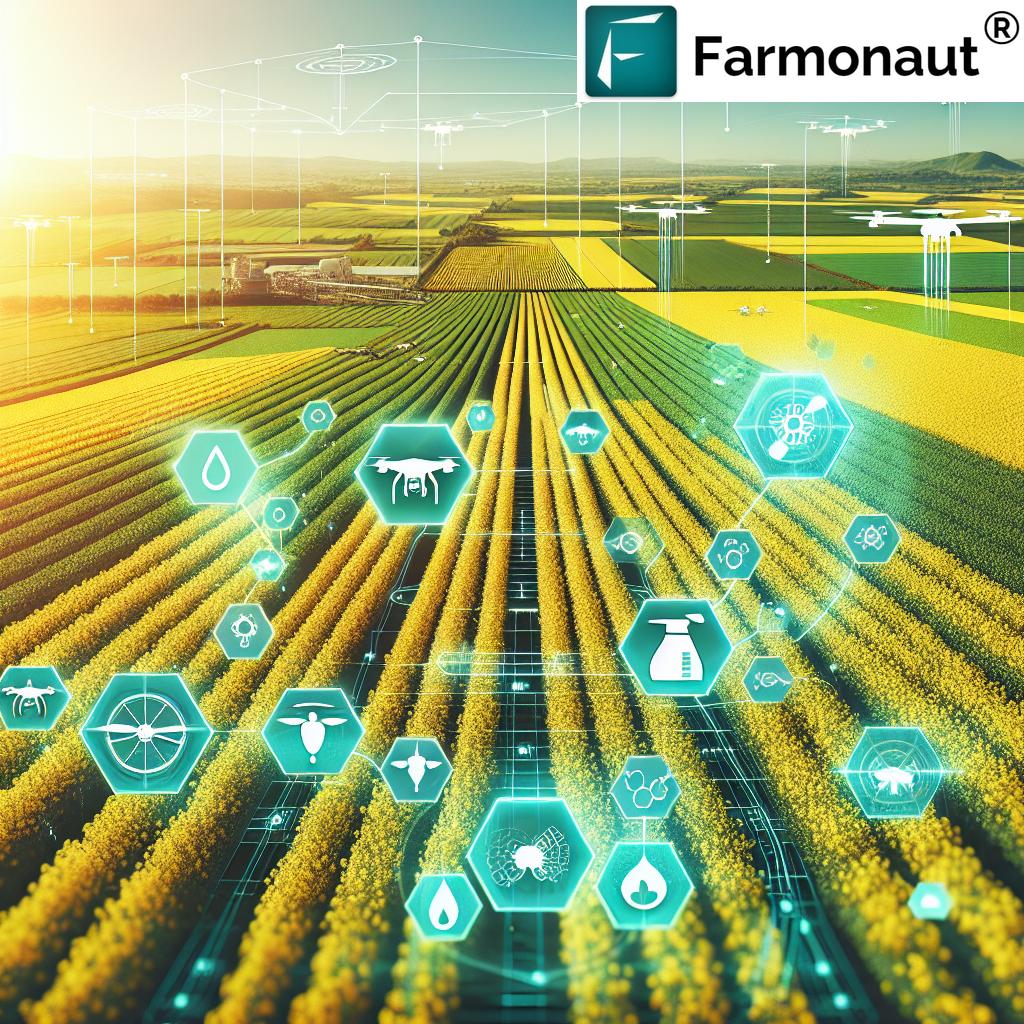
The rapid adoption of drones in agriculture applications is leading to a transformative shift in farming methods. Modern drones equipped with advanced sensors—such as multispectral, hyperspectral, and thermal cameras—now provide high-precision, real-time aerial imagery and data over large tracts of land. This transformation has reduced time, labor, and costs associated with ground inspections, while enabling new, efficient applications that combine AI-driven recommendations and smart management systems.
- ✔ Drones detect crop stress before damage is visible to the naked eye.
- 📊 Integrates IoT weather data to adjust drought or irrigation plans dynamically.
- ⚠ Risk: Data overload; ensure robust data management for optimal decision-making.
- ✔ Enables precision spraying—reducing chemical and water usage.
- 📊 Promotes climate-smart solutions for sustainable farming.
Visual List: Technologies Impacting Modern Agriculture
- 🚁 Drone Surveillance: Multispectral imaging for crop health and soil analysis
- 💡 Artificial Intelligence (AI): Predictive analytics and early disease detection
- 🌐 Internet of Things (IoT): Real-time field data from distributed sensors
- 🗺️ Geographic Information Systems (GIS): Precision mapping for site-specific management
For advanced carbon footprint monitoring and reduction in agriculture, explore Farmonaut’s Carbon Footprinting Solution—designed to track and guide sustainable farming activities.
7 Powerful Innovations: Drone Applications in Agriculture
The following seven applications of drones in agriculture are setting revolutionary new standards in 2025 and will continue to lead the way throughout 2026 and beyond:
-
1. Crop Health Monitoring & Stress Detection
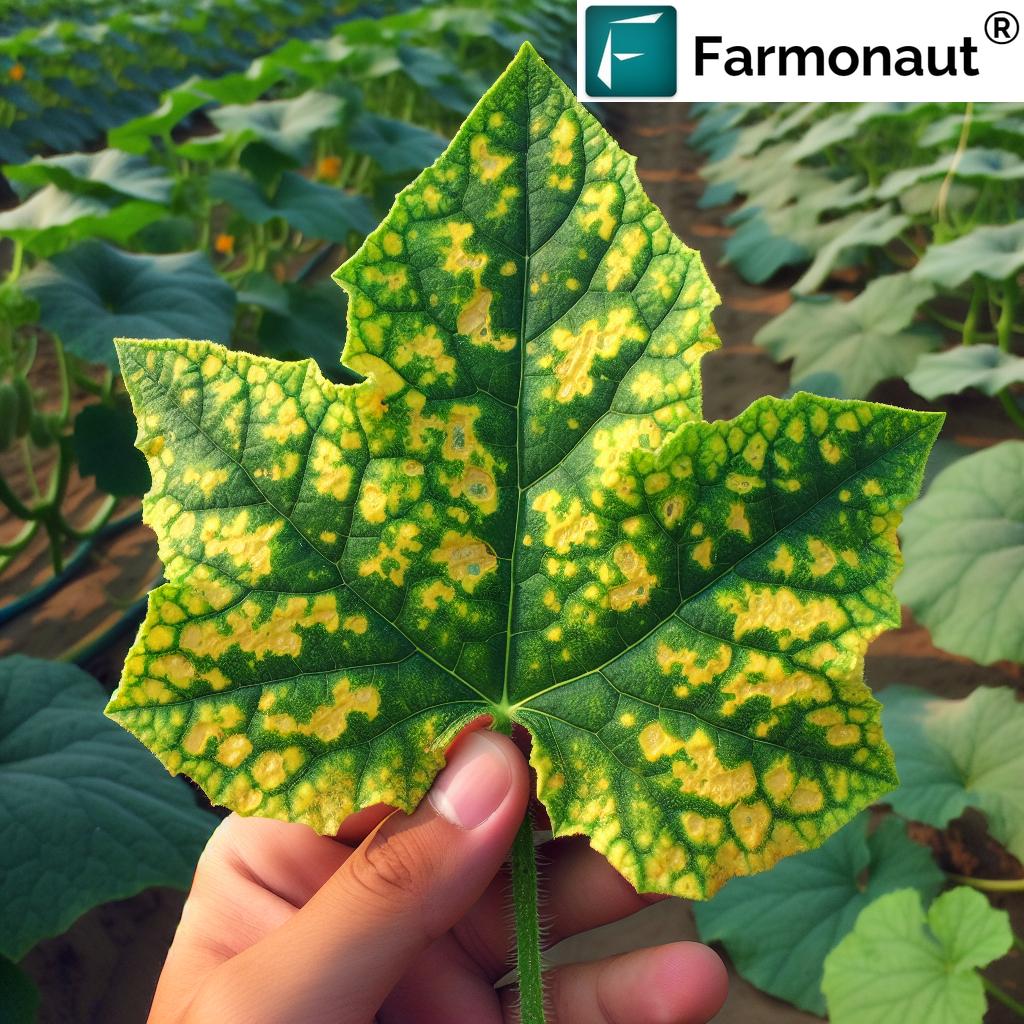
Drones equipped with multispectral and thermal sensors rapidly scan crops, identify health conditions, and detect pest infestations or disease outbreaks at an early stage. Data-driven insights enable farmers to react swiftly, preventing crop loss and optimizing yields.
Drone-generated aerial imagery is processed by AI algorithms, which highlight stressed zones, soil moisture deficits, and nutrient imbalances.
- ✔ Improves resource allocation for treatments
- 📊 Provides historical patterns of crop stress for predictive interventions
- ⚠ Risk: Overreliance on AI models that are not regularly updated can decrease accuracy
Smart Link: Monitor your cropland remotely with Farmonaut’s Large Scale Farm Management App—perfect for managers and agronomists operating at any scale across diverse terrains.
-
2. Precision Spraying of Fertilizers, Pesticides, and Herbicides
Powered with AI route-planning and GIS spatial mapping, drone systems can perform targeted spraying to precisely deliver fertilizers, herbicides, and pesticides—only where and when they’re needed.
- ✔ Reduces chemical usage and environmental impact
- 📊 Lowers water consumption through efficient, site-specific spraying
- ⚠ Limitation: Battery life may restrict flight range in remote or rugged terrains
These approaches are crucial parts of Farmonaut’s blockchain traceability systems, providing evidence of sustainable chemical use and environmental stewardship.
-
3. Soil Analysis and Fertility Mapping
Multi-layer drone imagery provides detailed soil condition maps, showing organic matter, compaction, salinity, and moisture. When combined with IoT in agriculture applications, drones deliver a 360° soil management view.
- ✔ Enables customized fertilizer recommendations and reduces wastage
- 📊 AI models analyze spatial datasets for site-specific treatments
- ⚠ Limitation: Variation in terrain may require repeated flights for high-resolution coverage
Unlock API access to real-time soil and crop condition data for your own apps via Farmonaut’s Satellite Soil & Crop API and review our developer resources.
-
4. Automated Planting & Variable Rate Seeding
Drone-based planting systems are re-shaping how we establish new crops. Guided by GIS maps and AI-driven prescription plans, drones disperse seeds at optimal depths and densities for each microzone, adapting to soil, topography, and predicted weather patterns.
- ✔ Promotes uniform crop emergence and maximizes land use
- 📊 Reduces manual labor costs for large-scale sowing operations
- ⚠ Limitation: Initial setup requires high-precision field mapping
Discover satellite-based advisories for crop plantation and forest guidance solutions via Farmonaut’s Crop Plantation and Forest Advisory.
-
5. Real-Time Weather and Environmental Monitoring
Drones with integrated IoT weather sensors and live connections to ground devices collect hyper-local climate data: temperature, humidity, wind, and surface moisture. This information is crucial for actionable in-field decisions on irrigation timing, chemical application, and harvest scheduling.
- ✔ Allows for dynamic response to changing field/weather conditions
- 📊 AI models predict optimal interventions to lower risk
- ⚠ Common Mistake: Relying only on either drone or ground sensor data; always integrate for best accuracy
-
6. Livestock and Asset Tracking
Advanced drone systems assist with real-time livestock monitoring and tracking of farm assets via RFID/IoT tags and machine vision. Drones survey large pastures, check animal health and count, and rapidly identify missing or distressed animals.
- ✔ Minimizes loss and enhances animal welfare
- 📊 Informs more efficient grazing and movement systems
- ⚠ Risk: Data privacy and system reliability—ensure compliance and robust backup protocols
Investor Note: The global market for smart livestock monitoring is projected to grow by 18% CAGR through 2030, highlighting strong momentum.
For agriculture fleets and equipment, Farmonaut’s Fleet Management Tools streamline vehicle deployment and increase operational efficiency—ideal for both businesses and individual farm managers.
-
7. GIS-Driven Crop & Disaster Risk Mapping
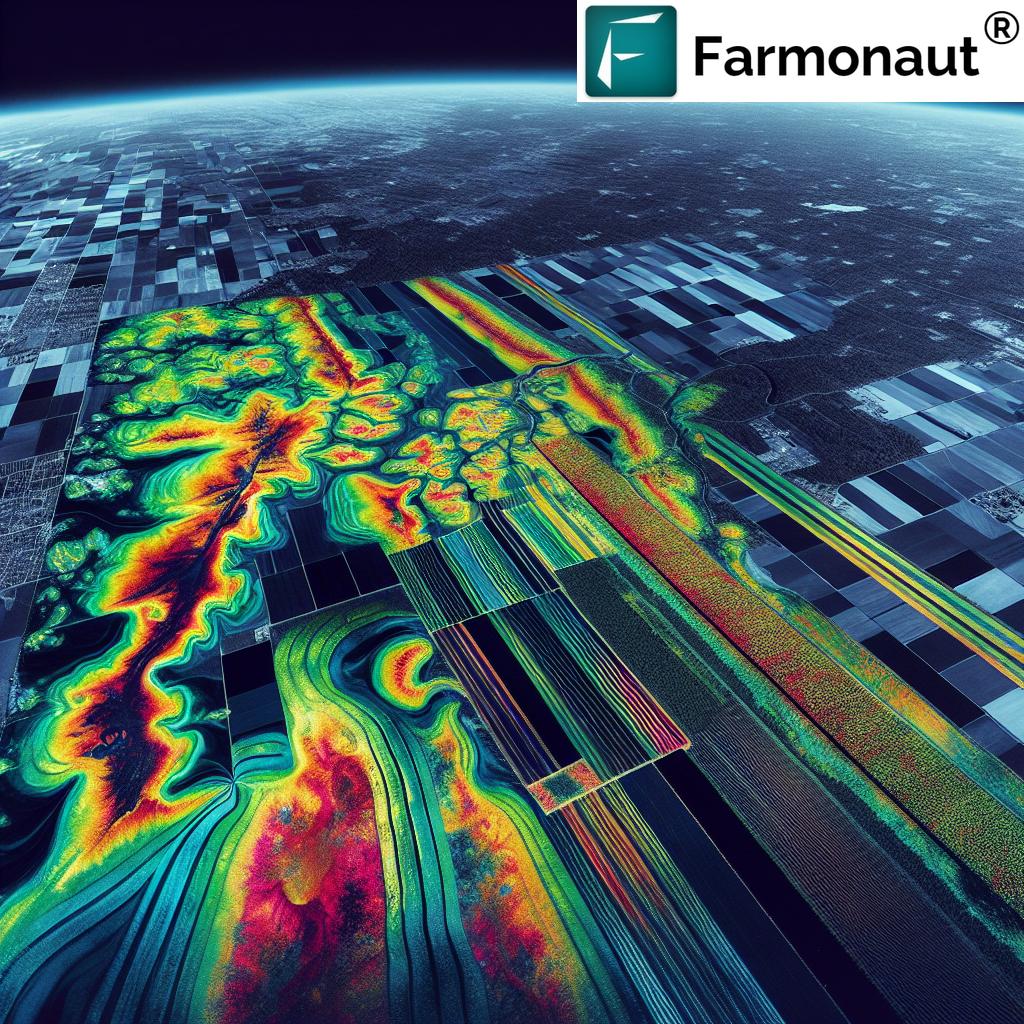
Applications of GIS in agriculture come alive through drones—producing spatial data to assess drought risk, detect flood zones, and map field-level variability. GIS overlays from drones inform emergency planning and adaptive crop strategies.
- ✔ Helps farmers proactively adapt to climate change
- 📊 Guides site-specific intervention, reducing losses and input waste
- ⚠ Limitation: Requires high-quality geolocation for the most accurate mapping
Comparison Table of Drone Applications in Agriculture
| Drone Application | AI/IoT/GIS Integration Level | Key Benefits | Estimated Efficiency Improvement (%) | Sustainability Impact |
|---|---|---|---|---|
| Crop Health Monitoring | High | Increased yield, early disease detection | 20-35% | Reduced input use, better land management |
| Precision Spraying | Moderate-High | Reduced costs, minimized chemical use | 15-30% | Water saving, less chemical runoff |
| Soil Analysis | High | Better fertilizer efficiency | 18-28% | Nutrient management, soil conservation |
| Automated Planting | High | Labor savings, uniform emergence | 12-22% | Reduced overplanting/waste |
| Environmental Monitoring | High | Timely decisions, disaster avoidance | 10-25% | Better water use, reduced crop loss |
| Livestock & Asset Tracking | Moderate | Improved animal welfare, loss reduction | 8-18% | Less grazing pressure, healthier livestock |
| GIS-Driven Risk Mapping | High | Risk reduction, targeted intervention | 15-27% | Minimized loss from natural disasters |
Key Benefits of Drone Innovations in Agriculture
- ✔ Maximize yields with data-driven precision farming.
- 📊 Reduce resource waste—less fertilizer, pesticide, and water.
- ✔ Lower operational costs through automation and efficiency.
- ✔ Boost sustainability by reducing environmental impact.
- 📊 Empower smallholders with affordable, scalable technology.
Visual List: Integration Across the Farming Landscape
- 🌱 Smallholder Farms: Access affordable insights via turnkey apps
- 🚜 Large Enterprises: Manage thousands of acres with unified dashboards & satellite data
- 🏬 Cooperatives: Share pooled data and forecasting for risk management
- 🌍 Governments: Monitor food security and enforce sustainable policies
“By 2025, over 65% of precision farming operations will integrate AI, IoT, and GIS with drones for data analysis.”



Farmonaut’s intelligent platform is available on Web, Android, and iOS for dynamic crop, soil, and resource management—discover more and streamline your operations today!
AI, IoT, and GIS: The Pillars of Smart Agriculture
Applications of AI in Agriculture
In 2025, artificial intelligence (AI) is truly the core of data-driven agriculture. AI-powered algorithms comb through vast datasets—from drones, IoT sensors, satellite imagery, and historical weather patterns—to deliver actionable insights. Sophisticated machine learning models predict crop yields, detect diseases early, and recommend optimal planting and harvesting times.
- ✔ Detect diseases before visual symptoms manifest
- ✔ Automate irrigation and nutrient management
- 📊 AI integration reduces decision fatigue and maximizes output
IoT in Agriculture Applications
The Internet of Things (IoT) ecosystem in farming comprises a vast network of interconnected devices and sensors. IoT provides real-time data on soil moisture, temperature, humidity, nutrient levels, and weather conditions. These streams are essential for smart irrigation, resource optimization, and farm-to-fork traceability.
- ✔ Conserves water with targeted irrigation
- ✔ Improves food safety and quality with end-to-end tracking
- ✔ Boosts operational efficiency by automating manual observations
Applications of GIS in Agriculture
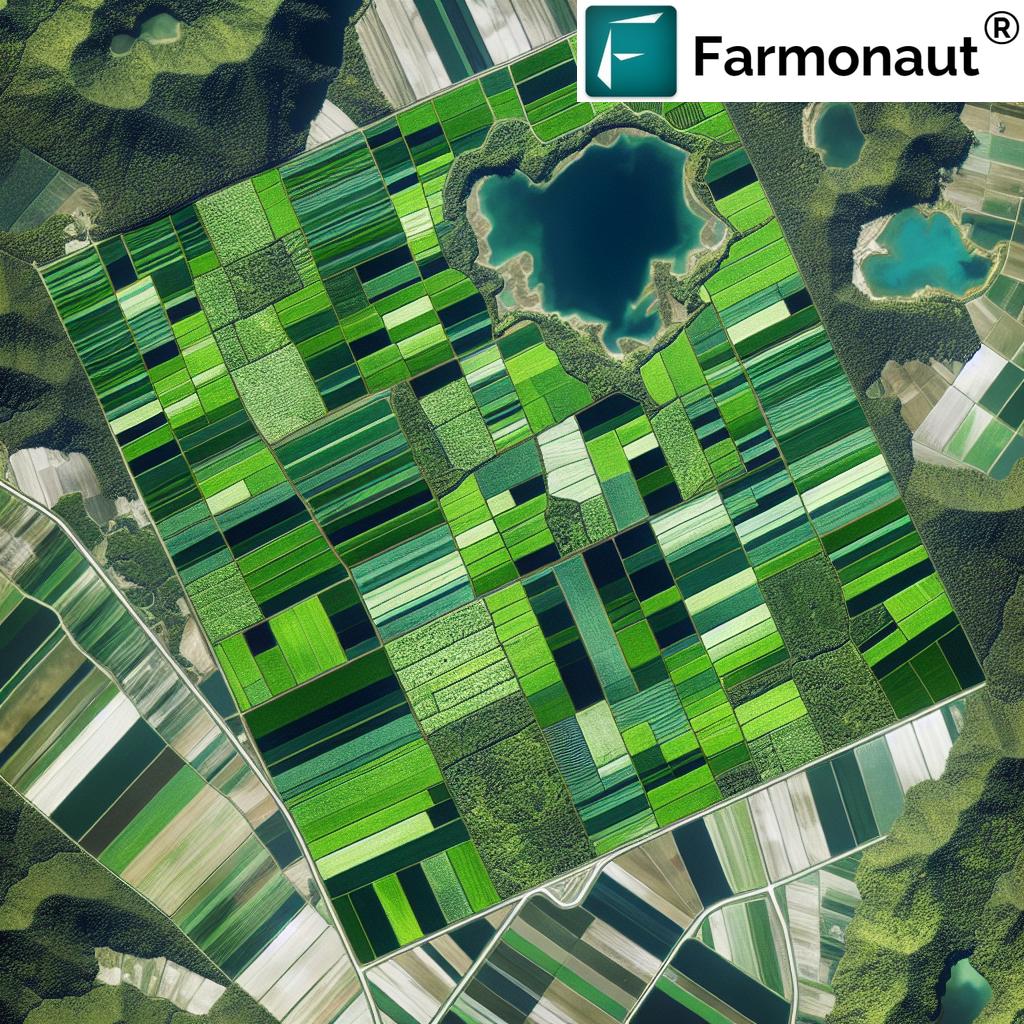
Geographic Information Systems (GIS) bring spatial context to every aspect of agriculture. GIS fuses satellite images, drone data, soil maps, topography, and climate data—empowering farmers to execute precision agriculture like never before.
- ✔ Create spatially-precise input plans to reduce waste
- ✔ Identify climate risks and disaster-prone areas in advance
- 📊 GIS risk models lower insurance costs and improve resilience
Precision Farming in 2026 & Beyond
Looking ahead, the future of precision farming will be defined by real-time data integration, autonomous operations, and the democratization of smart farming tools for all—thanks to continued advancements in drones, AI, IoT, and GIS. Instead of merely reacting, farmers are shifting to predictive management models, supported by:
- ✔ Satellite-based remote sensing for ongoing monitoring
- ✔ AI advisory systems, such as Farmonaut’s Jeevn AI, for tailored, site-specific strategies
- ✔ Automated fleet and resource management, cutting losses and increasing ROI
- ✔ Blockchain-based traceability for transparent, fraud-resistant supply chains
Key to these advancements is making such tools affordable for smallholders and scalable for global enterprises. This is precisely the vision driving satellite-based solutions at Farmonaut, where our mission is to make insights accessible and actionable for all.
Farmonaut Technologies: Advanced Solutions for Smart Agriculture
At Farmonaut, we offer advanced satellite-driven solutions for precision agriculture—making actionable data available in real-time through Android, iOS, web apps, and via APIs for custom integrations.
- ✔ Multispectral & AI-based crop monitoring: Visualize NDVI, health, and soil moisture to optimize every action.
- ✔ Jeevn AI Collaboration: Real-time weather, crop advisories, and tailored strategies directly to your device.
- ✔ Blockchain-powered traceability: Provenance for every step from planting to harvest, improving food safety and transparency.
- ✔ Fleet/resource management tools: Track vehicles, equipment, and assets for seamless operations.
- 📊 Environmental impact monitoring: Track carbon, water, and chemical footprints for regulatory or sustainability goals.
Choose your plan:
For further flexibility and integration with your business, access our developer-friendly APIs: Farmonaut APIs & Developer Documentation.
FAQs: Drones in Agriculture Applications
What are the main applications of drones in agriculture for 2026?
Drones in agriculture applications include crop health monitoring, precision spraying, soil analysis, automated planting, real-time weather/environmental monitoring, livestock & asset tracking, and GIS-driven risk mapping. Integration with AI, IoT, and GIS elevates all seven areas for efficient, sustainable farming in 2026 and beyond.
How do AI and IoT improve drone-based farming?
AI and IoT power predictive analytics, automate data collection from both drones and ground sensors, and provide actionable recommendations. This synergy enables more precise management, better yields, lower resource usage, and a sustainable approach to agriculture.
Are these technologies suitable for small farms?
Absolutely. Modern subscription models and scalable platforms (such as Farmonaut) make drone, satellite, and AI-driven systems both accessible and affordable for smallholders—not just enterprises.
How can drones contribute to sustainability in agriculture?
Drones reduce chemical, water, and resource usage by providing precise, data-driven insights. GIS and AI integration ensures inputs are only used where needed, which lowers environmental impact and improves long-term soil health.
How do I get started with Farmonaut’s smart agriculture tools?
You can download the app for instant crop monitoring and advisory services, explore large-scale management options, or integrate with our API for customized solutions.
Conclusion: Future of Agriculture with Drones, AI, IoT, and GIS
In summary, the applications of drones in agriculture are reshaping the farming landscape as we move into 2026 and beyond. Drones combined with AI, IoT, and GIS unlock truly data-driven, precise, and sustainable agricultural practices. These innovations support higher yields, a reduction in resource and chemical waste, improved food security, and stronger resilience against climate and economic shocks. Their true strength lies in the way they empower both small and large-scale farmers to make informed decisions—ensuring agriculture becomes more efficient, transparent, and future-ready.
At Farmonaut, our mission is to make cutting-edge satellite and AI technology accessible to every farming operation, globally. Whether you manage a small plot or vast agricultural estates, these intelligent systems offer the insights and operational agility needed to excel in the modern era of sustainable farming.
Now is the time to embrace these advanced technologies and shape the future of agriculture together.