Daikon Radish as a Cover Crop: Dakota Erosion Control & Soil Health for 2026 and Beyond
“Daikon radish roots can penetrate soil up to 60 inches, improving water infiltration and erosion control dramatically.”
- Introduction to Daikon Radish as a Cover Crop
- Why Use Daikon Radish for Erosion Control?
- Soil Health Benefits of Daikon Radish in Agriculture
- 2025-2026 Practices: Integrating Daikon Radish in Crop Rotations
- The Dakota Cover Crop Program and Regional Impact
- Technology & Remote Monitoring for Sustainable Dakota Farming
- Comparative Benefit Table: Daikon Radish vs. Alternatives
- Best Practices for Daikon Radish Cover Crop Management
- The Future of Soil Health & Sustainable Erosion Control
- Farmonaut: Digital Resources for Agriculture
- Frequently Asked Questions
- Conclusion
Introduction to Daikon Radish as a Cover Crop
Daikon radish for cover crop use has entered a new era in 2026. As expanding food demands and environmental challenges reshape modern agriculture, the need for sustainable practices has never been greater. Among the array of cover crops, daikon radish (Raphanus sativus var. longipinnatus) is rapidly gaining prominence under regional initiatives like the Dakota Cover Crop program. Fields across the Northern Plains are witnessing not just greater productivity, but a revolution in soil health, erosion control, and climate resilience.
The role of daikon radish in 2025 and beyond is vital. Its large, penetrating taproots function as natural tillage tools, improving soil structure, reducing erosion, and supporting sustainable farming systems. But why is this cover crop so effective, especially on Dakota soils? And how does its use transform the future of agriculture for both farms and the environment?




What Makes Daikon Radish Unique as a Cover Crop?
- ✔ Bio-drilling taproots: Create deep channels in compacted soils, helping to improve water infiltration and root growth for subsequent crops
- 📊 High biomass production: Produces substantial leafy canopy and underground root mass for enhanced cover crop erosion control
- ⚠ Natural nutrient scavenger: Absorbs excess nitrogen and minerals, reducing leaching and promoting soil health
- ✔ Rapid early growth: Quick establishment provides surface protection during vulnerable fallow periods
- ✔ Resilient performance: Adapts to various soil and climate conditions, benefiting Dakota and Northern Plains agriculture
Daikon radish is not just a soil protector—its taproots act as natural biosubsoilers, unlocking compacted layers and making nutrients and water accessible to future crops without the need for mechanical tillage. This is especially vital as farming systems strive to reduce tillage and promote sustainability.
Why Use Daikon Radish for Erosion Control?
Erosion remains a major challenge for modern agriculture, particularly throughout the Dakotas and Northern Plains. Conventional tillage and exposed soils lead to loss of topsoil, diminished soil quality, and reduced water holding capacity. Cover crop erosion control strategies are therefore integral to sustainable farming systems.
Daikon Radish Forms a Protective Canopy
- ✔ Leafy canopy intercepts raindrops: Reduces kinetic energy and lessens risk of surface runoff
- ✔ Dense root networks stabilize surface soil: Reducing the ability of wind and water to displace fertile particles
- ⚠ Reduces fallow period exposure: By occupying ground in late summer and fall, less soil is left unprotected during vulnerable seasons
Mitigating Soil Loss Under Changing Climate Conditions
With increasing climate variability—intense rainfall events, unpredictable snowmelt, and extreme winds—Dakota soils are more at risk of erosion than ever before. The role of daikon radish as a cover crop is critical for:
- Reducing topsoil loss: Bio-drilling roots stabilize soil structure and minimize detachment
- Enhancing infiltration: Deep root channels direct water downward, reducing surface runoff and erosion
- Synergy with other cover crop species: When blended with rye or clover, radish enhances ground coverage and root diversity, creating a multi-layered barrier against erosive forces
“Fields with daikon radish cover crops reduce surface runoff by up to 45%, enhancing soil sustainability in agriculture.”

For maximum erosion control, plant daikon radish in a mix with cereal rye. Rye establishes quickly for immediate surface protection, while daikon’s taproots enhance soil structure at deeper layers—ensuring year-round coverage as recommended in 2025-2026 best practices.
Soil Health Benefits of Daikon Radish in Agriculture
One of the most compelling reasons to adopt daikon radish as a cover crop is its multifaceted benefit for soil health. Fields that rotate daikon radish regularly experience improvements in structure, nutrient cycling, and biological activity, forming the backbone of resilient and sustainable agricultural systems.
Deep Tillage by Taproots: Loosening Compacted Soil
- ✔ Breaks natural compacted layers (hardpan): Radish roots can penetrate soil layers up to 150 cm (60 inches), far surpassing most typical cover crops
- 📊 Improves porosity and infiltration: Creating natural channels for water, air, and microbial movement—critical in semi-arid Dakota and Northern Plains conditions
- ✔ Facilitates deeper rooting of main crops: Subsequent crops benefit from improved access to water and nutrients, especially during dry spells or erratic rainfall
Harnessing Daikon’s Nutrient Scavenging Abilities
- ✔ Efficient nitrogen scavenging: Roots absorb and store residual nitrogen left after major crop harvests, reducing leaching risk into groundwater
- ✔ Slow nutrient release after winter decomposition: As radish tissue breaks down in early spring, nutrients become available for the next cash crop, enhancing fertilizer efficiency
- 💧 Retains and cycles key nutrients: Including phosphorus, potassium, sulfur, and micronutrients
Delaying daikon radish planting until late fall can result in poor root development before winter. This reduces bio-tillage effects and risk of winterkill. For optimal soil health, sow radish in late summer as a cover crop immediately after main crop harvest.

Residue Decomposition and Soil Microbiology
- ✔ Enhances microbial diversity: Decomposing radish residue feeds beneficial soil organisms, driving organic matter breakdown and nutrient cycling
- ✔ Early residue provides mulch: Debris left after winter protects soil from erosion during thaw, supporting spring plantings
Sustainable practices like daikon radish cover cropping significantly improve long-term land value and attract sustainable investment funds. Enhanced soil health means reduced erosion-associated costs, fewer fertilizer inputs, and a premium for regenerative agriculture in evolving global food markets.
5 Key Benefits of Daikon Radish as a Cover Crop
- ✔ Mitigates erosion risk through robust, deep rooting and surface canopy effects
- ✔ Improves soil health by breaking up compaction and building organic matter
- ✔ Optimizes nutrient management via nitrogen scavenging and gradual residue decomposition
- ✔ Supports climate resilience by regulating water movement and enhancing infiltration
- ✔ Increases long-term farm profitability through better resource use and crop productivity

2025-2026 Practices: Integrating Daikon Radish in Crop Rotations
Crop rotations incorporating daikon radish have become paramount in Dakota and Northern Plains farming systems. Integrating this cover crop follows a set of best practices shaped by climate, soil conditions, and technological advances.
When & How to Plant Daikon Radish for Cover Cropping
- 🌱 Optimal planting window: Late July through September, immediately following cash crop harvest or in established rotations
- 🌱 Seeding rates: 3–6 kg/ha (pure stand), or adjusted rates in seed blends with rye, clover, or vetch for multifunctional benefits
- 🌱 Termination: Radish is winter-killed in the Dakotas; in milder climates, use mowing or non-selective herbicides pre-plant
- 🌱 Residue management: Allow decomposed taproots to form mulching layer for spring crops, boosting biological activity
Visual Crop Rotation List for Dakota Soils:
- Spring: Plant cash crop (corn/soybeans/wheat)
- Early Summer: Harvest main crop
- Mid-Late Summer: Plant daikon radish (with/without rye/clover/vetch)
- Fall: Establish daikon radish cover and canopy
- Winter: Radish dies off (cold-killed in Dakota)
- Spring: Next cash crop sown into residue-enhanced soil
Many farmers overlook the benefits of early establishment. Sowing daikon after harvest as soon as possible maximizes biomass production and root depth—the two main factors behind effective erosion control and nutrient management.
Visual List: Advantages of Diverse Cover Crop Blends
- 🌾 Rye: Fast early growth and winter hardiness
- 🌱 Daikon radish: Bio-drilling and nutrient scavenging
- 🥜 Clover: Nitrogen fixation; feeds future crops
- 🌿 Vetch: Additional surface cover and soil enrichment
For actionable satellite-driven crop rotation planning and advisory on optimal planting windows for cover crops like daikon radish, explore our crop plantation & forest advisory tools.
The Dakota Cover Crop Program and Regional Impact
Dakota soil health and productivity are closely linked to the success of regional cover crop programs. The Dakota Cover Crop initiative promotes daikon radish as a cover crop due to its high efficacy in erosion control and sustainability. This focus aligns with the United States Department of Agriculture (USDA) goals, but also addresses farmer needs at the local level.
- 📅 2025+ forward-looking management: Focus on reducing wind and water erosion, enhancing soil health, and increasing system resilience to climate variability
- 🌾 Regional seed blends: Customized for the Northern Plains’ specific soil, rainfall, and temperature patterns
- 🌱 Monitoring and incentives: Ongoing tracking of erosion control and soil quality; programs offering incentives for sustainable cover crop adoption

Combine daikon radish with native grass species in Dakota for even stronger wind erosion control. The vertical structure of grasses complements the bio-drilling by radish roots, increasing overall field stability.
To understand how cover cropping and reduced tillage lower your farm’s carbon footprint, explore the Farmonaut carbon footprinting solution. Track emissions reductions and soil health in-line with global sustainability demands for 2026 and beyond.

Technology & Remote Monitoring for Sustainable Dakota Farming
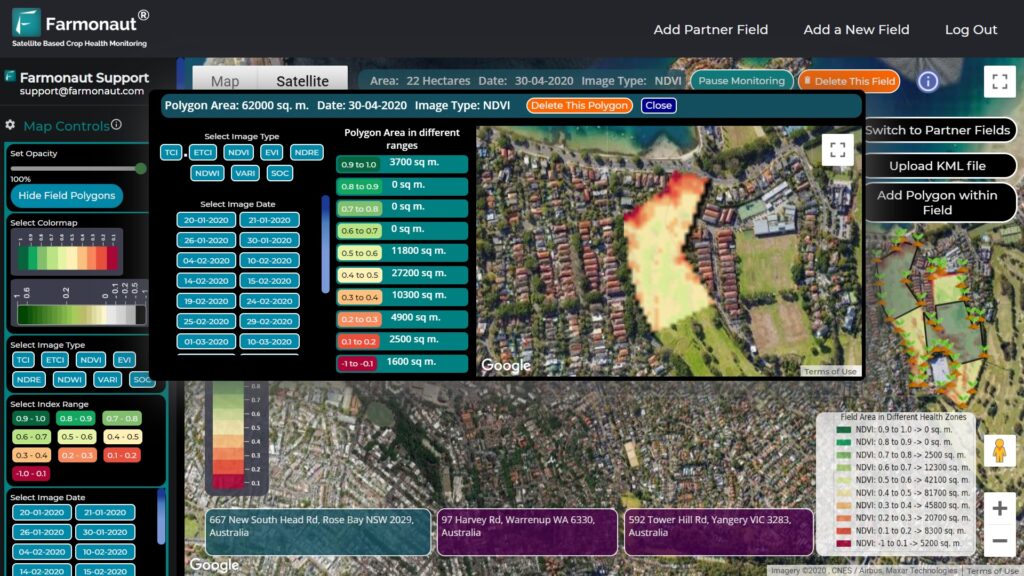
In modern sustainable agriculture, integrating data and technology has become essential for maximizing cover crop success. Satellite-driven platforms like ours at Farmonaut provide real-time monitoring, AI-based advisories, and environmental impact tracking—empowering farmers across all Dakota counties to make informed, timely decisions.
How Farmonaut Enables Data-Driven Cover Crop Management
- ✔ Satellite-based vegetation monitoring: Immediate detection of stand gaps, biomass growth, and canopy cover for daikon radish fields
- ✔ Soil moisture analytics: Data on relative wetness to optimize irrigation and prevent runoff or erosion risks
- ✔ AI-driven advisory: Weather forecasts and custom rotation strategies based on in-season and historical conditions
- ✔ Blockchain traceability: Verifies cover crop practices across the farm supply chain for compliance and sustainability labeling
(traceability solutions) - ✔ Crop health scoring (NDVI & more): Track the condition of cover and main crops, enabling granular field management
- ✔ Resource management, fleet monitoring, and insurance validation: Precision tools minimize input waste and maximize return on investment (fleet management)

Cover crop adoption in the Dakotas is rapidly increasing due to incentives, precision monitoring, and clear sustainability gains. Digital traceability verifies best practices for markets and policy compliance, a key differentiation as global buyers demand sustainable production.
Financial institutions and insurance providers can easily verify cover crop use and sustainable practices with satellite-based field monitoring by Farmonaut’s crop loan & insurance solutions.
Comparative Benefit Table: Daikon Radish vs. Alternatives
| Cover Crop Type | Estimated Erosion Reduction (%) | Improvement in Soil Health | Estimated Biomass Contribution (kg/ha) | Root Depth (cm) | Sustainability Score (1-10) |
|---|---|---|---|---|---|
| Daikon Radish | 40-60% | High | 3,000–6,500 | 120–150 | 9 |
| Rye | 30-45% | Medium | 3,500–5,500 | 60–90 | 8 |
| Clover | 25-35% | Medium | 2,000–3,000 | 40–60 | 8 |
| Vetch | 20-30% | Low-Medium | 1,800–2,500 | 40–60 | 7 |
This Comparative Benefit Table underlines the superior performance of daikon radish for cover crop erosion control. Its deep rooting, high biomass contribution, and outstanding sustainability score make it a leading choice for regenerative agriculture in 2026 and beyond.

Best Practices for Daikon Radish Cover Crop Management
Key Steps to Maximize Results
- ✔ Monitor soil conditions: Use digital tools for detecting field variations and right seed placement
- ✔ Choose resilient seed varieties: Opt for radish types bred for specific climate and Dakota soil conditions
- ✔ Establish cover at the right time: Plant in late summer or early fall to maximize biomass and root growth
- ✔ Support decomposition: Avoid aggressive tillage or residue removal post-winter; allow natural breakdown to promote nutrient cycling
- ✔ Blend with companion species: Mix daikon radish with rye, clover, or vetch to diversify functional benefits
Fields implementing these best practices not only see higher resilience to weather variability but also appeal to premium channels that value sustainable and traceable production. This is supported by digital verification tools, which are increasingly required in international export markets.
How Technology Elevates Best Practices
- 📱 Track progress in real time: Our large scale farm management app puts critical multi-field insights (biomass, crop health, weather) in your pocket
- 🛰️ Verify sustainability credentials: Leverage blockchain-based traceability to prove best practices and open premium market access
The Future of Soil Health & Sustainable Erosion Control
The outlook for daikon radish as a cover crop and cover crop erosion control in the Dakotas and beyond is both exciting and essential. With precision management, data-driven decisions, and a shift towards regenerative systems, daikon radish forms a linchpin of sustainable crop production for 2026 and future years.
- ✔ Evolving seed genetics: Innovation in radish breeding fosters even deeper roots and more resilient growth under a wider range of climatic stresses
- ✔ Advanced digital platforms: AI and satellite remote sensing automate best practices, detect risks, and verify outcomes at scale
- ✔ Holistic sustainability: Tools to measure carbon balance, soil health improvements, water management, and ecosystem services are redefining modern agriculture
The future of sustainable farming in the Dakotas will rely on a synergistic approach—combining practices like daikon radish cover cropping with next-generation technologies that empower farmers to optimize their efforts for food production, climate resilience, and environmental quality.
Farmonaut: Digital Resources for Agriculture
As we look to the future, empowering farmers, agronomists, and agri-businesses with technology is crucial. At Farmonaut, we’re passionate about delivering:
- 📱 Satellite-based field insights (crop health, soil condition, water status)
- 🌩️ AI-driven advisories for weather, rotation timing, and risk detection
- 🔗 Blockchain traceability for sustainable certification across the supply chain (see our Product Traceability Page)
- ♻️ Environmental impact tracking, including carbon footprinting, to support compliance and stewardship
- ⚙️ Fleet and resource management tools for optimal efficiency across vast operations
- 🌐 API access for seamless integration:
API Details & API Developer Docs
Adoption of digital resource management and traceability platforms like ours increases transparency, reduces costs, and positions farms—large and small—for competitiveness in both domestic and export markets in 2026 and beyond.
Frequently Asked Questions: Daikon Radish for Cover Crops
1. What distinguishes daikon radish as a cover crop from other cover crop options?
Daikon radish, known for its large, deep taproots, excels at disrupting compacted soil layers—functioning as a natural tillage implement. Its rapid early growth and biomass production provide both surface protection and subsoil benefits, elevating it above alternatives like rye, clover, or vetch for cover crop erosion control and soil health.
2. How does daikon radish control erosion in the Dakotas?
In the Dakotas’ windy, variable climate, the dense leafy canopy of daikon radish intercepts rain and wind, while its deep roots stabilize soil structure and minimize displacement. This reduces surface runoff by up to 45% and addresses one of the region’s top agricultural challenges.
3. What specific management practices should be followed for maximum benefit?
Sow daikon radish in late summer post-cash crop, opt for appropriate seed blends, and avoid aggressive tillage following winter die-back. Early establishment boosts both erosion control and nutrient cycling, and blending with rye or clover achieves multi-functional outcomes.
4. Is technology required to monitor cover crop success?
While not mandatory, leveraging remote sensing, satellite imagery, and AI-based advisories—via platforms like Farmonaut—enables real-time monitoring and early detection of issues, ensuring continuous optimization of cover crop strategies.
5. What are the long-term environmental benefits?
Consistent use of daikon radish for cover cropping leads to improved soil quality, increased organic matter, greater climate resilience, and higher productivity—all while mitigating the carbon footprint of farming through reduced tillage and efficient nutrient management.
Conclusion: Daikon Radish as a Cover Crop is a Vital Tool for Modern Erosion Control and Soil Health
The rise of daikon radish as a cover crop signals a positive transformation for soil health, erosion control, and climate resilience in modern, sustainable agriculture. Its unmatched performance in reducing erosion, enhancing soil’s physical and chemical properties, and meeting the evolving demands of food production positions it as a critical component of resilient Dakota and global farming systems.
By integrating daikon radish into crop rotations—supported by cutting-edge technology and data-driven management—farmers can meet the dual objectives of productivity and ecological stewardship for 2026 and far into the future.
For those seeking scalable, affordable, and effective insights into sustainable practices, Farmonaut stands ready with a robust platform for remote monitoring, advisory, resource management, and traceability, empowering agriculture to thrive in a fast-changing world.
Embrace natural solutions like daikon radish cover cropping and leverage digital insights from Farmonaut for an agricultural edge that is productive, sustainable, and climate-resilient — for 2026 and beyond.