Cucurbit Downy Mildew: 7 Sustainable Tips 2026
Understanding Cucurbit Downy Mildew: Challenges & Management in Agriculture (2025-2026)
Cucurbit downy mildew remains a significant threat to cucurbit agriculture, affecting crops like cucumbers, melons, pumpkins, squash, and gourds. With increasing global demand for these vegetables, evolving pathogen strains, and the challenges posed by climate change, effective and sustainable management strategies for 2026 and beyond are critical.
- ✔ Cucurbit Downy Mildew outbreaks can spread rapidly, particularly in dense plantings and humid conditions.
- ✔ Yield losses may reach devastating levels if early detection and sustainable management strategies are not adopted.
- ✔ Food security, farm incomes, and environmental sustainability are closely linked to effective mildew management worldwide.
- ✔ Modern monitoring and precision agriculture solutions, like those provided by satellite technology companies, are transforming downy mildew management.
- ✔ Integrated approaches reduce chemical reliance and promote beneficial environmental practices.

What is Cucurbit Downy Mildew?
Cucurbit downy mildew is a fungal-like disease caused by the oomycete pathogen Pseudoperonospora cubensis. It primarily attacks the leaves of all cucurbit crops, including cucumbers, melons, pumpkins, squash, and gourds, leading to a swift and often severe impact on crop production and yield.
- 📊 Symptoms: Yellow angular spots develop on the upper surface of the leaf; a downy, grayish-purple mold appears on the underside.
- ⚠ Progression: The disease progresses rapidly under cool, moist conditions, causing premature defoliation—and severely reducing photosynthesis and fruit development.
- ✔ Dispersal: The pathogen’s windborne spores can travel long distances, enabling fast regional outbreaks.
Early detection and understanding of pathogen biology is essential in developing sustainable disease management strategies for cucurbit crops.
Impact on Global Agriculture: Why is Cucurbit Downy Mildew So Critical?
Downy mildew outbreaks continue to lead to significant yield losses in commercial and smallholder farming systems, threatening the stability of food systems and farm livelihoods globally. In regions highly reliant on cucurbit crops as both cash crops and dietary staples, these outbreaks directly affect food availability, price stability, and economic security.
- ✔ Production costs rise as farmers resort to frequent fungicidal sprays.
- ⚠ Overdependence on chemicals increases resistance risk in the pathogen and causes environmental contamination, harming beneficial insects and pollinators.
- 📊 Yield Risks: Premature defoliation reduces fruit size, number, and quality.
- ✔ Management Costs: Intensive control efforts significantly increase operational costs for producers.
- ⚠ Global Challenge: The windborne, regionally-adapting nature of Pseudoperonospora cubensis exacerbates the threat across farming systems worldwide.
Addressing cucurbit downy mildew is crucial for future-proofing investment in vegetable supply chains, given its direct impact on farm incomes, market stability, and export quality.

Climate Change, Epidemiology & Emerging Management Challenges
Climate change is re-shaping the epidemiology of cucurbit downy mildew, making effective management in 2026 both urgent and complex.
- Warmer temperatures and erratic rainfall patterns now frequently create microclimates that favor the pathogen’s spread and survival.
- New and more virulent strains of Pseudoperonospora cubensis are emerging in different regions, showing variable fungicide resistance and management adaptation.
- Incursions into new frontiers: Areas previously unaffected by downy mildew are reporting outbreaks—necessitating surveillance, early warning, and rapid response programs for cucurbit growers.
Combining genetic resistance, cultural practices, and technology-aided monitoring is your best defense against the evolving challenges of cucurbit downy mildew in a warming world.
Cucurbit Downy Mildew in 2026: 7 Sustainable Tips for Management & Resistance
With cucurbit downy mildew remains a significant challenge to farming worldwide, sustainable control is only possible through an integrated approach. Here, we’ll cover seven actionable, science-backed tips for 2026:
-
1. Grow Resistant Cultivars
Breeding programs have pioneered cucurbit varieties with genetic resistance to downy mildew. Select varieties that demonstrate robust, broad-spectrum resistance to dominant regional pathogen strains for 2026.
- ✔ Reduces disease incidence and fungicide dependency.
- ⚠ Challenges: Resistance can be strain-specific; continuous breeding and pathogen monitoring are necessary.
Common Mistake: Planting the same “resistant” cultivar year after year may be risky—pathogen populations evolve! Always seek updated advice from local extension services. -
2. Use Cultural Practices to Disrupt Disease Cycle
Modify farming practices to disrupt the pathogen’s life cycle and environmental favorability.
- ✔ Rotate cucurbits with unrelated crops to reduce soil pathogen build-up.
- ✔ Remove infected plant debris after harvest.
- ✔ Optimize planting density and row orientation to improve air circulation and reduce humidity around leaves.
- ✔ Apply mulch to limit splashing and protect plants from direct contact with contaminated soil or water.

-
3. Practice Integrated Pest and Disease Management (IPM)
Integrated approaches combining monitoring, resistant cultivars, rotation, and targeted fungicide usage are best for 2026 and beyond.
- ✔ Scout regularly for first disease signs—early action prevents rapid spread.
- ✔ Apply fungicides selectively and rotate chemical classes to delay resistance.
- ⚠ Risk: Overuse of a single fungicide increases resistance risk; always diversify modes of action.
-
4. Emphasize Biological Control and Organic Amendments
Some biological products—containing beneficial bacteria and fungi—show strong potential as part of environmentally friendly strategies for cucurbit downy mildew.
- ✔ Utilize biocontrol agents: Research suggests Bacillus spp., Trichoderma, and similar organisms may inhibit Pseudoperonospora cubensis in the field.
- ✔ Incorporate organic amendments: Compost and biochar can improve plant resilience by enhancing overall soil health.

-
5. Leverage Early Warning Systems & Precision Agriculture
Modern remote sensing and precision agriculture tools can detect susceptible areas and disease hot-spots before outbreaks cause severe losses.
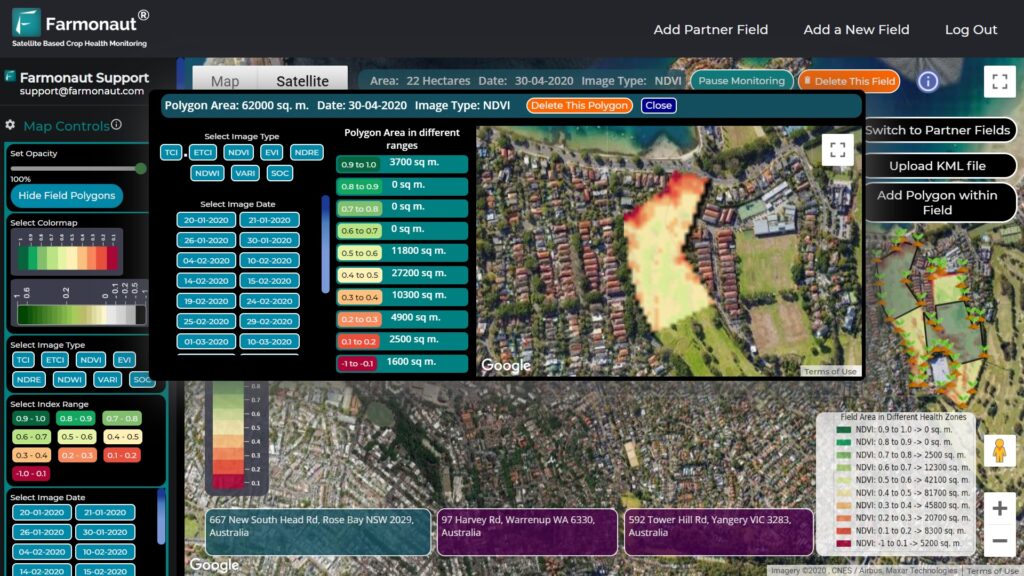
- ✔ Utilize satellite imagery for timely disease detection: With real-time monitoring, track disease risk and act quickly—reducing costs and non-target chemical exposure.
Farmonaut’s large-scale farm management platform provides satellite-based crop monitoring for all scales of farming. - ✔ Employ AI-powered advisory systems: AI tools analyze satellite and weather data to recommend proactive actions for disease risk mitigation.
- ✔ Farmonaut’s carbon-footprinting solutions help growers monitor and minimize environmental impact, supporting compliance and climate-smart farming.




- ✔ Utilize satellite imagery for timely disease detection: With real-time monitoring, track disease risk and act quickly—reducing costs and non-target chemical exposure.
-
6. Foster Robust Extension Services & Farmer Education
Continuous learning and information sharing are critical to outpacing both disease evolution and environmental changes.
- 📚 Stay informed via local agricultural extension services for regional updates about pathogen evolution, resistant cultivars, and control measures.
- ✔ Adopt digital traceability solutions to monitor field practices, protect markets, and ensure consumer trust. Learn more about blockchain traceability for agriculture.
- ✔ Reference AI-driven advisory platforms for up-to-date, field-specific advice.
-
7. Prioritize Environmental Sustainability & Climate Resilience
Effective management of downy mildew must also support larger goals—soil health, biodiversity, and climate adaptation.
- ✔ Reduce unnecessary chemical inputs by acting based on real-time field data rather than on schedule.
- ✔ Protect beneficial pollinators and natural enemies by adopting selective pest control strategies.
- ✔ Monitor carbon footprint and resource use at the farm level with Farmonaut’s carbon-footprinting dashboard.
Key Insight:
Combining productivity with environmental responsibility will be the hallmark of successful cucurbit farming in the face of ongoing climate and disease pressures.

For custom integrations or precision agriculture services, explore Farmonaut’s API or see the API developer docs.

Comparison Table: Sustainable Practices for Cucurbit Downy Mildew (2026)
| Sustainable Practice | Estimated Disease Reduction (%) | Environmental Impact (Low/Medium/High) | Estimated Yield Improvement (%) | Adoption Cost (Low/Medium/High) |
|---|---|---|---|---|
| Resistant Cultivars | 40 – 70 | Low | 25 – 40 | Medium |
| Cultural Practices | 20 – 35 | Low | 10 – 25 | Low |
| Integrated Pest/Disease Management (IPM) | 55 – 80 | Medium | 30 – 45 | Medium |
| Biological Control | 15 – 40 | Low | 8 – 20 | Medium |
| Early Warning & Precision Agriculture | 30 – 55 | Low | 20 – 35 | Medium |
| Extension Services & Farmer Education | 10 – 30 | Low | 10 – 18 | Low |
| Environmental Sustainability & Climate Resilience | 10 – 25 | Low | 5 – 12 | Low |
Visual List: 📈 Key Benefits of Integrated Downy Mildew Management
- ✔ Reduces disease spread and protects yields
- 🌱 Promotes environmental sustainability via reduced chemical use
- 💰 Lowers input costs long-term by minimizing frequent fungicide applications
- 🔍 Improves decision-making with real-time & predictive monitoring
- ⏳ Future-proofs farm systems against climate and pathogen shifts
Visual List: 📋 Essential Steps for Early Cucurbit Downy Mildew Detection
- 🔬 Regular scouting—inspect crop lower leaves first
- 🛑 Isolate suspect plants rapidly to prevent pathogen dispersal
- 📅 Monitor local weather forecasts—pay special attention after humid or cool periods
- 🛰 Utilize satellite & remote sensing for early, regional-level warnings
- 🚜 Communicate with extension services and digitally report local outbreaks
Ignoring new regional pathogen strains or skipping field scouting in 2026 can allow downy mildew outbreaks to devastate yields in days.
For insurance claims and improved financial access, monitor crop health with satellite-based verification such as Farmonaut’s crop loan and insurance solutions.
Accurate, environment-friendly disease management boosts marketplace credibility—use blockchain traceability for cucurbit and vegetable supply chains.
Deploying integrated satellite-AI monitoring platforms not only optimizes yields, but supports sustainability—an increasingly non-negotiable market standard for 2026 and beyond.
Failing to update disease management tactics in response to climate and pathogen change can result in rapid, severe crop losses.
Precision Agriculture & Farmonaut: Real-Time Monitoring for Cucurbit Downy Mildew
Precision agriculture is transforming farming systems worldwide—especially for diseases like downy mildew. Satellite, AI, and digital tools empower farmers with cost-effective, sustainable management strategies in 2026:
- ✔ Satellite monitoring (NDVI/health indices): Detect subtle health changes before visible symptoms appear.
- 📊 AI-powered advisories: Combine historical and current data for disease risk prediction—customized to field, region, and prevailing conditions.
- ✔ Blockchain-based traceability: Guarantee transparency and compliance for supply chains and market entry with Farmonaut Product Traceability.
- 🔄 Fleet and resource management: Optimize logistics during disease response with smart tracking—learn more about Farmonaut Fleet Management.
- 📈 Environmental impact monitoring: Support climate goals and sustainable production by tracking farm-level emissions and resource use.
Explore Farmonaut’s affordable subscription options for all size growers—featuring real-time crop and soil monitoring, carbon footprinting, traceability, fleet management, and more.
Frequently Asked Questions (FAQ): Cucurbit Downy Mildew 2026
What are the first signs of cucurbit downy mildew in 2026?
Look for yellow, angular spots on the upper surface of older leaves and a downy, greyish mold on the underside. Rapid action at these first signs is essential, especially during cool, moist weather.
How does climate change affect downy mildew outbreaks?
Warmer temperatures, erratic rainfall, and new climate regimes favor the spread and survival of Pseudoperonospora cubensis, increasing the need for rapid detection and adaptive management strategies.
Can fully organic or bio-based approaches manage downy mildew in commercial farms?
Biological controls and organic amendments play a supportive role but are most effective when combined with other measures (integrated management), especially under heavy disease pressure.
How often should fungicides be applied to cucurbit crops?
Only apply as needed, based on monitoring and risk assessment. Rotate active ingredients to delay resistance, and always adhere to local agri-regulations.
How can remote sensing or Farmonaut tools help cucurbit growers?
Remote sensing via satellite data enables timely detection of crop health changes, allowing for targeted action before downy mildew causes widespread losses. Farmonaut’s platforms also support traceability, impact monitoring, and carbon accounting—adding value beyond simple disease management.
Conclusion: A Sustainable Future for Cucurbit Agriculture
Cucurbit downy mildew remains a significant and evolving threat worldwide. In 2026 and beyond, success depends on integrated, sustainable solutions—combining resistant cultivars, modern monitoring technologies, advanced breeding efforts, extension services, and environmental stewardship.
- ✔ Emphasize adopting real-time, data-driven management for efficient disease control.
- ✔ Reduce chemical use with precision, sustainability, and farmer education.
- ✔ Leverage satellite and AI platforms, such as Farmonaut, for monitoring, traceability, and environmental compliance.
- ✔ Stay adaptable as climate and pathogens shift—sustaining not just yields but food security and farmer livelihoods.
By supporting farmers, enhancing early detection and integrating sustainable practices, we can ensure cucurbit agriculture not only survives, but thrives in the years ahead.