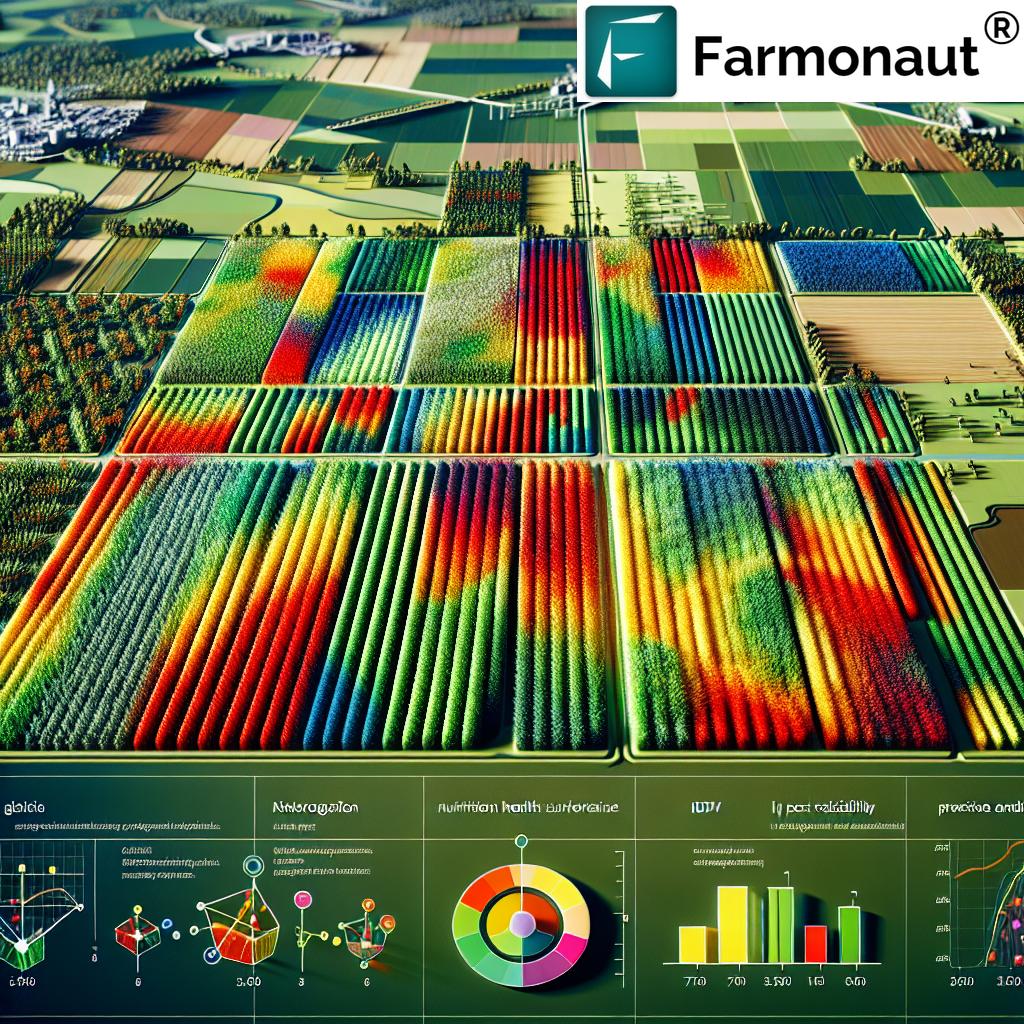
Crop Simulation Model, Crop Modeling: 2026 Advances—Transforming Agriculture for a Sustainable Future
“Crop simulation models in 2025 can predict crop yield with up to 85% accuracy, driving data-driven farm decisions.”
“Advanced crop modeling reduced water use by 30% in precision agriculture trials during 2025 innovation studies.”
- Introduction: The Era of Crop Simulation Model in 2026
- The Evolution of Crop Modeling: From Basics to 2026 Advancements
- The Core Mechanics: Crop Growth, Physiology, and Simulation Processes
- Technological Advancements in Crop Modeling (2025–2026)
- Precision Agriculture and a Sustainable Future
- Comparative Features Table: Crop Simulation Models 2023 vs 2026
- Farmonaut’s Role in Modern Crop Simulation and Precision Agriculture
- Key Applications and Strategies using Crop Simulation Models
- Realizing Sustainability: Climate, Water, and Resource Optimization
- Supporting Future Food Security and Meeting Global Challenges
- Farmonaut Platform: Making Advanced Crop Modeling Accessible
- FAQs: Crop Modeling, Simulation, and Farmonaut
Introduction: The Era of Crop Simulation Model in 2026
In the world of global agriculture, where challenges such as climate change, rapid population growth, resource constraints, and environmental instability intensify each year, the drive for sustainable and precision practices is more urgent than ever. By 2026, crop simulation model, crop modeling and its advanced iterations are not just tools—they’re essential pillars supporting the foundation of modern farming and food systems. This blog explores how these technologies are revolutionizing the approach to yield, resource use, and sustainability for farmers, agronomists, and policymakers worldwide.
The Evolution of Crop Modeling: From Basics to 2026 Advancements
A Brief History: The Rise of Crop Models
Crop simulation models first emerged as mathematical representations of how crops grow and respond to their environment (weather, soil, management). Early models were driven by simple equations and static assumptions. Over the past three decades, open-access platforms like DSSAT (Decision Support System for Agrotechnology Transfer), APSIM (Agricultural Production Systems Simulator), and AquaCrop by FAO paved the way for modeling crop growth under various scenarios.
What makes 2026 different? Today’s crop simulation model, crop modeling platforms leverage high-resolution remote sensing, dynamic data feeds, integration with AI/ML, and sophisticated environmental databases—enabling scenario analysis, detailed insights, and real-time recommendations for adaptive strategies.
- ✔ Increased precision via real-time weather and soil data
- ✔ Scalable platforms available on web, mobile, and APIs
- ✔ AI/ML integration for continual learning and improved prediction
- ✔ Remote accessibility and broader adoption among smallholders
- ✔ Sustainability-centric modeling for environmental performance
Pro Tip

Farmonaut Web System Tutorial: Monitor Crops via Satellite & AI
The Core Mechanics: Crop Growth, Physiology, and Simulation Processes
The heart of a crop simulation model is its capacity to represent the biological processes governing crop growth and development. Models utilize:
- 📊 Photosynthesis and respiration rates
- 📊 Evapotranspiration and water uptake mechanisms
- 📊 Soil-plant nutrient cycling and fertilizer application impact
- 📊 Pest and disease dynamics
- 📊 Phenological development stages (germination, flowering, grain filling, harvest)
By integrating environmental conditions—like weather patterns, soil moisture, solar radiation, and temperature—with genetic characteristics of crops and defined management practices (e.g., planting dates, irrigation scheduling), these models predict crop performance under numerous scenarios.
How Crop Modeling Supports Real-World Decisions
- ✔ Optimize planting dates for better synchronization with climate windows
- ✔ Adaptive scheduling of irrigation and nutrient application
- ✔ Pest and disease outbreak forecasting
- ✔ Tailored crop variety recommendations for specific soil and climatic conditions
- ✔ Yield, resource use, and profitability forecasts
Technological Advancements in Crop Modeling (2025–2026)
The leap to 2026 has seen a quantum shift in how crop simulation models are designed, implemented, and deployed. Core differences compared to previous generations include:
Highlighting 2025–2026 Advances:
- AI/ML-Enhanced Crop Modeling: Models continually self-update using machine learning, rapidly adapting to new weather, crop growth, and yield data. Predictive accuracy, therefore, improves dynamically.
- Hyper-Local Data Feeds: Satellite-driven and IoT sensor data on temperature, rainfall, evapotranspiration, soil moisture, and NDVI are directly streamed into models in real time.
- Integration with Precision Tools: Connection to mobile/field advisory apps, farm machinery controls, and decision support systems for immediate field action.
- Resource Optimization Algorithms: Models output location-specific recommendations to improve water use efficiency, reduce fertilizer waste, and fine-tune irrigation scheduling—all crucial for sustainable management.
- Scenario Analysis for Adaptive Planning: Farmers and scientists can simulate the impact of various management strategies, weather extremes, or pest/disease outbreaks—empowering smart adaptation.

JEEVN AI: Smart Farming with Satellite & AI Insights
Visual List: Why 2026 Crop Simulation Models Are a Game-Changer
- 🌱 Higher yield prediction accuracy for crops across diverse regions
- 📱 Mobile and accessible interfaces for field-level recommendations
- 🔒 Blockchain-based traceability secures the data integrity of supply chain outputs
- 💧 Water-smart strategies for drought-prone and rain-fed systems
- 🌍 Global deployment—from smallholder plots in India to vast farms in Argentina

Regenerative Agriculture 2025 🌱 Carbon Farming, Soil Health & Climate-Smart Solutions | Farmonaut
Precision Agriculture and a Sustainable Future: Crop Modeling Leads the Way
As we look to 2026—and the rising demands for sustainability in agriculture—it’s clear that crop simulation models have evolved to become critical infrastructure for precision and adaptive decision-making. Here’s how:
- ✔ Reduced resource consumption: Precise recommendations on fertilizer, irrigation, and chemical use, minimizing environmental impact
- ✔ Climate resilience: Scenario modeling empowers users to forecast and adapt to unpredictable rainfall patterns or temperature spikes
- ✔ Profitability: Data-driven management reduces input costs and boosts yields, improving farmer incomes
- ✔ Traceability: Blockchain-backed records enhance food system security and supply chain transparency (see how traceability supports sustainable food systems)
- ✔ Food safety and nutrition: Quality and safety assurance for consumers globally

How AI Drones Are Saving Farms & Millions in 2025 🌾 | Game-Changing AgriTech You Must See!
Comparative Features and Benefits Table of Crop Simulation Models: 2023 vs 2026
| Model Name | Core Tech / Algorithm | Estimated Yield Prediction Accuracy (%) | Estimated Water Use Optimization (% improvement) | Resource Saving Estimate (kg/ha) | Environmental Impact Reduction (%) | Commercial Application Status |
|---|---|---|---|---|---|---|
| DSSAT (2023) | Classical Algorithms, Weather Integration | 75 | 18 | 250 | 10 | Field Deployed |
| DSSAT AI (2026) | Hybrid AI, ML, Real-time Data Integration | 88 | 36 | 480 | 25 | Widespread Field Deployed |
| APSIM (2023) | Process-based, Soil/Weather Data | 74 | 21 | 210 | 11 | Field Deployed |
| APSIM NextGen (2026) | AI, Cloud, IoT Enhanced, Automated Sensing | 90 | 39 | 525 | 28 | Widespread Field Deployed |
| AquaCrop (2023) | Soil-Water Balance, Basic Sensing | 72 | 25 | 320 | 13 | Experimental/Deployed |
| AquaCrop+ (2026) | ML, API-Driven, IoT, Satellite Assisted | 87 | 46 | 575 | 29 | Broad Field Deployed |
📊 Data Insight
Farmonaut’s Role in Modern Crop Simulation and Precision Agriculture
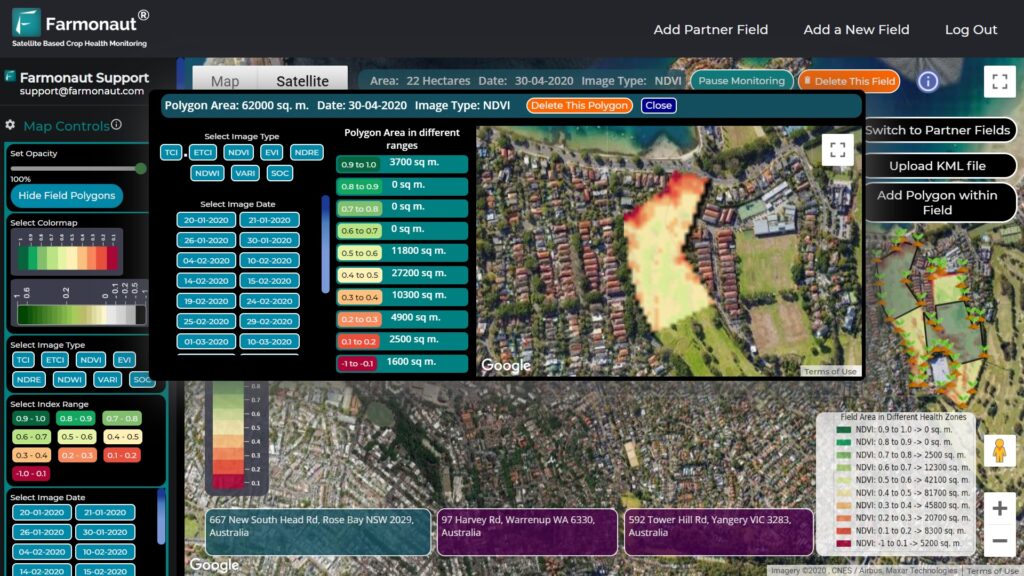
At Farmonaut, we have recognized the transformative role that crop simulation model, crop modeling and advanced geospatial analytics play in making precision farming accessible and scalable. Our satellite technology platform delivers real-time crop monitoring, soil analysis, weather forecasting, and AI-driven advisory solutions to support farmers, scientists, policymakers, and agribusinesses in every corner of the world.
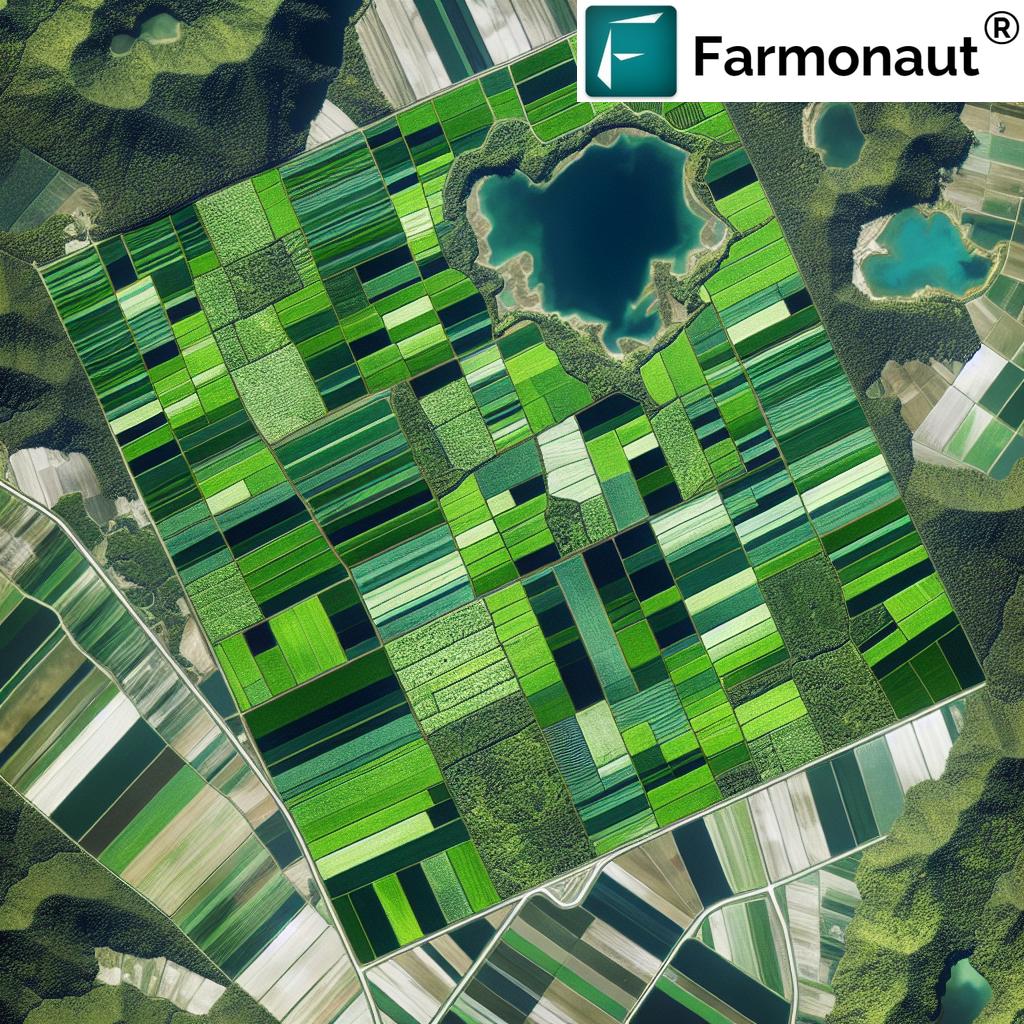
- ✔ Satellite-Based Crop Monitoring: We use high-resolution, multispectral imagery to monitor crop health, track NDVI, estimate biomass, and detect soil conditions, all accessible via our web and mobile apps.
- ✔ AI & Advisory: Our Jeevn AI Advisory System synthesizes field and satellite data for hyper-localized, real-time recommendations, empowering users to adapt strategies to actual conditions.
- ✔ Blockchain Traceability: End-to-end tracking ensures supply chain authenticity and reduces food fraud (Explore Product Traceability).
- ✔ Fleet & Resource Management: We help users optimize logistics and reduce operational costs, improving overall farm efficiency (View Fleet Management Tools).
- ✔ API Connectivity: Developers and businesses can integrate our satellite insights into their platforms via our API (API Developer Docs).

Satellite Soil Moisture Monitoring 2025 – AI Remote‑Sensing for Precision Agriculture
Visual List: Farmonaut Platform Advantages
- 🔍 Detailed crop monitoring dashboards (mobile, web, API)
- 🤖 Automated alerts and AI-recommended actions
- 🌐 Global reach and affordable pricing for smallholders and enterprises
- 🛠 Seamless integration with large-scale farm management (Learn about the Farmonaut Agro Admin Platform)
- 📲 Easy subscription management for real-time access and scalable operation
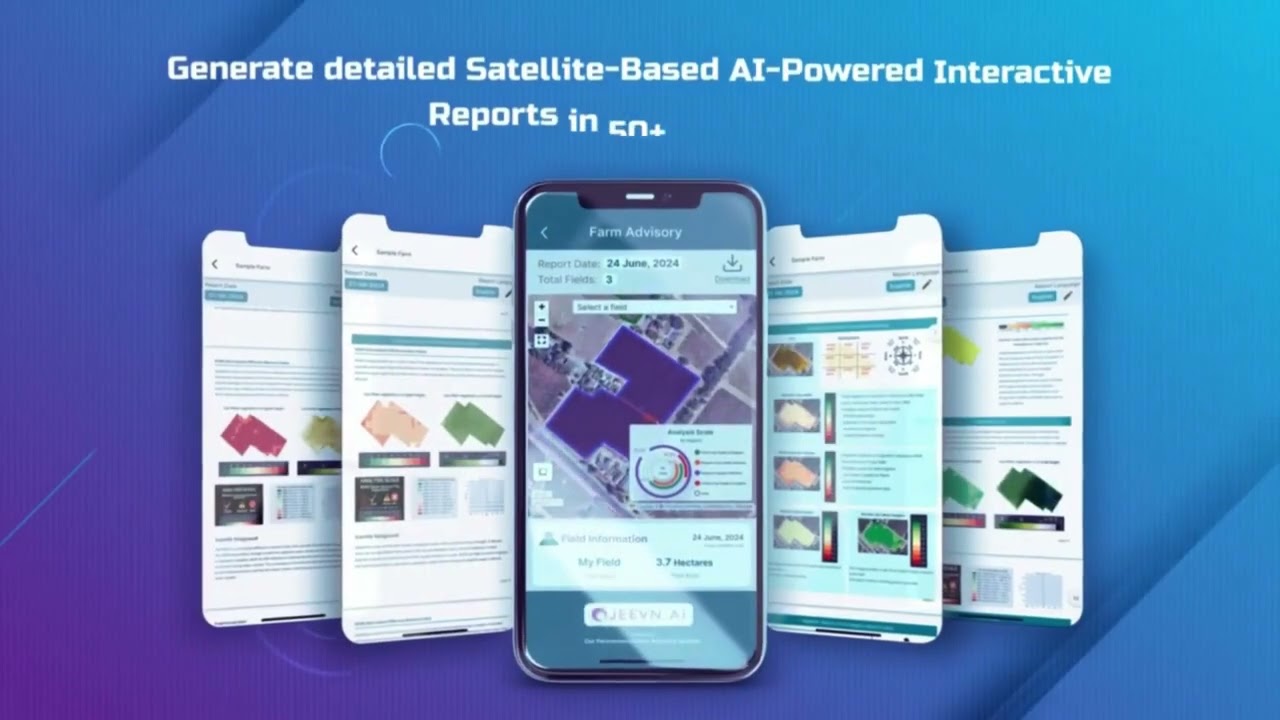
Farmonaut – Revolutionizing Farming with Satellite-Based Crop Health Monitoring
Key Applications and Strategies using Crop Simulation Models
- 🔬 Variety Selection and Cropping Pattern Design: Identify climate-resilient and high-yielding crop varieties and plan sequences based on model-driven scenario analysis.
- 💦 Precision Irrigation Management: Use water stress indices and real-time soil monitoring to guide exactly when and how much to irrigate, supported by AI recommendations.
- 🗓 Smart Planting and Harvest Scheduling: Modeling-driven planting and harvest dates optimize season timing for maximum productivity.
- 🦠 Pest and Disease Forecasting: Overlaying environmental conditions with growth models to alert farmers and managers before outbreaks occur.
- 📉 Food Security Planning and Risk Mitigation: Governments use national-scale models to predict yield fluctuations, coordinate imports/exports, and deploy disaster response (See Crop Loan and Insurance Verification).
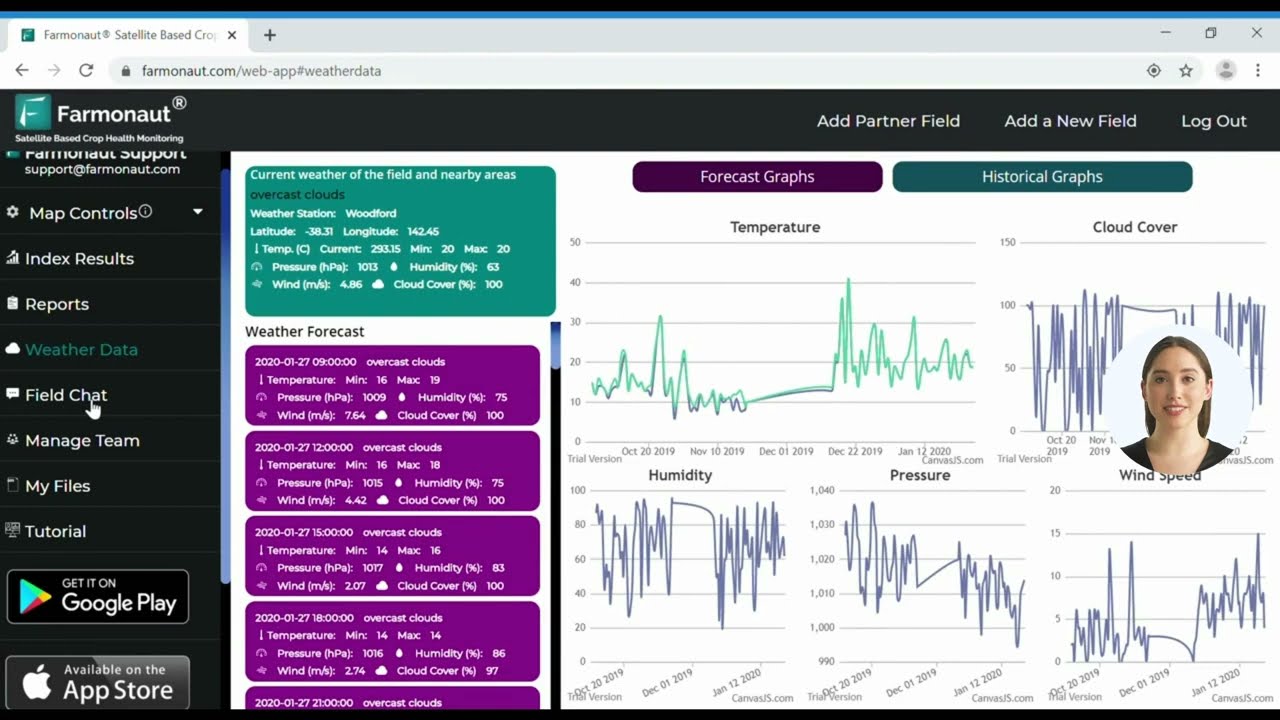
Farmonaut Web app | Satellite Based Crop monitoring
Realizing Sustainability: Climate Resilience, Water, and Resource Optimization
Perhaps the most celebrated feature of advanced crop simulation model, crop modeling in 2026 is its unequivocal focus on sustainability and adaptation, especially in the age of unpredictable weather, shifting rainfall patterns, and rising temperatures.
- 🟢 Soil Health Improvement: Accurate estimates on nutrient uptake and tailored fertilizer application promote balanced nutrition and combat soil degradation.
- 🟢 Water Use Efficiency: Field trials show up to a 30–46% reduction in water use in precision agriculture using model-driven irrigation scheduling.
- 🟢 Emissions and Carbon Metrics: Environmental impact tracking through carbon footprint monitoring is now a core benefit in many platforms (Measure your farm’s carbon footprint).
- 🟢 Ecosystem Protection: Lower runoff, minimized pesticide loads, improved groundwater recharge—the benefits extend far beyond the field.
- 🟢 Yield Stability for Smallholders: Model-driven adaptation is closing the yield gap, especially in climate-vulnerable regions of Africa, India, and Latin America.
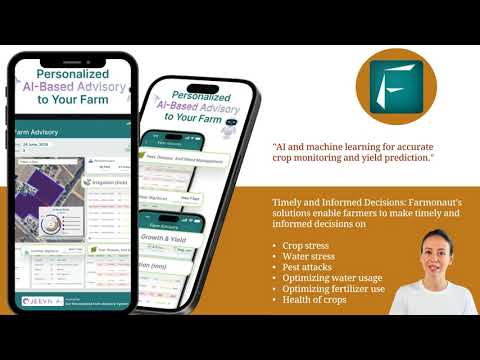
Explore Farmonaut’s Advanced Crop Monitoring & Yield Prediction
Supporting Future Food Security and Meeting Global Challenges
As the need for food security grows ever more critical due to population growth and climate variability, national and global agencies continue to deploy crop simulation models for:
- 💡 National yield estimation and forecasting
- 💡 Trade and import/export scenario planning
- 💡 Disaster preparedness and drought monitoring
- 💡 Pest/disease surveillance at landscape scale
- 💡 Resource allocation and food aid logistics
Empowered with accurate, near real-time data streams, these models significantly improve the resilience and efficiency of food supply systems in both developing and established economies.
Farmonaut Platform: Making Advanced Crop Modeling Accessible
At Farmonaut, we are deeply invested in democratizing crop simulation model, crop modeling for all users—farmers, businesses, governments, developers, and more—regardless of geography or farm scale. Our solutions are delivered via:



Experience Farmonaut’s advanced satellite-driven crop modeling and monitoring solutions.
– Web App: for powerful, browser-based dashboards and analytics
– Mobile Apps (Android & iOS): for in-field data, crop health tracking, and model-driven advisory
– API Access: for integration into custom agritech and enterprise platforms
We use advanced satellite, AI, and blockchain to bring real-time data-driven insights and resource optimization to users—empowering everyone from individual farmers to governments to adopt sustainable and adaptive precision agriculture practices.
For plantation, forestry, or large-scale advisory requirements, learn more about our scalable crop plantation/forest advisory platform here.
Farmonaut Subscription Options
Frequently Asked Questions: Crop Simulation Modeling and Farmonaut
A crop simulation model is a computer-based tool that represents crop growth, integrating genetics, weather, soil, and management practices to make predictions about yield, resource use, and more. In 2026, as agriculture faces more extreme conditions and resource limits, such models are critical for scenario analysis, risk mitigation, and sustainability planning.
Advanced crop modeling leverages AI, high-res satellite data, IoT sensors, and real-time environmental updates. It adapts dynamically to changing conditions, unlike static forecasts which are often based only on historical trends or single variables.
Farmonaut offers field-specific monitoring, disease/pest alerts, water/soil management insights, actionable advisories, and cost-saving recommendations all from a single, affordable platform accessible via web or mobile. This empowers smarter, risk-resilient farming.
Yes. We provide API integration for enterprise systems, support for national-scale monitoring, and satellite-based verification for loans and insurance, reducing risk and streamlining crop insurance for both providers and producers (learn more).
By accurately quantifying water, fertilizer, and emissions, simulation-driven management curtails overuse, prevents pollution, and enables farmers to meet sustainability standards and certifications.
Conclusion: Crop Simulation Models—The Core of Sustainable, Data-Driven Agriculture by 2026
Crop simulation model, crop modeling solutions in 2026 and beyond are far more than theoretical tools. They are indispensable infrastructure that directly drives yield gains, resource optimization, risk mitigation, and environmental sustainability. As global challenges intensify due to climate change, population constraints, and the need for resilient food systems, the models now enable society to feed the world more efficiently and sustainably.
At Farmonaut, we are proud to make these advanced capabilities affordable, scalable, and accessible to everyone—empowering farmers, agribusinesses, governments, and innovators to build a future-ready, resilient agriculture. Leverage real-time data, satellite analytics, AI, and blockchain—experience the future of crop simulation and precision management with Farmonaut today.