Cow Calf Pair Prices 2026: Trends & Market Drivers
“Cow-calf pair prices are forecasted to rise by 7% in 2025 due to tighter national cattle inventories.”
Overview of Cow-Calf Pair Prices – A Cornerstone of the Beef Cattle Industry
Cow-calf pair prices have long served as a critical economic benchmark in the livestock industry. This pricing signals the foundation of beef production systems and the broader agricultural economy. A cow-calf pair typically refers to a mature cow along with her nursing calf, commonly sold together at markets or auctions as a transactional unit. These pairs represent the initial stage in the beef production chain, offering early clues to subsequent market and pricing developments.
Tracking cow calf pair prices is essential for stakeholders at all levels:
- Producers rely on these figures to optimize operations and plan strategic herd management decisions.
- Ranchers monitor pair prices to time sales and maximize returns.
- Industry analysts assess prices to gain insights into supply levels, market demand, and economic welfare.
Over the years, a range of factors—from feed costs to climatic variability—have influenced these pricing dynamics. In 2026 and beyond, the health of the cattle industry will continue to depend on understanding and adapting to these forces.

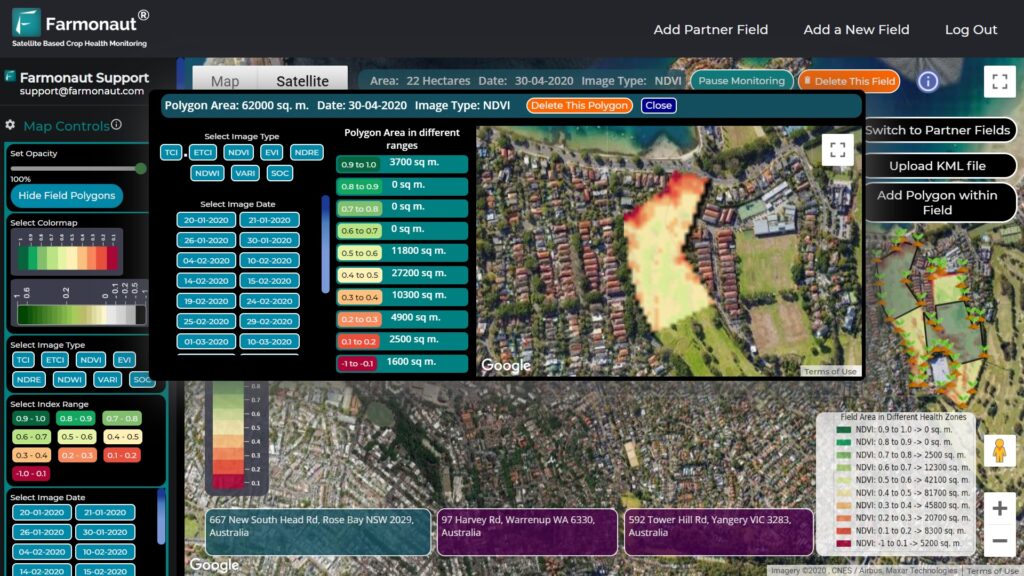
Access Farmonaut Web App: Satellite-based Monitoring for Livestock & Cropland
Yearly Comparison Table of Cow-Calf Pair Prices & Influencing Factors
| Year | Estimated Cow-Calf Pair Price (USD) | Feed Cost Index1 | Supply Levels | Key Market Drivers |
|---|---|---|---|---|
| 2024 | $1,570 | 102 | Medium | Drought impacts, moderate export demand |
| 2025 (Current) | $1,680 | 109 | Low | Tighter inventory, higher feed costs, rising consumer demand for sustainably produced beef |
| 2026 (Projected) | $1,765 | 112 | Low | Persistently high feed costs, export market volatility, sustainability regulations, weather unpredictability |
1Feed Cost Index: Relative scale (2023 baseline = 100), higher values indicate more expensive feed supply.
“Feed costs account for nearly 60% of total cow-calf operations expenses, significantly influencing 2025 market price trends.”
Major Factors Influencing Cow-Calf Pair Prices
Understanding the factors that shape cow calf pair prices is essential for producers, ranchers, analysts, and other stakeholders. As we approach 2026, several key dynamics continue to drive changes in value, supply, and market conditions.
1. Feed and Input Costs
- Feed costs are the largest single expense—comprising about 60% of total operational costs for cow-calf producers.
- Factors such as rising grains prices, climatic variability, global supply disruptions, and inflation drive feed expenses upward.
- When feed becomes expensive, operations reduce herd sizes, tightening supply and pushing pair prices upward.

🗝️ Pro Tip
Watch for seasonal feed cost spikes—timing cow-calf pair sales after the high-cost periods can yield stronger returns if you’ve maintained herd health effectively.
2. Weather Patterns, Climate Change, and Pasture Availability
- Increasing frequency of droughts, floods, and erratic weather patterns (in line with global climate change forecasts) have direct effects on pasture availability in key regions.
- Adverse climate impacts reduce forage—causing cattle to lose weight and decreasing resale value of cow-calf pairs.
- Unpredictable weather dynamics often cause short-term supply shocks that drive rapid price increases.

💸 Investor Note
Investments in carbon footprint monitoring for livestock are expected to be a core strategy for resilient cattle operations in the face of climate volatility. This not only improves sustainability but also attracts premium buyers seeking environmentally responsible beef.
3. Shifts in Market Demand & Consumer Preferences
- Changing consumer preferences—including a shift towards plant-based proteins and sustainably produced meat—are creating segmented markets.
- In 2025 and beyond, cattle raised with regenerative and sustainable practices (and verified with traceability solutions) secure a price premium.
- Transparency in animal welfare and feed sourcing can influence buyer interest and affect pair prices significantly.

✔ Key Insight
Markets are rewarding traceability: Verification of responsibly produced beef through traceability drives up the value of cow-calf pairs—a trend projected to accelerate into 2026 in both domestic and export channels.
4. Technological Innovations: Genetic Improvements & Smart Farming Tools
- Use of precision agricultural technologies, AI-driven monitoring (like NDVI pasture health, from Farmonaut), and smart breeding tools is on the rise.
- Genetic improvements in cattle and advanced animal health monitoring enhance productivity and overall pair quality.
- Tech-enabled producers can command higher prices for premium pairs.

5. Trade Policies, Export Markets & Global Supply Chains
- Trade agreements, tariff rates, and changing global demand for beef are critical external drivers.
- 2025–2026 may see further market volatility due to shifting export regulations and competitive pressures with major importers.
- Producers in regions with access to export channels may realize higher average prices for cow-calf pairs when demand surges abroad.
Main Drivers of Cow-Calf Pair Pricing (2025–2026)
- 📈 Feed & Input Costs: Driven by grain market volatility and climatic variability.
- 🌦 Weather & Climate Patterns: Drought, extreme storms, and their effects on pasture availability.
- 🛒 Consumer Preferences: Towards sustainability, welfare, and traceability.
- 🌍 Global Trade Dynamics: Export demand, tariffs, and regulatory changes.
- 💡 Technological Adoption: Use of satellite data, AI, blockchain for enhanced management.
Current Trends & 2026 Market Outlook for Cow-Calf Pair Prices
The market for cow calf pair prices as we head into 2026 is shaped by a mix of upward pressures and structural shifts. Let’s examine the most significant trends:
Inflation, Input Costs, and Price Support
- Persistent inflationary pressures—especially on feed, transport, and veterinary care—are reducing profit margins but supporting stronger cow-calf pair prices.
- Supply shrinkage in response to elevated input costs leads to tighter cattle inventories.
Market Segmentation and Premiums for Sustainable Pairs
- Distinct market tiers are emerging. Conventional pairs trade in one segment, while pairs produced under sustainability certifications (backed by blockchain-based traceability and verified carbon footprinting) fetch notable premiums.
- This trend is expected to strengthen with stringent environmental regulations taking effect in North America, Europe, and Asia-Pacific.
Data-Driven Auctions and Direct Farm Sales
- Livestock auctions and direct-to-rancher sales platforms harness real-time data analytics (production history, animal genetics, health status) to inform both sides of the transaction.
- Access to better data empowers producers to time sales, adjust herd management, and maximize pair value.

❌ Common Mistake
Over-relying on historical price trends without considering new regulatory, environmental, or technological changes can lead to missed opportunities—or losses—in cow-calf pair sales for 2025 and 2026.

How Cow Calf Pair Prices Impact Producers, Operations & Financial Decisions
Fluctuations in cow calf pair prices have wide-ranging implications for producers, ranchers, farmers, and the broader economy. Navigating these shifts is both a challenge and an opportunity in 2026.
Revenue & Profitability
- Higher cow-calf pair prices—while positive for gross revenue—may be neutralized or even offset by rising costs (especially feed and labor).
- Strategic management of breeding cycles to align with projected pricing peaks is essential for profitability.
Risk Management Strategies
- Government support programs, drought insurance, and satellite-based insurance verification help buffer against unexpected climate or disease shocks.
- Cooperative models and producer alliances play an increasing role in stabilizing returns and managing risk exposure.
Decisions for New Entrants and Small Producers
- Understanding price dynamics is especially critical for new entrants and smallholders to ensure long-term sustainability.
- Leveraging shared access to intelligence—such as real-time satellite data and collaborative sales platforms—levels the market playing field.
- 📊 Monitor feed and input prices seasonally – anticipate market shocks for strategic sales.
- 🛑 Guard against reactionary herd reductions that could cause long-term supply contraction and missed recovery cycles.
- 💼 Integrate data-driven technologies for health and resource management (see Farmonaut Fleet Management for optimized logistics).
- 🔐 Deploy traceability and carbon tools to tap into high-premium segments.
- 🧐 Regularly review export and import policy changes affecting your sales region or export market potential.
Technology, Artificial Intelligence, and Sustainability in Cow-Calf Pair Pricing
Technological innovations are redefining how both large and small livestock operations manage, market, and maximize the value of their cow-calf pairs.
Satellite Monitoring & AI-Driven Advisory for Livestock Operations
- Satellite-based solutions—like those provided by Farmonaut—deliver precise insights into pasture condition, animal health, and climate risks.
- AI-powered advisory systems offer forecasts for feed availability, weather, and market trends—supporting informed operational decisions.
- Blockchain-based traceability guarantees authenticity and opens new high-value markets for sustainably raised pairs.




Farmonaut’s APIs for Developers: Seamlessly integrate up-to-date satellite-based weather, crop, and pasture intelligence into your own livestock management or rancher tools.
Explore Farmonaut API |
Developer Documentation
Satellite-Driven Value for Livestock Producers
- 🛰️ Real-time crop and pasture monitoring improves forage planning for optimal cattle nutrition.
- 🌱 Early disease & drought alerts protect herd health and maintain resale value of pairs.
- 💡 AI-based insights forecast seasonal risks that may affect supply or demand trends.
- 🔗 Blockchain traceability validates sustainable and ethical animal handling for premium markets.
- 📉 Risk reduction via satellite-verifiable data for loan and insurance approvals (learn more).
Key Insights & Market Highlights for 2026
As sustainability certifications and digital traceability become more mainstream, expect the price gap between “generic” and “sustainable” cow-calf pairs to widen further.
A severe multi-season drought in one or more cattle regions could not only spike prices but also push long-term supply levels dangerously low into 2027.
Real-time satellite monitoring for pasture and animal health is rapidly becoming a market norm in auction listings and direct-to-farm sales.
Export-oriented producers will need to closely track currency swings and regulatory changes in China, the EU, and Middle East—regions with high import demand for quality beef.
Enterprise-scale farm and livestock management tools are emerging as the main differentiator for industry leaders capitalizing on efficiency, sustainability, and compliance.
Pro Tips, Visual Lists, & Data-Backed Insights for Ranchers & Producers
- ✔ Key Benefit: Implementing real-time data tools (like Farmonaut’s AI advisory systems) maximizes herd productivity and market timing, safeguarding against erratic pricing shocks.
- 📊 Data Insight: Operations using satellite-based verification for credit and insurance resolve disputes faster and access capital more efficiently than traditional methods.
- ⚠ Risk/Limitation: Not all sustainability certifications are recognized equally across global export markets—carefully select those with robust blockchain-backed audit trails.
- ⚑ Best Practice: Centralize all herd data, pasture health, and sales history for smarter operational and financial decision-making.
- 🔗 Integration Opportunity: Developers and ag-fintech companies: Integrate Farmonaut’s satellite and weather APIs into custom apps for producers and insurers for a competitive edge.
📅 Key Decisions for Cow-Calf Operations in 2026
- Review cost and availability of feed monthly, planning herd size adjustments pre-emptively.
- Assess weather risks with both traditional and satellite-driven forecasts.
- Audit animal health and genetics regularly using digital records for traceability in premium markets.
- Identify and secure multiple sales channels (domestic, export, direct).
- Document and promote sustainable practices to meet rising consumer and processor demand.
FAQ – Cow Calf Pair Prices, Market Trends & Technology
What exactly is a cow-calf pair, and why are pair prices important?
A cow-calf pair refers to a mature cow and her nursing calf sold as a single unit. Pair prices are a foundational pricing signal in beef production, reflecting both supply-demand dynamics and overall industry health. They influence decisions for herd management, breeding, and financial planning for beef producers and ranchers.
What is the biggest factor influencing cow-calf pair prices in 2025–2026?
Feed costs remain the dominant influence, often accounting for over half of a producer’s expenses. Other significant factors include weather patterns, export demand, consumer preferences for sustainability, and technological adoption in management operations.
How can technology help optimize returns from cow-calf pairs?
Satellite monitoring and AI-driven advisory systems provide near real-time reports on pasture quality, herd health, and weather risks, empowering data-backed management. Blockchain traceability systems are increasingly vital for supply chain transparency, opening access to premium-priced markets.
Why are sustainability certifications and traceability tools important for pricing?
Buyers, retailers, and export markets are prioritizing beef verified through blockchain traceability and certified for low carbon footprint, animal welfare, and responsive management. These attributes are now tied directly to higher cow-calf pair values and increased market access.
How do export policies and global trade shifts affect local cow-calf pair prices?
Open or restricted export markets, trade agreement changes, and global demand (from regions like China, the EU, and Middle East) lead to rapid shifts in domestic prices. Supply chain disruptions in major beef-importing nations can cause both sudden booms and busts in pair pricing, making adaptability essential.
Conclusion: Future-Proofing Cow-Calf Operations – 2026 and Beyond
The cow-calf pair price is more than a commodity metric—it’s a living barometer for the cattle sector, the agricultural economy, and supply chain health. By 2026, it will be shaped by heightened feed costs, environmental regulations, technological advances, and shifts in consumer demand. Producers and stakeholders who actively monitor and respond to these complex market drivers will be best positioned for resilience, profit, and long-lasting success.
As precision agriculture, AI, and satellite monitoring become mainstream tools, their integration will offer producers a vital edge in optimizing operations, timing decisions, and marketing their cow-calf pairs. Sustainability and traceability will not only open new markets but also anchor higher price points and stable returns. Staying informed and agile—through data, collaboration, and forward-thinking management—remains the surest route to prosperity in the evolving landscape of livestock production.
Farmonaut: Satellite Technology to Elevate Livestock & Cow-Calf Pair Returns
At Farmonaut, we deliver world-class, cost-effective satellite solutions for agriculture and livestock management in 2026 and beyond.
By leveraging AI, blockchain, and multispectral satellite imagery, our platform empowers cattle producers and ranchers to:
- ✔ Monitor pasture health and forage availability in real-time.
- ⚡ Anticipate climate and weather risks to protect herd health and asset value.
- 🌱 Optimize resource management and reduce operational costs—boosting overall profitability.
- 🔗 Achieve transparent, blockchain-backed traceability—unlocking high-value export and sustainable markets.
- 💡 Integrate AI-driven advisory and planning tools for smarter breeding, sales, and risk management.
Whether you’re a producer seeking actionable insights, a business optimizing farms at scale, or a developer building next-generation agri-intelligence tools, Farmonaut is your trusted technology partner.
Farmonaut Subscription Plans: Access scalable, affordable satellite monitoring tailored for individual farmers, ranchers, businesses, and government users across geographies and sectors.
Ready to get started? Explore detailed use-cases and benefits for carbon footprinting, product traceability, satellite-backed crop and cattle insurance, and large-scale farm management.
Optimize your livestock operations, boost profitability, and stay competitive by leveraging data-driven strategies, sustainable practices, and the latest in satellite technology—visit Farmonaut today for a smarter, future-ready approach to cow-calf pair management!