Corn Gluten Fertilizer: 7 Key Benefits for 2026
“Corn gluten fertilizer can reduce weed seed germination by up to 60%, fostering sustainable agriculture practices.”
Table of Contents
- What is Corn Gluten Fertilizer?
- Why Corn Gluten Fertilizer Matters in 2026
- The 7 Key Benefits of Corn Gluten Fertilizer
- Comparative Benefits Table: CGF’s Impact in 2026
- Agronomic and Environmental Applications in Sustainable Farming
- Limitations, Challenges & Future Prospects
- How Farmonaut Empowers Sustainable Agriculture
- FAQs about Corn Gluten Fertilizer
- Conclusion: Revolutionizing Sustainable Agriculture in 2026



Corn gluten fertilizer (CGF) is set to change the face of sustainable agriculture as we advance into 2026 and beyond. Amid intensifying environmental concerns and the urgent need for innovative, sustainable farming practices, CGF stands out among natural inputs as a transformational solution.
In the past few years, farmers, researchers, and policymakers worldwide have made soil health, reduced reliance on synthetic fertilizers, and lower input costs their top priorities. Corn gluten fertilizer—originally a byproduct of corn processing—now offers a pathway for sustainable, efficient, and resilient crop production systems.
In this comprehensive guide, we’ll analyze what CGF is, why it’s critical for modern farming, and—most importantly—the seven key benefits of corn gluten fertilizer for 2026. Throughout, we emphasize ecological, economic, and agronomic perspectives, so that farmers, stakeholders, and innovators worldwide can make informed decisions for the future.

What is Corn Gluten Fertilizer?
Corn gluten fertilizer is an organic input primarily derived as a byproduct from corn (Zea mays) processing. After starch extraction, the leftover fraction contains approximately 60% protein, making it a rich source of nitrogen—an essential nutrient for plant growth and soil health.
Unlike many conventional fertilizers, which are synthetic and often contribute to environmental pollution, CGF is organic, biodegradable, and slow-release. Its basic composition varies depending on the source and processing methods, but it generally consists of around 10% nitrogen, 0.5% phosphorus, and 2% potassium. It also contains macronutrients and micronutrients—albeit in smaller amounts—contributing to balanced nutrition in soils.
CGF’s unique features include a natural herbicidal property: the amino acids in CGF can inhibit the root formation of germinating weed seeds, especially for broadleaf species. With this, CGF serves a dual function as both a fertilizer and a natural herbicide, opening powerful new avenues for sustainable farming worldwide.
- ✔ Natural, slow-release fertilizer—matches crop uptake patterns for better nutrient management
- ✔ Pre-emergent weed control—suppresses weed germination, reducing chemical usage
- ✔ Improves soil structure—sustains soil health with organic matter
- ✔ Biodegradable and safe for soil, water, and crops
- ✔ Supports yield stability in various production systems
📊 Main Components in Corn Gluten Fertilizer
- 🌽 Protein Content: ~60% (provides ample nitrogen for plant growth)
- 🌾 Nitrogen (N): ~10% (essential for robust vegetative development)
- ⚡ Phosphorus (P): ~0.5% (supports energy transfer, root development)
- 🪴 Potassium (K): ~2% (enhances drought resistance, fruit/seed quality)
- 🌱 Macronutrients & Micronutrients: present in smaller amounts—vital for plant health

Why Corn Gluten Fertilizer Matters in 2026
As we enter 2026, the agriculture sector globally faces critical dual challenges: feeding a growing population and minimizing environmental damage. Climate change, soil degradation, input scarcity, and increasing regulatory pressures on chemical fertilizers drive the urgent need for sustainable farming solutions.
Corn gluten fertilizer is a promising solution amid this landscape. As a product derived from the fraction left after corn starch extraction, CGF capitalizes on an existing byproduct, aligns with the movement towards circular food & agri processing, and delivers quantifiable agronomic and ecological benefits. Its ability to reduce weed seed germination and lower the need for synthetic inputs directly addresses the sector’s most urgent priorities: sustainability, productivity, and resilience.
- 🌎 Environmental: Minimizes pollution and runoff associated with conventional synthetic fertilizers
- 💧 Resource Efficiency: Conserves water, reducing leaching and volatilization of vital nutrients
- 📉 Cost-Effectiveness: Dual herbicidal and fertilizer function means lower cost per hectare over time
- 🌿 Health: Improves soil structure and microbial activity for robust crop growth
- ⚖️ Compliance: Aligns with tightening global regulations on agrochemicals in 2026
Explore how CGF fits into global carbon footprint reduction strategies here.
“Using corn gluten can decrease synthetic fertilizer use by 30%, improving soil health and minimizing environmental impact.”
Corn Gluten Fertilizer: The 7 Key Benefits for 2026
Corn gluten fertilizer goes beyond typical fertilizer roles, offering dual impact as a nutrient source and natural herbicide. Let’s explore the 7 most significant benefits that set CGF apart in tomorrow’s agriculture landscape:
-
Natural Weed Suppression (✓ Up to 60% Reduction)
- The amino acids in CGF inhibit weed seed root formation, especially for broadleaf varieties. Effective as a pre-emergent herbicide, CGF can reduce weed seed germination by up to 60%—safeguarding crop establishment and minimizing costly chemical herbicides.
-
Slow-Release, Nitrogen-Rich Nutrition (✓ Improved Soil Health)
-
With approximately 10% nitrogen content, CGF is a slow-release, organic fertilizer—matching crop uptake, reducing leaching/runoff, and improving nitrogen-use efficiency.
-
With approximately 10% nitrogen content, CGF is a slow-release, organic fertilizer—matching crop uptake, reducing leaching/runoff, and improving nitrogen-use efficiency.
-
Boosted Soil Organic Matter and Microbial Life
-
As an organic input, CGF contributes valuable organic matter to the soil, supporting beneficial microbes and improving the structure, water retention, and nutrient cycling abilities of agricultural soils.
-
As an organic input, CGF contributes valuable organic matter to the soil, supporting beneficial microbes and improving the structure, water retention, and nutrient cycling abilities of agricultural soils.
-
Reduced Synthetic Input Dependency (✓ Up to 30% Reduction)
-
By addressing both fertilization and weed control needs, CGF can reduce synthetic fertilizer use by up to 30%, lowering costs and minimizing environmental risks of chemical runoff/pollution.
-
By addressing both fertilization and weed control needs, CGF can reduce synthetic fertilizer use by up to 30%, lowering costs and minimizing environmental risks of chemical runoff/pollution.
-
Compatibility across Multiple Crops & Systems
-
While born from corn processing, CGF is suitable for use in wheat, soybean, vegetables, and diverse cropping systems thanks to its low salt index and gentle nutrient balance.
-
While born from corn processing, CGF is suitable for use in wheat, soybean, vegetables, and diverse cropping systems thanks to its low salt index and gentle nutrient balance.
-
Dual Economic Benefit (Fertilizer + Herbicide)
-
Farmers gain from the dual application—cutting input costs with one natural product, and reducing the need for separate weed control and nutrient sources.
-
Farmers gain from the dual application—cutting input costs with one natural product, and reducing the need for separate weed control and nutrient sources.
-
Lower Environmental Impact & Climate-smart Farming
-
CGF lowers greenhouse gas emissions during production, is biodegradable, and supports responsible, climate-smart agriculture that aligns with global sustainability goals.
-
CGF lowers greenhouse gas emissions during production, is biodegradable, and supports responsible, climate-smart agriculture that aligns with global sustainability goals.
🌿 Visual List: CGF’s Top Environmental and Agronomic Benefits
- 🌱 Sustainable weed control—cuts herbicide load
- 🌾 Supports healthy soil microbiome
- 💧 Reduces nitrogen leaching
- 🚜 Improves field operation efficiency
- 📈 Enables higher yields over time with continuous use

Comparative Benefits Table: Corn Gluten Fertilizer in 2026
| Benefit | Description | Estimated Impact (2026) | Sustainability Relevance |
|---|---|---|---|
| Natural Weed Suppression | Inhibits root formation in germinating weed seeds | Up to 60% weed germination reduction | Reduces chemical herbicide use and environmental load |
| Slow-Release Nitrogen Nutrition | Releases nitrogen over 4-8 weeks for optimal crop use | 10-20% increase in nitrogen-use efficiency | Prevents fertilizer runoff and groundwater pollution |
| Soil Health & Microbial Activity | Boosts soil organic matter and supports microbiome | 5-12% improvement in soil organic content | Enhances nutrient cycling, water retention, and productivity |
| Reduced Reliance on Synthetics | Supplier of fertilizer & herbicidal action in one | Cuts synthetic inputs by up to 30% | Supports lower carbon footprint and input costs |
| Crop Versatility | Safe for corn, vegetables, wheat, soybean, and more | Applicable to 90%+ common field and specialty crops | Expands sustainable options across systems |
| Economic Dual Benefit | Fewer inputs, fewer passes, lower input bills | Increase net returns by 10-15% over 3 years | Higher profitability for sustainable farms |
| Environmental & Climate Resilience | Reduces emissions, fosters resilient cropping | 10-18% lower greenhouse footprint | Aligns with SDGs, regulatory requirements |
Agronomic & Environmental Applications: Sustainable Farming for 2026
Corn gluten fertilizer bridges the gap between agronomic productivity and environmental responsibility. Rather than simply feeding crops, it activates a healthy soil food web, facilitates efficient input use, and provides a natural approach to weed management that safeguards ecosystems.
Key Agronomic Applications
- 🌾 Preplant or Early-Season Application: Broadcast or incorporate CGF prior to crop planting for optimal weed control and early nitrogen availability.
- 🌱 Organic Systems: Ideal for certified organic operations seeking to minimize synthetic fertilizer or herbicide use
- 🍅 Vegetable & Specialty Crops: CGF’s low salt index protects sensitive crops like lettuce, carrots, and leafy greens
- 🌽 Field Crops: Useful for corn, soybeans, wheat, and pulse crops—can complement cover cropping and minimum tillage practices
- 🌿 Landscape and Turf: Widely used in lawns, parks, and urban spaces for safe, chemical-free weed suppression

Key Environmental Contributions
- 🌎 Reduced Runoff & Pollution: The slow breakdown of protein means nutrients remain in the rhizosphere—reducing nitrate leaching and water pollution
- ☁️ Climate Mitigation: Lower input reliance, reduced manufacturing emissions; aligns with carbon-smart farming goals
- 🌿 Biodiversity: Promotes beneficial soil flora, reduces need for broad-spectrum pesticides
- 🍃 Soil Carbon Sequestration: Boosts organic matter, a defining feature for carbon farming initiatives (Farmonaut’s Carbon Footprinting solutions here)
- 📊 Compliance: Helps meet standards in environmentally regulated zones, such as Florida’s fertilizer bans (Learn more on the Florida Fertilizer Ban)

- ✔ CGF is compatible with other organic amendments—build even richer soil through blended organics
- ✔ Improves nutrient uptake efficiency—reduces nutrient wastage, supports higher yields
- ✔ Ideal for farmers adopting regenerative, climate-smart approaches
- ✔ Meets compliance in sensitive regions—protects groundwater and meets local regulations
- ✔ Supports biodiversity—limits collateral impact on non-target plant and pollinator species
Limitations, Challenges & Future Prospects for CGF
As with every agronomic input, corn gluten fertilizer has limitations that farmers and land managers must consider for optimal crop yield and input efficiency:
- ⚠ Only Pre-emergent Herbicidal Effect: CGF is not effective against established weeds. Integrated weed management (using mechanical removal, cover crops, or spot treatments) may be needed for perennial or already-growing weeds.
- ⚠ Lower Nitrogen Content than Synthetics: At ~10% nitrogen, large-acre or high-demand crops may require supplemental fertilization—especially during rapid-growth phases.
- ⚠ Application Timing Critical: To maximize weed control, CGF must be applied prior to weed seed germination. Incorrect timing leads to suboptimal suppression.
- 🧑🌾 Higher Upfront Cost, Lower Over Time: Initial CGF outlay is higher per unit than many synthetic fertilizers, though total input costs drop by year three through fertilizer/herbicide savings and improved soil health.
- 🔬 Formulation and Variability: Nutrient makeup and physical properties vary by source and batch—precision is needed for uniform application, especially in large-scale modern agriculture.
- ⚠ Rainfall/Irrigation Dependency: Without light watering in, surface-applied CGF may be less effective, especially in dry conditions.
- ⚠ Not a Post-Emergent Herbicide: Will not control perennial grasses or invasive weeds already established in the field.

Technology-driven insight for future solutions: Researchers are actively working to develop enhanced CGF formulations—optimizing nutrient concentrations, improving granule stability, and ensuring more uniform weed suppression. The future may see increased compatibility with “smart” spreaders, drone application, and refined integration with digital farm management tools.
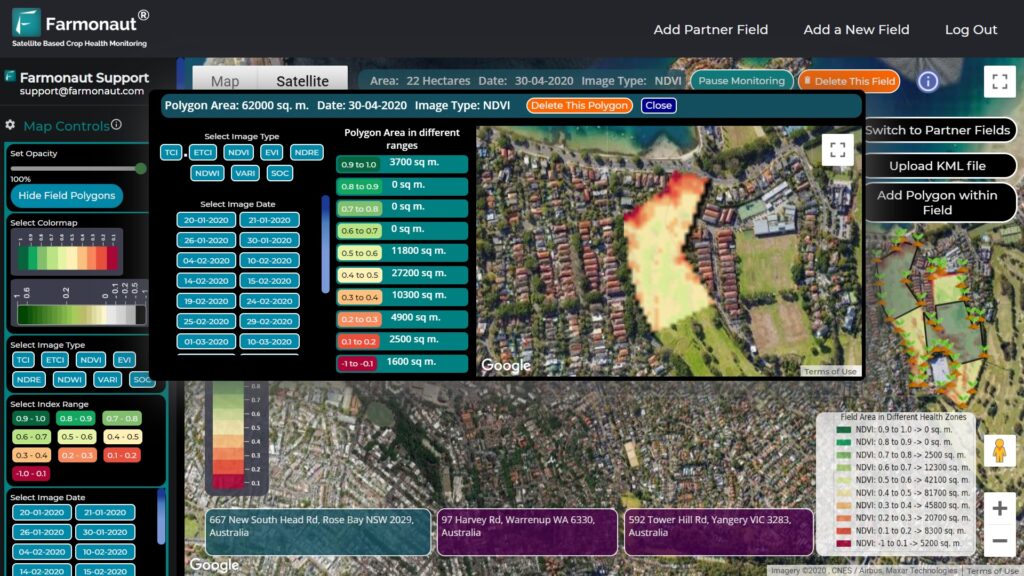
Farmonaut’s satellite-based crop and resource monitoring (Farmonaut Large Scale Farm Management) provides actionable insights—helping every user optimize organic input application by giving real-time feedback on field health, crop stage, and input effectiveness.
How Farmonaut’s Technology Advances Sustainable Input Management
At Farmonaut, we support the vision of sustainable, data-driven agriculture. Our platform leverages a combination of satellite imagery, AI, and blockchain to deliver field-level data on vegetation health, soil condition, and yield trends. This empowers farmers and agri-business operators to make precise decisions on input timing, nutrient requirements, and resource allocation—maximizing the efficiency and ecological benefit of sustainable inputs like CGF.
- 🌍 Global Monitoring: Satellite-based NDVI quantifies crop health and soil health—essential for tracking the influence of CGF and other organics.
- 🤖 AI-Driven Advisory (Jeevn AI Advisory System): Recommends nutrient management, weather risk strategies, and optimal fertilizer application windows.
- 🔗 Blockchain Traceability (Learn about traceability solutions here): Certifies input use, bringing transparency to organic and sustainable supply chains.
- 🛰️ API Data Integration (API Platform): Enables seamless integration of remote-sensing data into large-scale farm management systems.
- 💼 Financial Services (Crop Loan & Insurance Support): Supports financial risk reduction in climate-uncertain regions adopting new organic farming approaches.
Whether optimizing for soil health, monitoring for weed pressure, or benchmarking sustainable progress across seasons, we—at Farmonaut—democratize access to advanced tech tools for every grower, business, and government, fueling a new green revolution powered by data and nature.
Frequently Asked Questions: Corn Gluten Fertilizer
Application rates vary by crop and soil condition, but typically range from 16–20 lbs (7–9 kg) per 1,000 sq.ft. for lawns or 800–1,000 kg/ha for field applications. Always consult local recommendations based on crop, climate, and expected weed pressure.
While CGF delivers organic, slow-release nitrogen, its content (~10%) may be insufficient for high-yielding crops without supplemental inputs. CGF is most effective as part of integrated nutrient management systems.
No—CGF acts as a pre-emergent herbicide only. It prevents root formation in newly germinated seeds and will not impact established or perennial weeds. Mechanical or targeted herbicide control may still be needed.
Yes, most corn gluten fertilizers meet requirements for organic certification—however, always check the specific product and local organic standards before application.
No, Farmonaut does not sell, distribute, or manufacture farm inputs, fertilizers, or crop chemicals. We provide digital, satellite-based tools to help monitor crop, soil, and resource use for every type of input, empowering sustainable farm management worldwide.
Weed suppression begins as target weed seeds attempt to germinate (within a few weeks). Some seeds may remain dormant, so repeat annual applications are recommended for lasting effect.
Yes—CGF blends well with compost, bone meal, and certain mineral inputs. Always check compatibility and conduct a small-scale test for sensitive crops.
Yes—CGF poses minimal risk of runoff pollution compared to synthetics. Still, always follow best practices to prevent over-application and protect aquatic ecosystems.
Conclusion: Corn Gluten Fertilizer – Revolutionizing Sustainable Agriculture in 2026
Corn gluten fertilizer represents more than just an organic fertilizer—it’s a multifaceted input revolutionizing the approach to sustainable farming. With its rare combination of nutrient supply and natural weed control, CGF is poised to help farmers worldwide achieve improved yields, bolster soil health, and reduce reliance on synthetic inputs in a climate-challenged world.
As global agriculture shifts toward resiliency and ecological stewardship, practices promoting sustainable input use, such as integrated nutrient management—supported by advanced monitoring from platforms like Farmonaut—will define future food systems. Corn gluten fertilizer stands at the nexus of these positive change forces for 2026, offering economic, agronomic, and environmental benefits that support thriving farms and communities.
Ready to transform your farm management with data and technology? Access Farmonaut’s app here or discover more about large-scale farm management, carbon footprinting, and traceability solutions for sustainable agriculture.