Chocolate Spot Broad Beans: 7 Top 2026 Strategies
Introduction
Broad beans (Vicia faba) are among the world’s most vital legume crops, offering exceptional nutritional value, enriching soils, and supporting sustainable agriculture. With the global demand for protein-rich, resilient crops continuing to rise, maintaining healthy broad bean yields has become both a priority and a challenge in 2025 and beyond.
One of the most significant threats to broad bean production remains chocolate spot disease. Caused primarily by the fungal pathogen Botrytis fabae, the disease can devastate entire fields—especially when environmental conditions favor rapid spread. The question for farmers, agronomists, and policymakers around the globe: How can we safeguard our bean crops while honoring sustainability and environmental stewardship? Let’s explore the cutting-edge, science-backed, and eco-friendly answers in this detailed guide.
Chocolate Spot Disease in Broad Beans: 2025–2026 Challenges
Chocolate spot broad beans—beset by chocolate spot disease—stand at the crossroads of modern agriculture and climate disruption. Keeping yields robust in 2025 and beyond requires full understanding of the nature, impact, and management of this disease.
Nature & Pathology of Chocolate Spot Broad Beans
- Root cause: Botrytis fabae (mainly), occasionally Botrytis cinerea
- Symptoms: Dark brown, irregular lesions on leaves, stems, and pods, coalescing into necrotic areas
- Severe cases: Fuzzy gray mold, rapid tissue breakdown, impaired plant vigor
- Yield loss potential: Ranges from 10% (mild outbreaks) to 60% (with highly favorable conditions and no intervention)
The impact is not just limited to the field. Reduced photosynthetic capacity, impaired growth, and rapid spread under moist canopy conditions create a feedback loop that endangers entire crop cycles.
Current and Emerging Challenges
- Climate variability: Intensified humidity, erratic rainfall, and temperature swings expand disease “windows”
- Increased prevalence: Many regions report chocolate spot outbreaks as a growing concern
- Sustainability: Balancing fungicide use and eco-friendly methods while protecting the soil and beneficial organisms
Epidemiology & Disease Cycle: The Science Behind the Spread
- Survival reservoirs: Botrytis fabae persists on crop residues, infected seed, and alternate hosts (weeds)
- Spores: Wind and rain splash spread the fungus, with spores infecting new growth during prolonged leaf wetness
- Environmental triggers: Moderate temperatures (15–22°C), high humidity, and dense canopy conditions drive proliferation
- Disease cycle: Infection can persist across seasons unless management breaks the cycle by reducing soil- and debris-borne inoculum

Impact on Agriculture & Yields: Why Integrated Management Remains Crucial
The agricultural implications of chocolate spot broad beans extend far beyond aesthetics. Yield losses, diminished pod-filling, impaired plant vigor, and reduced marketability threaten food security and sustainable crop rotations—especially amid 2025’s growing protein demand.
- Yield losses can reach 60% under uncontrolled epidemics
- Reduced bean quality leads to price penalties for farmers
- Pathogen carryover in debris and soil threatens subsequent planting seasons
- Escalating fungicide use—if unmanaged—poses risks to environmental sustainability and beneficial biodiversity

7 Top Strategies for Chocolate Spot Broad Beans in 2026
Given the complex lifecycle and adaptability of the fungal pathogen, integrated management remains the gold standard. Let’s dive into the seven most effective, evidence-based strategies for protecting broad beans against chocolate spot in 2026 and beyond:
1. Selection of Disease-Resistant Varieties
By 2026, breeding programs worldwide have produced bean varieties exhibiting partial, field-tested resistance to Botrytis fabae.
- Partial resistance: Slows epidemic development, lessens lesion merger, and supports plant recovery
- Sustainable: Reduces fungicide dependency and aligns with eco-friendly cropping systems
- Recommended for: All farmers—especially in high-risk, high-humidity zones

2. Crop Rotation & Thoughtful Field Layout
- Avoid back-to-back legume plantings in the same field
- Switch to cereals or non-host crops for at least two years to break the disease cycle
- Separate bean fields from each other to reduce risk of cross-infection by windblown spores
Well-planned rotations diminish soil-bound inoculum, reducing disease prevalence in future seasons. This sustainable approach works hand-in-hand with residue management, forming the foundation for resilient cropping systems.

3. Optimized Crop Residue Management
- Post-harvest, remove infected debris or employ deep plowing to bury remnants below the soil surface
- Compost only thoroughly decomposed material to prevent overwintering fungus
- Monitor for alternate host weeds at field margins and eliminate aggressively
Effective residue strategies shrink the “base camp” for future spore production, further complementing rotation and varietal resistance.
4. Canopy Management: Sowing Dates, Spacing, and Ventilation
- Sow beans to avoid peak humidity and moderate temperature “disease windows”
- Wider row and intra-row spacing: Enhances airflow, reduces leaf wetness period
- Avoid excessive nitrogen, which can drive over-lush, dense canopies that retain moisture
Effective canopy management interrupts pathogen proliferation, providing a microclimate hostile to Botrytis infections.

5. Targeted Chemical Control: Modern Fungicides & Anti-Resistance Tactics
- Apply fungicides with systemic movement and targeted mode of action for enhanced efficacy, but always following integrated management principles
- Follow anti-resistance guidelines: Rotate active ingredients, apply only as needed, and combine with non-chemical practices
- Prioritize products with reduced non-target toxicity and short environmental persistence in 2026
Fungicide use remains important during epidemics, but judicious, data-driven application aligns with sustainability and ecosystem health goals.

6. Biological Control: Antagonist Organisms & Plant Immunity
- Introduce antagonistic fungi and bacteria that suppress Botrytis through competitive exclusion or direct inhibition
- Apply mycoparasitic products at susceptible crop stages, or as seed/foliar treatments
- Leverage induced resistance activators—elicitors that “train” beans’ natural defenses
Successful biological control reduces reliance on synthetic fungicides and aligns perfectly with sustainable agricultural management.

7. Digital & Remote Sensing Tools: Early Warning and Rapid Response
- Employ remote sensing (like satellites and drones) to monitor for early stress or hot-spots of fungal activity
- Adopt disease forecasting apps and decision support systems for just-in-time fungicide or activator application
- Integrate weather and micro-climate data into agricultural management for predictive, precise interventions

Comparative Strategy Effectiveness Table: Chocolate Spot Management (2026)
| Strategy Name | Estimated Yield Improvement (%) | Sustainability Score (1-5) | Ease of Implementation (1-5) | Description/Notes |
|---|---|---|---|---|
| 1. Resistant Variety Selection | 15–35% | 5 | 4 | Utilizes new genetics to suppress disease; cornerstone for sustainable management |
| 2. Crop Rotation | 10–20% | 5 | 5 | Breaks pathogen life cycle; reduces inoculum in soil and debris |
| 3. Crop Residue Management | 8–16% | 4 | 3 | Removes or buries infected trash; limits overwintering fungus |
| 4. Canopy Management | 8–15% | 4 | 3 | Improves ventilation, reduces humidity and leaf wetness |
| 5. Targeted Chemical Control | 10–25% | 3 | 4 | Strategic fungicide use when other measures are insufficient; prioritized for high-pressure windows |
| 6. Biological Control Agents | 8–18% | 5 | 2 | Employs beneficial bacteria/fungi and resistance inducers; eco-friendly |
| 7. Digital & Remote Sensing Tools | 5–12% | 5 | 5 | Supports early detection, rapid intervention, and precise management |
Satellite Technology & Precision Management: The Future of Broad Bean Protection
In 2026, leveraging precision agriculture and digital tools is a critical pillar for integrated chocolate spot management.
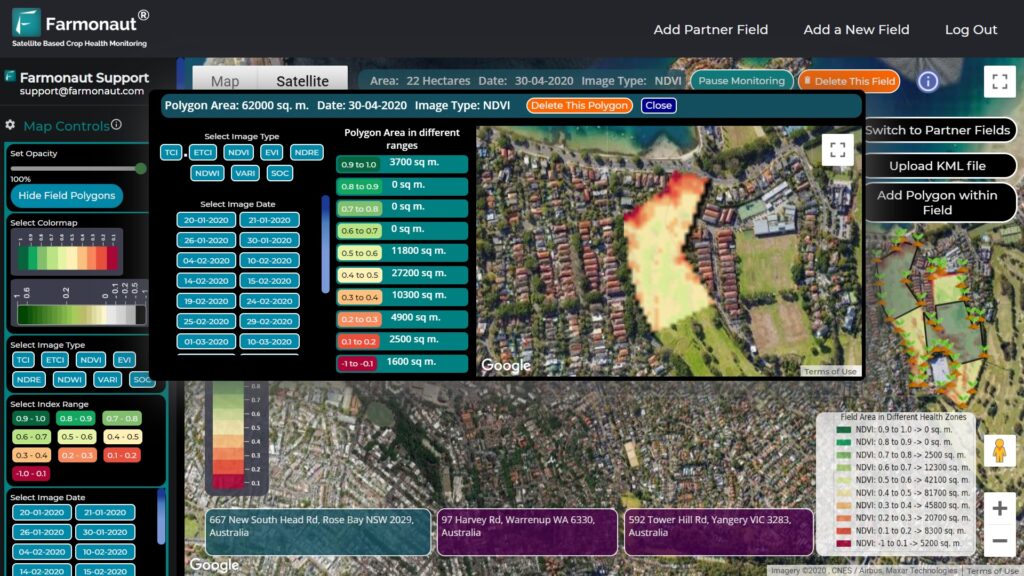
- Satellite Monitoring: Enables large-scale, real-time surveillance of crop health (NDVI for stress detection), allowing farmers to target hotspots before widespread lesion development.
- AI-driven Advisory: Real-time recommendations based on weather, crop stage, and historical disease outbreaks to inform optimal intervention times and inputs.
- Blockchain-Based Traceability: Ensures the supply chain integrity of disease-managed bean products, supporting market access and consumer trust.
Want end-to-end satellite-based farm management for large operations?
Check out Farmonaut’s Large Scale Farm Management Suite for integrated crop and resource oversight.
For precise carbon tracking and sustainable certification:
Explore Farmonaut’s Carbon Footprinting Solution to monitor and reduce the environmental impact of your agricultural enterprises.
Insurance and financing needs?
Leverage Farmonaut’s Crop Loan and Insurance Verification based on satellite insights, ensuring transparency and reduced risks for both farmers and lenders.
For accurate product provenance and anti-fraud assurance:
Farmonaut Traceability Systems bring blockchain security and transparency to agricultural supply chains.



Developers can integrate Farmonaut’s API for automated crop monitoring and disease risk alerts:
Farmonaut Developer API |
API Docs
Expert Callouts and Pro Tips for Chocolate Spot Broad Beans
Key Visual Benefits & Bullet Insights
- ✔ Disease-resistant varieties: Foundational for sustainable chocolate spot control
- 📊 Rotation & residue control: Lower base risk for future crops
- ⚠ Dense canopy: Main risk factor—proper spacing essential
- ♻ Eco-friendly controls: Biological agents and reduced-toxicity fungicides support beneficial insect and soil health
- 🌱 Digital monitoring: Enables just-in-time interventions and conserves inputs while protecting yields
- Prolonged wetness (dew, rain, overhead irrigation)
- High humidity from dense crops
- Moderate temperatures (15–22°C)
- Legacy inoculum from previous infections/field debris
- 🌍 Globally affordable satellite disease monitoring
- 🤖 Real-time AI crop health advisory
- ✅ API integration for automated risk alerts
- 🔗 Blockchain-based traceable beans for transparent supply chains
- 💡 Environmental impact reporting for sustainable certification
Farmonaut Tools for Integrated Disease Management
As a satellite technology pioneer, Farmonaut delivers real-time crop health monitoring, AI advisories, and blockchain traceability for broad bean crops and many more, supporting sustainable disease management worldwide. Our platform’s unique features:
- Multispectral Satellite Crop Monitoring: Detect stress and early disease symptoms before they become visible, so farmers can act proactively.
- Jeevn AI Advisory: Receive localized, crop-specific management advice—tailored by weather, past outbreaks, and current disease pressure.
- Blockchain Traceability: Growers and producers demonstrate disease management compliance for market access and consumer trust.
- Carbon Impact Tracking: Ensure disease management aligns with global emission standards—crucial for future-facing farmers and agri-businesses. Read about Carbon Footprinting.
- Comprehensive APIs: Automated alerts support truly data-driven decision-making (see API page).
Frequently Asked Questions: Chocolate Spot Broad Beans Management
-
What are the main symptoms of chocolate spot disease in broad beans?
Chocolate spot disease manifests as dark brown, irregular lesions on leaves, stems, and pods. In severe conditions, lesions coalesce into large necrotic patches and may become covered in fuzzy, gray fungal growth. -
How does chocolate spot disease spread?
The pathogen (Botrytis fabae) overwinters in crop residues and infected seed. Its spores are dispersed by wind and rain splash, making high humidity and dense canopies especially risky. -
What sustainable strategies combat chocolate spot?
The most sustainable strategies include resistant variety selection, crop rotation, optimized residue and canopy management, and biological controls. Digital tools (such as satellite monitoring) enhance early detection and reduce unnecessary chemical use. -
When should fungicides be used?
Only during high-risk periods or when other measures are insufficient. Use modern, low-toxicity fungicides, rotate modes of action, and always practice integrated management to prevent resistance. -
How can technology help minimize chocolate spot losses?
Remote sensing and digital advisory platforms identify stress, predict outbreaks, and recommend precise timing for interventions. This approach supports both productivity and sustainability. -
Is chocolate spot risk increasing due to climate change?
Yes—erratic rainfall, elevated humidity, and temperature swings have expanded infection windows globally, requiring adaptive management for resilient broad bean production. -
How can broad bean products be certified for disease management?
Traceability solutions (such as Farmonaut Traceability) utilize blockchain to provide transparent records, supporting certification and access to premium markets.
Conclusion: Building Resilient, Healthy Broad Bean Futures
Chocolate spot disease remains a formidable adversary to broad bean cultivation—especially as climate variability amplifies disease risks in 2025–2026 and beyond. Integrated, sustainable management that combines resistant varieties, cultural practices, judicious chemical and biological controls, and precision digital technologies will be essential for safeguarding yields, ensuring global food security, and maintaining healthy, vibrant legume agroecosystems.
We encourage all farmers, advisers, and agricultural stakeholders to maximize the latest advances in satellite monitoring, AI-driven advisories, and traceability systems for the next generation of broad bean protection—anchoring both profitability and the world’s sustainable food future.