Carbon Farming Benefits: 10 Farmland & Urban Benefits
Table of Contents
- Introduction
- Understanding Carbon Farming
- Carbon Farming Benefits: 10 Farmland & Urban Benefits
- Featured Videos: Unlocking Carbon & Soil Secrets
- Comparative Benefits Table
- Benefits of Urban Farming & Peri-Urban Integration
- How Farmonaut Supports Sustainable Carbon Farming
- Infrastructure & Policy: Scaling Carbon Farming in 2026 & Beyond
- FAQs: Carbon Farming & Sustainable Agriculture
- Conclusion & The Road Ahead
“Carbon farming can increase soil carbon stocks by up to 1.2 tons per hectare annually, improving soil fertility and productivity.”
The Multifaceted Benefits of Carbon Farming in Modern Agriculture
As the world grapples with environmental degradation, climate change, and resource scarcity, innovative agricultural practices are gaining prominence. Among these, carbon farming stands out as a promising approach that integrates both traditional and modern sustainable farming practices, boosting productivity while mitigating emissions. By 2026 and beyond, carbon farming benefits continue to drive environmental and economic transformations across both farmland and urban spaces, making it critical for our food future.
Integrating carbon farming practices is not just about sustainability—it’s an economic imperative for resilient, high-yield agricultural systems in 2026 and beyond.
Understanding Carbon Farming
Carbon farming refers to a suite of sustainable agricultural practices aimed at enhancing soil carbon stocks and improving ecosystem health. These practices directly contribute to lowering atmospheric CO₂ levels by capturing and storing carbon in soil and vegetation, thus supporting climate mitigation and environmental conservation.
Key Practices in Carbon Farming
- 🌱 Cover cropping: Planting crops that cover soil year-round, reducing erosion and increasing organic matter.
- 🌳 Agroforestry: Integrating trees with crops and livestock for biodiversity enhancement.
- 🔄 Crop rotation: Alternating crop types to maintain soil health & fertility.
- 🚜 Reduced tillage: Minimizing soil disturbance to retain carbon and soil structure.
- 🐄 Improved grazing management: Adjusting livestock grazing to avoid overgrazing and support plant regrowth.
By 2026, a growing consensus among scientists and policymakers underscores carbon farming’s ability to combine productivity with climate action. This multifaceted approach benefits not only the agricultural sector but also urban communities seeking sustainable food systems.
For maximum impact, combine carbon farming methods (e.g., cover cropping + reduced tillage) to amplify soil carbon sequestration and ecosystem resilience.
Explore Farmonaut’s Carbon Footprinting Tools
(Monitor your farm or business’s carbon emissions with Farmonaut’s satellite technology to drive actionable sustainability improvements.)



Investing in carbon farming infrastructure and technologies, such as remote soil monitoring, aligns portfolios with global climate goals and emerging carbon markets. Learn more about Farmonaut’s API for tracking & reporting environmental performance.
“Globally, sustainable agricultural practices could reduce carbon emissions by 5.5 to 6 gigatons of CO₂ per year.”
Carbon Farming Benefits: 10 Farmland & Urban Benefits
The benefits of carbon farming are wide-ranging, impacting soil health, climate stability, productivity, economic security, and community resilience. Here, we walk through the 10 most impactful benefits—relevant both for farmland and urban agriculture as we approach 2026 and beyond.

-
Climate Mitigation & Atmospheric CO₂ Reduction
By capturing and storing atmospheric carbon dioxide in soils and vegetation, carbon farming acts as a natural carbon sink—directly combating global warming. Each hectare of adopted land can sequester up to 1.2 tons of carbon per year.
Focus Keywords: climate mitigation, carbon, farming, sequestration, atmospheric CO₂ -
Enhanced Soil Health and Fertility
Increased organic matter transforms soil structure, nutrient availability, water-holding capacity, and microbial activity, enabling crops to thrive—even under climate stress.
Focus Keywords: soil health, fertility, organic matter, soil structure, farming -
Biodiversity Enhancement & Ecological Balance
Culturally diverse cropping systems improve habitats for beneficial flora and fauna, while agroforestry and rotation support pollinators & natural pest control.
Focus Keywords: biodiversity, agroforestry, cropping, flora, fauna, ecosystems -
Water Conservation & Improved Soil Moisture Retention
Carbon-rich soils act as sponges, reducing irrigation needs, limiting runoff, and buffering crops against drought and extreme weather.
Focus Keywords: water conservation, retention, resilience, sustainable, soil -
Increased Crop Productivity & Quality
Healthier soils drive higher yields, more resilient plants, and better-quality produce, directly benefiting both farmers and consumers.
Focus Keywords: productivity, food, crop, yields, quality, farming, produce -
Reduction in Synthetic Inputs
Enhanced soil structure and organic content reduce dependency on chemical fertilizers and pesticides, lowering input costs and mitigating pollution.
Focus Keywords: reduce, chemical, inputs, organic, fertilizers, pesticides, farming -
Economic Resilience & New Revenue Streams
Participation in carbon credit markets and sustainable certification programs rewards farmers for sustainable land management.
Focus Keywords: economic, revenue, management, carbon credit, sustainable, farmers -
Enhanced Rural & Community Livelihoods
Thriving soils and diversified systems bolster rural incomes, nutritional security, and community resilience—especially important as global change accelerates.
Focus Keywords: rural, community, resilience, livelihoods, agricultural -
Improved Food Security & Nutrition
As farming becomes more productive and sustainable, more nutritious produce becomes accessible in both urban and rural food systems.
Focus Keywords: food, nutrition, produce, food security, agricultural -
Long-term Sustainability & Ecosystem Services
By increasing carbon stocks, improving biodiversity, and boosting natural resource efficiencies, carbon farming underpins long-term ecosystem services and agricultural sustainability.
Focus Keywords: sustainability, ecosystem, services, sustainability, environmental, health
Treating carbon farming as a single action rather than a system of integrated practices limits its benefits. Combine methods like cover cropping, reduced tillage, and agroforestry for optimal results.
Featured Videos: Unlocking Carbon & Soil Secrets

Fleet Management for Agriculture
(Monitor, optimize, and cut emissions from agricultural vehicles and equipment using Farmonaut’s real-time satellite & AI data.)
📋 Five Distinct Carbon Farming Benefits
- ✔ Enhanced Soil Fertility – Boosted crop yields, improved resilience
- 📈 Improved Climate Stability – Direct reduction in CO₂ emissions
- 🌱 Biodiversity Increase – Natural pest suppression and balanced ecosystems
- 💧 Water Savings – Greater soil retention reduces irrigation costs
- 💰 Economic Incentives – New revenue from carbon credits & cost savings
Comparative Benefits Table: Farmland & Urban Carbon Farming
| Benefit Name | Farmland Relevance | Urban Relevance | Estimated CO₂ Reduction (tons/acre/year) |
Estimated Soil Health Improvement (%) | Productivity Increase (%) | Community Impact Level |
|---|---|---|---|---|---|---|
| Enhanced Soil Fertility | Very High | Medium | 0.9–1.2 | 20–35 | 10–25 | High |
| Climate Resilience | Very High | Medium | 0.6–0.9 | 18–28 | 8–16 | High |
| Biodiversity Enhancement | High | High | 0.3–0.7 | 10–20 | 6–12 | Medium |
| Water Conservation | Very High | Medium | 0.5–0.8 | 15–20 | 3–8 | High |
| Input Cost Reduction | High | Low | 0.2–0.5 | 9–16 | 4–7 | Medium |
| Economic Revenue | High | Medium | 0.3–0.4 | 7–12 | 4–6 | High |
| Food & Nutrition Security | Very High | Medium | 0.2–0.3 | 10–17 | 12–30 | High |
| Community Livelihoods | High | High | 0.2–0.3 | 9–14 | 7–10 | High |
| Ecosystem Services | Very High | High | 0.5–1.0 | 18–32 | 9–24 | High |
| Long-term Sustainability | High | High | 0.8–1.2 | 25–38 | 14–35 | High |
Note: Estimated values are typical ranges and can vary based on location, crop type, and adoption intensity.
💡 5 Key Reasons to Adopt Carbon Farming in 2026
- 🌍 Direct reduction of atmospheric CO₂—combating climate change
- 🌾 Sustainable boosts in crop productivity
- 💦 Crucial water conservation and drought resilience
- 🤝 Stronger community livelihoods in both urban and rural sectors
- 🛰 Eligibility for carbon credits and sustainable agriculture incentives
Some carbon farming practices can offset the annual emissions of a standard passenger vehicle per acre of farmland.

Benefits of Urban Farming & Peri-Urban Integration
Carbon farming isn’t limited to rural areas. Urban and peri-urban agriculture can leverage similar practices using composting, mulching, small-scale agroforestry, and vertical cropping for city-based food systems. Key benefits of urban farming include:
- 🍃 Improving urban soil health and enhancing local climate resilience
- 🍎 Increasing urban food security by producing fresh, nutritious food locally
- 🌳 Greening the built environment with added biodiversity and reduced urban heat
- 🪴 Recycling organic waste through composting, reducing landfill emissions
- 🤝 Building stronger, healthier urban communities
Urban carbon farming solutions can be adapted for small spaces—think rooftop gardens, home composting, or community food forests—all of which contribute to city-wide sustainability goals.

- 🧑🌾 Low-cost, high-impact urban farming methods: Compost, green mulch, and no-till gardening.
- 🔄 Circular economy solutions: Organic waste becomes essential nutrient-rich soil amendments.
- 🌆 Promoting climate resilience in cities: Green roofs and trees buffer heatwaves, reduce emissions.
- ✈️ Easy integration: Urban farms can tap into satellite tools for monitoring soil health.
- 📈 Supporting community growth: Urban farming initiatives foster social ties and local employment.
Discover Farmonaut Product Traceability
(Track food from urban farms to markets using blockchain-based traceability for transparency and trust.)

Urban farming can reduce food miles and lower per capita carbon footprints by as much as 15% in densely populated cities.
How Farmonaut Supports Sustainable Carbon Farming
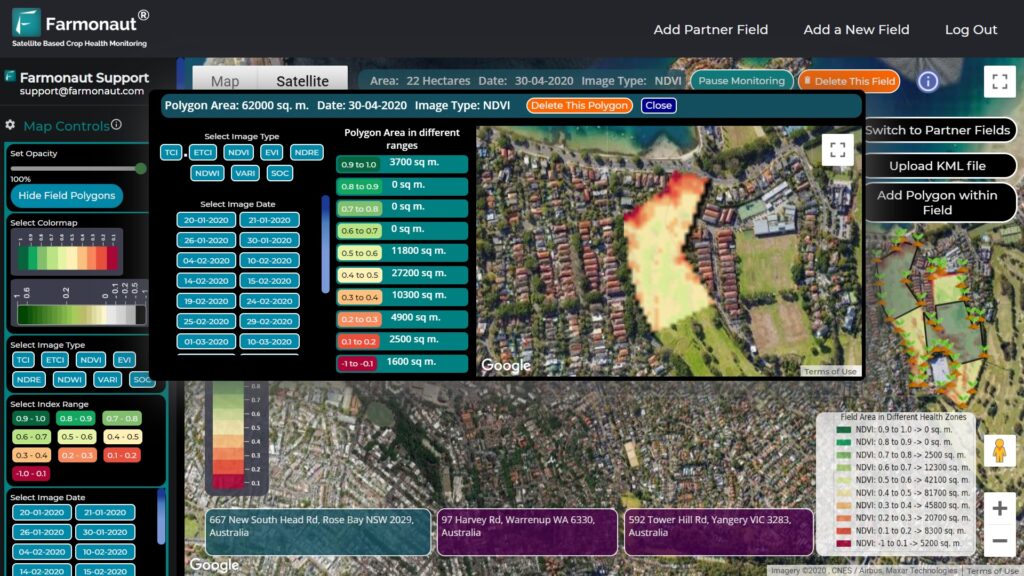
At Farmonaut, we are committed to advancing carbon farming benefits for all stakeholders—farmers, communities, businesses, and governments. Our satellite-based platform empowers users to monitor soil carbon, trace carbon footprints, and improve land management—from vast farmland to dynamic urban landscapes.
- 📡 Satellite imagery gives real-time data on vegetation health, soil conditions, and carbon levels.
- 🤖 Jeevn AI Advisory System offers customized farming recommendations for boosting soil carbon sequestration.
- 🔗 Blockchain-based traceability for transparent, secure supply chains in agriculture and food production.
- 💸 Resource and fleet management tools that help lower emissions, optimize operational costs, and enhance sustainability.
- 🌏 Environmental impact monitoring for compliance, certification, and access to incentives in global carbon markets.
Explore our crop loan and insurance solutions—optimizing insurance verification and financial access for sustainable farmers through satellite data.
Our mission is to democratize satellite-driven farming solutions, making sustainability and biodiversity practical and profitable for every stakeholder.
Large-Scale Farm Management with Farmonaut
(Unlock scalable insights for big farms, cooperatives, and agribusiness integrating carbon farming best practices.)
Neglecting soil diagnostics before beginning carbon farming may lead to uneven results. Using tools like Farmonaut’s real-time soil monitoring via satellites can guide smarter decision-making from day one.
🛠 Farmonaut Subscription Options For Every User
Infrastructure & Policy: Scaling Carbon Farming in 2026 & Beyond
For carbon farming to realize its full potential across both rural and urban environments, supportive infrastructure and clear policy frameworks are essential. Governments, businesses, and communities must invest in:
- 🔬 Soil testing & digital monitoring facilities
- 📝 Educational platforms & knowledge sharing
- 📦 Supply chains for cover crop seeds, organic amendments, and compost
- 🛒 Access to verified carbon credit markets & sustainability certification programs
- 👩🚀 Technology adoption: Satellite, AI, and blockchain for monitoring & reporting
Sustainable agricultural transformation requires a coordinated approach, integrating the expertise and participation of farmers, extension services, agri-businesses, and the research sector. The pathway to climate-resilient agriculture in 2026 and beyond is rooted in multi-stakeholder action.
Start Carbon Farming with Farmonaut App
(Digital tools for everyone: plan, monitor, and optimize carbon farming operations instantly.)
FAQs: Carbon Farming & Sustainable Agriculture
Q1. What are the main carbon farming benefits for farmers?
Carbon farming provides improved soil fertility, higher productivity, climate resilience, reduced input costs, access to carbon credits, and long-term sustainability. As these practices build healthier ecosystems, farmers benefit economically, environmentally, and socially.
Q2. How does carbon farming support urban agriculture?
Urban agriculture applies carbon farming through composting, green mulching, reduced tillage, and crop rotation. This enhances soil health, increases biodiversity, improves urban climate resilience, and lowers local carbon footprints.
Q3. What is the estimated impact of carbon farming on atmospheric CO₂?
Sustainable carbon farming can reduce up to 6 gigatons of CO₂ per year globally by 2030, provided practices are adopted at scale.
Q4. What technologies are recommended for scaling carbon farming in 2026?
Satellite-based monitoring, AI decision support, blockchain traceability, and digital advisory apps—like those from Farmonaut—enable scalable, data-driven carbon farming adoption.
Q5. Are there financial incentives for adopting carbon farming?
Yes, farmers can participate in carbon credit markets, receive certifications, and often access lower-cost or better-verified crop loans and insurance (see Farmonaut’s solutions for details).
Q6. Is carbon farming suitable for all climates and soil types?
While the fundamentals can be adapted widely, specific practices must match local climate, soil type, and cropping systems for optimal results. Satellite-enabled tools help tailor recommendations.
Q7. How soon can results be seen after starting carbon farming?
Benefits like improved soil moisture, healthier crops, and lower input costs are visible within the first 1-2 years, while full ecosystem resilience and carbon sequestration accumulate over the longer term.
Conclusion & The Road Ahead for Carbon Farming
By 2026 and beyond, carbon farming stands as a transformative approach for sustainable agriculture. Its proven ability to sequester carbon, enhance soil health, conserve water, increase yields, and fortify community livelihoods makes it indispensable in addressing the challenges of climate change and food security for both farmland and urban systems.
As more farmers, urban growers, and organizations embrace carbon farming principles and technologies, the aggregate impact on the environment—and on individual livelihoods—will intensify. With support from affordable, accessible solutions like those we offer at Farmonaut, the transition to a climate-resilient, economically viable, and ecologically balanced agriculture sector is well within reach.
- 🌍 The world needs sustainably managed farmland and urban food systems.
- 💧 Water conservation, soil restoration, and biodiversity must become central to every agricultural strategy.
- ⚡ Real-time data and smart management tools (like Farmonaut apps & APIs) empower better decisions and faster emission reductions.
- 🔗 Robust infrastructure, supportive policies, and transparent carbon markets are critical enablers.
- 🤝 Together, we can secure a healthy, resilient, and prosperous agricultural future.
Embracing carbon farming today is an investment in both our planet’s and farmers’ futures—producing lasting benefits for generations to come.
Start your journey—visit the Farmonaut App, explore our carbon footprinting capabilities, API, and developer docs to power your next step towards sustainable agriculture.