Table of Contents
- Introduction: Boll Rot of Cotton in 2026
- Quick Trivia
- Overview of Boll Rot in Cotton
- Symptoms and Diagnosis: Early Detection
- Causal Factors and Epidemiology
- Impact on Cotton Production and Economics
- Comparative Strategies Effectiveness Table
- Boll Rot of Cotton: 7 Best Strategies for 2026
- Cutting-Edge Technology & Precision Agriculture
- How Farmonaut Empowers Boll Rot Management
- Mid-Read Trivia
- Future Outlook: Adapting to Emerging Challenges
- Conclusion
- FAQ: Boll Rot of Cotton
- Farmonaut Subscription Plans
Boll Rot of Cotton: 7 Best Strategies for 2026
“Boll rot reduces cotton yields by up to 50%, demanding advanced disease management for sustainable production.”
In the rapidly evolving landscape of global cotton production, combating boll rot of cotton remains a central concern for farmers and the textile industry alike. The 2025 season underscores the significant challenge posed by this complex disease, threatening both yield and fiber quality in leading cotton-producing economies.
With the global demand for high-quality cotton continuing its upward trajectory, it’s crucial to understand, diagnose, and deploy innovative management strategies to protect crops, maintain economic viability, and ensure sustainable cotton farming in 2026 and beyond.



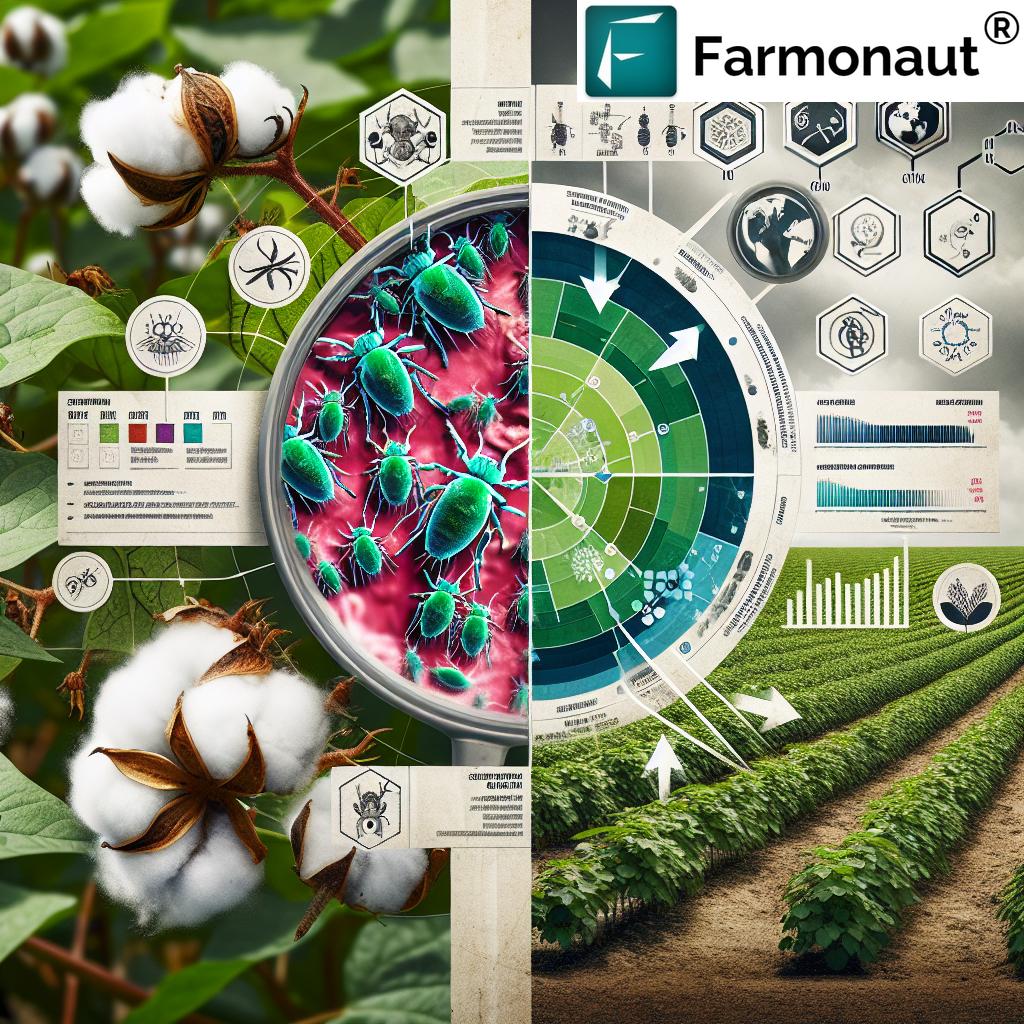
Advanced satellite and AI-driven tools are revolutionizing boll rot diagnosis and management by enabling early detection and targeted interventions—crucial for high-stakes cotton production in 2026.
Overview of Boll Rot in Cotton
Boll rot of cotton represents a complex plant disease that remains a persistent threat for producers worldwide. This disease complex is characterized by fungal and bacterial pathogens affecting maturing bolls, reducing yield and fiber quality by initiating decay and premature opening. The diversity of causal organisms, including Rhizoctonia solani, Fusarium spp., Alternaria spp., and Xanthomonas spp., makes this disease difficult to manage.
- Primarily manifests as: discoloration, softening, and rotting of cotton bolls
- Drastically reduces: lint quantity and quality
- Affects: both economic viability and supply chains in the textile industry
- Causal organisms: Diversity of fungi and bacteria
- Requires: Integrated disease management strategies for effective control

What Makes Boll Rot a Growing Challenge?
- Climate variability: high humidity, prolonged wetness, and frequent rainfall create ideal conditions for rot pathogens.
- Increasing Cotton Demand: Elevated production pressure pays a price in heightened disease incidence.
- Dense plantation practices: Reduce air flow and trap humidity, increasing risk.
Integrating environmental monitoring with real-time geospatial analytics (like Farmonaut’s platform) not only optimizes cotton yield, but also aligns with global sustainability benchmarks—vital for responsible agricultural investments in 2026.
Symptoms and Diagnosis: Early Detection is Key
Early identification of boll rot of cotton is vital to minimize losses and protect fiber quality. The disease exhibits an array of symptoms, depending on the pathogen species involved, but the process shares several key stages:
- Initial signs: Infected bolls show water-soaked lesions that expand rapidly
- Tissue color: Lesions enlarge, browning or blackening boll tissue
- Fungal advances: Fungal pathogens like Rhizoctonia solani, Fusarium spp., and Alternaria spp. cause remarkable decay and rotting
- Bacterial entry: Xanthomonas spp. quicken decay, resulting in premature boll opening and fiber staining
- Internal spread: The rot spreads inside the boll, impacting developing fibers and seeds
- Early infections: May induce boll shedding
- Late infections: Stained lint; reduced fiber quality and marketability
For accurate diagnosis, combine field inspection of symptomatic bolls with laboratory testing—including pathogen culturing and molecular methods—to identify specific causal organisms for targeted interventions.
Laboratory Diagnosis Essentials:
- Isolate pathogens from infected tissue
- Utilize PCR and serological testing
- Test for key fungal and bacterial species
- Detect multiple pathogen presence (complex disease complexes)
Field Symptom Checklist:
- Water-soaked, brown/black lesions
- Softening and decay of boll tissue
- Stained or discolored lint
- Premature boll opening/dropping

Causal Factors and Epidemiology: Understanding Incidence Drivers
Effective management of boll rot of cotton depends on recognizing the environmental and agronomic factors fueling its spread. Incidence is heavily influenced by:
- High humidity & frequent rainfall: Create ideal environments for pathogens
- Prolonged wetness: Surface moisture enables decay and spore/bacteria movement
- Poor air circulation: Dense crop canopies raise humidity around developing bolls
- Irrigation mismanagement: Over-irrigation or standing water exacerbates disease outbreaks
- Insect injury: Entry points for pathogenic bacteria and fungi
- Soil and crop residues: Act as disease reservoirs for multiple boll rot pathogens
Neglecting irrigation management and ignoring the importance of crop residue disposal often leads to recurring outbreaks of boll rot.

Trivial but Crucial Causal Agents:
- Rhizoctonia solani: Aggressive soil-borne fungus attacking young bolls under damp conditions
- Fusarium spp.: Spreads via soil, water, and insects
- Alternaria spp.: Thrives in humid weather, causing surface lesions and subsequent rot
- Xanthomonas spp.: Bacterial pathogens linked with rapid boll breakdown and stained lint

- 📊 Data insight: Infection periods correspond to critical boll development stages in high-rainfall regions.
- ⚠ Risk or limitation: Pathogen diversity complicates detection and treatment.
- 🛡 Best defense: Integrated management adapting to local agro-climatic factors.
- 🌱 Sustainability focus: Reducing input overuse and protecting soil health is vital for long-term yields.
- 🔗 Chain reaction: Field-level outbreaks cause ripple effects across supply chains and markets.
Impact on Cotton Production and Economic Viability
Boll rot of cotton is significant, not just for its direct impact on individual farmer yield but for its consequences on economies and global supply chains. The disease:
- Reduces yield quantity: Outbreaks reduce harvests by 30–50% seasonally in highly conducive years.
- Deteriorates quality: Browning, staining, and fiber breakage lead to lower market value.
- Complicates post-harvest: High infection rates demand more intensive ginning and cleaning, increasing costs.
- Jeopardizes farmer income: Losses strain economic viability, especially in developing economies.
- Threatens industry stability: Consistent losses disrupt textile industry supply chains, with ramifications for global markets.
Transparent traceability (see Farmonaut Product Traceability) helps textile companies and cotton traders authenticate their supply, mitigating risk from compromised fiber lots.

Comparative Strategies Effectiveness Table
| Strategy Name | Main Technology/Method | Estimated Yield Gain (%) | Estimated Cost Impact | Sustainability Rating | Implementation Complexity |
|---|---|---|---|---|---|
| Cultural Practices | Crop rotation, field hygiene, canopy management | 10–20% | Low | High | Simple |
| Resistant Varieties | Genomics-assisted and trait-selective breeding | 18–30% | Medium | High | Moderate |
| Chemical Control | Targeted fungicides/bactericides | 15–25% | Medium to High | Low | Simple |
| Biological Control | Antagonistic microbes, bioagents | 10–18% | Low to Medium | High | Moderate |
| Precision Agriculture | Remote sensing, AI-based prediction | 20–32% | Medium | High | Advanced |
| Integrated Management | Combination of all above methods | 28–40% | Medium | High | Advanced |
| Farmer Training & Digital Advisory | AI-driven advisory systems, apps | 9–15% | Low | High | Simple |
📈 Key Results from Latest Strategy Comparisons
- Cultural practices offer high sustainability with minimal cost
- Precision agriculture and integrated management maximize yield gains in tech-ready regions
- Biological control scores highest for ecological sustainability
- AI advisory systems (like Jeevn AI) empower farmers through targeted recommendations
- Resistant varieties provide strong, long-term control with moderate investment
Boll Rot of Cotton: 7 Best Strategies for 2026
Managing boll rot of cotton in 2026 and beyond requires a blend of tradition, technology, and constant adaptation. Below, we detail the seven most effective disease management strategies, highlighting innovations and best practices for sustainable cotton production.

-
Cultural Practices: The Foundation of Resilience
- Crop rotation with non-hosts reduces soil-borne inoculum
- Pruning and optimal plant spacing enhance airflow, decrease humidity
- Timely removal or deep plowing of infected crop debris blocks overwintering of pathogenic spp
- Efficient irrigation management prevents prolonged wetness. Adopt precision irrigation and drain excess water after rainfall for ideal field conditions.
-
Resistant Varieties: Trait-Powered Defense
- Breeding programs in 2026 leverage marker-assisted selection, CRISPR, and genomic tools.
- New cultivars combine high boll rot resistance with yield and fiber quality.
- Stage-specific resistance is being achieved (from early boll development to post-flowering stages).
-
Chemical Control: Targeted and Timely Use
- Fungicides (for Rhizoctonia solani, Fusarium, Alternaria) and bactericides (for Xanthomonas) can suppress outbreaks if applied during vulnerable growth stages.
- Rotation and tank-mixing chemicals slows resistance development in pathogens.
- Registered, regulated use—always with partial dependency on integrated management for sustainability.
-
Biological Control: Harnessing Nature’s Defenders
- Soil and phyllosphere applications of antagonistic bacteria/fungi (e.g., Trichoderma spp., Bacillus subtilis) outcompete boll rot pathogens.
- Biological agents stimulate plant resistance, reduce chemical input, and support soil health.
-
Precision Agriculture: Early Warning & Data-driven Action
- Remote sensing platforms (see Farmonaut’s Carbon Footprinting for Cotton), offer real-time monitoring of plant stress and disease incidence.
- AI models forecast outbreaks; drone/satellite imagery pinpoints infected field clusters.
- Precision interventions save inputs, reduce cost, and lower environmental impact.
-
Integrated Management: Synergy of Practices
- Combining cultural, resistant, chemical, biological, and tech-based practices reduces incidence by >30% in actively managed regions (2026 benchmarks).
- Regular monitoring and fine-tuned decision-making (see Farmonaut Large Scale Farm Management) enables holistic, landscape-level disease suppression.
-
Farmer Education & Digital Advisory: Powering Last-mile Action
- Mobile-connected AI advisory tools and digital platforms bring tailored recommendations directly to farmers’ fields.
- Knowledge transfer boosts timely interventions and drives adoption of sustainable practices.
- Access expert support via web/mobile—try Farmonaut Apps for up-to-date field health insights and action plans.
Delaying digital integration and failing to rotate resistant varieties increases susceptibility to multi-pathogen boll rot outbreaks.

The future of boll rot management is inherently technology-driven. Farms leveraging satellite monitoring and AI-cutting edge analytics stand to preserve higher yields, sustain soil health, and deliver traceable, high-grade cotton to the global marketplace.
Cutting-Edge Technology & Precision Agriculture
The integration of precision agriculture is redefining boll rot of cotton management. Utilizing geospatial data, satellite imagery, and AI-driven insights delivers numerous benefits:
- AI-powered disease alerts for early detection
- Variable rate input application (reduce resource waste, increase cost efficiency)
- Customized field maps highlight high-risk boll rot zones
- Timely implementation of above 7 strategies, minimizing adverse environmental impacts
- Performance tracking of each mitigation effort with carbon footprint monitoring
Unlocking Farmonaut’s Satellite-Driven Advantages:
- Real-time monitoring of crop stress using NDVI and multispectral indicators
- Environmental impact tracking for sustainable practice adoption
- Blockchain traceability ensures transparency throughout supply chains for quality assurance
- Seamlessly connect with Farmonaut APIs or explore technical integration via the Developer Docs

“Innovative 2026 strategies lower boll rot incidence by over 30%, ensuring high-quality cotton fiber.”
How Farmonaut Empowers Boll Rot Management
As a satellite technology leader, Farmonaut delivers scalable, innovative tools to empower cotton farmers against boll rot and associated threats. By integrating satellite data, AI analytics, blockchain traceability, and digital advisory, we at Farmonaut offer:
- Dynamic remote field monitoring to detect early plant stress due to rot pathogens
- Jeevn AI Advisory System for predictive boll rot incidence mapping and custom action plans
- Blockchain-enabled traceability (see Product Traceability) to track cotton fiber from field to textile, assuring quality even under disease pressure
- Environmental impact and carbon footprint monitoring for sustainable compliance (visit Carbon Footprinting)
- API integrations for large-scale farms, banks, and government agencies (get started with the Farmonaut API or access the Developer Docs)
- Fleet and resource management tools to optimize agricultural operations (Fleet Solutions)
- Value for every farm scale: Individual farmers and enterprise managers benefit from field-level health detection to strategic, region-wide monitoring.
- Direct access: Use via web, Android, and iOS or integrate with your agri-business/compliance workflows.
Satellites, AI, and blockchain open new frontiers for policy-makers, industry, and the farming community to build connected, transparent, and sustainable cotton supply chains—minimizing losses from boll rot.
Future Outlook: Adapting to Emerging Challenges
Given ongoing climate change, unpredictable rainfall, and evolving pathogen profiles, the boll rot of cotton landscape will intensify between 2026–2030. What’s essential for producers, industry stakeholders, and governments is:
- Continuous surveillance using remote monitoring and AI predictions
- Accelerated research: Developing multi-pathogen-resistant varieties and next-gen biocontrol agents
- Integrated extension advice: Effective knowledge transfer amplifies impact of all other management strategies
- Adopting scalable digital tools for field action and regional coordination
- Policy support for sustainable incentives—rewarding eco-friendly disease control innovations
Funding digital agriculture and next-generation plant resilience research is key to safeguarding both global cotton markets and climate adaptation strategies beyond 2026.
Conclusion
The boll rot of cotton is a persistent and evolving disease complex, threatening yield, quality, and the economic viability of the cotton sector. In the era from 2026 forward, strategic integration of innovative genetics, sustainable cultural practices, biological agents, and cutting-edge precision agriculture technologies will form the core defense against rot pathogens.
With the support of advanced monitoring, AI advisory ecosystems, blockchain-based supply chain solutions, and a commitment to farmer education, sustainable high-quality cotton production is achievable even as global demands continue to rise.
Continued cooperation, digital adoption, and rigorous disease management will ensure robust economic outcomes for farmers, security for textile supply chains, and resilience for agricultural economies worldwide.
FAQ: Boll Rot of Cotton
Q1. What are the main causal pathogens of boll rot in cotton?
The main pathogens include fungi like Rhizoctonia solani, Fusarium spp., Alternaria spp., and bacterial pathogens especially Xanthomonas spp. This diversity forms a complex that challenges management efforts.
Q2. How does boll rot impact cotton yield and quality?
It reduces fiber yield by up to 30–50% in severe outbreaks, causes staining, deterioration of lint, and premature boll opening, all of which decrease market grade and processing efficiency.
Q3. Which environmental conditions favor boll rot?
High humidity, frequent rainfall, prolonged wetness, and canopy closure during boll development are the main incidence drivers.
Q4. How can precision agriculture technologies help manage boll rot?
Satellite and AI-driven monitoring offer early warnings, targeted management, and real-time intervention, thus reducing losses and optimizing resource use.
Q5. Where can I learn about Farmonaut’s offerings for cotton producers?
Explore our Large Scale Farm Management platform for all-in-one solutions, from crop health monitoring to supply chain authentication and sustainability tracking.
Farmonaut Subscription Plans
Access affordable, scalable agricultural satellite solutions—from smallholder farmers to enterprise and government decision-makers. Choose the plan that fits your monitoring needs and maximize farm productivity.