Blockchain in Agriculture: 7 IoT Trends for 2026
“Over 75% of agri-food companies are projected to use blockchain-powered IoT systems for traceability by 2025.”
“Global investment in agricultural blockchain and IoT technologies is expected to surpass $1 billion annually before 2026.”
Table of Contents
- Introduction: The Digital Dawn of Agriculture
- Why Blockchain and IoT in Agriculture?
- The 7 IoT Trends Shaping Blockchain Agriculture in 2026
- Trend Impact Matrix: Comparing the Top 7 IoT Trends
- Farmonaut: Satellite-Driven Blockchain Agriculture Solutions
- Key Insights & Callouts
- Future-Proofing Global Agriculture
- Frequently Asked Questions
- Get Started with Farmonaut
Introduction: The Digital Dawn of Agriculture
The landscape of modern agriculture is rapidly evolving. As the global population grows and climate challenges intensify, the need for transparent, efficient, and sustainable systems has never been greater. By 2026, a powerful combination—blockchain in agriculture merged with the latest IoT devices in agriculture—is set to revolutionize farming.
Blockchain primarily serves as an immutable, decentralized ledger that records each transaction and event throughout the agricultural supply chain. Meanwhile, IoT sensors deployed across farms feed real-time data into this blockchain, enhancing transparency, reducing fraud, and enabling precise, data-driven decisions for everything from irrigation to crop health monitoring.
In this blog, we explore how blockchain for agriculture—augmented by IoT sensors, smart analytics, and satellite insights from platforms like Farmonaut—is not only improving food safety, traceability, and resource use, but also empowering farmers and businesses to thrive in a connected world.

Why Blockchain and IoT in Agriculture?
Before delving into 2026’s IoT trends, it’s vital to understand why blockchain and IoT are so pivotal to the future of agriculture:
- ✔ Data-Driven Farming: IoT sensors offer continuous monitoring of soil moisture, weather, and crop health indicators—helping farmers make smarter, timely decisions.
- ✔ Immutability & Trust: Blockchain for agriculture stores every event securely and transparently, preventing data tampering and building consumer trust in food safety.
- ✔ Automated, Efficient Processes: Smart contracts automate payments and insurance claims, reducing paperwork and delays for farmers.
- ✔ Sustainability at Scale: Integration allows resource optimization—reducing wastage of water and fertilizers, supporting climate-resilient sustainable practices.
- ✔ Supply Chain Visibility: Real-time tracking of crops and agri-goods enhances supply chain management, reducing fraud and ensuring quality for global markets.
The 7 IoT Trends Shaping Blockchain Agriculture in 2026
Let’s explore the top 7 IoT devices in agriculture and practices driving the next evolution of blockchain agriculture. These trends encapsulate how technology will transform global agricultural systems, making them smarter, more transparent, and sustainable than ever.
1. Integrated Smart Sensors for Crop & Soil Health
The deployment of IoT sensors across farms—measuring soil moisture, pH, nutrients, temperature, and humidity—has surged globally. These sensors feed critical data directly into blockchain-based agriculture management platforms. By 2026, such integrations are expected to cover over 80% of digitized farms.
- 🌱 Key Benefit: Real-time, tamper-proof monitoring of soil health and crop growth, improving yield and reducing resource wastage.
- ⏱ Data Insight: Automated data logging supports compliance with organic, sustainable certifications by providing proof of pesticide usage, harvest dates, and resource applications.
- ⚠ Risk: Requires robust IoT infrastructure and reliable blockchain integration to ensure data accuracy and system scalability.
How It Works:
For example, a farmer in India might deploy moisture and temperature sensors throughout their field. These devices automatically log data onto a decentralized blockchain platform—tracking every irrigation event, fertilizer application, or pesticide usage. This information is accessible by regulators, certification authorities, and retailers, enhancing transparency and supporting premium pricing in export markets.
2. Automated Irrigation Systems Linked with Blockchain
By 2026, smart irrigation will be driven by real-time soil and weather data from IoT sensors and verified by blockchain. Automated systems will remotely control water supply—conserving resources, increasing resilience against drought, and providing a transparent record of all actions for audits and compliance.
- 💧 Key Benefit: Reducing water wastage while maintaining crop health, with all applications logged and verified on blockchain.
- ⚡ Optimized Efficiency: Smart contracts trigger irrigation based on actual conditions—no more guessing or manual errors.
- ☑️ Example: If sensor data detects insufficient soil moisture, the irrgation system is remotely activated and the action is logged on blockchain, providing an immutable record for later audits.



3. Remote Crop Monitoring and AI-Based Predictions
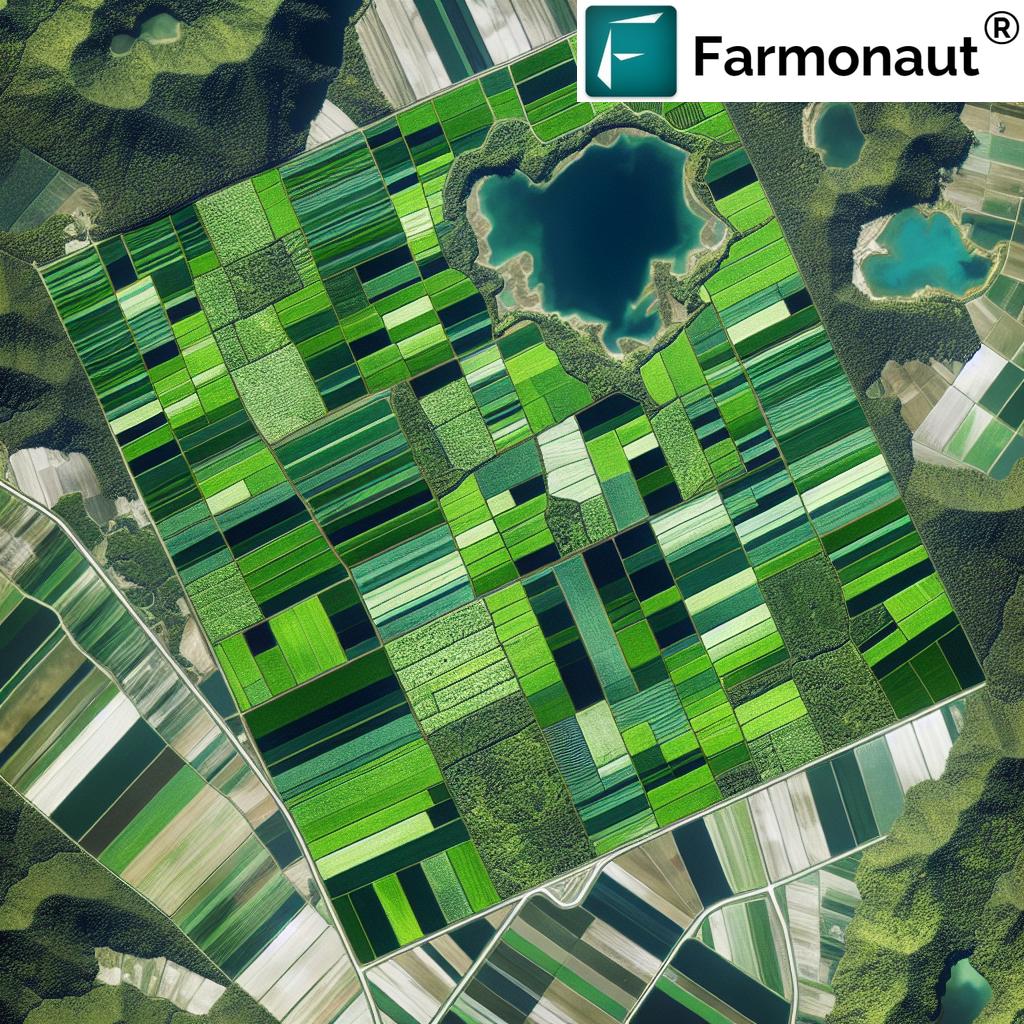
In 2026, integration of satellite-based multispectral imagery with on-field IoT sensors will offer comprehensive, real-time monitoring of vegetation health, soil status, and growth cycles. This constant inflow of data feeds AI advisory systems, which automatically log recommendations, actions, and harvest dates on blockchain—improving accountability, yield forecasts, and compliance.
- 🛰️ Key Benefit: AI-driven insights for smart farming decisions—whether to irrigate, fertilize, or harvest—recorded for future audits and certification.
- 📈 Example: Satellite detects drought stress, AI recommends irrigation, the action is executed and input log created via smart sensor. Blockchain verifies every event for complete transparency.

4. End-to-End Supply Chain Traceability
As global supply chains become more complex, blockchain in agriculture is essential for tracking produce journey from farm gate to consumer. Linked with IoT tracking devices (such as GPS or RFID tags), every stage—harvest, storage, shipment, and retail delivery—is documented and verified.
- 🌎 Transparency: Every event in the supply chain is recorded on blockchain, ensuring that distributors, suppliers, and end consumers can verify origin, quality, certifications, and storage/transport conditions.
- 🔎 Example Use Case: A honey jar’s entire journey—from source beehive to store shelf—can be instantly traced by scanning a QR code linked to its blockchain dossier.
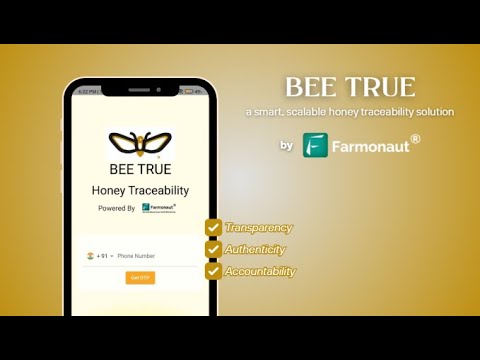
Ready to provide full product transparency? See how Farmonaut’s Product Traceability Solution can boost consumer trust and regulatory compliance for your brand.
5. Blockchain-Secured Agri-Inputs and Smart Compliance
Adulteration and fraud in seeds, fertilizers, and pesticides are major risks in global agriculture. IoT-enabled packaging and blockchain agriculture systems provide tamper-proof records of each product’s origin, batch, and supply journey. Regulators and buyers gain instant verification, elevating food safety for everyone.
- 🚜 Key Benefit: Secure verification of agri-inputs, authenticating lawful usage and helping farmers avoid counterfeit products.
- 🛡️ Compliance: Blockchain verifies regulatory certifications, supporting real-time audit trails for government and organic agencies.

6. Automated Lending, Crop Insurance & Payments
By 2026, IoT data combined with blockchain smart contracts will revolutionize agri-finance and insurance. Insurers will automate claims and pay-outs based on real, immutable sensor data (like drought, flood, or pest events). Lenders will fund verified farmers instantly, reducing fraud and paperwork.
- 💵 Key Benefit: Payments and claims are executed automatically and impartially, triggered by trusted IoT data streams recorded on blockchain.
- 📲 Example: Satellite and sensor data detect a crop loss event, automatically submitting a claim and triggering instant blockchain-secured payment.
Interested in streamlining your financial process? Discover Farmonaut’s Crop Loan & Insurance Verification—reduce risk and improve access to credit for agriculture.

7. Fleet, Logistics & Environmental Impact Monitoring
IoT-enabled GPS devices log agricultural vehicle movements, cold chain trucks, and machinery use—feeding location, condition, and activity directly into the blockchain. Advanced platforms will also monitor carbon footprint and environmental impacts, supporting compliance and reporting for new global standards.
- 🚚 Supply Chain Visibility: Track and trace goods, verify storage/transport conditions, and optimize fleet utilization.
- 🌎 Sustainability: Automatic reporting helps reduce emissions, monitor resource usage, and meet environmental certifications.
For large operations and logistics teams, Farmonaut’s Fleet Management Tools integrate seamlessly with blockchain, offering route optimization, cost savings, and full audit trails.
“Over 75% of agri-food companies are projected to use blockchain-powered IoT systems for traceability by 2025.”
“Global investment in agricultural blockchain and IoT technologies is expected to surpass $1 billion annually before 2026.”
Trend Impact Matrix: Comparing the Top 7 IoT Trends
| IoT Trend | Blockchain Application | Est. Adoption (%) by 2026 | Key Benefits | Example Use Case |
|---|---|---|---|---|
| Smart Crop & Soil Sensors | Immutable logging of field data for audits, compliance & premium pricing | 80% | Transparency, traceability, sustainability | Sensor records pesticide use, harvest dates—data auto-uploaded to blockchain |
| Automated Irrigation Systems | Smart contracts for water management, compliance proof | 68% | Efficiency, auditability, compliance | Blockchain logs every irrigation event with sensor evidence for organic certification |
| Remote Crop Monitoring & AI | Automated logging of AI advisories, event traceability | 75% | Yield maximization, compliance, data-driven planning | AI recommends fertilization, blockchain logs action, supports insurance submissions |
| End-to-End Supply Chain Traceability | Track produce journey with IoT tags, blockchain for audits | 77% | Fraud reduction, food safety, consumer trust | QR scan reveals farm-to-store trail for honey, coffee, or fruits |
| Agri-Input Authentication & Smart Compliance | Blockchain verification of inputs, compliance log | 66% | Counterfeit reduction, regulatory support | RFID-enabled fertilizer packaging auto-recorded on blockchain |
| Automated Lending, Crop Insurance & Payments | Smart contracts for payments/claims triggered by sensor data | 62% | Reduced fraud, instant payments, access to finance | Sat-detected loss triggers immediate insurance pay-out |
| Fleet, Logistics & Environmental Monitoring | GPS, fleet data, & emissions logged on blockchain | 70% | Cost saving, audit, compliance, sustainability | Fleet route, temp, cargo audits—carbon emissions tracked for ESG |
✔ Top 5 Benefits of Blockchain & IoT in Agriculture
- 🔒 Immutability: Ensures that every data point and transaction is tamper-proof, building trust throughout the supply chain.
- 🌐 Transparency: Every event—from input usage to logistics—is visible to authenticated users, supporting certification and compliance.
- 🚜 Efficiency: Automation reduces manual labour and paperwork, freeing up farmers for more strategic work.
- 🎯 Precision: Data-driven insights enable targeted use of water, fertilizers, and pesticides, reducing environmental impact.
- 💰 Financial Access: Secure, fast, and automated loans and insurance access directly benefit farmers’ livelihoods.
Farmonaut: Satellite-Driven Blockchain Agriculture Solutions
At Farmonaut, we recognize the unique challenges facing today’s global agricultural community. That’s why our solutions are built upon satellite-based monitoring, AI-powered advisories, blockchain-based traceability, and resource management tools. This integrated platform empowers individual farmers, agri-businesses, and governments to access affordable, real-time insights for smarter farming.
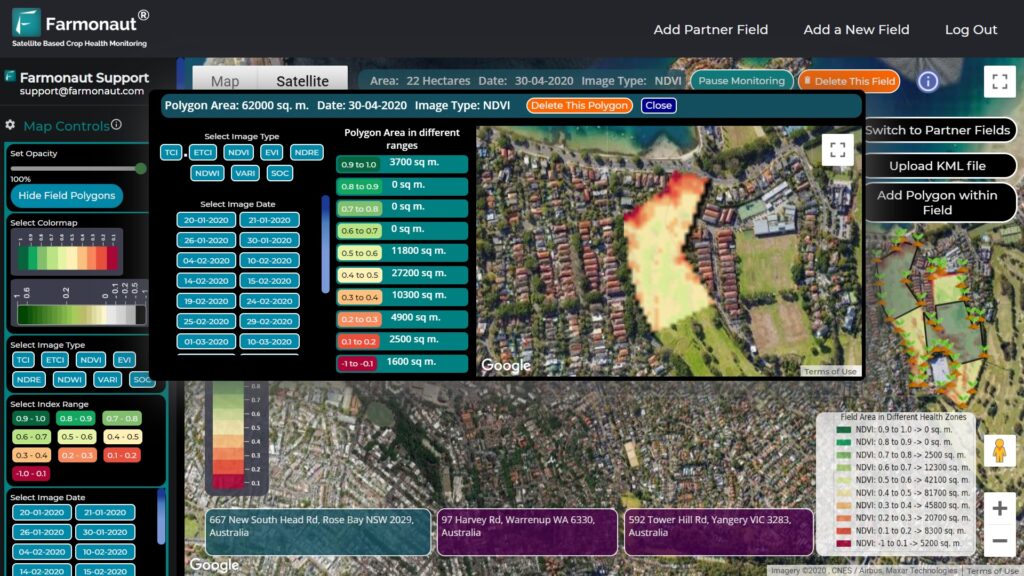
- 📊 Satellite Imagery: Multispectral and NDVI data pinpoint crop health status and soil conditions—reducing guesswork and maximizing yield.
- 🤖 Jeevn AI Advisory: Our AI delivers custom forecasting, growth recommendations, and actionable intelligence via web/app/API.
- 🔗 Blockchain Traceability: All records—input, harvest, logistics—are securely logged, supporting food safety and combating fraud.
- 🚚 Fleet & Resource Management: Tools for optimizing logistics, managing remote machinery, and tracking assets for large-scale farms.
- ♻️ Environmental Impact: Carbon footprint and resource tracking help clients balance productivity with sustainability requirements.
Learn about Farmonaut’s Carbon Footprinting Solutions—critical for meeting new agri-environmental norms.
API & Integration
Integrate Farmonaut insights into your own platforms! Check our API portal or dive deeper with the Developer Docs.
Highlight Boxes & Callouts
Blockchain for agriculture is expected to underpin over 50% of new regulatory standards for food safety and environmental compliance by 2026.
When implementing IoT sensors in your fields, always ensure secure firmware updates—this protects data integrity and blockchain records.
Assuming blockchain presence alone guarantees trust. True traceability requires verified IoT data and strict user access controls.
Regulatory push for blockchain-enabled audit trails is opening new insurance and finance markets—especially for climate-affected crops.
Integrated IoT and satellite monitoring can reduce input costs by 18% and water usage by up to 30% for precision agri-farms by 2026.
📋 Top Blockchain Agriculture Practices for 2026 (Visual List)
- Deploy multi-parameter sensors—for soil health and weather tracking, ensuring real-time insight streams.
- Automate irrigation and input application—triggered by blockchain-validated sensor data.
- Implement full traceability for food chains—link production, transportation, and retail events on blockchain platforms.
- Integrate remote AI advisories—custom planning for disease, pest, and drought response, all logged for transparency.
- Monitor your environmental footprint—using IoT and blockchain to record carbon emission and resource usage for compliance and sustainability.
🛠️ Practical Considerations (Visual List)
- 🔍 Choose global, scalable solutions that support integration with multiple devices and data types.
- 🔗 Select platforms offering robust API access for custom applications and data pipelines.
- ⏰ Plan for ongoing device maintenance and calibration to ensure reliable blockchain records.
- 🛡️ Focus on cybersecurity—protect IoT networks to avoid data breaches impacting traceability.
- 💬 Train staff and partners on new compliance protocols and digital standards for seamless adoption.
Future-Proofing Global Agriculture: What’s Next?
IoT and blockchain technologies lie at the heart of a robust framework for the coming decade, supporting everything from compliance and certifications to insurance and climate adaptation. Agriculture in 2026 will not only be smarter and more productive, but also accountable, secure, and globally connected.
Key Takeaways:
- ✔ Transparency at every step supports farmer livelihoods, regulatory compliance, and consumer trust.
- ✔ Automation reduces admin workloads and unlocks fast, data-dependent decision-making.
- ✔ Environmental stewardship is enabled by integrating emission tracking and precision management—aligning businesses with the global sustainability agenda.
Get Started with Farmonaut’s Blockchain-Driven Solutions
Ready to bring satellite, IoT, and blockchain intelligence into your agriculture operations? Access our technology via web, Android, or iOS—making real-time monitoring and global-scale traceability affordable and accessible.
FAQs on Blockchain in Agriculture & IoT Devices (2026 Edition)
- What is blockchain in agriculture, and how is it used?
- Blockchain in agriculture refers to using a decentralized, tamper-proof digital ledger to record every transaction, event, and input across the agri-food supply chain. It ensures traceability, fights fraud, automates compliance, and improves transparency for producers, regulators, and consumers.
- Which IoT devices are most commonly deployed in agriculture?
- The most common IoT devices in agriculture include soil moisture sensors, weather stations, GPS trackers, RFID tags, remote cameras, and machinery telematics units. These collect critical farm data in real time, supporting everything from irrigation to fleet management.
- How does blockchain agriculture improve food safety?
- Blockchain agriculture practices ensure that the entire history of a food product—origin, health interventions, logistics—is securely documented. Any attempt to alter, mislabel, or adulterate food is automatically exposed, reducing recalls and supporting rapid response to food safety incidents.
- Are blockchain and IoT solutions scalable for large and small farms?
- Yes. Platforms like Farmonaut are modular—supporting individual farmers with field alerts or large agribusinesses with full-scale, satellite-integrated resource management and compliance tools.
- How do I get started with API integration or custom farm solutions?
- Explore the Farmonaut API platform and review developer documentation for seamless integration with your own systems and applications.
Conclusion
The intersection of blockchain and IoT devices in agriculture offers a robust, future-ready framework for tackling the intensifying challenges of global farming. By 2026, these integrated technologies are set to anchor food safety, environmental monitoring, and financial innovation—while empowering stakeholders at every level. With affordable, accessible solutions and satellite intelligence, the future of agriculture is transparent, precise, and sustainable.