BLM Public Land: 7 Ways to Boost Sustainability 2026
Meta Description:
In 2026, BLM public land remains foundational for sustainable agriculture, grazing, and conservation across the western United States. Explore 7 innovative strategies for climate resilience, adaptive management, and sustainability.
“Over 245 million acres of BLM public land support sustainable grazing and conservation across the U.S. in 2025.”
Table of Contents
- Summary: The Role of BLM Public Land in Agriculture & Sustainable Land Management in 2025-2026
- 1. Introduction to BLM Public Land: Scope and Importance in the Western States
- 2. BLM Public Land as a Frontier for Sustainability
- 3. 7 Ways to Boost Sustainability on BLM Public Land (2026)
- a. Rotational Grazing: Enhancing Rangeland Health
- b. Native Vegetation Restoration for Biodiversity
- c. Erosion Control and Soil Conservation
- d. Water Conservation and Efficient Use
- e. Leveraging Satellite, AI, and Drones for Adaptive Management
- f. Invasive Species Management and Restoration
- g. Climate-Smart Agriculture: Policies and Community Participation
- 4. Comparative Benefits Table: Sustainability Practices 2025
- 5. Key Challenges, Risks & Future Outlook
- 6. The Farmonaut Proposition: Remote Sensing for Resilient Land Management
- 7. Farmonaut Apps, API & Satellite Solutions
- FAQ: Your Questions on BLM Public Land and Sustainability in 2026
- Conclusion
Summary: The Role of BLM Public Land in Agriculture & Sustainable Land Management in 2025-2026
BLM public land in the western United States remains critical for balancing sustainable agriculture, grazing, and conservation. As the largest land manager in the country, the Bureau of Land Management oversees approximately 245 million acres, allowing rural economies and agricultural livelihoods to flourish against the backdrop of climate change, environmental pressures, and evolving land-use demands.
In 2026, these public lands play an increasingly pivotal role by supporting ranchers through permits and adaptive management, fostering ecological stewardship, and enabling innovative technology-driven interventions. The following sections offer a comprehensive exploration of how BLM lands can continue to support sustainable farming and resource management, underpinned by data, strategic insights, and practical solutions for sustainability.
1. Introduction to BLM Public Land: Scope and Importance in the Western States
- 🌱 Scope: BLM public land spans approximately 245 million acres across the western United States, primarily in states like Nevada, Wyoming, Utah, and Oregon.
- 🛡️ Manager: The Bureau of Land Management (BLM), under the U.S. Department of Interior, is the country’s largest land manager.
- 🏞️ Uses: These lands support grazing, agriculture, conservation, recreation, and habitat preservation.
The direct economic and ecological dependency of many ranching operations, especially in rural communities, creates a complex web of needs and challenges. While private land becomes more expensive and fragmented due to urbanization and development pressures, BLM public land remains a lifeline for large operations needing expansive open ranges for cattle and sheep.
Ranchers benefit through relatively affordable leases, but responsibility comes with access. Grazing permits must balance livestock needs, stewardship, and ecological health to ensure the sustainability of both native vegetation and rangeland.
2. BLM Public Land as a Frontier for Sustainability
Since the turn of the century, the BLM has shifted from basic conservation to using advanced technology and science-driven land management practices to address 21st-century challenges. In 2025, the agency leverages:
- ✔ Satellite monitoring and GIS mapping for real-time assessment of resource and vegetation health.
- ✔ Drones for on-demand habitat surveys and grazing compliance.
- ✔ Adaptive management to respond swiftly to rangeland and climate changes.
- ✔ Collaborative efforts with farmers, ranchers, and indigenous groups to foster shared stewardship.
This modern approach allows the BLM to monitor and assess conditions across vast tracts, enabling evidence-based decisions and rapid interventions—crucial amid increasing risks of overgrazing, drought, wildfire, and invasive species outbreaks.
As climate pressures and biodiversity losses intensify, BLM public lands have become the frontier for advancing sustainability: where conservation meets productive use, technology complements tradition, and policy adapts with the seasons.
3. 7 Ways to Boost Sustainability on BLM Public Land (2026)
Below, we explore seven foundational and future-facing practices poised to drive BLM public land toward ever greater sustainability, resilience, and productivity in 2026 and beyond.
a. Rotational Grazing: Enhancing Rangeland Health on BLM Public Land
Rotational grazing—systematically moving livestock between ranges—is a core adaptive strategy that BLM managers increasingly deploy to:
- ✔ Prevent overgrazing and soil degradation by reducing continuous pressure on any single area.
- ✔ Give native vegetation periods of active recovery and regrowth.
- ✔ Boost soil health, structure, and microbial activity.
- ✔ Lower the risk of wildfire by maintaining balanced plant cover.
The science is clear: Well-implemented rotational grazing practices improve rangeland sustainability, increase productive carrying capacity, and enhance resilience against climate extremes.

b. Native Vegetation Restoration for Biodiversity
Restoring native vegetation—especially deep-rooted perennial grasses, wildflowers, and shrubs—is crucial for ecological health on BLM public land:
- ✔ Improves soil health and nutrient cycling.
- ✔ Enhances habitat for threatened and endangered species.
- ✔ Increases carbon sequestration (vital for climate goals).
- ✔ Reduces the spread of invasive species, ensuring resilient plant communities.
- ✔ Restores pollinator networks, aiding sustainable agriculture and wild plant reproduction.
By prioritizing native restoration, BLM lands serve as a bulwark against biodiversity loss, supporting thousands of species across the western states, ensuring that public lands remain functional ecosystems for generations.

c. Erosion Control and Soil Conservation
Erosion—exacerbated by intense grazing, drought, wildfire, and heavy rainfall—remains an ongoing challenge for the BLM. Strategic practices include:
- ✔ Installing riparian buffers and building grade control structures.
- ✔ Using contour plowing and cover crops to stabilize soil.
- ✔ Deploying mulch, crushed stone, or geotextiles on high-traffic areas.
- ✔ Limiting livestock access to fragile stream banks.
Well-executed erosion control not only protects soil resources but also improves water quality and reduces costly sedimentation downstream, linking productive ranching with healthy landscapes.

d. Water Conservation and Efficient Use on BLM Public Land
With escalating drought frequency and water scarcity, conserving every drop has become essential for BLM land productivity:
- ✔ Install high-efficiency irrigation systems (e.g., drip, low-flow pivots) on permitted sites.
- ✔ Prioritize water catchments and storage ponds to retain seasonal flows.
- ✔ Manage livestock access to minimize water point degradation.
- ✔ Rehabilitate depleted springs and riparian corridors.
Integrating soil-moisture monitoring and predictive modeling, powered by recent advances in satellite technology, further supports the judicious use of water—helping agriculture on public lands meet both sustainability and climate adaptation goals.

e. Leveraging Satellite, AI & Drones for Adaptive Management
Real-time data feeds, multispectral mapping, and AI-driven analytics represent the “new frontier” for BLM public land management:
- ✔ Monitor patch-by-patch vegetation health, water stress, and soil moisture (see carbon footprinting).
- ✔ Track the progression of invasive species or disease outbreaks and deploy targeted responses.
- ✔ Automate compliance checks for grazing permits via drone flyovers and satellite imagery.
- ✔ Predict wildfire risk spots with precision (crucial for adaptive management in 2026).
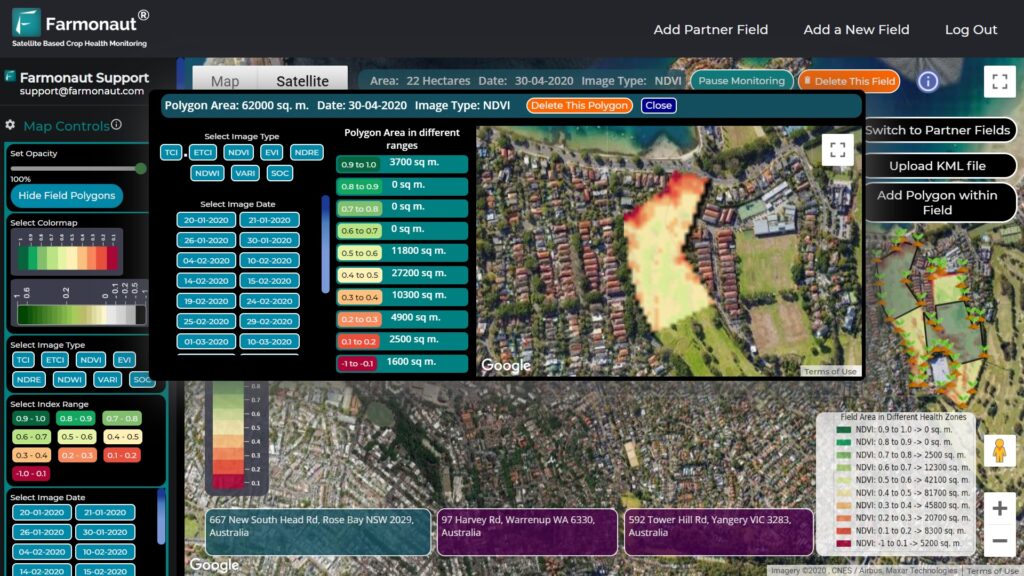
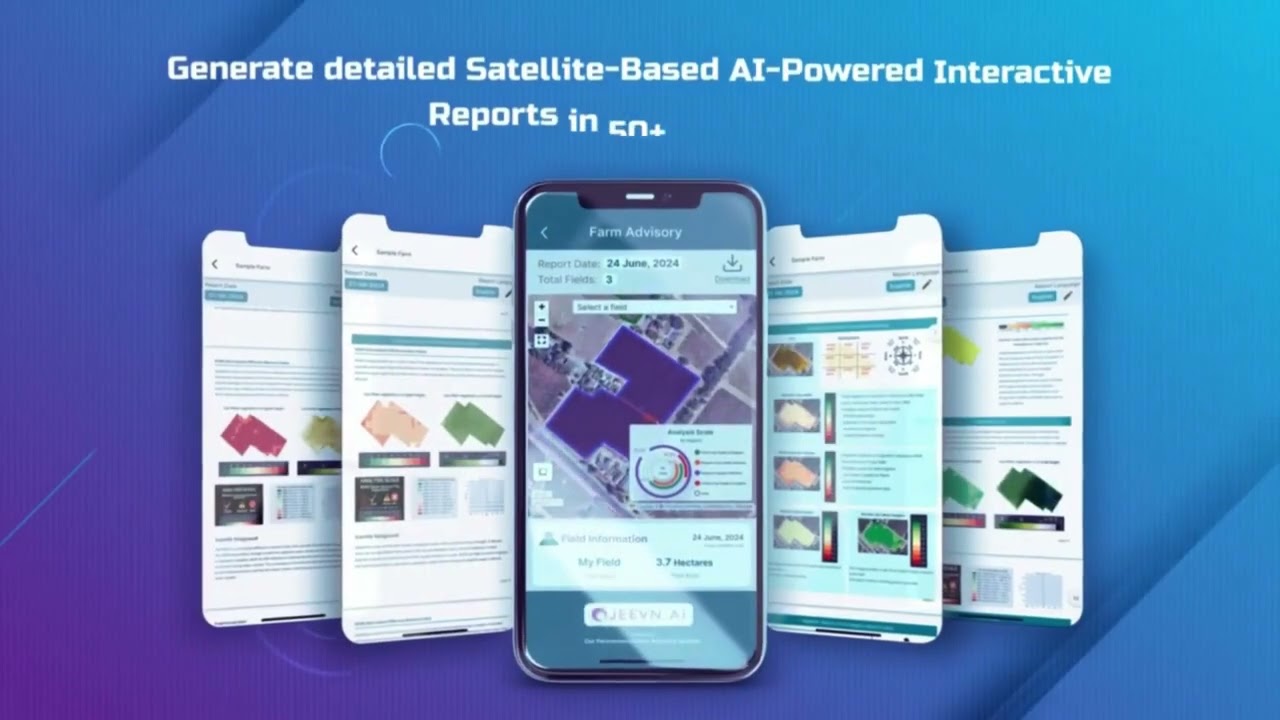
We at Farmonaut offer affordable, satellite-based monitoring, resource management, and blockchain-backed traceability solutions. Our platform leverages AI, Jeevn advisory, and environmental impact tools, empowering public and private land managers to make proactive decisions for both compliance and sustainability.
Discover our Large Scale Farm Management App for advanced monitoring and planning across BLM and private lands.




f. Invasive Species Management and Restoration on BLM Public Land
Aggressive non-native plants and pests threaten rangeland health by crowding out native vegetation and disrupting food webs. A robust BLM strategy in 2026 incorporates:
- ✔ Remote mapping of outbreaks and monitoring control efficacy.
- ✔ Combining targeted herbicide, prescribed grazing, and manual removal for integrated management.
- ✔ Replanting with native species to seal ecological gaps.
Consistent, data-driven action enables quicker, more effective responses—protecting both productive agriculture and wild habitats on public lands.

g. Climate-Smart Agriculture: Policies and Community Participation in BLM Management
Rising climate uncertainty and market shifts require resilient, community-driven land management. The BLM’s growing focus on incentivizing regenerative agriculture and multi-stakeholder engagement will underpin its 2026 success. Features include:
- ✔ Regenerative practices (e.g., managed grazing, cover cropping) for carbon capture and soil restoration—see more on Farmonaut’s Carbon Footprinting Solution.
- ✔ Climate risk reduction via diversified land use: eco-tourism, wild plant harvesting, and beekeeping, for resilient rural economies.
- ✔ Stakeholder involvement from indigenous communities, ranchers, and conservationists.
- ✔ Transparent traceability for public land products (read how blockchain provides supply chain trust).
These adaptive policies and shared responsibilities are the foundation of sustainable BLM public land use for years ahead.
“Adaptive management on BLM lands has improved climate resilience for over 1,500 threatened species by 2026.”
4. Comparative Benefits Table: Sustainability Practices on BLM Public Land (2025)
| Practice | Improved Soil Health (% Increase) |
Biodiversity Index (Relative Scale: 1–10) |
Water Usage Reduction (Gallons/Acre/Year) |
Carbon Sequestration (Tons/Acre/Year) |
Adaptive Management Integration |
|---|---|---|---|---|---|
| Rotational Grazing | +15–25% | 8-9 | ~6,000 | 2.3 | Yes |
| Native Vegetation Restoration | +30–40% | 9-10 | ~8,000 | 3.5 | Yes |
| Erosion Control (Buffers, Cover Crops) | +10–20% | 7-8 | ~4,000 | 1.2 | Yes |
| Water Conservation Techniques | +5–10% | 7 | ~10,000 | 0.8 | Yes |
*All figures are estimated; actual impacts may vary based on local conditions, implementation, and monitoring.
5. Key Challenges, Risks & Future Outlook in BLM Public Land Management
- ⚠ Land-Use Conflicts: Mining, renewable energy, and recreation frequently compete with grazing and conservation goals, requiring ongoing negotiation and adaptive policy shifts.
- ⚠ Degradation & Legacy Issues: Some lands struggle to recover from past overgrazing, invasive species, and fire regimes—necessitating continued investment in restoration.
- ⚠ Rising Climate Impacts: Drought frequency, extreme weather, and ecosystem unpredictability stress the BLM’s management capacity and resource pool.
- ⚠ Economic Pressures: Shifting markets and regulatory changes challenge the sustainability of traditional ranching and agricultural livelihoods.
- ⚠ Fragmentation: Ongoing urbanization isolates some BLM tracts, making coordinated, landscape-scale management harder.
- 🌾 Resilient Rangelands
- 💧 Water Security
- 🌱 Soil Carbon
- 🪲 Biodiversity
- 🚩 Stakeholder Collaboration
6. The Farmonaut Proposition: Remote Sensing for Resilient Land Management
We at Farmonaut are dedicated to democratizing access to satellite-driven insights for everyone stewarding or utilizing BLM public land—from individual ranchers to businesses, government agencies, and NGOs across the western United States.
- 🛰️ Satellite-Based Monitoring – Track crop health, rangeland conditions, and soil moisture using our web and mobile apps for dependable, affordable coverage.
- 🔗 Blockchain Product Traceability – Ensure transparency and credibility of agricultural products processed from public, leased, or managed lands. Explore blockchain traceability here.
- 🤖 AI & Jeevn Advisory – Receive instant insights on weather, crop health, or mining risks tailored to your lands—enabling informed, climate-smart decisions.
- 💼 Fleet & Resource Optimization – Reduce fuel costs, improve logistics, and manage machinery efficiently across large, dispersed BLM tracts. See our fleet management solutions.
- 🌏 Environmental Impact Tracking – Meet regulatory needs and sustainability targets with easy-to-understand analytics, including farm and rangeland carbon footprinting.
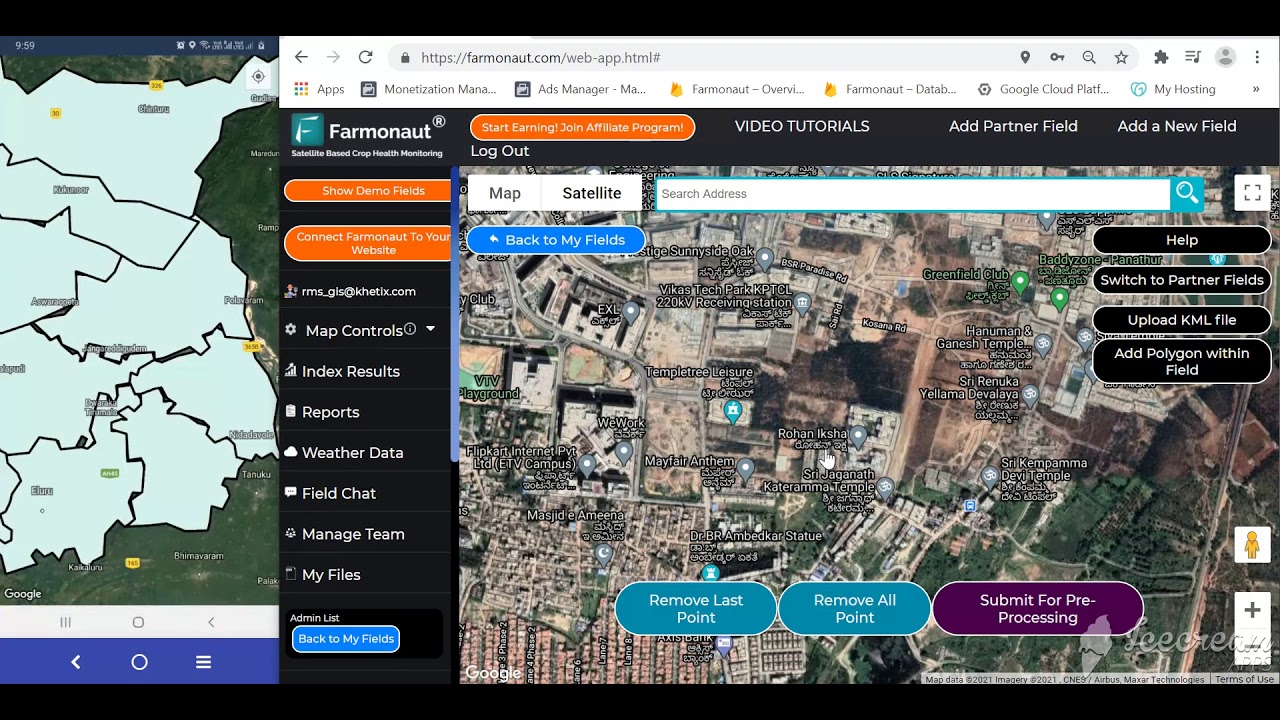
Farmonaut offers a robust and flexible API for satellite-based weather and resource monitoring, so developers and land managers can easily integrate geospatial data into any workflow.
7. Farmonaut Apps, API & Satellite Solutions for BLM Land Managers
- 🖥️ Web App: For real-time, desktop-based monitoring and analytics:
Farmonaut Web Application - 📱 Android App: Satellite and advisory insights on-the-go via Play Store:
Download Android App - 🍏 iOS App: Available for all Apple users:
Download iOS App - 🛠️ API: Integrate satellite, field, and weather data directly into your existing systems:
Farmonaut REST API
FAQ: Your Questions on BLM Public Land and Sustainability in 2026
Q1: What is BLM public land, and why is it important?
BLM public land refers to areas managed by the Bureau of Land Management, covering approximately 245 million acres, primarily in the western U.S. These lands support agriculture, grazing, conservation, recreation, and are critical for rural livelihoods and ecological health.
Q2: How are grazing permits managed to ensure sustainability?
The BLM uses rotational grazing, adaptive management, and science-backed monitoring to prevent overgrazing, protect native vegetation, and ensure that livestock use does not lead to long-term soil or habitat degradation.
Q3: What technologies support modern BLM land management?
Satellite monitoring, drones, AI advisory platforms, and blockchain traceability are integral for real-time assessment, compliance, climate risk reduction, and transparency in BLM public land management.
Q4: What are the key challenges facing BLM public lands?
Competing land uses, legacy degradation, invasive species, climate impacts, and shifting economic conditions for ranchers all challenge the sustainability and productivity of BLM public land.
Q5: How does Farmonaut improve BLM public land management?
We at Farmonaut provide satellite-driven monitoring, AI-based advisory, blockchain traceability, and fleet management tools for scalable, cost-effective, and real-time sustainable land management—empowering users to be climate-resilient and data-driven.
Conclusion: BLM Public Land – Sustainability at the Crossroads (2026)
BLM public land continues to underpin the agricultural sector, rural economies, and conservation efforts across the vast western states. Thanks to proactive policy evolution, adaptive management, sustainable grazing practices, and advanced technologies, these public resources now serve all stakeholders—ranchers, ecologists, indigenous communities, and recreational users—with an eye on both productivity and climate resilience.
In 2026 and beyond, sustainable use and robust stewardship are not just ethical imperatives but practical necessities for ensuring that 245 million acres of BLM-managed land continue to deliver food, jobs, biodiversity, and hope for future generations.
To be a part of this evolution, discover how Farmonaut is lowering cost barriers and putting advanced geospatial technologies into the hands of public and private land managers worldwide.
Ready to transform your BLM public land operations? Get started with Farmonaut’s satellite-powered solutions today—or integrate our developer-friendly API for seamless, scalable sustainability!