Best Monstera Fertilizer & Soil for Lush Growth in 2026
Why Has Monstera Cultivation Surged?
Monstera, often recognized by its botanical name Monstera deliciosa or “Swiss cheese plant,” has experienced remarkable popularity among indoor gardeners, horticultural enthusiasts, and the commercial ornamental plant industry. This striking aroid is not just a favorite decoration for homes and offices due to its vividly cut foliage, but it also holds significance in the broader agricultural and horticultural sectors as we move into 2026.
- ✔ High adaptability: Thrives in various growing conditions
- ✔ Vigorous growth: When provided the right nutrient and soil
- ✔ Benefit to urban farming: Highly suited for hydroponic systems and urban setups
- ✔ Sustainable opportunity: As the demand for sustainable, high-value crops intensifies
With more growers seeking to optimize crop yield, reduce input waste, and embrace eco-friendly practices, understanding the sustainable fertilizer for monstera and best potting soil options is critical for healthy growth—whether indoors, outdoors, or hydroponically.

Fertilizer for Monstera: Importance and Types
The right fertilizer for monstera is vital to maximize robust leaf formation, vibrant foliage, and resilient root structures. Monstera plants evolved in lush, tropical forest floors, which provide abundant, slow-releasing organic nutrients—a standard we often strive to replicate in sustainable cultivation today.
Essential Nutrients for Monstera
- 🌱 Nitrogen (N): Essential for lush, vibrant foliage and leaf expansion.
- 🌱 Phosphorus (P): Supports robust root development and encourages flower initiation (even in rare Monstera bloom).
- 🌱 Potassium (K): Boosts resistance to stress and disease, regulates water in cells, and enhances overall growth.
A typical NPK ratio suitable for Monstera is 3:1:2 (e.g., 9-3-6), ensuring a balance that promotes growth without risking fertilizer burn or nutritionally unbalanced plants.
Types of Monstera Fertilizer Used in 2026
- 🌿 Slow-Release Granular Fertilizer
Benefits: Ornamental nurseries and commercial growers value these for consistent, steady nutrient release—reducing the risk of sudden deficiencies or burn. - 🌿 Organic Fertilizer (composted manure, fish emulsion):
Importance: Boosts microbial health, enhances soil structure, and is favored in sustainable systems. They are better for plant health and environmental outcomes. - 🌿 Liquid Fertilizer (Synthetic/Organic Blends):
Role: Ideal for precision feeding—especially in active growth, propagation, and hydroponic cultivation. Often used for foliar feed to quickly remedy surface-level nutrient deficiencies. - 🌿 Foliar Fertilizer:
Use: Direct application to leaves to quickly address nutrient deficiencies, especially during active growth stages or in rapidly changing environmental conditions.

Choosing the Best Fertilizer for Monstera in 2026
Selecting the best fertilizer for monstera in 2026 involves not just maximizing growth, but also ensuring sustainability within the environmental context of modern agriculture and indoor gardening. Fertilization approaches have evolved, aligning more closely with principles of soil health, climate stewardship, and efficient urban farming.
- ✔ Organic Fertilizer (e.g. Composted Manure, Fish Emulsion): Increasingly popular in sustainable production. Improves soil microbiome, reduces chemical runoff and supports lush foliage growth. Plant health is typically improved, and resilience to stress is heightened.
- ✔ Precision Liquid Feeds: Tailored NPK blends matched to Monstera’s life-stage, ideal for hydroponics or high-value crop farming—often used during active growth seasons and for propagation phases.
- ✔ Slow-Release Blends: Best for indoor plants, commercial nurseries, or specialty urban farming operations—increasing fertilizer availability over 3–6 months, reducing the need for frequent dosing.
- 📊 Data Insight: In 2025–2026, fertilizer formulations with enhanced potassium are linked to improved resistance in Monstera against leaf spot and root disease.
- ✔ Eco Benefit: Combining biochar or vermicompost into the fertilization plan further enhances soil nutrient retention and microbial health, aligning with sustainable agriculture goals.
For maximum yield and quality, always consider seasonal phases, specific cultivars, and your preferred growing system—whether it’s soil-based, hydroponic, or a blend.

Best Potting Soil for Monstera: Composition, Drainage & pH
For soil-based Monstera cultivation, the root environment is fundamental to plant health, development, and overall resilience. The best potting soil for monstera merges high drainage quality, robust moisture retention, and a balanced pH supportive of nutrient uptake.
Top Ingredients in Great Monstera Soil Mixes
- 🌱 Peat Moss or Coconut Coir – Holds moisture for root access, but doesn’t stay waterlogged.
- 🌱 Perlite – Provides aeration and drainage for healthy root expansion.
- 🌱 Pine Bark (Fine/Medium) – Simulates forest-floor organic matter, boosts microbial activity.
- 🌱 Charcoal or Biochar – Reduces toxins, enhances soil life, retains nutrients.
- 🌱 Vermicompost – Adds slow-release nutrients, beneficial microbes, and is sustainable.
The ideal pH range for Monstera lies between 5.5–7.0; this zone sees maximum nutrient uptake and peak microbial activity within the soil matrix.
- 🍃 Peat moss or Coconut coir—moisture retention
- 💧 Perlite—improved aeration
- 🌲 Pine bark—organic matter, microbial boost
- 🔥 Biochar—nutrient retention, detox
- 🌱 Vermicompost—nutrient & microbe rich
In urban environments and high-efficiency setups, lightweight reusable mediums like expanded clay aggregate (LECA) are used—but even here, organic additives are increasingly included to improve root health and plant vigor.

Hydroponic Monstera: Fertilizer and Soil-free Systems
Monstera hydroponics is a rapidly emerging trend—especially in urban farming and vertical agriculture solutions. In a hydroponic monstera system, soil is replaced with inert media (LECA, coconut chips, perlite) and all nutrients are provided by a water-soluble fertilizer solution.
- 🌍 Sustainability benefit: Hydroponics can cut water usage by 30–60% and nearly eliminate fertilizer runoff.
- ⚡ Efficiency: Nutrient uptake is more precise; deficiency/overdose conditions can be monitored and corrected in real-time.
- 💡 Customizability: Nutrient solutions can be varied by growth stage (e.g. high nitrogen for leaf expansion; higher potassium for maturation or propagation phases).
Fertilization Management in Monstera Hydroponics
- ✔ Complete Hydroponic Fertilizers: Must supply all macro- and micronutrients (not just NPK, but also calcium, magnesium, iron, etc.).
- ✔ pH and EC Monitoring: pH (aim for 5.5–6.2 in hydroponics) and EC (electrical conductivity) levels must be routinely tracked to avoid lockout or toxicity.
- ✔ Automated Dosing: In 2025–2026, more hobbyists and growers are using AI-driven dosing systems for improved management, yield, and quality.
These techniques align with sustainable crop production and urban farming objectives by minimizing both resource usage and potential environmental impact.

- 🔋 Fast growth cycles
- 🛡 Reduced pest and disease risk (less soil-borne pathogens)
- 💧 Efficient water & fertilizer use
- 🌱 Cleaner, lighter harvesting
- ♻ Suits urban and small-space farms
Sustainable, Eco-friendly Cultivation Practices
Modern Monstera cultivation increasingly focuses on sustainability—reducing environmental footprint, lowering energy/water use, and preserving resource cycles. Fertilization approaches in 2026 aim to protect both plant health and the broader ecological environment.
Best Sustainable Practices for Monstera Growth
- 🌳 Use of carbon footprinting tools to monitor and reduce greenhouse emissions from large-scale Monstera farming.
- 🌿 Integrated Nutrient Management: Combining organic/biofertilizers, slow-release synthetics, and natural amendments (biochar, vermicompost).
- 💧 Water Conservation: Selection of soil and hydroponic media that minimize run-off and maximize retention (notably in urban/farming sectors).
- 🔗 Use of blockchain traceability systems enables tracking of fertilizer inputs and sourcing—especially for certified eco-conscious Monstera growers.
- 🤖 AI and Data-driven Farm Management: Platforms like Farmonaut equip growers with remote soil health assessment, crop advisory, carbon emission tracking, and irrigation optimization for improved yield and sustainability. Try Farmonaut for plantation advisory now.

Monstera Fertilizer and Soil Comparison Table
Choosing the right Monstera fertilizer and soil blend can feel overwhelming—so here’s an easy comparison table outlining popular types, best uses, eco impacts, and prices.
| Product/Fertilizer Type | Estimated NPK Ratio | Best Use (Soil/Hydroponic) | Sustainability Score (1–5) | Estimated Price Range (USD) | Key Benefits |
|---|---|---|---|---|---|
| Granular Slow-Release (synthetic) | 3:1:2 (e.g., 12-4-8) | Soil | 3 | $10–18/kg | Easy dosing; long-acting |
| Liquid Fertilizer (synthetic) | 3:1:2/2:1:2 | Soil/Hydroponic | 2 | $9–20/L | Precision feeding; adjustable NPK |
| Organic (composted manure, fish emulsion) | 2:1:2 (variable) | Soil | 5 | $6–15/L or kg | Boosts microbiome; eco-friendly |
| Hydroponic Complete Nutrient Solution | 3:1:2 to 2:1:3 (+micros) | Hydroponic | 3 | $18–30/2L | Full-spectrum; fast uptake |
| Foliar Spray (organic) | Low NPK; high micronutrients | Both | 4 | $8–16/L | Instant deficiency fix |
| Soil Mix Type | Main Ingredients | Drainage Quality | pH Range | Sustainability Score | Best for Monstera? |
|---|---|---|---|---|---|
| Classic Organic Mix | Peat/Coco, Bark, Perlite, Vermicompost | Excellent ★★★★☆ | 5.5–6.5 | 5 | ✔ Best |
| LECA / Expanded Clay | LECA, Coco chips | Excellent ★★★★★ | 6.0–7.0 | 4 | ✔ Best for Hydroponics |
| Reusable Soiless Blend | Coco, Sand, Perlite, Biochar | Very Good ★★★★☆ | 6.0–7.0 | 4 | Good (Add organics for best results) |
| Standard Potting Mix | Peat-based, minimal bark | Fair ★★★☆☆ | 5.5–6.5 | 3 | OK short-term, not long-term |




Enhancing Monstera Farming with Farmonaut Technology
Sustainable Monstera farming and cultivation in 2026 is closely linked to precision agriculture, impactful resource management, and environmental stewardship. We at Farmonaut support growers, nursery operators, and urban farmers with advanced, satellite- and AI-powered tools for next-generation Monstera systems.
Our Satellite-Driven Benefits for Monstera Growers
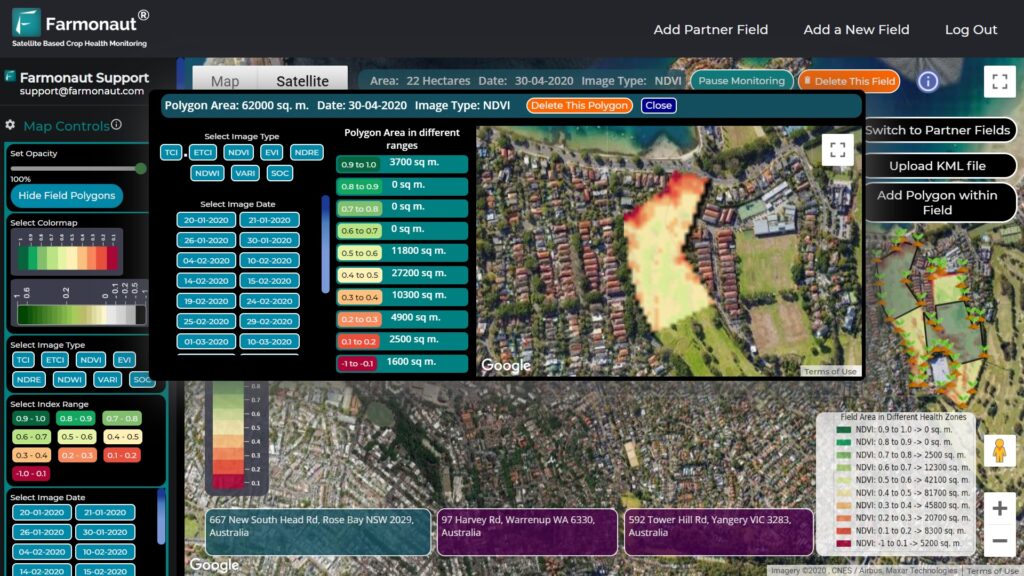
- ✔ Field Monitoring: Real-time observation of vegetation health (NDVI), soil condition assessment, and detection of problem zones—empowering growers to optimize fertilization and irrigation without excess chemical use.
- 📊 Jeevn AI Advisory: Precision crop and soil management recommendations, tailored to each Monstera batch (soil, hydroponic, or specialty systems).
- ⚠ Blockchain Traceability: Full sustainability and input tracking for eco-labels and certifications. See more on Farmonaut Product Traceability.
- ✔ Environmental Impact Monitoring: Carbon footprinting, water efficiency scoring, and compliance insights for urban and commercial Monstera production (see Farmonaut Carbon Footprinting).
- ✔ API and App Ecosystem: Access real-time satellite, weather, and resource data 24/7 via web app, Android, iOS, or Farmonaut API. See developer docs here.

Those interested in fleet optimization for large-scale Monstera transport or production sites can access our fleet management platform for real-time vehicle usage, safety, and resource management. Financial institutions, meanwhile, can tap into our satellite-driven verification tools for fairer loans and crop insurance in ornamental plant farming.
Frequently Asked Questions – Monstera Fertilizer, Soil, & Cultivation
Q1: What is the best fertilizer for Monstera in 2026?
The best fertilizer for Monstera in 2026 is often a slow-release granular or an organic blend with an NPK ratio of around 3:1:2. Organic options are increasingly favored for sustainability, but in hydroponics, a balanced complete nutrient solution is required for optimal plant health.
Q2: What makes an ideal potting soil mix for Monstera?
An ideal Monstera soil mix includes coconut coir/peat, pine bark, perlite, and vermicompost. Excellent drainage, high organic content, and a pH of 5.5–7.0 are key. For hydroponics, use inert media like LECA with full nutrient solutions.
Q3: How often should I fertilize my Monstera?
During active growth in spring and summer, fertilize soil-grown Monstera every 2–4 weeks with a balanced liquid feed or follow label guidance for slow-release types. In hydroponics, maintain regular nutrient solution top-ups and monitor for deficiencies.
Q4: What are sustainable steps for indoor Monstera farming?
Use organic fertilizers, sustainable potting media, monitor with satellite-enabled tools like Farmonaut, track environmental impact, and recycle materials where possible. Automated hydroponics also support water and fertilizer savings.
Q5: Can Monstera survive in hydroponic systems long-term?
Yes! Hydroponic monstera can thrive with a suitable environment, consistent full-spectrum nutrients, and robust root aeration. Regular monitoring and adjustment for pH, EC, and micronutrient levels are vital.
Conclusion: The Future of Sustainable Monstera Growth
As the pursuit of lusher Monstera foliage and sustainable agricultural outcomes continues into 2026 and beyond, it is the integration of eco-friendly fertilizers, optimal potting soils, and the precision of advanced resource management platforms that defines best practices. Modern growers, whether at home or in specialty crop production, now select their inputs for effectiveness, ecosystem health, and traceable sustainability.
- ✔ Best fertilizer for Monstera = balanced, organic, slow-release for soil; complete and adjustable for hydroponic systems
- ✔ Best potting soil for Monstera = moisture-retaining, fast-draining, high-organic blend with stable pH
- ✔ Sustainability = choose eco-certified inputs, leverage satellite/AI-driven tools, and minimize runoff/resource waste
- ✔ Hydroponics and Urban Farming = precise dosing and resource savings drive future growth
- ✔ Platform Support = We at Farmonaut empower data-driven, scalable, and sustainable decisions for every grower, nursery, and Monstera enthusiast
In conclusion, the future of Monstera cultivation and farming is bright, green, and high-tech. By choosing the best Monstera fertilizer and soil—and integrating smart tools—growers secure vitality for their plants, health for the planet, and economic sustainability for themselves—now and for years to come.
Explore Farmonaut’s large-scale farm management platform or get real-time AI-driven advisory now.