Beauveria bassiana insecticide for Sustainable Pest Control
“Beauveria bassiana insecticide reduces chemical pesticide use in agriculture by up to 70% by targeting specific pests.”
Introduction: The Revolution in Sustainable Pest Control
In modern agriculture, the stakes have never been higher. The demand for sustainable, eco-friendly pest management solutions is steadily rising as farmers, policymakers, and consumers alike seek effective alternatives to conventional chemical pesticides. The consequences of chemical overuse are clear: environmental degradation, harmful residues on produce, and mounting resistance in pests that threaten the stability of crop protection worldwide.
Among promising biological agents, one name stands apart in the context of sustainable agriculture for 2025 and beyond: Beauveria bassiana insecticide. This powerful, naturally occurring fungus has captured extensive attention for its significant insecticidal properties and its critical role in revolutionizing pest control strategies globally.
“In 2025, over 1.5 million hectares of crops globally are protected using Beauveria bassiana for eco-friendly pest control.”
Biological insecticides like Beauveria bassiana are setting new benchmarks for efficacy and environmental safety in IPM strategies— aligning with eco-conscious farming practices that are shaping the future of global agriculture.

What is Beauveria bassiana?
Beauveria bassiana is an entomopathogenic fungus—meaning it is a parasite of insects (arthropods). This obligate parasite *specifically targets* arthropod pests without harming plants, animals, or humans. Found naturally in soil and on plants, this biological agent exploits a sophisticated strategy: its spores (conidia) attach to the exoskeleton of insect pests, germinate, and then penetrate the cuticle, proliferating inside the body and ultimately causing mortality within days.
Unlike synthetic insecticides, Beauveria bassiana insecticide does not rely on toxic chemicals. Instead, it leverages a multifaceted approach involving physical invasion of the insect’s defenses and production of diverse insecticidal metabolites. This makes it not only effective against a broad range of pests but also significantly reduces the risk of unintended harm to humans and beneficial organisms.

How Beauveria bassiana Insecticide Controls Pests
Beauveria bassiana uses a unique biological mechanism that disrupts the pest’s body from the outside in. Here’s how this revolutionary fungus acts:
- 🔬 Spore Attachment: Conidia (spores) stick to the exoskeleton of the insect.
- 🌱 Germination: The spores germinate under ideal temperature and humidity, initiating fungal growth.
- 🛡 Cuticle Penetration: Fungal threads (hyphae) penetrate the cuticle, invading internal tissues.
- 💥 Proliferation and Toxin Production: The fungus proliferates inside the pest, releasing toxins and metabolites that quickly disrupt organ function.
- ☠ Mortality: Within days, the pest succumbs to fungal invasion. The pest’s body becomes a source for new spores, continuing the biological control cycle.
This highly selective process ensures Beauveria bassiana insecticide targets arthropod pests without harming beneficial pollinators, natural predators, or mammals—a key advantage over conventional chemical insecticides.
Proper timing of Beauveria bassiana applications—especially during periods of moderate temperature and humidity—can boost efficacy against target pest species for your crops.

Applications in Agriculture: From Fruits to Forests
Since its commercial adoption, Beauveria bassiana insecticide has established itself as a potent tool in crop protection across a spectrum of farming systems. Here’s how this biological fungus is utilized in agricultural pest management strategies:
- 🍎 Fruits & Vegetables: Used widely to control aphids, whiteflies, thrips, caterpillars, beetles, and mealybugs on crops including tomatoes, citrus, papaya, peppers, and leafy greens.
- 🌾 Cereal Crops: Integral to wheat, rice, maize, and soybean production, battling key insect pests threatening yield in 2025 and beyond.
- ☕ Plantations (Coffee, Cotton): Vital for sustainable control of bollworms, coffee berry borers, and whiteflies while preserving ecological balance.
- 🌲 Forestry: Expanding into forest applications, especially for managing invasive beetles and borers in timber plantations.
- 🏙 Urban Green Spaces: Used for protecting ornamental trees and landscape plants without endangering humans or pets.
By 2025, improvements in formulation technologies have resulted in more stable, shelf-stable, and practical applications, allowing Beauveria bassiana to be applied as foliar sprays, soil drenches, or seed treatments—offering farmers unprecedented flexibility.

Visual List: Key Crops Protected by Beauveria bassiana Insecticide
Overlooking proper storage and handling of Beauveria bassiana formulations (e.g., exposing products to high temperatures and sunlight) can reduce spore viability and consequently, control efficacy.
Formulation & Technology Advances in 2025 and Beyond
2025 has brought unprecedented sophistication to the development of Beauveria bassiana insecticide products. Cutting-edge advancements have focused on making biopesticides more accessible, effective, and reliable in varied field conditions. Farmers now benefit from:
- 🔹 Improved Formulations: Wettable powders, granules, and emulsifiable concentrates—each tailored for specific crop and pest combinations and application methods (foliar spray, soil drench, etc.).
- 🛡 UV Protectants & Microencapsulation: Advanced coatings shield spores from ultraviolet light and environmental stresses, enhancing survival and field persistence.
- 🚀 Genetically Optimized Strains: Research focuses on strains with increased virulence, improved environmental tolerance, and expanded host range to address emerging pest threats.
- 📦 Stability & Shelf Life: New storage methods have extended the shelf-stability of spore-based products, reducing waste and improving economic viability for farmers.
- 📈 Targeted Application Tools: Spray drones, precision applicators, and integrated data analytics now guide timing and placement for maximum impact with minimal environmental footprint.

Beauveria bassiana Efficacy: Key Points
- ✔ Broad range: Effective on numerous arthropod pests without affecting non-target organisms.
- ⚠ Selectivity: Targets specific insect species; safe for pollinators and natural predators.
- 📊 Residue-free: Leaves no harmful chemical traces on produce.
- 💡 Resistance Management: Multifaceted action means lower chances of resistance development in pest populations.
- 🌏 Environmentally Sustainable: Minimizes ecological disruption and supports soil health.
Comparative Benefits: Beauveria bassiana vs. Chemical Insecticides
| Pest Control Method | Mode of Action | Est. Effectiveness (% pest reduction) |
Environmental Impact (Eco-toxicity rating 1–5) |
Effect on Non-target Species (% impact) |
Safety for Humans (Risk Level) |
Cost per Hectare (USD, est.) |
Residual Life in Environment (days) |
|---|---|---|---|---|---|---|---|
| Beauveria bassiana Insecticide | Fungal infection; physical invasion & metabolite toxicity | 70–90% | 1 (Minimal) | 5–15% | Very Low | 20–45 | 3–7 |
| Chemical Insecticide | Nerve toxins; enzyme inhibitors; systemic poisons | 85–98% | 4–5 (High) | 55–85% | Moderate–High | 30–80 | 15–50 |
Data compiled from peer-reviewed journals and innovation reports for sustainable agriculture in 2025.
The rising market for eco-friendly biopesticides like Beauveria bassiana offers significant investment opportunities, especially with regulatory shifts favoring environmental safety and bans on high-toxicity chemical insecticides globally.



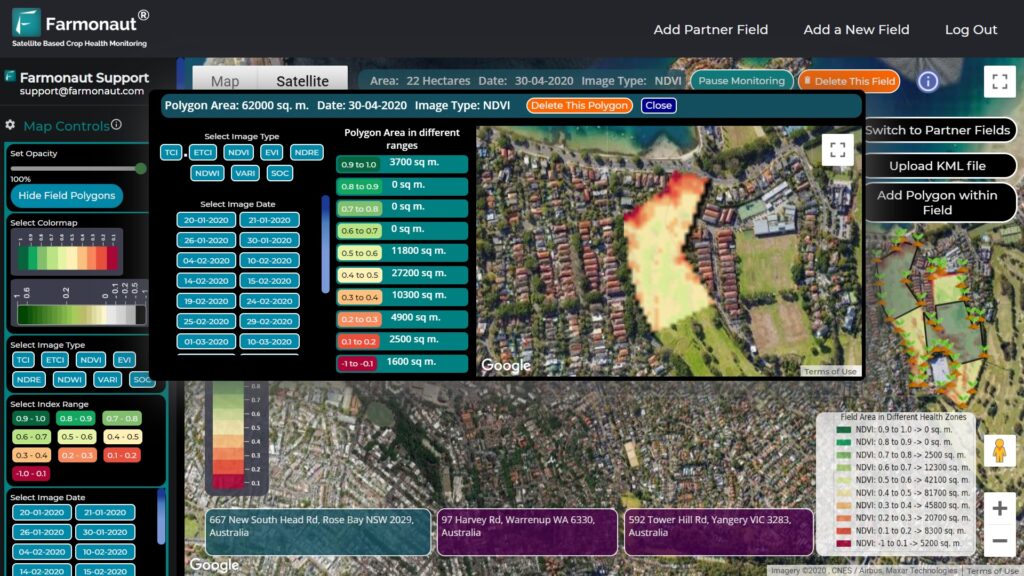
🌍 Optimize your pest and crop management with real-time satellite insights: Try Farmonaut’s mobile and web solutions today.
Visual List: Sustainability Benefits of Beauveria bassiana Insecticide
No harmful chemical buildup or toxicity in agricultural soils.
Pollinators and natural predators remain unharmed.
Lower eco-toxicity rating compared to synthetic pesticides.
Minimal risk of acute or chronic exposure.
Supports organic and pesticide-free market standards.
Key Benefits and Highlights: Why Choose Beauveria bassiana Insecticide?
- 🌱 Sustainable crop protection with minimal environmental footprint
- 🧬 Innovative biological control method—safe, selective, and effective
- 💧 Supports residue-free produce for health-conscious consumers and organic markets
- 🐞 Enhances ecological balance by preserving beneficial species and natural predators
- 🔄 Compatible with integrated pest management (IPM) strategies and modern precision agriculture
Beauveria bassiana insecticide is increasingly integrated into **data-driven farming systems**—where monitoring and precise interventions are made possible by advanced platforms like Farmonaut’s satellite solutions.

Farmonaut: Satellite Support for Sustainable Agriculture
At Farmonaut, we recognize the critical role of sustainable pest management in the agricultural landscape of 2026 and beyond. Our satellite-based monitoring and AI-powered advisory solutions help farmers track crop health, detect pest outbreaks in real-time, and make informed decisions about the adoption of biological insecticides like Beauveria bassiana.
- 🔬 AI Advisory: Our Jeevn AI system provides real-time detection of pest hotspots and disease risks, enabling optimized timing for biopesticide application.
- 🌱 Environmental Impact Tracking: Monitor your farm’s footprint and practice regenerative agriculture. Explore carbon footprinting tools for eco-certifications.
- 🔗 Product Traceability: Secure your sustainable produce chain—see our traceability platform for full transparency from field to fork.
- 📱 Mobile & Browser Access: Use Farmonaut’s Android, iOS, and Web apps for on-the-move monitoring and instant alerts.
- 🛠 API Integration: For businesses, integrate seamless crop, pest, and resource management via the Farmonaut API. See developer docs: API Docs

Farmonaut Subscription Plans
Choose a Farmonaut subscription that matches your farming, agri-business, or organizational needs—offering cost-effective access to AI, satellite monitoring, and sustainable pest management tools.
Global regulatory pressure for residue-free and traceable produce is driving demand for blockchain-based traceability systems. This is a key advantage when implementing Beauveria bassiana insecticide in certified supply chains.
Integrated Pest Management (IPM) and Beauveria bassiana
Beauveria bassiana fits seamlessly into modern Integrated Pest Management (IPM) strategies. IPM promotes the harmonization of multiple tactics:
- 🧲 Biological Agents: Use of selective biopesticides like Beauveria bassiana fungus
- 🦟 Mechanical Controls: Pheromone traps, sticky cards, row covers to physically reduce pest numbers
- 🌱 Cultural Practices: Crop rotation, resistant crop varieties, optimized irrigation/fertilization
- 🐞 Conservation of Natural Predators: Lady beetles, lacewings, parasitoid wasps, etc.
- 📉 Chemical Pesticides: Only when essential, and always with rotation to prevent resistance
By integrating Beauveria bassiana insecticide into their IPM programs, farmers effectively reduce total pesticide loads and prolong the efficacy of both biological and chemical products.

Relying solely on biologicals or chemical insecticides can create a cycle of pest resurgence or resistance. **Combining IPM tools is critical for effective, sustainable pest control!**
Environmental Safety and Human Health
The eco-toxicity rating of Beauveria bassiana insecticide is among the lowest of any commercial agricultural input. Here’s why:
- 🌿 Minimal Impact on Non-target Organisms: Its specificity means natural enemies, pollinators, and soil microflora are preserved.
- 🔒 Residue-free: No harmful residues left on food crops, supporting organic certification and international export compliance.
- 👩🌾 User Safety: Users experience minimal risk of toxicity versus handling synthetic crop chemicals.
- 💧 Water Safety: No leaching into groundwater or contamination of waterways.
- 🍃 Soil Health: Non-disruptive to soil microbiota, key for regenerative agriculture.
Major Challenges and Resistance Management for Beauveria bassiana
- Environmental Conditions: Field efficacy varies with temperature, humidity, and sunlight. Overcoming UV degradation and desiccation is a top research priority in 2026.
- Product Consistency: Batch-to-batch formulation quality and spore viability are critical for consistent field results.
- Pest-Specific Efficacy: Some pest species may require strain-specific solutions or combination treatments.
- Adoption and Education: Farmer awareness of correct usage, storage, and timing makes a significant difference in success rates.
- Market Access: The need for regulatory approvals, especially for export crops, means ongoing vigilance in compliance and data transparency.
Rotating Beauveria bassiana insecticide with other IPM tools minimizes risk of pest resistance—a growing challenge with conventional chemicals.
- 🌟 Next-gen Formulations: Nano-coating, smart encapsulation, and multi-strain blends for field reliability.
- 🛰 Satellite-Powered Precision: Large-scale farm management enhances timing and placement for biopesticide applications.
- 📉 Reduced Carbon Footprint: Biopesticides cut emissions compared to chemical inputs.
- 🔍 Blockchain Traceability: Secure and transparent supply chains are possible with platforms like Farmonaut Traceability.
- 📈 Access to Green Finance: Satellite-based loan and insurance verification rewards growers for sustainable practices.
Future Outlook: Beauveria bassiana in Agriculture 2026 and Beyond
The sustainable insecticide landscape is quickly evolving. By 2026 and into the next decade, Beauveria bassiana is expected to surpass its biological agent competitors as field-ready innovation continues:
- 🔬 Molecular Breeding: Diversified strain development for new pest targets and climates.
- 👨🌾 Farmer-Friendly Applications: App-driven geolocation and satellite-guided spraying for precision efficacy.
- 🌾 Expansion Beyond Agriculture: Embracing urban, forestry, and plantation advisory zones for ecosystem-wide pest control.
- 📦 Supply Chain Integration: Digital track-and-trace ensures residue compliance and sustainability certifications on global exports.
- 📊 Smart Analytics: Farmonaut’s multispectral satellite image analytics for pro-active pest and disease risk forecasting.
Nations are strengthening legal frameworks to restrict harmful chemical pesticides and encourage adoption of biological insecticides—creating opportunities for early-moving stakeholders in green agriculture.
FAQs on Beauveria bassiana Insecticide
Q: Is Beauveria bassiana insecticide compatible with organic certification?
A: Yes, most commercial formulations are suitable for certified organic production, as they contain no synthetic chemical residues.
Q: Will Beauveria bassiana harm pollinators or beneficial insects?
A: No, its specificity means it only infects targeted pest species, leaving pollinators and natural predators unharmed.
Q: How soon after application does Beauveria bassiana kill pests?
A: Mortality typically occurs within 3–7 days, depending on environmental conditions and pest species.
Q: Can Beauveria bassiana be used alongside chemical pesticides?
A: Yes, but always observe label guidance. It’s best used within IPM strategies and with non-antagonistic chemicals to preserve spore viability.
Q: What’s the environmental fate of Beauveria bassiana spores?
A: Spores degrade naturally in soil and sunlight, leaving no toxic residue and supporting sustainable cycle closure.
Conclusion: Beauveria bassiana–Paving the Way for Revolutionary, Sustainable Agriculture
In summary, Beauveria bassiana insecticide represents a revolutionary advancement for sustainable pest management in agriculture as we look toward 2025, 2026, and beyond. As a biological, entomopathogenic fungus, it delivers potent, eco-friendly pest control that directly addresses global concerns about environmental safety, resistance management, and human health.
Sharp improvements in formulation technologies, satellite-powered crop monitoring, and digital traceability platforms (such as those offered by Farmonaut) are rapidly accelerating the adoption of Beauveria bassiana insecticide. This trend is fundamentally changing how farmers protect crops, preserve biodiversity, and assure consumers of clean, sustainable produce.
Adopting Beauveria bassiana insecticide within IPM frameworks not only reduces dependency on chemical inputs but also aligns with the worldwide transition to greener, more resilient food systems. The future of pest management is sustainable, data-driven, and biological—and Beauveria bassiana stands at the forefront of this transformation.
The next generation of global agriculture will be marked by sustainability, resilience, and transparency—with Beauveria bassiana insecticide and satellite-driven solutions like Farmonaut leading the charge.